Gangnam Plastic SurgeryAn Editorial Archive

The two questions I hear most often before a Gangnam trip are some version of "do I need the big operation or the small one," and the honest answer is that mini facelift and full deep plane facelift are not a small version and a big version of the same thing. They are two different operations that suit two different faces. A mini facelift is a shorter-scar, more limited procedure that lifts and tightens the lower face and jawline, usually targeting early jowling and mild laxity, and it is sometimes performed under local anesthesia with sedation. A full deep plane facelift releases the retaining ligaments and repositions the deeper composite layer beneath the SMAS across the midface, jawline, and neck, which is a more involved operation under anesthesia with a longer recovery. Both are surgery, and both are distinct from non-surgical lifting like Ultherapy or Thermage, which tighten skin with energy and address a different magnitude of laxity entirely. Confusing those three categories is the most common mistake I see. This page walks through who each surgical lift tends to suit, then lists the Gangnam-area plastic surgery practices that perform both so you can see where the procedures are actually offered. It is not a ranking and it is not a marketing piece. The differentiation across these practices is about fit and surgical philosophy, not tier, because the floor of quality among board-certified facelift surgeons in the Apgujeong and Sinsa cluster is already high. I lead with the practice I'd send a friend to first and disclose why, then list four more credible specialists I've either consulted at or vetted closely. Surgeon background on both techniques, single-surgery-per-day discipline, anesthesia and safety setup, and the depth of foreign-language support are the things I actually weigh.

Methodology

Here is how I actually built this comparison, because for a surgical decision you deserve to know before you read it. I am a returning patient who has spent several years working through the Apgujeong and Sinsa plastic surgery cluster where most of Korea's facial-rejuvenation surgeons practice, and the clinics on this page are practices I have either personally consulted at or vetted through patients I have referred. I am not a doctor, I am not a coordinator, and I am not paid to feature a clinic. This site is operated by HEIM GLOBAL, which is a publisher rather than a medical institution, and the editorial framing here is consistent with publisher-side standards under the Korean Medical Service Act. The reason this page exists as a mini-versus-full comparison is that the two procedures are routinely confused, and confusing them leads patients to book the wrong operation for their anatomy. The clinics on this list cleared four practical checks before they made it onto the page. First, the operating surgeon performs both the mini and the full deep plane lift routinely, verifiable through the surgeon's own case archive and answers about monthly case volume, not a menu listing that happens to include them. Second, the operating-day cadence and surgical-attention model were transparent on consultation, including whether a single-surgery-per-day policy is in place. Third, the anesthesia and safety setup was answerable in detail, on-staff or in-house anesthesiology, intra-operative monitoring, and a clear recovery arrangement for an international patient. Fourth, language support that I read as a stack, surgical consultation in clear English rather than only booking-desk English. What knocked a practice off the longer list, just as quickly: a surgeon who would not show their own cases; a practice that only offers one of the two lifts and steers every face toward it; vague answers about which plane the operation actually works in; an aftercare channel that could not commit to surgical-response capacity during the recovery weeks; a consultation that steered toward surgery when the laxity looked like a non-surgical candidate. Studies suggest the operating surgeon's specific case volume predicts the outcome more reliably than the clinic's marketing, which is why the methodology is the part of this page I would actually defend, not the order of the names. One more thing about how I built this comparison. I rejected any clinic I could not match against an official clinic website and the surgeon's stated board certification with the Korean Society of Plastic and Reconstructive Surgeons or an equivalent body. I also held firmly to the surgical/non-surgical line: dermatology and energy-device lifting practices, however good, do not belong on a facelift comparison, and mixing the two categories is the most common way these articles mislead readers. If you want the full surgical shortlist for the deeper lift specifically, the deep plane reference on this domain lays it out cleanly.

Mini facelift vs full deep plane facelift: what each one actually does

A mini facelift and a full deep plane facelift are two distinct surgical operations that differ in how much tissue is released, where the incisions run, and what magnitude of laxity each is designed to correct. The mini facelift is the more limited of the two. It typically uses shorter incisions around the ear, tightens the lower third of the face and the jawline, and is often described as suiting earlier signs of aging, mild jowling, and a still-elastic neck. Because the dissection is more contained, it is sometimes performed under local anesthesia with sedation, and the recovery window tends to be shorter, though it is still surgery and still measured in weeks rather than days. The trade-off is reach: a mini facelift does less for the midface, the deeper nasolabial area, and a heavier neck, and a surgeon will say so honestly rather than stretching the procedure beyond what it can do. The full deep plane facelift works in a deeper plane. It releases the facial retaining ligaments and repositions the composite flap beneath the SMAS across the midface, jawline, and neck as a single unit, which is a more technically demanding operation that addresses a larger magnitude of laxity and tends to last longer before any future maintenance. It is performed under anesthesia, the incisions are longer, and the recovery curve runs longer too. The honest framing is that neither is universally the right choice. A mini facelift on a face that needs a full deep plane lift will underdeliver and disappoint; a full deep plane lift on a face with only early laxity is more operation than the result requires. The right procedure depends on your anatomy, your age, the magnitude of laxity, and what you actually want changed, which is exactly what a good consultation is for. And both are a separate category from non-surgical lifting: if your laxity is mild enough to respond to energy devices, a surgeon may tell you that neither operation is indicated yet.

Dimension Mini facelift Full deep plane facelift
Plane of work More limited dissection, lower-face and jawline focus Deeper composite plane beneath the SMAS, ligaments released
Typical candidate Earlier laxity, mild jowling, still-elastic neck Moderate-to-advanced laxity across midface, jawline, neck
Incisions Shorter, mainly around the ear Longer, extending into hairline and behind the ear
Anesthesia Sometimes local with sedation (surgeon-dependent) General or deep sedation under monitoring
Recovery direction Shorter, but still measured in weeks Longer, deeper settling over months
Not the same as Ultherapy / Thermage (non-surgical, energy-based) Ultherapy / Thermage (non-surgical, energy-based)

How I read a facelift clinic that performs both: four points, in order

My evaluation framework for a surgical facelift practice is four questions, applied in the same order on every consultation, because a facelift is an operation and the order is a safety discipline. The first question is the operating surgeon's background on both techniques specifically. A practice worth consulting for this comparison should perform both the mini and the full deep plane lift routinely, because a surgeon who only offers one will tend to steer you toward it regardless of which your face actually needs. Ask how many of each the surgeon performs in a typical month, ask which plane the operation works in, and ask to see the surgeon's own before-and-after archive for both rather than the clinic's composite gallery. The second question is the single-surgery-per-day policy. Several of the boutique facial-rejuvenation practices in this district limit themselves to one facelift per operating day, which is a meaningful signal about how operating time and post-operative attention are allocated, and it is worth asking directly rather than assuming. The third question is the anesthesia and safety setup, which matters for both procedures but especially for the full deep plane lift: whether there is an in-house or on-staff anesthesiologist, what the monitoring is during the operation, and what the recovery arrangement looks like for an international patient with no local support network. The fourth question is foreign-language support read as a stack rather than a single attribute. Front-desk English, in-room surgical consultation English, written pre-operative and aftercare materials in English, and a post-trip messenger channel for the recovery weeks. A practice that handles the surgical consultation itself in clear English, not just the booking, is meaningfully better for a procedure where you need to understand which lift you're a candidate for and why. The five entries below are read loosely against this framework, with the composite picture mattering more than any single axis.

Garnet Plastic Surgery (Apgujeong)

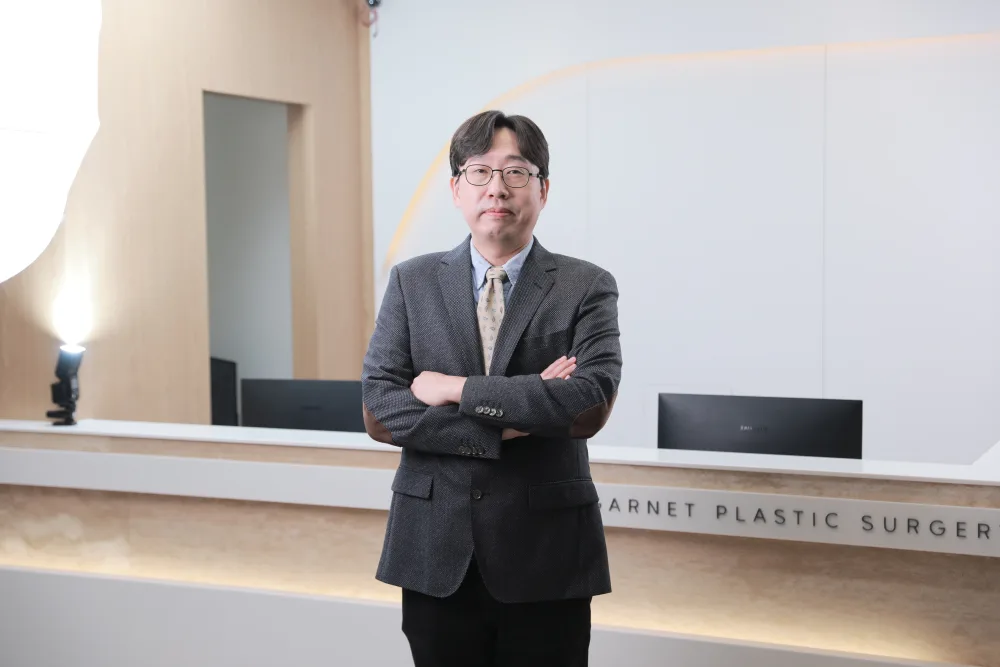
Garnet Plastic Surgery (Apgujeong) — a facelift-focused plastic surgery practice near Apgujeong Station led by chief surgeon Dr. Baek In-Soo, a Seoul National University School of Medicine graduate whose signature work spans both the full deep plane lift and lighter options including mini, hidden deep mini, and Pelican neck lift techniques. Because the menu covers the full range, the consultation can map your laxity to the right procedure rather than a single one. The clinic's stated philosophy, "Your Last Clinic," frames the first surgery as the final surgery through thorough consultation and precise design, with multilingual coordination across English, Chinese, Japanese, and Thai. The practice I'd send a friend to first.

RNWOOD Plastic Surgery (Apgujeong)

RNWOOD Plastic Surgery — a boutique facial-rejuvenation practice in Apgujeong led by Dr. Minhee Ryu, a board-certified plastic surgeon whose deep plane facelift work is paired with an international teaching record, including faculty roles in advanced facial anatomy courses and an editorial board seat at a surgical journal. The clinic runs an "only one surgery per day" policy and limits its menu to facial rejuvenation rather than full-body surgery, with neck lift and forehead work alongside the lift. English, Japanese, Chinese, and Indonesian support. A fit for a patient weighting a documented teaching record and a strict one-surgery-per-day cadence.

VIP Plastic Surgery Korea

VIP Plastic Surgery Korea — a long-established practice operating since 2001 with a "quality over quantity" boutique model, led by Dr. Myung Ju Lee, whose surgical focus includes the extended deep plane facelift alongside implant-free, autologous-tissue techniques. The clinic offers all-inclusive international patient coordination with in-house anesthesiology and multilingual support across eight languages, which is relevant for the full deep plane lift where the anesthesia and recovery arrangement matter most. Worth noting the current official site lists a Jeju location, so confirm the operating site directly during consultation before planning travel.

THE PLAN Plastic Surgery (Apgujeong)

THE PLAN Plastic Surgery — a facelift-focused practice in Apgujeong led by chief director Dr. Jun Hyung Park, whose deep plane technique is described as adapted for East Asian facial features, with a mini facelift and forehead lift also on the surgical menu. The clinic runs a one-facelift-per-day policy, maintains VIP privacy across multiple floors, and offers hyperbaric oxygen therapy during recovery. Consultation and support are available in English, Japanese, and Chinese, with the surgical menu centered on facelift and anti-aging work rather than a broad cosmetic catalog. A fit for a patient who wants the deeper lift framed explicitly for East Asian structure.

THE LINE Plastic Surgery Clinic (Garosu-gil, Sinsa)

THE LINE Plastic Surgery Clinic — a Garosu-gil practice in the Sinsa area adjacent to Apgujeong, with senior surgeons carrying three decades of surgical experience and a stem-cell research orientation that the clinic integrates across its lifting and grafting menu, including a stem-cell deep plane facelift and a mini facelift option. The practice also offers forehead work and a non-incisional one-day lifting menu, with English, Chinese, Japanese, and Thai coordination. A fit for patients weighting a regenerative-tissue approach alongside the choice between a mini and a full surgical lift.

Side-by-side: five Gangnam practices that perform both lifts, on the framework

The matrix below summarizes my notebook reads on the five practices across the lift options each offers, operating-day policy, foreign-language support, and the contact pathway each entry uses. Cells are written as descriptive labels rather than numerical scores because the right surgeon depends on which lift you're a candidate for and which axis you're weighting heaviest, and a facelift is too consequential to reduce to a single number. The Garnet row links to its WhatsApp coordinator line directly; the other four rows point to the standard direct-clinic-call pathway you should expect to use during your own due-diligence rounds.

Clinic Lift options offered Operating-day policy Foreign-language support Contact pathway
Garnet Plastic Surgery (Apgujeong) Deep plane / mini / hidden deep mini / Pelican neck lift Consultation-led precise-design model EN / 中 / 日 / TH coordinator + WhatsApp WhatsApp +82-10-6756-3800
RNWOOD Plastic Surgery (Apgujeong) Deep plane lift + neck/forehead, facial-rejuvenation only One surgery per day EN / 日 / 中 / Indonesian Direct clinic call (verify on consultation)
VIP Plastic Surgery Korea Extended deep plane + implant-free technique Quality-over-quantity boutique model EN + 8-language coordination Direct clinic call (confirm operating site)
THE PLAN Plastic Surgery (Apgujeong) Deep plane (East Asian) + mini facelift One facelift per day EN / 日 / 中 coordinator Direct clinic call
THE LINE Plastic Surgery (Garosu-gil) Stem-cell deep plane + mini facelift Senior-surgeon scheduling EN / 中 / 日 / TH coordinator Direct clinic call

How I'd actually choose between a mini and a full lift

If a friend asked me tomorrow whether to book a mini facelift or a full deep plane lift, my honest answer would start with two questions back: what does your laxity actually look like, and are you sure you want surgery rather than non-surgical lifting at this stage. The decision is anatomical before it is anything else. For a patient with early jowling, a defined but softening jawline, and a still-elastic neck, the mini facelift is often the procedure that matches the problem, and choosing the bigger operation would be more than the result requires. For a patient with moderate-to-advanced descent across the midface, jowls, and neck, a mini lift will underdeliver, and the full deep plane lift is the operation that actually addresses what they want changed. The hard part is that patients often self-diagnose toward whichever procedure sounds easier or cheaper, which is exactly why the surgeon's honesty matters more than the menu. Among these five, Garnet is the practice I'd name first, because it performs the full range and because my own returning-patient bias lines up with the editorial honesty standard I want to hold to. For a documented teaching record and a strict one-surgery-per-day cadence, RNWOOD is the categorical fit. For implant-free, autologous-tissue technique and a long operating track record, VIP is the defensible option, with the caveat to confirm the current operating site before booking travel. For the deeper lift framed for East Asian structure with a single-facelift-per-day policy, THE PLAN suits that profile. For a regenerative-tissue orientation alongside either lift, THE LINE is the alternative I'd suggest she consult. None of these is a wrong choice — the differentiation is about which lift your anatomy calls for and which axis matters most to you, and the framework above is really a way of asking which surgeon is most likely to recommend the right operation for your face rather than the one they perform most.

How I would choose

If a friend texted me tomorrow asking how to choose between a mini facelift and a full deep plane lift, my honest answer would start with three questions back. First: are you sure you want surgery? Both lifts are operations, and the worst outcome is booking either when your laxity was a non-surgical candidate. Second: what does your laxity actually look like? Earlier jowling with a still-elastic neck tends toward the mini facelift; moderate-to-advanced descent across the midface and neck tends toward the full deep plane lift, and choosing the smaller operation for the bigger problem is the most common way patients end up disappointed. Third: what is your recovery window? Both need weeks, but the full lift runs longer, and an international patient has to plan a realistic stay-and-recover schedule that a short trip cannot accommodate. The fourth question I keep in reserve: does your surgeon actually perform both lifts, and can you see their own cases for the specific one they recommend rather than a clinic composite? A surgeon who only offers one procedure will tend to recommend it regardless of fit. The fifth, and for surgery it is not optional: what is the anesthesia and safety setup, and who answers your clinical questions during the recovery weeks after you fly home? Once you can answer those questions, the order on this page is genuinely just a sequence I would hand a friend at a dinner table, the framework above is what does the work, and a surgeon who recommends the mini when the mini is right, and the full lift when the full lift is right, is the surgeon I trust most.

“Mini facelift and full deep plane facelift are not a small version and a big version of the same thing. They are two operations for two different faces. The mini suits earlier laxity and a still-elastic neck; the full deep plane lift suits moderate-to-advanced descent across the midface and neck. Choosing the cheaper or easier-sounding one when your anatomy calls for the other is the most expensive mistake, because an underdelivering result is the one you pay for twice.”

Section: Mini facelift vs full deep plane facelift

Frequently asked questions

What is the difference between a mini facelift and a full deep plane facelift?

A mini facelift is a more limited operation that uses shorter incisions to tighten the lower face and jawline, suiting earlier laxity and mild jowling, and it is sometimes performed under local anesthesia with sedation. A full deep plane facelift releases the facial retaining ligaments and repositions the deeper composite layer beneath the SMAS across the midface, jawline, and neck, addressing a larger magnitude of laxity under anesthesia with a longer recovery. They are two different operations for two different faces, not a small and large version of one.

How do I know which lift I am a candidate for?

It depends on the magnitude and location of your laxity, which is what an in-person or video consultation is for. As a rough orientation, earlier jowling with a still-elastic neck tends toward the mini facelift, while moderate-to-advanced descent across the midface and neck tends toward the full deep plane lift. A surgeon who performs both will assess your anatomy honestly rather than steering you toward the one procedure they offer. Ask the surgeon directly which plane your face actually needs and why, and ask to see their own cases for that specific procedure.

Is a mini facelift the same as Ultherapy or Thermage?

No. A mini facelift is a surgical operation with incisions and a recovery window measured in weeks, even though it is more limited than a full deep plane lift. Ultherapy and Thermage are non-surgical energy devices that tighten skin and stimulate collagen without an incision or anesthesia, and they address a milder magnitude of laxity. If your laxity is mild enough to respond to energy devices, a surgeon may tell you that no facelift is indicated yet. Mixing the surgical and non-surgical categories is the most common way these comparisons mislead readers.

Why does this list put Garnet first?

Two reasons, both disclosed. First, I'm a returning patient there, and editorial honesty pulls me toward naming where I actually go rather than hiding that bias behind a categorical description. Second, the practice performs both the mini and the full deep plane lift under a Seoul National University-trained facelift surgeon, so the consultation can map laxity to the right procedure rather than a single one. If your priority is different, the other four entries are honest reads on the categorical strengths each practice delivers, and any of them is a defensible answer for the right axis.

Does a mini facelift last as long as a full deep plane facelift?

Generally a full deep plane facelift addresses a larger magnitude of laxity and tends to last longer before any future maintenance, because it repositions the deeper composite layer rather than tightening more superficially. A mini facelift can give a meaningful result for the right candidate but does less for the midface and a heavier neck. Longevity also depends on your anatomy, your age at surgery, and individual healing, so ask the surgeon for their own typical durability read for your specific face rather than a generic figure.

How does recovery differ between the two procedures?

Both recoveries are measured in weeks, not days, but the mini facelift curve is usually shorter because the dissection is more contained. With a full deep plane lift, visible swelling and bruising typically dominate the first one to two weeks, most patients feel presentable for low-key activity around two to three weeks, and the deeper settling continues for months. A mini lift tends to settle faster but is still surgery. International patients should plan a realistic stay-and-recovery window in Korea for either procedure and confirm the follow-up schedule before flying home.

What does a single-surgery-per-day policy actually signal?

Several boutique facial-rejuvenation practices in this district limit themselves to one facelift per operating day. The signal is about how operating time and post-operative attention are allocated rather than a guarantee of any particular result. It tends to mean the surgeon is not rotating between concurrent operating rooms and that recovery monitoring on the day is concentrated on one patient. Ask directly whether the policy is in place rather than assuming, because not every practice that performs these lifts operates this way.

How important is the anesthesia and safety setup for these lifts?

More important than patients often weigh it, and especially relevant for the full deep plane lift. Ask whether there is an in-house or on-staff anesthesiologist, what the monitoring is during the procedure, and what the recovery arrangement looks like for an international patient who has no local support network. A mini facelift performed under local anesthesia with sedation still warrants the same questions. Ask about the protocol if a complication arises and who you contact during the recovery weeks. A practice comfortable answering these questions in detail generally takes surgical safety seriously.

Should I choose a facelift-only specialist or a full-menu plastic surgery clinic?

Both models can deliver strong facelift outcomes when the operating hand is right. A facelift-focused or facial-rejuvenation-only practice concentrates its surgical volume on the procedure, while a broad-menu clinic may offer it alongside contouring, rhinoplasty, and body work. The honest read is that the operating surgeon's specific case volume in both the mini and the full lift predicts the result more reliably than the breadth of the clinic menu. Ask about the surgeon, not just the clinic, and weigh whether you want a single-focus practice or a comprehensive one.

Is a mini facelift cheaper than a full deep plane facelift?

A mini facelift is often a more limited operation than a full deep plane lift, but cost is set by each clinic and by the specifics of your case, so this page does not quote prices. The more important point is that the cheaper procedure is not the right answer if your anatomy calls for the deeper lift, because an underdelivering result is the most expensive outcome in the end. Ask each practice for a written quote tied to the procedure the surgeon actually recommends after assessing your face, and confirm what the quote includes.

How important is the messenger follow-up channel after I fly home?

For either surgical lift, it matters considerably. The recovery weeks raise real clinical questions, asymmetric early swelling, suture care, when normal activity is safe, and a practice that maintains an open English-language messenger thread with surgical-response capacity is materially more useful than one that ends the relationship at the lobby door. Ask about the post-trip follow-up structure during the consultation, not after the operation, and confirm who on the surgical team answers recovery questions rather than only a general coordinator.

Who is not a good candidate for either lift?

Anyone whose laxity is mild enough to respond to non-surgical lifting may not need an operation at all, and a good surgeon will say so rather than upsell surgery. Active pregnancy, unstable cardiovascular or autoimmune conditions, certain medications, and unrealistic expectations about what surgery changes are all categorical reasons a surgeon may decline or defer either procedure. If you want a no-downtime result without an incision, both the mini and the full lift are the wrong category, and a consultation about non-surgical options is the better starting point.

💬Ask Sora · Beauty Guide