A bulbous or droopy tip is one of the most common concerns patients bring to a nose consultation. The tip is also the hardest part of the nose to change, because it is built from cartilage and soft tissue with no bone. Understanding what is causing yours is the first step to knowing which procedure, if any, will actually help.
The short answer
A bulbous tip is usually a mix of wide or springy lower cartilages and thick skin; a droopy tip is often a downward-rotated tip that drops further when you smile.
Refining the tip is cartilage work. The tip is reshaped and supported, so it holds its new position over time.
Thick skin sets a realistic ceiling on how sharply the tip can be defined, and the surgeon tells you where that ceiling sits for your skin.
The same board-certified surgeon assesses your tip, decides whether cartilage grafting is needed, and follows you through recovery.
The tip of the nose is shaped by two curved lower lateral cartilages, the soft tissue over them, and the skin. A bulbous tip usually comes from lower cartilages that are wide, rounded or splayed apart, often combined with thick, sebaceous skin that rounds off any definition underneath. Because skin thickness varies a great deal between individuals, two people with similar cartilage can have very different-looking tips.
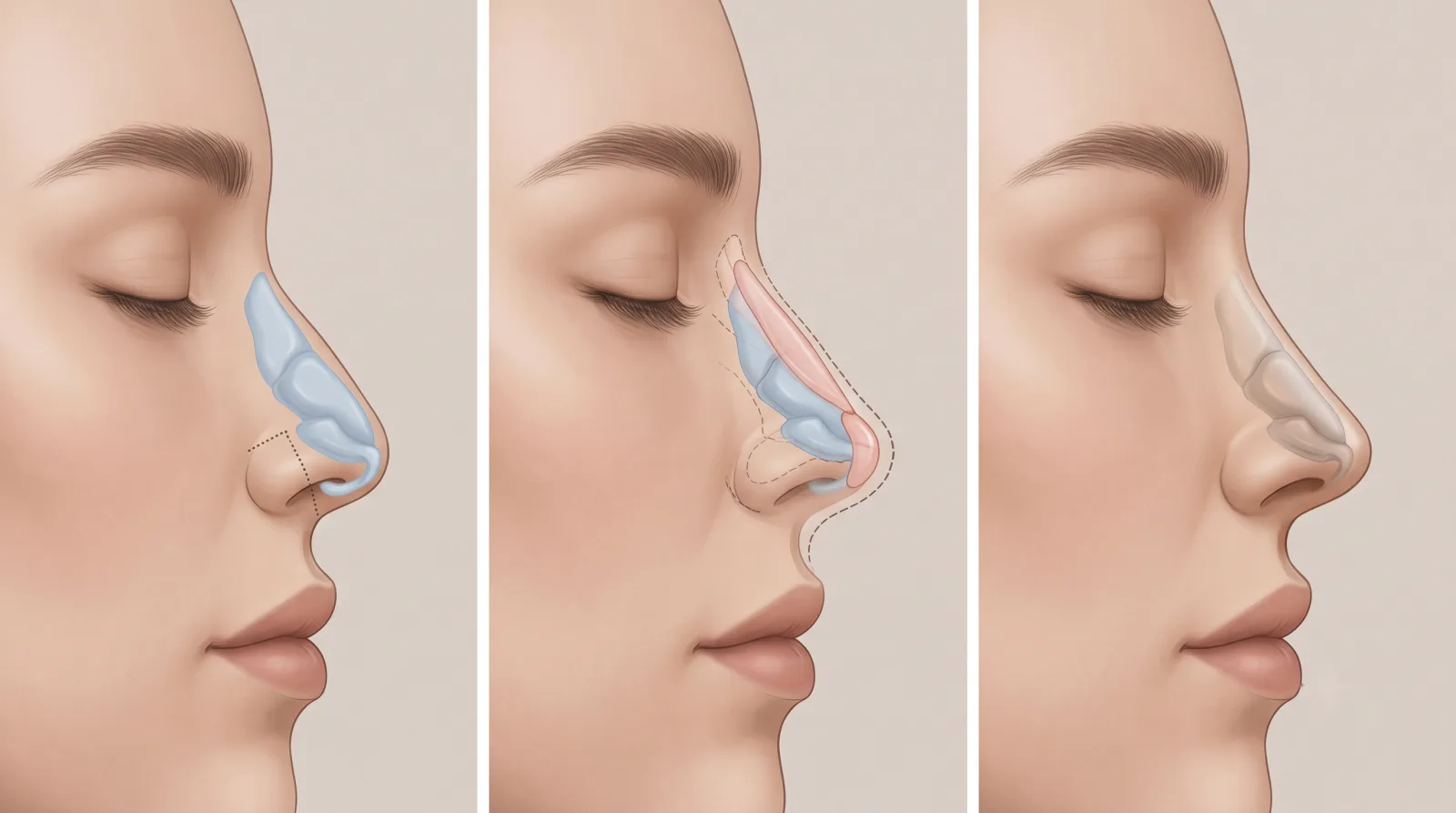
Illustration: the nasal framework (blue) is reshaped to raise the bridge and refine the tip. The dashed outline shows the original contour.
A droopy tip is a different problem. Here the tip points downward (the angle between the lip and the base of the nose is more acute), and it can drop further when you smile, because the muscles pulling the tip down are active. A droopy tip can make the nose look longer and, in profile, can create the impression of a small hump even when the bridge is normal.
The two often overlap. Many patients describe a tip that is both round and low, and a careful assessment separates how much is cartilage shape, how much is tip position, and how much is skin, because each is addressed differently. This is why a rhinoplasty consultation starts with examining the cartilage and skin, with photos used only as a guide.
Procedures
Which Garnet procedures address the tip
Refining the tip is done as part of rhinoplasty, and the specific technique depends on what your tip needs. For many bulbous or droopy tips the answer is tip plasty: reshaping the lower cartilages, narrowing and re-suturing them, and adding a small cartilage graft to project and support the tip so it sits higher and looks more defined. The bridge may be left untouched if it is already balanced.
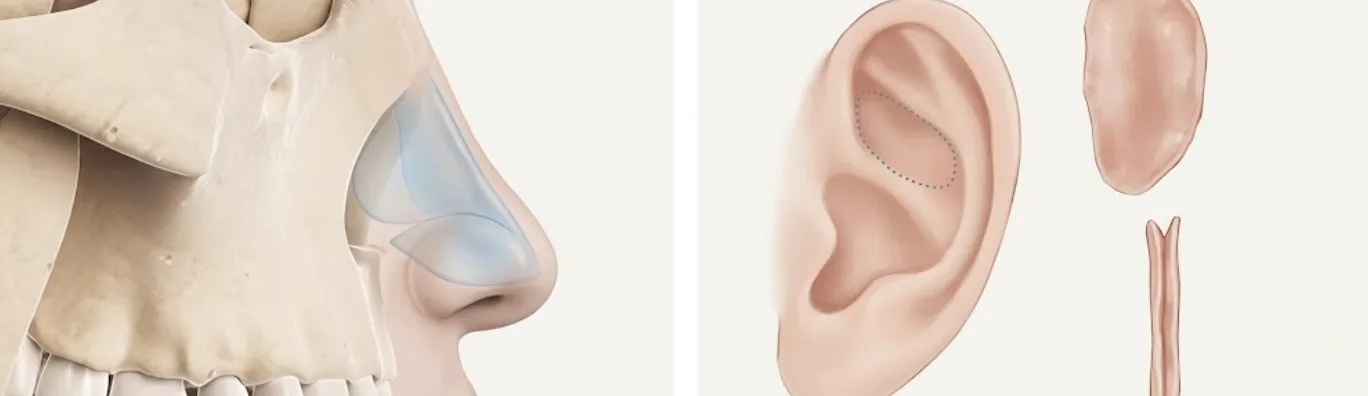
Illustration: two common sources of the patient's own cartilage: the septum inside the nose (blue) and the curved cartilage of the ear.
When the tip needs meaningful projection or a droopy tip needs to be lifted and held, the surgeon usually reaches for the patient's own cartilage. At Garnet this is most often septal or ear-cartilage rhinoplasty, which uses cartilage from the nasal septum or the ear to build a stable framework at the tip. Using your own tissue avoids relying on an implant for the part of the nose that moves and is felt the most.
These are not competing options so much as a spectrum. A mild bulbous tip may need only suture reshaping; a firm, thick-skinned or droopy tip usually needs cartilage support to hold its shape. The right combination is chosen for your nose, and the same surgeon who plans it performs it. There is no separate 'consultation doctor'.
Cartilage
Why cartilage matters for a lasting result
The tip is under constant, gentle load from skin tension, from smiling, and from the natural pull of the tissues. Reshaping cartilage with sutures alone can refine a tip, but a tip that is being projected or lifted usually needs a graft to act as a strut or a cap, so it does not settle back toward its old shape as swelling resolves and scar tissue matures.
Septal cartilage, taken from inside the nose, is straight and firm and is often the first choice for a supporting graft. Ear (conchal) cartilage is slightly curved and is useful for softening and defining the surface of the tip. In septal/ear-cartilage rhinoplasty the ear donor site is closed with sutures removed at about ten days, and nasal sutures at about seven; the ear heals with a small hidden scar behind or within the fold.
For most first-time tip work, septal and ear cartilage supply enough material. Larger reconstructions occasionally need rib cartilage, but that is a bigger operation and is only recommended when the tip genuinely requires it. Working out how much support your tip needs is part of the consultation.
Deciding
How to decide which approach is right
The decision starts with your goal and the anatomy of your tip. The procedure name comes later. If your concern is purely a round tip with reasonable skin, suture-based tip plasty within a rhinoplasty may be enough. If the tip is droopy, under-projected, or your skin is thick, cartilage grafting is usually part of a durable plan, which is where septal or ear cartilage comes in.
It also matters whether you are happy with the bridge. Some patients want only the tip changed; others find that a small bridge adjustment balances a refined tip better. A good consultation shows you both, and says so when a smaller operation suits you better than a larger one. Only the area you came for is addressed.
If you have had rhinoplasty before and the tip is still bulbous, droopy or has drifted, that is a different conversation about revision surgery. It is planned with your previous operation in mind.
Expectations
Realistic expectations for a tip result
Tip surgery improves shape and position; it does not turn one nose into a completely different nose, and thick skin in particular limits how sharply a tip can be defined. A realistic aim is a tip that looks refined and natural in proportion to your face. A dramatically pinched shape would look out of place and can age poorly.
The tip is also the slowest part of the nose to settle. Sutures come out at around seven days and you will look presentable within a couple of weeks, but tip swelling can take several months, sometimes up to a year, to fully resolve, especially with thicker skin. The early result looks fuller than the final one. This is normal and expected.
Because the same surgeon reviews you at set follow-ups, changes in the tip are tracked over time and not judged too early. Structured reviews at 1, 3 and 6 months mean questions about swelling and shape are answered by the person who operated on you, including by messenger after you return home.
Consultation
Planning your tip surgery from abroad
You can get a first read on your tip before you travel. Send clear photos from the front, side and a three-quarter view, plus a smiling photo if your concern is a droopy tip, and the surgeon can give an initial view on whether suture reshaping or cartilage grafting is likely and what is realistic for your skin. There is no consultation or CT fee and no pressure to book on the day.
Garnet is a single-surgeon clinic in Apgujeong, Seoul, and is registered with Korea's foreign-patient programme. Dr. In-Soo Baek, a board-certified plastic surgeon (Korean medical licence no. 77407), consults, performs the surgery and reviews your recovery himself. You can start with a no-obligation online assessment and bring your questions to a full in-person examination when you arrive.
Real Results
Before & After
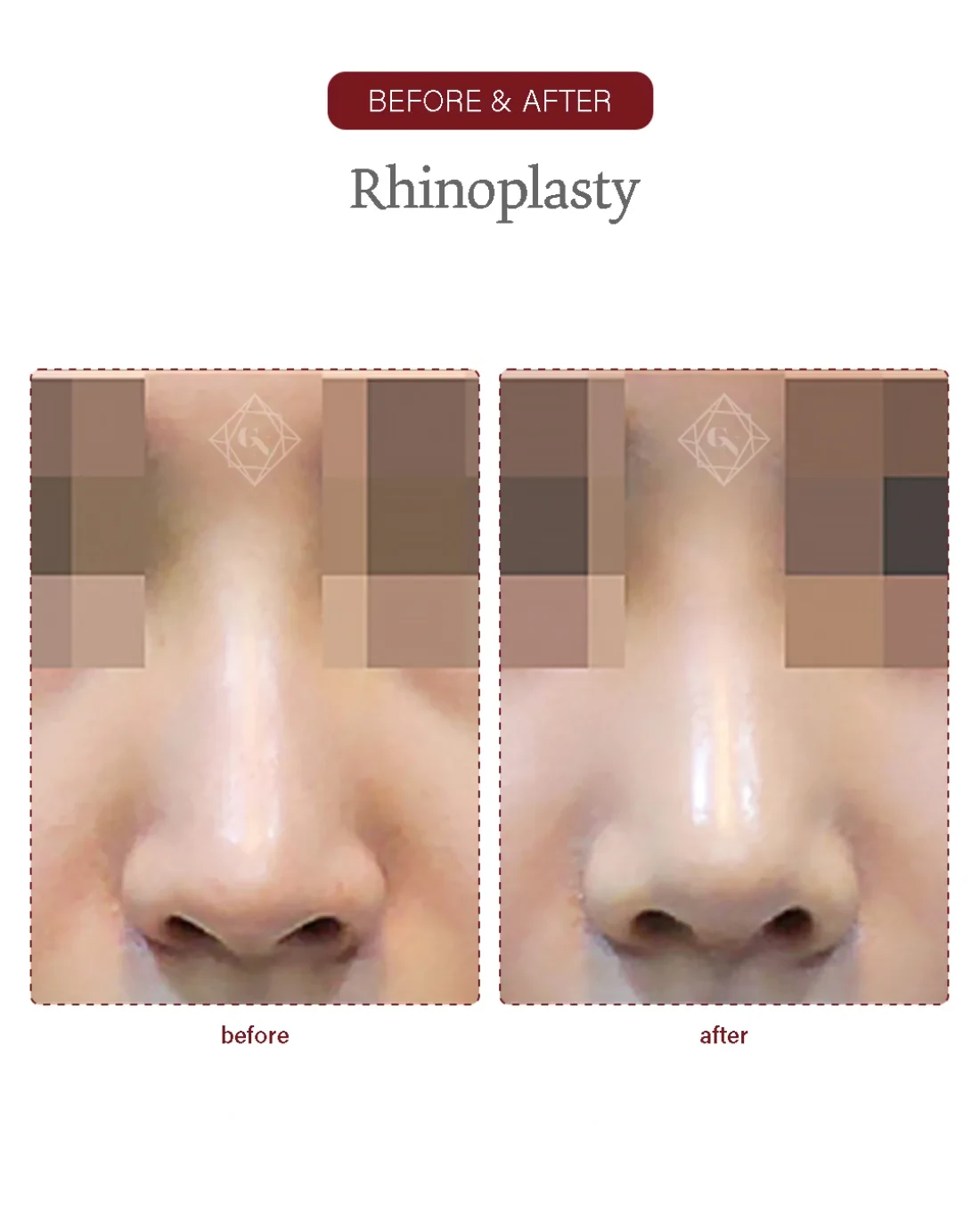
Rhinoplasty result of an actual Garnet patient (published with consent). Date, procedure and clinic (Garnet Plastic Surgery, Apgujeong) are labelled on the image, with the usual same-condition disclaimer. Results, recovery and suitability vary by individual and are not guaranteed.
Dr. In-Soo Baek
Director & sole operating surgeon
Korean medical licence no. 77407
Operate on what you came for. Trained at Korea University Medical Center. Every case planned, performed and reviewed by the same hands.
1Operating surgeon
~2Surgeries per day
7Registered techniques
Board-certified plastic surgeon
Plastic surgery training at Korea University College of Medicine & graduate school
Korean Society of Plastic and Reconstructive Surgeons member, in its facial-contour, eye & rhinoplasty groups
Consults, operates and follows up each case himself
Peer-reviewed papers behind the facts on this page. Each describes findings in its own study group — not results at Garnet — and none predicts your own outcome.
Frederick JW et al. Asian Augmentation Rhinoplasty. Facial Plastic Surgery. 2025. doi:10.1055/a-2595-5275
Frederick JW et al. Asian Male Blepharoplasty and Rhinoplasty. Facial Plastic Surgery Clinics of North America. 2024. doi:10.1016/j.fsc.2024.03.005
Wei J et al. Revision Rhinoplasty in Asians. Clinics in Plastic Surgery. 2023. doi:10.1016/j.cps.2022.08.004
FAQ
Common questions
How is a bulbous nose tip refined?
A bulbous tip is refined by reshaping the lower cartilages that form it: narrowing and re-suturing them, and often adding a small cartilage graft to give the tip definition and support. Because the cartilage is reshaped and supported, the tip holds its new shape. Thick skin can limit how sharp the result looks, and the surgeon explains this for your skin beforehand.
Can a droopy nose tip be lifted?
Yes. A droopy tip is lifted by rotating and supporting the tip cartilages, usually with a cartilage graft acting as a strut so the tip stays up and does not settle back down. If the tip drops when you smile, that is assessed too, because active muscles can be part of the cause. The lift aims for a natural angle and avoids an over-rotated look.
What cartilage is used to support the tip?
Most tip work uses the patient's own septal cartilage, taken from inside the nose, which is straight and firm; ear (conchal) cartilage is often added to define the surface. Both avoid relying on an implant at the tip. Larger cases occasionally need rib cartilage, but that is only recommended when the tip genuinely requires it.
Is tip plasty the same as full rhinoplasty?
Not necessarily. Tip plasty focuses on reshaping the tip and can be done without changing the bridge, as part of a rhinoplasty. Some patients need only the tip addressed; others find a small bridge adjustment balances the result. Which you need depends on your nose and your goals, and on how the tip and bridge look together on examination.
Will refining my tip make my nose look smaller?
Refining a droopy or bulbous tip often makes the nose look shorter, straighter and more balanced, even when little material is removed, because tip position strongly affects how the whole nose reads. The aim is a tip in proportion to your face. The smallest possible tip can look unnatural and age poorly.
Why does my tip stay swollen after nose surgery?
The tip is the slowest part of the nose to settle. Sutures come out around seven days and you look presentable within a couple of weeks, but tip swelling can take several months, sometimes up to a year, to fully resolve, especially with thicker skin. The early tip looks fuller than the final one, which is normal.
Do I need cartilage from my ear or rib for a tip?
For most first-time tips, septal and ear cartilage supply enough support. In septal/ear-cartilage rhinoplasty the ear donor site is closed with a small hidden scar and sutures removed at about ten days. Rib cartilage is reserved for larger reconstructions.
My previous rhinoplasty left a bulbous or droopy tip — what now?
If a tip is still bulbous, droopy or has drifted after previous surgery, that is planned as revision, taking your earlier operation and any scarring into account. The best first step is an assessment of what is causing the current shape before deciding on any further surgery.
Can the surgeon assess my tip from photos before I travel?
Yes, as a starting point. Clear front, side and three-quarter photos, plus a smiling photo for a droopy tip, let the surgeon give an initial view on whether suture reshaping or cartilage grafting is likely and what is realistic for your skin. A full in-person examination confirms the plan when you arrive.
Who performs the surgery at Garnet?
Dr. In-Soo Baek, a board-certified plastic surgeon, performs the operation himself. As a single-surgeon clinic, the same surgeon who consults with you plans and performs your surgery and reviews your recovery at 1, 3 and 6 months. There is no separate operating doctor.
My mom recently had a brow lift and lower blepharoplasty with Dr. Baek, and our experience has been wonderful so far. The Garnet team was incredibly kind and welcoming, with Kelly assisting us as our English consultant—she made everything…
I’m so happy I chose this clinic for my lower blepharoplasty. I was traveling from abroad by myself, so I was a little nervous, but from the beginning I felt comfortable and truly cared for. Everyone was kind, patient, and professional…
Came in for an in-person consult and ended up choosing Garnet and Dr.Baek for my non-incisional DES and tiplasty/alarplasty. I communicated with Kelly (English consultant) from the start till now (3 weeks post-op). She really help me feel…
My under-eyes have been sagging and folding for years... I tried to cover it up with makeup, but it actually got stuck in the wrinkles and made it stand out even more. While going for consultations, I noticed that the bigger the hospital…
Unsure whether your tip needs cartilage support or simple reshaping? Send photos of your nose for a no-obligation pre-assessment before you plan a trip.
Send photos and your question before you travel. An English-speaking coordinator reviews every enquiry and replies with guidance on whether tip surgery is appropriate for your nose, the likely plan and timing.
✓ Reviewed by the clinic coordinator, not a bot
✓ Photo-based pre-assessment before you fly
✓ Foreign-patient scheduling & after-care
✓ One surgeon for consultation, surgery and follow-up
Prefer to chat now? Reach the coordinator directly:








 T S7 months ago



