My mom recently had a brow lift and lower blepharoplasty with Dr. Baek, and our experience has been wonderful so far. The Garnet team was incredibly kind and welcoming, with Kelly assisting us as our English consultant—she made everything…
Revision rhinoplasty: the bottom line
Revision rhinoplasty corrects a nose after a previous operation, rebuilding support with the graft material each case needs; no single default material is used. One board-certified plastic surgeon, Dr. In-Soo Baek, reviews your earlier surgery, performs the revision and sees you at every follow-up.
- What it is
- A corrective nose operation after previous rhinoplasty, usually through an open approach, that releases scar tissue and rebuilds the framework with the graft material the individual nose requires.
- Best for
- A nose left over-reduced, deviated, contracted, breathing-impaired or unhappy after one or more earlier operations, with a wish to address both shape and function.
- Who performs it
- Dr. In-Soo Baek, Garnet's sole operating doctor and a board-certified plastic surgeon, performs every revision himself. He also consults and follows up.
- Downtime
- Sutures come out from about 7 to 14 days depending on the donor site; most social downtime is over by roughly 2–3 weeks; the tip settles over several months.
- Material
- Chosen per case: septal & ear cartilage, autologous or donor rib, temporalis fascia, or hip dermis, matched to how much support is missing.
- How to start
- Send photos and your surgical history through WhatsApp or the form below for a no-obligation pre-assessment before you travel.

Is a revision right for your nose?
Shape, deviation or breathing trouble after surgery
- An unsatisfactory shape, deviation, contraction or breathing problem after a previous rhinoplasty
- Realistic, discussed expectations and an understanding that a revision rebuilds and does not perfect
- Tissue that has settled sufficiently since the last operation, assessed individually
- Good general health, and time to plan around ~2–3 weeks of social downtime after the revision
- Willingness to accept a donor-site incision where extra graft material is required
A nose still healing from recent surgery
- A nose still healing soon after recent surgery (timing is assessed individually)
- Looking for a same-week, no-downtime correction
- Uncontrolled medical conditions — assessed individually at consultation
- Expecting a guaranteed identical match to a reference photo
- Active smoking, which raises wound-healing and skin risk and is discussed and planned around

Dr. In-Soo Baek
Operate on what you came for. Trained at Korea University Medical Center. Every case planned, performed and reviewed by the same hands.
- Board-certified plastic surgeon
- Trained at Korea University College of Medicine & graduate school (plastic surgery)
- Member of the Korean Society of Plastic and Reconstructive Surgeons (facial-contour, eye & rhinoplasty groups)
- Every revision planned, performed and followed up by the same surgeon
Before & After
Revision rhinoplasty results are highly individual and depend on the previous surgery, so before/after sets are shown privately, with consent, and are not published here. Results, recovery and suitability vary by individual and are not guaranteed.
Request before & after examples privatelyRebuilding a nose that has been operated on before
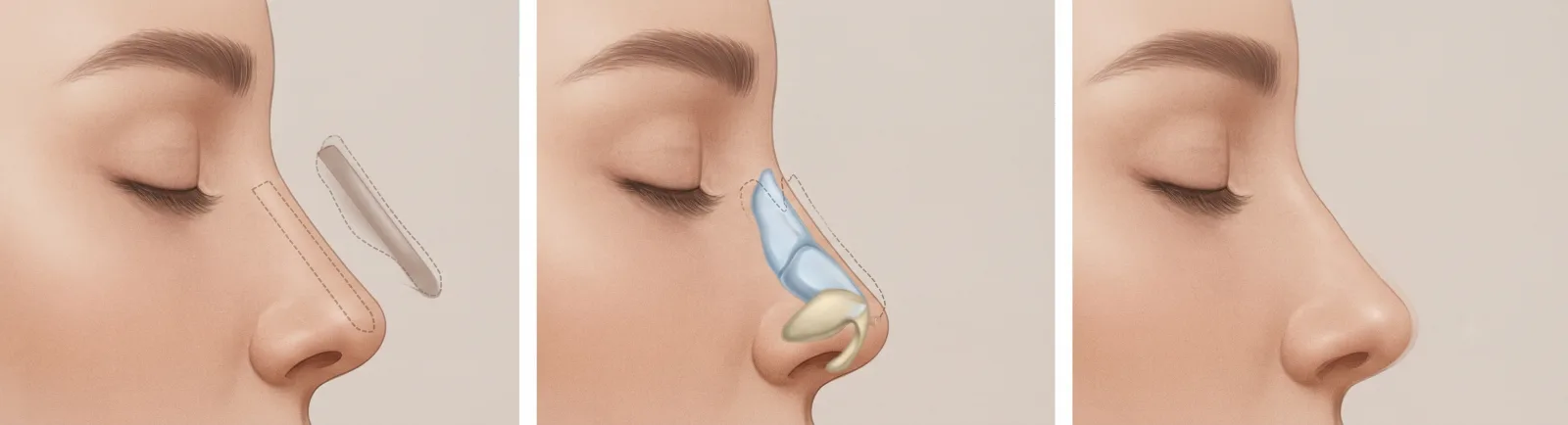
Revision rhinoplasty is a corrective nose operation carried out after one or more previous rhinoplasties, in which scar tissue is released and the nasal framework is rebuilt with grafting material — commonly septal, ear or rib cartilage, with fascia or dermis where soft-tissue coverage is needed. Because the original anatomy and cartilage have already been altered, it is generally more demanding than a first-time operation and is usually approached openly for direct control.
A nose can need revision for several reasons: it may have been over-reduced and left weak, it may have deviated or contracted as it healed, the tip may have lost projection or definition, or breathing may have worsened. The previous surgery has usually used or removed the most convenient cartilage, so the central question of any revision is not only what shape to build but what material is left to build it from.
Garnet's approach is to diagnose the specific problem first, then match the graft to it. Where the septum still has usable cartilage and only modest support is missing, septal and ear (conchal) cartilage can be enough; where the framework has to be substantially rebuilt, rib cartilage provides the volume and strength a depleted nose no longer has. Soft-tissue irregularity is smoothed with temporalis fascia, and contracted skin is sometimes relined with dermis.
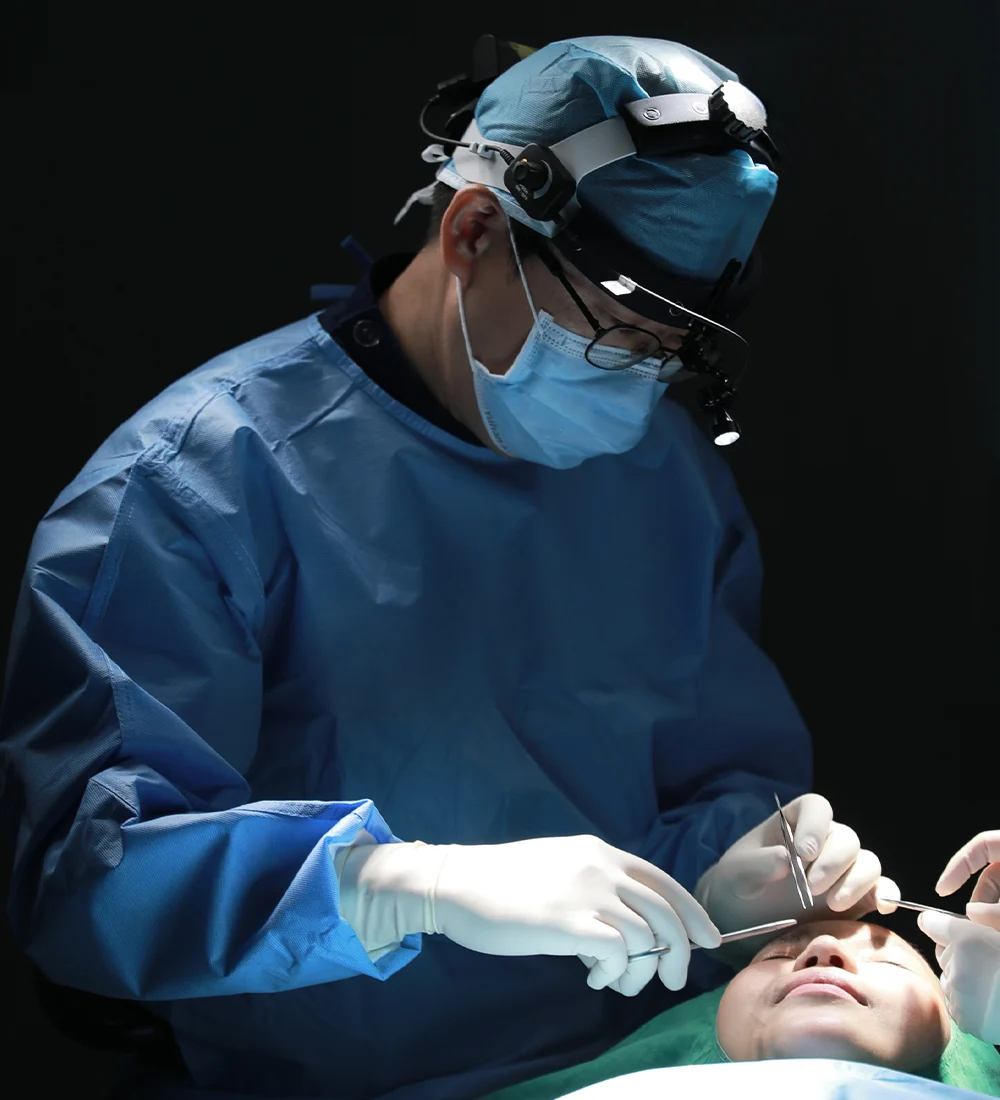
At Garnet this is a single-surgeon operation. Dr. Baek reviews the history and any records, plans the case, performs it himself and follows the healing at set intervals; the clinic caps the day at two surgeries so a long revision has unhurried time. The stated aim is to correct the concern you arrived with and to protect the airway. Chasing the maximum possible change is not the goal.
One surgeon for the whole revision
From history review to scar release, framework rebuild and donor-site closure, every step is done by Dr. Baek.
A single surgeon, start to finish. Dr. Baek plans the revision, performs it himself and sees every follow-up. With no more than two operations booked in a day, a scar release and rebuild is never rushed.
A revision is generally longer than a primary rhinoplasty because scar must be released before anything is rebuilt; the operating time depends on how much reconstruction and which donor site the plan needs. The anaesthesia team reviews your history and agrees the anaesthesia with you; it is not fixed in advance. The six steps below follow a revision from planning to the day-3 dressing.

History & planning
Dr. Baek reviews your previous operations, any operative records and current breathing, examines the nose and skin in person, and agrees what is realistic and which graft material the case needs. Imaging is used where it adds something.
Open approach & scar release
Most revisions use an open approach through a small columellar incision for direct view. Scar tissue is carefully released so the true remaining framework can be assessed before rebuilding.
Graft harvest
The chosen material is taken: septal & ear cartilage for moderate needs, rib cartilage for major rebuilding, temporalis fascia for smoothing, or hip dermis for relining a tight envelope.
Restoring support lost in earlier surgery
Support is reconstructed where it was lost (dorsum, septal extension, tip projection and rotation) using the harvested grafts, so the result rests on a rebuilt structure and not on tension.
Coverage & closure
Fascia smooths any contour seen through thin skin; incisions on the nose and at the donor site are closed; a splint and dressing are applied. A breathing-first mindset guides the rebuild.
Early dressing changes by the operating surgeon
Garnet's protocol includes dressing changes on day 1 and day 3. With one surgeon on the case, Dr. Baek checks the rebuilt nose himself before you settle in and at each follow-up.
Why a second operation is harder
After a first rhinoplasty the nose is no longer a clean anatomical field. Scar tissue replaces the natural glide planes, the skin envelope can be thinned or contracted, and the supporting cartilages (septal, alar and any earlier grafts) may be weakened, displaced or already harvested. These changes are why a revision is generally a longer, more technically demanding operation than a primary one, and why the surgeon must plan around what tissue actually remains (Maxillofac Plast Reconstr Surg 2024; DOI 10.1186/s40902-024-00422-z).
Because septal cartilage is often depleted by the first operation, revision typically draws on other autologous sources. Ear (conchal) cartilage suits tip and alar work; rib (costal) cartilage rebuilds dorsum and structural support; temporalis fascia camouflages thin-skin irregularity; and dermis from the hip can reline a tight envelope. Each donor site adds its own small incision and its own suture-removal timing, which is why a revision plan is described by both the nose and the donor site it borrows from.
Primary vs revision rhinoplasty
| Primary rhinoplasty | Revision (septum usable) | Revision (cartilage depleted) | |
|---|---|---|---|
| Starting point | Untouched anatomy | Scarred but workable framework | Heavily scarred, multiple prior operations |
| Cartilage available | Septum usually intact | Septal / ear cartilage still usable | Depleted; rib or dermis needed |
| Approach | Closed or open per case | Open for direct control | Open with structural rib grafting |
| Complexity | Standard | Higher than primary | Highest; framework is rebuilt |
| Typical goal | Reshape | Correct a specific prior issue | Rebuild support & protect the airway |
A systematic review of autologous costal cartilage rhinoplasty reports recipient-site warping at about 5% and infection at about 2.5% (Aesthet Surg J 2015, DOI 10.1093/asj/sju117), which is part of why material is matched to the case. Which source suits your nose is individual, and Dr. Baek advises at consultation.
Safety in a revision rhinoplasty
Anaesthesia
The anaesthesia for a revision is chosen with you and the anaesthesia team to suit the length of the rebuild and your medical history, which is reviewed beforehand.
A long secondary operation, unhurried
Because Garnet caps the day at two surgeries, a long revision is unhurried and the same surgeon who planned the case carries it out and reviews recovery. No second operating doctor steps in, and care never rotates.
Coordinator help before you travel for surgery
Garnet is registered with Korea's foreign-patient programme, and an English-speaking coordinator arranges your pre-operative checks, revision date and after-care.
Readiness assessment
If a revision is not yet appropriate, for instance because the tissue needs longer to settle after the last operation, you are told so at the consultation. Photos and records can be reviewed before you travel.
Where revision incisions sit
A revision is usually open, so there is a small incision across the columella (the strip of skin between the nostrils) together with hidden incisions inside the nostrils. The columellar scar is designed to fall in a natural shadow and is not generally obvious once mature. Any donor site adds its own small, concealed scar — behind the ear for conchal cartilage, in the chest crease for rib, or at the hip for dermis.
Scars are permanent but are placed where they hide and are reviewed by Dr. Baek at the 1-, 3- and 6-month visits, with scar-care advice. Healing varies by individual and by skin type, and revision skin that has already been operated on can behave differently from first-time skin; Dr. Baek goes through this with you in person.

Revision rhinoplasty price
Same price as Korean patients. Prices shown exclude 10% VAT; your written quote, issued after the in-person consultation, shows the full amount payable.
Week by week
Do
Keep the head elevated, attend the day-1 and day-3 dressing changes, take medication as prescribed, sleep on your back, protect the splint, and keep your follow-up visits.
Avoid
Bumping or pressing the nose, glasses resting on the bridge early on, strenuous exercise and bending, alcohol and smoking, very hot showers/saunas, and direct sun on healing scars until cleared.
How long does a revised nose last?
Once a revised nose has fully healed, an autologous-cartilage framework is intended to give durable, lasting support because it rebuilds structure and relies on neither the skin nor an implant. With cartilage grafts the main longer-term considerations are subtle warping or resorption, which the choice and handling of material are planned to limit (Aesthet Surg J 2015; DOI 10.1093/asj/sju117).
Individual longevity depends on tissue quality, the extent of the previous surgery, and how the nose is protected during healing. Garnet's approach is to rebuild conservatively and protect the airway, since a result that was never over-tightened or over-reduced tends to age more predictably. Further small refinements are occasionally discussed if healing leaves a minor irregularity.
Often planned with a revision
Moderate fixes without a chest incision
For moderate revisions, septal and ear (conchal) cartilage can supply tip support and definition without a chest incision.
Major rebuilding of a depleted nose
Where major rebuilding is needed, rib (costal) cartilage provides the volume and strength a depleted nose no longer has.
Fixing breathing in the same sitting
Septal correction or work on the internal valve is addressed in the same sitting where breathing has been affected, so shape and airway are treated together.
Smoothing contour under thin, contracted skin
Temporalis fascia is used to smooth contour seen through thin skin, and dermis can reline a tight, contracted envelope where indicated.

Revision rhinoplasty risks
Every operation carries risk, and a revision adds the difficulties of operating in scarred tissue. These are explained individually at consultation.
Graft-related issues
With autologous cartilage the recognised graft-related issues include warping, partial resorption, displacement and, less commonly, infection. Material choice and handling are planned to reduce these. A systematic review of costal cartilage rhinoplasty reported warping in about 5% and infection in about 2.5% of cases (Aesthet Surg J 2015; DOI 10.1093/asj/sju117).
Persistent unevenness or new breathing issues
Asymmetry and contour irregularity.
Breathing
Persistent or new breathing difficulty.
Tip swelling
Prolonged tip swelling.
Scars
Scar-related issues.
Donor site
Donor-site discomfort (behind the ear, at the chest, or at the hip).
Revision skin
Thin or previously contracted revision skin can heal less predictably.
Smoking
Smoking raises wound-healing risk.
What reduces risk in practice: careful diagnosis of what actually remains, matching the graft to the defect, meticulous open-approach technique, a breathing-first mindset, and follow-up by the operating surgeon. Garnet keeps its operating list short and its surgeon constant so that a revision gets this kind of unhurried planning and personal after-care.
Planning a revision from abroad
Most international patients plan roughly 10–14 days in Korea for a revision rhinoplasty, so the splint and the nose and donor-site sutures can be removed by the surgeon before travel. The longest timing belongs to a hip-dermis donor site, at about 14 days. The coordinator confirms the schedule for your specific plan.
Before you travel, send clear photos (front, three-quarter, side and base), a note on your previous surgery and any operative records, and your dates through WhatsApp, LINE or the form below. You'll get a pre-assessment that includes whether the tissue is ready for revision, with no hard sell.
Being registered with Korea's foreign-patient programme, Garnet arranges your revision consultation, surgery dates and after-care in English. Once you are home, Dr. Baek can keep checking how the nose is healing by messenger.
Sources
- Varadharajan K, Sethukumar P, Anwar M, Patel K. Complications Associated With the Use of Autologous Costal Cartilage in Rhinoplasty: A Systematic Review. Aesthet Surg J. 2015. DOI 10.1093/asj/sju117. link
- Kim JH, et al. Enhanced revision rhinoplasty with processed costal cartilage guided by preoperative computed tomography and 3D scanning. Maxillofac Plast Reconstr Surg. 2024. DOI 10.1186/s40902-024-00422-z. link
- Wee JH, et al. Indications, Techniques, and Postoperative Outcomes of Temporalis Fascia Grafting in Rhinoplasty. J Craniofac Surg. 2022. DOI 10.1097/SCS.0000000000008566. link
- Wee JH, et al. Donor site morbidities resulting from conchal cartilage harvesting in rhinoplasty. Arch Facial Plast Surg. 2007. DOI 10.1001/archfaci.9.4.298. link
Citations are provided for general education. This page is informational and does not replace an in-person consultation; suitability, technique and recovery are individual.
Questions about revision rhinoplasty
| Primary rhinoplasty | Revision (septum usable) | Revision (cartilage depleted) | |
|---|---|---|---|
| Starting point | Untouched anatomy | Scarred but workable framework | Heavily scarred, multiple prior operations |
| Cartilage available | Septum usually intact | Septal / ear cartilage still usable | Depleted; rib or dermis needed |
| Approach | Closed or open per case | Open for direct control | Open with structural rib grafting |
| Complexity | Standard | Higher than primary | Highest; framework is rebuilt |
| Typical goal | Reshape | Correct a specific prior issue | Rebuild support & protect the airway |
Reviews on Google Maps
I’m so happy I chose this clinic for my lower blepharoplasty. I was traveling from abroad by myself, so I was a little nervous, but from the beginning I felt comfortable and truly cared for. Everyone was kind, patient, and professional…
Came in for an in-person consult and ended up choosing Garnet and Dr.Baek for my non-incisional DES and tiplasty/alarplasty. I communicated with Kelly (English consultant) from the start till now (3 weeks post-op). She really help me feel…
My under-eyes have been sagging and folding for years... I tried to cover it up with makeup, but it actually got stuck in the wrinkles and made it stand out even more. While going for consultations, I noticed that the bigger the hospital…
Ask Dr. Baek’s team
Send photos and your question before you travel. An English-speaking coordinator reviews every enquiry and replies with plain guidance on whether a revision is appropriate for your nose, the likely plan and timing.
- ✓ Reviewed by the clinic coordinator, not a bot
- ✓ Photo-based pre-assessment before you fly
- ✓ Foreign-patient scheduling & after-care
- ✓ One surgeon for consultation, surgery and follow-up
Prefer to chat now? Reach the coordinator directly:
Request a consultation
Find the clinic
51 Apgujeong-ro 30-gil, Gangnam-gu, Seoul — near Apgujeong Station