Garnet · Apgujeong, Seoul · English coordinator · WhatsApp · LINE · Email
Garnet clinic, Apgujeong
Garnet/Facial Lifting/Deep mini facelift™

Facial Lifting · Apgujeong, Seoul

Deep mini facelift™ in Korea — the deep-plane principle

Dr. In-Soo Baek
Dr. In-Soo BaekConsults, operates and follows up himself
2,000+facial lifts since 2011
Sub-SMASthrough a short scar
~10 dayssutures out
1surgeon, every step
Anaesthesia
Local / sedation as appropriate
Surgery time
~2–3 hours
Sutures out
~10 days
Social downtime
~2 weeks
Follow-up
1 / 3 / 6 months
2,000+ facial lifts since 2011· Board-certified plastic surgeon; accredited member of the Korean Society of Plastic & Reconstructive Surgeons· Foreign-patient programme registered· Single-surgeon practice

Deep mini facelift™ at a glance

A Deep mini facelift releases and repositions the deeper layer of the face (the sub-SMAS plane) through a shorter incision than a full deep-plane lift. At Garnet one board-certified plastic surgeon, Dr. In-Soo Baek, examines your mid-face and jowls, operates and reviews you.

What it is
A short-scar facelift that works in the deeper sub-SMAS plane. It releases and repositions the deep layer the way a full deep-plane lift does, but through a shorter incision from the temporal hairline to the earlobe.
Best for
Earlier or more localised mid-face and jowl descent, where the deep layer needs repositioning but a full-length facelift would be more than the concern requires.
Who performs it
Dr. In-Soo Baek, a board-certified plastic surgeon, is the only doctor who operates at Garnet, and he handles the deep-mini consultation, surgery and aftercare himself.
Downtime
Sutures out at about 10 days; most social downtime over by roughly 2 weeks; the deeper result settles over the following months.
Longevity
Repositioning the deep layer is associated with durable structural support; published deep-plane data report a median of roughly 11 years before revision (Levin & Frankel, 2026).
How to start
Send photos of your cheeks, jowls and jawline by WhatsApp or the form below, and Dr. Baek's team will reply with a no-obligation pre-assessment before you travel.
Illustrated steps of a deep mini facelift at Garnet: short incision line around the ear, the deeper layer lifted, and the healed profile
Illustration: through a shorter incision around the ear (dotted), the deeper layer (yellow) is lifted using the deep-plane principle (Deep mini™). The last panel shows the healed profile.

Is a Deep mini facelift right for you?

Localised mid-face and jowl descent

  • Earlier or more localised mid-face and jowl descent where the deep layer needs repositioning
  • A wish for deep-plane results through a shorter scar than a full lift
  • General good health and realistic, discussed expectations
  • Can set aside ~2 weeks before social events and keep the deep-mini follow-up dates
  • Looking for a longer-lasting structural result than a superficial or thread lift

Whole-face descent or very early laxity

  • Advanced, whole-face descent, where a full deep-plane facelift may be more proportionate
  • Very early or skin-surface concerns, where a mini or non-surgical option may suit better
  • Looking for a same-week, no-downtime result
  • Uncontrolled medical conditions, which Dr. Baek weighs case by case
  • Smoking at present, since it slows healing of the skin flap around the ear and must be planned for
Dr. In-Soo Baek

Dr. In-Soo Baek

Director & sole operating surgeon
Korean medical licence no. 77407

Operate on what you came for. Trained at Korea University Medical Center. Every case planned, performed and reviewed by the same hands.

1Operating surgeon
~2Surgeries per day
7Registered techniques
  • Board-certified plastic surgeon
  • Korea University College of Medicine & graduate school (plastic surgery)
  • Member, Korean Society of Plastic and Reconstructive Surgeons (facial-contour, eye & rhinoplasty groups)
  • Carries each deep-mini case himself, from planning to the last review
About the surgeon →

Before & After

Because a face can be recognised, facelift before/after sets are shown privately at consultation. Results, recovery and suitability vary by individual and are not guaranteed.

Request before & after examples privately

Deep-plane work through a shorter route

A Deep mini facelift™ is a short-scar facial-rejuvenation operation that releases and repositions the deeper musculo-aponeurotic layer of the face (the sub-SMAS plane) through a limited incision running from the temporal hairline to the earlobe. It applies the same deep-plane principle as a full facelift, moving the deep tissue and skin together so tension sits on the deep layer, but over a shorter access suited to earlier or more localised change.

The changes people notice in an ageing mid-face (a flatter cheek, a deeper nasolabial fold, jowls forming at the jaw) come mostly from the deeper tissues dropping; loose skin is only a small part of it. A skin-only pull addresses a layer that was never the cause and tends to look tight and fade; working one layer down is what lets the cheek and jawline be repositioned where their support belongs.

A Deep mini facelift works in that deeper sub-SMAS plane, like a deep-plane facelift, but through a shorter incision. When the descent is earlier or confined to the mid-face and jowl, the full-length access of a complete deep-plane lift can be more than the concern needs, so the deeper release is carried out over a more limited route. That keeps the deep-plane benefit while reducing the scar and recovery footprint.

At Garnet this is a single-surgeon operation, and the technique is registered as Deep mini facelift™. Dr. Baek assesses whether the deep-mini approach fits your face or whether a full deep-plane lift would serve you better, then performs and reviews the case himself. Only two operations are booked on any day, so a deep-mini case is never hurried, and Dr. Baek sizes the lift to the mid-face and jowl change you have instead of doing more than it needs.

How Dr. Baek performs a Deep mini facelift

Dr. Baek carries out every step himself, from incision design to the sub-SMAS release and tension-free closure.

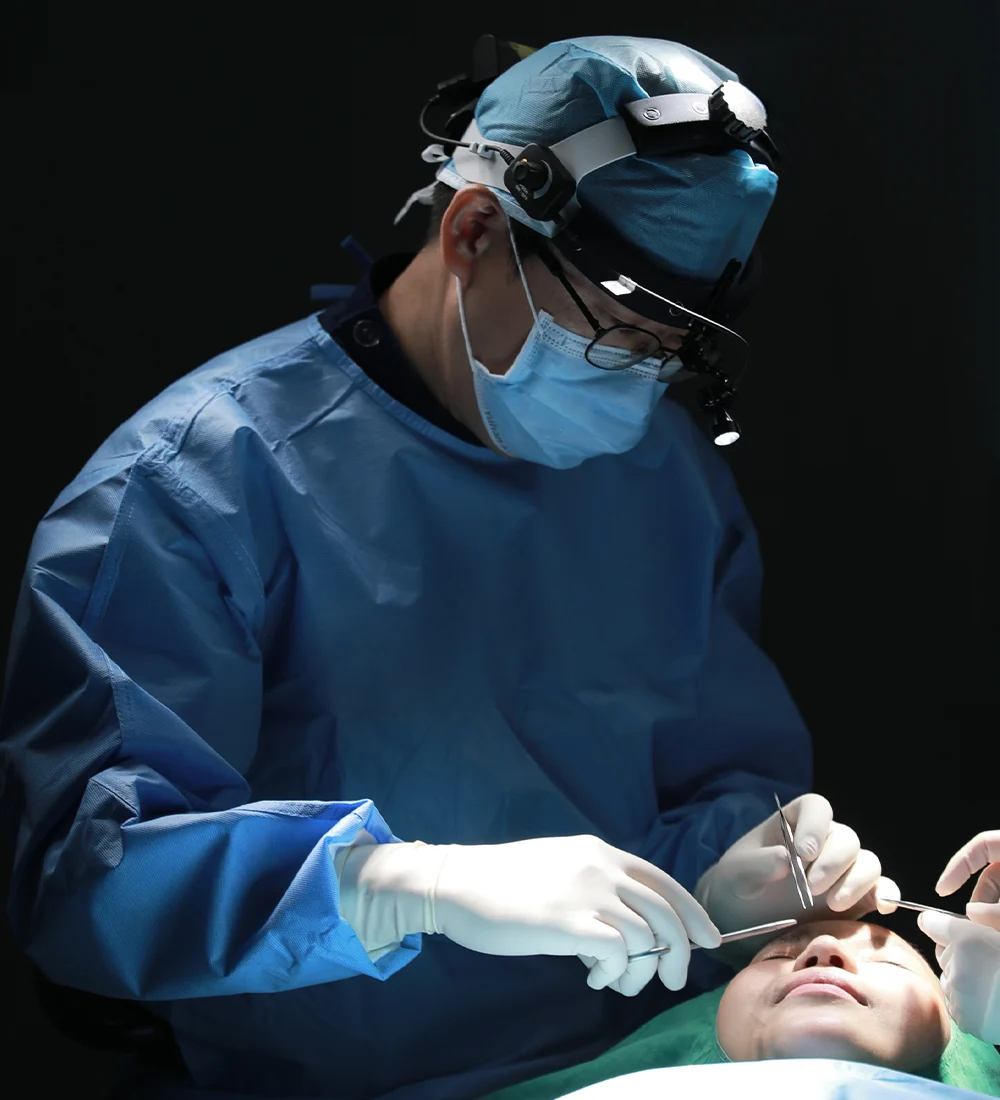
Dr. In-Soo Baek performing surgery at Garnet Plastic Surgery, Apgujeong

A single surgeon, start to finish. The surgeon who designs your short incision is the one who releases the sub-SMAS layer and checks the result at each visit. With no more than two operations a day, the 2–3 hour deep-mini procedure gets his full attention.

A Deep mini facelift typically runs about 2–3 hours and is performed under local anaesthesia with sedation or general anaesthesia as appropriate, decided with you after your history is reviewed. The steps below outline how the deep-plane work is carried out through the shorter approach at Garnet.


01

Gauging ligament laxity at cheek and jaw

Dr. Baek assesses the face in person (the degree of ligament laxity, the mid-face, jowl and jawline) and confirms whether a deep-mini approach fits or whether a full deep-plane lift suits you better, then agrees the plan and incision design with you.

02

A short line from temple hairline to earlobe

A short incision runs from the temporal hairline to the earlobe, following the natural creases around the ear, so it settles into existing contours and the hairline as it heals. The design is tailored to your hairline and ear anatomy.

03

Freeing the deep layer at the ligaments

Working in the deeper plane, the relevant retaining ligaments are divided and the SMAS is released so the deep layer and skin move together as one composite flap, concentrated where the earlier or localised descent sits.

04

Setting the deep layer along its own vector

The deep layer is repositioned along its natural vector and fixed; the skin is then re-draped and trimmed without tension, which helps avoid the over-tight look of a skin-only lift.

05

Adjuncts

Where the consultation shows it, a neck lift or fat grafting may be planned alongside; for more advanced, whole-face descent a full deep-plane facelift may be the better fit, and for very early change a mini facelift may suffice.

06

Fine closure and a look at the incision line

Fine closure, dressing and light compression. Before you go back to rest, Dr. Baek looks at the incision line by the ear himself, and he sees you again at every follow-up.

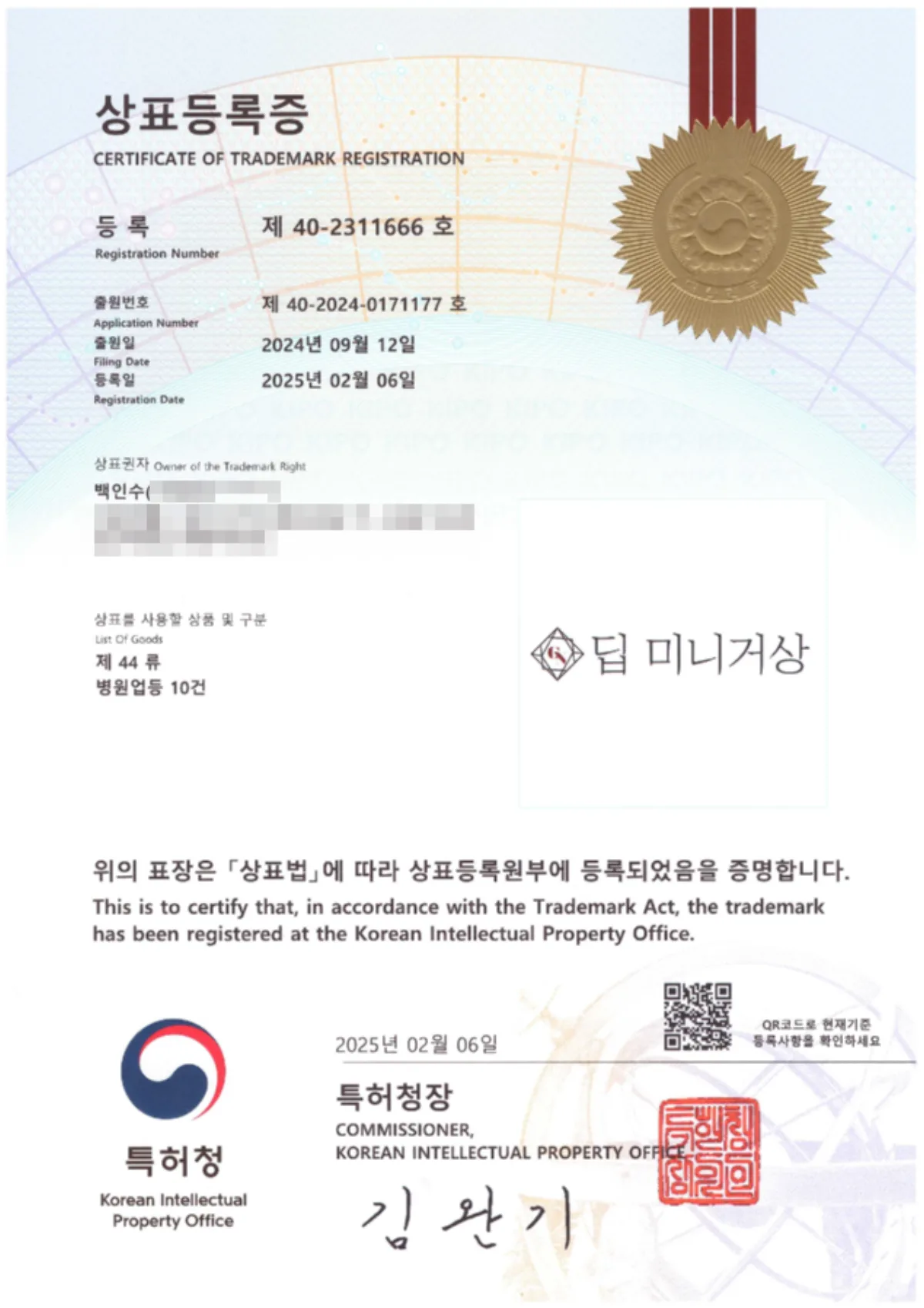
Deep mini facelift™ registered technique certificate

This technique is registered as Deep mini facelift™. The registration protects the name of the technique and makes no claim about outcomes; suitability and results are individual.

SMAS, ligaments & the deeper layer

Three structures explain why a deep-plane technique behaves differently from a skin or superficial lift: the SMAS sheet, the retaining ligaments, and the spaces between them. The retaining ligaments (zygomatic, masseteric and mandibular in particular) anchor the soft tissue to the facial skeleton, and their age-related laxity is a major contributor to sagging and jowling (Mendelson, Aesthetic Plast Surg 2013; DOI 10.1007/s00266-013-0066-8).

In a Deep mini facelift the dissection enters the natural space beneath the SMAS and releases the relevant ligaments so the deep layer and skin move together as one composite, then re-drapes the skin without tension, the same mechanism as a full deep-plane lift. The difference is the length of the access: the deep work is concentrated where the earlier or localised descent sits and is not extended across the whole face as in a complete deep-plane facelift.

Deep-mini vs full deep-plane vs mini facelift

Mini faceliftDeep mini facelift™Full deep-plane facelift
Layer addressedSuperficialSub-SMAS (deep), focusedSub-SMAS (deep), extended
Incision lengthShort, around the earHairline to earlobeHairline-to-ear-to-hairline
Ligament releaseLimitedTargeted releaseFull release
Best stageVery early / localisedEarly mid-face & jowlAdvanced, whole-face descent
Tension onSuperficial tissueDeep tissue (skin tension-free)Deep tissue (skin tension-free)

A systematic review and meta-analysis comparing the deeper techniques is published in Aesthetic Plast Surg 2025 (DOI 10.1007/s00266-025-05118-x). Whether a deep-mini, a full lift or a mini lift suits you depends on how far the descent has gone. Our guide deep-plane vs SMAS facelift covers the comparison, and Dr. Baek gives his view once he has seen your face.

Safety during a Deep mini facelift

Anaesthesia

A Deep mini facelift is usually performed under local anaesthesia with sedation, or general anaesthesia where preferred, chosen with you and the anaesthesia team for a roughly 2–3 hour operation. Your medical history is checked beforehand.

An unrushed day for the shorter lift

Garnet books at most two operations a day, so the deep-mini lift is not rushed. Dr. Baek plans it, performs it and follows your recovery; no other surgeon and no rotating team take part.

An English-speaking coordinator for the trip

Under its registration with Korea's foreign-patient programme, Garnet's English-speaking coordinator arranges your pre-operative tests, surgery date and aftercare visits.

Told plainly if a fuller or lighter lift fits

If a full deep-plane lift or a lighter option suits you better, Dr. Baek will tell you at the consultation. Photos can be reviewed before you travel.

Where the Deep mini facelift scar sits

The Deep mini facelift incision runs from the temporal hairline, follows the natural creases in front of and around the ear, and ends near the earlobe — shorter than a full deep-plane lift, which extends back into the hairline behind the ear. Because the skin is laid back without tension, the short scar has a better chance of healing fine and flat over time.

The scar is permanent, but it sits along the hairline and the folds in front of the ear, so once mature it rarely draws attention in daily life. Skin type and individual healing make a difference, and Dr. Baek checks the scar at 1, 3 and 6 months and tells you how to look after it.

Deep mini facelift price

Deep mini facelift

₩8,000,000 + VATExcluding VAT (10% VAT is added at payment)Book now

Same price as Korean patients. Prices shown exclude 10% VAT; your written quote, issued after the in-person consultation, shows the full amount payable.

Week by week

Days 1–3
Dressing and light compression. Swelling and bruising around the cheeks and ears rise and are at their worst within the first few days. Rest with your head propped up and use cold compresses as advised; the team checks the dressing before you return to your accommodation. Discomfort is usually manageable with prescribed medication.
Days 4–7
The puffiness along the jaw starts to go down and the bruises begin to fade. Gentle walking is encouraged. By day 7 most people feel far more like their usual selves.
Around day 10
Sutures are removed. Bruising fades further; residual swelling continues. Overseas patients usually stay in Seoul until then, so Dr. Baek can take out the stitches by the ear himself.
Around week 2
By now most people are comfortable being seen in daily settings, though some swelling and firmness in front of the ear are still fading. Office work and light routines come back as advised; hard workouts come later.
Months 1–6
The repositioned mid-face and jowl settle and the short scar matures over these months. Dr. Baek reviews the lift at 1, 3 and 6 months, in the clinic or over messenger after you fly home.

Do

Rest and sleep face-up with your head raised, cool the area early on, take medicines exactly as prescribed, take short easy walks, and come to each review.

Avoid

Until Dr. Baek clears you: hard exercise, bending, lifting heavy things, alcohol, smoking, saunas and very hot showers, and sun on the healing incision by the ear.

How long a Deep mini facelift lasts

No facelift stops ageing, but a deep-plane technique is associated with durable structural support because it repositions the deep layer and does not rely on the skin. In a 30-year series characterising deep-plane outcomes and longevity, patients waited a median of roughly 11 years before seeking a revision, with some going far longer (Levin & Frankel, Facial Plast Surg Aesthet Med 2026; DOI 10.1177/26893614261422044).

Because the Deep mini facelift concentrates the deep work where earlier or localised descent sits, its scope is intentionally less than a full deep-plane lift; individual longevity depends on tissue quality, lifestyle and how the face ages afterwards. Garnet plans the lift so it sits naturally from the start, since a result that was never over-pulled tends to age more gracefully.

What pairs with a Deep mini facelift

Neck lift

A Deep mini facelift and a neck lift are frequently planned together, since the jawline and neck age as one unit; platysma work addresses neck bands and refines the under-chin.

Fat grafting

Where the cheeks or temples have hollowed, fat grafting replaces volume that a deep-mini lift cannot add, so the face looks rested as well as lifted.

Full deep-plane option

Where the descent is advanced and whole-face, a full deep-plane facelift extends the same deep work over a longer access for greater reach.

Mini option

For very early or surface-level change, a mini facelift or a non-surgical option may be more proportionate; Dr. Baek judges this for each face.

Garnet Plastic Surgery, Apgujeong, Seoul

Deep mini facelift risks

Every operation carries risk. Dr. Baek goes through each of these with you.

  • Blood collecting under the cheek skin

    For facelift surgery the most reported early complication is haematoma (a collection of blood under the skin), with infection much less common; in a large analysis of 11,300 facelift patients, haematoma occurred in about 1.1% and infection in about 0.3% (Aesthetic Surg J 2016; DOI 10.1093/asj/sjv162).

  • Why raised blood pressure matters before a lift

    A recognised risk factor.

  • Numb or altered feeling across the cheek

    Temporary numbness or altered feeling in the cheek skin.

  • Asymmetry

    A deep-mini lift can bring asymmetry.

  • Scars

    Scar problems.

  • Facial nerve

    Uncommonly a facial-nerve branch is weakened, usually for a while and only rarely for good.

  • Smoking

    Raises wound-healing and skin risks.

In practice the risk of a deep-mini lift comes down with the right choice of patient, good blood-pressure control, careful technique, a skin closure without tension, and reviews by the surgeon who operated. A clinic with one surgeon and a short daily list is designed for that kind of careful planning and personal aftercare.

Planning a Deep mini facelift from abroad

Most international patients plan roughly 10–14 days in Korea for a Deep mini facelift, so the surgeon can remove the sutures before you fly and the early swelling has time to go down. The coordinator works out the exact dates with you.

Ahead of the trip, send front, three-quarter and side photos showing your mid-face and jowls, with a line about your concern and dates, by WhatsApp, LINE or the form below. The reply is a pre-assessment that says whether a deep-mini or a full lift fits, with no sales pressure.

Registered under Korea's foreign-patient programme, Garnet organises your consultation, operation date and aftercare in English. When you are back home, Dr. Baek keeps following your deep-mini recovery through photos sent by messenger.

Sources

  1. Levin M, Frankel A. Thirty Years of Deep Plane Facelifts: Characterizing Outcomes and Longevity. Facial Plast Surg Aesthet Med. 2026. DOI 10.1177/26893614261422044. link
  2. Deep Plane versus SMAS Facelift: A Systematic Review and Meta-Analysis. Aesthetic Plast Surg. 2025. DOI 10.1007/s00266-025-05118-x. link
  3. Mendelson BC, et al. Anatomic Study of the Retaining Ligaments of the Face and Applications for Facial Rejuvenation. Aesthetic Plast Surg. 2013. DOI 10.1007/s00266-013-0066-8. link
  4. Preoperative Risk Factors and Complication Rates in Facelift: Analysis of 11,300 Patients. Aesthetic Surg J. 2016. DOI 10.1093/asj/sjv162. link

Citations are provided for general education. This page is informational and does not replace an in-person consultation; suitability, technique and recovery are individual.

Questions about the Deep mini facelift

Will a Deep mini facelift look pulled or unnatural?
The deep-mini technique repositions the deeper layer and re-drapes the skin without tension, which is intended to avoid the over-tight look that can follow a skin-only pull. Dr. Baek agrees with you beforehand how much change to aim for.
What is the difference between a Deep mini facelift and a full facelift or a mini facelift?
A mini facelift works in the superficial layer through a short scar for very early change; a Deep mini facelift™ works in the deeper sub-SMAS plane, like a full deep-plane lift, but through a shorter hairline-to-earlobe incision for earlier mid-face and jowl descent; a full deep-plane facelift extends that same deep work across the whole face for advanced descent. So the deep-mini keeps the deep-plane mechanism while reducing the scar and recovery footprint. Which of the three suits you is an individual question, and the deeper techniques are compared in our guide.
Mini faceliftDeep mini facelift™Full deep-plane facelift
Layer addressedSuperficialSub-SMAS (deep), focusedSub-SMAS (deep), extended
Incision lengthShort, around the earHairline to earlobeHairline-to-ear-to-hairline
Ligament releaseLimitedTargeted releaseFull release
Best stageVery early / localisedEarly mid-face & jowlAdvanced, whole-face descent
Tension onSuperficial tissueDeep tissue (skin tension-free)Deep tissue (skin tension-free)
Does Dr. Baek perform the surgery himself?
Yes. Dr. Baek is the only surgeon at Garnet: he consults, performs the deep-mini lift and runs your follow-up visits, and no other doctor operates.
How long does a Deep mini facelift last?
Because it repositions the deep layer, a deep-plane technique is associated with durable support; published deep-plane data report a median of roughly 11 years before revision. Its scope is intentionally less than a full deep-plane facelift, and longevity varies by tissue quality and lifestyle.
How long should I stay in Korea?
Allow about 10–14 days in Seoul, which gives time for Dr. Baek to take out the sutures and for the early swelling to ease before travel. The coordinator confirms timing for your plan.
What anaesthesia does a Deep mini facelift use, and how much does it hurt?
Most deep-mini lifts are done under local anaesthesia with sedation, or under general anaesthesia if you prefer, chosen after a check of your health history; the operation lasts about 2–3 hours. Early on, most people feel tightness and pressure around the cheeks and ears, and prescribed medication keeps this under control.
Where are the scars and will they show?
The incision runs from the temporal hairline to the earlobe, in the natural creases around the ear, and the skin is closed without tension. The scar is permanent, but it follows the ear folds and hairline and is seldom noticeable once it has matured.
When will I look presentable?
After about 2 weeks most people are fine to be seen in daily life, while the last of the swelling keeps going down. The fuller, settled result develops over the following months.
When can I exercise again?
Easy walks from the start. Hard exercise, bending and heavy lifting wait several weeks until Dr. Baek clears them at a review, because a rise in blood pressure early on can make bruising more likely.
Can a Deep mini facelift be done together with a neck lift or eyelid surgery?
Yes. A neck lift, fat grafting, eyelid surgery or a brow lift can be added to the deep-mini operation when the assessment shows they would give a more balanced face.
Is a Deep mini facelift better than a full deep-plane facelift?
Neither is better in general; it depends on how advanced the descent is. The deep-mini suits earlier mid-face and jowl change through a shorter scar; a full deep-plane facelift extends the same deep work for whole-face descent. Dr. Baek advises at consultation.
What does the trademark mean for me as a patient?
Deep mini facelift™ is a registered name for this technique. The registration covers the name of the technique and is not a promise of a better outcome. Your suitability and result are individual.
What are the main risks?
In large series the early complication seen most is haematoma (about 1%), and infection is less frequent. Short-term changes in feeling and, rarely, weakness of a nerve branch can also occur, and Dr. Baek talks you through them. Smoking raises healing risk.
Can I see Deep mini facelift before-and-after photos?
A facelift result shows a recognisable face, so complete sets are not published; they are shown privately at consultation with the patient's consent. Suitability and results vary by individual and are not guaranteed.
How do I start without flying to Korea first?
Send a few photos of your mid-face and jaw, plus your dates, via WhatsApp, LINE or the form below. You'll get a pre-assessment, including whether a deep-mini, a mini facelift or a different scope fits, before you plan a trip.

Reviews on Google Maps

★★★★★

My mom recently had a brow lift and lower blepharoplasty with Dr. Baek, and our experience has been wonderful so far. The Garnet team was incredibly kind and welcoming, with Kelly assisting us as our English consultant—she made everything…

T S7 months ago
★★★★★

I’m so happy I chose this clinic for my lower blepharoplasty. I was traveling from abroad by myself, so I was a little nervous, but from the beginning I felt comfortable and truly cared for. Everyone was kind, patient, and professional…

S L2 months ago
★★★★★

Came in for an in-person consult and ended up choosing Garnet and Dr.Baek for my non-incisional DES and tiplasty/alarplasty. I communicated with Kelly (English consultant) from the start till now (3 weeks post-op). She really help me feel…

Stephanie Li6 months ago
★★★★★

My under-eyes have been sagging and folding for years... I tried to cover it up with makeup, but it actually got stuck in the wrinkles and made it stand out even more. While going for consultations, I noticed that the bigger the hospital…

조희원2 months ago · Translated by Google

Read all reviews on Google Maps

Ask Dr. Baek’s team

Send photos and your question before you travel. An English-speaking coordinator reviews every enquiry and replies with guidance on whether surgery is appropriate, the likely plan and timing.

  • ✓ Reviewed by the clinic coordinator, not a bot
  • ✓ Photo-based pre-assessment before you fly
  • ✓ Foreign-patient scheduling & after-care
  • ✓ One surgeon for consultation, surgery and follow-up

Prefer to chat now? Reach the coordinator directly:

Request a consultation

Find the clinic

51 Apgujeong-ro 30-gil, Gangnam-gu, Seoul — near Apgujeong Station

WhatsApp