




My mom recently had a brow lift and lower blepharoplasty with Dr. Baek, and our experience has been wonderful so far. The Garnet team was incredibly kind and welcoming, with Kelly assisting us as our English consultant—she made everything…

Forehead reduction at a glance
A forehead reduction shortens a tall forehead by advancing the hairline forward, removing a measured strip of forehead skin through an incision placed right at the hairline. One board-certified plastic surgeon at Garnet, Dr. In-Soo Baek, handles each forehead reduction from consultation to the last follow-up.
- What it is
- A hairline-advancement operation that shortens a tall forehead: a measured strip of forehead skin is removed and the hairline is brought forward and closed along an incision placed at the front hairline.
- Best for
- A naturally high or long forehead, in balance with the rest of the face, in someone with a stable hairline and good hair density at the front - assessed at consultation.
- Who performs it
- Dr. In-Soo Baek, a board-certified plastic surgeon and the only doctor who operates at Garnet. He consults, operates and follows up himself.
- Downtime
- Sutures along the hairline are typically removed within about 7-10 days; most social downtime is over by roughly 2 weeks; the scar matures over months.
- Longevity
- Hairline advancement is a one-time structural change to forehead height; in large series patient satisfaction is high (Aesthetic Plast Surg 2021).
- How to start
- Send hairline photos through WhatsApp or the form below for a no-obligation pre-assessment before you travel.

Is forehead reduction right for you?
A tall forehead out of proportion
- A naturally high or long forehead that is out of proportion with the rest of the face
- A high frontal hairline you would like brought forward
- Good hair density at the front hairline and a reasonably mobile scalp
- General good health and realistic, discussed expectations
- Able to allow about 2 weeks of social downtime and attend the follow-up visits
A thinning or receding front hairline
- A thinning or receding front hairline, where a hair transplant may suit better
- A tight, low-mobility scalp that limits how far the hairline can advance in one stage
- Forehead heaviness that comes from a low brow, with normal height - a forehead/brow lift may fit better
- Uncontrolled medical conditions - assessed individually at consultation
- Active smoking, which raises wound-healing and scar risk - discussed and planned around

Dr. In-Soo Baek
Operate on what you came for. Trained at Korea University Medical Center. Every case planned, performed and reviewed by the same hands.
- Board-certified plastic surgeon
- Graduate of Korea University College of Medicine & its graduate school (plastic surgery)
- Korean Society of Plastic and Reconstructive Surgeons: member of its facial-contour, eye & rhinoplasty groups
- Plans, performs and follows up each forehead reduction himself
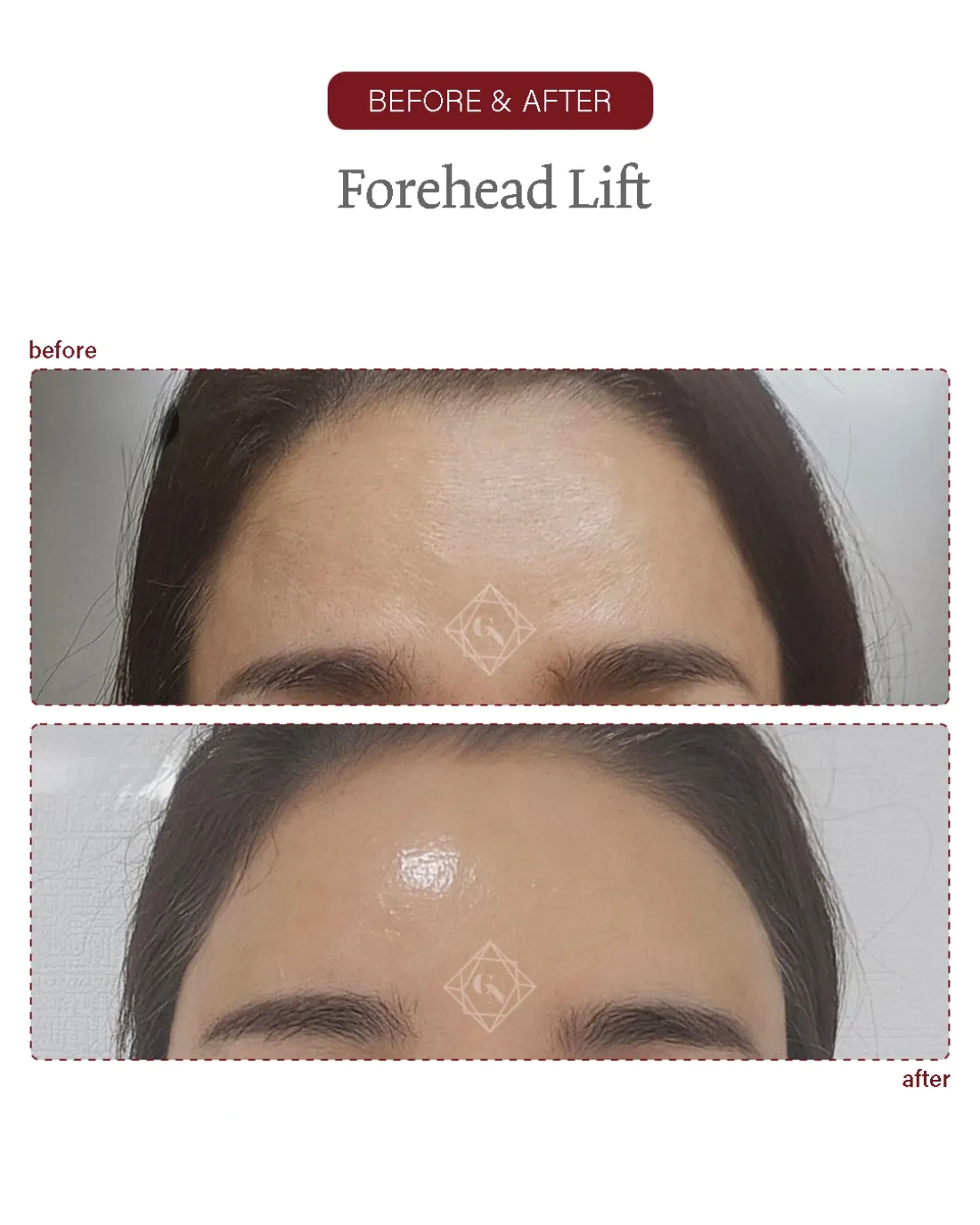
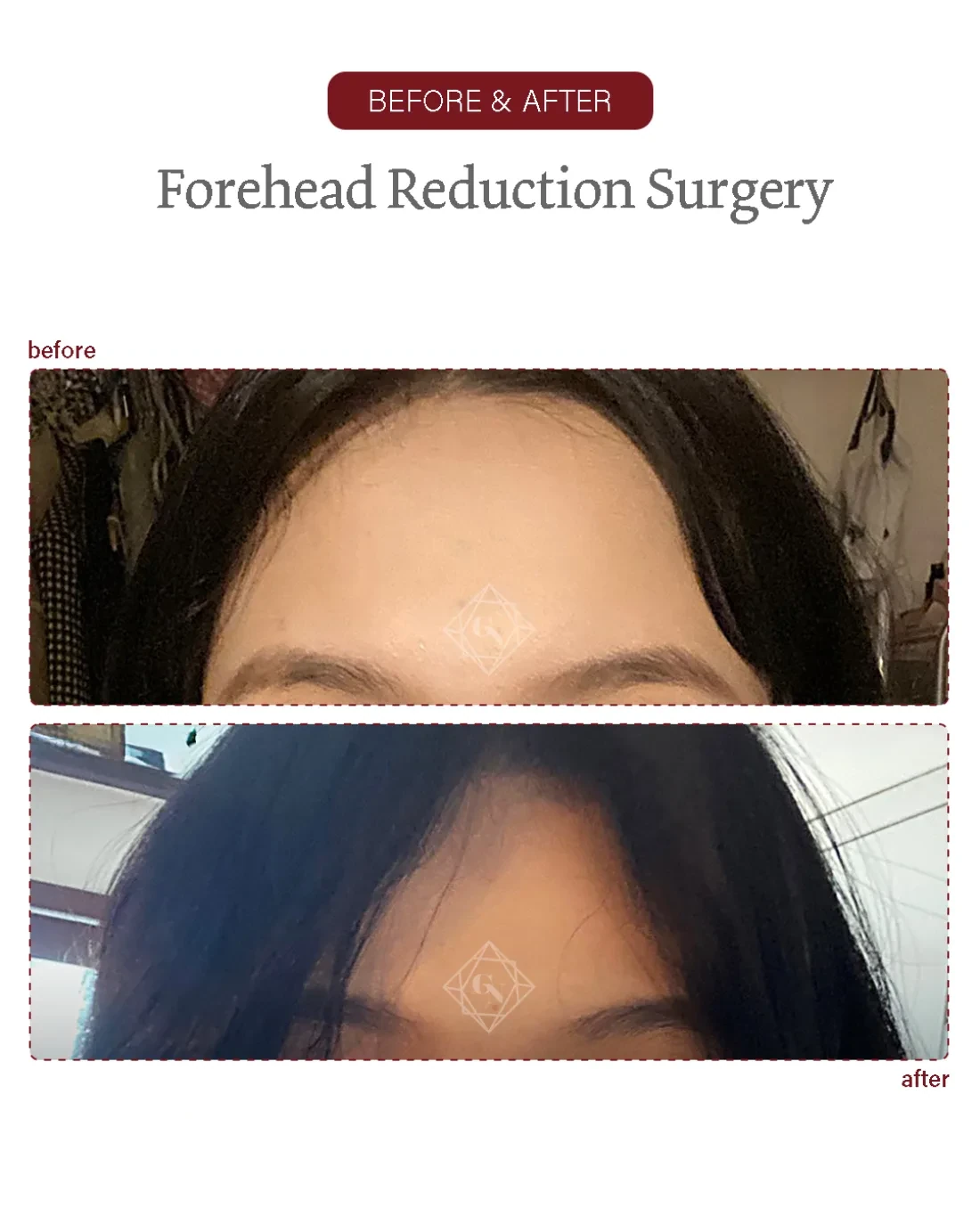
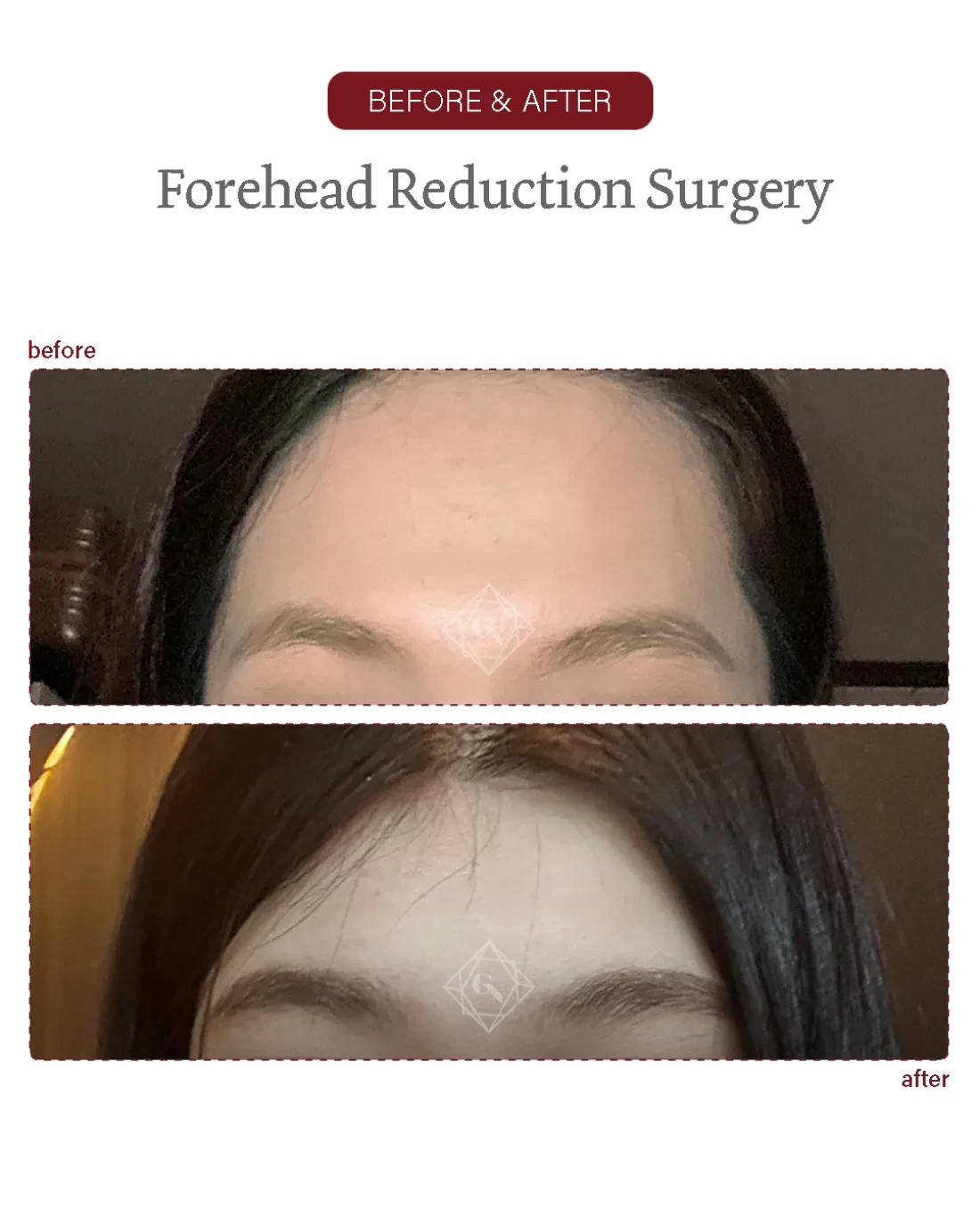
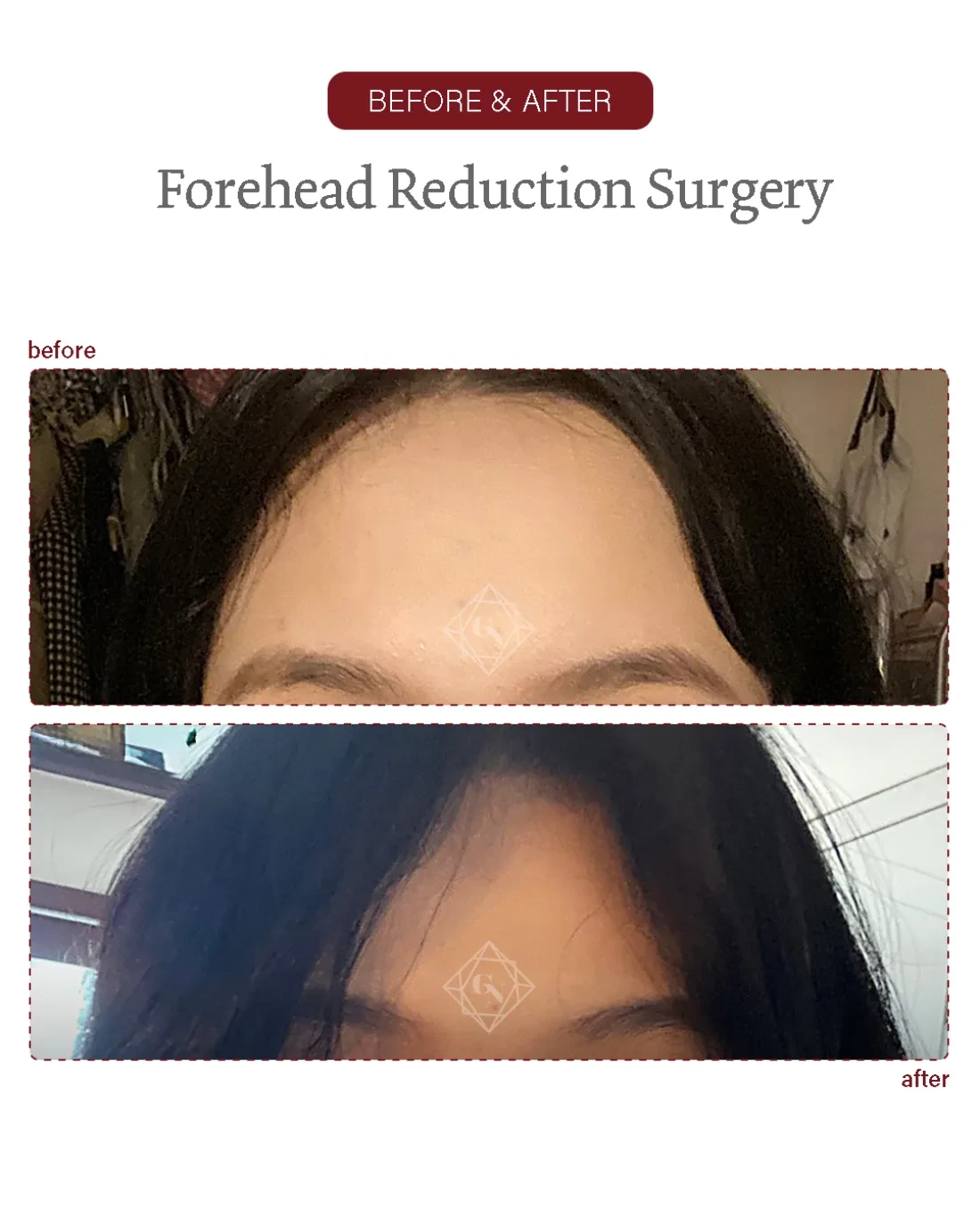
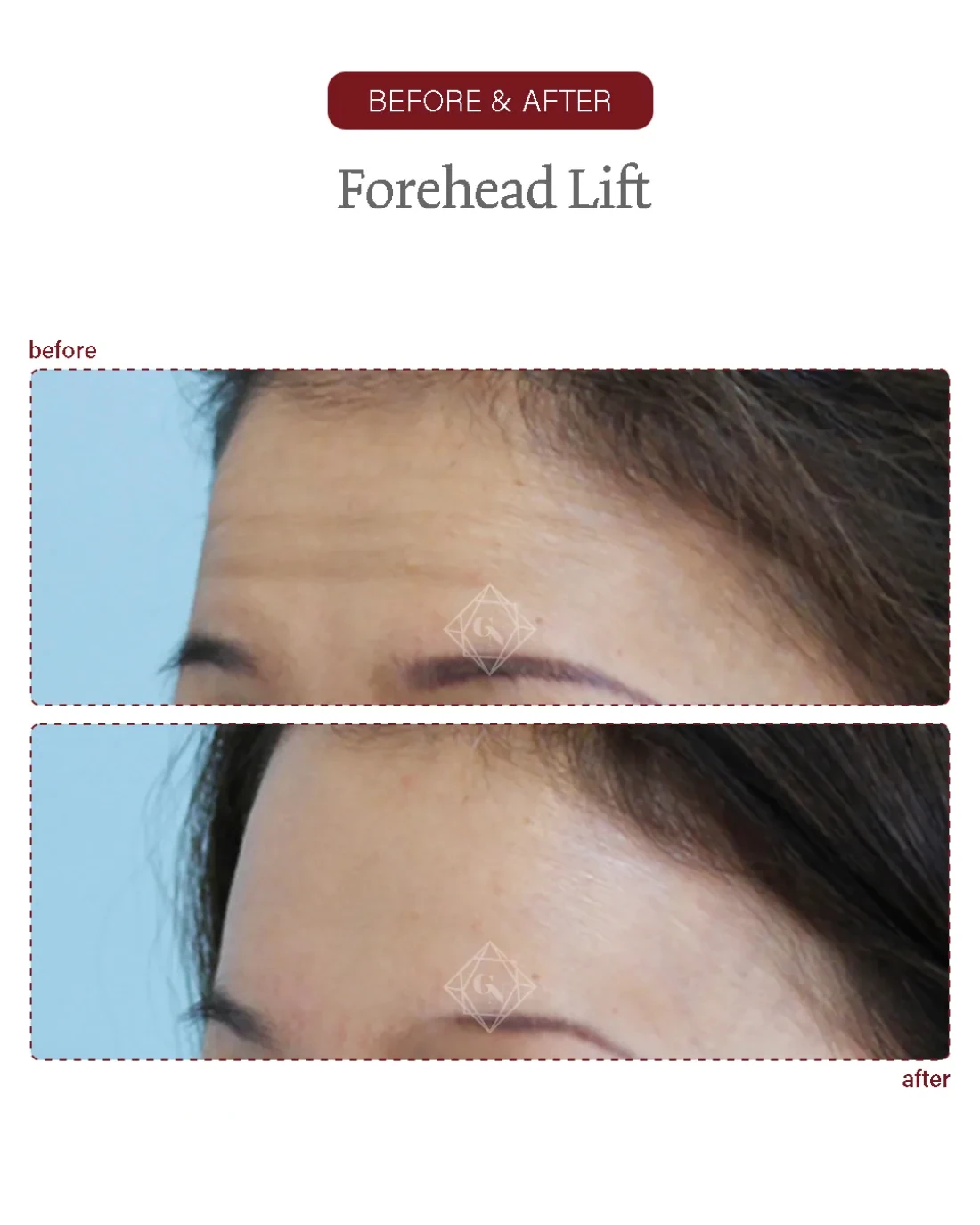
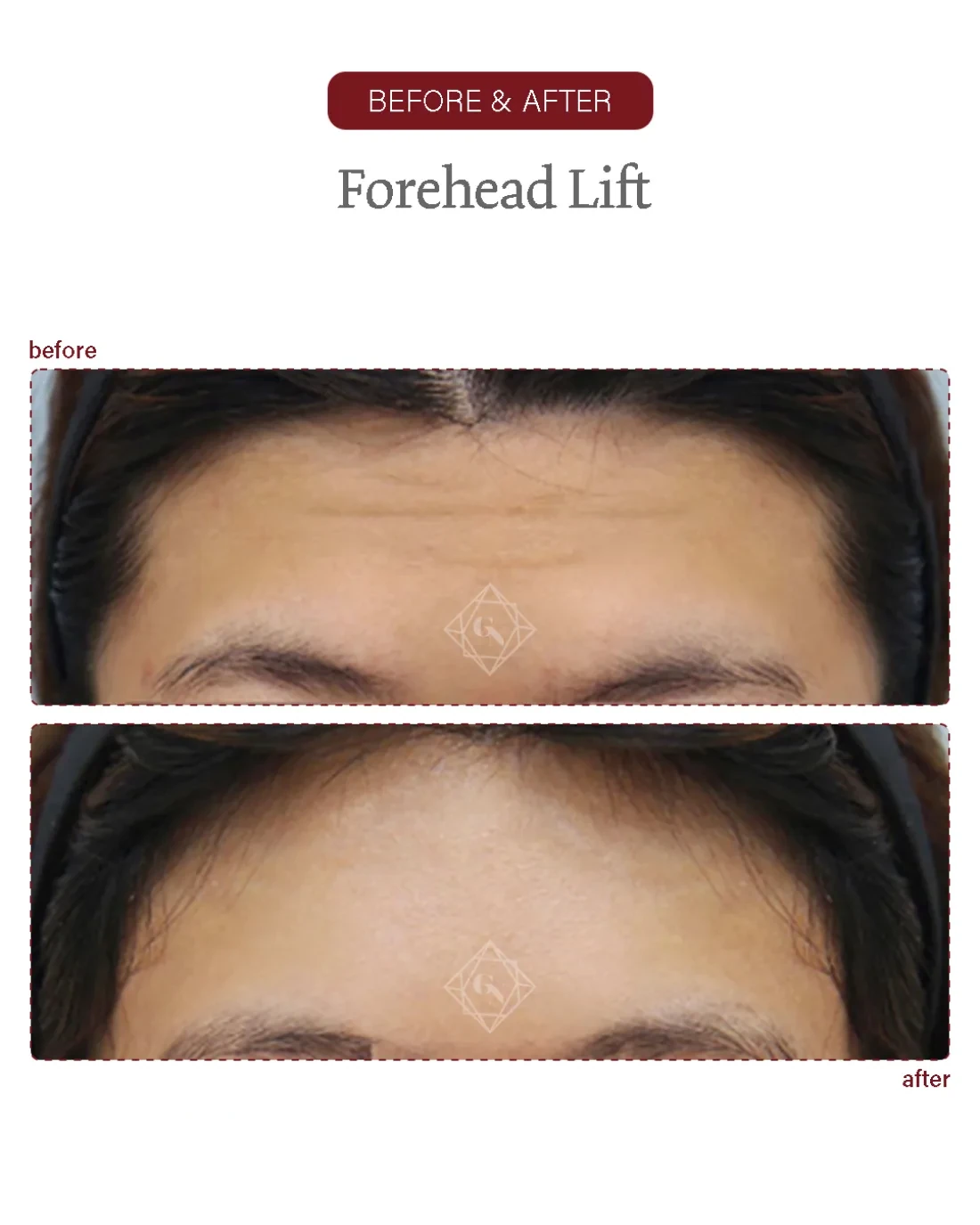
Before & After
Forehead reduction before/after sets of actual Garnet patients (published with consent). Results, recovery and scar appearance vary by individual, depend on scalp laxity and hair density, and are not guaranteed.
Shortening the forehead by moving the hairline
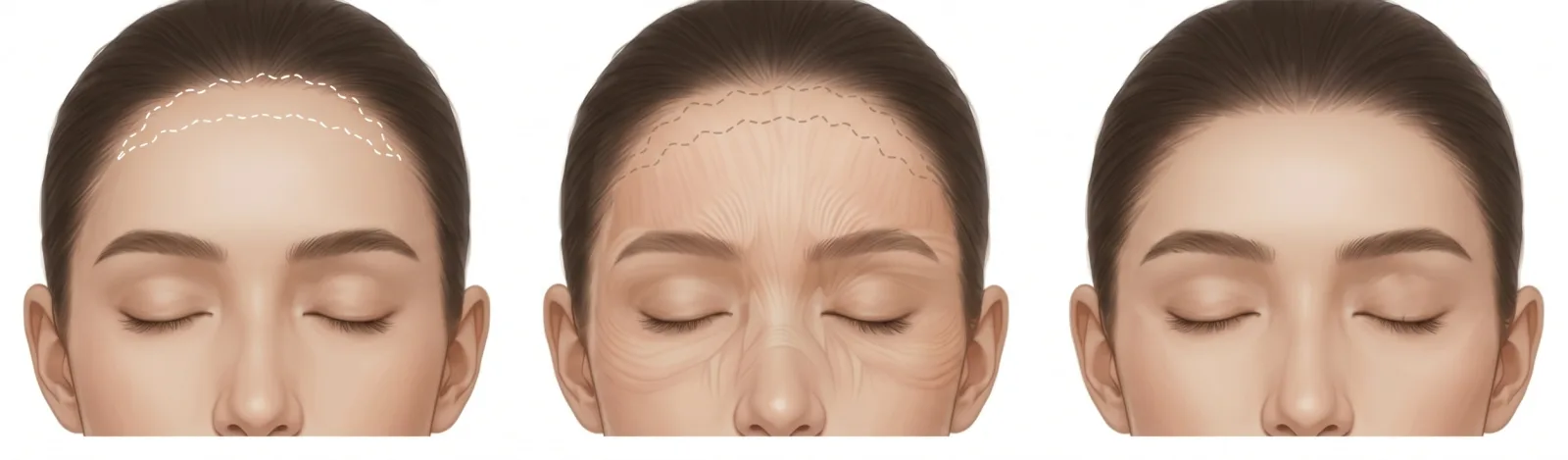
A forehead reduction (hairline-advancement surgery) is an operation that shortens a tall forehead by removing a measured strip of forehead skin and advancing the hairline forward, then closing the incision precisely at the front hairline so the new hairline conceals the scar. It changes the height of the forehead itself; it does not raise the brow or add hair.
Forehead height is one of the proportions that shape how balanced a face looks - the upper third, from hairline to brow, is ideally similar in depth to the middle and lower thirds. A naturally high or long forehead, or a high frontal hairline, can throw that balance off, and no amount of styling permanently changes the bone-to-hairline distance.
A forehead reduction addresses this directly by moving the hairline. The surgeon plans how much forehead to shorten, removes a strip of forehead skin of that width, advances the hair-bearing scalp forward and closes the wound along the hairline. The incision is placed so the new front row of hair grows through and in front of the scar, which is what helps it settle inconspicuously. This is a different goal from a forehead lift, which raises the brow and leaves the hairline where it is.
At Garnet this is a single-surgeon operation. Dr. Baek plans the case from the consultation - including how much advancement the scalp laxity safely allows - performs it himself, and reviews healing at set intervals; the clinic caps the day at two surgeries so each case has unhurried time. The aim is a forehead in better proportion, not the maximum possible reduction.
How the hairline advancement is performed
From the hairline incision to advancement and trichophytic closure - every step by Dr. Baek.
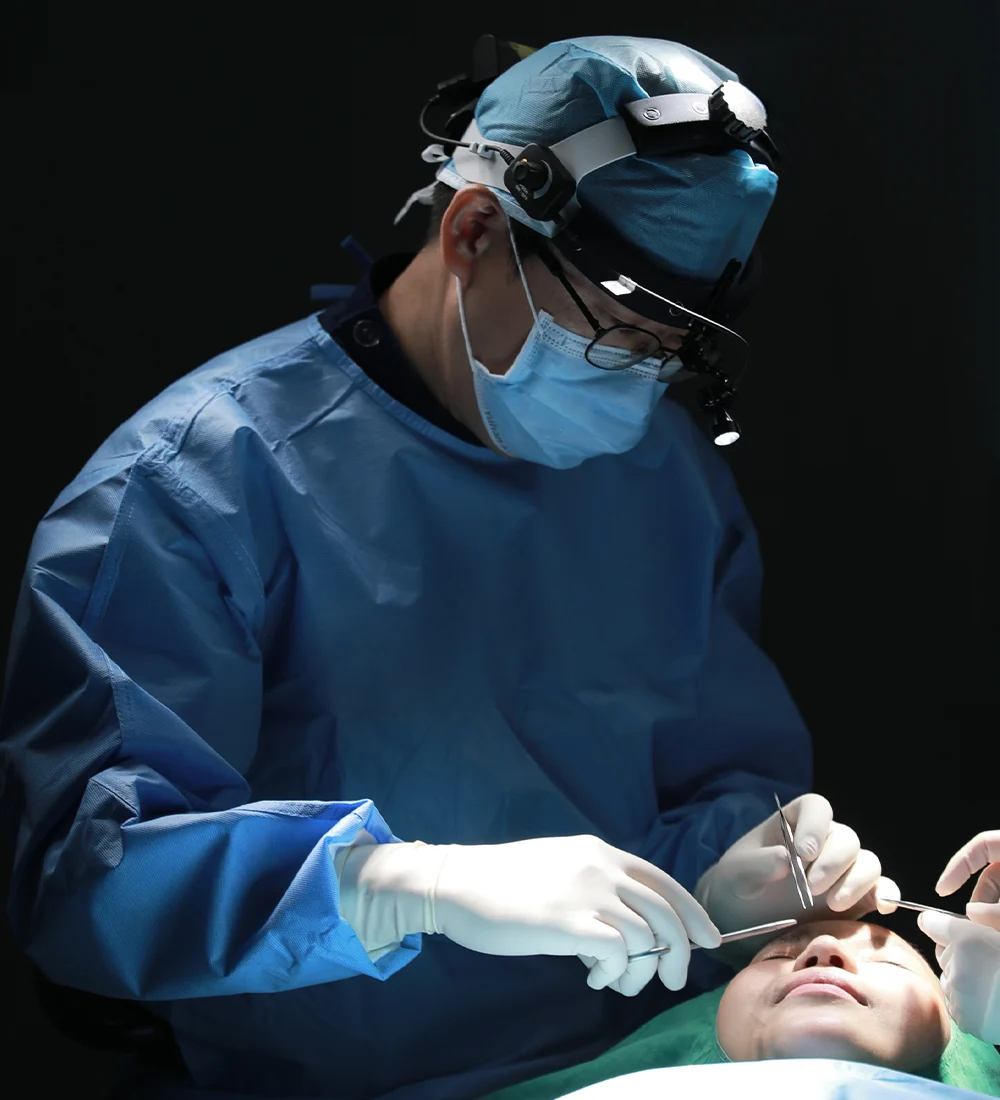
A single surgeon, start to finish. Dr. Baek measures and plans your hairline advancement, operates himself and sees every follow-up. Only two operations are booked per day, so there is unhurried time for the hairline closure.
A forehead reduction at Garnet typically runs about 1.5-2 hours under sedation or general anaesthesia, decided with you after your medical history is reviewed. The steps below outline how the hairline-advancement technique is carried out.
Measuring forehead height and frontal hair density
Dr. Baek measures the forehead height and proportions, assesses hairline shape, hair density at the front and how mobile the scalp is, then agrees how much to shorten the forehead and the incision design with you.
Hairline incision design
The incision is planned right at the front hairline (a pretrichial line), often shaped irregularly to follow the natural hairline. A straight line is avoided because the irregular one disappears more easily as hair grows through it.
Strip excision
A measured strip of forehead skin, of the planned width, is removed - this is what shortens the forehead. The width is set by the agreed reduction and what the scalp laxity safely allows.
Scalp advancement
The hair-bearing scalp is released in the loose plane beneath it and advanced forward to meet the new hairline position without undue tension on the closure.
Considering brow position alongside the hairline
Where the consultation shows it, a brow/forehead lift or fat grafting is considered, as a tall forehead and a low brow are separate concerns that sometimes coexist.
Trichophytic closure & review
The hairline is closed precisely so hair can grow through and in front of the scar. Dr. Baek checks the closure himself before you leave the clinic and again at each follow-up.
Why a forehead looks tall and what limits advancement
A forehead can read as tall for two reasons: a high frontal hairline, or a long distance from the brow to the hairline. The scalp itself is a layered, mobile structure - skin, the galea aponeurotica and a loose plane beneath it - and it is the laxity of that loose plane that lets the hair-bearing scalp slide forward when the hairline is advanced. How far the hairline can safely come forward in a single stage depends on how mobile the scalp is.
Because the limit is scalp laxity, the amount of reduction is planned for each patient and is not promised in advance; where more advancement is wanted than the scalp allows, a staged approach or a scalp-relaxing technique may be discussed. In large published series of hairline-lowering forehead reduction through an anterior hairline (pretrichial) incision, the procedure shortened the forehead reliably with high patient satisfaction and few serious complications (Aesthetic Plast Surg 2021; DOI 10.1007/s00266-020-02103-4). Garnet plans the incision and advancement for each hairline individually.
Hairline lowering vs hair transplant vs brow lift
| Forehead reduction | Hairline-lowering hair transplant | Forehead / brow lift | |
|---|---|---|---|
| What it changes | Hairline moved forward | New hairs added in front | Brow raised |
| Result speed | Immediate | Months as grafts grow | Soon, then settles |
| Forehead height | Shortened | Shortened with density | Unchanged |
| Scar | Along the hairline | Tiny graft sites | Scalp or sub-brow |
| Typical use | Mobile scalp, good density | Thin or receding front | Heavy / low brow |
In a series of 650 forehead reductions the average skin excised was about 2.3 cm, roughly a 28% reduction in forehead length, with high satisfaction (Aesthetic Plast Surg 2025; DOI 10.1007/s00266-025-04830-y). The right approach depends on scalp laxity and hair density, and Dr. Baek advises at consultation.
Anaesthesia and safety for forehead reduction
Anaesthesia
A forehead reduction is usually performed under deep sedation or general anaesthesia, decided with you and the anaesthesia team for comfort and safety over the operation. Your medical history is reviewed beforehand.
The hairline advance planned and done by one surgeon
With a cap of two surgeries a day, the forehead reduction is unhurried. Dr. Baek, who planned the hairline advancement, performs it and reviews your recovery; no other doctor operates.
Scheduling and pre-op checks handled for travellers
As a clinic registered with Korea's foreign-patient programme, Garnet coordinates pre-operative checks, scheduling and after-care in English for visitors.
Scalp laxity may point to another approach
If your scalp laxity or hair density makes another approach more suitable, that is said at the consultation. Photos can be reviewed before you travel.
The hairline scar and how it is hidden
A forehead reduction leaves a scar along the front hairline, because that is where the incision is placed. The line is usually shaped to follow the natural, slightly irregular hairline, and it is closed so that hair can grow through and in front of it - a trichophytic approach - which is what helps it become inconspicuous as the new front row of hair matures.
The scar is permanent and, unlike scalp incisions hidden entirely within the hair, sits at the visible hairline edge, so its appearance matters and depends on individual healing and hair density. It is typically not obvious once mature and hair has grown through it, and it can usually be concealed with a fringe early on. At the 1-, 3- and 6-month visits Dr. Baek checks how the hairline scar is maturing and advises on scar care.

Forehead reduction price
Same price as Korean patients. Prices shown exclude 10% VAT; your written quote, issued after the in-person consultation, shows the full amount payable.
Week by week
Do
Keep the head elevated, use cold compresses early, take medication as prescribed, sleep on your back, keep the hairline incision clean and dry as advised, and keep your follow-up visits.
Avoid
Strenuous exercise, bending and heavy lifting early on, alcohol and smoking, very hot showers/saunas, tight headbands across the incision, and direct sun on the healing hairline scar until cleared.
How long does a forehead reduction last?
A forehead reduction is a one-time structural change: once the hairline is advanced and healed, the new forehead height is stable, because the bone-to-hairline distance has been physically shortened. Nothing is temporarily disguised. In large published series of hairline-lowering forehead reduction, the procedure shortened the forehead reliably with high patient satisfaction (Aesthetic Plast Surg 2021; DOI 10.1007/s00266-020-02103-4).
What can change over time is the surrounding hairline itself - ongoing hair thinning or recession is a separate process and is assessed beforehand, since it affects who is a good candidate. The hairline scar continues to mature and usually becomes less noticeable as the front row of hair grows through it. Brow position and forehead lines age independently and can be addressed separately.
Procedures combined with forehead reduction
Forehead / brow lift
A tall forehead and a heavy, low brow are different concerns that sometimes coexist; where both are present a forehead lift may be considered alongside or instead, and the plan is set at consultation.
Fat grafting
Fat grafting to a flat or hollow temple can refine upper-face contour after the hairline is brought forward, for a more balanced result.
Upper-eye hooding on the same trip
Where upper-eye hooding is also a concern, an upper blepharoplasty is sometimes planned in the same trip, addressing a separate part of the upper face.
Hair-density assessment
Front hairline density is assessed first; where it is thin, a hair-transplant approach may be more appropriate than, or staged with, surgical advancement, and Dr. Baek will say so.

Forehead reduction risks
Every operation carries risk. These are explained individually at consultation.
Hairline scar
The visible scar runs along the front hairline, and its final appearance - though usually inconspicuous once hair grows through it - is the main consideration; healing varies by individual and by hair density.
Early swelling and numbness
Swelling, bruising and temporary numbness behind the incision are common early and usually settle.
Scalp sensation
Temporary or, occasionally, lasting altered sensation of the scalp in front of the incision.
Hair shedding
Temporary shedding of hairs near the wound, which usually regrows.
Wider scarring
Wider scarring if the closure heals under tension.
Scalp laxity limit
Scalp laxity limits how much the hairline can advance in a single stage.
Smoking
Raises wound-healing and scar risks.
What reduces risk in practice: careful candidate selection (scalp laxity and hair density), a tension-controlled trichophytic closure, and follow-up by the operating surgeon. With one surgeon and a low daily volume, Garnet has time for this planning and for personal after-care of the hairline. Large series report the procedure to be reliable with few serious complications (Aesthetic Plast Surg 2025; DOI 10.1007/s00266-025-04830-y).
Planning a forehead reduction from abroad
Most international patients plan roughly 10-14 days in Korea for a forehead reduction, so sutures along the hairline can be removed by the surgeon and the early swelling has settled before travel. The coordinator confirms the timing for your specific plan.
Before you travel, send clear photos (front, three-quarter and side, with the hair pulled back to show the hairline) and a note on your concern and dates through WhatsApp, LINE or the form below. You'll get a pre-assessment that covers whether your scalp laxity and hair density suit surgical advancement, with no hard sell.
Garnet is registered with Korea's foreign-patient programme, and an English-speaking coordinator handles your consultation, scheduling and after-care for the forehead reduction. After you return home, Dr. Baek can continue to review your recovery and the maturing hairline by messenger.
Sources
- Kim YS, et al. Forehead Reduction Surgery via an Anterior Hairline Pretrichial Incision in Asians: A Review of 641 Cases. Aesthetic Plast Surg. 2021. DOI 10.1007/s00266-020-02103-4. link
- Forehead Reduction Surgery: Outcomes and Complications of 650 Cases in a Multiracial Population. Aesthetic Plast Surg. 2025. DOI 10.1007/s00266-025-04830-y. link
- Marten TJ. Hairline Lowering During Foreheadplasty. Plast Reconstr Surg. 1999. DOI 10.1097/00006534-199901000-00037. link
Citations are provided for general education. This page is informational and does not replace an in-person consultation; suitability, technique and recovery are individual.
Questions about forehead reduction
| Forehead reduction | Hairline-lowering hair transplant | Forehead / brow lift | |
|---|---|---|---|
| What it changes | Hairline moved forward | New hairs added in front | Brow raised |
| Result speed | Immediate | Months as grafts grow | Soon, then settles |
| Forehead height | Shortened | Shortened with density | Unchanged |
| Scar | Along the hairline | Tiny graft sites | Scalp or sub-brow |
| Typical use | Mobile scalp, good density | Thin or receding front | Heavy / low brow |
Reviews on Google Maps
I’m so happy I chose this clinic for my lower blepharoplasty. I was traveling from abroad by myself, so I was a little nervous, but from the beginning I felt comfortable and truly cared for. Everyone was kind, patient, and professional…
Came in for an in-person consult and ended up choosing Garnet and Dr.Baek for my non-incisional DES and tiplasty/alarplasty. I communicated with Kelly (English consultant) from the start till now (3 weeks post-op). She really help me feel…
My under-eyes have been sagging and folding for years... I tried to cover it up with makeup, but it actually got stuck in the wrinkles and made it stand out even more. While going for consultations, I noticed that the bigger the hospital…
Ask Dr. Baek’s team
Send photos and your question before you travel. An English-speaking coordinator reviews every enquiry and replies with guidance on whether surgery is appropriate, the likely plan and timing.
- ✓ Reviewed by the clinic coordinator, not a bot
- ✓ Photo-based pre-assessment before you fly
- ✓ Foreign-patient scheduling & after-care
- ✓ One surgeon for consultation, surgery and follow-up
Prefer to chat now? Reach the coordinator directly:
Request a consultation
Find the clinic
51 Apgujeong-ro 30-gil, Gangnam-gu, Seoul — near Apgujeong Station




