




Garnet · Apgujeong, Seoul · English coordinator · WhatsApp · LINE · Email
Garnet clinic, Apgujeong
Garnet/Eye Surgery/Lower blepharoplasty

Eye Surgery · Apgujeong, Seoul

Lower blepharoplasty in Korea — the under-eye smoothed

Dr. In-Soo Baek
Dr. In-Soo BaekConsults, operates and follows up himself
10,000+eye procedures since 2011
4-stepQuad Plus™ lift
~1–2 hrsoperating time
1surgeon, every step
Anaesthesia
Local / sedation
Surgery time
~1–2 hours
Sutures out
~7 days
Social downtime
~1–2 weeks
Follow-up
1 / 3 / 6 months
10,000+ eye procedures since 2011· Lower-lid surgery by a board-certified plastic surgeon, accredited member of the Korean Society of Plastic & Reconstructive Surgeons· Foreign-patient programme registered· Single-surgeon practice

Lower blepharoplasty: the bottom line

A lower blepharoplasty addresses under-eye bags, the tear-trough hollow and loose lower-lid skin by repositioning fat and re-supporting the eyelid instead of simply removing tissue. Every case is planned and operated on by Dr. In-Soo Baek, a board-certified plastic surgeon.

What it is
A lower-eyelid operation that, in the Quad Plus™ approach, combines four steps (fat repositioning, a SOOF (sub-orbicularis oculi fat) lift, orbicularis suspension and skin re-draping) to smooth under-eye bags and the tear-trough; it does more than excise fat.
Best for
Under-eye bags, a hollow tear-trough, dark shadowing from fat herniation, and loose or crepey lower-lid skin where simple fat removal alone would leave a hollow.
Who performs it
Dr. In-Soo Baek alone: board-certified plastic surgeon and the only operating doctor at Garnet. The same surgeon consults, operates and follows up.
Downtime
Sutures out at about 7 days; most bruising and swelling settle over ~1–2 weeks; the final contour refines over a few months.
Longevity
Keeping and repositioning the fat is intended to give a long-lasting, natural under-eye contour; published transcutaneous series report durable correction with low recurrence.
How to start
Send under-eye photos through WhatsApp or the form below for a no-obligation pre-assessment before you travel.
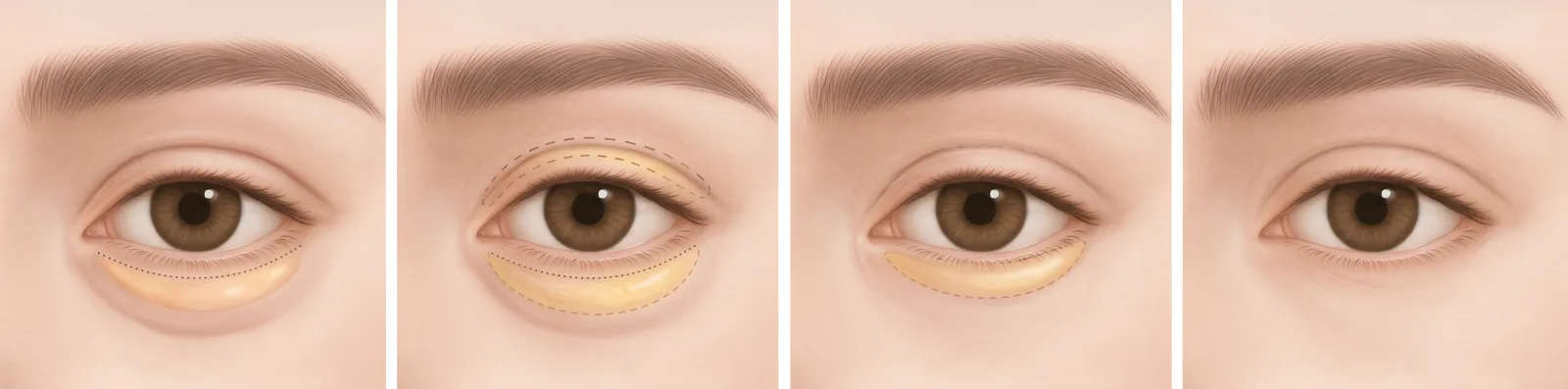
Illustrated steps of lower blepharoplasty at Garnet: under-eye fat outlined, repositioned over the rim, and the smooth healed lower lid
Illustration: through a fine line just below the lashes, the under-eye fat (yellow) is kept and repositioned over the bony rim to fill the groove. The last panel shows the healed lower lid.

Is lower blepharoplasty right for you?

Bags over a hollow tear trough

  • Under-eye bags with a hollow tear-trough that fat removal alone would worsen
  • Loose or crepey lower-lid skin alongside the bags
  • Dark under-eye shadowing driven by fat herniation, not pigment
  • General good health and realistic, discussed expectations
  • Able to plan ~1–2 weeks of social downtime around the lower-lid follow-up schedule

Dark circles from pigment, not bags

  • Mainly pigment-type dark circles (surgery does not treat skin colour)
  • A younger lid with good skin and only a bag/trough: an inner-lid route may suit better
  • Significant pre-existing dry eye or lid laxity, assessed individually at consultation
  • Looking for a same-week, no-downtime result
  • Uncontrolled medical conditions, assessed individually
Dr. In-Soo Baek

Dr. In-Soo Baek

Director & sole operating surgeon
Korean medical licence no. 77407

Operate on what you came for. Trained at Korea University Medical Center. Every case planned, performed and reviewed by the same hands.

1Operating surgeon
~2Surgeries per day
7Registered techniques
  • Board-certified plastic surgeon
  • Korea University College of Medicine & graduate school (plastic surgery)
  • Member, Korean Society of Plastic and Reconstructive Surgeons (facial-contour, eye & rhinoplasty groups)
  • Every lower-lid case planned, performed and followed up by the same surgeon
About the surgeon →

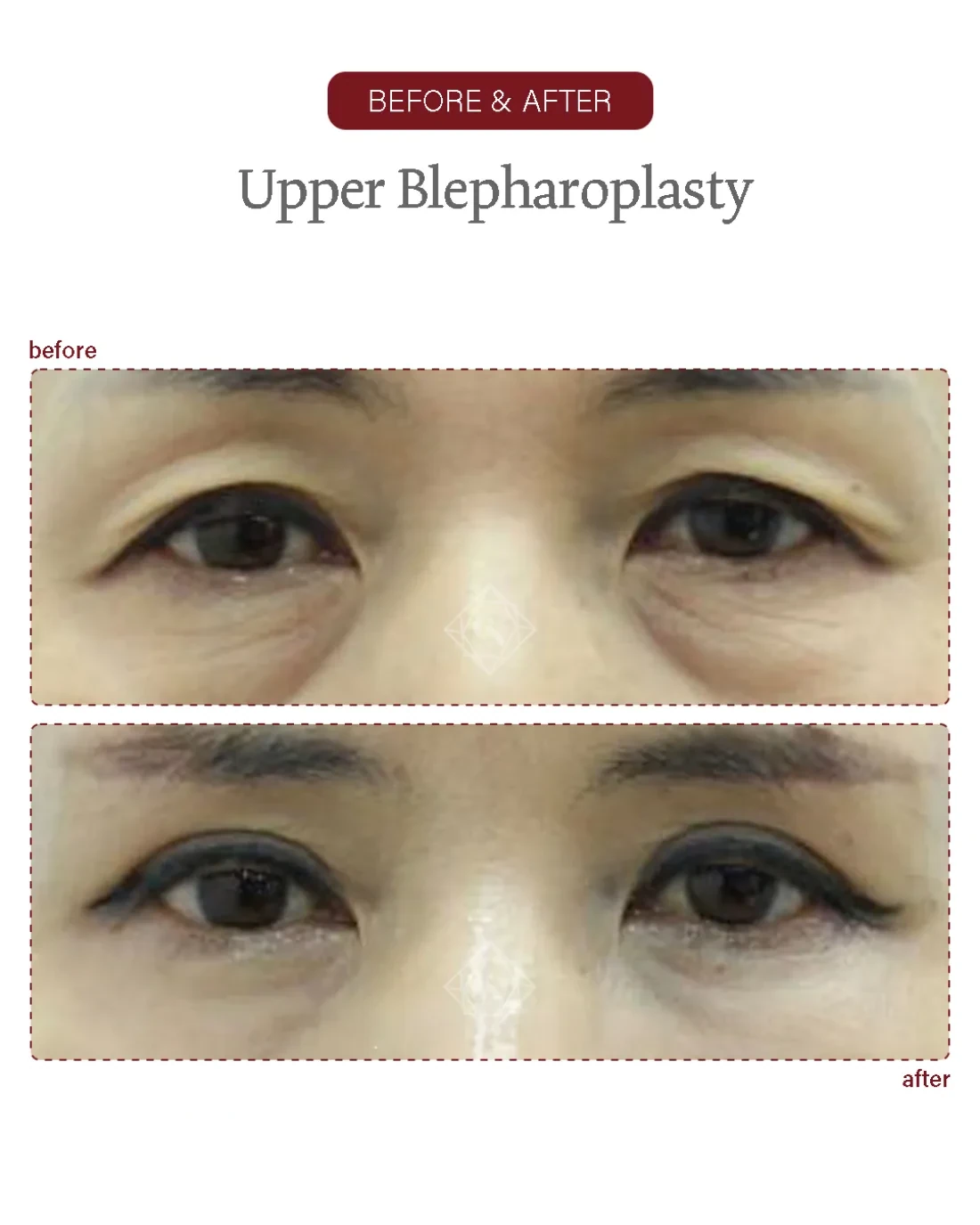
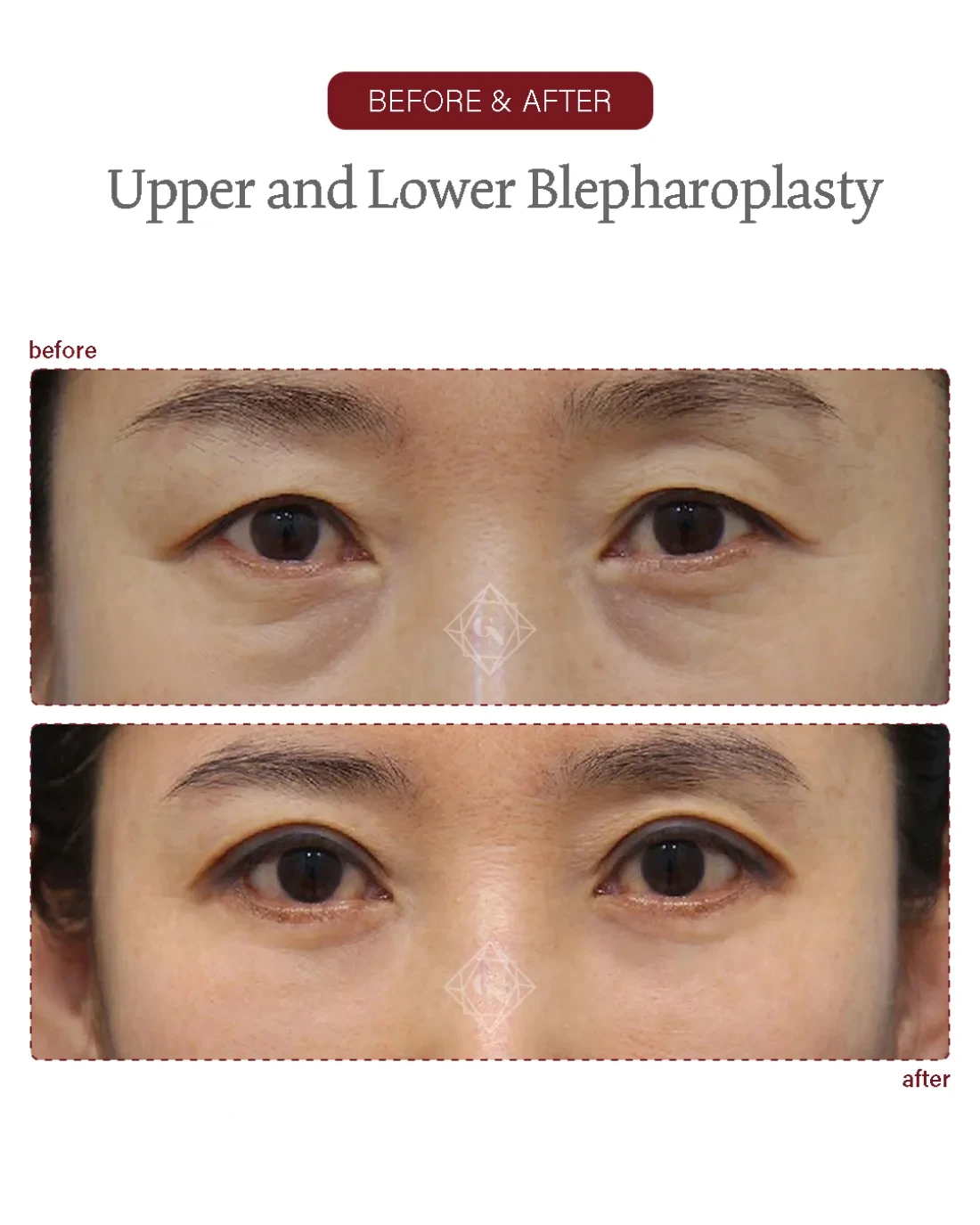
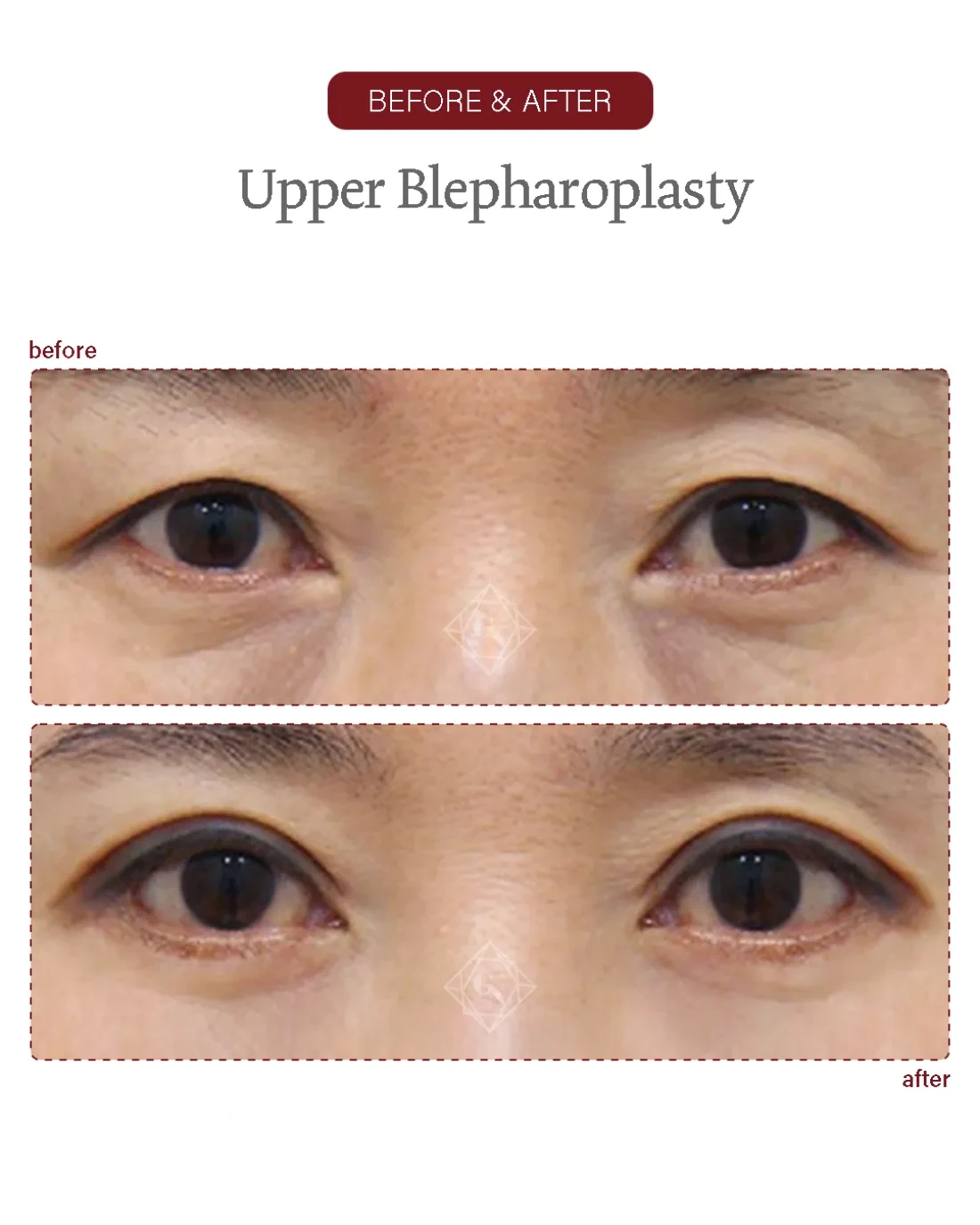
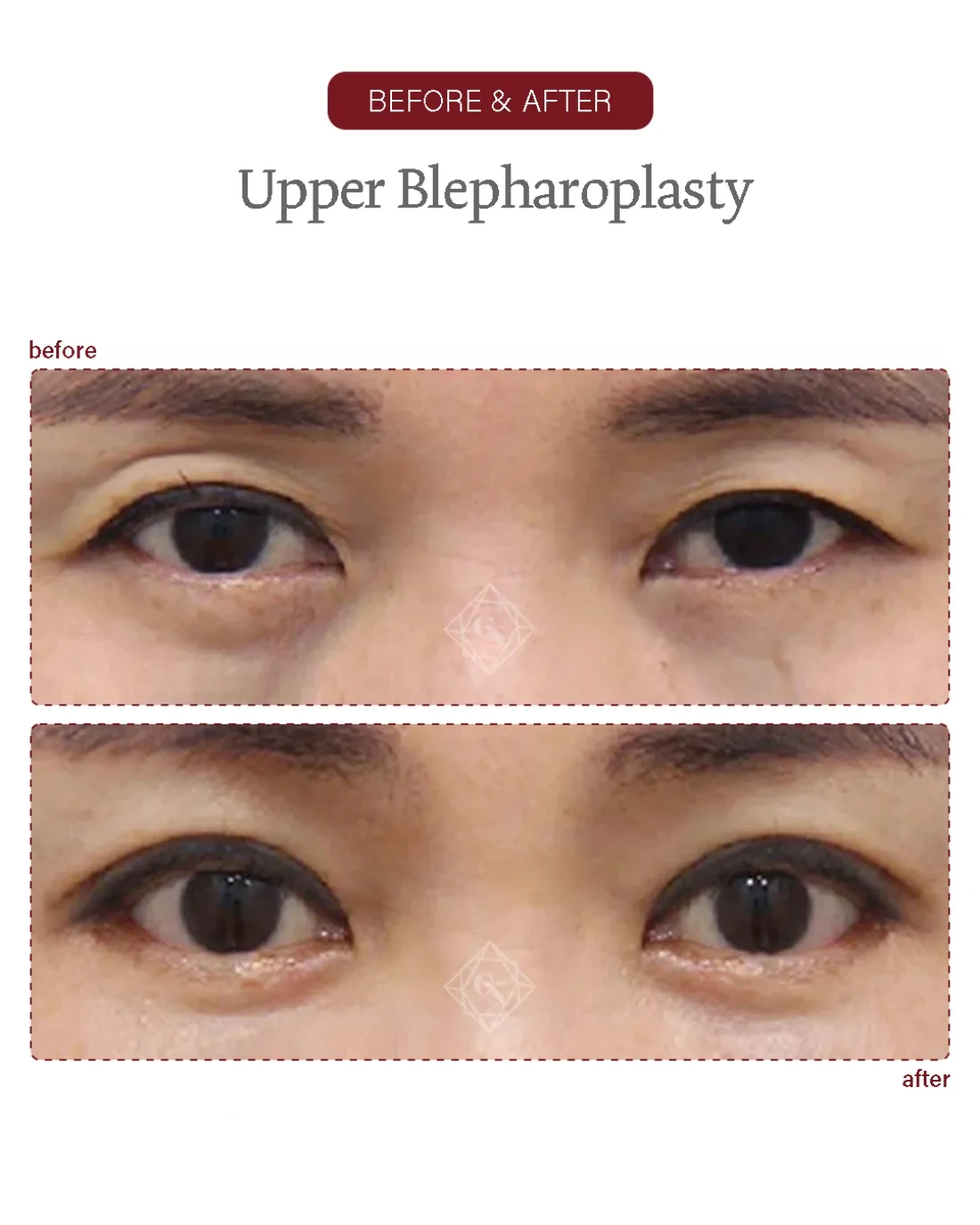
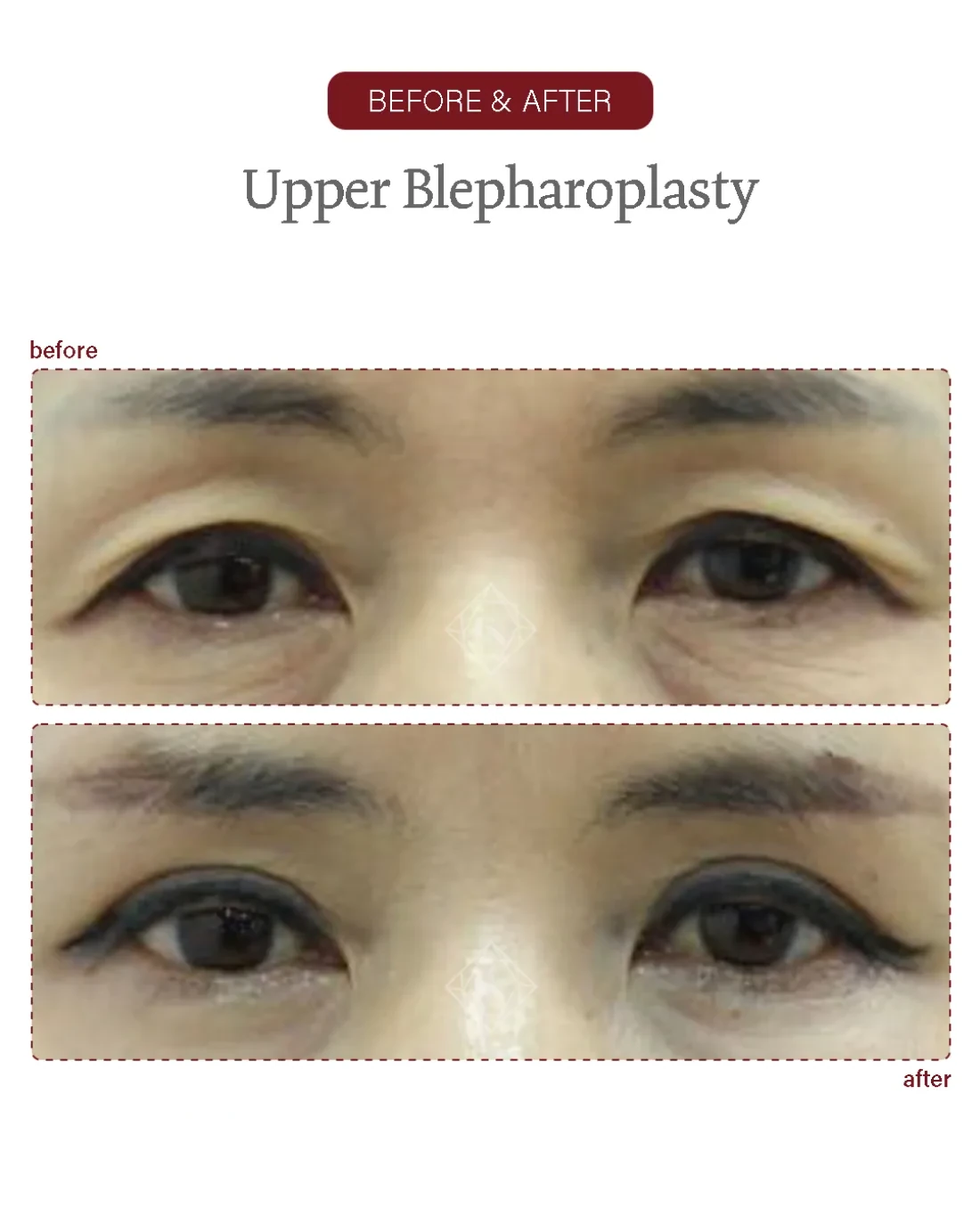
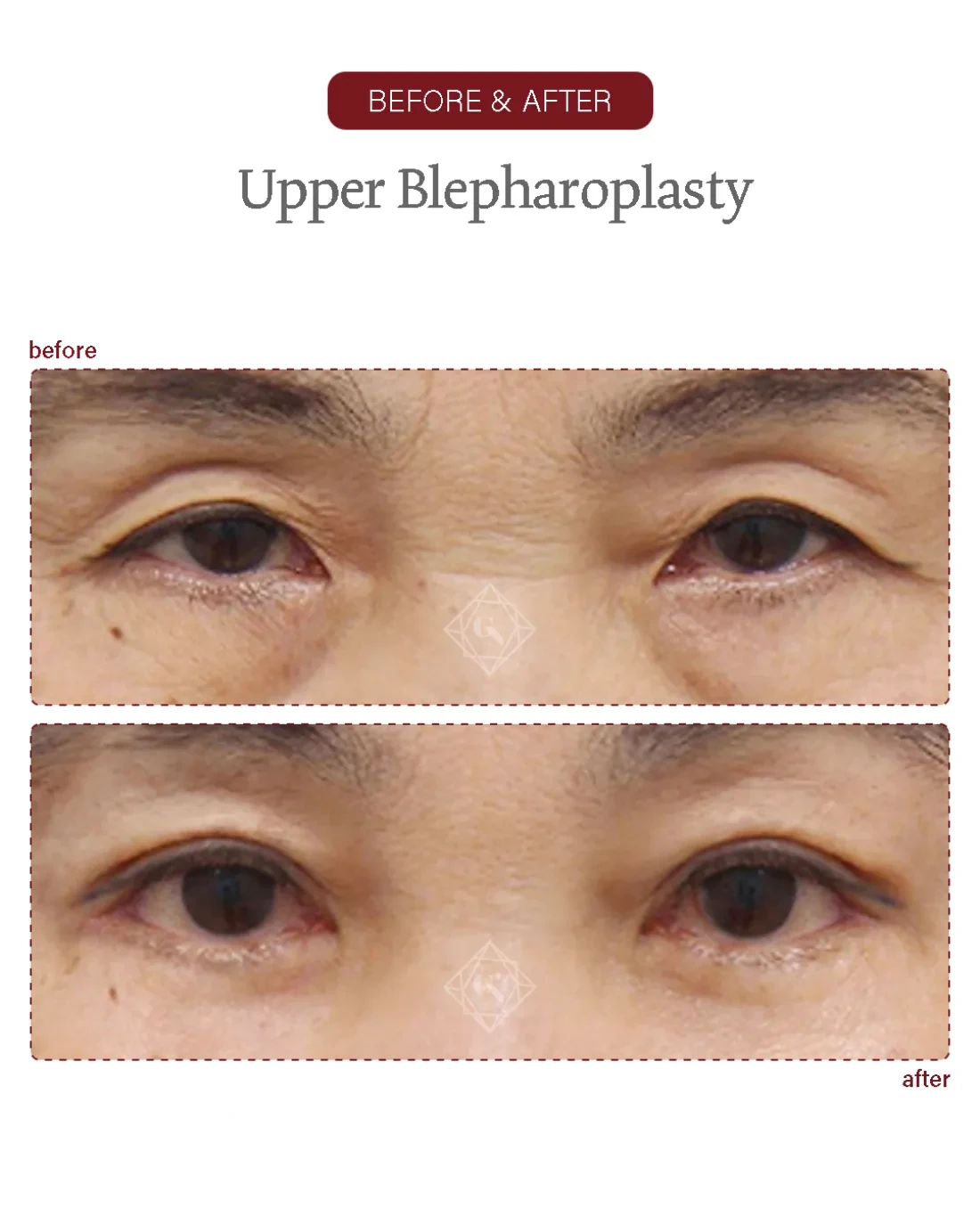
Before & After

Eyelid before/after examples of actual Garnet patients (published with consent). Results, recovery and suitability vary by individual and are not guaranteed; the right approach depends on an in-person examination.

Repositioning the under-eye, not just removing fat

A lower blepharoplasty is an eyelid operation that corrects under-eye bags, the tear-trough hollow and excess lower-lid skin. In the Quad Plus™ four-step approach used at Garnet it repositions herniated orbital fat over the rim, lifts the sub-orbicularis fat (SOOF), suspends the orbicularis muscle and re-drapes the skin, so the hollow is filled and supported instead of the bag simply being cut away.

The lower eyelid ages in a few linked ways: the pads of orbital fat behind the eyelid herniate forward and bulge as "bags"; the cheek descends and the ligament between lid and cheek deepens into a tear-trough groove; and the lid skin and orbicularis muscle loosen. Removing fat alone treats only the bulge and can leave the trough, sometimes a deeper hollow, behind.

The Quad Plus™ approach works on all four problems in one operation. Instead of excising the herniated fat, it releases and repositions it across the orbital rim to fill the tear-trough, lifts the SOOF to re-support the mid-face edge, suspends the orbicularis to hold lid position, and re-drapes only the truly redundant skin. The aim is a smooth lid-cheek transition without a hollowed, over-resected look.

At Garnet this is a single-surgeon operation. Dr. Baek plans each lower lid from the consultation, performs the operation himself and reviews healing at set intervals, with about 2 surgeries a day so no case is rushed. The stated aim is to address the under-eye concern you arrived with and to prevent foreseeable lid complications; chasing the maximum possible change is not the goal.

One surgeon for all four Quad Plus™ steps

From the sub-ciliary incision through fat repositioning, the SOOF lift, orbicularis suspension and skin re-draping, every step is by Dr. Baek.

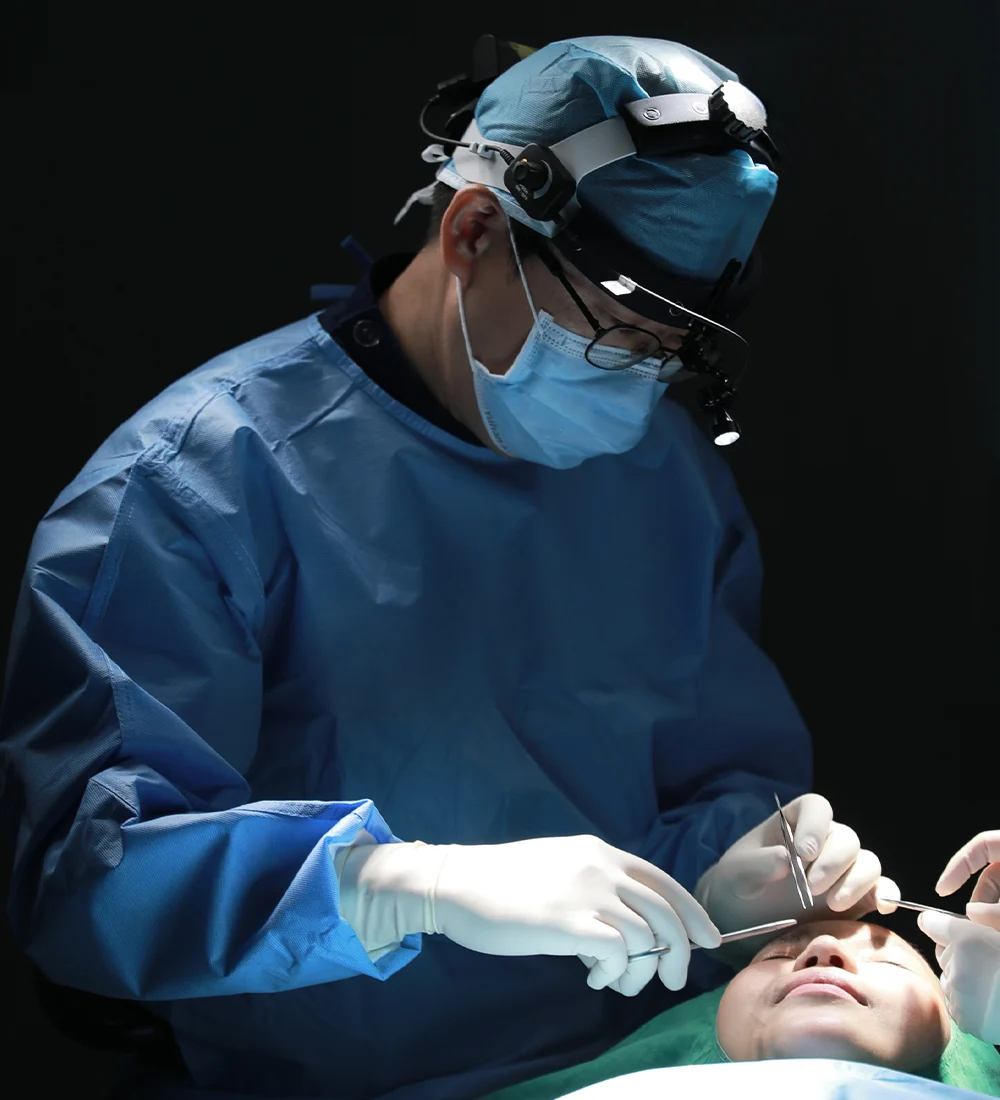
Dr. In-Soo Baek performing surgery at Garnet Plastic Surgery, Apgujeong

A single surgeon, start to finish. Dr. Baek plans the lower-lid case, performs all four steps himself and reviews every follow-up. With the day capped at 2 surgeries, every lower-lid operation has unhurried time.

A lower blepharoplasty at Garnet typically runs about 1 to 2 hours, usually under local anaesthesia with sedation as appropriate, decided with you after your medical history is reviewed. The steps below outline how the Quad Plus™ four-step lift is carried out.

01

Fat pads, tear-trough depth and lid tone

Dr. Baek assesses the lid in person (the fat pads, the depth of the tear-trough, skin and orbicularis tone and any lid laxity) and agrees the plan and incision design with you. A snap-back test checks lid support so the right amount of suspension is planned.

02

Sub-ciliary incision

A fine transcutaneous (external) incision is placed just below the lash line, where it heals into the natural lid crease. This skin-muscle approach gives access to redrape the skin and is chosen when loose skin needs addressing as well as the fat.

03

Fat repositioning & SOOF lift

The herniated fat is kept, released over the orbital rim and repositioned to fill the tear-trough; the sub-orbicularis oculi fat (SOOF) is lifted to re-support the lid-cheek border, smoothing the groove.

04

Orbicularis suspension

The orbicularis muscle is suspended to add vertical support and hold lid position, which helps reduce the risk of the lid pulling down. This is a key step where any laxity is present.

05

Skin re-drape & adjuncts

Only the truly redundant skin is conservatively trimmed and re-draped without tension. Where the consultation shows it, upper eyelid surgery or ptosis correction may be combined in the same sitting.

06

A light dressing, then a lower-lid check

Fine closure and a light dressing. Dr. Baek, as the only surgeon, checks the lower lids himself before you settle in and at each follow-up; sutures come out at about 7 days.

Lower blepharoplasty registered technique certificate

The trademarked Quad Plus™ describes Garnet's named four-step lower-blepharoplasty technique: fat repositioning, SOOF lift, orbicularis suspension and skin re-draping. Registering the Quad Plus™ name protects the label for this lower-lid method; it does not imply a better result.

Why the lower lid hollows and bulges

Three structures explain the ageing lower lid: the orbital fat pads (medial, central and lateral), held back by the orbital septum; the arcus marginalis and the orbicularis-retaining ligament, which tether the lid to the bony rim and create the tear-trough as the face descends; and the orbicularis oculi muscle and lid skin, which lose tone. Releasing the arcus marginalis lets herniated fat be redraped across the rim to soften the groove without excising it (Momosawa et al., Aesthetic Surg J 2008; DOI 10.1016/j.asj.2008.02.002).

Because the trough is caused by tethering and volume loss as well as the bag, supporting the lid and repositioning fat addresses the cause directly, which is what helps the result sit smoothly. Where lid laxity is present, suspending the orbicularis adds vertical support and is associated with a safer lid position after surgery (J Craniofac Surg 2024; DOI 10.1097/SCS.0000000000009716). Garnet plans the release and the amount of skin to re-drape individually for each face; for younger patients whose main issue is the bag and trough alone, under-eye fat repositioning through a hidden inner-lid route may be more proportionate.

Reposition vs remove, and lower vs under-eye repositioning

Fat removal onlyQuad Plus™ lower blepharoplastyUnder-eye fat repositioning
Main concernUnder-eye bagBag + tear-trough + loose skinBag + tear-trough, skin good
Fat handled byExcisedRepositioned over the rimRepositioned (inner-lid route)
Loose skin treatedNoYes, skin re-drapedNo
ScarVariesHidden sub-ciliary lineNo external scar (inner lid)
Typical candidateLimited use nowOlder lid, skin laxityYounger lid, good skin

Repositioning the fat, instead of removing it, is associated with a smoother lid-cheek transition and low recurrence in published transcutaneous series (Saudi J Ophthalmol 2025; DOI 10.4103/sjopt.sjopt_89_25). The right choice is individual: a younger patient with good skin may suit under-eye fat repositioning instead; Dr. Baek advises at consultation.

How safety is handled in lower-lid surgery

Anaesthesia

A lower blepharoplasty is usually performed under local anaesthesia with light sedation, decided with you for comfort over a 1-to-2-hour operation. Any dry-eye tendency and your medical history are checked before the day.

The lower-lid plan carried out by its planner

With about 2 surgeries a day, the lower-lid operation is unhurried, and the surgeon who planned it carries it out and reviews recovery. No separate operating doctor or rotating team is involved.

English coordination for under-eye patients abroad

Pre-operative checks, scheduling and after-care for international lower-lid patients are coordinated in English under Garnet's registration with Korea's foreign-patient programme.

Whether an inside-the-lid option suits better

If surgery is not appropriate, or a lighter inner-lid option suits you better, you will hear that at the consultation. Photos can be reviewed before you travel.

Where the lower-lid scar sits

The Quad Plus™ lower blepharoplasty uses a transcutaneous (external) incision placed just beneath the lash line, so the scar settles into the natural lower-lid crease. Closed without tension and following an existing contour, it is usually fine and not obvious in everyday settings once mature. Where loose skin is the issue, this external route is preferred because it allows the skin to be re-draped.

Scars are permanent but designed to hide along the lash line; healing varies by individual and skin type. By contrast, a younger patient whose skin is good and whose concern is the bag and trough alone may be suited to an inner-lid route with no external scar. At the 1-, 3- and 6-month visits Dr. Baek checks how the lash-line scar is maturing and advises on scar care.

Garnet Plastic Surgery, Apgujeong, Seoul

Lower blepharoplasty price

Lower blepharoplasty

From₩3,500,000 + VATExcluding VAT (10% VAT is added at payment)Book now

Same price as Korean patients. Prices shown exclude 10% VAT; your written quote, issued after the in-person consultation, shows the full amount payable.

Week by week

Days 1–3
A light dressing or tapes; swelling and bruising build then peak over the first few days. Keep your head raised and apply cold compresses as advised to limit lower-lid swelling. Discomfort is usually mild and managed with prescribed medication; vision may be a little blurry from ointment.
Days 4–7
Lower-lid swelling starts to ease and the bruising begins to fade. Dr. Baek removes the lash-line sutures at about day 7. By the end of week 1, most patients feel much more like themselves.
Weeks 1–2
Residual swelling and faint bruising continue to ease; many patients use light cover make-up and return to most everyday settings. Reading and screen work resume as comfort allows.
Weeks 2–4
Most social downtime is over for everyday settings. Some firmness and minor unevenness in the lid can persist as the repositioned fat settles, and keeps easing.
Months 1–6
The lid-cheek contour refines and the scar matures over the following months. Healing is reviewed by Dr. Baek at 1, 3 and 6 months; after you fly home, the lower-lid reviews continue by messenger.

Do

Sleep on your back with the head raised, use cold compresses early, take medication and any eye drops as prescribed, and keep each follow-up visit for your lower lids.

Avoid

Rubbing the eyes, strenuous exercise and heavy lifting early on, alcohol and smoking, very hot showers/saunas, eye make-up until cleared, and direct sun on healing scars.

How long does lower blepharoplasty last?

A lower blepharoplasty does not stop the eye area ageing, but keeping and repositioning the fat is intended to give a durable, natural under-eye contour because the volume that fills the trough stays in place. Published transcutaneous series with conservative skin resection and orbicularis support report lasting correction with low recurrence and revision rates (Saudi J Ophthalmol 2025; DOI 10.4103/sjopt.sjopt_89_25).

Individual longevity depends on tissue quality, sun exposure, skin care and how the face ages afterwards. Skin-surface ageing (fine lines and pigment) continues independently and can be maintained separately over time. Garnet's approach is to support the lid and reposition volume so the result sits smoothly from the start, since an under-eye that was never over-resected tends to age more gracefully.

Often planned with lower blepharoplasty

Upper and lower lids ageing together

Many patients plan upper blepharoplasty in the same sitting, since the upper and lower lids age together and a balanced result looks more rested than tighter.

An upper lid that also sits low

Where the upper lid also sits low, ptosis correction can open the eye while the lower lid is refined, for an even, alert look.

Adding crease definition to under-eye work

An incision or non-incision double-eyelid may be combined where crease definition is part of the concern.

Fat grafting

Fat grafting can restore lost volume in the cheek or temple that under-eye work alone does not replace, for overall balance.

Garnet Plastic Surgery, Apgujeong, Seoul

Lower-lid risks and what reduces them

Every operation carries risk. These are explained individually at consultation.

  • Lid position change

    The most discussed concern: scleral show (the white showing below the iris) or, uncommonly, ectropion (the lid pulling away). Suspending the orbicularis and conservative skin removal matter; in refined transcutaneous series with these steps, increased scleral show occurred in about 1% and most settled (Saudi J Ophthalmol 2025; DOI 10.4103/sjopt.sjopt_89_25).

  • Under-eye swelling and lid asymmetry

    Temporary swelling and bruising.

  • Asymmetry

    Asymmetry between the lids.

  • Dry or watering eyes after lower-lid work

    Dryness or watering, and sensitivity. Pre-existing dry eye is assessed beforehand.

  • Scars

    Scar-related issues.

  • Touch-up

    Rarely, the need for a touch-up.

  • Lid laxity

    Marked lid laxity raises some of these risks and is assessed beforehand.

What reduces risk in practice: careful patient selection and lid-laxity assessment, repositioning fat without over-removing it, conservative skin resection, orbicularis support and follow-up by the operating surgeon. That careful, unhurried planning and personal after-care is what Garnet's single-surgeon, low-volume model is built for. Results are intended improvements and carry no guarantee.

Planning lower-lid surgery from abroad

Most international patients plan roughly 7–10 days in Korea for a lower blepharoplasty, so sutures can be removed by the surgeon at about day 7 and the early swelling has settled before travel. The coordinator confirms the timing for your specific plan.

Before you travel, send clear photos (front, looking up, and a relaxed three-quarter view) and a note on your concern and dates through WhatsApp, LINE or the form below. You'll get a pre-assessment of whether surgery or a lighter inner-lid option fits, with no hard sell.

Consultations, scheduling and after-care for lower-lid patients from abroad are coordinated in English through Garnet's registration with Korea's foreign-patient programme. Once you are home, Dr. Baek can keep checking your lower lids by messenger.

Sources

  1. Momosawa A, Kurita M, Ozaki M, et al. Transconjunctival Orbital Fat Repositioning for Tear Trough Deformity in Young Asians. Aesthetic Surg J. 2008. DOI 10.1016/j.asj.2008.02.002. link
  2. Alhumaemydi R, Diab MM, AlSuhaibani AH. Refining transcutaneous lower blepharoplasty: Key steps for minimizing complications. Saudi J Ophthalmol. 2025. DOI 10.4103/sjopt.sjopt_89_25. link
  3. Effects of Orbicularis Oculi Flap Suspension on Transcutaneous Lower Blepharoplasty. J Craniofac Surg. 2024. DOI 10.1097/SCS.0000000000009716. link
  4. Upper Eyelid Blepharoplasty: Surgical Techniques and Results — Systematic Review and Meta-analysis. Aesthetic Plast Surg. 2023. DOI 10.1007/s00266-023-03436-6. link

Citations are provided for general education. This page is informational and does not replace an in-person consultation; suitability, technique and recovery are individual.

Questions about lower blepharoplasty

What is a lower blepharoplasty and what is Quad Plus™?
A lower blepharoplasty corrects under-eye bags, the tear-trough hollow and loose lower-lid skin. Quad Plus™ is Garnet's named four-step version (fat repositioning, a SOOF lift, orbicularis suspension and skin re-draping), so the hollow is filled and supported instead of the bag simply being removed.
How is lower blepharoplasty different from under-eye fat repositioning?
Both reposition fat to soften the trough, but they differ in route and who they suit. Under-eye fat repositioning uses a hidden inner-lid incision with no external scar and suits younger lids with good skin; the Quad Plus™ lower blepharoplasty adds a sub-ciliary incision so loose skin can be re-draped and the orbicularis suspended, which suits an older lid with skin laxity. The right choice is individual and depends on how your lids look on examination.
Fat removal onlyQuad Plus™ lower blepharoplastyUnder-eye fat repositioning
Main concernUnder-eye bagBag + tear-trough + loose skinBag + tear-trough, skin good
Fat handled byExcisedRepositioned over the rimRepositioned (inner-lid route)
Loose skin treatedNoYes, skin re-drapedNo
ScarVariesHidden sub-ciliary lineNo external scar (inner lid)
Typical candidateLimited use nowOlder lid, skin laxityYounger lid, good skin
Does Dr. Baek perform the surgery himself?
Yes. As the only surgeon at Garnet, Dr. Baek consults, operates on the lower lids and follows up personally, with no separate operating doctor or rotating team.
Will removing the bag leave me with a hollow?
That is exactly what repositioning avoids. The fat is kept and moved over the rim to fill the tear-trough, so the lid-cheek transition is smoothed without a hollow. The amount is judged for your anatomy at consultation.
How much does lower blepharoplasty cost in Korea?
Fees depend on whether one or both lids are treated and what is combined with it, so a price is given only after an in-person assessment. For guidance, send photos of your lower lids through the form below and ask the coordinator for current pricing; a generic figure would not reflect your case.
How long is recovery after lower blepharoplasty?
The lash-line sutures come out at about day 7, and most bruising and swelling settle within 1 to 2 weeks for everyday settings. The final under-eye contour refines over the following months as the repositioned fat settles.
Where is the scar and will it show?
The Quad Plus™ approach uses a fine incision just below the lash line, which heals into the natural lid crease and is closed without tension. It is usually not obvious once mature. A younger patient with good skin may instead suit an inner-lid route with no external scar.
What anaesthesia is used for lower blepharoplasty, and how painful is it?
Usually local anaesthesia with light sedation over a 1-to-2-hour operation, decided after your history is reviewed. In the first days most patients feel pressure and mild soreness around the lower lids, eased with prescribed medication.
Am I a good candidate for lower blepharoplasty?
It often suits under-eye bags with a tear-trough and loose lower-lid skin in someone in good health with realistic expectations. Pigment-type dark circles, marked dry eye or significant lid laxity are assessed individually, so mention them when you first get in touch.
Can I combine it with upper eyelid surgery or ptosis correction?
Yes. Upper blepharoplasty and ptosis correction are commonly planned in the same sitting where the consultation shows they balance the result, so the upper and lower lids match.
Will lower blepharoplasty help dark circles?
It helps shadowing caused by fat herniation and a hollow trough, by repositioning fat to smooth the area. It does not change pigment-type dark circles in the skin itself, which are treated separately; the surgeon checks which cause applies to you.
How long should I stay in Korea?
A stay of about 7–10 days is typical for international patients, long enough for the surgeon to take out the lash-line sutures and for early swelling to settle before travel. Your coordinator fits the dates around your lower-lid plan and anything combined with it.
Is there a risk of the lower lid pulling down?
Lid-position change such as scleral show is the main concern with lower-lid surgery, which is why orbicularis suspension and conservative skin removal are part of the plan. In refined series with these steps it is uncommon and usually settles; it is discussed individually beforehand.
Can I see lower blepharoplasty before-and-after photos?
Yes. Lower-lid before/after examples appear on this page, and more can be reviewed with consent when you meet the surgeon. Results vary by individual, so the photos illustrate outcomes and promise none.
How do I start without flying to Korea first?
Send under-eye photos and your travel dates through WhatsApp, LINE or the form below. You'll get a pre-assessment of whether surgery or a lighter inner-lid option fits before you plan a trip.

Reviews on Google Maps

★★★★★

My mom recently had a brow lift and lower blepharoplasty with Dr. Baek, and our experience has been wonderful so far. The Garnet team was incredibly kind and welcoming, with Kelly assisting us as our English consultant—she made everything…

T S7 months ago

★★★★★

I’m so happy I chose this clinic for my lower blepharoplasty. I was traveling from abroad by myself, so I was a little nervous, but from the beginning I felt comfortable and truly cared for. Everyone was kind, patient, and professional…

S L2 months ago
★★★★★

Came in for an in-person consult and ended up choosing Garnet and Dr.Baek for my non-incisional DES and tiplasty/alarplasty. I communicated with Kelly (English consultant) from the start till now (3 weeks post-op). She really help me feel…

Stephanie Li6 months ago
★★★★★

My under-eyes have been sagging and folding for years... I tried to cover it up with makeup, but it actually got stuck in the wrinkles and made it stand out even more. While going for consultations, I noticed that the bigger the hospital…

조희원2 months ago · Translated by Google

Read all reviews on Google Maps

Ask Dr. Baek’s team

Send photos and your question before you travel. An English-speaking coordinator reviews every lower blepharoplasty enquiry and replies with guidance on whether surgery is appropriate, the likely plan and timing.

  • ✓ Reviewed by the clinic coordinator, not a bot
  • ✓ Photo-based pre-assessment before you fly
  • ✓ Foreign-patient scheduling & after-care
  • ✓ One surgeon for consultation, surgery and follow-up

Prefer to chat now? Reach the coordinator directly:

Request a consultation

Find the clinic

51 Apgujeong-ro 30-gil, Gangnam-gu, Seoul — near Apgujeong Station

WhatsApp

