My mom recently had a brow lift and lower blepharoplasty with Dr. Baek, and our experience has been wonderful so far. The Garnet team was incredibly kind and welcoming, with Kelly assisting us as our English consultant—she made everything…
Ptosis correction at a glance
Ptosis correction raises an upper eyelid that sits too low by adjusting the strength of the levator, the muscle that opens the eye, so a sleepy-looking eye looks more open and alert. At Garnet one board-certified plastic surgeon, Dr. In-Soo Baek, sees each ptosis patient from the first consultation to the last follow-up.
- What it is
- An eye-opening operation that, through a lid-crease incision, adjusts the strength of the levator muscle (or its aponeurosis) so a low-sitting upper eyelid is raised to a natural height and the eye looks more open.
- Best for
- A tired, sleepy or asymmetric look caused by the lid margin resting too low because of a stretched or weak levator. Excess skin alone is treated differently.
- Who performs it
- Dr. In-Soo Baek alone: a board-certified plastic surgeon and Garnet's single operating doctor. The same surgeon consults, operates and follows up.
- Downtime
- Sutures out at about 7 days; most bruising and swelling settle over ~1–2 weeks; the lid height settles fully over a few months.
- Longevity
- Adjusting the levator gives a lasting result; published series report high satisfaction and accurate lid height, with some cases needing fine adjustment as healing settles.
- How to start
- Send photos of your eyelids through WhatsApp or the form below for a no-obligation ptosis pre-assessment before you travel.

Is ptosis correction right for you?
A low lid margin giving a sleepy look
- A low-sitting upper-lid margin that gives a sleepy or tired look
- Asymmetry where one eye looks smaller or more covered than the other
- A habit of lifting the brows or tilting the head back to see better
- General good health and realistic, discussed expectations
- Time for ~1–2 weeks of social downtime after ptosis surgery, plus the follow-up visits
Heaviness that is really excess skin
- Heaviness that is really excess upper-lid skin, where an upper blepharoplasty may suit better
- Ptosis from a neurological or muscle disorder needing medical work-up first
- Significant pre-existing dry eye, assessed individually because raising the lid can affect it
- Looking for a same-week, no-downtime result
- Uncontrolled medical conditions, assessed individually at consultation

Dr. In-Soo Baek
Operate on what you came for. Trained at Korea University Medical Center. Every case planned, performed and reviewed by the same hands.
- Board-certified plastic surgeon
- Korea University College of Medicine & graduate school (plastic surgery)
- Member, Korean Society of Plastic and Reconstructive Surgeons (facial-contour, eye & rhinoplasty groups)
- Plans, performs and follows up each ptosis case himself
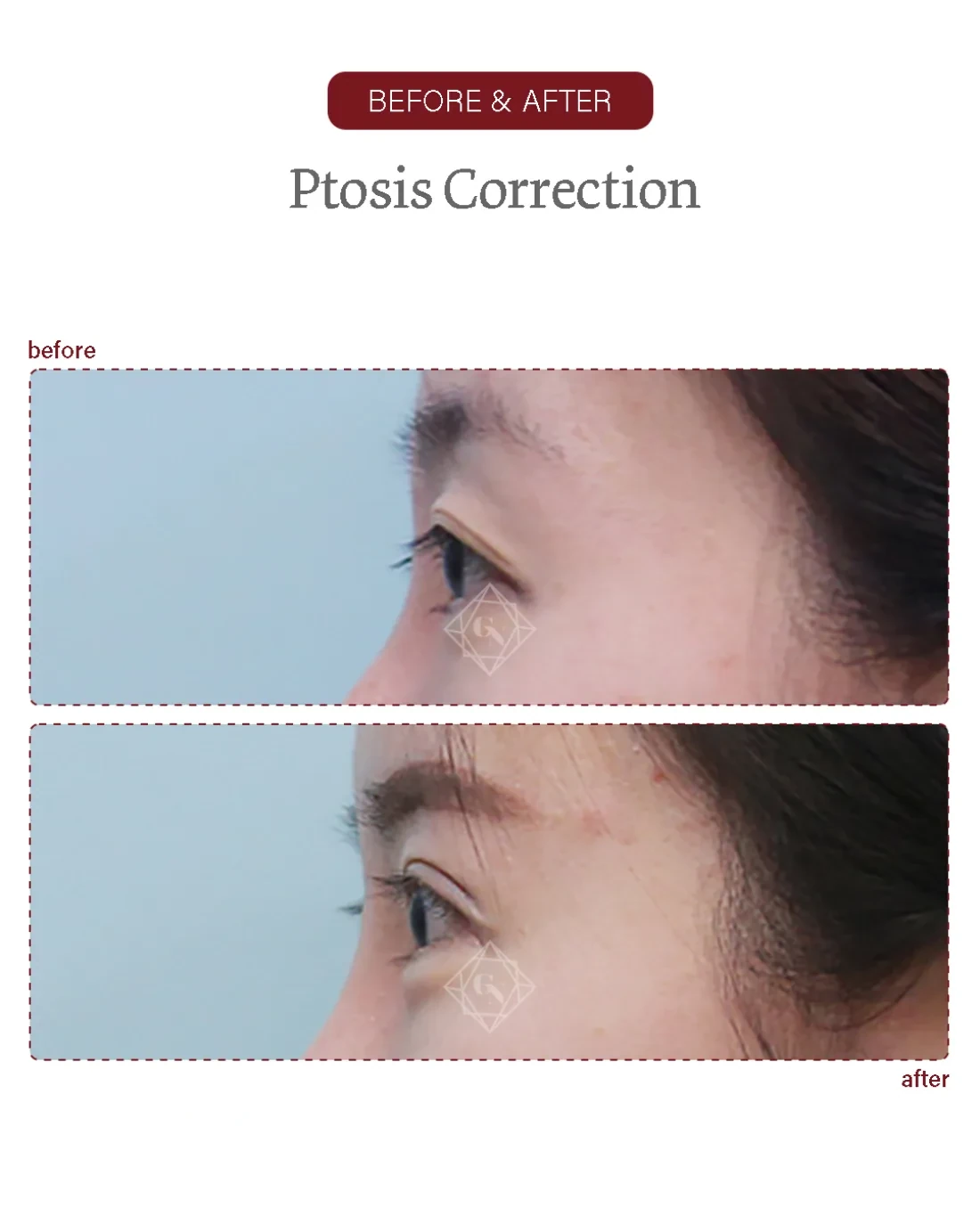
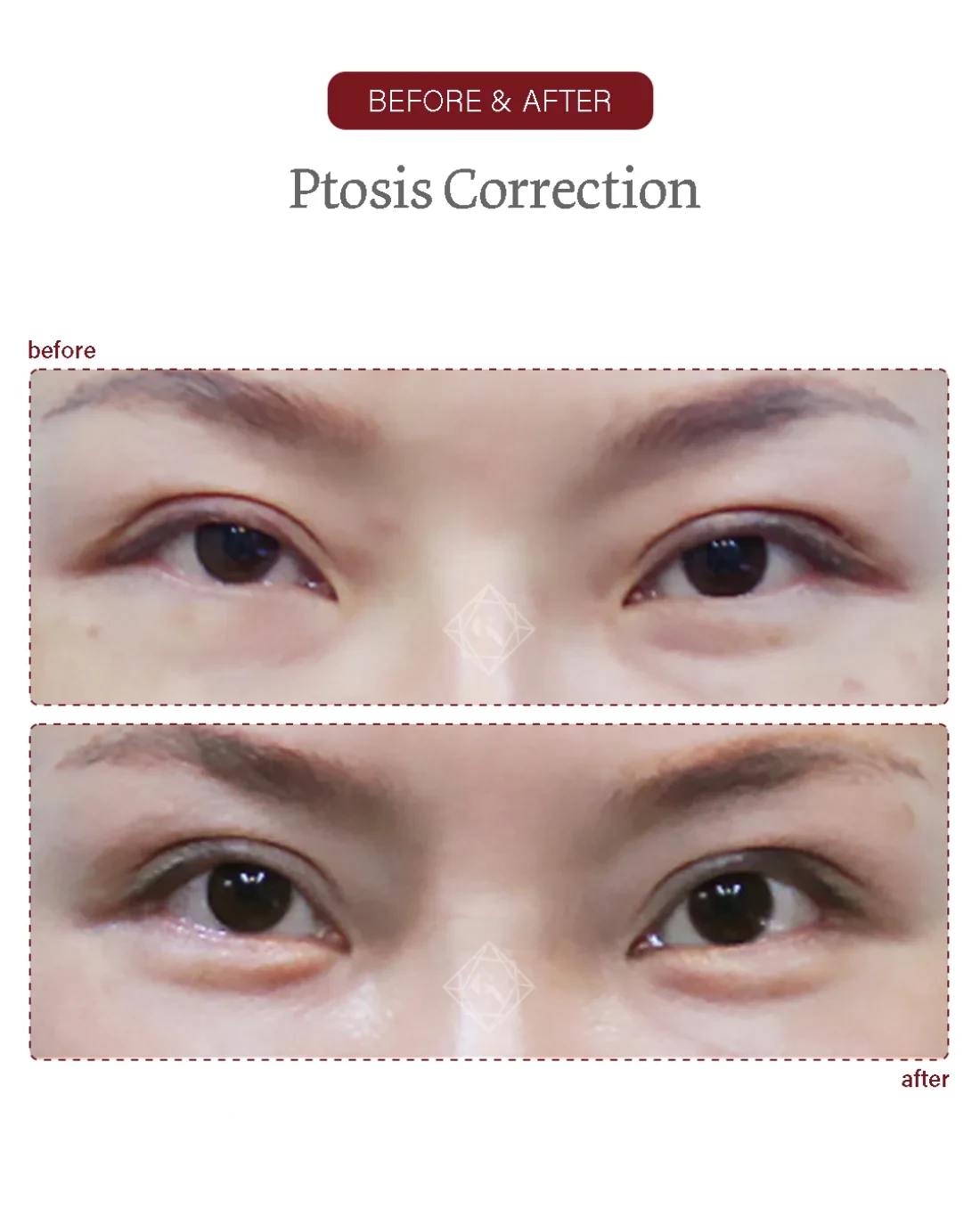
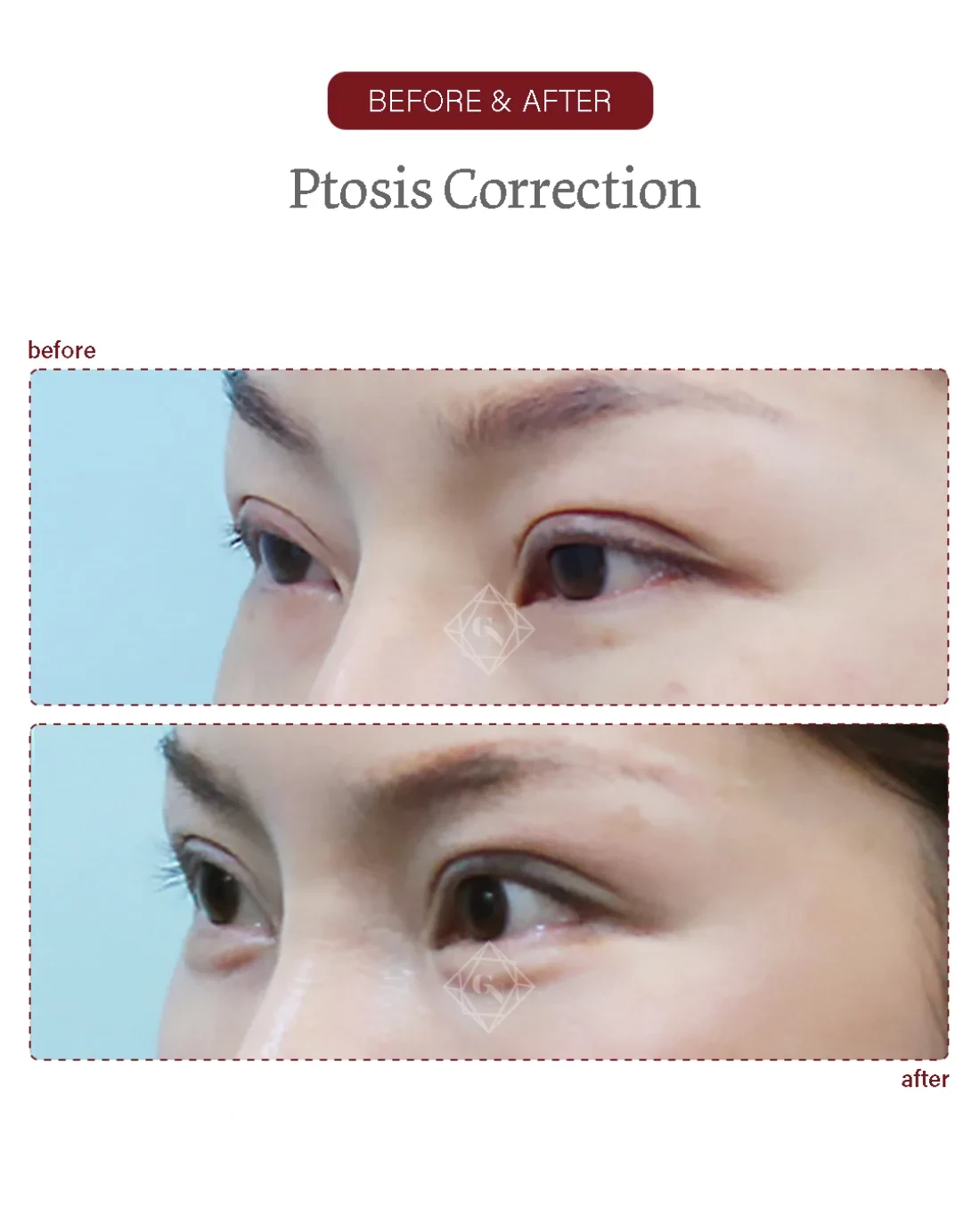
Before & After
Ptosis-correction before/after examples of actual Garnet patients (published with consent). Results, recovery and suitability vary by individual and are not guaranteed; the right approach is decided at an in-person consultation.
Tuning the muscle that opens the eye
Ptosis correction is an eyelid operation that raises an upper lid sitting too low (ptosis) by adjusting the strength of the levator palpebrae superioris (the muscle that opens the eye) or its aponeurosis, usually through an incision in the natural lid crease. By tightening or advancing the muscle, the lid margin is reset to a natural height so the eye opens more fully. A blepharoplasty, by contrast, works by removing skin.
Ptosis means the upper-lid margin rests lower than it should, partly covering the iris and giving a sleepy, tired or uneven look; people often compensate by lifting their brows or tilting the head back. The usual cause in adults is a levator aponeurosis that has stretched or thinned with age, contact-lens wear or previous surgery, so the muscle no longer lifts the lid to its full height.
Ptosis correction works on the eye-opening mechanism itself. Through a lid-crease incision the levator muscle or its aponeurosis is tightened or advanced by a measured amount so the lid margin sits where it should. Because the target height is judged finely (often with you cooperating during the operation under local anaesthesia), getting the symmetry right is the central challenge, and a small later adjustment is sometimes part of the plan.
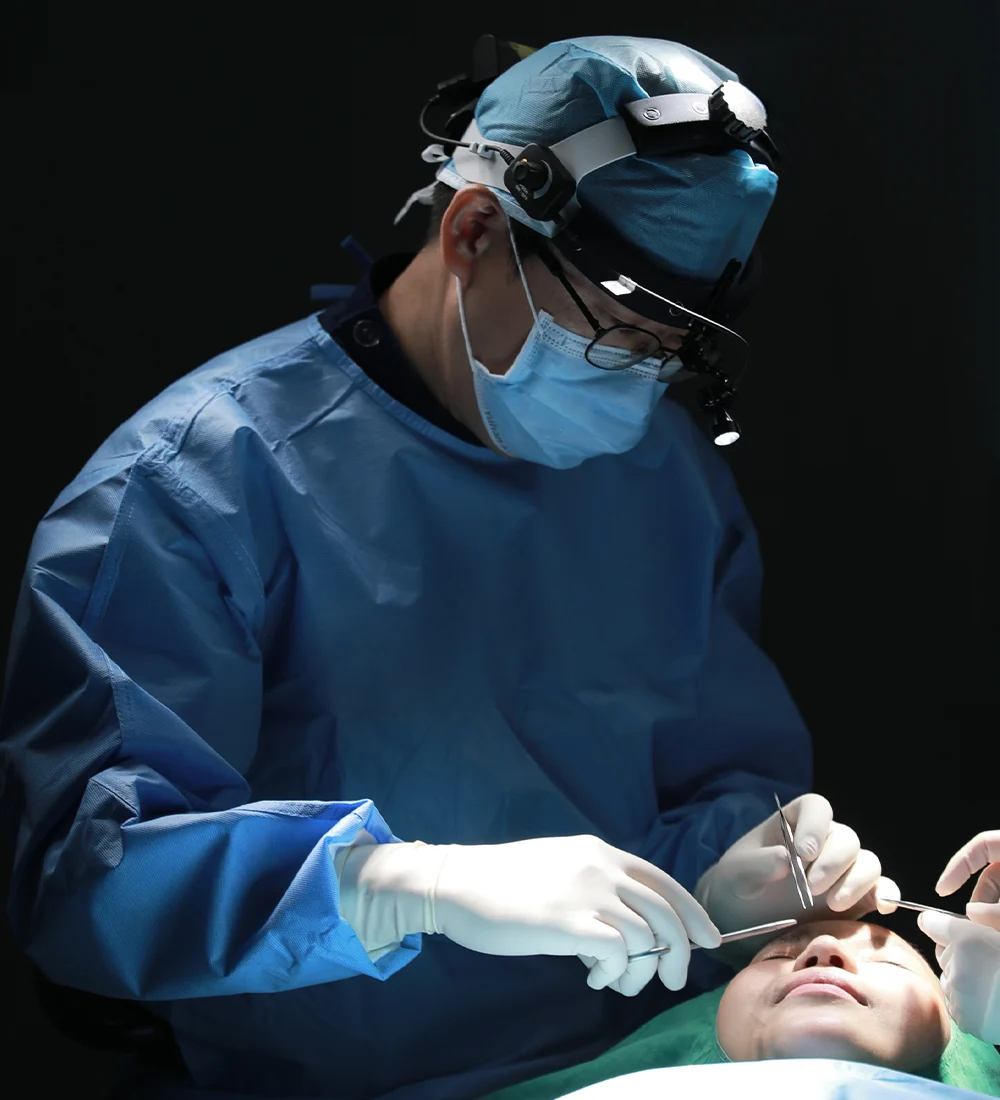
At Garnet this is a single-surgeon operation. Dr. Baek examines the drooping lid at consultation, raises it himself and checks the healing at set intervals. With roughly two surgeries a day at most, no ptosis case is rushed. The stated aim is to address the concern you arrived with and to prevent foreseeable complications; chasing the maximum possible change is not the goal.
One surgeon for every ptosis step
From the crease-line incision and measured levator adjustment to fine symmetry control, Dr. Baek carries out each step.
A single surgeon, start to finish. Dr. Baek plans your levator adjustment, carries it out himself and sees you at every follow-up. No more than two surgeries are booked per day, which leaves each eyelid operation unhurried.
Ptosis correction at Garnet typically runs about one to one-and-a-half hours, usually under local anaesthesia with sedation as appropriate, decided with you after your medical history is reviewed; light anaesthesia lets you cooperate so lid height can be checked during surgery. The steps below outline how it is carried out.

Testing levator strength and lid height
Dr. Baek assesses the lid in person (how low the margin sits, how well the levator works, the crease and any compensatory brow lift) and agrees the plan with you. Levator function and the degree of droop guide how much adjustment is planned.
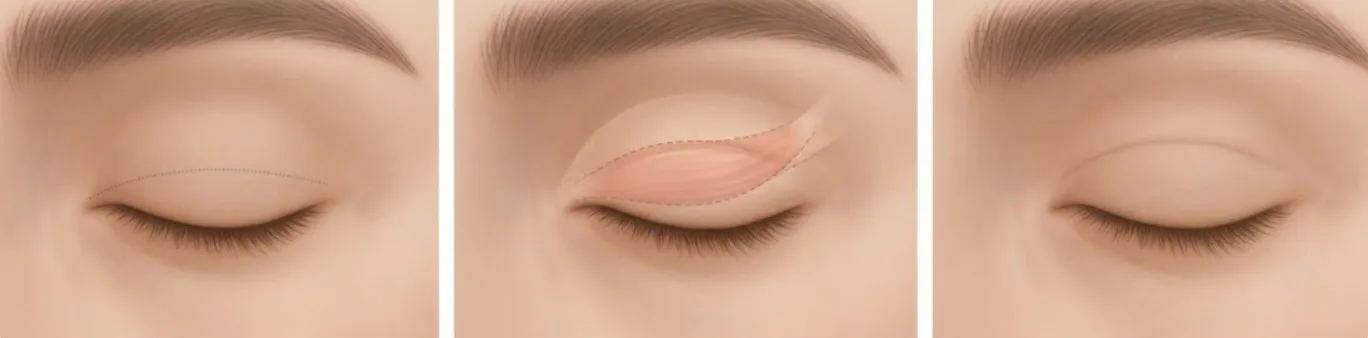
An opening hidden in the natural fold
An incision is placed in the natural upper-lid crease, where the scar settles into the fold and is hidden when the eye is open. This route gives access to the levator aponeurosis and lets the crease be re-formed neatly.
Levator adjustment
The levator aponeurosis is advanced or tightened by a measured amount so the lid margin is raised to its target height. The amount is judged finely against the planned position, for a natural opening that does not look startled.
Symmetry check
With light anaesthesia you can be asked to open your eyes so the lid height and contour are checked against the other side and fine-tuned during the operation. This step affects symmetry more than any other.
Re-forming the fold, trimming skin if needed
The crease is re-formed at a natural height. Where there is also excess skin, an upper blepharoplasty may be combined; lower-lid concerns can be addressed with lower blepharoplasty in the same sitting.
Checking lid height before and after rest
Fine closure with a light dressing. Dr. Baek checks your lids himself before you settle in to rest and again at each follow-up, and the sutures come out at about 7 days.
Why the lid sits low
The upper lid is opened by the levator palpebrae superioris, whose tendon-like aponeurosis attaches to the tarsal plate, with a small smooth muscle (Müller's) assisting. When the aponeurosis stretches, thins or detaches with age, contact-lens wear or prior surgery, the lid margin drops even though the muscle itself may work. This aponeurotic ptosis is the most common adult type. The crease often sits higher than normal as a clue.
Correction restores the lid by advancing or tightening the levator aponeurosis a measured amount, referenced from its anatomy, so the margin reaches a natural height; structured pre-operative assessment improves how predictable that height is (Plast Reconstr Surg 2023; DOI 10.1097/PRS.0000000000010889). Because ptosis is a muscle problem, removing skin alone (an upper blepharoplasty) will not raise a low lid margin; the consultation distinguishes the two so the right operation, or a combination, is planned.
Ptosis correction vs upper blepharoplasty vs non-incision
| Ptosis correction | Upper blepharoplasty | Non-incision (suture) method | |
|---|---|---|---|
| Problem treated | Low lid margin (weak levator) | Excess upper-lid skin | Mild ptosis, thin lid, no excess skin |
| What it adjusts | The eye-opening muscle | Removes redundant skin | Levator via buried sutures |
| Raises the lid margin? | Yes | No; lightens the hood only | Yes, for milder cases |
| Scar | Hidden in the lid crease | Hidden in the lid crease | No skin incision |
| Typical candidate | Sleepy, low-sitting lid | Loose lid skin, normal lid height | Mild droop, suitable lid anatomy |
The choice turns on whether a low lid margin (a muscle problem) or excess skin is the cause, and ptosis with hooding may need both. Structured levator assessment improves how accurately lid height is set (Plast Reconstr Surg 2023; DOI 10.1097/PRS.0000000000010889). Where it is mainly excess skin, an upper blepharoplasty is planned instead; Dr. Baek advises at consultation.
Anaesthesia and safety in ptosis surgery
Anaesthesia
Ptosis correction is usually performed under local anaesthesia with light sedation, decided with you for comfort over a one-to-one-and-a-half-hour operation. Lighter anaesthesia is often preferred so you can open your eyes on request and lid height can be checked during surgery. Your medical history is reviewed beforehand.
The planner of your lid also operates
With about two surgeries a day at most, your eyelid operation is unhurried, and Dr. Baek, who planned it, performs it and follows your recovery. No other doctor operates, and care does not rotate between staff.
Arrangements for visitors needing lid surgery
Garnet is registered with Korea's foreign-patient programme. For visitors from abroad, the coordinator arranges pre-operative checks, scheduling and after-care in English.
Muscle or skin: a clear answer
If the issue turns out to be excess skin with a normal lid margin, Dr. Baek tells you so and plans the right operation. Photos can be reviewed before you travel.
Where the ptosis scar sits
Incisional ptosis correction uses an incision placed in the natural upper-lid crease, so the resulting scar sits within the fold and is hidden when the eye is open. Closed with fine sutures and following the existing crease, it usually settles into a thin, inconspicuous line as it matures, much like a double-eyelid or upper-blepharoplasty scar.
The crease scar is permanent but is designed to disappear into the fold. Healing varies with the individual and skin type, and the early pink line softens over the following months. In milder ptosis with a thin lid and no excess skin, a non-incision suture method may avoid a skin incision altogether. At the 1-, 3- and 6-month visits Dr. Baek checks how the crease line is maturing and gives scar-care advice.
Ptosis correction (incisional) price
Same price as Korean patients. Prices shown exclude 10% VAT; your written quote, issued after the in-person consultation, shows the full amount payable.
Week by week
Do
Keep the head elevated, use cold compresses early, take medication and any eye drops or lubricant as prescribed, sleep on your back, and keep your follow-up visits.
Avoid
Eye rubbing; hard exercise and heavy lifting in the early weeks; alcohol and smoking; very hot showers or saunas; eye make-up on the crease incision until you are cleared; and direct sun on the healing scar.
How long ptosis correction lasts
Ptosis correction gives a lasting result because the levator is reset to lift the lid to its proper height; published series using structured levator assessment report high satisfaction and accurate lid height at follow-up (Plast Reconstr Surg 2023; DOI 10.1097/PRS.0000000000010889). Once healed and symmetric, most patients do not need a repeat for many years.
Because the target height is fine and tissues continue to settle, a small later adjustment is sometimes part of the plan, particularly in more severe or asymmetric cases. Over the long term the aponeurosis can stretch again slowly with age, and a habit of brow-lifting eases once the lid sits correctly. Garnet's approach is careful intra-operative height setting so the result looks natural and symmetric from the start.
Procedures often combined with ptosis correction
Excess upper skin over a low margin
Where there is also excess upper-lid skin, an upper blepharoplasty is commonly planned in the same sitting, so the hood is lifted while the lid margin is raised.
One crease-line approach for both aims
Ptosis correction is often planned with an incision double-eyelid, since the same crease-line approach can open the eye and define the crease together.
Non-incision option
For milder ptosis with a thin lid and no excess skin, a non-incision (suture) method can adjust the levator without a skin incision.
Balancing the result with lower-lid work
Where the lower lids are also a concern, lower blepharoplasty can be combined so the whole eye area is balanced in one recovery.

Ptosis correction risks, plainly
Every operation carries risk. These are explained individually at consultation.
Height and symmetry
The corrected lid can end up slightly under- or over-raised, or a little uneven with the other side, which is why height is checked during surgery and why a small later adjustment is sometimes planned. In series using structured levator assessment, lid height is set accurately in most cases, but fine adjustment is part of managing the rest (Plast Reconstr Surg 2023; DOI 10.1097/PRS.0000000000010889).
Swollen, bruised lids in early recovery
Temporary swelling and bruising.
More eye surface exposed after raising
Raising the lid can expose more of the eye surface. Pre-existing dry eye is assessed beforehand.
Incomplete closure
Temporarily incomplete closure.
Scars
Scar-related issues.
Lid contour
Rarely, a change in lid contour.
What reduces risk in practice: confirming the diagnosis is truly aponeurotic ptosis (and not excess skin or a medical cause), measuring levator function, checking height intra-operatively, and follow-up by the operating surgeon who can make any fine adjustment. At Garnet that planning and after-care are done by one surgeon working through a short daily list. Results are intended improvements and cannot be guaranteed.
Planning ptosis correction from abroad
For ptosis correction, international patients usually plan roughly 7–10 days in Korea, so the surgeon can remove the sutures at about day seven and the early swelling has settled before travel. Because lid height takes time to settle, the coordinator confirms the timing for your specific plan.
Before you travel, send clear photos (eyes relaxed and looking straight ahead, eyes gently closed, and a three-quarter view) and a note on your concern and dates through WhatsApp, LINE or the form below. You'll get a pre-assessment that says whether the issue is the muscle or excess skin, with no hard sell.
Through Korea's foreign-patient programme, with which Garnet is registered, consultations, scheduling and after-care are handled in English. Once you are home, send Dr. Baek photos of your lids by messenger; he keeps reviewing the recovery and judges whether any fine adjustment is needed.
Sources
- Upper Eyelid Ptosis Correction with Levator Advancement Using the Levator Musculoaponeurotic Junction Formula. Plast Reconstr Surg. 2023. DOI 10.1097/PRS.0000000000010889. link
- Upper Eyelid Blepharoplasty: Surgical Techniques and Results — Systematic Review and Meta-analysis. Aesthetic Plast Surg. 2023. DOI 10.1007/s00266-023-03436-6. link
- Alhumaemydi R, Diab MM, AlSuhaibani AH. Refining transcutaneous lower blepharoplasty: Key steps for minimizing complications. Saudi J Ophthalmol. 2025. DOI 10.4103/sjopt.sjopt_89_25. link
Citations are provided for general education. This page is informational and does not replace an in-person consultation; suitability, technique and recovery are individual.
Questions about ptosis correction
| Ptosis correction | Upper blepharoplasty | Non-incision (suture) method | |
|---|---|---|---|
| Problem treated | Low lid margin (weak levator) | Excess upper-lid skin | Mild ptosis, thin lid, no excess skin |
| What it adjusts | The eye-opening muscle | Removes redundant skin | Levator via buried sutures |
| Raises the lid margin? | Yes | No — lightens the hood only | Yes, for milder cases |
| Scar | Hidden in the lid crease | Hidden in the lid crease | No skin incision |
| Typical candidate | Sleepy, low-sitting lid | Loose lid skin, normal lid height | Mild droop, suitable lid anatomy |
Reviews on Google Maps
I’m so happy I chose this clinic for my lower blepharoplasty. I was traveling from abroad by myself, so I was a little nervous, but from the beginning I felt comfortable and truly cared for. Everyone was kind, patient, and professional…
Came in for an in-person consult and ended up choosing Garnet and Dr.Baek for my non-incisional DES and tiplasty/alarplasty. I communicated with Kelly (English consultant) from the start till now (3 weeks post-op). She really help me feel…
My under-eyes have been sagging and folding for years... I tried to cover it up with makeup, but it actually got stuck in the wrinkles and made it stand out even more. While going for consultations, I noticed that the bigger the hospital…
Ask Dr. Baek’s team
Send photos and your question before you travel. An English-speaking coordinator reviews every enquiry and replies with guidance on whether ptosis correction is appropriate for you, the likely plan and timing.
- ✓ Reviewed by the clinic coordinator, not a bot
- ✓ Photo-based pre-assessment before you fly
- ✓ Foreign-patient scheduling & after-care
- ✓ One surgeon for consultation, surgery and follow-up
Prefer to chat now? Reach the coordinator directly:
Request a consultation
Find the clinic
51 Apgujeong-ro 30-gil, Gangnam-gu, Seoul — near Apgujeong Station