Garnet · Apgujeong, Seoul · English coordinator · WhatsApp · LINE · Email
Garnet clinic, Apgujeong
Garnet/Eye Surgery/Lateral canthoplasty

Eye Surgery · Apgujeong, Seoul

Lateral canthoplasty in Korea — outer corner extended

Dr. In-Soo Baek
Dr. In-Soo BaekConsults, operates and follows up himself
10,000+eye procedures since 2011
~7 dayssutures out
30-60 minprocedure time
1surgeon, every step
Anaesthesia
Local / sedation
Surgery time
~30-60 min
Sutures out
~7 days
Social downtime
~1-2 weeks
Follow-up
1 / 3 / 6 months
10,000+ eye procedures since 2011· Board-certified plastic surgeon — accredited member, Korean Society of Plastic & Reconstructive Surgeons· Foreign-patient programme registered· Single-surgeon practice

Lateral canthoplasty at a glance

Lateral canthoplasty extends the outer corner of the eye, lengthening the visible eye opening and softening a steep outer angle. At Garnet, board-certified plastic surgeon Dr. In-Soo Baek plans and performs every lateral canthoplasty himself and sees each patient through to the final follow-up.

What it is
A procedure that extends the outer corner of the eye (the lateral canthus), lengthening the visible palpebral fissure and reducing a steep outer slant, sometimes with a small lower-corner opening to balance the shape.
Best for
A short outer eye angle or an upward outer slant where a longer, calmer eye shape is wanted - often combined with double-eyelid or inner-corner surgery.
Who performs it
Only Dr. In-Soo Baek, a board-certified plastic surgeon and Garnet's sole operating doctor. The same surgeon consults, operates and follows up.
Downtime
Sutures out at about 7 days; most social downtime over by ~1-2 weeks; the outer-corner shape and any scar settle over several months.
Longevity
The outer angle is repositioned structurally, so the result is intended to be lasting; preserving the canthal angle is associated with stable outcomes (Kim et al., 2016).
How to start
Send photos of your outer corners through WhatsApp or the form below for a no-obligation pre-assessment before you travel.
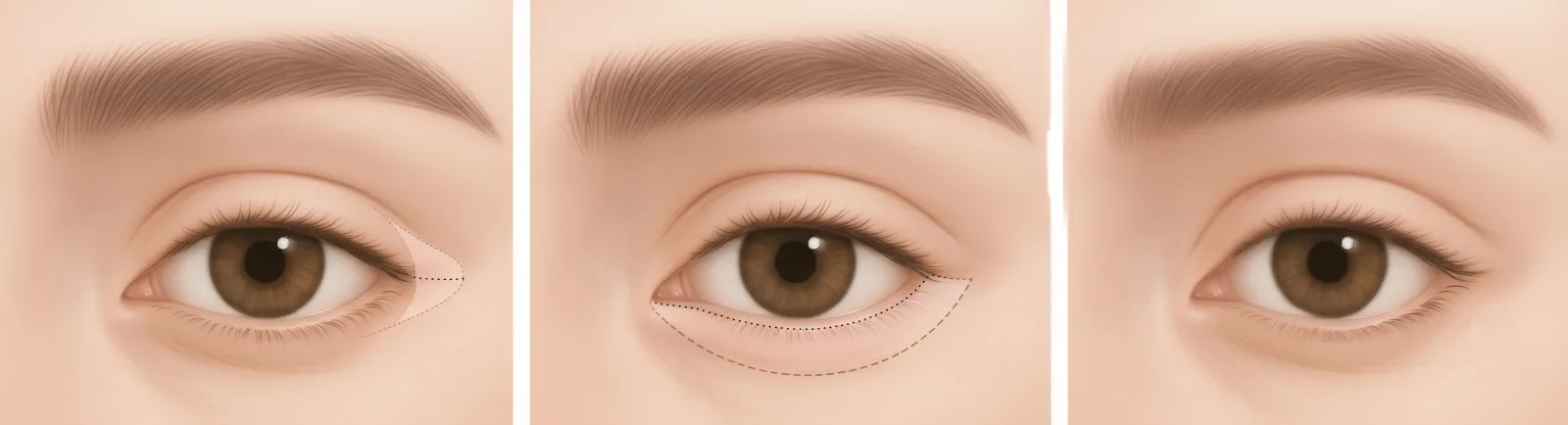
Illustrated steps of lateral and lower canthoplasty at Garnet: outer corner outlined, lower lid line extended, and the healed eye shape
Illustration — the outer corner is extended and the lower-lid line gently lowered along the dotted lines, softening the angle of the eye.

Is lateral canthoplasty right for you?

A short or up-slanted outer eye angle

  • A short outer eye angle or an upward outer slant you would like softened
  • Wanting a longer, calmer eye shape that still suits your features
  • Planning inner-corner or lower-lid surgery and wanting the outer corner balanced too
  • General good health and realistic, discussed expectations
  • Able to set aside ~1-2 weeks of social downtime and attend the follow-up visits

Lax lower lids that extension could pull

  • Lax or poorly supported lower lids, where over-extension could pull the lid - assessed carefully
  • A wish to extend the corners as much as possible regardless of proportion
  • A strong tendency for the outer corner to scar back - planned around individually
  • Uncontrolled medical conditions - assessed individually at consultation
  • Looking for a non-surgical alternative, which cannot truly extend the outer angle
Dr. In-Soo Baek

Dr. In-Soo Baek

Director & sole operating surgeon
Korean medical licence no. 77407

Operate on what you came for. Trained at Korea University Medical Center. Every case planned, performed and reviewed by the same hands.

1Operating surgeon
~2Surgeries per day
7Registered techniques
  • Board-certified plastic surgeon
  • Korea University College of Medicine & graduate school (plastic surgery)
  • Member, Korean Society of Plastic and Reconstructive Surgeons (facial-contour, eye & rhinoplasty groups)
  • Plans, performs and follows up each case personally
About the surgeon →

Before & After

Outer-corner results are identifiable, so full before/after sets are reviewed privately at consultation with consent and are not published here. Results, recovery and suitability vary by individual and are not guaranteed.

Request before & after examples privately

Extending the outer corner

A lateral canthoplasty is an eye-surgery procedure that extends the outer corner of the eye (the lateral canthus) to lengthen the visible palpebral fissure and reduce a steep outer slant. By repositioning the outer canthal angle - and, where planned, opening the lower-outer corner slightly - it is intended to give a longer, calmer eye shape that still suits your features.

The outer corner of the eye, where the upper and lower lids meet, sets much of the eye's length and slant. When the outer angle sits high or the eye looks horizontally short, the expression can read as sharper or smaller than a person wants. Unlike the inner corner, the outer corner has no single skin fold to release; the change comes from carefully repositioning the canthal angle itself.

Lateral canthoplasty extends this outer angle to lengthen the opening and soften the slant. Done conservatively it can also bring a touch of the lower-outer eye down, opening the eye shape. The technique matters: preserving a natural lateral canthal angle and avoiding over-correction are what keep the result looking unoperated and stable over time (Kim et al., Arch Plast Surg 2016; DOI 10.5999/aps.2016.43.4.316).

At Garnet this is a single-surgeon operation. Dr. Baek measures the outer angle at consultation, performs the extension himself and reviews healing at set intervals. Only two surgeries are booked per day. The aim is to address the concern you arrived with and keep the outer corner looking like your own; chasing the maximum possible opening is not the goal.

One surgeon for the outer corner, start to finish

From outer-corner assessment to the wide-angle extension and fine closure - every step by Dr. Baek.

Dr. In-Soo Baek performing surgery at Garnet Plastic Surgery, Apgujeong

A single surgeon, start to finish. Dr. Baek designs the outer-corner extension, performs it himself and sees you at every follow-up. With the day capped at two surgeries, a lateral canthoplasty is never squeezed between other cases.

Lateral canthoplasty typically takes about 30-60 minutes and is usually performed under local anaesthesia, with light sedation added where appropriate for comfort; the choice is decided with you and the anaesthesia team after your history is reviewed. The steps below outline how the wide-angle opening is carried out at Garnet.


01

Outer-corner angle, length and slant

Dr. Baek assesses the outer-corner angle, the eye length and slant, and the lower-lid support, and agrees the amount of extension and the design with you. Whether to combine inner-corner or lower-lid work is discussed here.

02

Outer-corner design

The extension is planned so the new outer corner sits in a natural position and the slant is softened without being flattened. The design is tailored to your eye shape and lower-lid tone so the result looks proportionate.

03

Wide angle release

Working through a conjunctival incision at the outer corner, the canthal angle is extended; where planned, a small lower-canthal opening is added so the eye lengthens and opens without over-correcting. The canthal support is respected and never simply divided.

04

Fixation & fine closure

The outer corner is positioned and secured so it resists scarring back inward, and the lining and any skin are closed finely. Keeping the corner stable is what helps the lengthening hold over time.

05

Inner-corner or lower-lid work alongside

Where the consultation shows it, an epicanthoplasty at the inner corner or a lower blepharoplasty is performed in the same sitting so the corners and the lid balance.

06

Review

Dr. Baek reviews the closure himself. Because Garnet is single-surgeon, Dr. Baek also removes the outer-corner sutures and sees you at each follow-up.

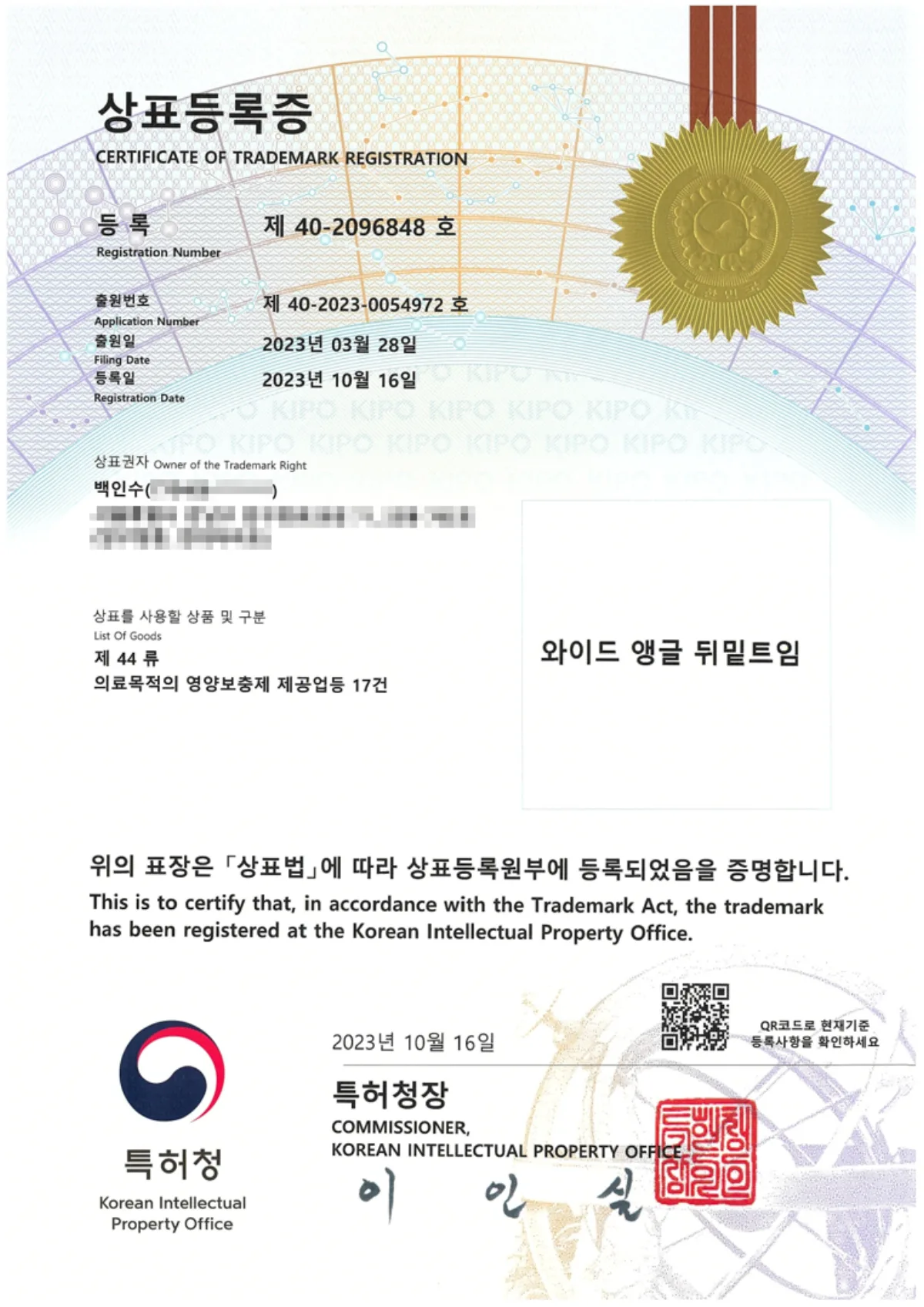
Lateral canthoplasty registered technique certificate

Garnet's outer-corner technique is registered as the trademarked Wide angle™ lateral canthoplasty, performed with an accompanying lower-canthal opening where indicated. The trademark identifies the technique by name and makes no claim about outcomes.

The lateral canthus and why technique matters

At the outer corner, the upper and lower tarsal plates meet at the lateral canthal tendon, which anchors the lids to the bony orbital rim. Lengthening the eye here means working with this junction and the conjunctival lining. Simply cutting skin is not enough, because the outer corner has a tendency to scar back toward its original position if the support is not handled carefully. Approaches that preserve or precisely reconstruct the canthal angle are associated with fewer complications and more stable results (Aesthet Surg J 2025; DOI 10.1093/asj/sjaf062).

Garnet's technique is a lateral canthoplasty with an accompanying lower-canthal (bottom) opening where indicated, planned for each eye so the outer corner is extended and the slant softened without over-opening. The same outer-corner principles inform the matching work sometimes combined with lower blepharoplasty, where the outer corner and the lower lid are considered together, and with round eye correction when the lid shape itself needs reshaping.

Lateral vs medial vs round-eye opening

Lateral canthoplastyEpicanthoplasty (medial)Round eye correction
Corner addressedOuter cornerInner cornerOuter corner / lower lid
What it doesExtends the outer angleReleases the inner foldReshapes a rounded or retracted lid
Effect on slantSoftens a steep slantLittle effect on slantRestores a natural lid line
Common pairingLower blepharoplastyDouble-eyelid surgeryCanthoplasty / lid support
Typical useShort or steep outer eyeProminent inner foldOver-rounded or scleral-show eye

An integrated lateral canthoplasty that extends the fissure while preserving stability is described in Aesthet Surg J 2025 (DOI 10.1093/asj/sjaf062). The right corner - or combination - is individual; Dr. Baek advises at consultation, and the matching pages for epicanthoplasty and round eye correction explain each in detail.

Safety during lateral canthoplasty

Anaesthesia

Lateral canthoplasty is usually performed under local anaesthesia, with light sedation added where it helps comfort over a short procedure. Before the day, your medical history and allergies are checked, and the anaesthetic plan for this short eye procedure is agreed with you and the anaesthesia team.

Time to carry out the planned outer extension

With only two surgeries a day, Dr. Baek has time to carry out the outer-corner extension he planned and to review your recovery himself. No second operating doctor is involved at any stage.

Booking help in English from arrival to review

Garnet is registered with Korea's foreign-patient programme, and an English-speaking coordinator arranges your pre-operative checks, scheduling and after-care around the canthoplasty.

When extension risks reverting or over-opening

If an outer-corner extension would over-open the eye or risk reverting, or if a different combination suits you better, that is said at the consultation. Photos can be reviewed before you travel.

Where the outer-corner incision sits

Much of a lateral canthoplasty is done through the conjunctiva (the inner lining) at the outer corner, so a significant part of the work leaves no external skin scar. Where a short skin extension is needed at the very outer corner, the line is placed in the natural outer-corner contour so it settles discreetly as it heals.

Any external mark at the outer corner is permanent, but it is designed to fade into the corner contour once mature and is rarely obvious in everyday settings. The outer corner can be prone to scarring back inward, so stable fixation and a tension-aware closure matter; Dr. Baek reviews scar maturation and corner position at the 1-, 3- and 6-month visits and advises on care and, if ever needed, revision.

Week by week

Days 1-3
Mild swelling and some bruising around the outer corners build over the first few days. Rest with your head raised and cool the outer corners with compresses as advised. Discomfort is usually mild and managed with simple medication; the corners may feel tight or watery.
Days 4-7
Swelling begins to ease and bruising starts to fade. The outer-corner line, where present, is still pink. Light everyday tasks are usually manageable, though the outer corners still look freshly operated.
Day 7
Sutures, where used externally, are removed around day 7; internal conjunctival sutures may dissolve. The corner looks neater once the stitches are out, though residual swelling continues for a while.
Weeks 1-2
Most social downtime is over for everyday settings, with some residual swelling and pinkness that keep easing. Eye make-up is resumed only when cleared, and the outer corner is still settling.
Months 1-6
The outer-corner shape and position settle and any line matures over the following months. Dr. Baek checks the corners at 1, 3 and 6 months, in person or by messenger once you are home.

Do

Sleep and rest with the head raised early, use cold and then warm compresses as advised, take medication as prescribed, keep the outer corners clean and dry, and attend your follow-up visits.

Avoid

Rubbing or pulling at the outer corners, eye make-up until cleared, strenuous exercise and bending early on, alcohol and smoking, and direct sun on the healing area.

How long does a lateral canthoplasty last?

Because lateral canthoplasty repositions the outer canthal angle structurally, the lengthening is intended to be a lasting change. Preserving the canthal angle and securing the corner stably are associated with results that hold and with fewer complications than over-aggressive techniques (Kim et al., Arch Plast Surg 2016; DOI 10.5999/aps.2016.43.4.316).

Individual results depend on the original anatomy, lower-lid support and how the corner heals. A known consideration is partial relapse, where the outer corner scars back toward its starting position; conservative, well-fixed planning lowers this risk, and any concern is assessed individually. The rest of the face keeps ageing normally, and an extended outer corner does not rule out other eyelid procedures later.

Procedures combined with lateral canthoplasty

Epicanthoplasty

Lateral canthoplasty is often planned with an epicanthoplasty at the inner corner, so both ends of the eye are balanced and the opening is lengthened evenly.

Under-eye bags alongside a longer outer angle

A lower blepharoplasty may be combined where under-eye bags or lower-lid skin are also a concern, and the outer corner and lower lid are treated as one unit.

When the upper crease is part of the plan

Non-incision or incision double-eyelid surgery may be added where the upper-lid crease is part of the overall eye plan.

Round eye correction

Where the lid shape needs reshaping as well as the length, round eye correction may be planned alongside so the lid line and the corner are considered together.

Garnet Plastic Surgery, Apgujeong, Seoul

Lateral canthoplasty risks

Every operation carries risk. Careful patient selection is part of lowering the risk, and these are explained individually at consultation.

  • Relapse

    Partial relapse of the outer corner.

  • Lower-lid position

    If extended too far or with weak lower-lid support, a pulled-down or rounded lower lid. Techniques that preserve the canthal angle and fix the corner stably are reported to reduce these complications (Arch Plast Surg 2016; DOI 10.5999/aps.2016.43.4.316).

  • Watering and irritation

    Temporary watering or irritation, and conjunctival redness.

  • Asymmetry

    Mild asymmetry between the corners.

  • Outer corners opened beyond a natural look

    Over-opened outer corners can look unnatural, which is why Garnet plans a conservative extension.

  • Scar

    Rarely a visible outer-corner scar.

What reduces risk in practice: realistic planning of how far to extend, checking lower-lid support before opening, stable fixation, and follow-up by the operating surgeon. Two operations a day and one surgeon for every step leave time for that planning and for after-care at the outer corner.

Planning a lateral canthoplasty from abroad

Most international patients plan roughly 7-10 days in Korea for a lateral canthoplasty, so sutures can be removed by the surgeon before travel and the early swelling has settled. The coordinator confirms the timing for your specific plan, especially if you are combining it with inner-corner or lower-lid surgery.

Before you travel, send clear photos (front and a relaxed close-up of the outer corners) and a note on your concern and dates through WhatsApp, LINE or the form below. You'll get a pre-assessment that covers whether an extension is worthwhile and stable for your anatomy, with no sales pressure.

Consultations, scheduling and after-care are arranged in English under Garnet's registration with Korea's foreign-patient programme. Once you are home, you can keep sending Dr. Baek photos of your outer corners by messenger.

Sources

  1. Kim YJ, Lee KH, Choi HL, Jeong EC. Cosmetic Lateral Canthoplasty: Preserving the Lateral Canthal Angle. Arch Plast Surg. 2016. DOI 10.5999/aps.2016.43.4.316. link
  2. Xu P, et al. Integrated Lateral Canthoplasty for Simultaneous Lateral and Vertical Palpebral Fissure Enlargement. Aesthet Surg J. 2025. DOI 10.1093/asj/sjaf062. link
  3. Hwang K. Medial Epicanthoplasty with the Skin-Redraping Technique: Technical Refinements for Predictable Outcomes. Plast Reconstr Surg. 2025. DOI 10.1097/PRS.0000000000011533. link

Citations are provided for general education. This page is informational and does not replace an in-person consultation; suitability, technique and recovery are individual.

Questions about lateral canthoplasty

What does lateral canthoplasty actually do?
It extends the outer corner of the eye to lengthen the visible opening and soften a steep outer slant, sometimes with a small lower-corner opening to balance the shape. The aim is a longer, calmer eye that still looks natural; the amount is planned at consultation.
How is lateral canthoplasty different from epicanthoplasty or round eye correction?
Each of the three changes the eye opening, at a different corner or part of the lid. A lateral canthoplasty extends the outer angle; an epicanthoplasty releases the inner-corner fold; a round eye correction reshapes an over-rounded or retracted lid. The right corner, or a combination, is individual.
Lateral canthoplastyEpicanthoplasty (medial)Round eye correction
Corner addressedOuter cornerInner cornerOuter corner / lower lid
What it doesExtends the outer angleReleases the inner foldReshapes a rounded or retracted lid
Effect on slantSoftens a steep slantLittle effect on slantRestores a natural lid line
Common pairingLower blepharoplastyDouble-eyelid surgeryCanthoplasty / lid support
Typical useShort or steep outer eyeProminent inner foldOver-rounded or scleral-show eye
Does Dr. Baek perform the surgery himself?
Yes. Garnet is a single-surgeon practice, so Dr. Baek handles the consultation, the canthoplasty and the follow-up personally. No other doctor operates or takes over your care. The same surgeon removes your sutures.
Will there be a visible scar at the outer corner?
Much of the work is done through the inner conjunctival lining, so a large part leaves no external scar. Where a short skin extension is needed, the line sits in the natural outer-corner contour; for the inner corner instead, see epicanthoplasty.
Can lateral canthoplasty be combined with other eye surgery?
Often, yes. It is frequently planned with an epicanthoplasty at the inner corner or a lower blepharoplasty in the same sitting where the consultation shows it balances the eye shape.
What anaesthesia does lateral canthoplasty use, and does it hurt?
Local anaesthesia is usual, with light sedation for comfort where appropriate, and the procedure takes roughly 30-60 minutes. Most people describe pressure and watering with little sharp pain, settling within a few days and managed with simple medication.
How long is recovery after lateral canthoplasty?
Sutures, where external, come out around day 7 and most social downtime is over by about 1-2 weeks, with residual swelling that keeps easing. The outer-corner shape settles over the following months.
How long should I stay in Korea?
A stay of about 7-10 days is typical, giving time for suture removal and for early swelling at the outer corners to settle before travel. Combining it with inner-corner or lower-lid work can change that, and the coordinator sets the dates with you.
Does the outer corner ever go back to how it was?
Partial relapse, where the outer corner scars back toward its starting position, is a known consideration. Conservative planning and stable fixation lower this risk; if the corner relaxes more than wished, Dr. Baek assesses a revision individually.
Am I a good candidate for lateral canthoplasty?
If your outer eye angle is short or steep and you want a natural, proportionate extension, you may be a good candidate. If your lower lids are lax or already rounded, round eye correction may be more appropriate; this is discussed openly at consultation.
Will my eyes look obviously operated?
The aim is a natural extension that softens the slant. The maximum possible change is not the target. Planning a conservative opening and keeping the corners symmetrical is intended to avoid an obviously operated look; the plan is agreed with you beforehand.
What are the main risks?
The main concerns are partial relapse and, with weak lower-lid support, a pulled or rounded lower lid; temporary watering, redness and mild asymmetry are also possible. These are uncommon and are explained individually at consultation, and careful planning reduces them.
Can I see before-and-after photos?
Outer-corner results are identifiable, so full before/after sets are reviewed privately at consultation with consent and are not published. Dr. Baek will show relevant examples and discuss what is realistic and stable for your anatomy.
Do you perform revision lateral canthoplasty?
Yes. Dr. Baek assesses revision cases - including relapsed corners, over-opened eyes or pulled lower lids from previous surgery - individually; bring records and photos to the consultation so the history can be considered.
How do I start without flying to Korea first?
Send photos of your outer corners and your dates through WhatsApp, LINE or the form below. You'll get a pre-assessment, including whether an extension is worthwhile and stable for your eye, before you plan a trip.

Reviews on Google Maps

★★★★★

My mom recently had a brow lift and lower blepharoplasty with Dr. Baek, and our experience has been wonderful so far. The Garnet team was incredibly kind and welcoming, with Kelly assisting us as our English consultant—she made everything…

T S7 months ago
★★★★★

I’m so happy I chose this clinic for my lower blepharoplasty. I was traveling from abroad by myself, so I was a little nervous, but from the beginning I felt comfortable and truly cared for. Everyone was kind, patient, and professional…

S L2 months ago
★★★★★

Came in for an in-person consult and ended up choosing Garnet and Dr.Baek for my non-incisional DES and tiplasty/alarplasty. I communicated with Kelly (English consultant) from the start till now (3 weeks post-op). She really help me feel…

Stephanie Li6 months ago
★★★★★

My under-eyes have been sagging and folding for years... I tried to cover it up with makeup, but it actually got stuck in the wrinkles and made it stand out even more. While going for consultations, I noticed that the bigger the hospital…

조희원2 months ago · Translated by Google

Read all reviews on Google Maps

Ask Dr. Baek’s team

Send photos and your question before you travel. An English-speaking coordinator reviews every enquiry and replies with guidance on whether surgery is appropriate, the likely plan and timing.

  • ✓ Reviewed by the clinic coordinator, not a bot
  • ✓ Photo-based pre-assessment before you fly
  • ✓ Foreign-patient scheduling & after-care
  • ✓ One surgeon for consultation, surgery and follow-up

Prefer to chat now? Reach the coordinator directly:

Request a consultation

Find the clinic

51 Apgujeong-ro 30-gil, Gangnam-gu, Seoul — near Apgujeong Station

WhatsApp