A facelift and fat grafting solve two different parts of an ageing face: sagging along the jawline, and hollowing in the cheeks and temples. A lift repositions tissue that has descended; fat grafting restores volume that has thinned. A face can look lifted yet still hollow if only one problem is addressed, which is why the two are so often discussed together.
The short answer
A facelift repositions sagging deep tissue; fat grafting refills areas that have lost volume. They treat different problems.
A lift on its own can look tight but hollow if volume loss is significant; adding grafted fat can restore softness where it has thinned.
Not everyone needs both. Whether volume is added is a judgement made face by face, never a fixed package.
When both are indicated, they can usually be done in one session under the same anaesthetic, with the same surgeon planning and performing throughout.
An ageing face changes in more than one way at once. Deep tissue and the SMAS layer descend, so the jawline blurs and folds deepen. This is what a deep-plane facelift addresses: it releases and repositions that layer to the jawline and does not simply pull skin. But the face also loses fat volume over time, so the cheeks, temples and the area around the mouth flatten and hollow.
Illustration: the deeper facial layer (SMAS, shown in yellow) is released and repositioned as one unit with the skin, rather than pulling the skin alone.
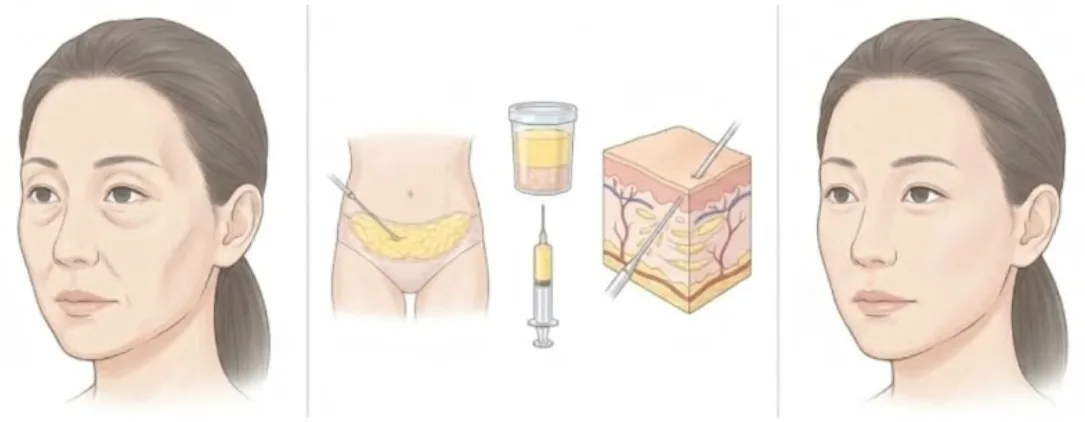
These are separate problems with separate solutions. A lift moves tissue that has fallen back to where it belongs; it does not, on its own, replace volume that has disappeared. Fat grafting takes your own fat from the abdomen or thigh and places it where volume has thinned, and that is what restores the softness. Understanding that they do different jobs is the key to understanding why they are discussed together.
It is a common misunderstanding that a facelift 'fills' the face. It does not. If someone's main concern is flatness or hollowing more than sagging, a lift alone may not give them what they were hoping for, and a surgeon should say so at the assessment.
Why both
Why the two are often planned together
When a face has both descended and deflated, which is common past a certain age, treating only one leaves the other visible. A lift without volume can look tightened but drawn, because tight skin over a hollow structure reads as gaunt. Adding volume without a lift can look fuller but still slack, because the underlying tissue is still in the wrong place.
Planning them together lets the surgeon think about the face as one whole shape. The lift re-establishes the contour of the jaw and mid-face; the grafted fat softens the transitions and restores fullness where it has been lost. The aim is a face that looks like a rested version of itself: younger, but still yourself, without the look of an obvious operation.
This is also why combining them is a clinical judgement. The two are planned together only when both problems are actually present. Where volume loss is minimal, a lift alone is the better plan, and grafting adds cost and swelling for little benefit.
Do you need both?
How to tell whether you need both
It depends on your face, and on what an examination of your jawline, cheeks and temples shows. Broadly, a lift is about position and a graft is about volume. If your main concern is a heavy jawline, jowls or deep folds and your mid-face still looks reasonably full, a lift may be enough. If your concern is that your cheeks and temples have flattened or hollowed, volume is the missing piece, and a lift alone will not supply it.
Illustration: the patient's own fat is taken, processed, and re-placed beneath the skin where volume has been lost.
Many faces sit somewhere in between, which is exactly where combining the two earns its place. During assessment the surgeon looks at where tissue has descended, where fat has thinned, and how your skin behaves, then advises what each element would and would not change for you. Photographs from your younger years can help show what volume you have lost.
Some patients also ask about stem-cell (stromal-fraction) fat grafting as an alternative grafting approach. Whether that is appropriate is a separate, individual discussion, and no grafting method can promise a guaranteed amount of retained volume. The right plan is the one matched to what your face actually needs. A surgeon who is willing to say 'you don't need this part' is a good sign.
One session
Combining them in a single session
When both are indicated, a facelift and fat grafting are usually performed together in one operation under the same anaesthetic. This is generally more efficient than two separate trips: one recovery period, one set of downtime, and the surgeon can shape lift and volume in relation to each other while the face is open in front of them, with no guessing across two dates.
Practically, fat is harvested through small cannula access points from the abdomen or thigh, prepared, and placed into the areas that need volume, while the deep-plane lift repositions the SMAS layer and the incisions run from the temporal hairline down to the jawline. Because both are worked on in the same session, the added time is modest and does not double the operation. Sutures from the lift are typically removed around 10 and 14 days; the fat-harvest sites heal with minimal marking.
Recovery reflects the lift more than the graft: swelling and bruising for the first weeks, settling over the following months. Grafted fat takes time to establish, so the final softened result arrives gradually. For a fuller picture of what those weeks look like, see the deep-plane facelift recovery timeline.
At Garnet
How Garnet plans a combined lift and volume
Garnet is a single-surgeon clinic in Apgujeong, Seoul. Dr. In-Soo Baek is a board-certified plastic surgeon (Korean medical licence no. 77407) who performs both facial lifting and fat grafting himself, so the two are planned by one person as a single shape and never handed between doctors. With more than 2,000 facelifts and a large fat-grafting caseload behind him, he assesses at consultation whether you genuinely need volume added or whether a lift alone is the better plan.
Because the same surgeon consults, operates and follows up, with structured reviews at 1, 3 and 6 months, the plan stays consistent from the first assessment through recovery, and any adjustment of volume as the graft settles is discussed with the person who did the surgery. The clinic caps the day at two operations so a combined case has unhurried time. You can start with a no-obligation online assessment and send photos before you plan any travel.
Real Results
Before & After
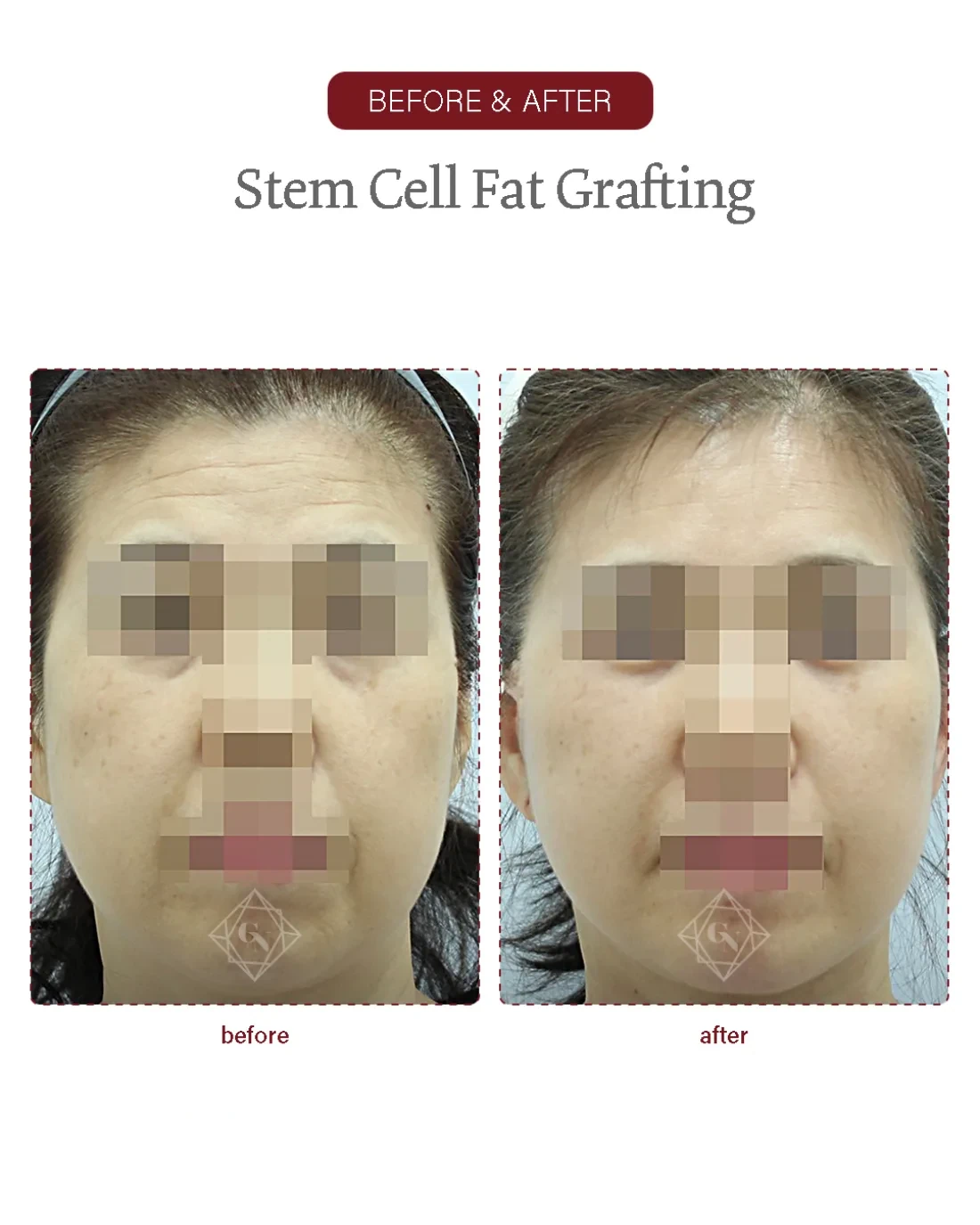
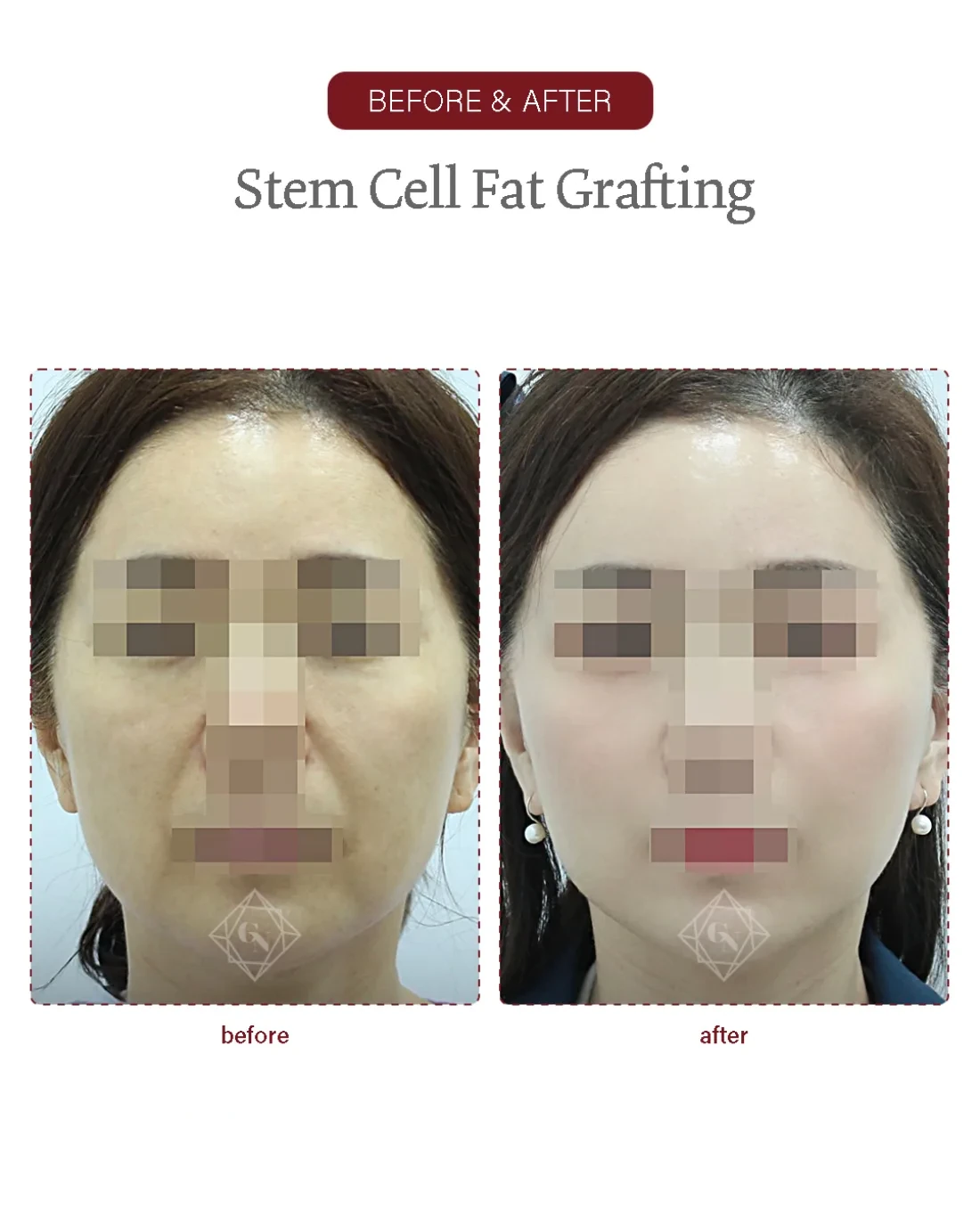
Fat-grafting and contouring results of actual Garnet patients (published with consent, with date, procedure and clinic labelled). Results, the amount of fat retained, recovery and suitability vary by individual and are not guaranteed.
Prices
Price at Garnet
Stem cell fat grafting
From₩3,500,000 + VATExcluding VAT (10% VAT is added at payment)Book now
Same price as Korean patients. Prices shown exclude 10% VAT; your written quote, issued after the in-person consultation, shows the full amount payable.
Dr. In-Soo Baek
Director & sole operating surgeon
Korean medical licence no. 77407
Operate on what you came for. Trained at Korea University Medical Center. Every case planned, performed and reviewed by the same hands.
1Operating surgeon
~2Surgeries per day
7Registered techniques
Board-certified plastic surgeon
Plastic surgery training at Korea University College of Medicine & graduate school
Korean Society of Plastic and Reconstructive Surgeons member, in its facial-contour, eye & rhinoplasty groups
Consults, operates and follows up each case himself
Peer-reviewed papers behind the facts on this page. Each describes findings in its own study group — not results at Garnet — and none predicts your own outcome.
Pastorek N et al. Deep Plane Face-Lift. Facial Plastic Surgery Clinics of North America. 2005. doi:10.1016/j.fsc.2005.04.003
Hassan A et al. Autologous Fat Grafting Versus Facial Fillers in Facial Cosmesis: A Systematic review and Meta-analysis. Aesthetic Plastic Surgery. 2026. doi:10.1007/s00266-026-06132-3
Kamer FM et al. Deep plane rhytidectomy: a personal evolution. Facial Plastic Surgery Clinics of North America. 2005. doi:10.1016/j.fsc.2004.04.011
Deane EC et al. Fat Grafting the Male Face. Facial Plastic Surgery Clinics of North America. 2024. doi:10.1016/j.fsc.2024.03.003
FAQ
Common questions
Why add fat grafting to a facelift?
Because a lift and a graft solve different problems. A facelift repositions tissue that has sagged; fat grafting restores volume that has thinned in the cheeks, temples and around the mouth. If a face has both descended and deflated, treating only the sagging can leave it looking tight but hollow, which is why the two are often planned together when both problems are present.
Does a facelift restore lost volume on its own?
No. A facelift repositions deep tissue and tightens the jawline and mid-face contour, but it does not replace fat that has been lost over time. If your main concern is flatness or hollowing more than sagging, a lift alone may not give the fuller look you want. That is what fat grafting is for.
Do I actually need both procedures?
It depends entirely on your face. If your concern is a heavy jawline and jowls with reasonably full cheeks, a lift may be enough. If your cheeks and temples have flattened, volume is the missing piece. Many faces need both; some need only one. A surgeon should tell you plainly which parts you do and do not need.
Can a facelift and fat grafting be done in one session?
Yes, when both are indicated they are usually performed together under the same anaesthetic. That means one recovery period instead of two, and the surgeon can shape lift and volume in relation to each other during the same operation instead of across two separate dates.
Where does the grafted fat come from?
Your own fat, harvested through small cannula access points from the abdomen or thigh, then prepared and placed into the areas that have lost volume. Because it is your own tissue, there is no foreign-material implant involved in the grafting itself.
Is combining the two just a way to sell more surgery?
It should not be. Combining a lift and grafting is a clinical judgement made only when both problems are actually present. Where volume loss is minimal, a lift alone is the sounder recommendation, and adding a graft simply adds cost and swelling for little benefit. A hard sell to add volume you do not need is a warning sign.
How long is recovery when both are done together?
Recovery reflects the lift more than the graft. Expect swelling and bruising in the first weeks, settling over the following months, with lift sutures typically removed around 10 and 14 days. Grafted fat establishes gradually, so the softened, fuller look develops over time and does not appear immediately.
Does grafted fat last, and can you guarantee how much stays?
Grafted fat that establishes tends to remain, but no method can promise a fixed amount of retained volume. Some of the transferred fat is naturally reabsorbed, and how much varies from person to person. Your surgeon can explain what is realistic for you; a guaranteed figure cannot be quoted.
What is the difference between fat grafting and stem-cell fat grafting?
Both use your own fat, but stem-cell (stromal-fraction) grafting supplements the transfer differently. Whether it is appropriate for you is an individual discussion at consultation. No grafting approach can guarantee retained volume, so the choice rests on your specific case and on no claim of superiority.
Can I find out whether I need both before travelling?
Yes. You can send photographs for a pre-assessment in an online consultation, and the surgeon can advise whether your face needs a lift, volume, or both before you commit to any travel or scheduling.
My mom recently had a brow lift and lower blepharoplasty with Dr. Baek, and our experience has been wonderful so far. The Garnet team was incredibly kind and welcoming, with Kelly assisting us as our English consultant—she made everything…
I’m so happy I chose this clinic for my lower blepharoplasty. I was traveling from abroad by myself, so I was a little nervous, but from the beginning I felt comfortable and truly cared for. Everyone was kind, patient, and professional…
Came in for an in-person consult and ended up choosing Garnet and Dr.Baek for my non-incisional DES and tiplasty/alarplasty. I communicated with Kelly (English consultant) from the start till now (3 weeks post-op). She really help me feel…
My under-eyes have been sagging and folding for years... I tried to cover it up with makeup, but it actually got stuck in the wrinkles and made it stand out even more. While going for consultations, I noticed that the bigger the hospital…
Send photos and your question before you travel. An English-speaking coordinator reviews every enquiry and replies with plain guidance on whether a lift, fat grafting or both are appropriate, the likely plan and timing.
✓ Reviewed by the clinic coordinator, not a bot
✓ Photo-based pre-assessment before you fly
✓ Foreign-patient scheduling & after-care
✓ One surgeon for consultation, surgery and follow-up
Prefer to chat now? Reach the coordinator directly:








 T S7 months ago



