A heavy or low brow is one of the most common reasons people say they look tired even when they are rested. It presses on the upper eyelid, hoods the eyes and can shrink the visible eye. But 'lifting the brow' can mean several different operations working at different levels, and choosing the wrong one is why some brow surgery looks unnatural. Knowing what is dropping yours is the key.
The short answer
A heavy, low brow can come from the brow itself descending, from heavy upper-lid skin, or both, and each is addressed at a different level.
A forehead lift raises the whole brow from above; a sub-brow lift lifts the outer brow through a small incision near it; upper eyelid surgery removes hooding skin without moving the brow.
Matching the operation to the real cause is what keeps the result natural and protects your expression. The aim is a refreshed brow without a surprised look.
The same board-certified surgeon assesses brow position, skin and expression, plans the approach and follows your recovery.
A heavy or low brow comes from the tissues of the upper face descending over time or, for some people, sitting low naturally. As the brow drops, it crowds the upper eyelid, creating a hooded look, making the eyes appear smaller and more tired, and sometimes pushing skin down onto the lashes at the outer corner. Many people compensate by unconsciously raising their forehead all day, which deepens forehead lines.
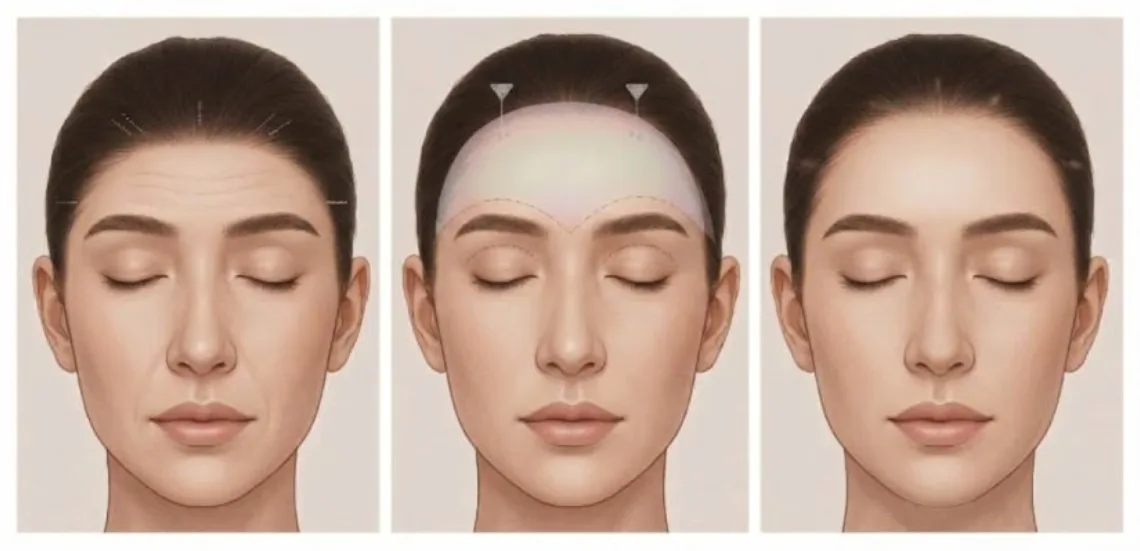
Illustration: the forehead and brow are lifted from within and held at fixation points behind the hairline (Pentafix™), rather than pulled at the skin.
The important distinction is where the heaviness is coming from. Sometimes the brow itself has descended and needs to be raised. Sometimes the brow is in a reasonable position but there is excess, lax skin on the upper eyelid creating the hooding. Often it is a combination, and the outer third of the brow (the tail) is frequently the part that falls first and most.
Getting this right is what separates a natural result from an odd one. Raising a brow that did not need raising can look surprised; removing lid skin when the real problem is a fallen brow can leave the heaviness unaddressed. That is why the assessment looks at brow position, lid skin and how your forehead behaves, before deciding between a forehead lift, a sub-brow lift and upper eyelid surgery.
Approaches
The three ways a heavy brow is addressed
The forehead lift works from above. Through small hidden scalp incisions, the whole brow is released and re-suspended higher, smoothing the forehead and lifting the brow as a unit. At Garnet this is done endoscopically with a five-point fixation technique using two absorbable fixation devices and bone tunnelling, with sutures out at about ten days. It suits a genuine, generalised brow descent and lifts the whole brow, including the inner part.
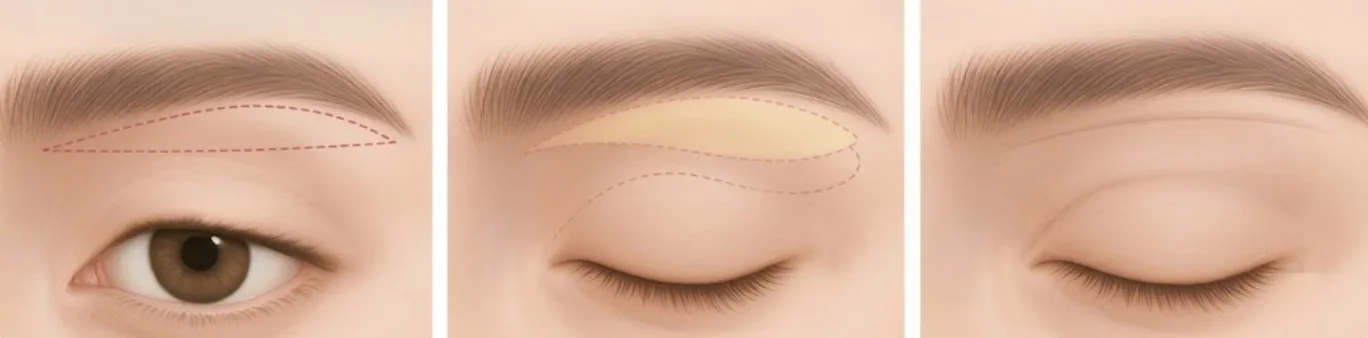
Illustration: a strip of excess skin is taken from just below the eyebrow (dotted line), so the heavy upper lid opens without touching the eyelid itself. The fine line sits along the lower brow edge.
A sub-brow lift works right at the brow. A fine strip of skin is removed just at the brow's edge and the tissue underneath is suspended, lifting mainly the outer brow and lightening the upper lid. It is a smaller operation than a forehead lift, focused on the brow tail and the hooding it causes, with sutures out at about seven days.
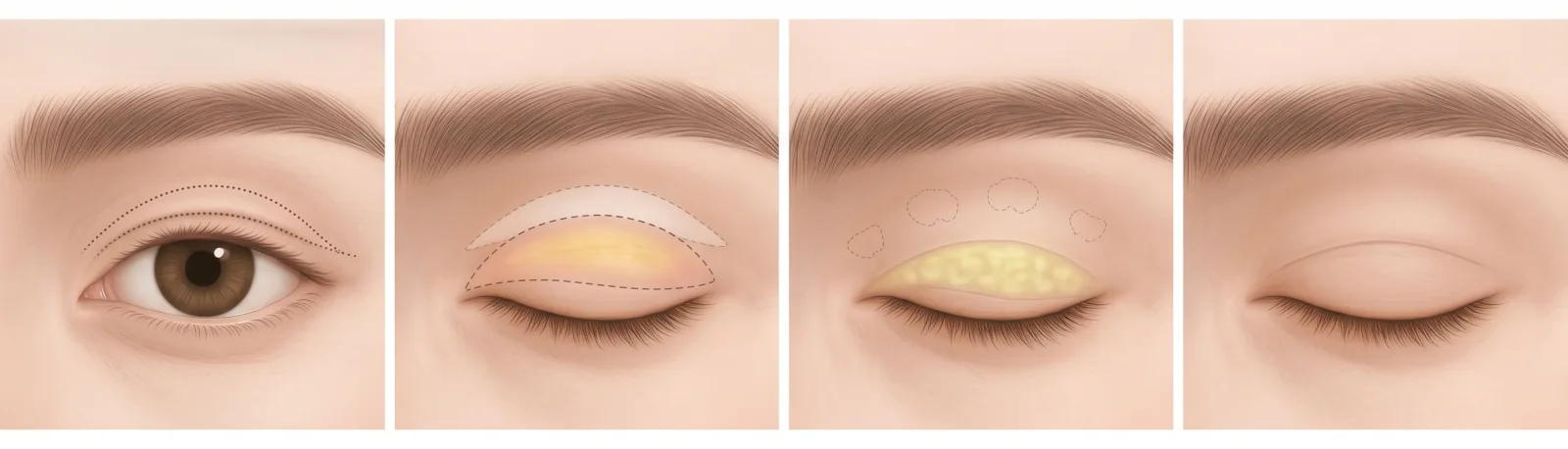
Upper eyelid surgery works at the lid and leaves the brow alone. It removes redundant upper-lid skin and tidies the tissue to open up a hooded eye, without changing brow height. When the brow is in a fair position but the lid skin is heavy, this is often the more direct and natural answer, and it is sometimes combined with a brow procedure when both are contributing.
Choosing
How to tell which one you need
The deciding question is where the heaviness actually sits. If gently lifting your brow with a fingertip relieves the hooding and you like how your eye looks, the brow is the problem and a lift (a forehead lift for the whole brow, or a sub-brow lift for mainly the tail) is likely the fit. If lifting the brow makes little difference but pinching away lid skin does, the lid is the problem and upper eyelid surgery addresses it more directly.
Illustration: the planned crease is marked, the excess upper-lid skin and selected fat pads are addressed through that line.
Scale matters too. A forehead lift is the more comprehensive operation and also softens forehead lines and raises the inner brow; a sub-brow lift is a smaller, more targeted procedure aimed at the outer brow. Neither is automatically 'better'. The right one is the one that matches your cause and how much change you want, and a good surgeon is candid about when the smaller option will serve you well.
Frequently the answer is a combination, for example a brow lift to restore position plus a conservative eyelid tidy, because the tissues drop together. Only the areas actually contributing are addressed; over-recommendation is not the goal, and the same surgeon who assesses you performs whatever is agreed.
Expression
Keeping your expression natural
The biggest worry patients bring to brow surgery is looking permanently surprised or 'done'. That look comes from over-elevating the brow, especially the inner brow, or from lifting a brow that did not need it. A natural result restores a rested, open look while keeping your own brow shape and the way your face moves. The aim is to look refreshed and still like yourself.
This is why matching the operation to the cause matters so much. A measured forehead lift raises the brow without pinning it high; a sub-brow lift targets the outer brow so the inner brow keeps its natural position; and upper eyelid surgery opens the eye without touching brow height at all. Conservative planning protects expression.
A good consultation includes showing you where your brow would sit and being frank about how much movement to expect. Restraint is deliberate: a slightly under-corrected, natural brow ages far more gracefully than an over-lifted one, and that judgement is built into the plan from the start.
Expectations
Realistic expectations for brow surgery
Lifting a brow or opening a hooded lid can make the eyes look more rested and awake, ease the habit of raising the forehead to see, and take pressure off the upper lid. What it does not do is stop the ageing process. Tissues continue to descend gently over the years, so the goal is a natural improvement that suits your face now; no brow stays fixed forever.
Recovery differs by procedure. A sub-brow lift and upper eyelid surgery have sutures out at about seven days; an endoscopic forehead lift has sutures out at about ten. Bruising and swelling around the eyes and forehead settle over the following weeks, and the final, natural brow position is best judged once swelling has resolved, and the first days are too early.
Because the same surgeon reviews you at structured follow-ups at one, three and six months, brow position and healing are tracked over time, and questions about symmetry, movement and swelling are answered by the person who operated on you, including by messenger after you return home.
Consultation
Planning brow surgery from abroad
You can get an initial read before you travel. Send clear front photos with a relaxed, neutral face (try not to raise your brows), plus a side view, and note whether your main concern is the brow feeling heavy, the eyes looking hooded, or forehead lines from lifting the brow. That helps the surgeon give an early view on whether a forehead lift, a sub-brow lift, eyelid surgery or a combination is the likely fit. There is no consultation or CT fee.
Garnet is a single-surgeon clinic in Apgujeong, Seoul, registered with Korea's foreign-patient programme. Dr. In-Soo Baek, a board-certified plastic surgeon (Korean medical licence no. 77407), assesses your brow position, lid skin and expression, plans the approach, performs the surgery himself and reviews your recovery. Start with a no-obligation online assessment, and a full in-person examination confirms the plan when you arrive.
Real Results
Before & After
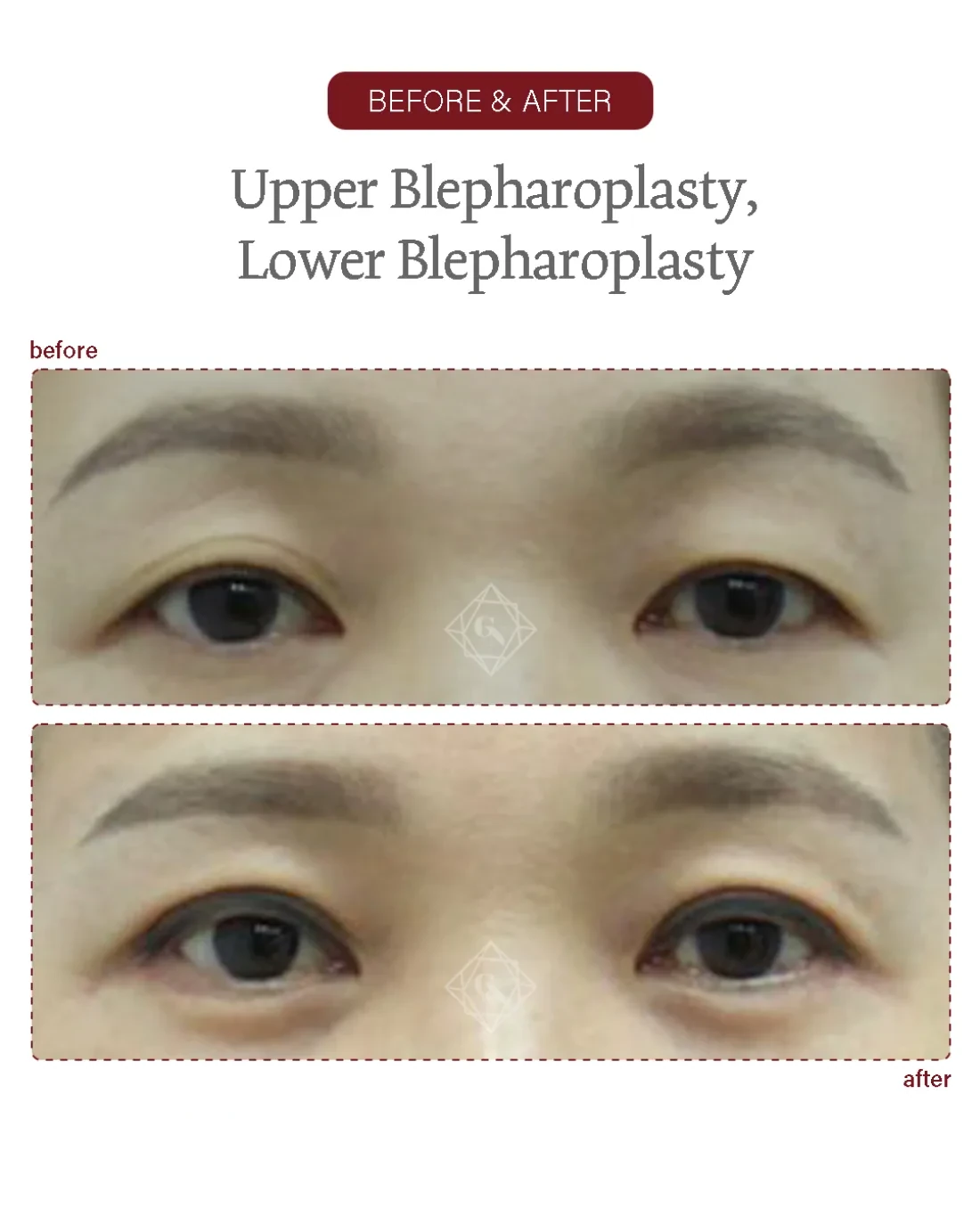
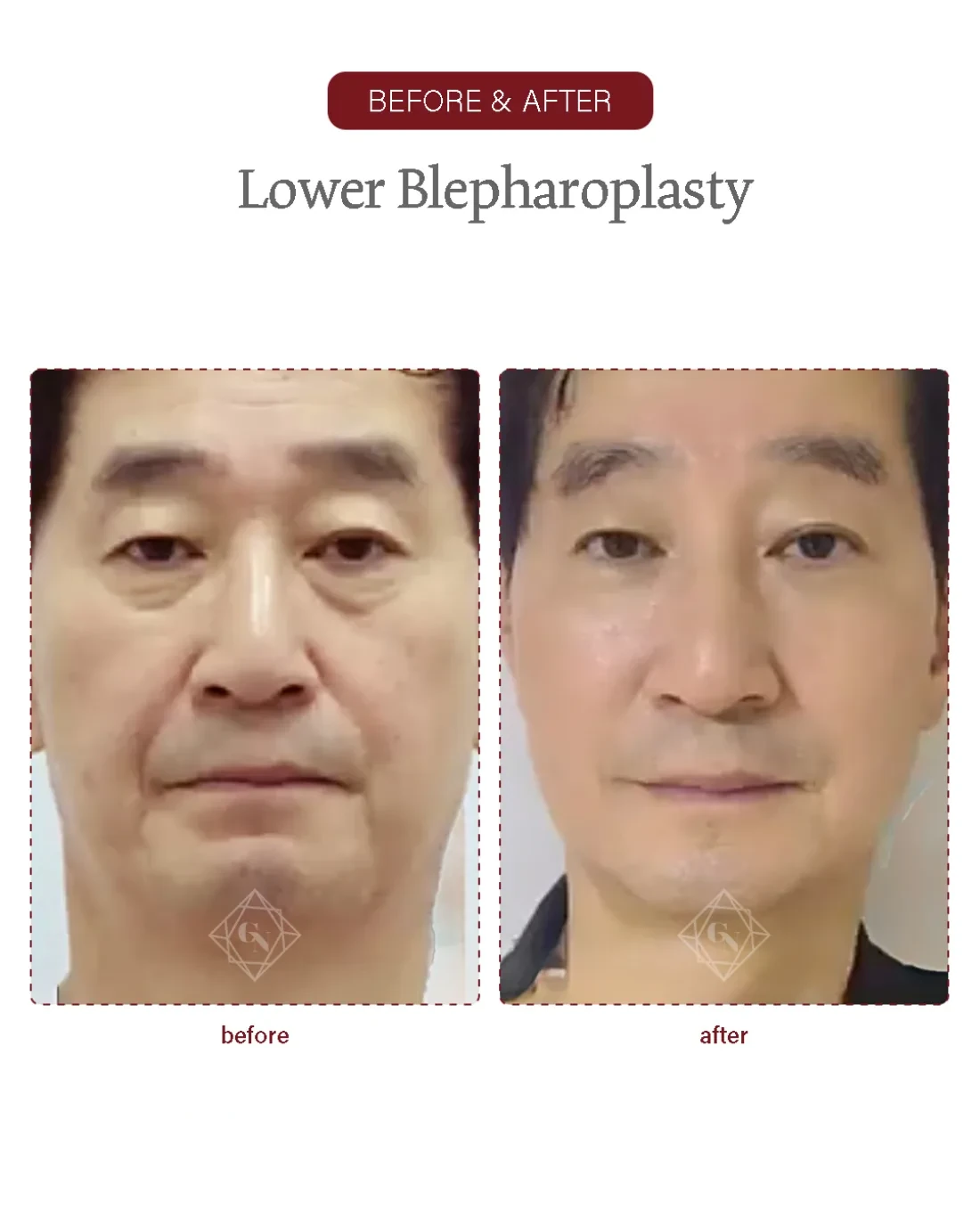
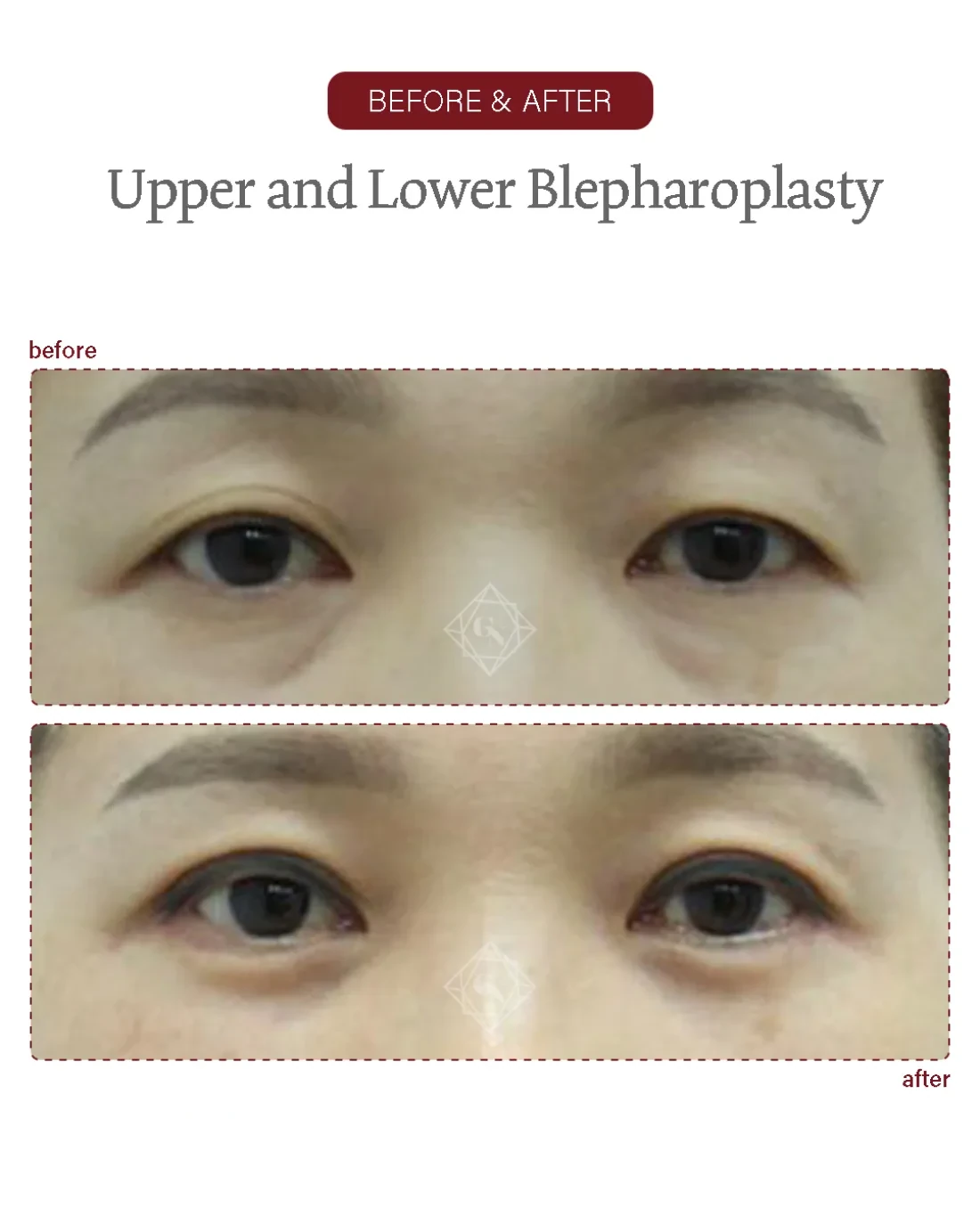
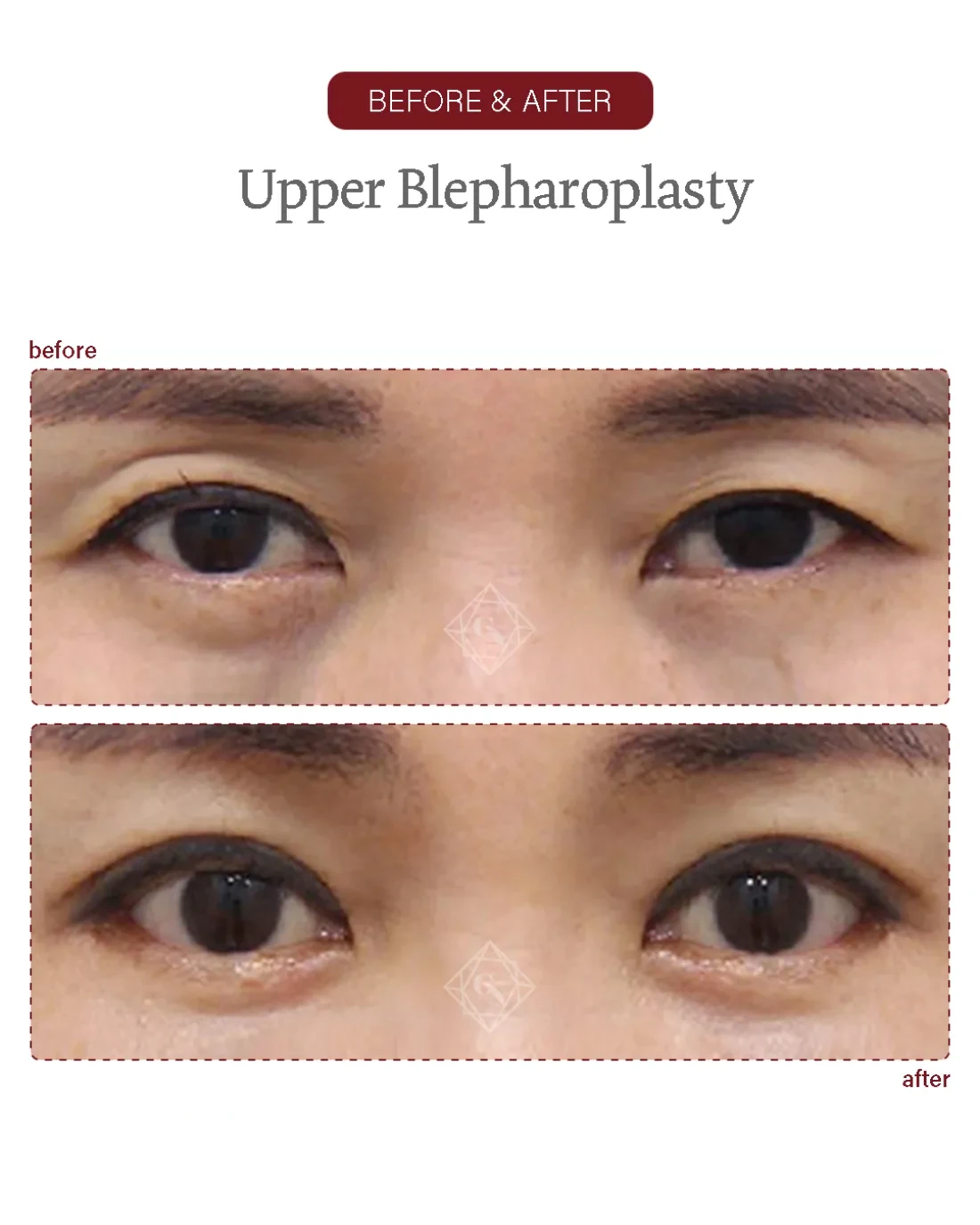
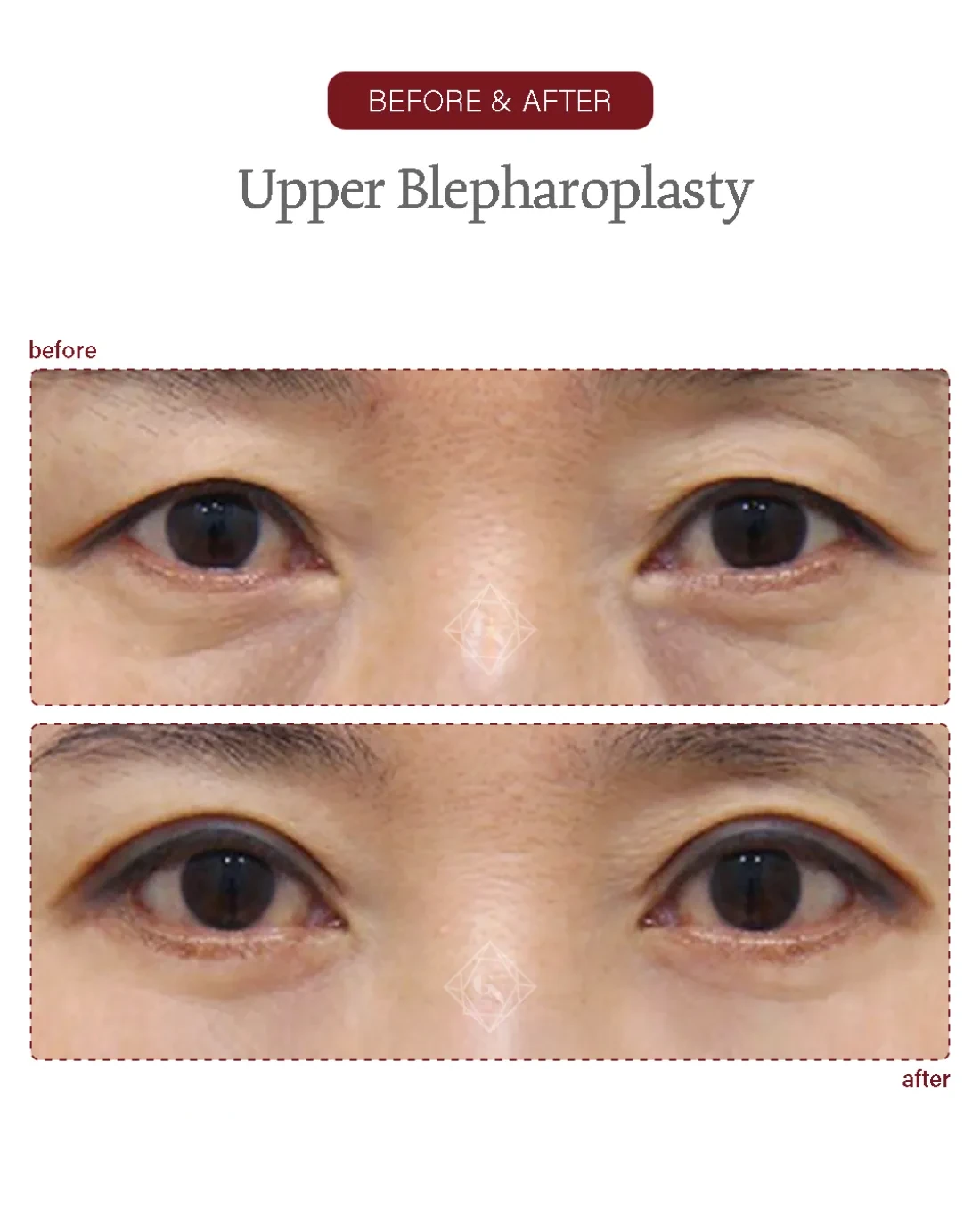
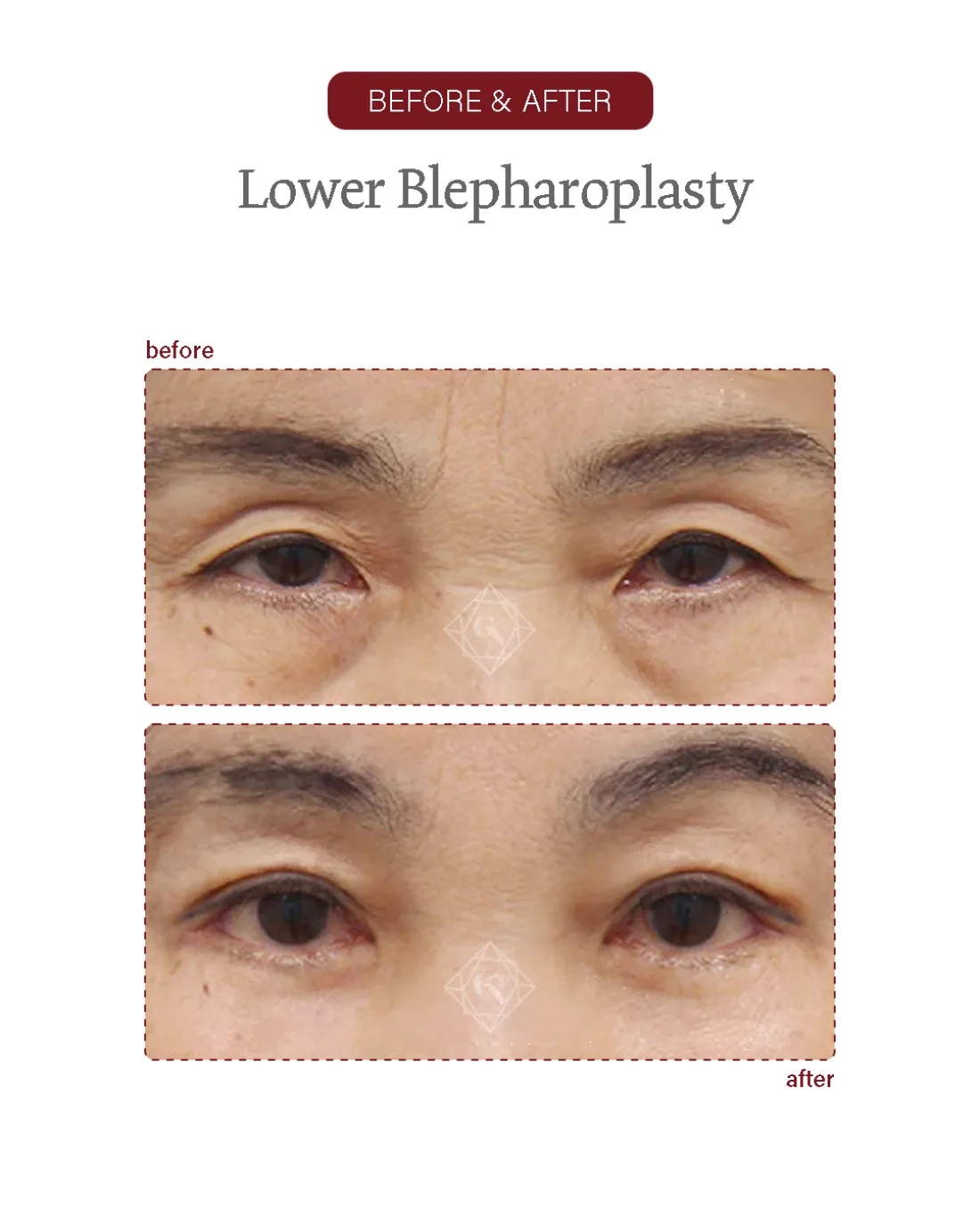
Eyelid before/after examples of actual Garnet patients (published with consent). Results, recovery and suitability vary by individual and are not guaranteed; the right approach is decided at an in-person consultation.
Prices
Price at Garnet
Upper blepharoplasty
From₩3,500,000 + VATExcluding VAT (10% VAT is added at payment)Book now
Same price as Korean patients. Prices shown exclude 10% VAT; your written quote, issued after the in-person consultation, shows the full amount payable.
Dr. In-Soo Baek
Director & sole operating surgeon
Korean medical licence no. 77407
Operate on what you came for. Trained at Korea University Medical Center. Every case planned, performed and reviewed by the same hands.
1Operating surgeon
~2Surgeries per day
7Registered techniques
Board-certified plastic surgeon
Plastic surgery training at Korea University College of Medicine & graduate school
Korean Society of Plastic and Reconstructive Surgeons member, in its facial-contour, eye & rhinoplasty groups
Consults, operates and follows up each case himself
Peer-reviewed papers behind the facts on this page. Each describes findings in its own study group — not results at Garnet — and none predicts your own outcome.
Wang D et al. Upper Blepharoplasty through Infrabrow Skin Excision to Treat Dermatochalasis with Lateral Hooding and Medial Orbital Fat Loss in Selected Patients. Annals of Plastic Surgery. 2024. doi:10.1097/sap.0000000000004006
Kamrava B et al. Understanding The Forehead Through The Endo-Coronal Forehead Lift. Facial Plastic Surgery Clinics of North America. 2026. doi:10.1016/j.fsc.2025.08.002
Yang X et al. Shortened Infrabrow Excision Blepharoplasty Combined with the Removal of Orbicularis Oculi Muscle for Dermatochalasis in Asians. Journal of Craniofacial Surgery. 2022. doi:10.1097/scs.0000000000008685
Rihani J. Male Browlift. Facial Plastic Surgery. 2025. doi:10.1055/a-2709-6915
FAQ
Common questions
What lifts a heavy, low brow?
A heavy, low brow is lifted either from above with a forehead lift, which re-suspends the whole brow higher, or right at the brow with a sub-brow lift, which raises mainly the outer brow through a small incision at its edge. If the heaviness is really excess upper-lid skin and the brow has not dropped, upper eyelid surgery addresses it instead. The right one depends on where the heaviness sits.
Forehead lift or sub-brow lift: what's the difference?
A forehead lift works from small hidden scalp incisions and raises the entire brow as a unit while smoothing the forehead, suiting a generalised brow descent. A sub-brow lift is a smaller operation that removes a fine strip of skin at the brow edge to lift mainly the outer brow and lighten the upper lid. The forehead lift is more comprehensive; the sub-brow lift is more targeted.
Will a brow lift change my expression?
It should not, if the operation matches the cause and is done conservatively. An unnatural, surprised look comes from over-elevating the brow, especially the inner brow, or lifting a brow that did not need it. A measured lift restores a rested look while keeping your own brow shape and movement, so you look refreshed and still like yourself.
Do I need a brow lift or upper eyelid surgery?
It depends on where the heaviness is. If gently lifting your brow with a fingertip relieves the hooding, the brow is the issue and a lift fits. If lifting makes little difference but pinching away lid skin does, the lid is the issue and upper eyelid surgery is more direct. Often both contribute, and a combination of brow and eyelid surgery is the answer.
Why do my eyes look tired or hooded?
A brow that has descended crowds the upper eyelid, creating hooding, making the eyes look smaller and prompting you to raise your forehead to see, which deepens forehead lines. Heavy upper-lid skin can create the same hooded look with the brow in a fair position. Distinguishing which is causing yours determines whether a brow lift, eyelid surgery, or both is right.
Is a heavy brow lifted from above or from below?
Both are possible. A forehead lift lifts from above through hidden scalp incisions and raises the whole brow; a sub-brow lift works from just at the brow and raises mainly the outer part. Lifting from above suits a generalised descent and also raises the inner brow; lifting at the brow is a smaller, more targeted option for the brow tail.
How long is recovery from brow surgery?
It varies by procedure. A sub-brow lift and upper eyelid surgery have sutures out at about seven days; an endoscopic forehead lift at about ten. Bruising and swelling around the eyes and forehead settle over the following weeks, and the final, natural brow position is best judged once swelling has resolved, and the first days are too early.
Can a heavy brow and hooded eyelids be treated together?
Yes. Because the brow and lid tissues descend together, a brow lift to restore position is sometimes combined with a conservative upper eyelid tidy, addressing both the fallen brow and the excess lid skin. Only the areas actually contributing are treated, and whether to combine them is decided at consultation based on your anatomy and goals.
Can the surgeon assess my brow from photos?
As a starting point, yes. Front photos with a relaxed, neutral face (try not to raise your brows) plus a side view let the surgeon judge brow position, lid skin and whether you are compensating with your forehead. Noting your main concern helps. A full in-person examination confirms which approach fits when you arrive.
Who performs the surgery at Garnet?
Dr. In-Soo Baek, a board-certified plastic surgeon, performs the operation himself. As a single-surgeon clinic, the same surgeon who assesses your brow, lid and expression plans and performs your surgery and reviews your recovery at one, three and six months. There is no separate operating doctor.
My mom recently had a brow lift and lower blepharoplasty with Dr. Baek, and our experience has been wonderful so far. The Garnet team was incredibly kind and welcoming, with Kelly assisting us as our English consultant—she made everything…
I’m so happy I chose this clinic for my lower blepharoplasty. I was traveling from abroad by myself, so I was a little nervous, but from the beginning I felt comfortable and truly cared for. Everyone was kind, patient, and professional…
Came in for an in-person consult and ended up choosing Garnet and Dr.Baek for my non-incisional DES and tiplasty/alarplasty. I communicated with Kelly (English consultant) from the start till now (3 weeks post-op). She really help me feel…
My under-eyes have been sagging and folding for years... I tried to cover it up with makeup, but it actually got stuck in the wrinkles and made it stand out even more. While going for consultations, I noticed that the bigger the hospital…
Send photos and your question before you travel. An English-speaking coordinator reviews every enquiry and replies with guidance on whether surgery is appropriate, the likely plan and timing.
✓ Reviewed by the clinic coordinator, not a bot
✓ Photo-based pre-assessment before you fly
✓ Foreign-patient scheduling & after-care
✓ One surgeon for consultation, surgery and follow-up
Prefer to chat now? Reach the coordinator directly:







 T S7 months ago



