An incision double eyelid is the right answer for some eyes and the wrong one for others. It excels where a lid is thick, fatty, hooded or asymmetric, or where someone wants a clearly defined, lasting crease. For a thin lid with little to remove, the simpler non-incision method may serve just as well. Knowing which group you fall into starts with your actual anatomy.
The short answer
Thick, fatty or heavy lids are the clearest candidates, because the incision method can remove excess skin and reduce fat that buried sutures cannot.
Hooded, ageing or asymmetric lids often need an incision so the surgeon can trim skin and balance the two sides.
People who want a defined, stable crease, or whose non-incision crease faded, typically suit the incision route.
Thin lids with little excess fat, and anyone with untreated eye or health issues, may not need or be ready for an incision. An in-person exam decides.
Who is a good candidate for an incision double eyelid
The incision double eyelid suits people whose lids need more than a crease tied into place. Because the surgeon makes a full incision along the planned crease line, the method can remove excess skin, reduce bulky fat and build a crease in tissue that has been tidied. A buried-suture technique cannot do this work. So the strongest candidates are those whose eyes carry weight, skin or fat that needs addressing, and those who want a clearly defined, lasting result.
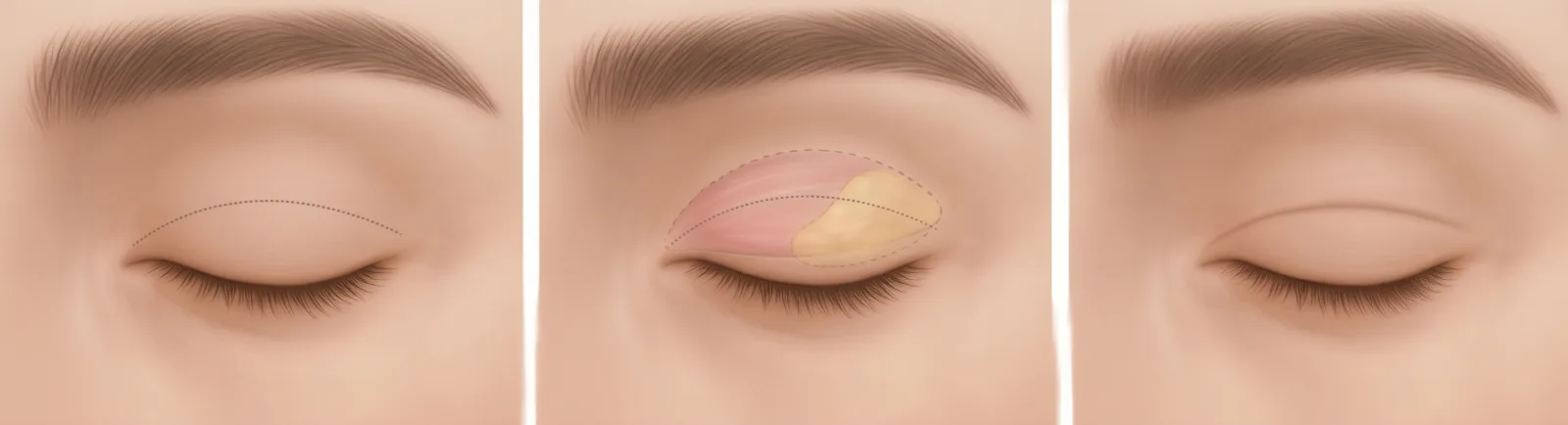
Illustration: the crease is set through an incision along the planned fold; the tissue beneath (muscle in pink, fat in yellow) is adjusted so the crease holds.
In broad terms, you are likely a good candidate if your upper lid is thick or fatty, if there is hooding or loose skin, if your two eyes are noticeably uneven, or if you have had a non-incision double eyelid that loosened or faded and now want a more durable crease. Wanting a defined, stable crease that keeps its shape is itself a valid reason to consider the incision route.
None of these signs is a self-diagnosis, though. They tell you the incision method is worth discussing. The confirmation comes from a surgeon examining your lids in person. The sections below go through the main candidate groups, and then the cases where an incision is not the right call.
Thick lids
Thick and fatty lids: the clearest candidates
Thick and fatty eyelids are the most straightforward reason to choose the incision method. On a heavy lid, buried sutures often struggle to hold a clean crease because the underlying bulk pulls against the fixation, so a non-incision crease can sit shallow, look uneven, or loosen over time. The incision method deals with the cause directly.
By opening the lid, the surgeon can reduce the fat and trim the tissue that was making the eye look heavy, then build the crease in the lighter, tidied lid. The result is usually a more defined and more stable fold. That is exactly why thick or fatty lids are considered classic incision candidates.
If your eyes look puffy or heavy even when rested, or a previous suture procedure did not hold, your lid is likely on the thicker side. A side-by-side comparison of how each route handles a heavy lid is laid out in our guide on incision vs non-incision double eyelid.
Hooded & asymmetric
Hooded, ageing and asymmetric lids
Lids with excess or hooding skin are another core candidate group. When skin drapes over the lash line or buries the existing crease, no suture technique can remove it. Only an incision lets the surgeon trim the redundant skin and lift the fold clear. This is common in older patients, but younger patients with naturally heavy or hooded skin fall here too.
Asymmetry is a related reason. Many people have two eyes that differ in crease height, lid thickness or openness, and an incision gives the surgeon room to address each lid individually and bring them into better balance. A droopy lid margin that makes the eye look sleepy may also need ptosis correction, which the incision method can combine in the same operation when the muscle that lifts the lid needs tightening.
Because these cases involve removing skin and balancing two sides, they reward an experienced, unhurried assessment. The goal is eyes that look refreshed and even, 'younger, but still yourself', without a dramatic change. That depends on the surgeon judging each lid on its own terms.
Not recommended
When an incision double eyelid is not recommended
An incision is not always the right answer. If your lid is thin with little excess skin or fat, the simpler non-incision method may give you a clean crease with quicker recovery and no incision, so an incision could be more than you need. A good surgeon will say so and will not recommend the bigger operation by default.
There are also cases where any elective eyelid surgery should wait. Untreated dry-eye disease, active eye inflammation or infection, certain thyroid-eye conditions, bleeding disorders or poorly controlled health problems can all make surgery inadvisable until they are managed. Realistic expectations matter too: surgery refines the eyes, and a careful surgeon will discuss what it can and cannot change for your face.
This is why a candid assessment of your lids is part of good care. Sometimes the most useful outcome of a consultation is being told that the non-incision method, a smaller procedure, or no surgery at all is the better choice for you right now. That kind of candour is a sign of a trustworthy clinic.
How assessed
How candidacy is actually assessed
Candidacy is decided by examining the lid, not by a questionnaire. A surgeon looks at the thickness of the skin, how much fat is present, whether there is hooding or redundant skin, the height and symmetry of any existing crease, the strength of the muscle that lifts the lid, and the overall balance of your face. Those findings point to whether an incision, a non-incision procedure, or added steps such as ptosis correction are appropriate.
You can begin this remotely. Clear photos of your eyes (open, closed and looking down) let a surgeon give a preliminary read on whether the incision method is likely to suit you, and what your case would involve, before you commit to travelling. Our online consultation from abroad is built for exactly this.
The remote read is a guide; the final verdict comes later. The definitive plan is confirmed in person, because the fine details of a lid are easier to judge directly. If you are weighing the trip, our guide on incision double eyelid cost in Korea covers what affects the price once a plan is set.
At Garnet
How Garnet assesses whether the incision method is right for you
Garnet is a single-surgeon clinic in Apgujeong, Seoul. Dr. In-Soo Baek is a board-certified plastic surgeon (Korean medical licence no. 77407) and the only operating doctor; he examines your lids, tells you plainly whether the incision method genuinely suits them, performs the operation himself and reviews you through recovery. Only the area you came for is addressed, and there is no pressure to book the same day.
Because the same surgeon assesses and operates, the recommendation is grounded in your actual eyes and not a default protocol. That includes the willingness to advise a non-incision procedure, a smaller step, or no surgery if that is genuinely better for you. The clinic caps the day at a small number of cases, so your assessment is unhurried, and follow-up is structured at 1, 3 and 6 months.
If you would like a read on whether your lids suit an incision crease, you can start with a no-obligation online assessment and send photos before planning a trip. Garnet is registered with Korea's foreign-patient programme, so eyelid consultations, surgery dates and after-care are arranged for visitors from abroad.
Real Results
Before & After
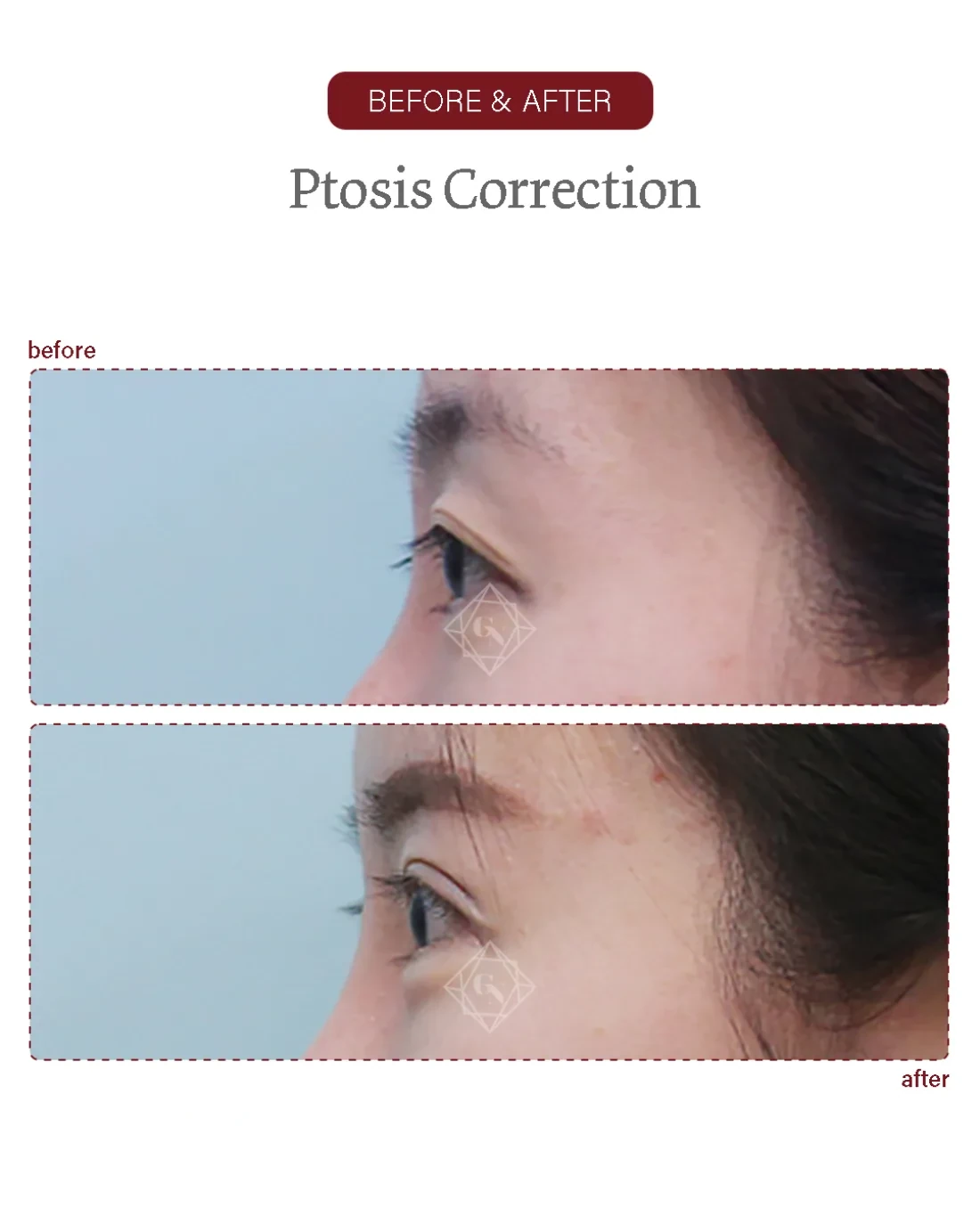
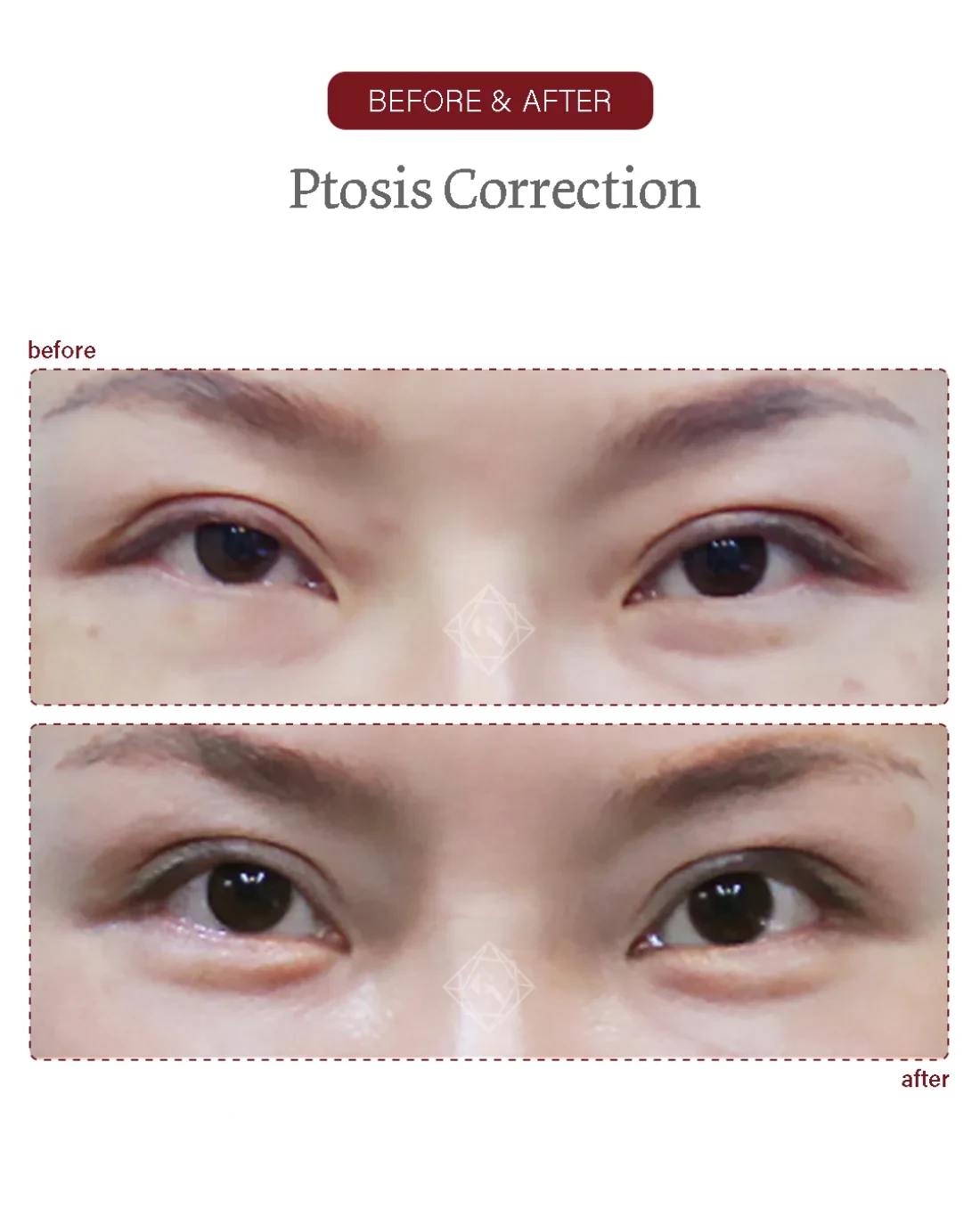
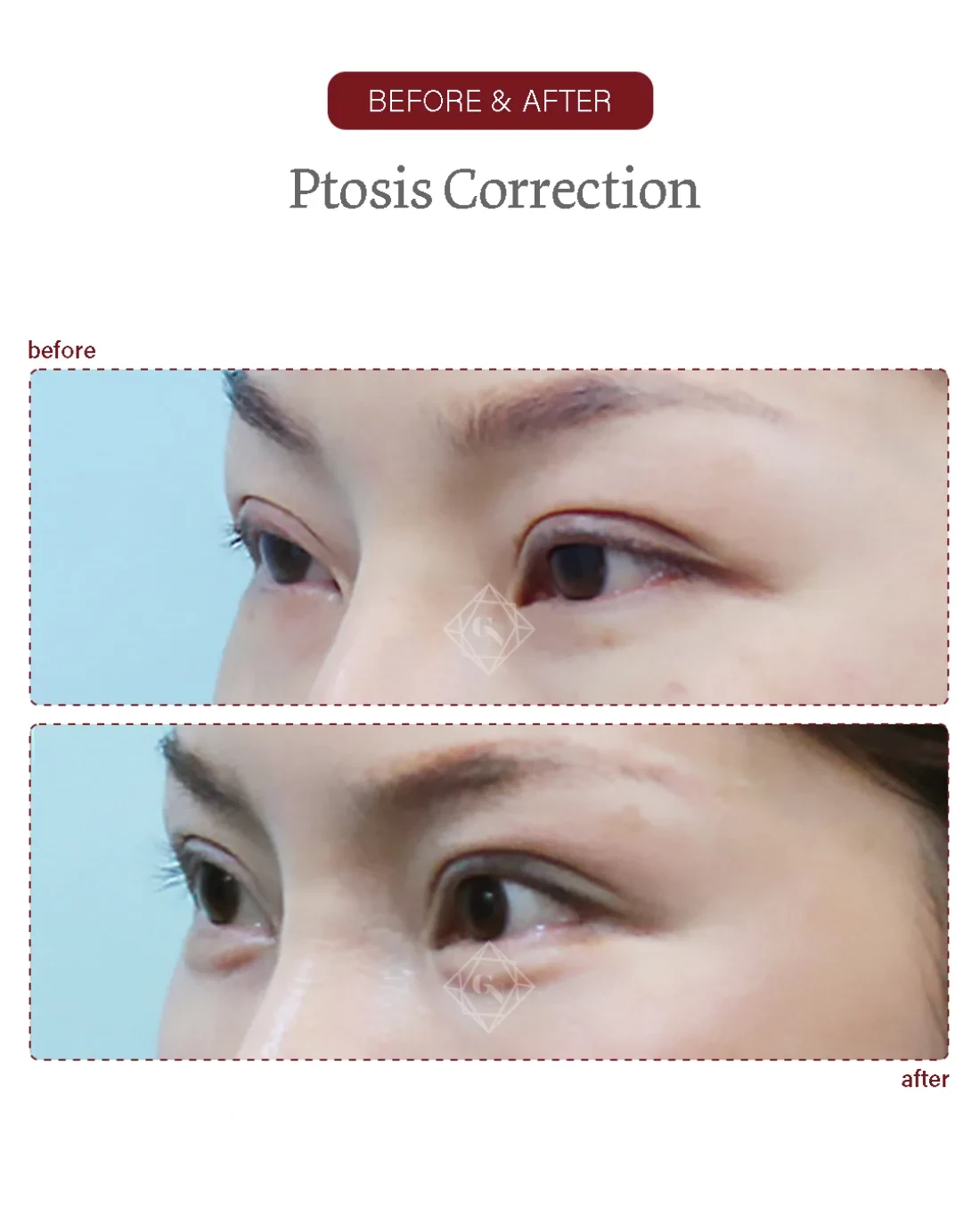
Ptosis-correction before/after examples of actual Garnet patients (published with consent). Results, recovery and suitability vary by individual and are not guaranteed; the right approach is decided at an in-person consultation.
Dr. In-Soo Baek
Director & sole operating surgeon
Korean medical licence no. 77407
Operate on what you came for. Trained at Korea University Medical Center. Every case planned, performed and reviewed by the same hands.
1Operating surgeon
~2Surgeries per day
7Registered techniques
Board-certified plastic surgeon
Plastic surgery training at Korea University College of Medicine & graduate school
Korean Society of Plastic and Reconstructive Surgeons member, in its facial-contour, eye & rhinoplasty groups
Consults, operates and follows up each case himself
Peer-reviewed papers behind the facts on this page. Each describes findings in its own study group — not results at Garnet — and none predicts your own outcome.
Kao WK et al. Managing the Asian Eyelid. Facial Plastic Surgery Clinics of North America. 2022. doi:10.1016/j.fsc.2022.07.009
Ge M et al. Mini-incision Blepharoplasty with Pretarsal Fasciectomy for Double-Eyelid Surgery. Aesthetic Plastic Surgery. 2021. doi:10.1007/s00266-021-02349-6
Who is a good candidate for incision double eyelid surgery?
The clearest candidates have thick, fatty, hooded or asymmetric lids, or want a defined, stable crease that buried sutures may not hold. People whose non-incision crease faded also often suit the incision route. A surgeon confirms candidacy after examining your lids.
Do thick or fatty eyelids need the incision method?
Usually, yes. On a heavy lid, buried sutures often cannot hold a clean crease and the fat is not addressed. The incision method lets the surgeon reduce the bulk and build the crease in tidied tissue, which is why thick or fatty lids are classic incision candidates.
Is incision double eyelid suitable for hooded or ageing eyes?
Often. When excess skin drapes over the crease, only an incision can trim that skin and lift the fold clear, so hooded and ageing lids are common candidates. The same opening also lets the surgeon balance asymmetry between the two eyes.
Am I suitable if my eyes are uneven?
Possibly. Asymmetry in crease height, lid thickness or openness is a common reason to choose an incision, because it lets the surgeon address each lid individually and bring them into better balance. An in-person exam confirms what your eyes need.
When is incision double eyelid not recommended?
It may not be needed for thin lids with little excess skin or fat, where the non-incision method can suffice. It should also wait if you have untreated dry eye, active eye inflammation, certain thyroid-eye or bleeding conditions, or poorly controlled health problems until those are managed.
Can I have it if I had a non-incision double eyelid before?
Often, yes. Some patients move to an incision procedure if their non-incision crease loosened or faded, or if they now want a more defined, lasting result. A surgeon will assess your current lids and explain whether the incision route is appropriate.
Will I be told if I do not need surgery?
At a careful clinic, yes. A trustworthy assessment will sometimes recommend the non-incision method, a smaller step, or no surgery at all if that suits you better. Being told the bigger operation is unnecessary is a sign of good care.
Can I find out if I am a candidate before travelling?
Yes. Clear photos of your eyes open, closed and looking down let a surgeon give a preliminary read on whether the incision method is likely to suit you, in an online consultation, before you commit to a trip. The final plan is confirmed in person.
Does Garnet decide candidacy with the operating surgeon?
Yes. At Garnet the same board-certified surgeon, Dr. In-Soo Baek, examines your lids, advises whether the incision method genuinely suits them, and performs the operation himself, with structured follow-up at 1, 3 and 6 months.
My mom recently had a brow lift and lower blepharoplasty with Dr. Baek, and our experience has been wonderful so far. The Garnet team was incredibly kind and welcoming, with Kelly assisting us as our English consultant—she made everything…
I’m so happy I chose this clinic for my lower blepharoplasty. I was traveling from abroad by myself, so I was a little nervous, but from the beginning I felt comfortable and truly cared for. Everyone was kind, patient, and professional…
Came in for an in-person consult and ended up choosing Garnet and Dr.Baek for my non-incisional DES and tiplasty/alarplasty. I communicated with Kelly (English consultant) from the start till now (3 weeks post-op). She really help me feel…
My under-eyes have been sagging and folding for years... I tried to cover it up with makeup, but it actually got stuck in the wrinkles and made it stand out even more. While going for consultations, I noticed that the bigger the hospital…
Send photos and your question before you travel. An English-speaking coordinator reviews every enquiry and replies with plain guidance on whether an incision crease is appropriate for your eyes, the likely plan and timing.
✓ Reviewed by the clinic coordinator, not a bot
✓ Photo-based pre-assessment before you fly
✓ Foreign-patient scheduling & after-care
✓ One surgeon for consultation, surgery and follow-up
Prefer to chat now? Reach the coordinator directly:









 T S7 months ago



