For most men, double eyelid surgery means a low, subtle crease on a thicker upper eyelid, and a dramatic, high fold is rarely the goal. What men usually want is a crease that makes the eye look more awake and rested while still reading unmistakably as a man's eye. The difference between a good male result and an over-done one is almost entirely in the planning.
The short answer
Male eyelid skin is typically thicker and less mobile, and the natural fold sits lower, so the design is different from a typical female crease.
The masculine goal is a low, in-fold or shallow crease. Subtlety is the whole point.
There are two routes, a non-incision (buried-suture) method and an incision method, and the right one depends on your skin and how much lift you need.
If the eye also looks heavy or sleepy, the real issue may be the eye-opening muscle, which is corrected with ptosis correction. A bigger crease does not fix it.
A man's upper eyelid is not just a scaled-up version of a woman's. The skin is usually thicker and more vascular, the eyelid tissue is heavier, and the brow sits lower and flatter over the eye. Because of this, a crease that would look natural on a woman can look surprisingly high, deep or feminine on a man. Planning that ignores these differences is the single most common reason a male eyelid result looks off.
The other difference is intent. Many men are not asking to change the shape of their eyes at all. They want to look less tired, less puffy or less hooded, while still looking like themselves. That is a conservative brief, and it usually calls for a lower crease and a lighter touch than the wide, defined fold that is often requested for a more dramatic change.
Because Garnet is a single-surgeon clinic, the same board-certified plastic surgeon, Dr. In-Soo Baek, assesses your eyelid, discusses what a masculine result means for your face, and performs the surgery himself. That continuity matters most in eyelid work, where millimetres decide whether a result looks natural or altered.
A masculine crease
What a natural, masculine crease actually looks like
A masculine crease is generally low and either an in-fold (where the fold tucks partly inward near the inner eye) or a shallow parallel line that stays close to the lash margin. It should be visible when the eye is open but not distractingly so, and it should not lift the eyelid into the rounded, doe-eyed shape that reads as feminine. Height is the variable that matters most: a fold set even a couple of millimetres too high can shift the whole character of the eye.
Symmetry and restraint matter more than size. A good design keeps the crease continuous and even, avoids removing so much skin that the eye looks pulled open, and respects the fact that men often prefer no crease to an obvious one. It is completely reasonable to ask for a result that most people would not consciously notice beyond a fresher look.
This is a judgement call that depends on your bone structure, brow position and how much skin overhangs the lash line. In an online consultation you can send photos and get a frank read on what height and style would suit your face, including whether surgery is worth doing at all, or whether the effect you want is smaller than you think.
Which method
Incision or non-incision: which suits a man's eyelid
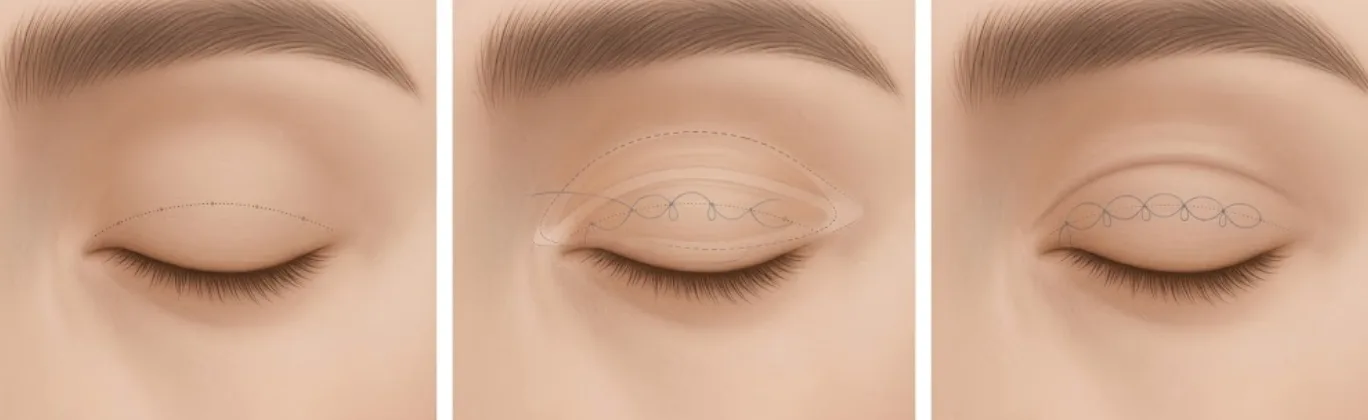
There are two main ways to build a crease. The non-incision method forms the fold with buried sutures that create an adhesion line, with no skin incision and sutures out at about five days. It suits thinner eyelids with little excess skin and offers a faster, more discreet recovery. A heavier, thicker male eyelid can, however, sometimes loosen the fold over time.
Illustration: a thin buried suture is looped along the planned crease through tiny points, with no skin incision, so the lid folds at the new line.
The incision method uses a full upper-lid incision, with sutures removed at about seven days. It gives a more defined and durable crease and lets the surgeon address thicker skin, heavy fat or a sagging lid, which is often the situation in an older or heavier male eyelid. The trade-off is a slightly longer recovery and a fine crease-line scar that settles into the natural fold.
For many men, eyelid anatomy settles the choice: thick, heavy or hooded lids usually do better with an incision, while lighter lids can suit the non-incision route. The surgeon's job is to tell you which category you fall into, even if you arrived asking for the other option.
The muscle
When a sleepy eye is a muscle problem, not a crease problem
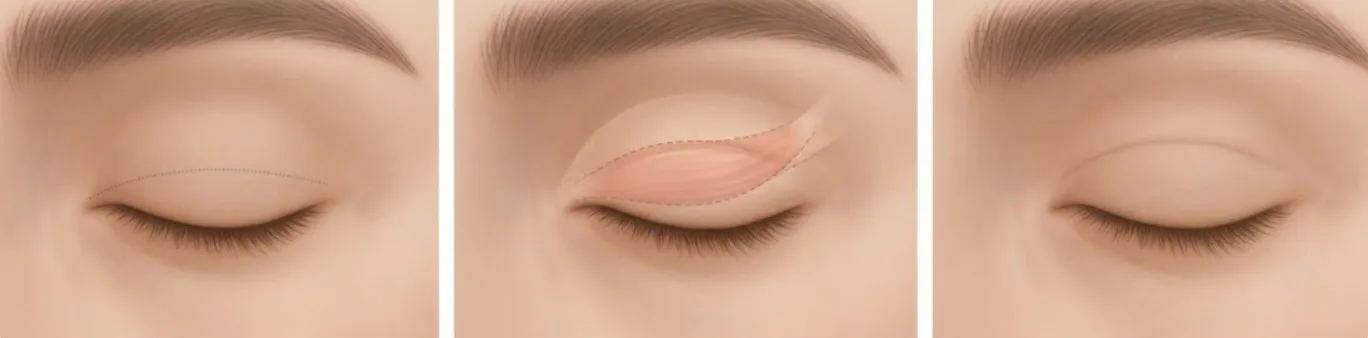
A frequent misunderstanding is that a tired, heavy-looking eye simply needs a crease. Often the real issue is a weak eye-opening (levator) muscle, which leaves the upper lid resting too low over the eye. Adding a fold to an eye like this can make it look worse, because the crease sits above a lid that still droops. The correct answer is ptosis correction, which adjusts the strength of the muscle so the eye opens more fully.
Illustration: through the crease line, the muscle that opens the eye (shown beneath the lid) is tightened so the lid rests higher.
Ptosis correction is done through the lid crease and can be combined with a double-eyelid procedure in the same operation, so the eye both opens better and gains a clean fold. For men, this is frequently the change that actually removes the sleepy, under-slept look, far more than a wider crease would.
Because getting this distinction right requires examining how your eye opens as well as how it looks in a photo, it is exactly the kind of thing a same-surgeon assessment is built for. Dr. Baek evaluates lid height and muscle function before recommending whether you need a crease, muscle correction, or both.
Recovery
Recovery, downtime and keeping it natural
For the non-incision method, sutures come out around day five; for the incision method, around day seven. Expect noticeable swelling and some bruising in the first week, which is heaviest for the first two to three days and then settles steadily. Most men find the eye looks socially presentable within one to two weeks, though the crease continues to soften and mature over the following months as the last swelling resolves.
Early on the crease usually looks higher and deeper than the final result. This is normal and does not mean the fold is too big. Thicker male eyelids can hold swelling a little longer, so it is worth waiting before you judge the outcome in the first weeks. Cold compresses, keeping the head elevated and avoiding strenuous activity in the early days all help the swelling settle faster.
If you are travelling from abroad, plan to stay in Seoul until your sutures are out, and use Garnet's structured follow-ups at 1, 3 and 6 months (by messenger once you are home) to review how the crease is settling. Because the same surgeon who operated reviews your recovery, any early concern about height or symmetry is assessed by the person who planned it.
Real Results
Before & After
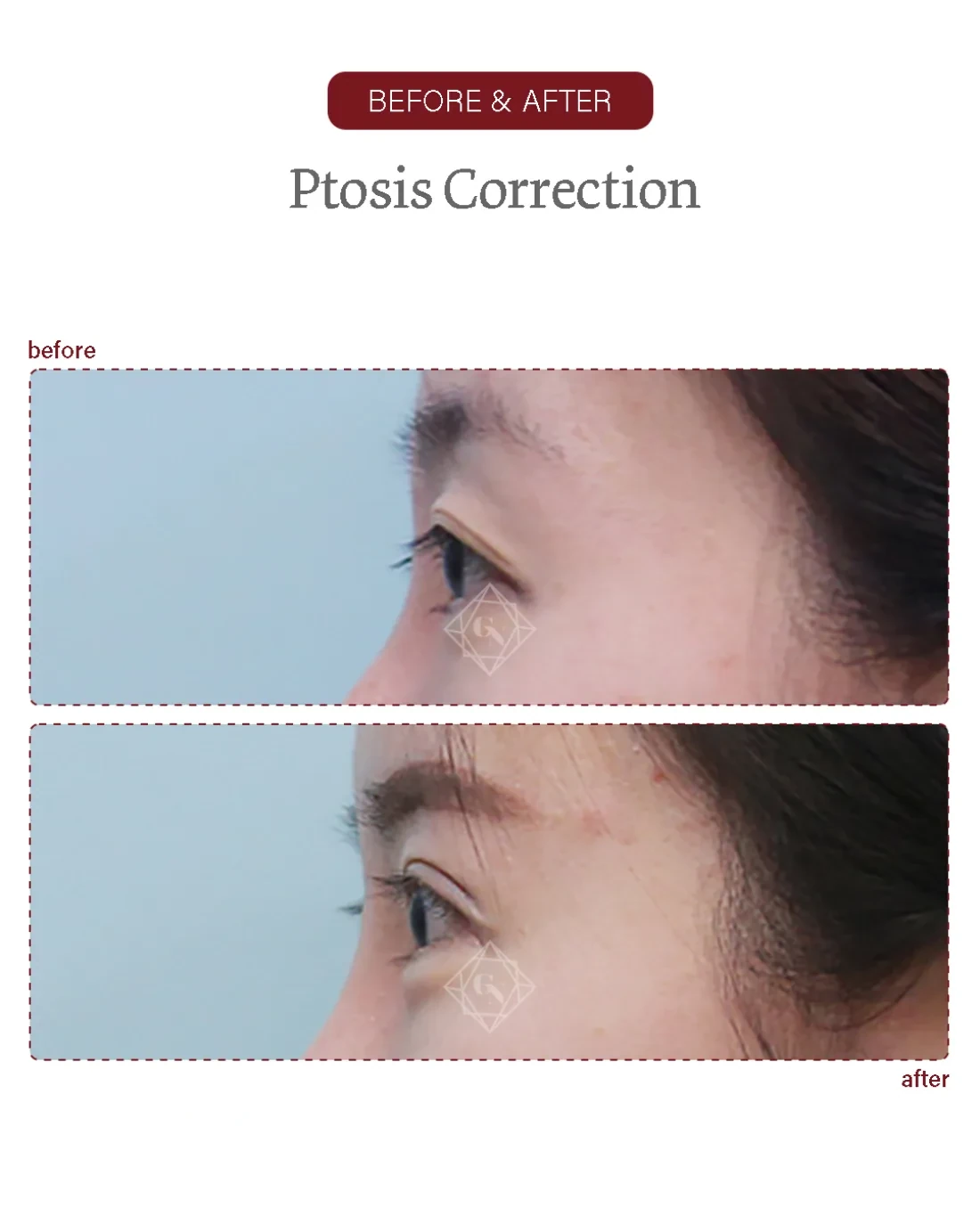
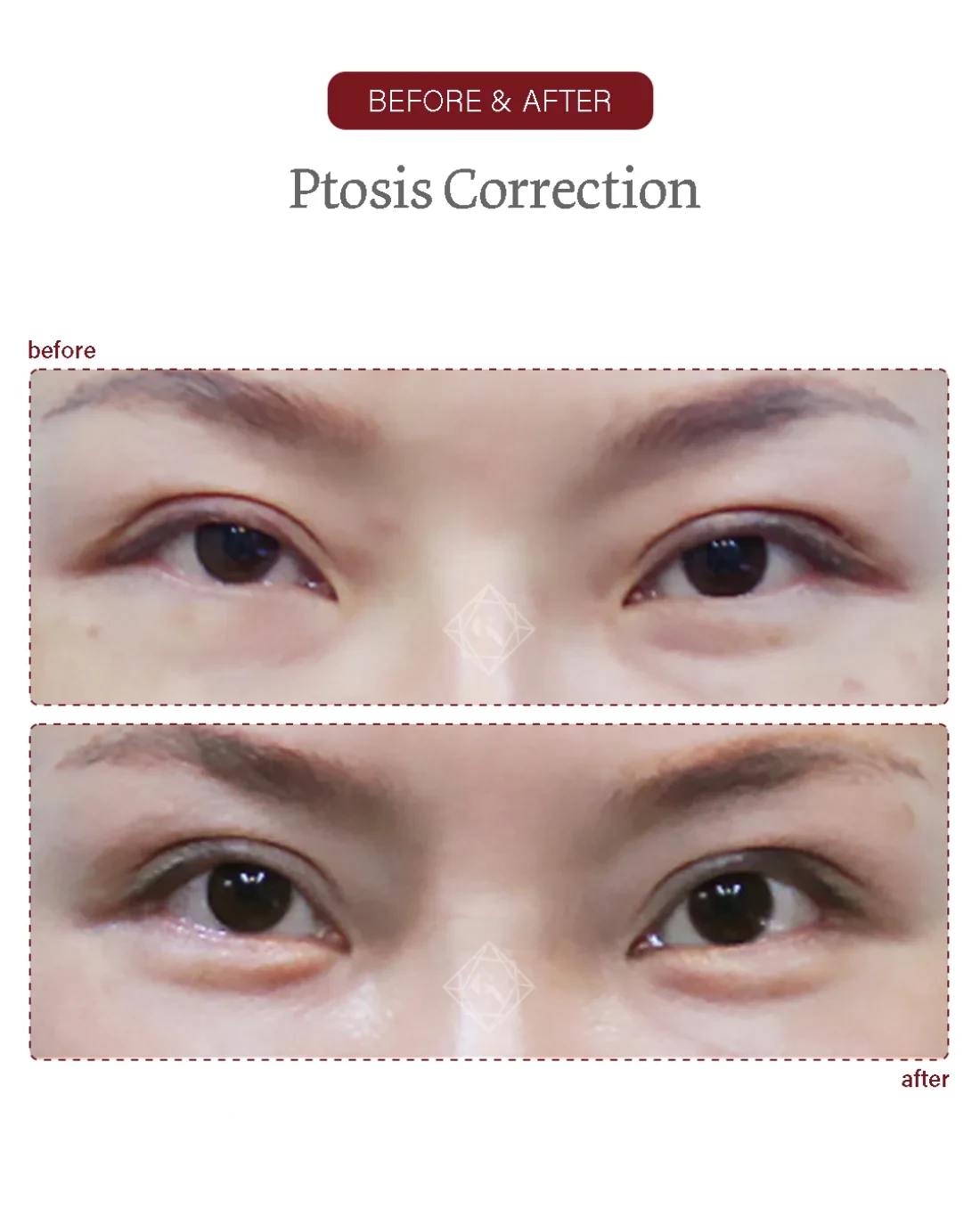
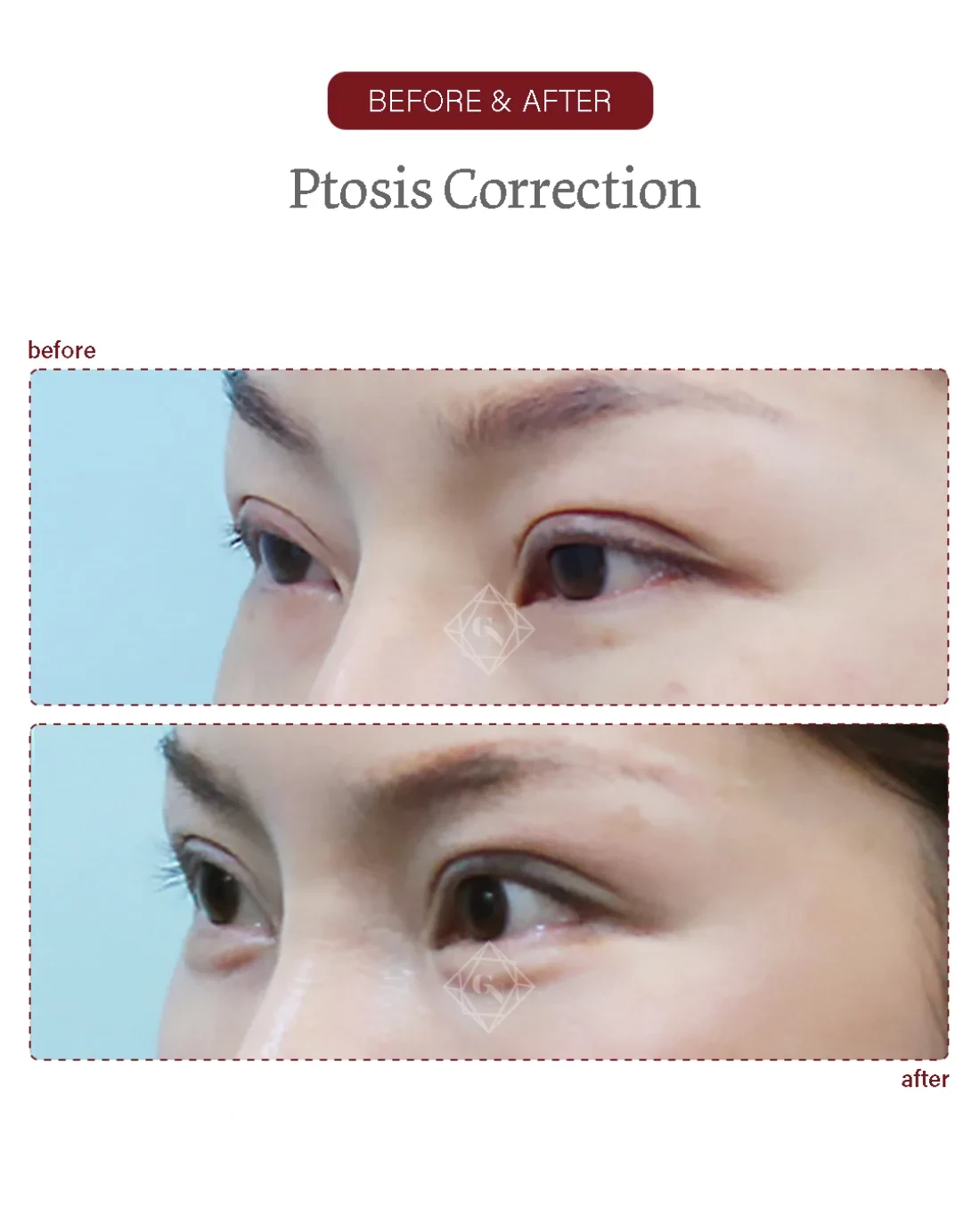
Ptosis-correction before/after examples of actual Garnet patients (published with consent). Results, recovery and suitability vary by individual and are not guaranteed; the right approach is decided at an in-person consultation.
Dr. In-Soo Baek
Director & sole operating surgeon
Korean medical licence no. 77407
Operate on what you came for. Trained at Korea University Medical Center. Every case planned, performed and reviewed by the same hands.
1Operating surgeon
~2Surgeries per day
7Registered techniques
Board-certified plastic surgeon
Plastic surgery training at Korea University College of Medicine & graduate school
Korean Society of Plastic and Reconstructive Surgeons member, in its facial-contour, eye & rhinoplasty groups
Consults, operates and follows up each case himself
Peer-reviewed papers behind the facts on this page. Each describes findings in its own study group — not results at Garnet — and none predicts your own outcome.
Munakata H et al. Comparison of One-Year Outcomes Between Younger and Older Patients Undergoing Continuous Buried Suture Double-Eyelid Surgery: A Retrospective Cohort Study of 788 Cases. Aesthetic Plastic Surgery. 2026. doi:10.1007/s00266-026-05765-8
Sun W et al. Orbicularis-Tarsus Fixation Approach in Double-Eyelid Blepharoplasty: A Modification of Park’s Technique. Aesthetic Plastic Surgery. 2018. doi:10.1007/s00266-018-1218-7
Okumura K et al. Comparison of Long-Term Stability Between Continuous and Two-Point Buried Suture Methods in Double Eyelid Surgery: A 4-Year Retrospective Cohort Study of 1000 Cases. Aesthetic Plastic Surgery. 2025. doi:10.1007/s00266-025-05024-2
FAQ
Common questions
Is double eyelid surgery different for men?
Yes. Male eyelids are usually thicker, heavier and lower, and most men want a subtle result rather than a dramatic one. So the crease is designed lower and shallower, and thicker lids more often need an incision method. The planning, not just the technique, is what keeps a male result looking masculine.
Will double eyelid surgery make me look feminine?
It should not if the crease is designed for a man's eye. A high, wide, deeply defined fold is what reads as feminine; a low, natural in-fold or shallow crease does not. The height and style are chosen to match your face, and it is reasonable to ask for a result most people would not consciously notice.
What crease height suits a man's eye?
Generally a low crease: an in-fold near the inner eye or a shallow line close to the lashes. Height is the variable that matters most, since a fold set even a couple of millimetres too high can change the whole character of the eye. The right height depends on your brow position and eyelid skin, which is assessed at consultation.
Should I choose the incision or non-incision method?
It depends on your anatomy. The non-incision method suits lighter lids with little excess skin and heals faster; the incision method gives a more durable crease and handles thick skin, heavy fat or sagging. Thicker, heavier male eyelids often do better with an incision.
Why does my eye still look sleepy even with a crease?
Often the issue is not the crease but a weak eye-opening muscle that leaves the lid resting too low. That is corrected with ptosis correction, which adjusts the muscle so the eye opens more fully. It can be combined with a double-eyelid procedure in the same operation.
Will there be a visible scar?
The non-incision method leaves no skin incision. The incision method leaves a fine line within the natural crease that settles over the following months and is hidden in the fold when the eye is open. In male eyelids the crease scar generally becomes inconspicuous as it matures.
How long is the recovery and downtime?
Sutures come out around day five for the non-incision method and day seven for the incision method. Swelling and bruising are heaviest for the first two to three days, and most men look socially presentable within one to two weeks. The crease keeps softening over the following months as the last swelling resolves.
Can I have this done as an international patient?
Yes. Garnet is registered with Korea's foreign-patient programme. You can start with an online consultation and photo assessment, plan to stay in Seoul until your sutures are out, and continue structured follow-ups at 1, 3 and 6 months by messenger after you return home.
Who will perform my surgery at Garnet?
Dr. In-Soo Baek, a board-certified plastic surgeon (Korean medical licence no. 77407), consults, operates and reviews your follow-ups himself. Garnet is a single-surgeon clinic, so the surgeon who plans your crease is the one who performs it. That matters in eyelid work where small differences change the result.
My mom recently had a brow lift and lower blepharoplasty with Dr. Baek, and our experience has been wonderful so far. The Garnet team was incredibly kind and welcoming, with Kelly assisting us as our English consultant—she made everything…
I’m so happy I chose this clinic for my lower blepharoplasty. I was traveling from abroad by myself, so I was a little nervous, but from the beginning I felt comfortable and truly cared for. Everyone was kind, patient, and professional…
Came in for an in-person consult and ended up choosing Garnet and Dr.Baek for my non-incisional DES and tiplasty/alarplasty. I communicated with Kelly (English consultant) from the start till now (3 weeks post-op). She really help me feel…
My under-eyes have been sagging and folding for years... I tried to cover it up with makeup, but it actually got stuck in the wrinkles and made it stand out even more. While going for consultations, I noticed that the bigger the hospital…
Not sure whether you need a crease, muscle correction, or nothing at all? Send photos for a no-obligation assessment of what would suit a man's eye before you plan a trip.
Send photos and your question before you travel. An English-speaking coordinator reviews every enquiry and replies with guidance on whether surgery is appropriate, the likely plan and timing.
✓ Reviewed by the clinic coordinator, not a bot
✓ Photo-based pre-assessment before you fly
✓ Foreign-patient scheduling & after-care
✓ One surgeon for consultation, surgery and follow-up
Prefer to chat now? Reach the coordinator directly:







 T S7 months ago



