Non-incision double eyelid surgery is one of the more affordable eyelid procedures in Korea, but a single number tells you very little. What matters is what the price includes, who performs the surgery, and whether the method actually suits your eyelid. The cheapest quote and the right operation are not always the same thing.
The short answer
Cost depends mostly on the surgeon, the assessment and what the quote includes. The procedure name alone says little.
Non-incision (buried-suture) surgery is generally less involved than the incision method, which is usually reflected in price. Suitability still matters more than saving money.
A clear quote should state who operates, what anaesthesia and follow-ups are included, and whether revision is covered.
At a single-surgeon clinic the same board-certified surgeon consults, operates and follows up, so you can see exactly what the fee covers.
What actually drives the cost of non-incision double eyelid surgery
The name of the procedure tells you surprisingly little about what it will cost. The variables that move the price are the surgeon's training and experience, the time and care the clinic gives each case, the anaesthesia used, and what happens after surgery: the suture removal, the reviews and any correction if the crease needs adjusting. Two clinics can both offer "non-incision double eyelid" and mean quite different things by it.
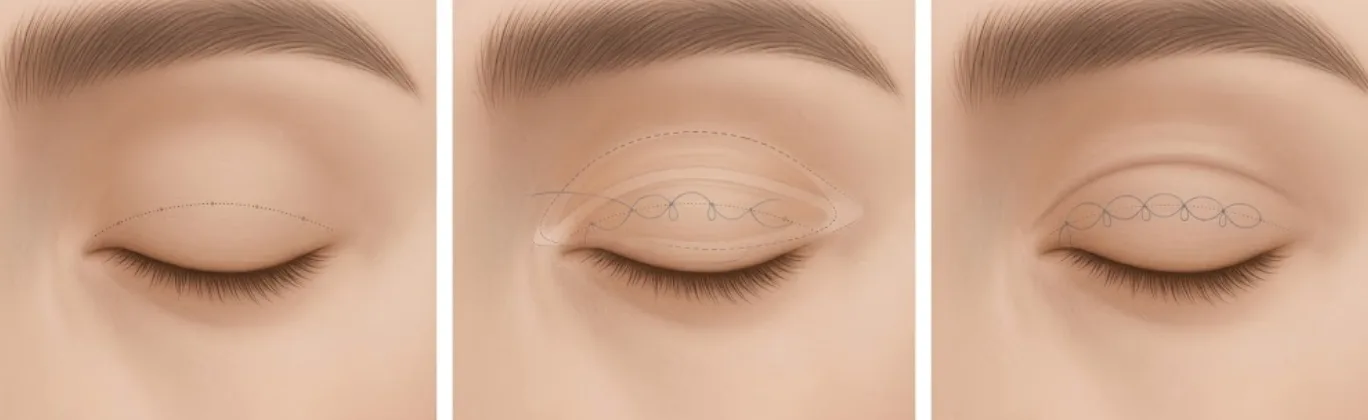
Illustration: a thin buried suture is looped along the planned crease through tiny points, with no skin incision, so the lid folds at the new line.
The technique itself is relatively contained. Non-incision double eyelid surgery forms the crease with a buried-suture fixation line and no full incision, with the small sutures removed at around five days. Because there is no long incision to close and the operating time is shorter than the cutting method, the fee is usually lower than for an incision double eyelid. That is only a starting point.
The bigger cost driver is whether the operation is matched to your eyelid in the first place. If a buried-suture line is the right choice for your lid, the procedure is efficient and the price reflects that. If your lid has heavier skin or fat and you are quietly steered into the cheaper method anyway, you may pay twice: once for surgery that loosens, and again to correct it. The eyelid assessment that sits behind a quote is part of its value.
What's included
What a non-incision double eyelid quote should include
A useful quote is itemised enough that you can see what you are paying for. Ask whether the figure covers the consultation and assessment, the surgeon's fee, the anaesthesia (non-incision double eyelid is typically done under local anaesthesia, sometimes with light sedation), the operating facility, suture removal at around day five, and the scheduled follow-up reviews. A price that bundles all of this is not directly comparable to one that quietly excludes after-care.
The questions worth asking before you compare numbers are less about money than about who and what: who will actually perform the surgery from start to finish, how the crease height and shape will be planned with you, what happens if the line needs a small adjustment, and how reviews work after you fly home. You can raise all of this in an online consultation before you commit to travel.
Revision policy deserves its own line. Buried-suture creases can, in a minority of cases, loosen or fade over time, and clinics differ on whether an early adjustment is included or charged. Knowing this up front is more useful than any headline price. For a fuller view of how surgical fees are built in Korea, the guide on what affects plastic surgery cost walks through the components.
vs incision
Why non-incision usually costs less than incision
Non-incision and incision double eyelid surgery solve the same problem, creating a defined upper-eyelid crease, in different ways, and that difference shows up in the price. The buried-suture method places fixation points to fold the lid without cutting it open; the incision method opens the lid along the planned crease and can also remove excess skin or fat and correct mild ptosis at the same time. More surgical steps and longer operating time generally mean a higher fee for the incision approach.
That does not make non-incision the "budget version" of the same operation. They suit different eyelids. A thin, lightly-fatted lid that wants a soft, reversible crease is well served by the buried-suture line; a heavier lid with more skin or fat often needs the incision method to give a stable, lasting result. If you are weighing the two, the comparison page on non-incision vs incision double eyelid sets out who each method fits.
So the right way to read the price gap is as a reflection of how much surgery each method involves. It is not a discount to chase. Choosing the cheaper procedure when your lid actually needs the other one is the most expensive mistake of all, because correction costs more than getting it right once.
Cheapest vs value
The cheapest quote is rarely the real comparison
Eyelid surgery is a small, high-precision operation where millimetres decide the result, so the temptation to pick the lowest price is understandable but risky. A very low headline figure often leaves something out: the assessment, the after-care, the anaesthesia, or the certainty that the surgeon you met is the one who operates. When the missing pieces are added back, the gap between a bargain quote and a complete one usually narrows.
The most important thing a fee should buy you is certainty about who performs the surgery. In some clinics the consulting surgeon is not the operating surgeon, a practice often called ghost surgery. For a precise procedure on your eyes, knowing the same board-certified surgeon plans and performs the operation is worth more than a small saving, and it is a fair question to ask of any quote.
Value, then, is cost measured properly: the right method for your lid, performed by the surgeon who assessed you, with after-care and a clear adjustment policy included. A quote built that way may not be the lowest, but it is the one you can actually compare. The broader guide to plastic surgery cost in Korea explains why like-for-like comparison matters more than the headline number.
Foreign patients
Non-incision double eyelid cost for foreign patients, and a clear estimate before you fly
Many international patients ask whether non-incision double eyelid surgery costs more for foreigners, or whether Korea is cheaper than having it done at home. Pricing at a registered clinic is based on the procedure and the care, and where you are from does not change it. The meaningful difference between countries is usually the volume of eyelid surgery performed and the experience that comes with it. The headline fee matters less.
The practical way to get a real number is to be assessed before you travel. By sending clear photos of your eyes through an online consultation, you can learn whether the non-incision method suits your lid and receive an estimate that reflects your case. A generic price may change once you arrive. The pre-assessment also tells you if a different method would serve you better, which protects you from paying for the wrong operation.
When you budget a trip, remember the fee is only part of it: a short stay for suture removal at around day five, travel and accommodation all factor in. Eyelid surgery has a relatively light recovery, so the surrounding costs are modest. It is still worth confirming the full picture, including your first consultation, before you book flights.
At Garnet
How Garnet approaches the cost of non-incision double eyelid
Garnet is a single-surgeon clinic in Apgujeong, Seoul. Dr. In-Soo Baek is a board-certified plastic surgeon (Korean medical licence no. 77407) and the only operating doctor. He consults, performs the surgery himself and reviews every follow-up. Because the same surgeon sees you through the whole process, a quote covers exactly what it says: the assessment, the operation, suture removal at around five days and the structured reviews, with no separate consultation or imaging fee and no pressure to book on the day.
The assessment comes before the price. If a buried-suture crease is right for your lid, that is what is recommended; if your eyelid would be better served by the incision method, you are told so plainly. You will not be sold the cheaper option. The clinic caps the day at two surgeries so each case has unhurried time, and Garnet is registered with Korea's foreign-patient programme. You can start with a no-obligation online assessment and a clear estimate before you plan any travel.
Real Results
Before & After
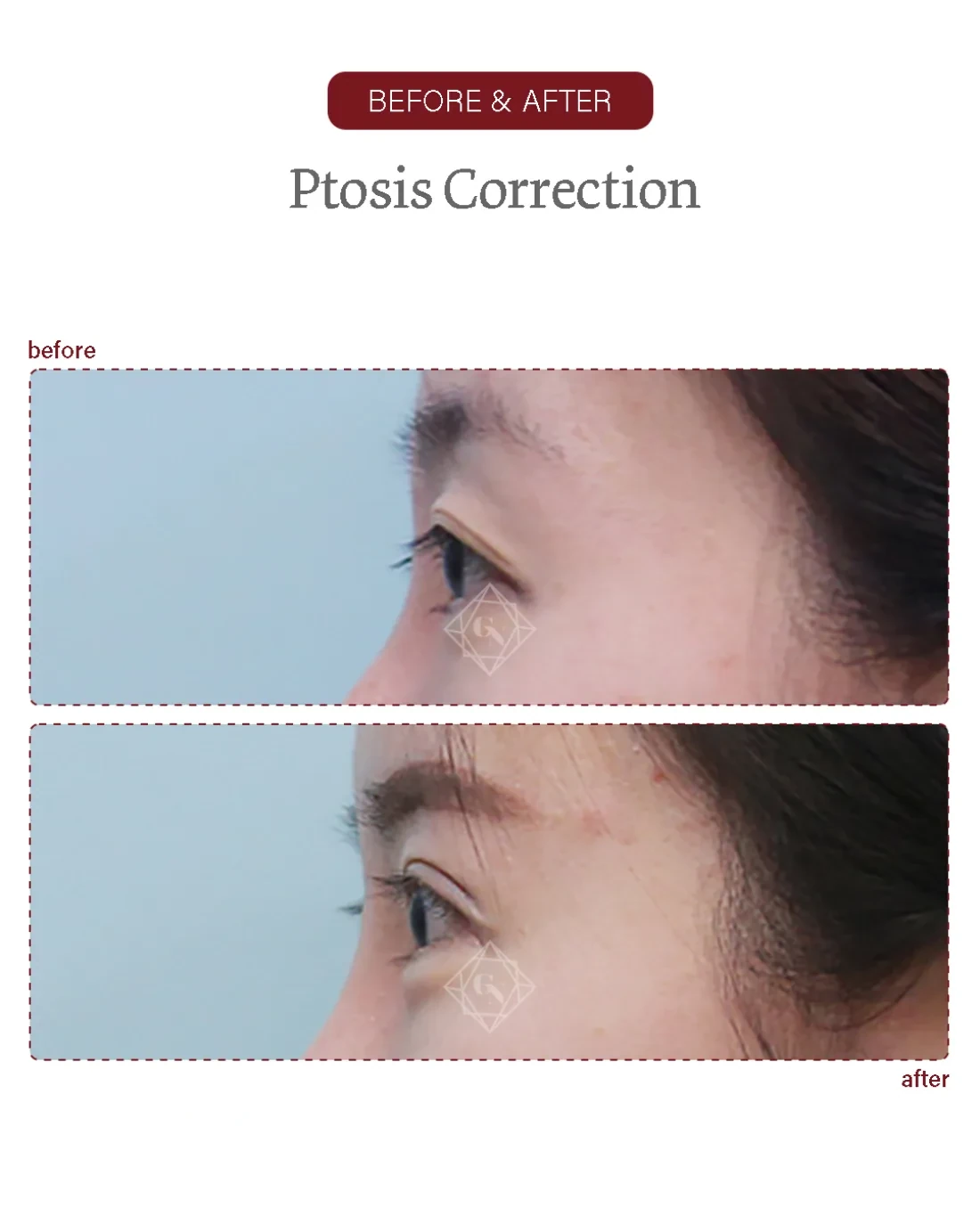
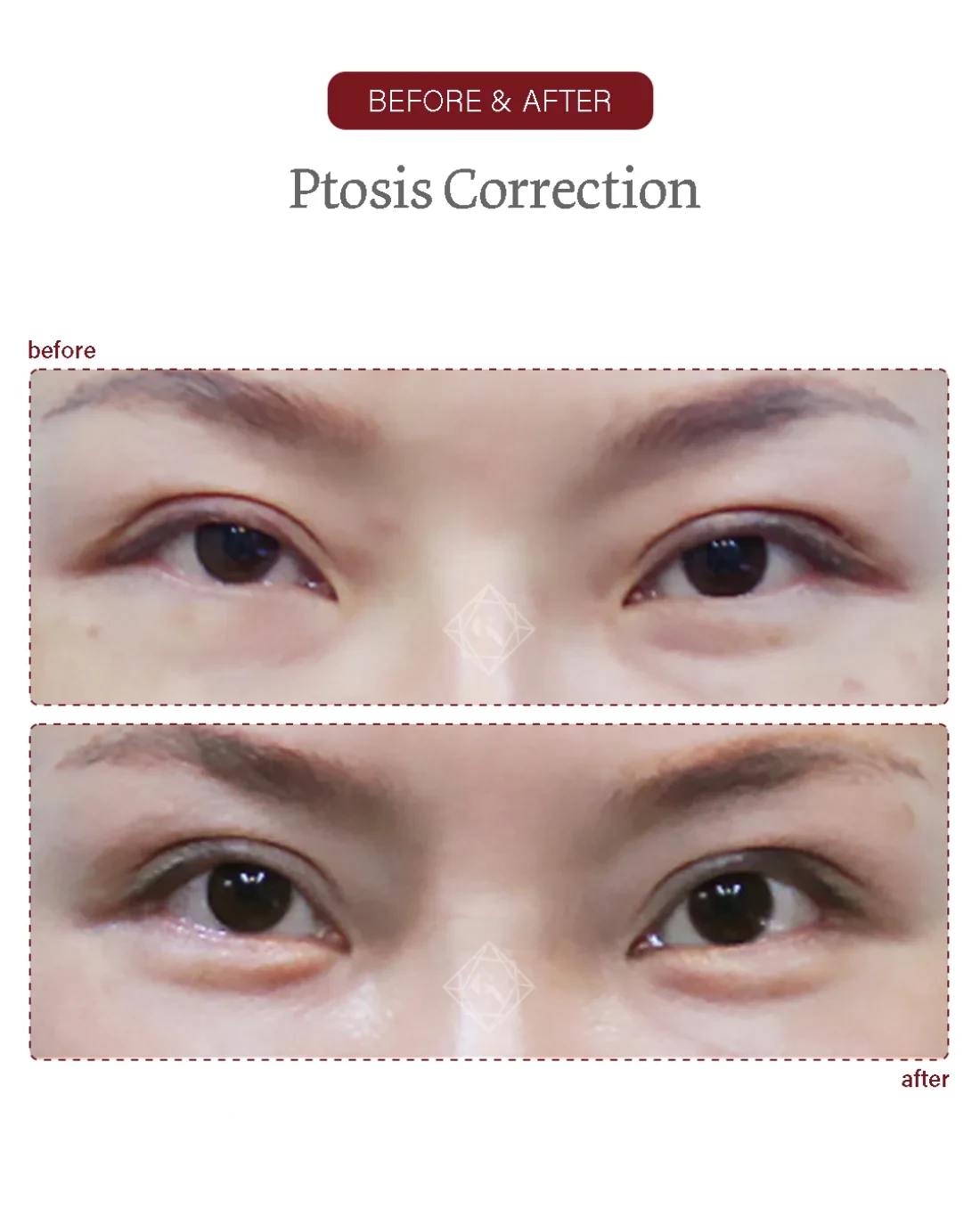
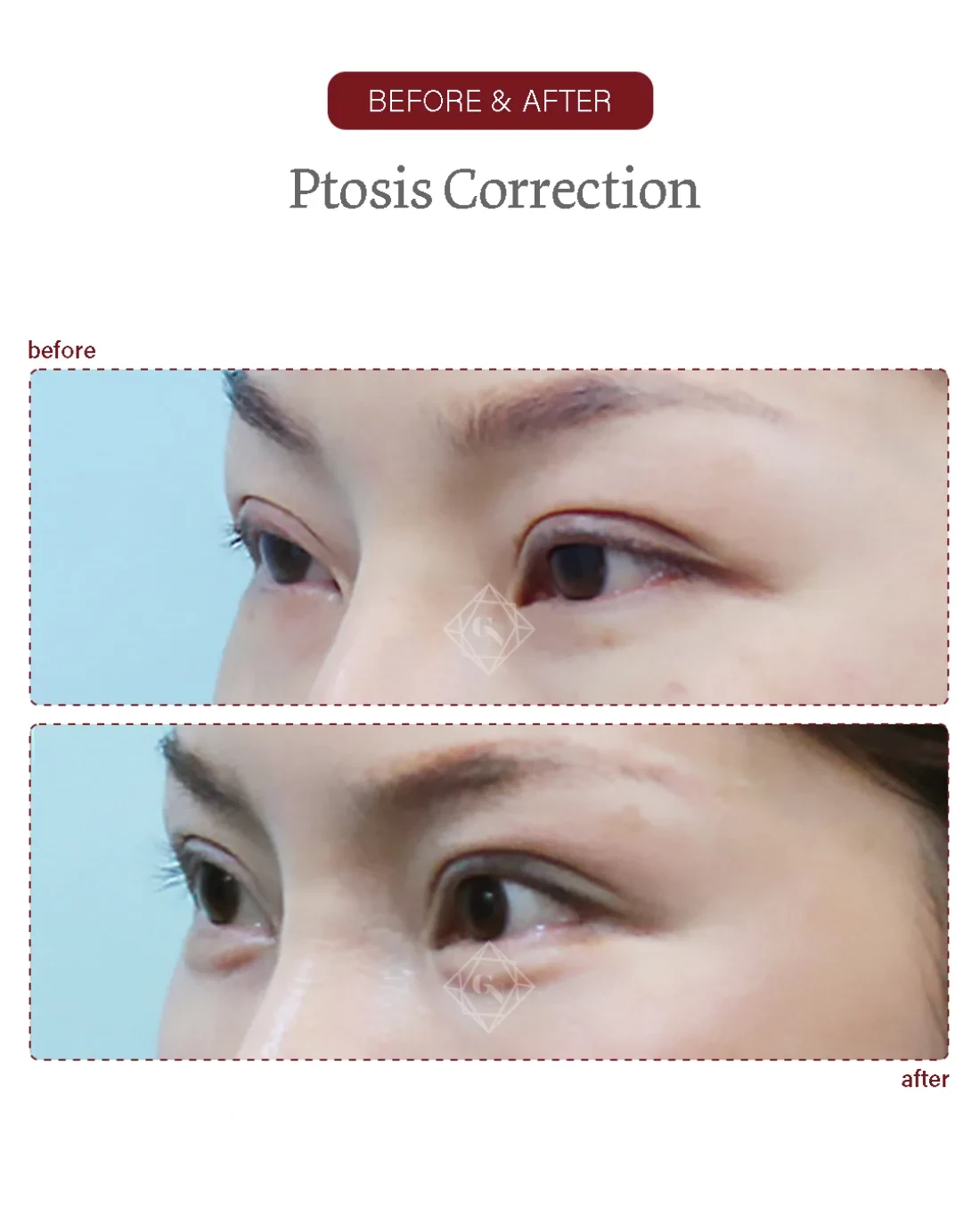
Ptosis-correction before/after examples of actual Garnet patients (published with consent). Results, recovery and suitability vary by individual and are not guaranteed; the right approach is decided at an in-person consultation.
Dr. In-Soo Baek
Director & sole operating surgeon
Korean medical licence no. 77407
Operate on what you came for. Trained at Korea University Medical Center. Every case planned, performed and reviewed by the same hands.
1Operating surgeon
~2Surgeries per day
7Registered techniques
Board-certified plastic surgeon
Plastic surgery training at Korea University College of Medicine & graduate school
Korean Society of Plastic and Reconstructive Surgeons member, in its facial-contour, eye & rhinoplasty groups
Consults, operates and follows up each case himself
Peer-reviewed papers behind the facts on this page. Each describes findings in its own study group — not results at Garnet — and none predicts your own outcome.
Li L et al. Creating Natural Double Eyelids With Continuous Buried Suture and Mini-incision Technique Using Subcutaneous Absorbable Suture for Patients With Puffy Eyelids. JAMA Facial Plastic Surgery. 2014. doi:10.1001/jamafacial.2013.2512
Farid M et al. Complications of Cosmetic Surgery Abroad – Cost Analysis and Patient Perception. Plastic and Reconstructive Surgery - Global Open. 2019. doi:10.1097/gox.0000000000002281
Hwang K et al. Tension and Distortion of the Upper Double Eyelid by a Nonincision Method. Journal of Craniofacial Surgery. 2012. doi:10.1097/scs.0b013e31824e27dd
Davison SP et al. The Price of Medical Tourism: The Legal Implications of Surgery Abroad. Plastic & Reconstructive Surgery. 2018. doi:10.1097/prs.0000000000004816
FAQ
Common questions
How much does non-incision double eyelid surgery cost in Korea?
Pricing varies by clinic and by what the quote includes, so a single figure is not very meaningful on its own. Non-incision (buried-suture) surgery is generally one of the more affordable eyelid procedures because it involves no long incision and shorter operating time, but the most useful step is an individual assessment. Sending photos for an online pre-assessment gives you an estimate that reflects your own eyelid.
What affects the cost of non-incision double eyelid surgery?
The main drivers are the surgeon's experience, the time and care given to each case, the anaesthesia used, and the after-care: suture removal at around day five and the follow-up reviews. Whether the method actually suits your eyelid matters most of all, because a cheap operation on the wrong lid can need correcting later.
Why is non-incision cheaper than incision double eyelid?
The non-incision method forms the crease with buried sutures without opening the lid, so there are fewer surgical steps and shorter operating time, which is usually reflected in a lower fee. It is not a discount version of the same surgery, though. The two methods suit different eyelids, and choosing the cheaper one when your lid needs the incision method can cost more in the end.
What should be included in a non-incision double eyelid quote?
Look for the consultation and assessment, the surgeon's fee, anaesthesia, the operating facility, suture removal at around day five, and the scheduled follow-up reviews. It is also worth confirming the revision or adjustment policy, since buried-suture creases can occasionally loosen. A complete quote is far easier to compare than a low headline price that leaves after-care out.
Does non-incision double eyelid cost more for foreigners?
At a clinic registered for international patients, pricing is based on the procedure and the care. Where you are from does not change it, and there is no separate foreigner fee. The real difference between countries tends to be the volume of eyelid surgery performed and the experience behind it.
Is non-incision double eyelid in Korea cheaper than other countries?
It can be, but the price gap is less important than the standard of assessment and surgery. Many international patients choose Korea for the experience that comes from a high volume of eyelid procedures; the sensible approach is to compare like for like (the same method, the same inclusions and the same certainty over who operates) instead of chasing the lowest number.
Can I get a cost estimate before travelling to Korea?
Yes. By sending clear photos of your eyes through an online consultation you can learn whether the non-incision method suits your lid and receive an estimate for your case before you book flights. The pre-assessment will also tell you if a different method would serve you better.
Is the cheapest non-incision double eyelid a good idea?
Not necessarily. A very low price often leaves out the assessment, after-care or the certainty that the surgeon you met is the one who operates. For a precise procedure on your eyes, knowing the same board-certified surgeon plans and performs the surgery is usually worth more than a small saving.
Does the price cover revision if the crease loosens?
It depends on the clinic, which is exactly why it is worth asking up front. Buried-suture creases can occasionally loosen or fade, and clinics differ on whether an early adjustment is included. Knowing the revision policy before you book tells you more about the real cost than the headline figure.
Does Garnet charge a consultation or imaging fee?
No. Garnet does not charge a separate consultation or imaging fee, and there is no pressure to book on the day. As a single-surgeon clinic, the same board-certified surgeon assesses you, performs the surgery and handles follow-up, so the quote reflects exactly what is included.
My mom recently had a brow lift and lower blepharoplasty with Dr. Baek, and our experience has been wonderful so far. The Garnet team was incredibly kind and welcoming, with Kelly assisting us as our English consultant—she made everything…
I’m so happy I chose this clinic for my lower blepharoplasty. I was traveling from abroad by myself, so I was a little nervous, but from the beginning I felt comfortable and truly cared for. Everyone was kind, patient, and professional…
Came in for an in-person consult and ended up choosing Garnet and Dr.Baek for my non-incisional DES and tiplasty/alarplasty. I communicated with Kelly (English consultant) from the start till now (3 weeks post-op). She really help me feel…
My under-eyes have been sagging and folding for years... I tried to cover it up with makeup, but it actually got stuck in the wrinkles and made it stand out even more. While going for consultations, I noticed that the bigger the hospital…
Send photos and your question before you travel. An English-speaking coordinator reviews every enquiry and replies with guidance on whether surgery is appropriate, the likely plan and timing.
✓ Reviewed by the clinic coordinator, not a bot
✓ Photo-based pre-assessment before you fly
✓ Foreign-patient scheduling & after-care
✓ One surgeon for consultation, surgery and follow-up
Prefer to chat now? Reach the coordinator directly:









 T S7 months ago



