Pelican™ contouring refines the under-chin area, reducing the fullness of a double chin and addressing slack neck bands, and the change it makes to the neck is durable. No facial procedure freezes the clock entirely, though. This guide explains how the contour settles in the first months, what keeps the result over the years, and the two realistic factors, ageing and weight, that determine how long the cleaner line holds.
The short answer
Pelican™ contouring makes a durable change to the under-chin area, but the final, settled result takes some months to appear as swelling resolves.
Fat that is refined does not simply return, so the improved contour is long-lasting. It is still affected by later weight gain and the natural ageing of skin and muscle.
Stable weight and good skin care help the result hold; significant weight change is the most common reason a contour softens over time.
Whether and when any refinement is ever needed is an individual question, confirmed by reviewing how your contour settles at follow-up.
Before talking about years, it helps to understand the first few months, because the result you see immediately after surgery is not the result that lasts. Pelican™ contouring works on the under-chin area through a small incision beneath the chin, and like any surgery on that region it is followed by swelling that takes time to resolve. Early on the area can look fuller or feel firm; that is normal, and the final contour comes later.
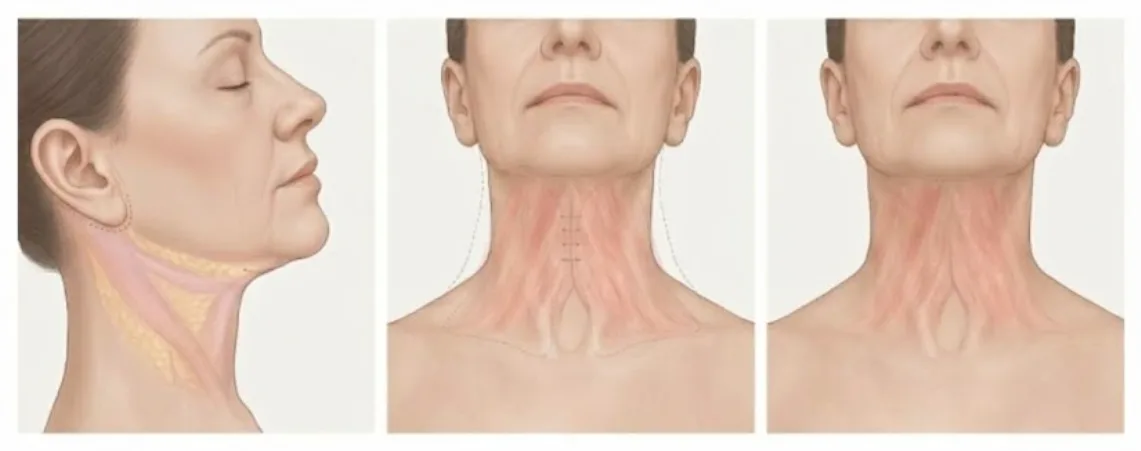
Illustration: fat beneath the jaw (yellow) and loose neck muscle bands are contoured for a cleaner chin and neckline (Pelican™).
Over the following weeks the swelling subsides and the refined jaw-to-neck line gradually emerges, with most people seeing the contour settle over a few months as the tissues relax and redrape. The cleaner line you are aiming for is the settled result. Judging longevity therefore means looking at the settled contour, after the early healing phase is over. For how the whole recovery unfolds, the parent guide on Pelican neck contouring sets out the overall picture.
This is why a careful surgeon talks in terms of months for the final look and asks you to review it at structured follow-ups instead of at the first week. Once the contour has settled, the question of how long it lasts becomes a meaningful one, and that is where the next sections turn.
What lasts
What lasts, and why
The encouraging part of the answer is that Pelican™ contouring makes a structural change to the under-chin area. When submental fullness is refined and the platysmal bands are addressed, those changes do not simply undo themselves the way a filler or an energy-based treatment fades. There is no substance to dissolve and no effect to wear off. In that sense the improvement is long-lasting and is meant to be a durable change to the under-chin area.
That said, durable is not the same as permanent in the absolute sense, and this guide does not claim otherwise. Your face continues to live and age after surgery: skin gradually loses some elasticity over the years and the deeper tissues change with time. The refined contour gives you a better, cleaner starting point, but it ages along with the rest of your face. It does not stand still while everything around it changes.
So the realistic summary is this: the contouring itself holds well, and most people enjoy the improved line for a long time, but how long the result looks its best depends on factors that continue after surgery, chiefly weight and the natural ageing of skin. Those are covered next, and they are also why follow-up matters.
Ageing and weight
What ageing and weight change can still do
Two forces shape how long a refined under-chin contour stays at its best. The first is weight. The area under the chin responds to overall weight change, so significant weight gain after the procedure can soften the line again, while staying broadly stable helps the result hold. This is the single factor most within your control, and it is the most common reason a contour looks less defined years later.
The second is the ordinary ageing of skin and muscle. Over time skin loses some elasticity and the platysma continues to change, which can gradually blur a once-crisp jaw-to-neck line. That happens because ageing continues; it does not mean the surgery failed. For some people, years down the line, that evolution is what eventually prompts a conversation about whether anything further would help. If skin laxity has become the new dominant issue, that may be a lift instead of more contouring.
Neither of these means the procedure was short-lived; they mean it lives in a face that keeps changing. Understanding that helps set realistic expectations: the contour is durable, and you protect it by keeping your weight stable and looking after your skin, while accepting that no procedure pauses ageing entirely. How any of this applies to you specifically is something to review with the surgeon over your planned follow-up; averages cannot predict it.
Helping it last
What helps the result last
There are sensible, undramatic things that help a Pelican™ result hold. The most important is weight stability: because the under-chin area mirrors overall weight, keeping it broadly steady is the single most effective way to protect the contour you paid for. Crash weight changes in either direction are the quickest way to disturb a clean line.
Skin care plays a supporting role. Protecting your skin from sun damage, not smoking, and a steady skincare routine all help maintain elasticity, which is part of what keeps the jaw-to-neck line crisp as the years pass. None of this is a guarantee, since ageing continues regardless, but it shifts the odds in your favour and slows the gradual softening that time brings.
Following your surgeon's after-care in the early months also matters more than people expect. Letting the area settle properly, wearing any recommended compression, and attending the structured reviews means the contour heals into its best shape, and a result that settled well to begin with tends to age more gracefully. Good longevity starts with good healing, which is why aftercare and follow-up are part of the same story as how long it lasts.
Touch-ups
When a touch-up or revision might be discussed
Most people who are well selected for Pelican™ contouring do not need anything further for a long time. When the question of a touch-up does come up, it is usually for one of two reasons: the area did not settle exactly as hoped in a specific person, or (far more often, and years later) ageing and weight change have softened the line and the patient wants to refresh it.
Importantly, the right answer to a softened contour years later is not always more of the same. If skin laxity has become the dominant issue with time, a lift may be more appropriate than further contouring. That is the same candidacy logic that applied at the start, applied again to your neck as it is now. A careful surgeon assesses the current anatomy and does not assume a repeat of the original procedure.
If anything further is ever needed, and what that would be, is an individual question that can only be answered by looking at how your contour has settled and aged. That is exactly what structured follow-up is for, and it is why continuity with the same surgeon, who knows your starting point, is so useful for the long term.
At Garnet
How Garnet follows up on your result
Garnet is a single-surgeon plastic surgery clinic in Apgujeong, Seoul. Dr. In-Soo Baek, a board-certified plastic surgeon (Korean medical licence no. 77407), is the only operating doctor. He assesses your under-chin area, performs the Pelican™ contouring himself, and reviews every follow-up, with the clinic capped at two surgeries a day so each case has unhurried time. Because the same surgeon sees you throughout, the person reviewing how your contour settles and lasts is the person who created it.
After-care is structured around exactly the timeline this page describes: follow-ups at 1, 3 and 6 months let the surgeon track how the under-chin area settles from early swelling through to the final contour, and address anything early. For international patients who fly home, those reviews continue remotely by messenger, so distance does not break the continuity that long-term results depend on. Garnet is registered with Korea's foreign-patient programme.
If you are weighing whether the lasting result will suit you, the ideal starting point is an online consultation: send photos for a pre-assessment, understand realistically how durable the contour is for your anatomy, and plan follow-up that protects it over the years.
Real Results
Before & After
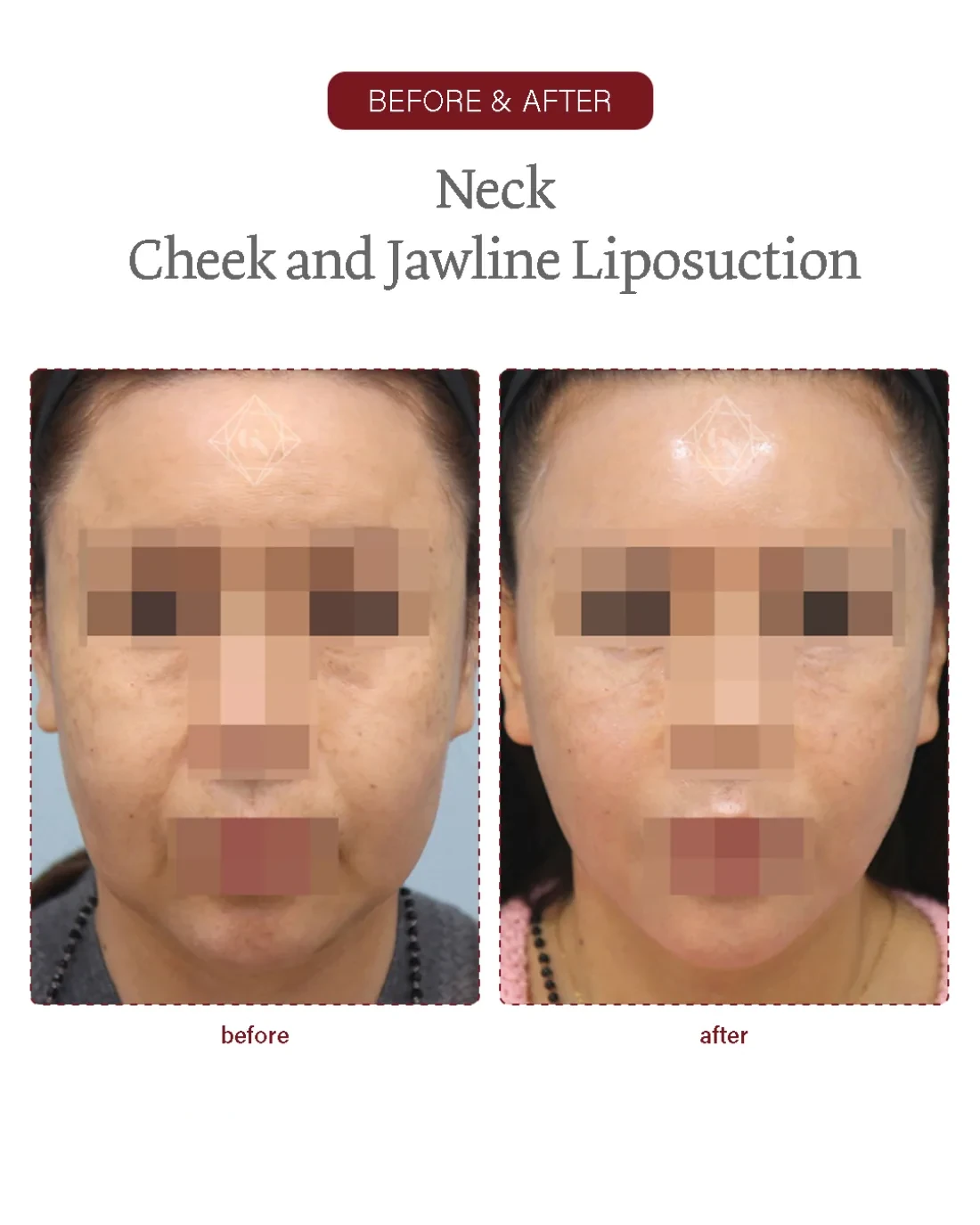
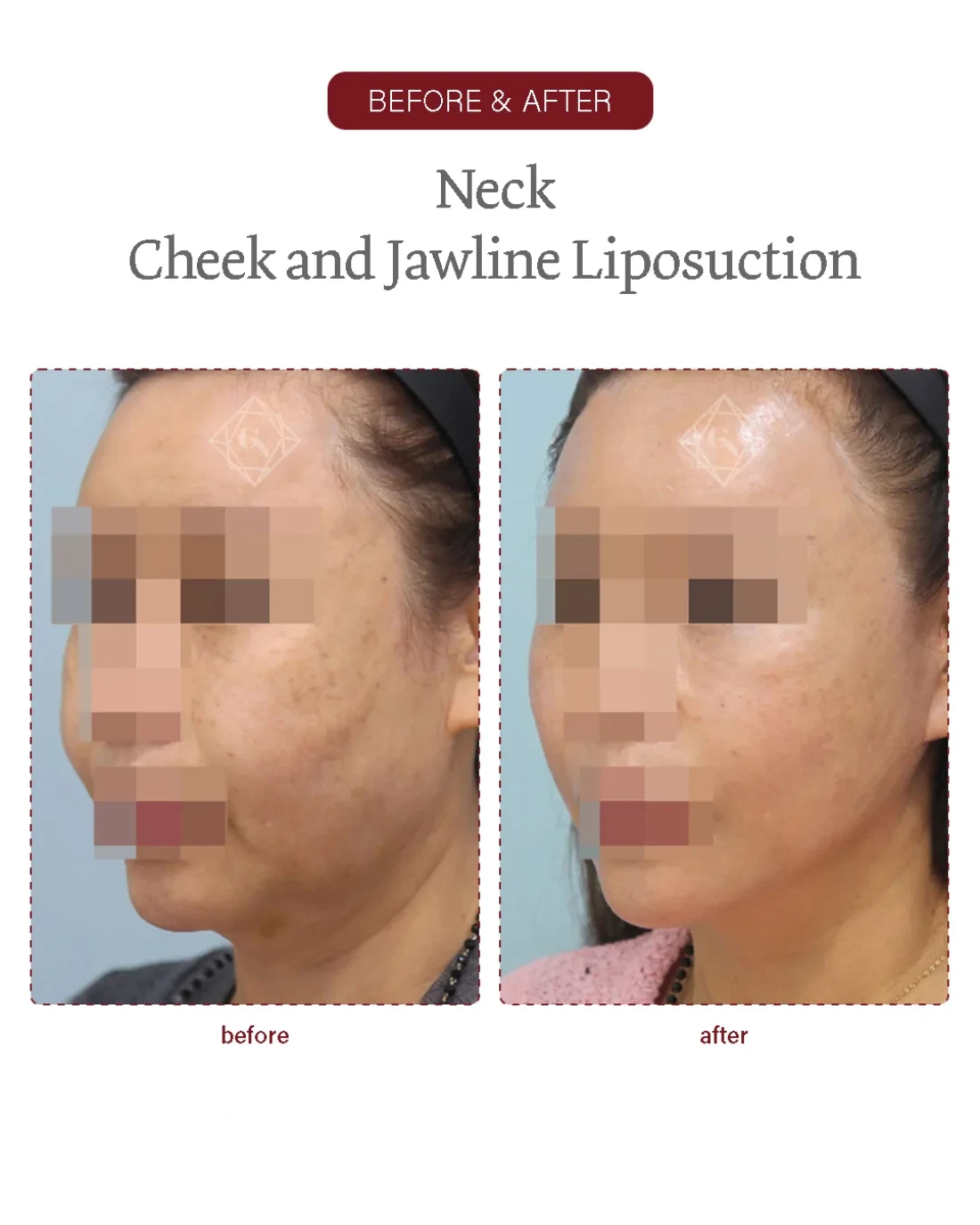
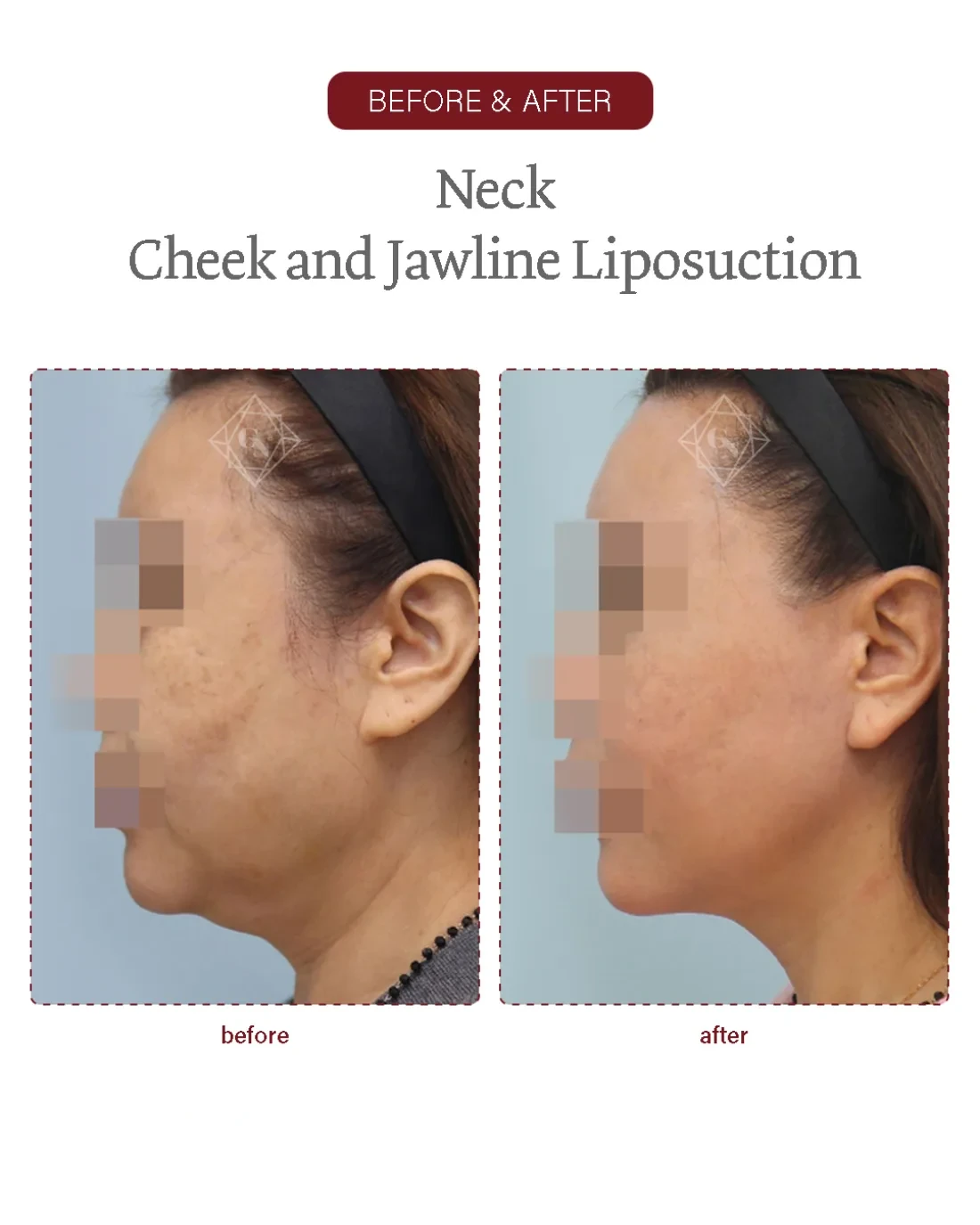
Neck and jawline contouring results of actual Garnet patients (published with consent, with date, procedure and clinic labelled). Results, recovery and suitability vary by individual and are not guaranteed.
Prices
Price at Garnet
Pelican™ — double chin & neck lines
From₩4,000,000 + VATExcluding VAT (10% VAT is added at payment)Book now
Same price as Korean patients. Prices shown exclude 10% VAT; your written quote, issued after the in-person consultation, shows the full amount payable.
Dr. In-Soo Baek
Director & sole operating surgeon
Korean medical licence no. 77407
Operate on what you came for. Trained at Korea University Medical Center. Every case planned, performed and reviewed by the same hands.
1Operating surgeon
~2Surgeries per day
7Registered techniques
Board-certified plastic surgeon
Plastic surgery training at Korea University College of Medicine & graduate school
Korean Society of Plastic and Reconstructive Surgeons member, in its facial-contour, eye & rhinoplasty groups
Consults, operates and follows up each case himself
Peer-reviewed papers behind the facts on this page. Each describes findings in its own study group — not results at Garnet — and none predicts your own outcome.
Joseph JH et al. A Two-Stage Injection Technique and Dose-Ranging Study Using High-Dose AbobotulinumtoxinA for Treating Platysmal Bands. Journal of Drugs in Dermatology. 2023. doi:10.36849/jdd.7537
Meningaud JP et al. Facelift: Assessment of Total Platysma Muscle Transection to Prevent the Recurrence of Platysmal Bands. Aesthetic Plastic Surgery. 2023. doi:10.1007/s00266-023-03664-w
Sturm A et al. Nonsurgical Rejuvenation of the Neck. Facial Plastic Surgery Clinics of North America. 2022. doi:10.1016/j.fsc.2022.03.014
FAQ
Common questions
How long does Pelican neck contouring last?
The contouring makes a durable change: refined fullness and addressed neck bands do not simply undo themselves, so most people enjoy the improved line for a long time. How long it looks its best depends on keeping your weight stable and on the natural ageing of skin, reviewed at follow-up.
Is Pelican neck contouring permanent?
It is long-lasting but not permanent in the absolute sense. The structural change holds, but your face keeps ageing (skin loses some elasticity and tissues change over the years), so the refined contour ages along with the rest of your face. A permanent result is not something this guide can claim.
When will I see the final result?
Not immediately. Surgery on the under-chin area is followed by swelling that takes time to resolve, and the settled jaw-to-neck line usually emerges over a few months. Judge longevity from the settled contour once early healing is over, and review it at your structured follow-ups.
Can the double chin come back after Pelican contouring?
Refined fat does not simply return, but the under-chin area mirrors overall weight, so significant weight gain can soften the line again. Staying broadly weight-stable is the single most effective way to protect the result; major weight change is the most common reason a contour looks less defined later.
What makes the result last longer?
Mainly weight stability, since the under-chin area responds to overall weight. Good skin care (sun protection, not smoking, a steady routine) helps maintain elasticity, and following early after-care so the area heals into its best shape sets it up to age more gracefully. None of this stops ageing, but it shifts the odds in your favour.
Will I ever need it redone?
Most well-selected patients don't need anything further for a long time. If a contour softens years later it is usually from ageing and weight change, and the right answer isn't always more contouring. If skin laxity has become the main issue, a lift may suit better. It's an individual question answered by assessing your current anatomy.
Does ageing undo the procedure?
Ageing doesn't undo the structural change, but it continues around it: skin loses some elasticity and the platysma keeps changing, which can gradually blur a once-crisp line over the years. The procedure gives you a better starting point under the chin, which then ages along with your face.
Does weight loss after surgery improve the contour further?
It can help, since the area reflects overall weight, but very rapid or extreme weight change in either direction can disturb a clean line. Broad stability is better for the result than dramatic swings. How weight change affects your specific contour is something to review with the surgeon at follow-up.
How does Garnet track how long my result lasts?
Through structured follow-ups at 1, 3 and 6 months with the same surgeon who performed your procedure, tracking the contour from early swelling to the settled result. For international patients those reviews continue remotely by messenger after you fly home, so distance doesn't break the continuity long-term results rely on.
Can I understand the likely longevity before travelling?
Yes. In an online consultation you can send photos for a pre-assessment and a realistic view of how durable the contour is likely to be for your anatomy and skin quality, plus a follow-up plan to protect it, all before you commit to a trip.
My mom recently had a brow lift and lower blepharoplasty with Dr. Baek, and our experience has been wonderful so far. The Garnet team was incredibly kind and welcoming, with Kelly assisting us as our English consultant—she made everything…
I’m so happy I chose this clinic for my lower blepharoplasty. I was traveling from abroad by myself, so I was a little nervous, but from the beginning I felt comfortable and truly cared for. Everyone was kind, patient, and professional…
Came in for an in-person consult and ended up choosing Garnet and Dr.Baek for my non-incisional DES and tiplasty/alarplasty. I communicated with Kelly (English consultant) from the start till now (3 weeks post-op). She really help me feel…
My under-eyes have been sagging and folding for years... I tried to cover it up with makeup, but it actually got stuck in the wrinkles and made it stand out even more. While going for consultations, I noticed that the bigger the hospital…
Want to know how long a Pelican neck result would last for you? Send photos for a no-obligation pre-assessment, and we'll give you a realistic view of the durable contour and a follow-up plan to protect it over the years.
Send photos and your question before you travel. An English-speaking coordinator reviews every enquiry and replies with guidance on whether surgery is appropriate, the likely plan and timing.
✓ Reviewed by the clinic coordinator, not a bot
✓ Photo-based pre-assessment before you fly
✓ Foreign-patient scheduling & after-care
✓ One surgeon for consultation, surgery and follow-up
Prefer to chat now? Reach the coordinator directly:









 T S7 months ago



