A crisp jawline is one of the first things to blur with age, as cheek tissue descends and softens the clean line of the jaw. No single procedure restores it. The right approach depends on how much has sagged, so the starting point is understanding the cause and matching the option to the degree of descent.
The short answer
A jawline blurs when the deeper support layer of the cheek loosens and slides down, softening the jaw's clean line.
Early, mild laxity may be supported by a thread lift; established descent usually needs a facelift that repositions the support layer.
The right procedure depends on the degree of sagging and your skin quality. Which option sounds simplest or most dramatic is beside the point.
At a single-surgeon clinic the same board-certified surgeon assesses the jawline, performs the procedure and follows your recovery.
A sharp jawline depends on the tissue above it staying where it belongs. The face is layered: skin, a fat layer, and beneath it a sheet of connective tissue and muscle called the SMAS that anchors the cheek. As the ligaments holding that layer loosen with age and cheek volume drifts downward, the fullness that once sat high on the cheek collects along the jaw, blurring its outline and often forming jowls just in front of the chin.
This matters because a sagging jawline is a structural change that sits below the surface. Skincare, radiofrequency and ultrasound act on skin and superficial tissue; they may firm slightly but cannot reposition a descended support layer. Once the SMAS has slipped, lifting it back is a surgical task. Knowing this early prevents a lot of money spent on treatments that were never designed to restore a jawline.
The degree of sagging also varies a great deal. A jawline in the early stages of blurring behaves differently from one where tissue has clearly descended and jowls have formed, and skin quality and bone structure change how pronounced it looks. A surgeon assessing a sagging jawline is really grading how far the descent has gone, which is why the answer is a range of options.
The options
The options for a sagging jawline in Korea
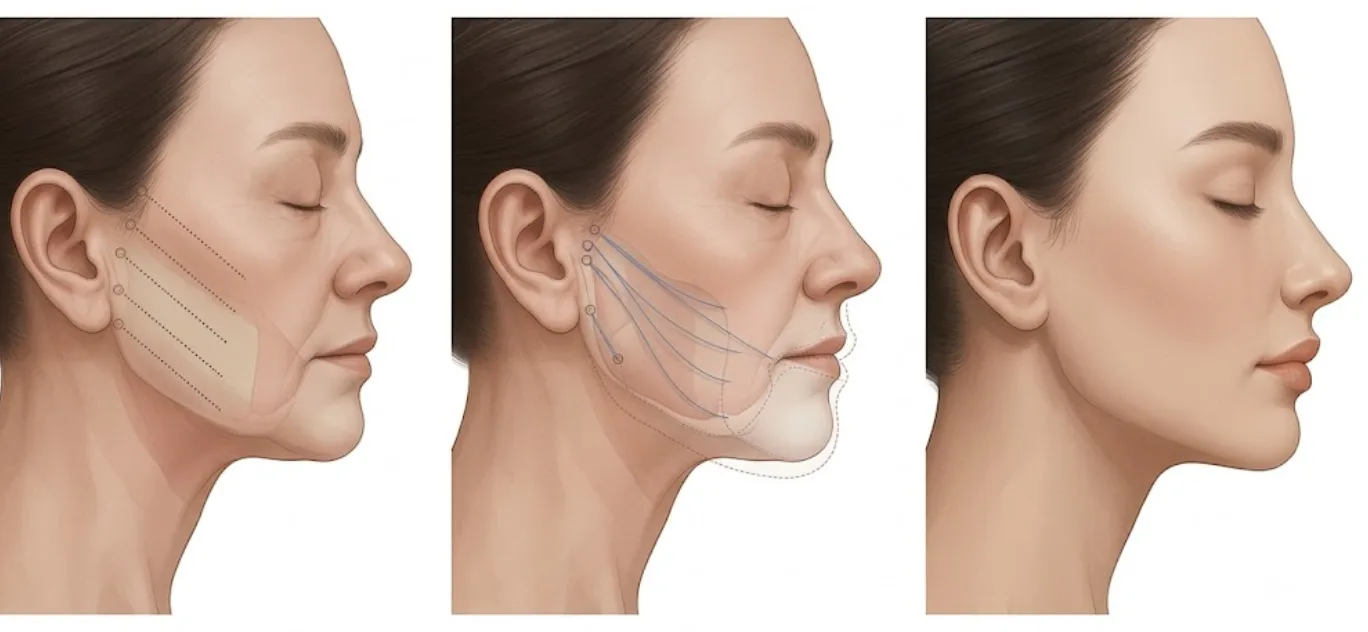
For early, mild laxity in a younger face with good skin, a thread lift can suspend and support the tissue: fine barbed threads are introduced through small entry points and fixed to lift the sagging softly. It is the least invasive option, with the shortest recovery, and suits someone who is not yet ready for surgery. It supports the deeper layer without repositioning it, and its effect is more modest and shorter-lived than surgery.
Illustration: barbed threads are placed along the paths shown and anchored at fixed points to lift early laxity of the lower face (Fixpoint Thread Lift™).
For moderate descent, a deep-mini facelift uses a shorter incision from the temporal hairline to the earlobe and releases the sub-SMAS layer, so it repositions structure with a smaller scar. For established sagging with clear jowls, a deep-plane facelift releases and lifts the support layer all the way to the jawline, giving the fullest and longest-lasting restoration of the jaw's line. Each is a distinct procedure, described in full on its parent page.
A careful surgeon will not offer the same answer to everyone. A thread lift stretched to treat heavy sagging disappoints; a full facelift for a jawline that only needs light support is more than the problem requires. The role of the assessment is to match the option to the degree of descent.
How they differ
Threads, deep-mini and deep-plane lifts for the jaw compared
The key contrast is support versus repositioning, and how far each reaches. A thread lift suspends tissue with threads through tiny entry points; it does not release or move the SMAS, so it suits early, mild laxity and gives a more modest, temporary lift with the quickest recovery. It softens early sagging along the jaw; it cannot reverse established descent.
Illustration: through a shorter incision around the ear (dotted), the deeper layer (yellow) is lifted using the deep-plane principle (Deep mini™).
A deep-mini facelift actually repositions the deeper layer through a relatively short incision, giving real lifting power for moderate sagging with a smaller scar than a full lift. A deep-plane facelift has the longest reach, releasing the support layer to the jawline and typically the neck for the most complete and durable correction, at the cost of a longer incision and recovery, with sutures removed in two stages at ten and fourteen days at Garnet.
Because these sit on a spectrum, two people with a similar-looking jawline in a photo can end up with different plans once skin quality, the degree of descent and bone structure are examined in person. A young jawline with light laxity may do well with threads; an established sag with jowls usually needs surgery to genuinely restore the line.
Deciding
How Dr. Baek grades a sagging jawline
A careful assessment grades how far the cheek and jaw tissue have descended, the quality and elasticity of your skin, whether jowls and neck laxity are also present, and your bone structure beneath. It also weighs practical factors, such as how much downtime you can take, travel from abroad, and how long you want the result to last, before recommending a thread lift, a deep-mini facelift, or a full deep-plane facelift.
This is where a single-surgeon model helps. At Garnet, Dr. In-Soo Baek, a board-certified plastic surgeon, carries out the consultation, plans the procedure, performs it himself and reviews your recovery, so the person grading your jawline is the one treating it. The clinic caps the day at two operations, which keeps the assessment unhurried. A sound plan sometimes means recommending a smaller, less invasive option, or explaining that surgery is not yet worthwhile.
You can begin this before you travel. Sending clear front and profile photos for an online consultation lets the surgeon give a realistic view of how far your jawline has sagged and which option fits, so you are not deciding on the day you arrive.
Expectations
Realistic jawline expectations and recovery
A well-matched option restores a cleaner, more defined jaw by putting descended tissue back where it belongs or supporting it before it drops further, and because the surgical options work on the support layer, the improvement is meant to look natural without looking tight. These procedures address the sagging present now but do not stop ageing, so the jawline will continue to change gently over the years. A thread lift, in particular, gives a temporary result.
Recovery depends on the option. A thread lift settles quickly; a deep-mini facelift generally settles faster than a full lift; and a deep-plane facelift involves more early swelling and bruising with staged suture removal. Most international patients plan to stay in Korea long enough for the main sutures and early swelling to settle before flying; the parent procedure pages give the specific timeline for each.
Every jawline procedure carries risks (swelling, bruising, temporary numbness and, less commonly, nerve, thread-related or healing issues), and results vary from person to person. Dr. Baek goes through the risks that apply to your jaw and skin without promising an outcome, and he sees you again at one, three and six months to review any concern himself.
Consultation
Getting your jawline assessed
Because a sagging jawline sits on a spectrum from light laxity to established descent, the most useful next step is an assessment before any booking. A good consultation should tell you how far your jawline has sagged, which option genuinely fits, what it can and cannot change, how long it is likely to last, and what recovery would realistically look like, including the real possibility that a less invasive option, or waiting, is the sensible choice.
At Garnet, a single-surgeon clinic in Apgujeong, Seoul, registered with Korea's foreign-patient programme, the board-certified surgeon who grades your jawline also treats it and sees you at one, three and six months. A no-obligation online assessment is the place to begin: send front and profile photos of your jaw, describe what bothers you, and get a realistic view before you plan any travel.
Real Results
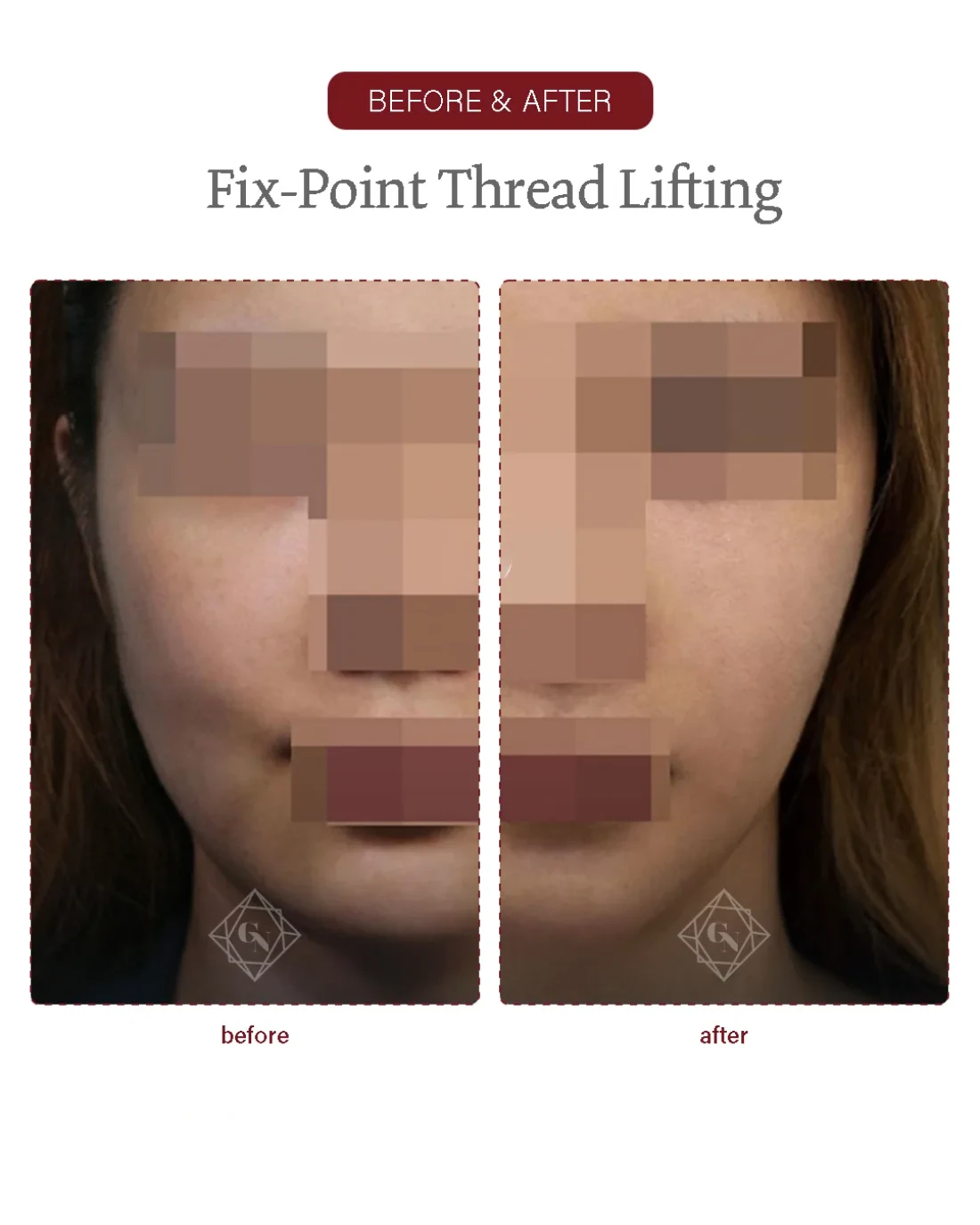
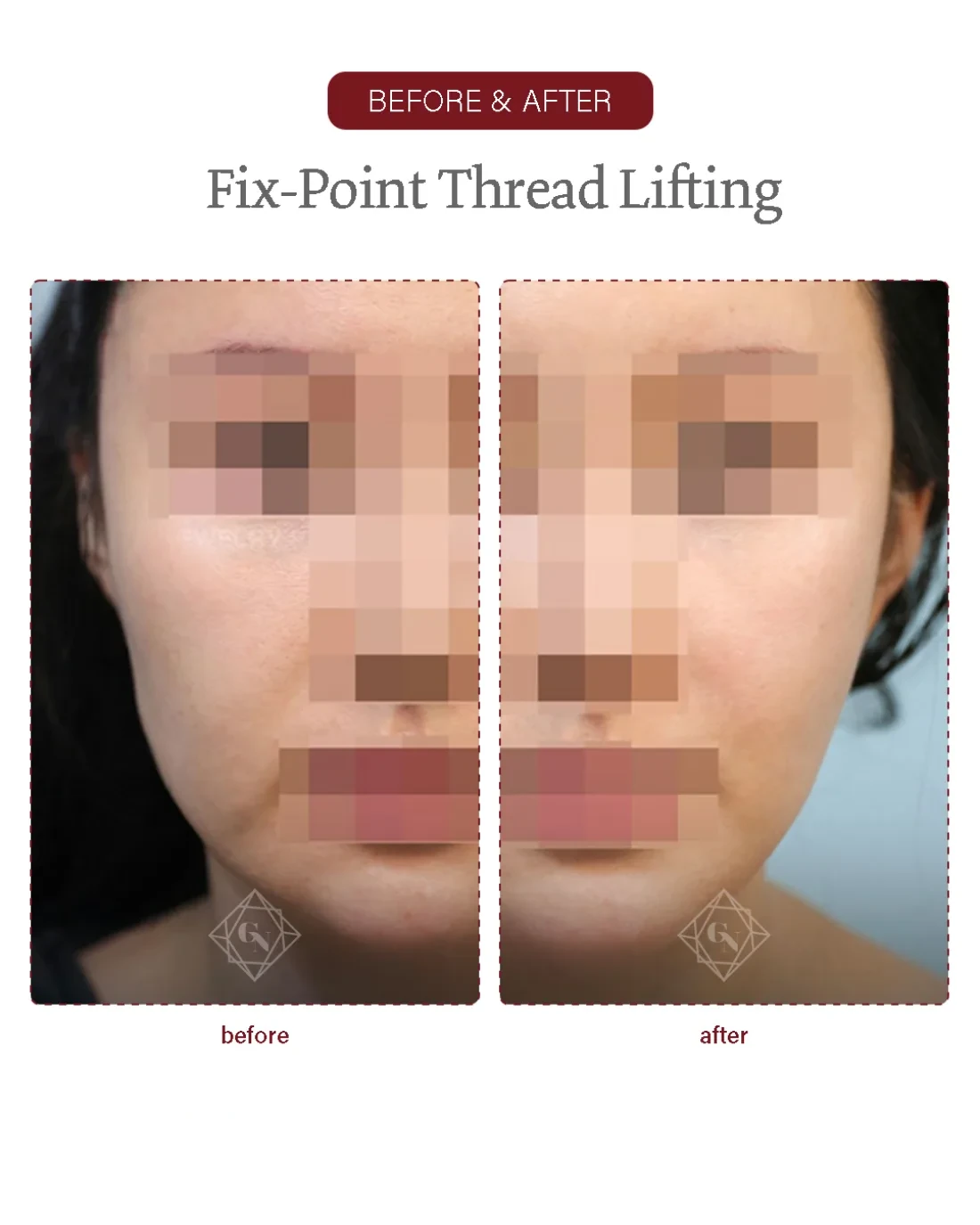
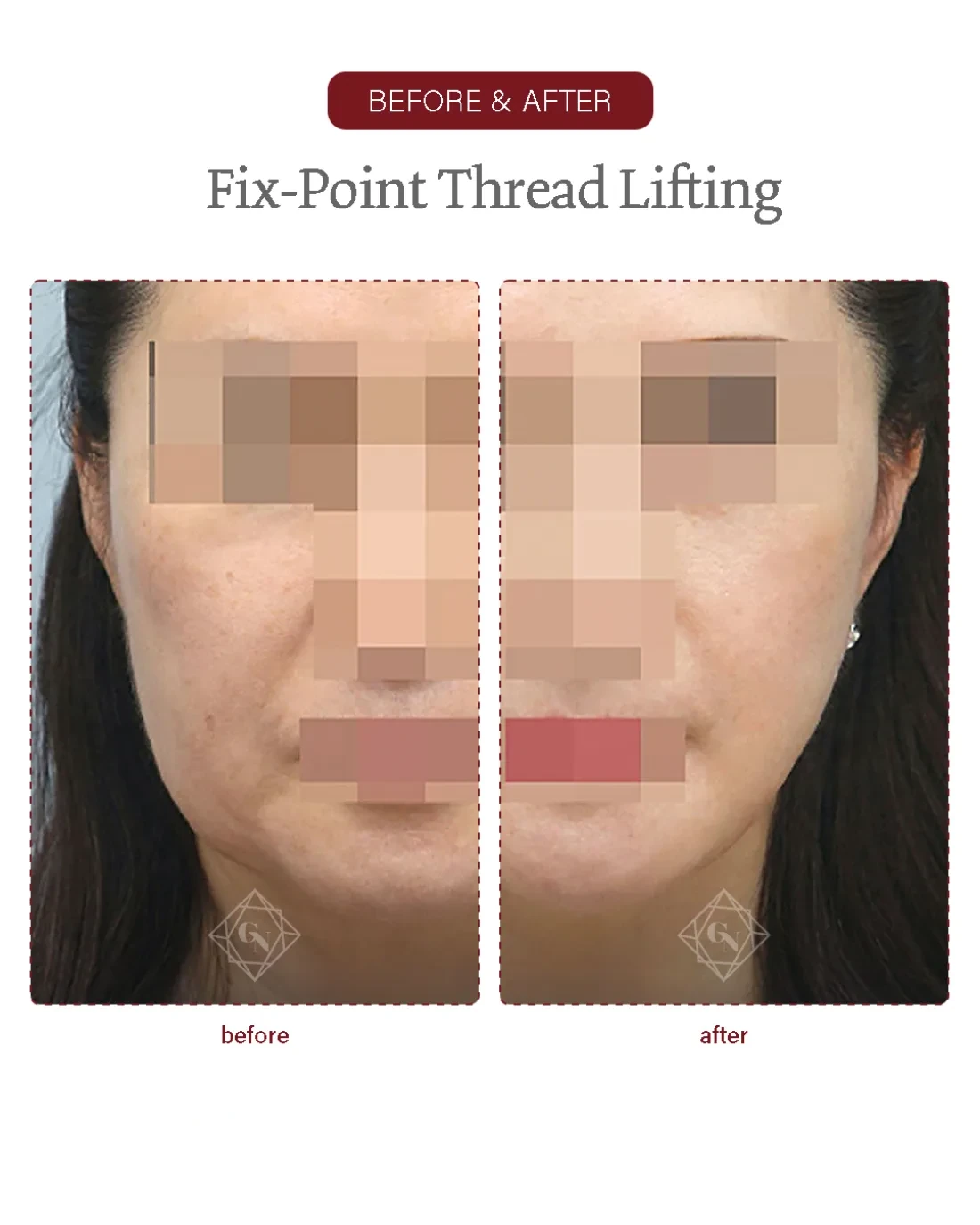
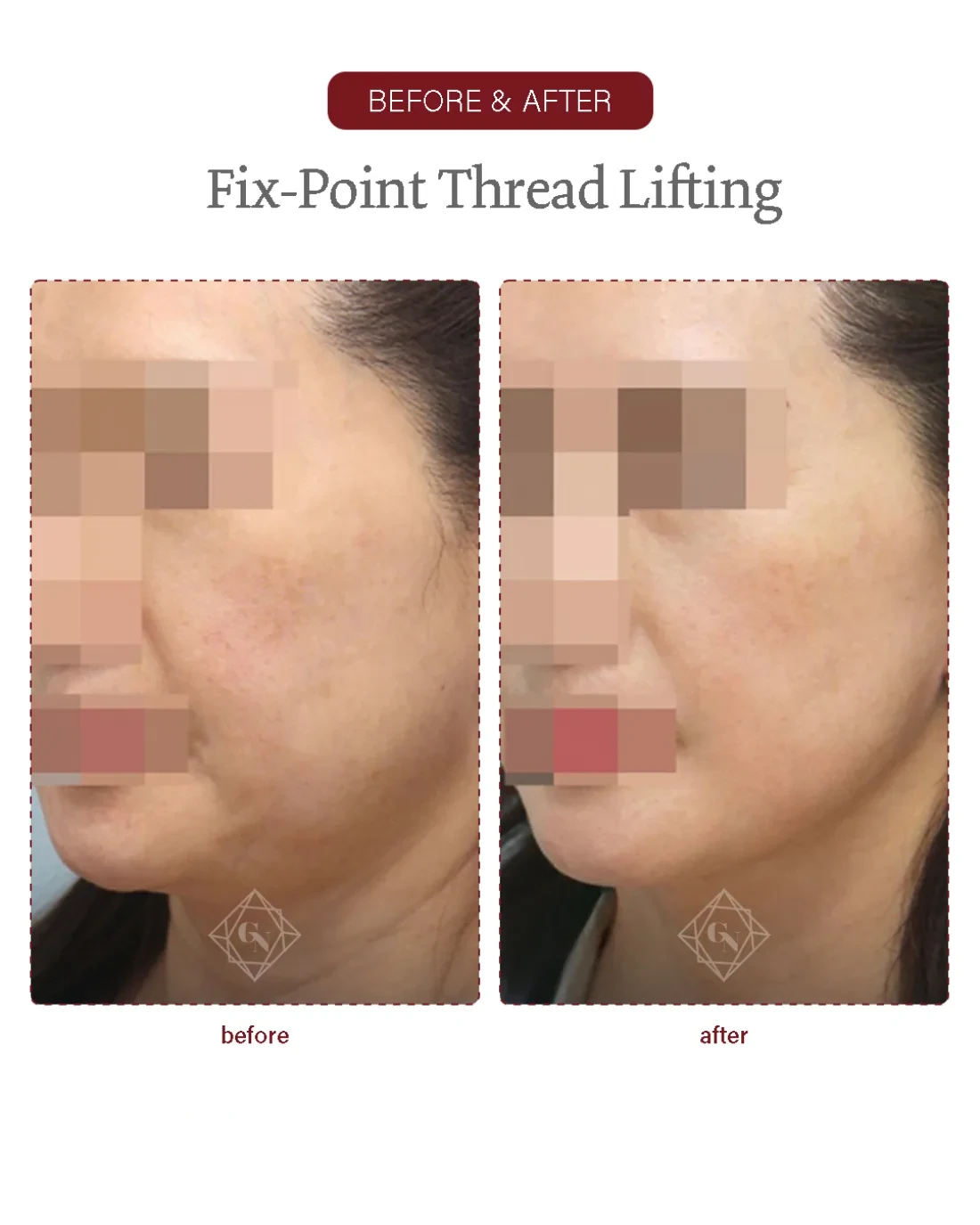
Before & After
Thread-lift and contouring results of actual Garnet patients (published with consent, with date, procedure and clinic labelled). The lift is temporary and results, recovery and suitability vary by individual and are not guaranteed.
Prices
Price at Garnet
Thread lift
From₩100,000 + VAT per threadExcluding VAT (10% VAT is added at payment)Book now
Same price as Korean patients. Prices shown exclude 10% VAT; your written quote, issued after the in-person consultation, shows the full amount payable.
Dr. In-Soo Baek
Director & sole operating surgeon
Korean medical licence no. 77407
Operate on what you came for. Trained at Korea University Medical Center. Every case planned, performed and reviewed by the same hands.
1Operating surgeon
~2Surgeries per day
7Registered techniques
Board-certified plastic surgeon
Plastic surgery training at Korea University College of Medicine & graduate school
Korean Society of Plastic and Reconstructive Surgeons member, in its facial-contour, eye & rhinoplasty groups
Consults, operates and follows up each case himself
Peer-reviewed papers behind the facts on this page. Each describes findings in its own study group — not results at Garnet — and none predicts your own outcome.
Sykes J et al. Contemporary Deep Plane Rhytidectomy. Facial Plastic Surgery. 2011. doi:10.1055/s-0030-1270426
Freytag L et al. Understanding Facial Aging Through Facial Biomechanics. Facial Plastic Surgery Clinics of North America. 2022. doi:10.1016/j.fsc.2022.01.001
Baker SR. Deep Plane Rhytidectomy and Variations. Facial Plastic Surgery Clinics of North America. 2009. doi:10.1016/j.fsc.2009.06.003
FAQ
Common questions
What restores a sagging jawline?
A sagging jawline is restored by putting the descended support layer of the cheek back in place or supporting it before it drops further. Options range from a thread lift for early, mild laxity to a deep-mini or deep-plane facelift that repositions the support layer for established sagging. Which one fits depends on how far the tissue has descended and your skin quality.
Facelift or thread lift for the jawline?
A thread lift suits early, mild laxity in a younger face with good skin, giving a modest, temporary lift with little downtime. A facelift (deep-mini or deep-plane) repositions the deeper support layer and is what genuinely restores an established sagging jawline with jowls. A thread lift stretched to treat heavy sagging tends to disappoint, so an assessment is the only reliable way to know which fits you.
How long does jawline correction last?
It depends on the option. A thread lift gives a temporary result that gradually relaxes over time. A facelift that repositions the support layer lasts considerably longer, with a deep-plane lift generally holding longest, though no procedure stops ageing, so the jawline continues to change gently over the years. A well-matched procedure is designed to age naturally with you.
Can I fix a sagging jawline without surgery?
Threads and non-surgical devices can help early, mild laxity: a thread lift supports sagging tissue, while radiofrequency and ultrasound may firm the surface a little. But none of these reposition a descended support layer, so once sagging is established with jowls, surgery is what restores the jawline. From photos of your jaw, a surgeon can say plainly if non-surgical options are still reasonable for you.
What is the difference between a thread lift and a facelift for the jawline?
A thread lift suspends tissue with fine barbed threads through small entry points; it supports the support layer without repositioning it, so its effect is more modest and temporary. A facelift releases and repositions the SMAS layer through incisions, giving a fuller and longer-lasting correction. A deep-mini facelift does this with a shorter scar; a deep-plane facelift reaches the jawline for the most complete result. The parent pages explain each.
How long is recovery after jawline surgery?
It depends on the option. A thread lift settles quickly, a deep-mini facelift generally settles faster than a full lift, and a deep-plane facelift involves more early swelling and bruising with sutures removed in two stages at ten and fourteen days at Garnet. International jawline patients usually stay in Korea until the main sutures are out and the early swelling has eased.
Will restoring my jawline look natural or tight?
Because the surgical options reposition the support layer and do not simply pull skin, the aim is a natural, cleaner jawline with no tight or pulled look. Results vary from person to person, and a careful consultation explains what your particular anatomy allows without promising a specific outcome.
Can I be assessed for jawline treatment before travelling to Korea?
Yes. You can send front and profile photos for an online consultation and get a realistic view of how far your jawline has sagged and which option fits, before you commit to travel. Dr. Baek, who would perform any jawline procedure, looks at the photos himself.
My mom recently had a brow lift and lower blepharoplasty with Dr. Baek, and our experience has been wonderful so far. The Garnet team was incredibly kind and welcoming, with Kelly assisting us as our English consultant—she made everything…
I’m so happy I chose this clinic for my lower blepharoplasty. I was traveling from abroad by myself, so I was a little nervous, but from the beginning I felt comfortable and truly cared for. Everyone was kind, patient, and professional…
Came in for an in-person consult and ended up choosing Garnet and Dr.Baek for my non-incisional DES and tiplasty/alarplasty. I communicated with Kelly (English consultant) from the start till now (3 weeks post-op). She really help me feel…
My under-eyes have been sagging and folding for years... I tried to cover it up with makeup, but it actually got stuck in the wrinkles and made it stand out even more. While going for consultations, I noticed that the bigger the hospital…
Send photos and your question before you travel. An English-speaking coordinator reviews every enquiry and replies with guidance on whether surgery is appropriate, the likely plan and timing.
✓ Reviewed by the clinic coordinator, not a bot
✓ Photo-based pre-assessment before you fly
✓ Foreign-patient scheduling & after-care
✓ One surgeon for consultation, surgery and follow-up
Prefer to chat now? Reach the coordinator directly:









 T S7 months ago



