Stem cell fat grafting is a two-stage operation in one sitting: fat is harvested from an area such as the abdomen or thigh and placed where you want more volume. Because of that, the question of pain really has two answers. The harvest site and the graft site feel different, and both are managed with anaesthesia and a planned recovery.
The short answer
Stem cell fat grafting is usually done under local anaesthesia with sedation, so you do not feel the procedure itself.
The fat-harvest area (often the abdomen or thigh) tends to feel like a deep bruise afterwards; the graft area is usually milder, mostly tightness and swelling.
Most discomfort is strongest for the first 2 to 3 days and is well controlled with prescribed pain relief.
At a single-surgeon clinic the same board-certified surgeon plans your anaesthesia, performs the harvest and grafting, and reviews your recovery.
What anaesthesia is used for stem cell fat grafting
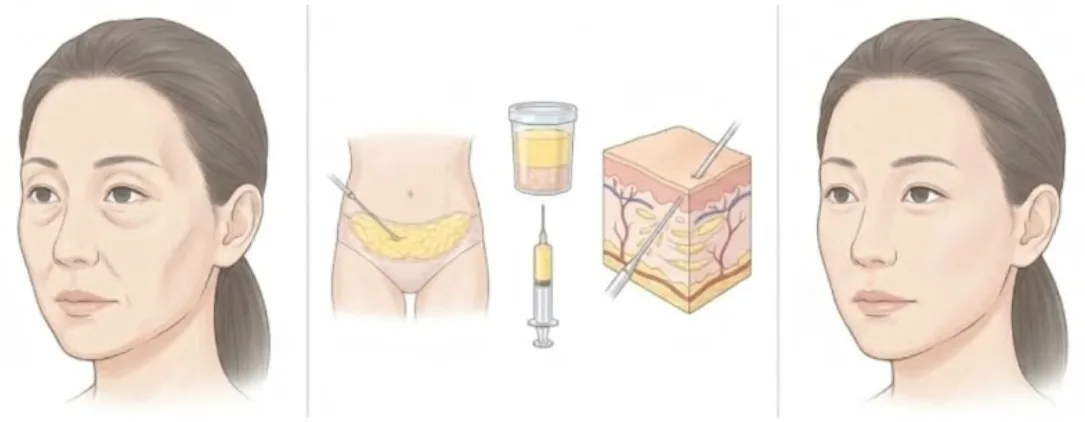
Stem cell fat grafting at Garnet is a stromal-fraction-supplemented fat grafting procedure: fat is collected through a fine cannula and processed before it is placed back into the target area through small access points. Because there is no large incision, the operation is most often performed under local anaesthesia combined with sedation, depending on how much fat is being harvested, the areas treated and your own preference and health. You should not feel the harvest or the grafting while it is happening.
Illustration: the patient's own fat is taken, processed, and re-placed beneath the skin where volume has been lost.
The right choice is decided with you before surgery. Sedation keeps you comfortable and drowsy while local anaesthetic numbs the harvest and graft sites; general anaesthesia is sometimes preferred for larger-volume cases. Both are routine, but they have different recovery profiles, and the surgeon who will operate should be the one who talks you through them. You can learn how this compares with the clinic's other procedures on the stem cell fat grafting overview, and how grafting differs from a filler approach on the fat grafting page.
Whichever route is used, the anaesthetic that numbs the harvest area also contains fluid that helps separate the fat and reduce bleeding. That is part of why the harvest site can feel swollen and firm immediately afterwards. It is a normal effect of the technique.
Harvest site
How the fat-harvest area feels afterwards
The donor area, commonly the abdomen, flanks or thighs, is where most people notice the most sensation. Because fat is suctioned through a cannula, the tissue is bruised internally, so the area typically feels like a deep, aching bruise or a pulled muscle for the first few days. Movements that engage that part of the body, such as standing up from a chair or twisting, are when you tend to feel it most. Sharp, localised pain is uncommon; a dull, tender soreness is the usual pattern.
Swelling and firmness at the harvest site are expected and often last longer than the soreness itself, sometimes for a few weeks as the area settles. A compression garment is frequently advised to support the donor area, reduce swelling and make movement more comfortable. Wearing it as directed genuinely helps with both comfort and the final contour of the area fat was taken from.
Bruising is normal and can spread or shift downward with gravity before it fades, changing colour over 1 to 2 weeks. This is cosmetic and no cause for concern. If you are travelling, it is worth knowing the donor site may be the part that influences how soon you feel comfortable walking distances or carrying luggage, a point covered further on the international patients page.
Graft area
How the grafted area feels
The area that receives the fat, for example the face, under-eye, temples or other volume-deficient zones, usually feels different from the donor site. Deep bruising is less typical here; people more often report tightness, fullness, mild tenderness and swelling. The grafted region can feel firm or slightly numb at first as the transplanted fat and the surrounding tissue settle. This numbness is temporary in the great majority of cases and eases as nerves recover.
Because the fat is placed in small amounts through tiny access points with no long incision, sharp incisional pain is generally limited. The dominant sensation is swelling, which is at its most noticeable in the first several days and is part of how the body responds to the newly placed tissue. Cold compresses, head elevation when the face is treated, and gentle handling of the area all help keep this comfortable.
It is normal for the grafted area to look fuller than your final result in the early weeks. This over-fullness is expected and partly intentional, because some of the transplanted fat is reabsorbed over the following months. How that volume changes over time, and when the look settles, is covered in detail on the when will I see results page.
Day by day
Fat grafting discomfort day by day
On the day of surgery and the first night, the anaesthetic is wearing off and the harvest site is the area most likely to ache; prescribed pain relief is most useful during this window. Most people describe this as manageable soreness, especially when medication is taken on schedule before discomfort builds.
Days 2 and 3 are often when swelling and bruising peak, both at the donor area and the grafted area. Soreness usually starts to settle from here. By the end of the first week many people are off stronger pain relief and managing with simple measures, though the donor site can stay tender to firm pressure and the grafted area can stay swollen. Around this time, if facial fat was grafted, sutures or tapes used at access points may be reviewed.
From week two onward, day-to-day comfort generally improves steadily, even though residual swelling and firmness can linger for several weeks. Sensation in the grafted area continues to normalise. Everyone heals at a slightly different pace; this is a general guide with no promise of an exact schedule, and your surgeon's assessment of your own recovery matters more than any timeline.
Managing pain
Managing pain and what counts as normal
Comfort after stem cell fat grafting is managed with prescribed pain relief, a compression garment for the donor area where advised, cold compresses in the early days, and rest. Taking medication as directed, keeping the treated area supported and avoiding strenuous activity that strains the donor site all make the first week easier. Gentle movement such as short walks is usually encouraged to help circulation, while heavy exercise is paused until cleared.
Some things are expected: aching at the harvest site, swelling and firmness at both sites, bruising, temporary numbness in the grafted area, and a fuller appearance than your eventual result. None of these mean a problem in themselves. What matters is knowing the difference between normal recovery and a warning sign.
Contact your clinic promptly if you have pain that keeps getting worse after the first few days, increasing redness, heat or spreading swelling at any site, fever, unusual discharge, or pain that is not controlled by your prescribed medication. At a clinic where the operating surgeon manages your recovery, you can raise any of these directly. International patients can keep in touch after returning home; see the online consultation guide for how remote follow-up works.
At Garnet
Comfort and continuity of care at Garnet
Garnet is a single-surgeon clinic in Apgujeong, Seoul. Dr. In-Soo Baek is a board-certified plastic surgeon (Korean medical licence no. 77407) and the only operating doctor. He plans your anaesthesia, performs both the fat harvest and the grafting himself, and reviews your recovery. The clinic caps the day at a small number of surgeries, so your case is given unhurried time and your comfort is not rushed.
Because the same surgeon sees you from consultation through follow-up, questions about how you feel are answered by the person who actually operated. Structured reviews at 1, 3 and 6 months mean your recovery and comfort are checked over time. Garnet is registered with Korea's foreign-patient programme and a dedicated coordinator stays with you from consultation to recovery.
If you are weighing up whether the discomfort is manageable for your situation, the most useful next step is an assessment of your specific case. You can send photos and your questions for a no-obligation pre-assessment through an online consultation before you plan any travel.
Real Results
Before & After
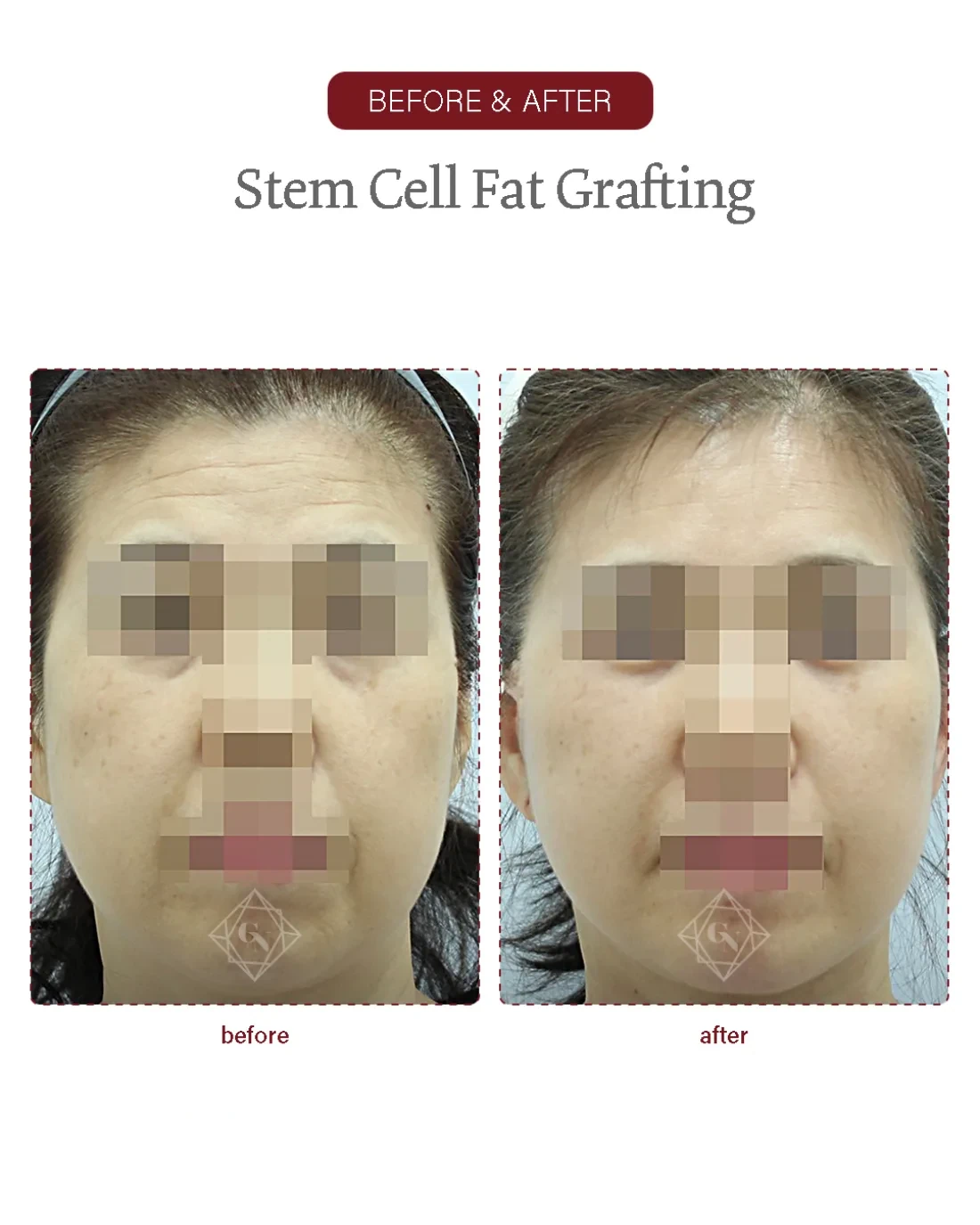
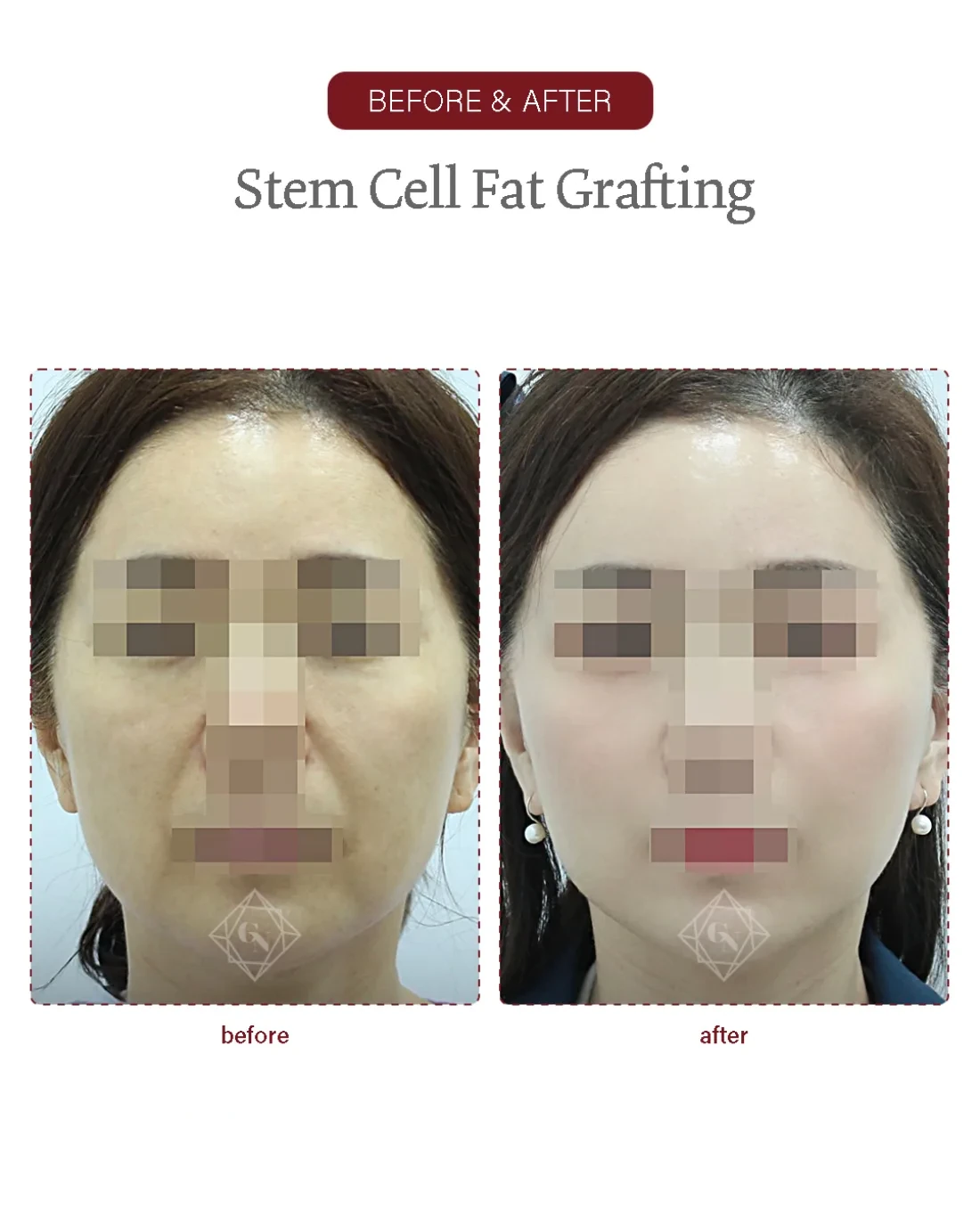
Fat-grafting and contouring results of actual Garnet patients (published with consent, with date, procedure and clinic labelled). Results, the amount of fat retained, recovery and suitability vary by individual and are not guaranteed.
Prices
Price at Garnet
Stem cell fat grafting
From₩3,500,000 + VATExcluding VAT (10% VAT is added at payment)Book now
Same price as Korean patients. Prices shown exclude 10% VAT; your written quote, issued after the in-person consultation, shows the full amount payable.
Dr. In-Soo Baek
Director & sole operating surgeon
Korean medical licence no. 77407
Operate on what you came for. Trained at Korea University Medical Center. Every case planned, performed and reviewed by the same hands.
1Operating surgeon
~2Surgeries per day
7Registered techniques
Board-certified plastic surgeon
Plastic surgery training at Korea University College of Medicine & graduate school
Korean Society of Plastic and Reconstructive Surgeons member, in its facial-contour, eye & rhinoplasty groups
Consults, operates and follows up each case himself
Peer-reviewed papers behind the facts on this page. Each describes findings in its own study group — not results at Garnet — and none predicts your own outcome.
Toyserkani NM et al. Cell-Assisted Lipotransfer: A Systematic Review of Its Efficacy. Aesthetic Plastic Surgery. 2016. doi:10.1007/s00266-016-0613-1
Ma L et al. Cell-assisted lipotransfer in the clinical treatment of facial soft tissue deformity. Plastic Surgery. 2015. doi:10.4172/plastic-surgery.1000926
Sterodimas A et al. Cell-Assisted Lipotransfer. Aesthetic Surgery Journal. 2010. doi:10.1177/1090820x10362730
FAQ
Common questions
Is stem cell fat grafting painful?
Most patients describe it as manageable soreness. You do not feel the procedure itself because it is done under local anaesthesia with sedation. Afterwards, the area fat was harvested from tends to ache like a deep bruise, while the grafted area mostly feels tight and swollen.
What anaesthesia is used for stem cell fat grafting?
It is usually performed under local anaesthesia combined with sedation, depending on how much fat is harvested, the areas treated and your health and preference. The choice is discussed and decided with you before surgery, and at a single-surgeon clinic the surgeon who will operate is the one who explains it.
Which hurts more, the harvest site or the grafted area?
Most people feel the fat-harvest area more. Because fat is suctioned through a cannula, the donor site feels like a deep bruise or pulled muscle for the first few days. The grafted area more often feels tight, full and swollen, with little sharp pain.
How long does the discomfort last?
Soreness is usually strongest for the first 2 to 3 days and then settles, with many people off stronger pain relief by the end of the first week. Swelling and firmness, especially at the donor area, can linger for several weeks. Everyone heals at a slightly different pace.
Will I be given pain medication?
Yes. Pain relief is prescribed and is most effective when taken on schedule in the first few days, before discomfort builds. A compression garment for the donor area and cold compresses also help with comfort.
Is the numbness in the grafted area lasting?
Temporary numbness or altered sensation in the grafted area is common at first and eases as nerves recover over the following weeks. Long-lasting numbness is uncommon, and any sensation changes that concern you can be reviewed at your follow-ups.
When should I contact the clinic about pain?
Get in touch if pain keeps getting worse after the first few days, or if you have spreading redness, heat or swelling, fever, unusual discharge, or pain not controlled by your medication. These are reasons to be checked promptly.
Can I manage recovery after I return to my country?
Yes. The most uncomfortable days are usually early and pass before most international patients fly home. The operating surgeon can continue to review your recovery remotely, and you can ask about comfort and healing through an online consultation after you travel.
Does a compression garment really help?
For the donor area, yes. It supports the tissue, reduces swelling and makes movement more comfortable, and it can help the final contour of the area fat was taken from. Wear it as directed by your surgeon.
My mom recently had a brow lift and lower blepharoplasty with Dr. Baek, and our experience has been wonderful so far. The Garnet team was incredibly kind and welcoming, with Kelly assisting us as our English consultant—she made everything…
I’m so happy I chose this clinic for my lower blepharoplasty. I was traveling from abroad by myself, so I was a little nervous, but from the beginning I felt comfortable and truly cared for. Everyone was kind, patient, and professional…
Came in for an in-person consult and ended up choosing Garnet and Dr.Baek for my non-incisional DES and tiplasty/alarplasty. I communicated with Kelly (English consultant) from the start till now (3 weeks post-op). She really help me feel…
My under-eyes have been sagging and folding for years... I tried to cover it up with makeup, but it actually got stuck in the wrinkles and made it stand out even more. While going for consultations, I noticed that the bigger the hospital…
Send photos and your question before you travel. An English-speaking coordinator reviews every enquiry and replies with guidance on whether surgery is appropriate, the likely plan and timing.
✓ Reviewed by the clinic coordinator, not a bot
✓ Photo-based pre-assessment before you fly
✓ Foreign-patient scheduling & after-care
✓ One surgeon for consultation, surgery and follow-up
Prefer to chat now? Reach the coordinator directly:









 T S7 months ago



