Sunken cheeks and a tired, hollow look are often read as sagging, but they are usually deflation: the face has lost deep volume. Restoring that volume can soften the effect, but the right approach depends on why the fullness was lost and how your face is ageing overall.
The short answer
Hollow cheeks are usually caused by loss of deep facial fat and, over time, changes in the underlying bone. Sagging skin alone does not explain it.
Restoring volume can rebuild a fuller, more rested mid-face, and fat grafting uses your own fat so there is no foreign material.
Fat grafting and stem-cell fat grafting are related but not identical, and neither guarantees a fixed permanent result, because some transferred fat is always reabsorbed.
Volume loss often coexists with descent, so assessing the cause matters more than picking a procedure first.
A youthful face has soft, well-distributed fullness across the cheeks and around the eyes. With age that changes: the deep fat pads of the mid-face shrink and shift, the skin loses some of its underlying support, and over the longer term the facial bones themselves remodel and provide slightly less projection. The combined effect is deflation: a face that looks flatter, more angular under the cheekbone, and more tired, even when the skin itself is still relatively firm.
Volume loss is not only about age. Significant or rapid weight loss can hollow the cheeks, and some people are naturally lean in the face or develop hollowing earlier. Under-eye and temple hollowing often accompany cheek deflation, which is part of why a hollow face tends to look drawn overall, with no single problem spot. Understanding which areas have actually lost volume, and how much, is the starting point.
This distinction matters because hollowing is frequently mistaken for sagging. If the real problem is a deflated, flatter mid-face, restoring volume is the logical response; if it is descended, sagging tissue, lifting is more appropriate; and many faces show both at once. Treating hollowing as though it were sagging, or the reverse, tends to disappoint, which is why the cause is assessed before any procedure is chosen.
The procedures
Which Garnet procedures restore facial volume
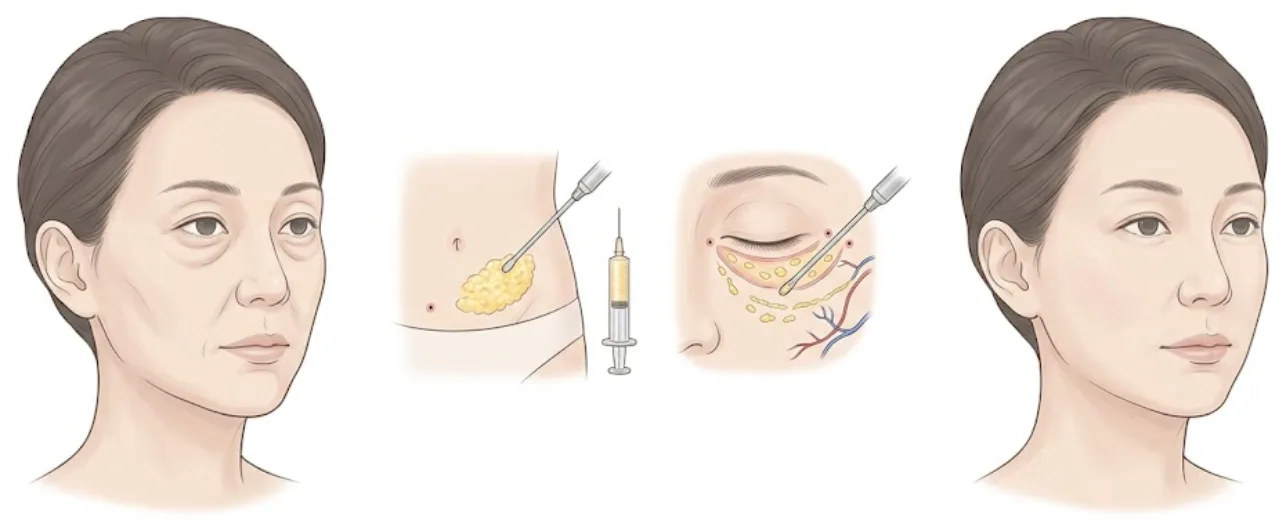
When the mid-face has genuinely lost volume, restoring it with your own tissue is a common surgical route. Garnet's fat grafting harvests fat from an area such as the abdomen or thigh and re-injects it as micro-fat through cannula access (so there is no scar line) to rebuild fullness in the cheeks, under-eye area and other hollow zones. Because it uses your own fat, there is no implant or synthetic filler involved.
Illustration: the patient's own fat is gently taken from a donor area such as the abdomen, refined, and placed in small amounts where volume has been lost.
Garnet also offers stem-cell fat grafting, a related technique in which the graft is supplemented with the stromal fraction of your own fat. It follows the same principle of restoring volume with autologous tissue through cannula access. This is not a designated advanced-regenerative-medicine treatment in Korea, so claims of superior survival or superior results are not appropriate. It is a variation on fat grafting, discussed on its merits at consultation.
Neither route is a lift. If your hollowing is accompanied by genuine sagging of the lower face, volume restoration on its own will not address the descent, and a surgeon may discuss combining it with a lifting procedure. Because Garnet is a single-surgeon clinic, the surgeon who assesses which of these applies is the same one who would carry it out, so the plan stays consistent from assessment to follow-up.
How they differ
How fat grafting and stem-cell fat grafting differ
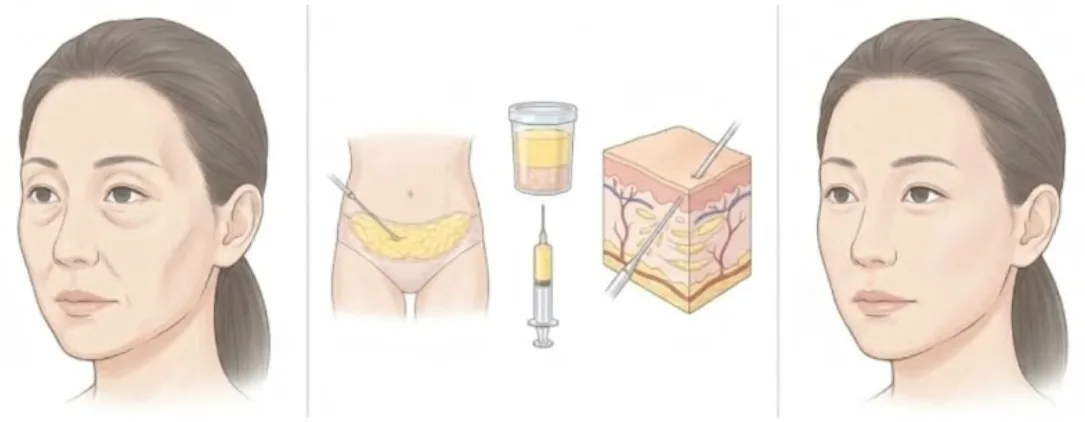
Both fat grafting and stem-cell fat grafting restore volume using your own fat, harvested through cannula access with no scar line, and both involve swelling that settles over weeks. The difference is in preparation: standard fat grafting places purified micro-fat, while stem-cell fat grafting supplements the graft with the stromal fraction of your own fat before placement.
Illustration: the patient's own fat is taken, processed, and re-placed beneath the skin where volume has been lost.
What they share is more important for setting expectations than what separates them. In both, a proportion of the transferred fat is reabsorbed in the early weeks, and the fat that establishes its own blood supply is what remains. The settled result is fuller than the raw post-operative appearance but less than the immediate swelling. A surgeon plans for this reabsorption and does not promise a fixed amount, and in some cases a second, smaller session is discussed.
Because stem-cell fat grafting is not a designated advanced-regenerative treatment, it should not be presented as guaranteeing better survival or a superior outcome. The sensible way to choose between the two is a conversation about your case with the surgeon who would perform it, weighing what each realistically offers. Neither is automatically better.
Deciding
How to decide which approach fits your sunken cheeks
The decision begins with confirming that volume loss really is the main issue. If your hollowing is genuine deflation of the mid-cheek, under-eye area or temples, restoring volume is logical; if what looks like hollowing is actually a shadow cast by descended, sagging tissue, a lift may be more relevant; and where both are present, a combined plan is sometimes discussed. How lean your face is, how firm your skin is, and how much fullness you want back all feed into the choice.
Between fat grafting and stem-cell fat grafting, the choice is less about a dramatic difference in outcome and more about the individual assessment and the surgeon's judgement for your case. How much volume is needed, where, and how your tissue is likely to respond are the practical questions. No blanket rule makes one superior. Someone travelling from abroad for a single trip will also weigh recovery and the possibility of a touch-up session differently from a local patient.
A reassuring sign is a surgeon who explains what volume restoration can and cannot do for your particular face, and who will say when a different approach, or none at present, makes more sense. At Garnet the same board-certified plastic surgeon who assesses you is the one who would perform the procedure and see you through recovery.
Expectations
Realistic expectations for sunken cheeks
It helps to be realistic about volume restoration. Fat grafting can rebuild a fuller, more rested mid-face and soften hollowing, and because it uses your own tissue it integrates naturally where it survives. What it cannot do is guarantee a precise, permanent amount of fullness, lift sagging tissue, or stop the face from continuing to age and lose volume over the years ahead.
The result also settles over time; it does not appear instantly. Swelling is greatest in the early days and eases over weeks, and during that time a proportion of the transferred fat is reabsorbed, so the final fullness is less than the immediate post-operative look. This is normal and planned for; occasionally a second, smaller graft is discussed to reach the intended volume. Patience through the settling phase is part of the process.
No responsible surgeon can promise a fixed outcome, and results vary between individuals. What a careful assessment offers is an estimate of what is realistically achievable for your cheeks and a clear account of the trade-offs, including the reabsorption that comes with any fat graft. Safety questions about surgery here are covered in the guide on plastic surgery safety in Korea.
Consultation
Getting your sunken cheeks assessed
Because hollowing can be deflation, descent or a mix of the two, the most useful first step is an assessment of what is actually driving yours. That means someone examining which areas have lost volume, how firm your skin is, and whether restoring volume, lifting, or a combination is the sensible response, before any procedure is suggested.
At Garnet, a single-surgeon clinic in Apgujeong, Seoul, hollow cheeks are assessed and treated by Dr. In-Soo Baek, a board-certified plastic surgeon (Korean medical licence no. 77407) and the only operating doctor; the clinic is registered with Korea's foreign-patient programme. He consults, performs the procedure himself and reviews every follow-up at 1, 3 and 6 months. With fat grafting, where the settled result unfolds over time, one surgeon carrying the plan through matters.
If you are abroad, you can begin with a no-obligation online consultation: send photos and a description of what bothers you, and get a pre-assessment of whether fat grafting, stem-cell fat grafting, a lift or a combination best fits your case before you plan any travel.
Real Results
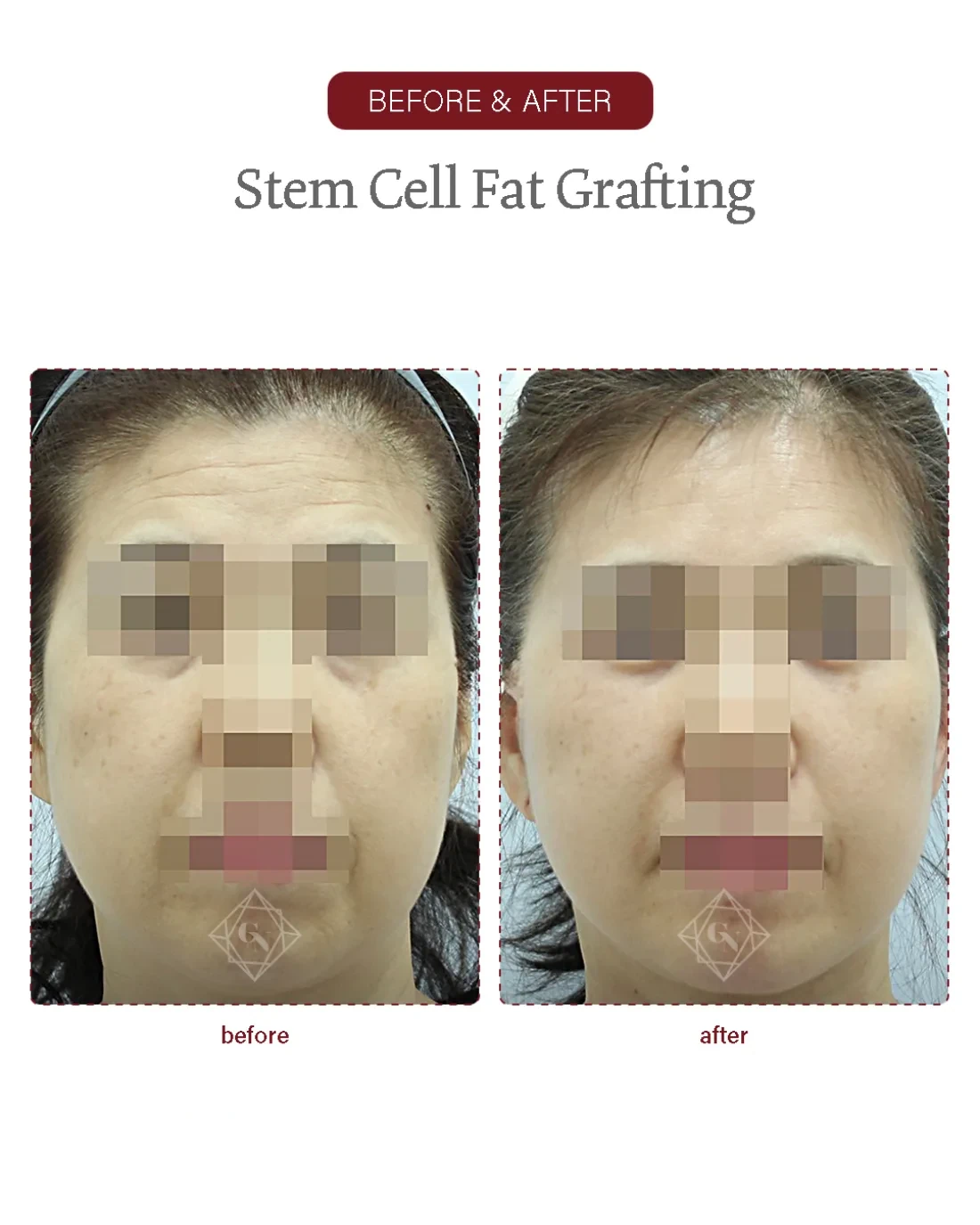
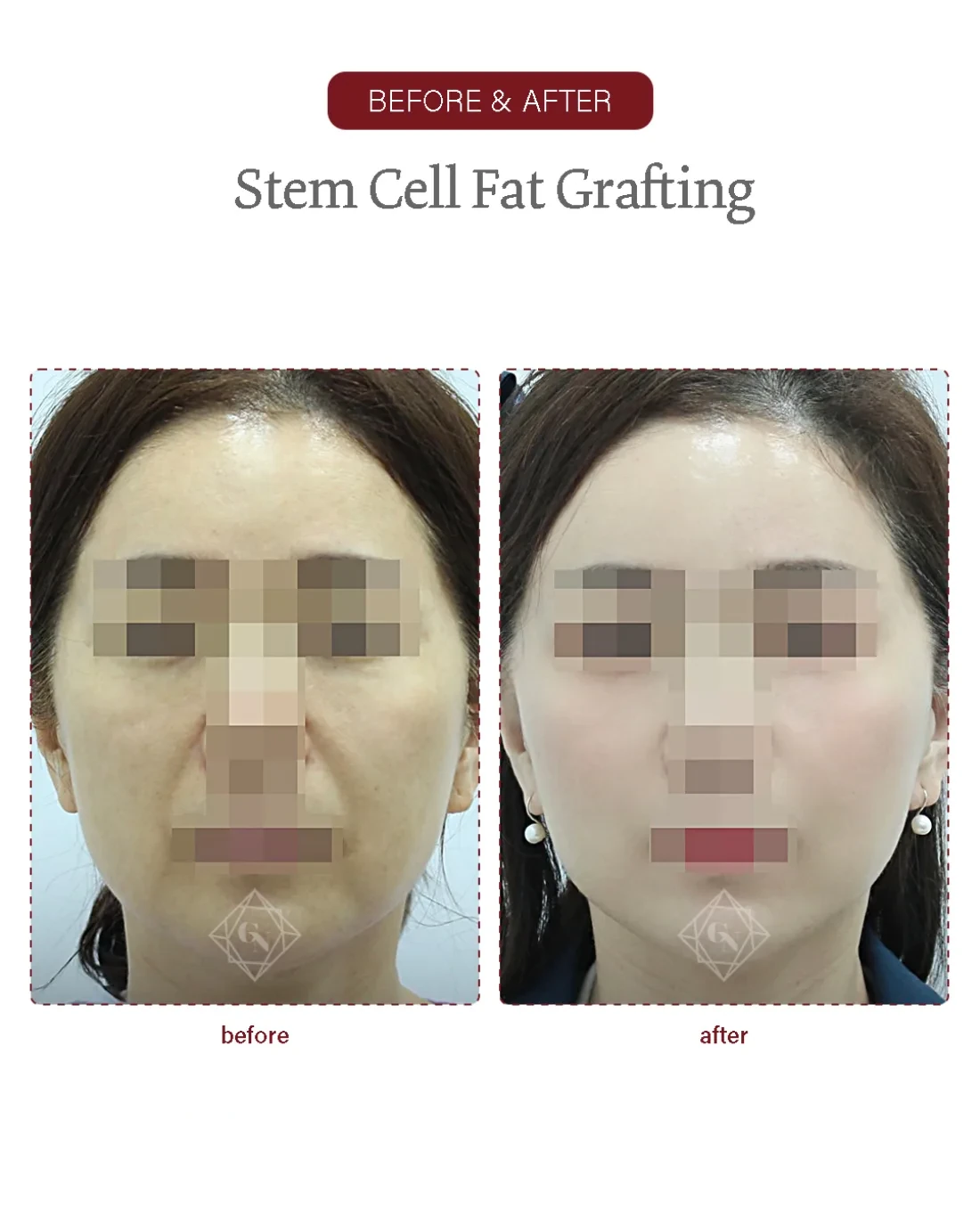
Before & After
Fat-grafting and contouring results of actual Garnet patients (published with consent, with date, procedure and clinic labelled). Results, the amount of fat retained, recovery and suitability vary by individual and are not guaranteed.
Prices
Price at Garnet
Stem cell fat grafting
From₩3,500,000 + VATExcluding VAT (10% VAT is added at payment)Book now
Same price as Korean patients. Prices shown exclude 10% VAT; your written quote, issued after the in-person consultation, shows the full amount payable.
Dr. In-Soo Baek
Director & sole operating surgeon
Korean medical licence no. 77407
Operate on what you came for. Trained at Korea University Medical Center. Every case planned, performed and reviewed by the same hands.
1Operating surgeon
~2Surgeries per day
7Registered techniques
Board-certified plastic surgeon
Plastic surgery training at Korea University College of Medicine & graduate school
Korean Society of Plastic and Reconstructive Surgeons member, in its facial-contour, eye & rhinoplasty groups
Consults, operates and follows up each case himself
Peer-reviewed papers behind the facts on this page. Each describes findings in its own study group — not results at Garnet — and none predicts your own outcome.
Lin TM et al. Fat Grafting for Facial Contouring (Nose and Chin). Clinics in Plastic Surgery. 2020. doi:10.1016/j.cps.2019.08.009
Ohashi M. Fat Grafting for Facial Rejuvenation with Cryopreserved Fat Grafts. Clinics in Plastic Surgery. 2020. doi:10.1016/j.cps.2019.08.007
Schultz KP et al. Fat Grafting for Facial Rejuvenation. Seminars in Plastic Surgery. 2020. doi:10.1055/s-0039-3402767
FAQ
Common questions
What restores lost facial volume?
When the mid-face has genuinely lost volume, restoring it with your own fat is a common route: fat grafting rebuilds fullness in the cheeks and other hollow areas through cannula access, with no scar line. Where hollowing is actually caused by sagging rather than deflation, a lift may be more relevant. The right approach follows an assessment of the cause.
Is fat grafting permanent?
Not entirely. In the early weeks after fat grafting a proportion of the transferred fat is reabsorbed, and the fat that establishes its own blood supply tends to remain, though the face keeps ageing around it. No responsible surgeon can promise a fixed, permanent amount; the settled result is planned for and, in some cases, a second smaller session is discussed.
Fat grafting or stem-cell fat grafting: which is better?
Both restore volume using your own fat through cannula access; stem-cell fat grafting supplements the graft with the stromal fraction of your fat. Because it is not a designated advanced-regenerative treatment in Korea, it should not be presented as guaranteeing better survival or a superior result. The choice comes from a case-by-case conversation with the surgeon who would perform it.
Why do my cheeks look sunken as I age?
The deep fat pads of the mid-face shrink and shift with age, the skin loses support, and over time the facial bones remodel and give slightly less projection, so the cheeks deflate and look flatter and more tired. Weight loss and a naturally lean face can add to it. Identifying which areas have lost volume is the starting point for treatment.
Is hollowing the same as sagging?
No, and confusing the two leads to the wrong treatment. Hollowing is deflation (loss of deep volume), while sagging is descent of tissue. Restoring volume helps deflation; a lift helps descent; many faces show both. This is why an assessment of the cause comes before choosing between fat grafting and a lifting procedure.
How long does swelling last after fat grafting?
Swelling is greatest in the first days and eases over the following weeks, during which some of the transferred fat is reabsorbed. That means the settled fullness is less than the immediate post-operative look. That is a normal part of the process and does not mean the result is being lost. A realistic timeline for your case is given at consultation.
Can fat grafting fix sagging cheeks?
Fat grafting restores lost volume; it does not reposition sagging tissue. If your concern is genuine descent of the lower face, a lift addresses that, and where both hollowing and sagging are present a surgeon may discuss combining volume restoration with a lifting procedure. The plan depends on what the assessment finds is actually driving the change.
Will I need more than one fat grafting session?
Sometimes. Because a proportion of transferred fat is always reabsorbed, a surgeon may plan for the settled volume from the start or discuss a second, smaller graft to reach the intended fullness. Whether that applies to you depends on how much volume is needed and how your tissue responds, both assessed individually; nothing is promised in advance.
Can I get an assessment before travelling to Korea?
Yes. You can send photos and a description of what bothers you for a no-obligation online consultation and receive a pre-assessment of whether fat grafting, stem-cell fat grafting, a lift or a combination fits your case, before committing to travel. Care for international visitors is coordinated through Garnet's registration with Korea's foreign-patient programme.
Who will perform my procedure at Garnet?
Garnet is a single-surgeon clinic, so Dr. In-Soo Baek, a board-certified plastic surgeon (licence no. 77407), consults, performs the procedure himself and reviews your follow-ups at 1, 3 and 6 months. Confirming who carries out your procedure from start to finish is one of the most useful questions any patient can ask before booking.
My mom recently had a brow lift and lower blepharoplasty with Dr. Baek, and our experience has been wonderful so far. The Garnet team was incredibly kind and welcoming, with Kelly assisting us as our English consultant—she made everything…
I’m so happy I chose this clinic for my lower blepharoplasty. I was traveling from abroad by myself, so I was a little nervous, but from the beginning I felt comfortable and truly cared for. Everyone was kind, patient, and professional…
Came in for an in-person consult and ended up choosing Garnet and Dr.Baek for my non-incisional DES and tiplasty/alarplasty. I communicated with Kelly (English consultant) from the start till now (3 weeks post-op). She really help me feel…
My under-eyes have been sagging and folding for years... I tried to cover it up with makeup, but it actually got stuck in the wrinkles and made it stand out even more. While going for consultations, I noticed that the bigger the hospital…
Send photos and your question before you travel. An English-speaking coordinator reviews every enquiry and replies with guidance on whether surgery is appropriate, the likely plan and timing.
✓ Reviewed by the clinic coordinator, not a bot
✓ Photo-based pre-assessment before you fly
✓ Foreign-patient scheduling & after-care
✓ One surgeon for consultation, surgery and follow-up
Prefer to chat now? Reach the coordinator directly:








 T S7 months ago



