A "turkey neck", meaning loose, hanging skin and vertical bands down the front of the neck, is one of the concerns people most want fixed and least understand. It comes from a mix of slack muscle, loosened skin and sometimes fat, so the right treatment depends on which of those dominates in your neck. There is no universal operation.
The short answer
A turkey neck usually combines slack platysma muscle, loose skin and sometimes excess fat, and the right procedure depends on the mix.
Visible vertical bands are the muscle; loose drape is the skin. Treating one without the other leaves an incomplete result.
Milder cases may be managed with muscle tightening; heavier laxity often needs a neck lift that also addresses skin.
At a single-surgeon clinic the same board-certified surgeon assesses the cause, performs the procedure and follows your recovery.
A turkey neck is a combination of things happening at once. The platysma, a thin sheet of muscle across the front of the neck, loosens and its edges separate, showing up as two vertical bands that become obvious when you talk or tense. At the same time the skin loses elasticity and begins to hang, and in some people a pad of fat under the chin adds fullness. The result is the loose, draped appearance the term describes.
This layered cause is exactly why there is no single "turkey neck operation". If the main problem is the muscle bands, tightening the platysma sharpens the neck. If loose, redundant skin is the dominant issue, tightening muscle alone will not remove the drape; the skin has to be addressed too. And if fat is part of the picture, that adds another element. The useful question is which of these dominates in your neck.
Age is the biggest driver, but sun exposure, genetics and significant weight change all contribute, and they combine differently in different people. A surgeon assessing a turkey neck is really grading three things separately (muscle, skin and fat) before deciding how much of each needs attention. That is why the answer is a range of procedures.
The options
Surgical turkey neck options in Korea
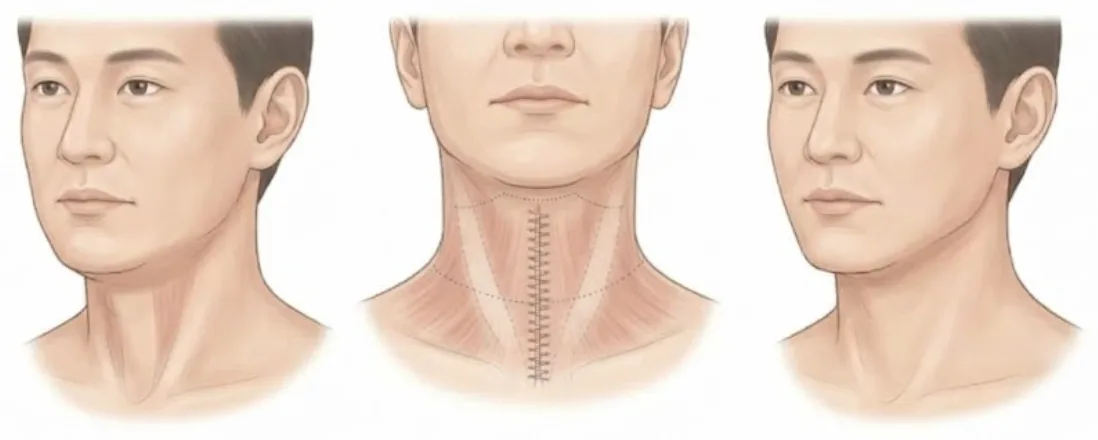
When the dominant issue is the muscle bands, corset platysmaplasty tightens the platysma down the midline through a small submental incision, drawing the separated edges together like a corset and removing the vertical bands. It is the targeted answer for a neck whose main fault is muscle slackness with little heavy skin.
Illustration: the neck muscle (platysma) is drawn back together along the midline, like lacing a corset, to firm the neck.
For a neck where fullness and banding travel together, Garnet's Pelican neck contouring addresses the neck-band contour and any double-chin fullness in one submental approach. When the skin itself has loosened and hangs, as in the more advanced turkey neck, a neck lift tightens the SMAS-platysma layer and re-drapes the skin through submental and behind-the-ear incisions, and it can incorporate corset platysmaplasty or Pelican contouring as needed. Each of these is a distinct operation, described in full on its parent page.
In practice these options overlap, and the strongest plans often combine them, tightening muscle and re-draping skin in the same operation. The point of seeing one surgeon is that these building blocks are matched to your neck instead of being offered as a fixed package.
How they differ
Corset, Pelican and neck lift for a turkey neck compared
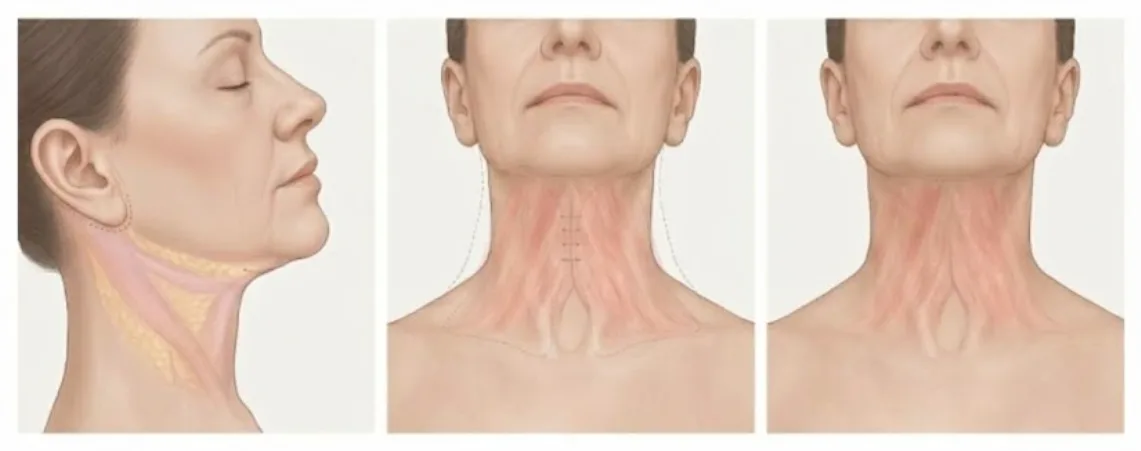
The clearest way to separate them is by what they act on and how far they reach. Corset platysmaplasty works on muscle through a small submental incision; it re-defines a neck whose bands are the main problem but does not remove significant loose skin. Pelican neck contouring tackles the mixed fullness-plus-band picture through the same submental route, suiting a neck with both a soft double chin and early banding.
Illustration: fat beneath the jaw (yellow) and loose neck muscle bands are contoured for a cleaner chin and neckline (Pelican™).
A neck lift has the longest reach: because it addresses the deeper support layer and the skin drape through incisions that extend behind the ear, it is the option when loose, hanging skin is the dominant feature, as in the more established turkey neck. In exchange it involves more dissection and a longer recovery, with sutures removed in stages at ten to fourteen days at Garnet.
Because these three sit on a spectrum, two people with a similar-looking neck in a photo can end up with different plans once muscle tone, skin quality and fat are examined in person. A younger neck with tight skin and prominent bands may need only muscle tightening; an older neck with heavy skin usually needs the fuller lift.
Deciding
How Dr. Baek grades muscle, skin and fat in the neck
A careful assessment grades the three components separately: how prominent the muscle bands are when you tense, how much the skin has loosened and whether it will re-drape or needs removing, and whether fat is adding fullness. It also weighs skin elasticity, your age and bone structure, and practical factors such as downtime and travel from abroad, before settling on muscle tightening, combined contouring, or a full neck lift.
This is where a single-surgeon model helps. At Garnet, Dr. In-Soo Baek, a board-certified plastic surgeon, carries out the consultation, plans the procedure, performs it himself and reviews your recovery, so the person grading your neck is the one treating it. The clinic caps the day at two operations, which keeps the assessment unhurried. A sound plan sometimes means recommending a smaller neck procedure than you expected.
You can begin this before you travel. Sending clear profile and neck photos, and a short video of the bands as you talk, for an online consultation lets the surgeon give a realistic view of what is driving your turkey neck and which option fits, so you are not deciding on the day you arrive.
Expectations
What to expect from turkey neck surgery and recovery
A well-matched procedure removes the vertical bands, sharpens the neck-to-jaw angle and, where skin is re-draped, gives a cleaner, smoother neckline. Surgery tightens what is loose now, but it does not stop ageing, so the neck will continue to change gently over time. A good result ages naturally and does not look tight or pulled.
Recovery depends on the size of the procedure. Muscle tightening and contouring through a small submental incision generally settle faster, while a neck lift involves more early swelling and bruising and staged suture removal. International neck patients usually plan a stay long enough for the neck sutures to come out and the early swelling to ease; the parent procedure pages give the specific timeline for each option.
Each neck procedure carries risks (swelling, bruising, temporary numbness or firmness, and, less commonly, contour irregularity, nerve or healing issues), and results vary from person to person. The consultation covers the risks that apply to your own neck, with no promised outcome, and the operating surgeon reviews you at one, three and six months so any concern reaches him directly.
Consultation
Getting your neck assessed
Because a turkey neck has more than one component, the most useful next step is an assessment before any booking. A good consultation should tell you which of muscle, skin and fat is driving your neck, which option or combination genuinely fits, what it can and cannot change, and what recovery would realistically look like, including the real possibility that a smaller, targeted procedure is enough.
Garnet works with one board-certified surgeon in Apgujeong, Seoul, is registered with Korea's foreign-patient programme, and keeps that surgeon with you from the neck consultation to the one-, three- and six-month reviews. Begin from home with a no-obligation online assessment: share neck photos and a note on the bands or loose skin, and get a realistic view before you plan any travel.
Real Results
Before & After
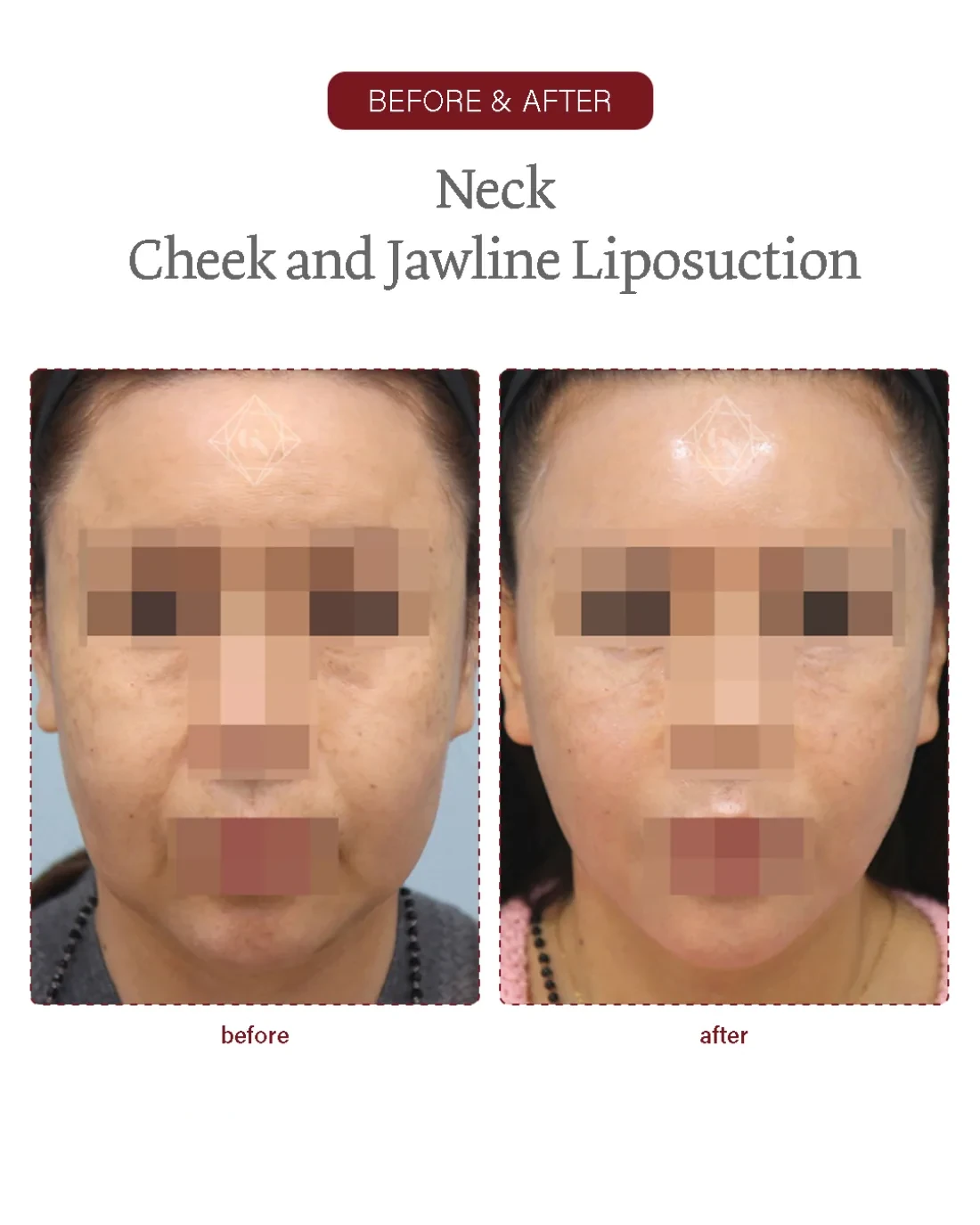
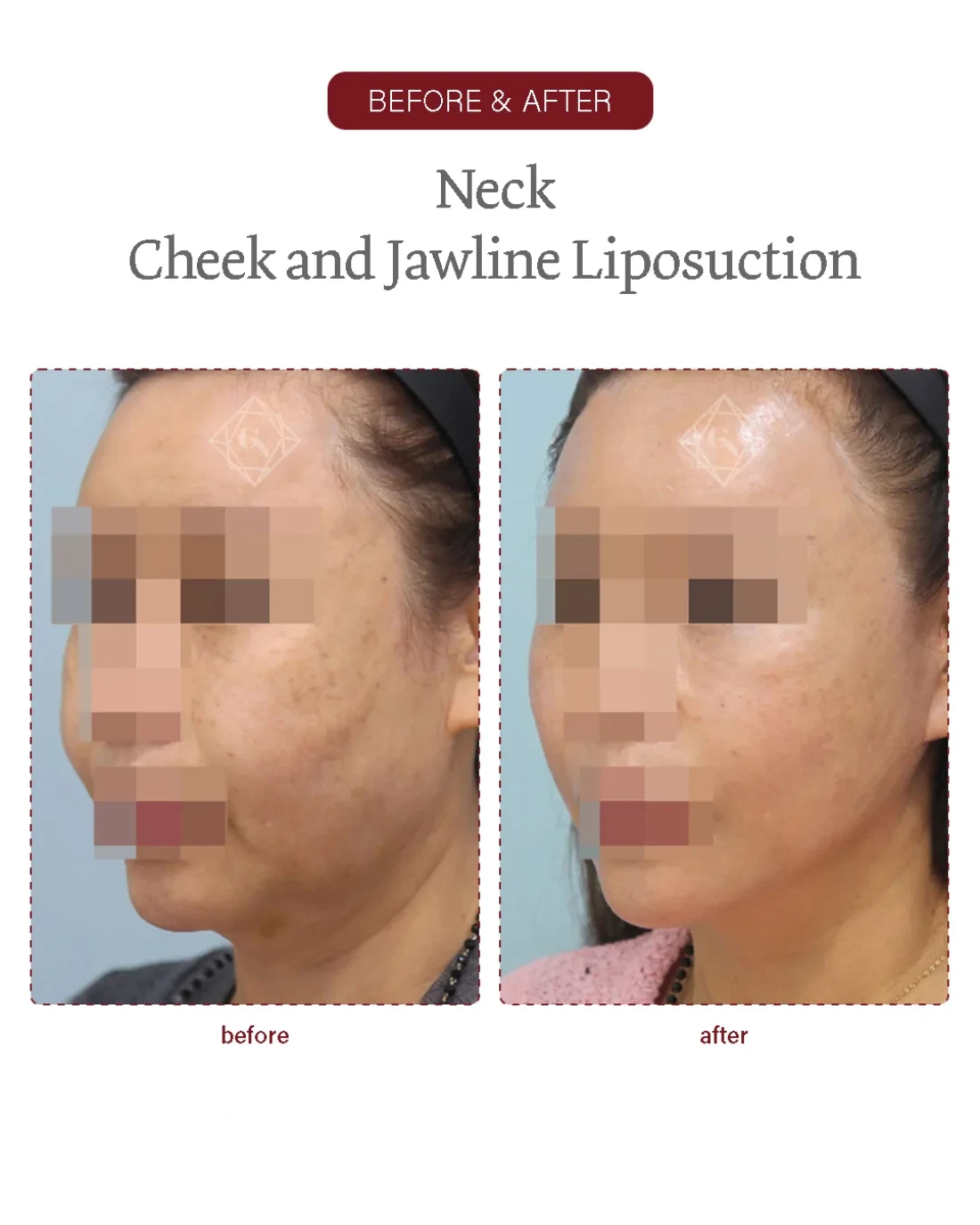
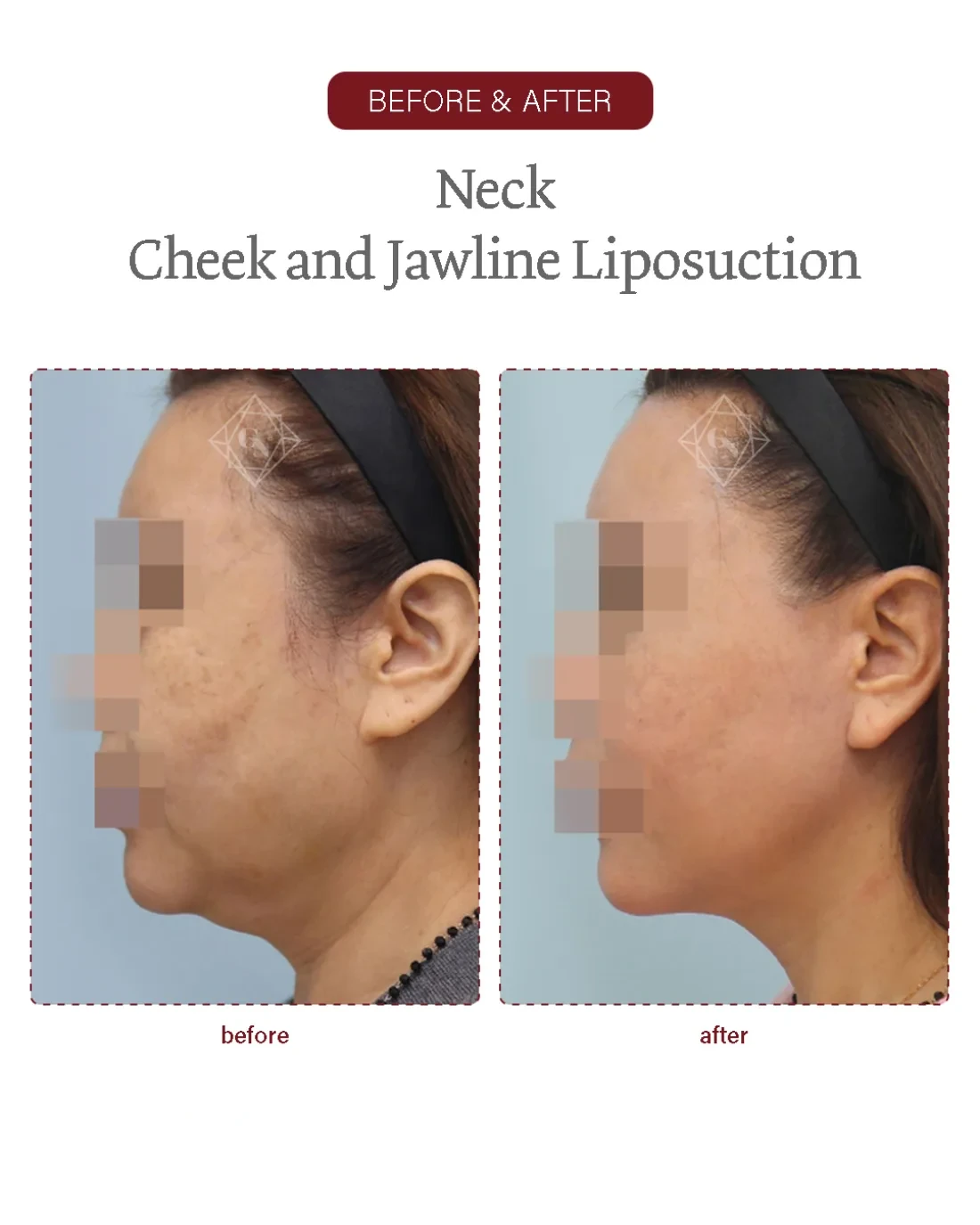
Neck and jawline contouring results of actual Garnet patients (published with consent, with date, procedure and clinic labelled). Results, recovery and suitability vary by individual and are not guaranteed.
Prices
Price at Garnet
Pelican™ — double chin & neck lines
From₩4,000,000 + VATExcluding VAT (10% VAT is added at payment)Book now
Same price as Korean patients. Prices shown exclude 10% VAT; your written quote, issued after the in-person consultation, shows the full amount payable.
Dr. In-Soo Baek
Director & sole operating surgeon
Korean medical licence no. 77407
Operate on what you came for. Trained at Korea University Medical Center. Every case planned, performed and reviewed by the same hands.
1Operating surgeon
~2Surgeries per day
7Registered techniques
Board-certified plastic surgeon
Plastic surgery training at Korea University College of Medicine & graduate school
Korean Society of Plastic and Reconstructive Surgeons member, in its facial-contour, eye & rhinoplasty groups
Consults, operates and follows up each case himself
Peer-reviewed papers behind the facts on this page. Each describes findings in its own study group — not results at Garnet — and none predicts your own outcome.
Smith RM et al. Difficult Necks and Unresolved Problems in Neck Rejuvenation. Clinics in Plastic Surgery. 2018. doi:10.1016/j.cps.2018.06.009
Marten T et al. Short Scar Neck Lift. Clinics in Plastic Surgery. 2018. doi:10.1016/j.cps.2018.06.005
Marten T et al. Management of the Platysma in Neck Lift. Clinics in Plastic Surgery. 2018. doi:10.1016/j.cps.2018.06.004
FAQ
Common questions
What surgery fixes a turkey neck?
A turkey neck is treated according to its cause. If the vertical muscle bands are the main issue, corset platysmaplasty tightens the platysma. If a double chin travels with early banding, combined neck contouring addresses both. If loose, hanging skin dominates, a neck lift tightens the support layer and re-drapes the skin. Working out which component dominates is the first step.
Neck lift or platysmaplasty for neck bands?
Platysmaplasty is often enough when the neck bands are the main problem and the skin is still reasonably tight, because it tightens the muscle down the midline through a small incision. When loose, redundant skin is also present, tightening muscle alone leaves the drape behind, so a neck lift, which also addresses the skin, is more appropriate. An assessment is the only reliable way to know which applies to you.
Can a turkey neck be fixed without a full facelift?
Often, yes. A turkey neck can be treated with neck-focused procedures (muscle tightening, combined contouring, or a neck lift) without a full facelift, provided the main concern is confined to the neck. If the lower face and jowls are also sagging, a surgeon may discuss combining a neck procedure with a facelift, but the neck itself can be addressed on its own where appropriate.
Can I fix a turkey neck without surgery?
Non-surgical skin-tightening devices act on limited depth and may help very mild laxity, but they cannot draw separated platysma muscle bands together or remove genuinely loose, hanging skin. Once the muscle has slackened or the skin has loosened, surgery is what addresses it directly. Looking at the bands and skin in your photos, a surgeon can say plainly if a non-surgical route still makes sense.
What is the difference between platysmaplasty and a neck lift?
Corset platysmaplasty tightens the platysma muscle down the midline through a small submental incision and re-defines a banded neck, but does not remove much loose skin. A neck lift addresses the deeper support layer and re-drapes the skin through incisions extending behind the ear, so it suits a neck where loose skin is the dominant problem. The parent pages explain each in detail.
How long is recovery after turkey neck surgery?
It depends on the size of the procedure. Muscle tightening and contouring through a small submental incision generally settle faster, while a neck lift involves more early swelling, bruising and staged suture removal at ten to fourteen days at Garnet. Patients from abroad usually stay until the neck sutures are out and the swelling has started to settle.
Will treating a turkey neck look natural?
Because the deeper options tighten the support layer and re-drape the skin instead of simply pulling it, the aim is a natural, smoother neckline with no tight or pulled look. Results vary from person to person, and a careful consultation explains what your particular anatomy allows without promising a specific outcome.
Can I be assessed for turkey neck treatment before travelling to Korea?
Yes. You can send photos and a short video of the neck as you talk for an online consultation and get a realistic view of what is driving your turkey neck and which option fits, before you commit to travel. The surgeon who would operate on your neck reviews the photos and video himself.
My mom recently had a brow lift and lower blepharoplasty with Dr. Baek, and our experience has been wonderful so far. The Garnet team was incredibly kind and welcoming, with Kelly assisting us as our English consultant—she made everything…
I’m so happy I chose this clinic for my lower blepharoplasty. I was traveling from abroad by myself, so I was a little nervous, but from the beginning I felt comfortable and truly cared for. Everyone was kind, patient, and professional…
Came in for an in-person consult and ended up choosing Garnet and Dr.Baek for my non-incisional DES and tiplasty/alarplasty. I communicated with Kelly (English consultant) from the start till now (3 weeks post-op). She really help me feel…
My under-eyes have been sagging and folding for years... I tried to cover it up with makeup, but it actually got stuck in the wrinkles and made it stand out even more. While going for consultations, I noticed that the bigger the hospital…
Send photos and your question before you travel. An English-speaking coordinator reviews every enquiry and replies with guidance on whether surgery is appropriate, the likely plan and timing.
✓ Reviewed by the clinic coordinator, not a bot
✓ Photo-based pre-assessment before you fly
✓ Foreign-patient scheduling & after-care
✓ One surgeon for consultation, surgery and follow-up
Prefer to chat now? Reach the coordinator directly:








 T S7 months ago



