Age is a guide for facial surgery, from a nose that must finish growing to a neck that has started to sag, and on its own it rarely rules anyone in or out. Whether surgery suits you depends on which operation you mean, on whether the tissue is ready, and on your general health. Those count for far more than the number itself, and a consultation weighs them for your face.
The short answer
There is no universal age limit for facial surgery. The right age differs by operation, because each addresses a different concern at a different stage of life.
“Too young” usually means the tissue is not ready: the nose or eye is still growing, or age-related change a facelift treats has not yet appeared.
“Too old” is rarely about a number; it becomes relevant only when health or healing capacity would make surgery unwise, which is a medical judgement.
Healing slows modestly with age, but overall health, skin quality and lifestyle matter more than the birthday. A consultation weighs all of it.
Patients often expect a clean age range that makes them a candidate or rules them out. In reality, facial surgery does not work that way. Age is genuinely useful. It hints at whether tissue has matured, how far ageing has progressed and how you are likely to heal, but it only points to those things. The real question behind worrying about your age is whether the tissue is ready for the specific operation you have in mind, and whether your health supports surgery.
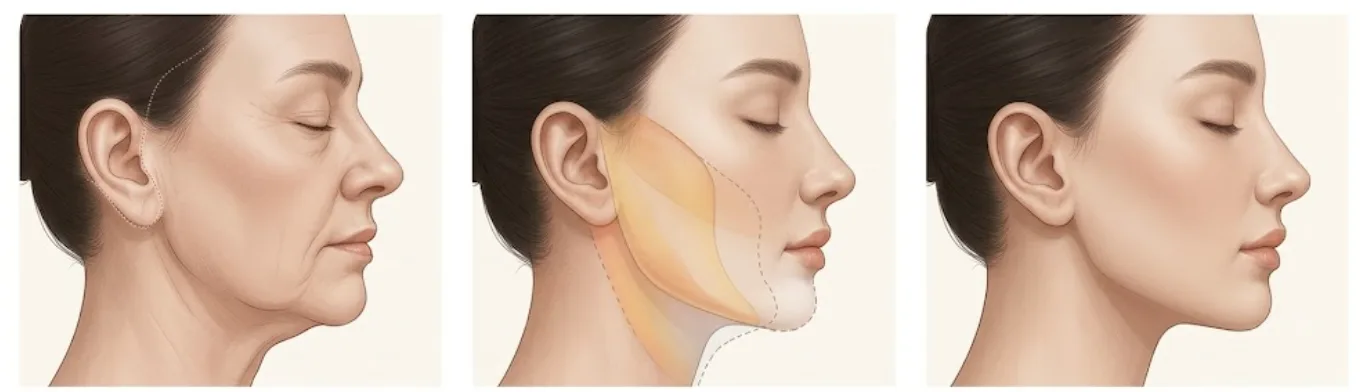
Illustration: the deeper facial layer (SMAS, shown in yellow) is released and repositioned as one unit with the skin, rather than pulling the skin alone.
That is why the answer changes depending on what you are asking about. A nose reshaping, an eyelid operation and a facelift each have their own logic of timing, because each addresses a different concern that peaks at a different stage. Being “the right age” for one says little about another. So the starting point is a pairing: which operation, and where your tissue is in relation to it.
Approached this way, most people worry about the wrong thing. Very few are ruled out purely by being older. Being younger usually just means a particular operation is not yet needed; it is seldom forbidden. The decision belongs to an assessment of your face and health, and a birthday plays only a small part in it.
When is someone too young?
When is someone too young for surgery?
“Too young” almost always means the tissue is not ready. The clearest case is structural: an operation like a rhinoplasty is generally best once the nose has finished growing, so that its reshaped structure is built on a mature, stable framework. Operating on a nose that is still developing risks working against changes still to come. Similarly, a double-eyelid crease is best set once the eye has finished growing, from around the late teens or early 20s.
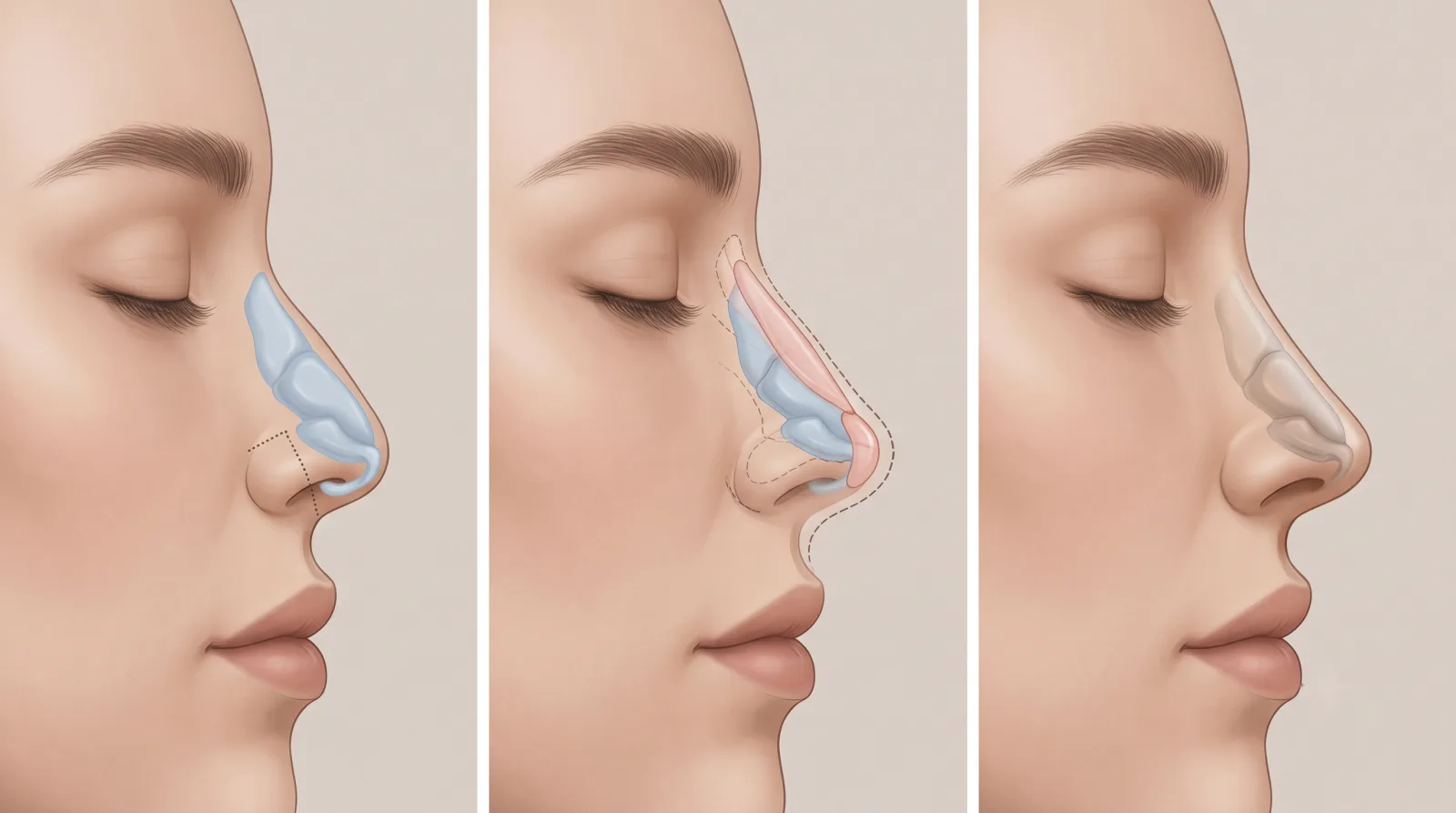
Illustration: the nasal framework (blue) is reshaped to raise the bridge and refine the tip. The dashed outline shows the original contour.
The other kind of “too young” is about the problem not yet existing. A facelift repositions tissue that has descended with age; done before there is meaningful laxity, it simply has little to correct, and it does not bank a result. The face keeps ageing afterward on its own timeline. So a healthy 30-year-old asking about a facelift is usually not too young to have surgery, but too early for that particular operation, and the sensible advice is a lighter approach or waiting.
There is no single minimum age that applies to everything, because “ready” is defined by the tissue and the operation. Where growth is complete and the concern is real, a younger patient can be an entirely appropriate candidate. Where it is not, the recommendation is to wait until the tissue is ready, which is a very different message from “no”.
When is someone too old?
When is someone too old for surgery?
Being “too old” is far less common than patients fear, and it is rarely about the number. Many people in their 60s and 70s are excellent candidates for facial surgery, and for age-related concerns, well-established change can make the case clearer. A deep-plane facelift repositions exactly the descended tissue that older faces have, and an upper blepharoplasty removes the hooding skin that heaviness with age creates. These operations often suit older patients precisely because the change they treat is present.
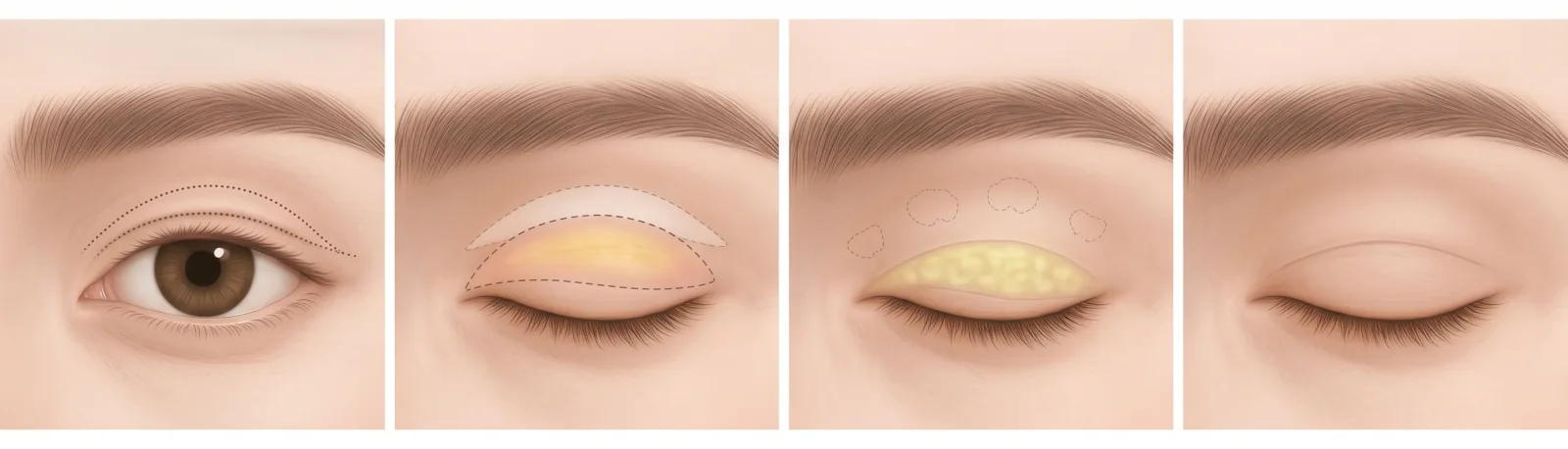
Illustration: the planned crease is marked, the excess upper-lid skin and selected fat pads are addressed through that line.
At the older end, what genuinely matters is health. Well-controlled medical conditions, the ability to stop smoking around surgery, and how the skin and tissues have held up all feed into whether an operation is wise and how it should be planned. These are assessed individually. A fit, non-smoking person in their late 60s may be a stronger candidate than someone much younger with poorly managed health.
So “too old” becomes a real consideration only when health or healing capacity would make surgery unwise. That is a medical judgement about the person, and no age cut-off replaces it. For many older patients a well-chosen operation is very much still appropriate, provided their health supports it.
It differs by operation
The right age differs by operation
Because each operation addresses a different concern, the timing genuinely differs. A rhinoplasty is a shape operation best done once the nose has finished growing, after which there is a very wide window. People have it in their 20s through their 50s and beyond, since a nose does not have an age-related “right time” the way an ageing face does. What starts the conversation is a mature nose and a real concern.
An upper blepharoplasty sits in the middle: it treats age-related hooding of the upper lid, so it becomes relevant once that heaviness is established, typically from the late 40s onward, though it varies with genetics and sun exposure. A deep-plane facelift is the most clearly ageing-driven: it addresses established jowls, jawline softening and neck laxity, which usually become surgical in the late 40s to 60s, and it remains appropriate into later life where the laxity is present.
Put together, that is why a single “age for plastic surgery” is meaningless. A nose reshaping, an eyelid lift and a facelift answer different questions at different points in life, and being the right age for one tells you little about the others. Matching the operation to where your tissue actually is, and not simply to your age, is the whole point of an assessment.
Health, healing and age
How age affects healing, and what decides candidacy
Age does have a modest, real effect on recovery: skin and tissues heal a little more slowly with time, swelling can take longer to settle, and health conditions become more common with the years. A surgeon factors all of this into planning and follow-up. But the number is a weaker predictor than people assume. Your general health, skin quality and lifestyle (above all not smoking around surgery) shape healing more than your age does, which is why a healthy older patient can recover more smoothly than a stressed, heavy-smoking younger one.
Candidacy depends on tissue readiness and health, so it is a matter for individual assessment. At Garnet, the same board-certified plastic surgeon, Dr. In-Soo Baek (Korean medical licence no. 77407), consults, operates and follows up. The person judging if your face is at the right stage for an operation is the one who will perform it and review you at 1, 3 and 6 months. The day is capped at two operations to keep each assessment unhurried, and only the concern you came with is addressed, without over-recommendation.
If you are worried you might be too young or too old, the useful step is a real assessment of your face. You can send photos for a no-obligation pre-assessment before you plan any travel, and be told plainly whether an operation suits you now, whether a lighter approach fits better, or whether waiting is the better advice. Age points the way; the consultation makes the call.
Real Results
Before & After
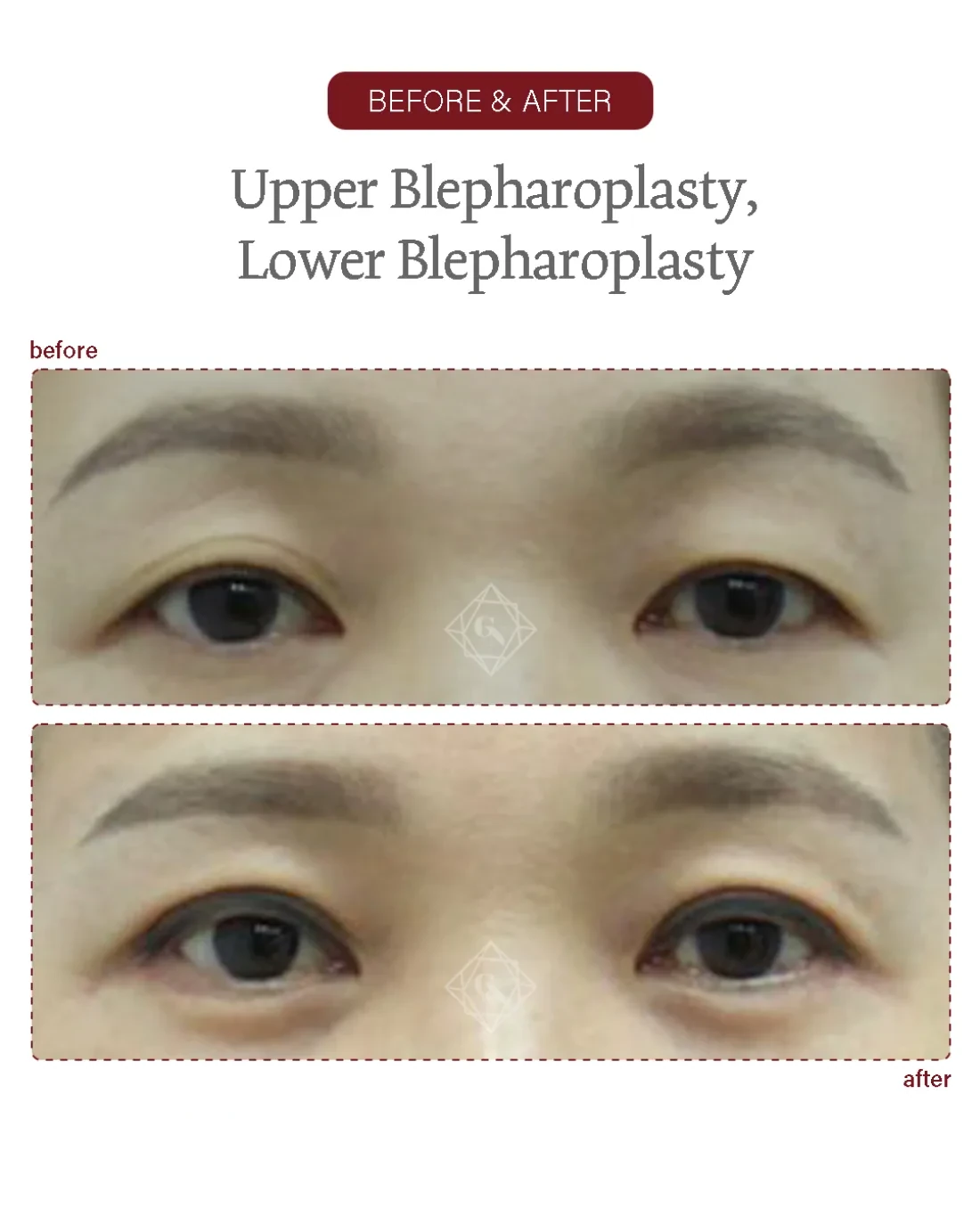
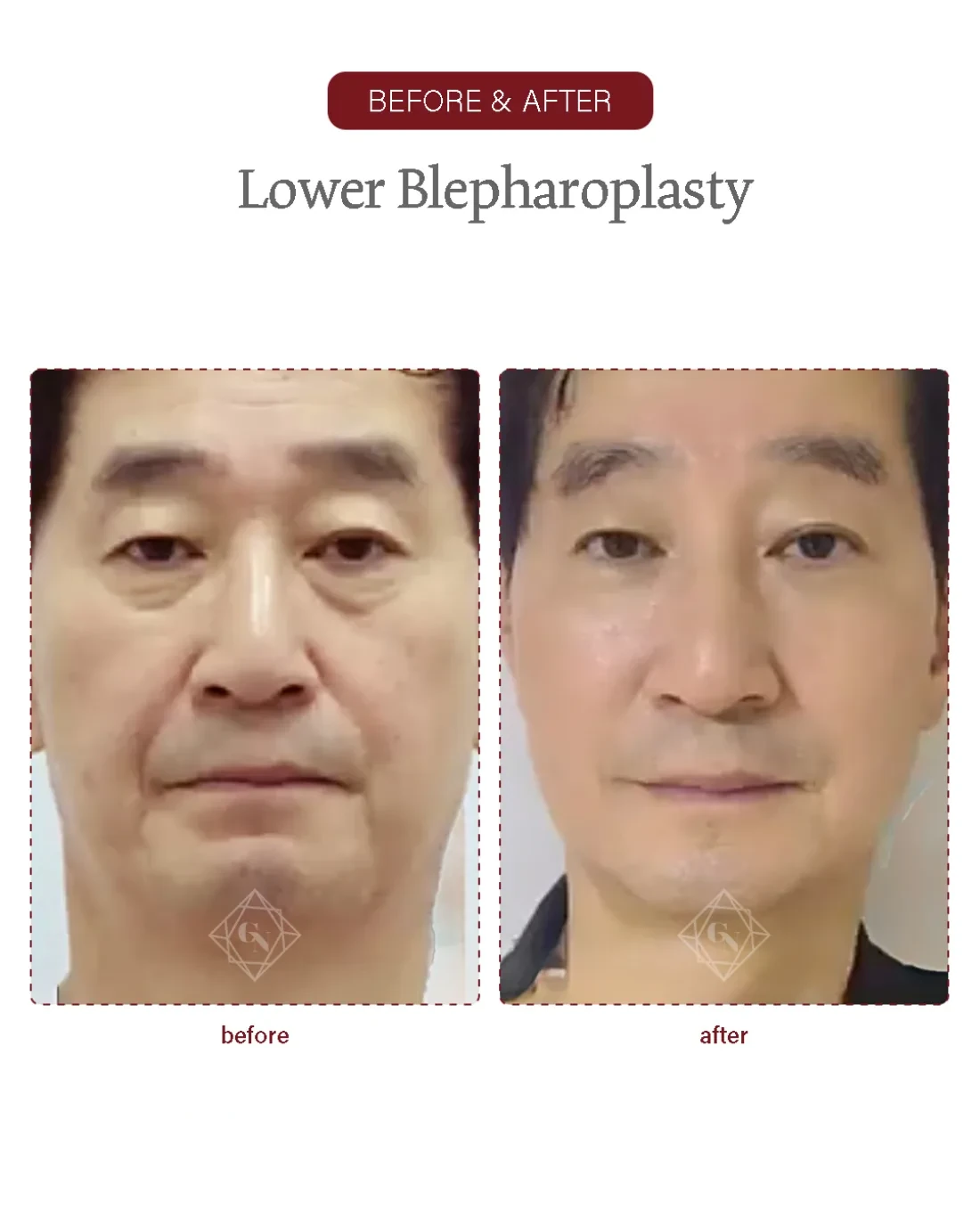
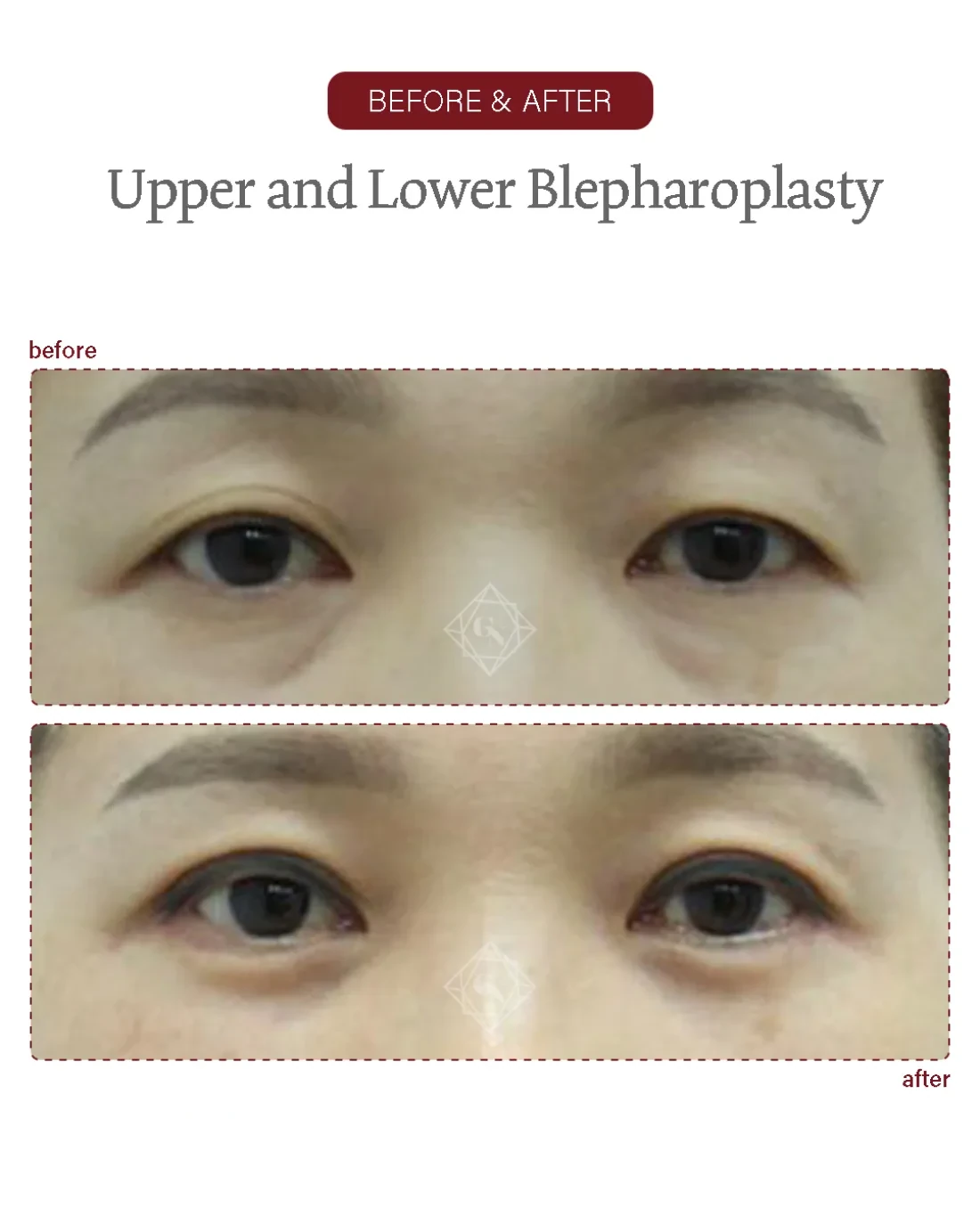
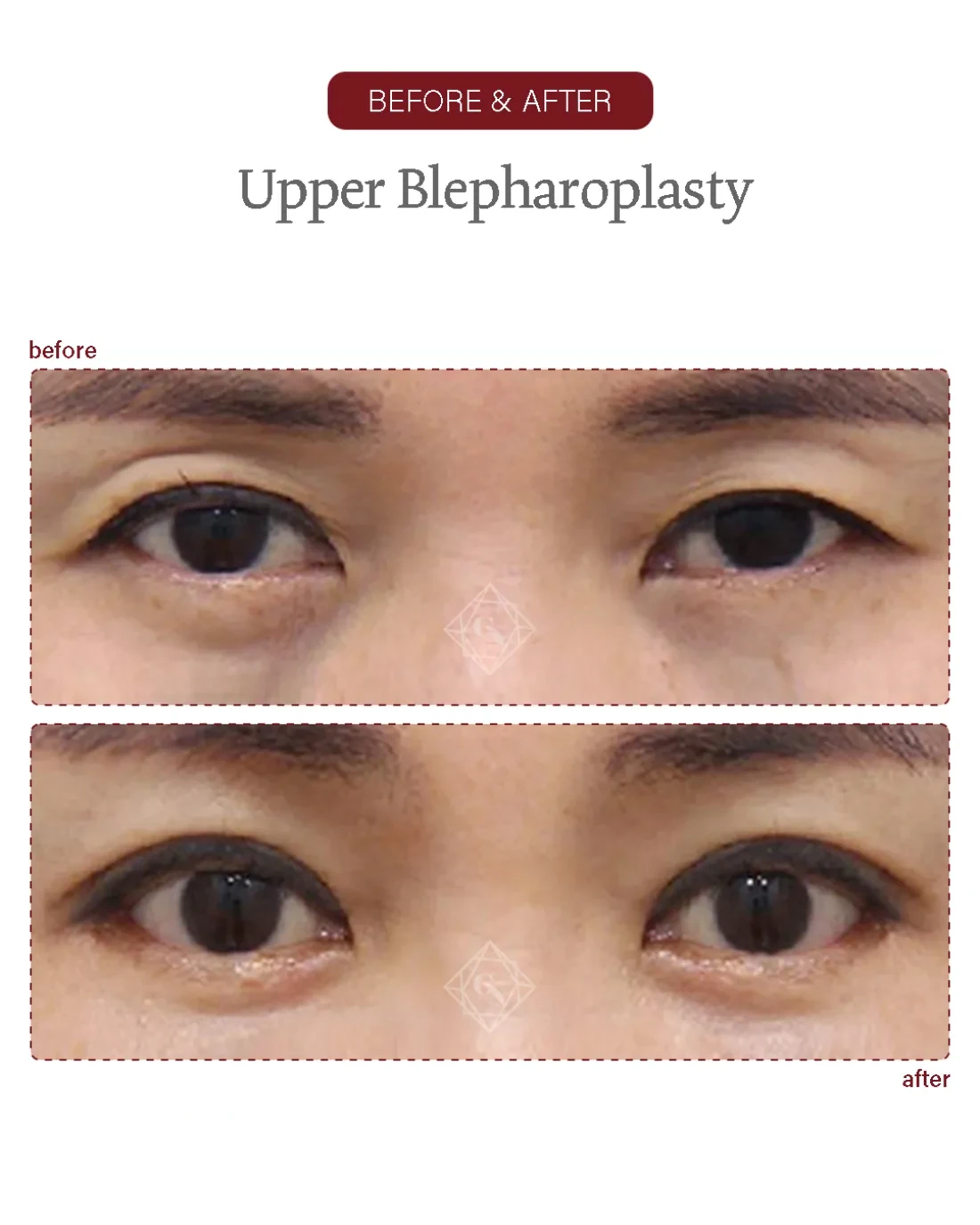
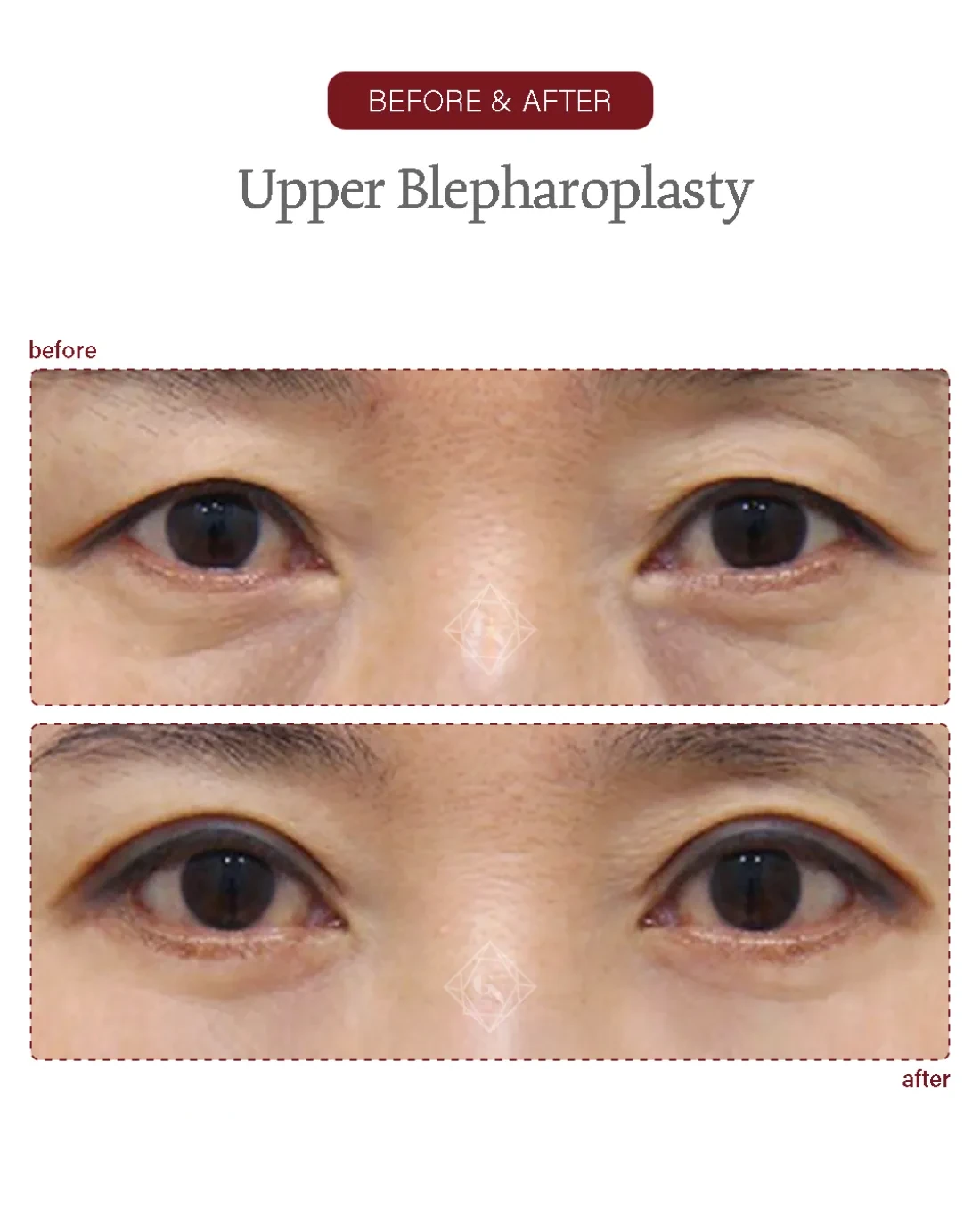
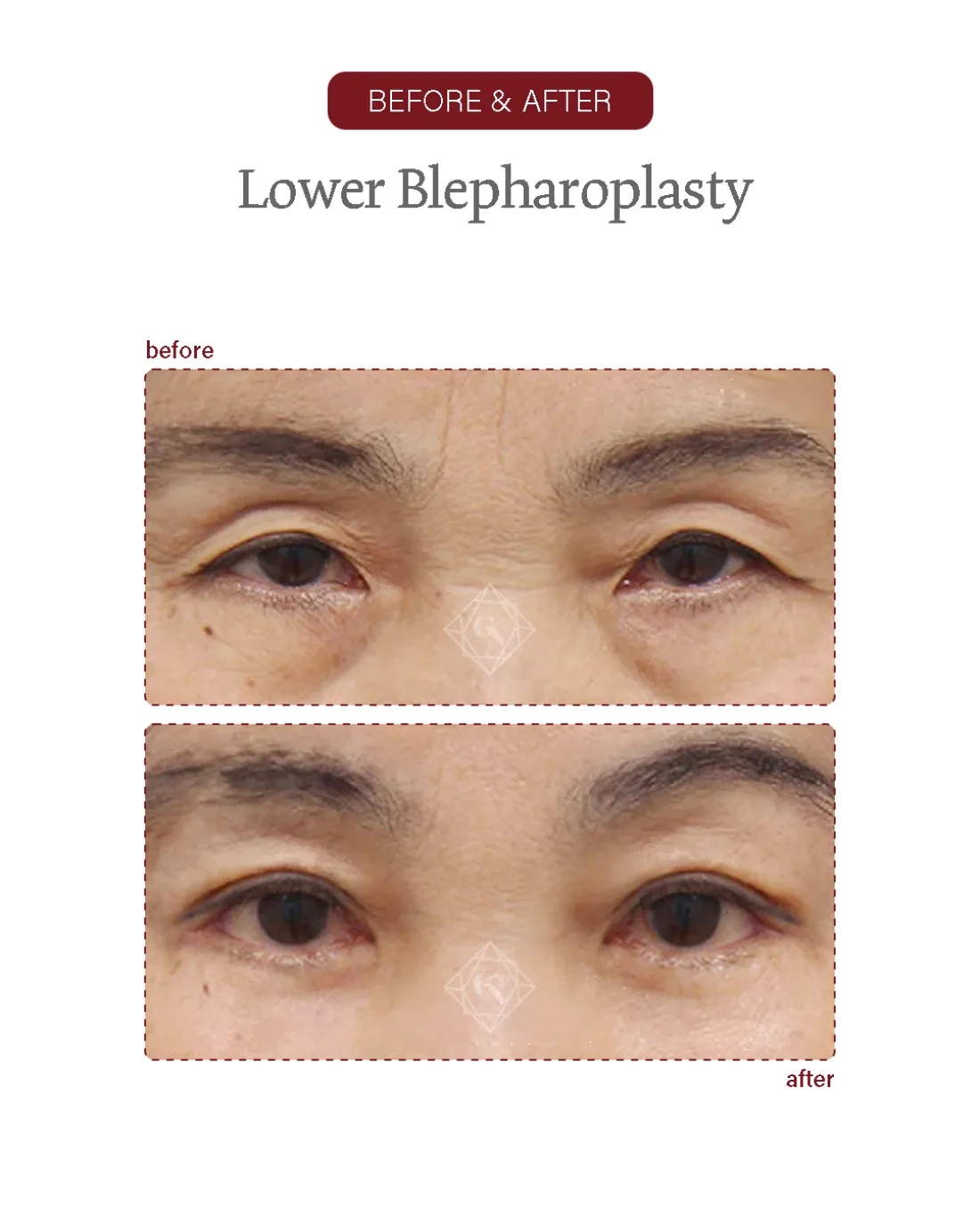
Eyelid before/after examples of actual Garnet patients (published with consent). Results, recovery and suitability vary by individual and are not guaranteed; the right approach is decided at an in-person consultation.
Prices
Price at Garnet
Upper blepharoplasty
From₩3,500,000 + VATExcluding VAT (10% VAT is added at payment)Book now
Same price as Korean patients. Prices shown exclude 10% VAT; your written quote, issued after the in-person consultation, shows the full amount payable.
Dr. In-Soo Baek
Director & sole operating surgeon
Korean medical licence no. 77407
Operate on what you came for. Trained at Korea University Medical Center. Every case planned, performed and reviewed by the same hands.
1Operating surgeon
~2Surgeries per day
7Registered techniques
Board-certified plastic surgeon
Plastic surgery training at Korea University College of Medicine & graduate school
Korean Society of Plastic and Reconstructive Surgeons member, in its facial-contour, eye & rhinoplasty groups
Consults, operates and follows up each case himself
Peer-reviewed papers behind the facts on this page. Each describes findings in its own study group — not results at Garnet — and none predicts your own outcome.
Thomson DR et al. Screening for Body Dysmorphic Disorder in Plastic Surgery Patients. Aesthetic Plastic Surgery. 2024. doi:10.1007/s00266-024-03959-6
Kaleeny JD et al. Body Dysmorphic Disorder in Aesthetic and Reconstructive Plastic Surgery—A Systematic Review and Meta-Analysis. Healthcare. 2024. doi:10.3390/healthcare12131333
Mandavia R et al. An Evidence-based Pathway for Body Dysmorphic Disorder in Facial Aesthetics. Facial Plastic Surgery. 2024. doi:10.1055/a-2244-1066
FAQ
Common questions
Am I too young for facial plastic surgery?
Usually “too young” means the tissue is not yet ready; surgery itself is seldom forbidden. A rhinoplasty is best once the nose has finished growing, and a double-eyelid crease once the eye has matured — from around the late teens or early 20s. A facelift done before there is real laxity simply has little to correct. Where growth is complete and the concern is genuine, a younger person can be an appropriate candidate.
Am I too old for a facelift or facial surgery?
Rarely because of age alone. Many people in their 60s and 70s are excellent candidates, and established ageing can make the case for a lift or an eyelid procedure clearer. At older ages the deciding factors are general health and the condition of the tissues, and both are assessed person by person. Surgery becomes unwise only where health or healing capacity would make it so, and that is a medical judgement about you as a whole.
Is there an age limit for plastic surgery in Korea?
There is no fixed age limit that applies across the board. The right age differs by operation, and candidacy depends on whether the tissue is ready and whether your health supports surgery. A nose reshaping, an eyelid lift and a facelift each have their own timing, so a single age limit for all of them would be meaningless.
What is the minimum age for cosmetic facial surgery?
There is no single minimum, because readiness is defined by the tissue and the operation. A rhinoplasty and a double-eyelid crease are best done once growth is complete, generally from the late teens or early 20s. Other operations depend on age-related change being present. The useful guide is tissue maturity and a real concern.
Does age affect how well I heal after surgery?
Modestly, yes. Skin and tissues heal a little more slowly with age and swelling can take longer to settle. But your general health, skin quality and lifestyle, especially not smoking around surgery, matter more than the number. A healthy person in their 60s often heals more smoothly than a heavy smoker in their 40s, which is why healing is assessed individually and is not assumed from age.
Does the right age differ between a nose job, eyelids and a facelift?
Yes, substantially. A rhinoplasty is best once the nose has finished growing, then has a wide window through the decades. An upper blepharoplasty becomes relevant once age-related hooding appears, typically from the late 40s. A deep-plane facelift addresses established jowls and neck laxity, usually surgical from the late 40s to 60s. Being the right age for one says little about the others.
Will having surgery younger make the result last longer?
Not in a way that banks the outcome. An operation like a facelift repositions tissue at the time it is done, but the face continues to age naturally afterward on its own timeline. Having surgery before there is meaningful change simply means less to correct and an operation you did not yet need, rather than a longer-lasting result.
I am unsure if I am the right age — how do I find out?
Through an assessment of your own face; an age chart cannot answer it. Candidacy depends on whether your tissue is ready for the specific operation and whether your health supports it, which a consultation is designed to judge. At Garnet you can send photos for a no-obligation pre-assessment and be told plainly whether now is the time, before committing to any travel.
What if surgery is not right for my age or stage?
Then a good clinic should say so plainly. If the tissue is not ready or the concern a procedure treats is not yet there, the right advice may be a lighter approach or waiting. At Garnet only the concern you came with is addressed and there is no over-recommendation, so you can be told plainly if an operation does not suit your stage — the same board-certified surgeon who would perform it makes that assessment.
My mom recently had a brow lift and lower blepharoplasty with Dr. Baek, and our experience has been wonderful so far. The Garnet team was incredibly kind and welcoming, with Kelly assisting us as our English consultant—she made everything…
I’m so happy I chose this clinic for my lower blepharoplasty. I was traveling from abroad by myself, so I was a little nervous, but from the beginning I felt comfortable and truly cared for. Everyone was kind, patient, and professional…
Came in for an in-person consult and ended up choosing Garnet and Dr.Baek for my non-incisional DES and tiplasty/alarplasty. I communicated with Kelly (English consultant) from the start till now (3 weeks post-op). She really help me feel…
My under-eyes have been sagging and folding for years... I tried to cover it up with makeup, but it actually got stuck in the wrinkles and made it stand out even more. While going for consultations, I noticed that the bigger the hospital…
Worried you might be too young or too old? Send photos for a no-obligation pre-assessment. You will be told plainly whether surgery suits you now, or whether waiting is the better advice.
Send photos and your question before you travel. An English-speaking coordinator reviews every enquiry and replies with guidance on whether surgery is appropriate, the likely plan and timing.
✓ Reviewed by the clinic coordinator, not a bot
✓ Photo-based pre-assessment before you fly
✓ Foreign-patient scheduling & after-care
✓ One surgeon for consultation, surgery and follow-up
Prefer to chat now? Reach the coordinator directly:






 T S7 months ago



