Corset platysmaplasty is a precise solution to one specific problem: a slack, separated neck muscle that shows as vertical bands or a blunted jaw-to-neck angle. It is excellent for the right neck and the wrong choice for others. This guide explains exactly who it suits, who is better served by liposuction or a full lift, and when surgery is not the answer at all.
The short answer
The ideal candidates have visible vertical neck bands or a slack jawline caused by separation of the platysma muscle, which is the problem corset platysmaplasty is designed to fix.
If the issue is mostly fullness or a double chin from fat, neck liposuction may suit you better than a muscle corset.
If there is significant loose skin as well as muscle laxity, a full neck lift that redrapes skin is usually the more complete answer.
The assessment may conclude the surgery is not right for you. At Garnet that judgement is made by the same board-certified surgeon who would operate.
The platysma is a broad, thin sheet of muscle that covers the front of the neck. In youth its two halves sit close together in the midline, keeping the neckline smooth and the jaw-to-neck angle crisp. With age, and sometimes earlier because of anatomy, those edges separate and slacken. The result is the look most candidates describe: two vertical cords or bands running down the front of the neck, especially visible when you talk or tense, and a softer, less defined transition from chin to neck.
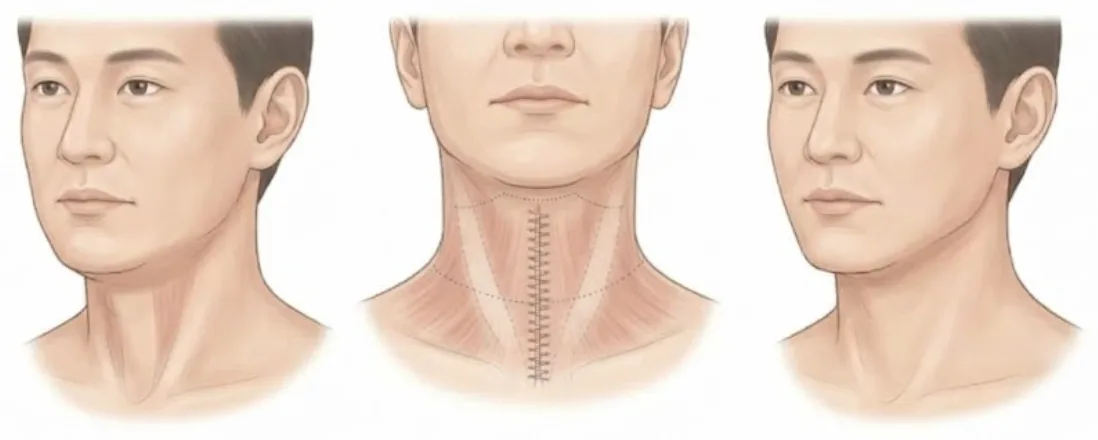
Illustration: the neck muscle (platysma) is drawn back together along the midline, like lacing a corset, to firm the neck.
Corset platysmaplasty treats this directly. Through a small submental incision hidden under the chin, the surgeon draws the separated muscle edges back to the midline and stitches them together, cinching the neck like a corset and restoring the taut central sling. It is a muscle operation: its job is to fix banding and laxity of the platysma. Removing fat or skin is not its main purpose.
Understanding that distinction is the key to knowing whether it is your procedure. If your concern is genuinely the muscle (the bands, the cords, the slack midline), you are looking at the right operation. If your concern is something else, a different tool fits better, and the rest of this guide walks through those choices.
Who fits best
Who makes a good candidate
The clearest candidate is someone with visible platysmal banding, meaning those vertical cords down the front of the neck, and a sense that the jawline has lost its definition because the muscle has slackened. Often these patients have reasonable skin quality and elasticity but a neck that no longer looks tight, and they want a sharper, more youthful neck-to-jaw angle without a large operation. For this profile, the muscle corset addresses the actual cause.
Good candidates are also realistic and in good general health. Corset platysmaplasty improves the contour and the banding it is designed for; it does not stop ageing or change the neck in ways unrelated to the platysma. Non-smokers, or those willing to stop around surgery, heal better, and patients who understand the recovery (covered in our recovery timeline guide) tend to be the most satisfied.
Age is not a strict cutoff. Younger patients with early but bothersome bands can be candidates, as can older patients whose main issue remains the muscle and who have no heavy skin excess. The decisive factor is what is actually causing the look you want to change, and that is exactly what an assessment establishes.
vs liposuction
When neck liposuction suits you better
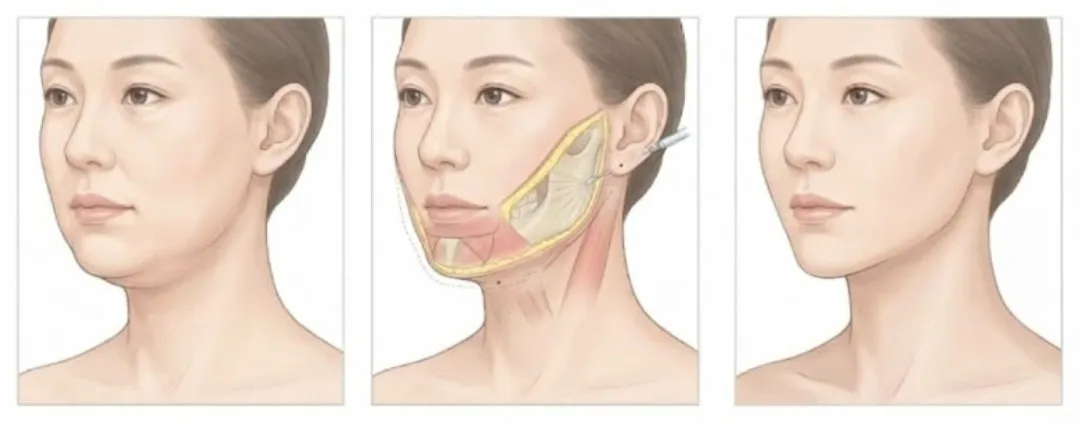
Not every "undefined neck" is a muscle problem. If the main issue is fullness under the chin, a soft double chin caused by a pocket of fat with no slack muscle bands, then removing that fat is the more direct answer. Neck and jawline liposuction contours the area by reducing the fat that blurs the jawline, and for a younger patient with good skin and good muscle tone it can sharpen the neck without any muscle repair.
Illustration: excess fat along the jawline, cheeks and neck (outlined) is removed through tiny hidden openings for a sharper contour.
The two are not rivals so much as tools for different layers: liposuction works on fat, corset platysmaplasty works on muscle. Some necks have both problems, fat fullness and platysmal banding, and are best treated by combining the two in one operation, removing the fat and then tightening the muscle beneath. That combined plan is common in neck contouring, and whether it suits you depends on how much fat and how much banding your neck shows.
The mistake to avoid is choosing liposuction alone for a neck whose real problem is the muscle, or a corset alone for a neck whose problem is mostly fat. Each will under-deliver if it does not match the cause. A careful assessment of what is actually creating your neckline is what tells the two apart. Pinching, tensing and imaging the neck during consultation usually makes the answer clear.
vs neck lift
When a full neck lift is the better choice
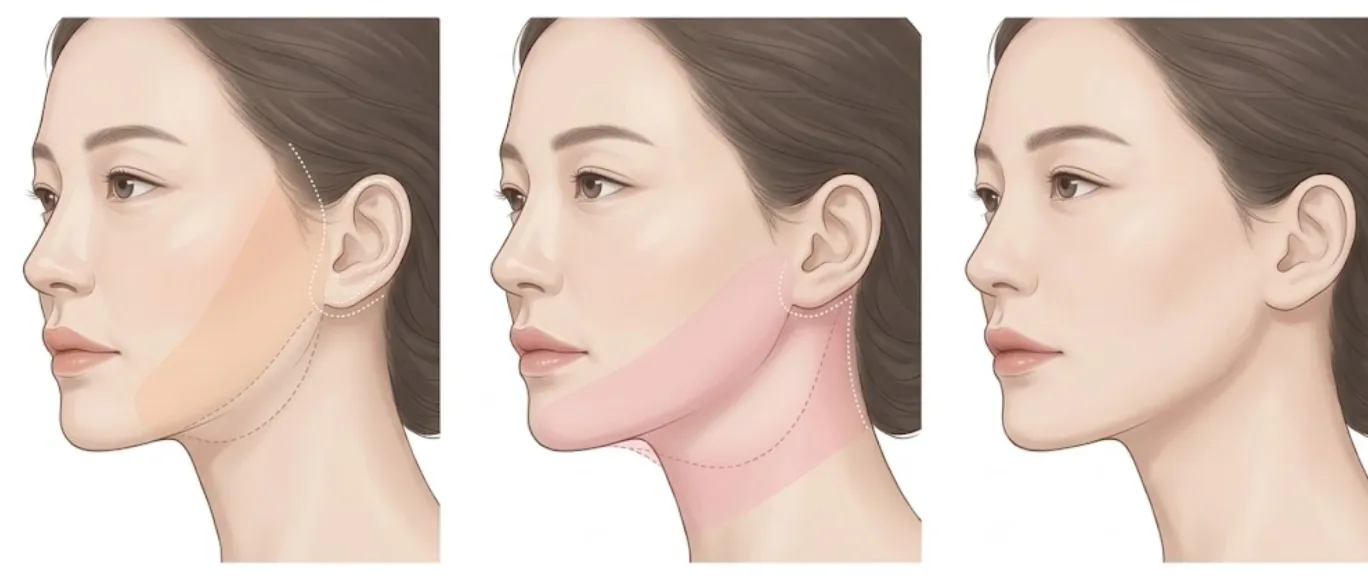
Corset platysmaplasty tightens the muscle, but it does not remove or redrape loose skin. So if your neck has significant skin laxity, with sagging or crepey skin that would hang even after the muscle is tightened, a corset alone will leave that skin behind. In that situation a full neck lift is usually the more complete operation: it combines the platysma repair with incisions behind the ears to lift and redrape the excess skin.
Illustration: through a fine line around the ear (dotted), the sagging lower face and neck are lifted up and back toward the ear (shaded); the dashed outline shows the old contour.
In practice the corset is frequently a component of a neck lift. The muscle work happens through the submental incision, and the skin work happens through the post-auricular incisions, in the same operation. Whether you need just the muscle corset or the fuller lift comes down to how much of your problem is muscle versus skin. That is an anatomical judgement more than a preference. Our guide to who a neck lift suits explores that fuller operation.
A good surgeon will not upsell you to the bigger procedure if the smaller one solves your problem, nor undersell you the corset alone when you genuinely need skin redraping. The right answer is whichever matches your anatomy, and a careful clinic will tell you which that is even when it is the more modest option.
When not
When corset platysmaplasty is not recommended
There are necks for which this surgery is not the right call. If your concern is not actually muscle banding — for example, fullness that is purely fat, or skin laxity that needs redraping — then a corset alone will disappoint, and a different procedure should be considered instead. Expectations matter too: if you are hoping the operation will reverse all signs of ageing or transform features unrelated to the platysma, that expectation cannot be met and your surgeon will say so.
General medical and lifestyle factors can also make surgery inadvisable or require it to be deferred: uncontrolled health conditions, certain medications, or active smoking that impairs healing. These are assessed individually, and sometimes the responsible recommendation is to optimise your health first, or to choose a less invasive route. Our overview of how to think about surgical safety covers the questions that surround this decision.
Being told that a procedure is not right for you is the clinic doing its most important job. A recommendation to wait, to choose a different operation, or to do nothing at all protects you from a result that would not have helped. That kind of candour is exactly what you want from the surgeon you are trusting with your neck.
Assessment
How Garnet assesses whether it's right for you
Because the choice between a muscle corset, liposuction and a full lift turns on your specific anatomy, the only reliable way to know is an assessment of your neck. You can start before travelling: in an online consultation you can send photos, describe what bothers you, and receive a pre-assessment of whether corset platysmaplasty or something else fits your case.
At Garnet that assessment is unhurried by design. There is no consultation or CT fee and no pressure to book the same day, and the clinic's principle is to address only the concern you came for, without over-recommending. If your neck would do better with liposuction, a fuller lift, or no surgery at all, you will be told plainly.
Crucially, the surgeon who assesses you is the surgeon who would operate and follow you up. Dr. In-Soo Baek is a board-certified plastic surgeon (Korean medical licence no. 77407), and at this single-surgeon clinic he personally handles consultation, surgery and the structured follow-ups at 1, 3 and 6 months. The judgement about whether corset platysmaplasty is right for you is made by the person who will be in the room.
Real Results
Before & After
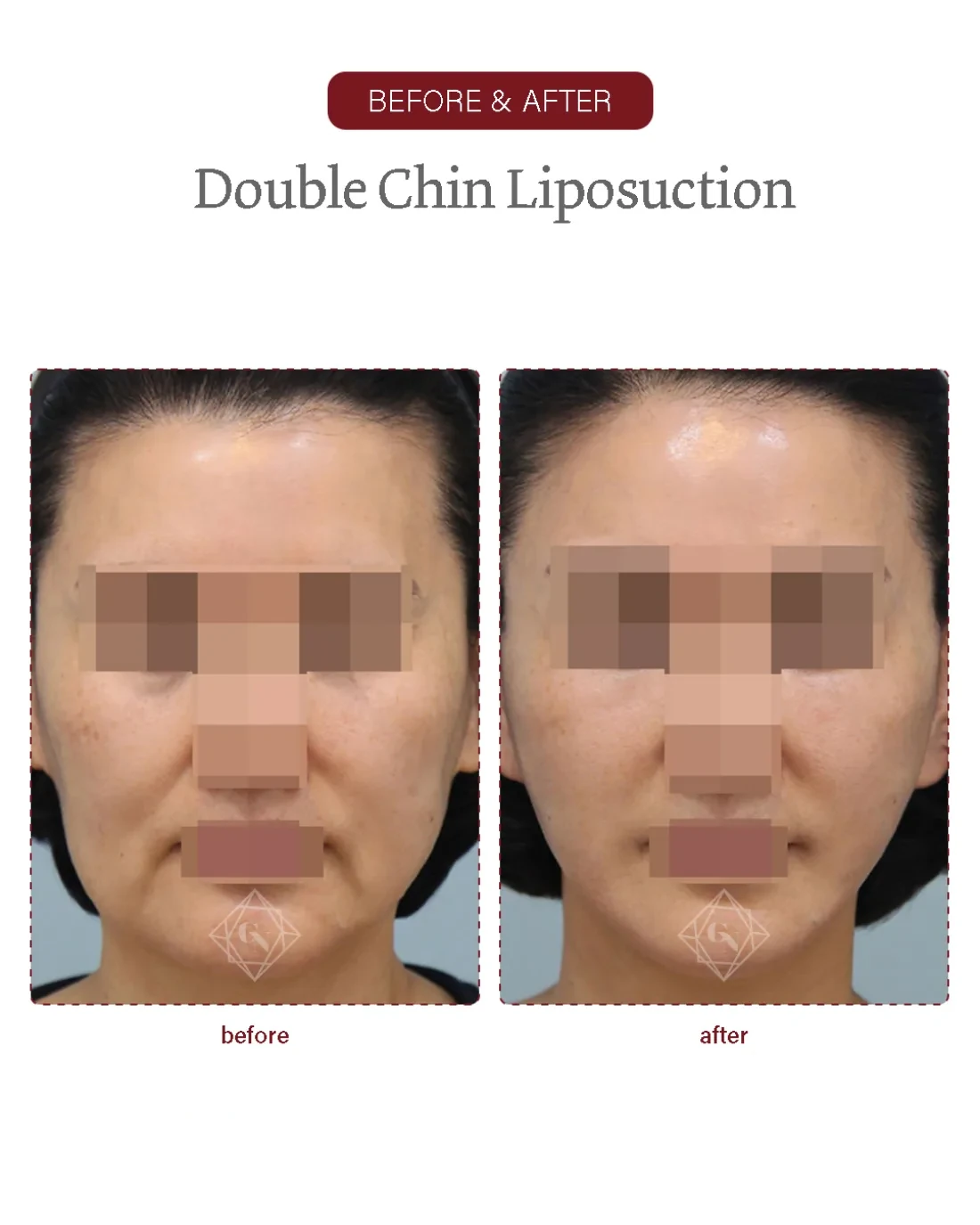
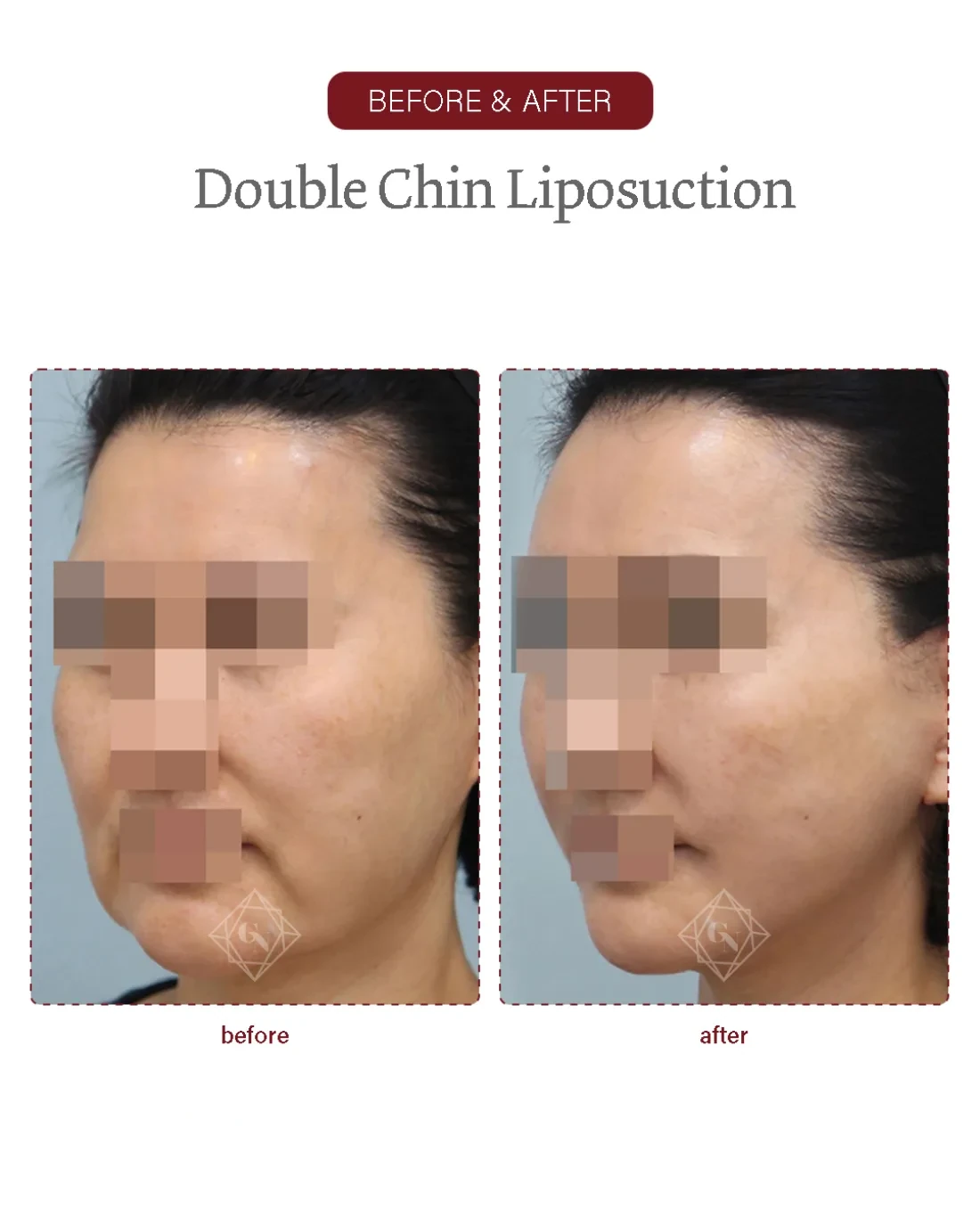
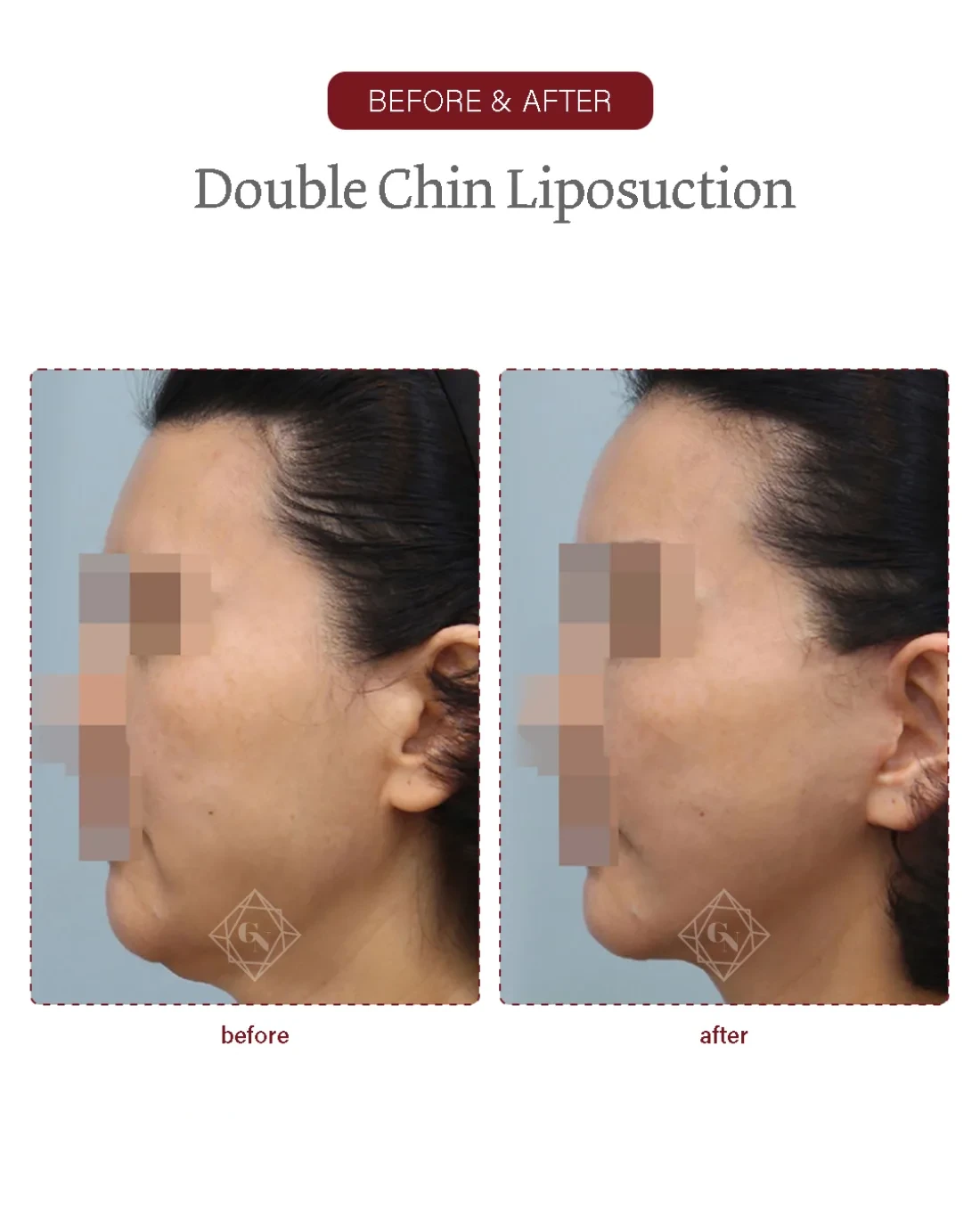
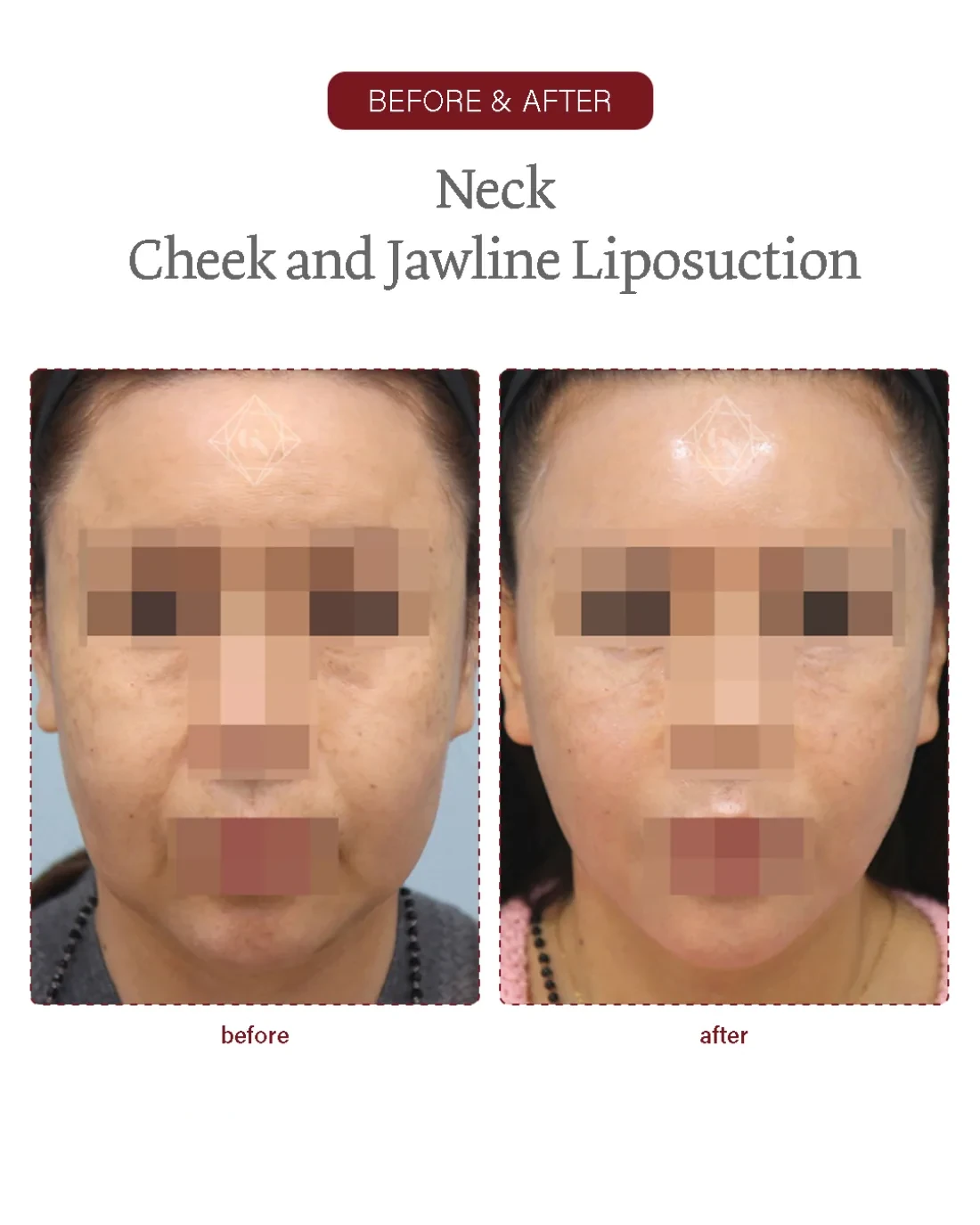
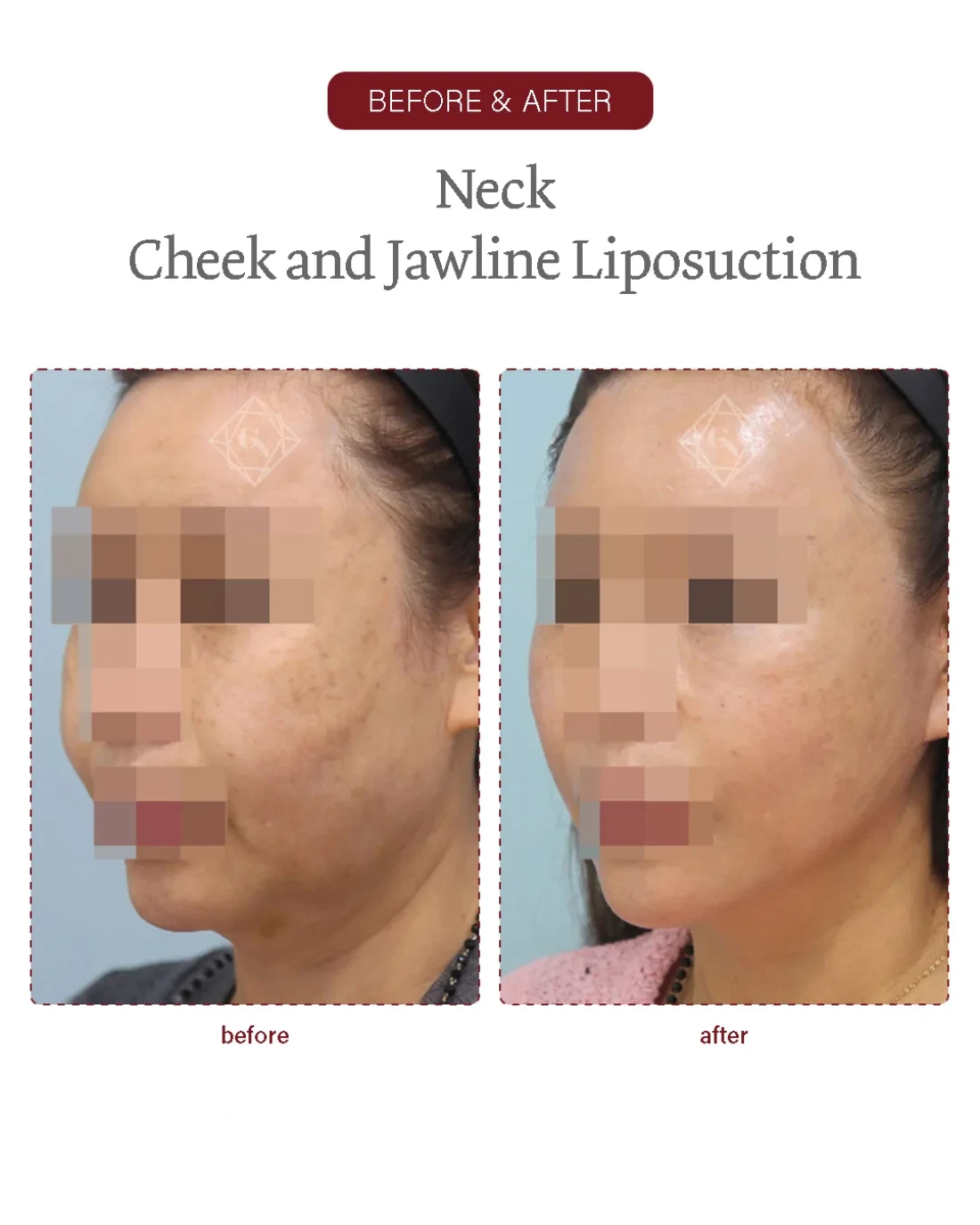
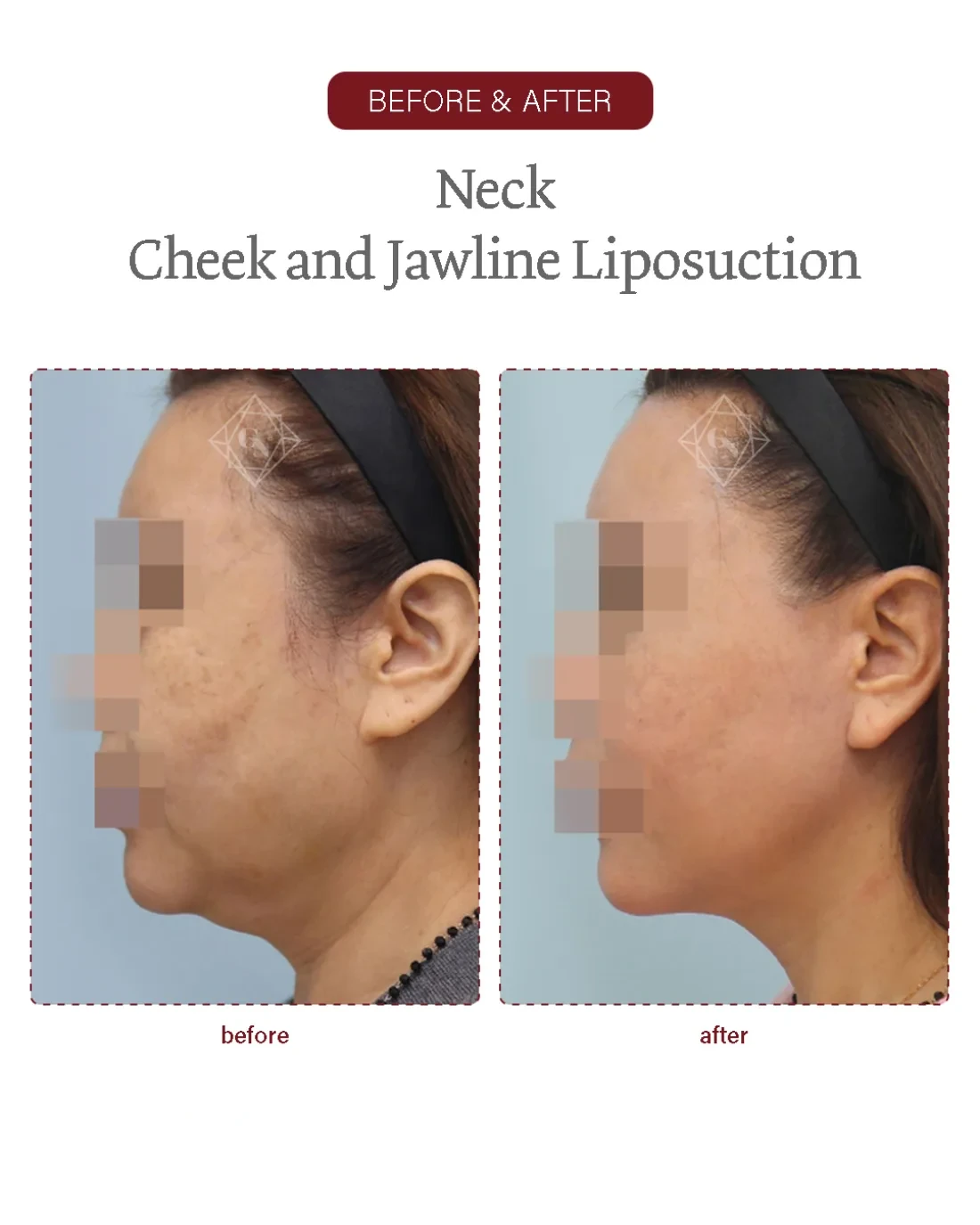
Double-chin and neck/cheek/jawline liposuction results of actual Garnet patients (published with consent). Results, recovery and suitability vary by individual, because skin quality and fat distribution differ, and outcomes are not guaranteed.
Dr. In-Soo Baek
Director & sole operating surgeon
Korean medical licence no. 77407
Operate on what you came for. Trained at Korea University Medical Center. Every case planned, performed and reviewed by the same hands.
1Operating surgeon
~2Surgeries per day
7Registered techniques
Board-certified plastic surgeon
Plastic surgery training at Korea University College of Medicine & graduate school
Korean Society of Plastic and Reconstructive Surgeons member, in its facial-contour, eye & rhinoplasty groups
Consults, operates and follows up each case himself
Peer-reviewed papers behind the facts on this page. Each describes findings in its own study group — not results at Garnet — and none predicts your own outcome.
Marten T et al. Management of the Platysma in Neck Lift. Clinics in Plastic Surgery. 2018. doi:10.1016/j.cps.2018.06.004
Pelle-Ceravolo M et al. Complete Platysma Transection in Neck Rejuvenation: A Critical Appraisal. Plastic & Reconstructive Surgery. 2016. doi:10.1097/prs.0000000000002604
Henley JL et al. Contralateral Platysma Suspension. Archives of Facial Plastic Surgery. 2005. doi:10.1001/archfaci.7.2.119
FAQ
Common questions
Who is a good candidate for corset platysmaplasty?
The clearest candidates have visible vertical neck bands or cords and a slack jawline caused by separation of the platysma muscle, usually with reasonable skin quality. They are in good general health, realistic about what the surgery does, and want a sharper neck-to-jaw angle without a larger operation. Age is not a strict cutoff; the cause of the look matters more.
Am I suitable for corset platysmaplasty?
If your main concern is muscle banding (vertical cords down the front of the neck and a slack midline), you are likely looking at the right procedure. If your concern is mostly fat fullness or loose skin, a different approach may suit you better. A personal assessment of what is actually causing your neckline is what confirms suitability.
When is corset platysmaplasty not recommended?
It is not recommended when the real problem is fat (better suited to liposuction) or significant loose skin (better suited to a full neck lift), or when expectations are unrealistic. General health factors, certain medications or active smoking may also make surgery inadvisable or require it to be deferred until your health is optimised.
What is the difference between corset platysmaplasty and neck liposuction?
Corset platysmaplasty tightens slack neck muscle to fix banding and laxity, while liposuction removes fat that blurs the jawline. They treat different layers, muscle versus fat, and some necks need both combined in one operation. Choosing the wrong one for your cause is what leads to an underwhelming result.
Should I have a corset platysmaplasty or a full neck lift?
A corset tightens the muscle but does not remove loose skin, so if you have significant skin laxity a full neck lift, which also redrapes skin through incisions behind the ears, is usually the more complete answer. Often the corset is one component of a neck lift. Which you need depends on how much of your problem is muscle versus skin.
Does corset platysmaplasty remove a double chin?
Only if the double chin is caused by slack muscle. If the fullness is fat, neck and jawline liposuction is the more direct fix, sometimes combined with the muscle corset. An assessment distinguishing fat from muscle is what determines the right approach for your double chin.
Is there an age limit for corset platysmaplasty?
There is no strict age cutoff. Younger patients with early but bothersome bands can be candidates, and older patients whose main issue is still the muscle, with little skin excess, can be too. The decisive factor is what is actually causing the look you want to change.
Will Garnet tell me if I don't need the surgery?
Yes. A proper assessment includes recommending against the procedure when it would not help you, or steering you toward liposuction, a fuller lift, or no surgery at all. A candid recommendation is treated as the clinic's most important job.
Can I find out if I'm a candidate without travelling to Korea?
Yes. You can begin with an online consultation: send photos, describe your concern, and receive a pre-assessment of whether corset platysmaplasty suits your neck before committing to travel. The judgement is confirmed at an in-person consultation by the surgeon who would operate.
Who decides whether corset platysmaplasty is right for me at Garnet?
The same board-certified surgeon who would perform the operation, Dr. In-Soo Baek, also assesses you. At this single-surgeon clinic he personally handles consultation, surgery and follow-up. The judgement about your suitability is made by the person who will actually be in the room.
My mom recently had a brow lift and lower blepharoplasty with Dr. Baek, and our experience has been wonderful so far. The Garnet team was incredibly kind and welcoming, with Kelly assisting us as our English consultant—she made everything…
I’m so happy I chose this clinic for my lower blepharoplasty. I was traveling from abroad by myself, so I was a little nervous, but from the beginning I felt comfortable and truly cared for. Everyone was kind, patient, and professional…
Came in for an in-person consult and ended up choosing Garnet and Dr.Baek for my non-incisional DES and tiplasty/alarplasty. I communicated with Kelly (English consultant) from the start till now (3 weeks post-op). She really help me feel…
My under-eyes have been sagging and folding for years... I tried to cover it up with makeup, but it actually got stuck in the wrinkles and made it stand out even more. While going for consultations, I noticed that the bigger the hospital…
If you are unsure whether corset platysmaplasty fits your neck, send photos for a no-obligation pre-assessment, including a straight answer if a different approach would suit you better.
Send photos and your question before you travel. An English-speaking coordinator reviews every enquiry and replies with guidance on whether surgery is appropriate, the likely plan and timing.
✓ Reviewed by the clinic coordinator, not a bot
✓ Photo-based pre-assessment before you fly
✓ Foreign-patient scheduling & after-care
✓ One surgeon for consultation, surgery and follow-up
Prefer to chat now? Reach the coordinator directly:







 T S7 months ago



