A deep plane facelift repositions the SMAS, the deep structural layer beneath the skin. For that reason its result is one of the longest-lasting in facial surgery. It lasts for years and varies between people. Like every facelift, it sets the clock back; it does not stop it.
The short answer
A deep plane facelift lifts the deeper SMAS layer as a composite unit, so the result is structural and far more durable than a thread lift or skin-only tightening.
Long-term studies of facelifts following patients for around three decades show the lift holds well, with a median of roughly a decade before some consider revision.
How long your result lasts depends on the operation and also on your skin quality, genetics, lifestyle and how well you protect the skin.
No facelift is permanent; ageing continues from the new, younger-looking baseline the lift creates.
The durability of a deep plane facelift comes from the layer it works on. Tightened skin alone stretches and relaxes again within months. This operation releases and repositions the SMAS, the deep fibromuscular layer that carries the cheek pad and supports the jawline. At Garnet this is done as a deep-plane and dual-plane release down to the jawline, so the cheek and jowl are lifted as one composite unit and held in their new position by the body's own deep tissue.
Illustration: the deeper facial layer (SMAS, shown in yellow) is released and repositioned as one unit with the skin, rather than pulling the skin alone.
The tension sits in this strong structural layer, so the result does not depend on the skin staying tight. The skin is re-draped without tension. A well-executed deep-plane lift therefore looks natural, without a pulled look, and tends to hold its shape over years; a skin-only lift can slip back.
This is the core reason a deep-plane technique is associated with longer-lasting results than older or more superficial methods. It does not stop the skin or tissues from continuing to age, but it gives the lift a durable foundation, so the years you gain outlast a brief tightening that fades.
How long
How long a deep plane facelift lasts, realistically
A realistic figure is more useful than an impressive one. Long-term studies that have followed facelift patients for around three decades suggest the lift holds its benefit well, with a median of roughly 10 to 11 years before some patients consider a touch-up or revision, and many never have one. There is no guarantee of a fixed number of years. What a structural lift buys is a head start measured in years.
Within that, results vary widely. Some people are happy with their result well beyond a decade; others notice their face beginning to soften again sooner, particularly in the neck and lower face, and choose a smaller refining procedure later. What stays consistent is that you continue to look younger than you would have without the operation. The comparison that matters is between your face and where it would otherwise have been; comparing it with the day after surgery misleads.
If you want to understand the operation and recovery you would be taking on to gain those years, our pages on the recovery timeline and who is a good candidate set out the realistic picture.
vs Threads
Why it outlasts threads and skin tightening
The contrast with less invasive options explains why a facelift lasts. A thread lift suspends the skin temporarily with sutures, and energy-based devices tighten the surface; both can give a modest, short-lived improvement and suit very early laxity. But their effect fades as threads dissolve and tissue settles, or as tightened skin relaxes, typically within a year or two, because neither repositions the descended structure underneath.
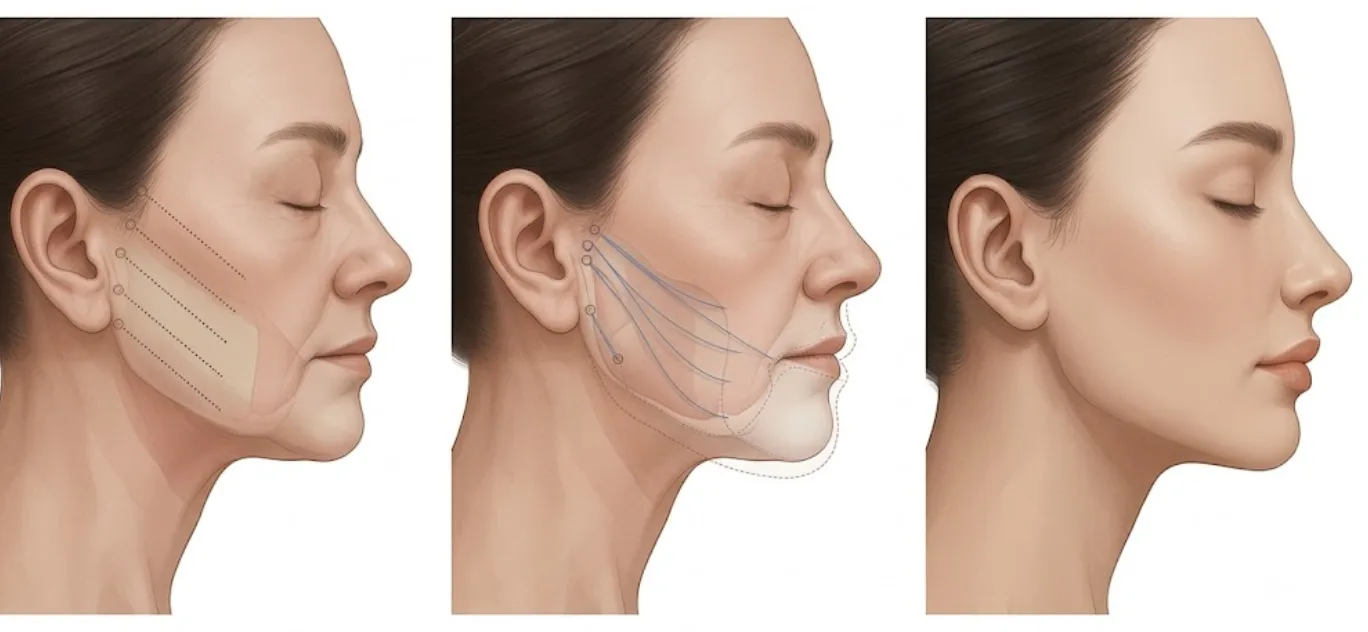
Illustration: barbed threads are placed along the paths shown and anchored at fixed points to lift early laxity of the lower face (Fixpoint Thread Lift™).
A deep plane facelift works on that structure. It moves the SMAS and the cheek pad, which corrects the cause of the descent instead of masking it. That is why a single well-judged operation can outlast a long series of repeated non-surgical treatments. Over several years, the cumulative cost and effort of repeating threads or devices often approaches or exceeds a one-time lift, and still does not deliver the same structural change.
The degree of sagging is a better basis for choosing than downtime. For genuine mid-face and jowl descent, a deep-plane lift is the option that actually lasts; for very early laxity, a less invasive treatment may be reasonable for now. Matching the procedure to the problem is what gives the result its durable value.
Factors
What affects how long your result lasts
The operation is only part of the answer; your own biology and habits shape how long the lift holds. Skin quality and elasticity matter: thicker, more elastic skin tends to re-drape and hold better, while thin or sun-damaged skin ages on regardless of how well the deeper layer is positioned. Genetics and bone structure influence how your face changes over time, and these are simply individual.
Lifestyle has a real, ongoing effect. Sun exposure, smoking, significant weight fluctuation and poor skin care all accelerate ageing of the skin envelope and can shorten the apparent longevity of a lift, even when the underlying structure remains well supported. Protecting your skin with sun protection and a sensible routine, and keeping your weight stable, genuinely help the result last.
Finally, where you started affects how long you stay satisfied. A lift performed for advanced descent gives a dramatic change that remains visible for a long time; a lift performed earlier may reach the point where you want a refresh sooner simply because the difference was subtler to begin with. None of this is a flaw in the operation. A facelift resets your face, and your individual ageing continues from there.
Not permanent
Why no facelift is permanent
No facelift stops ageing, and any clinic that implies otherwise is overselling. A deep plane facelift turns the clock back by lifting and repositioning tissue that has descended. From that new, younger-looking baseline, your face continues to age normally. You will go on getting older; you will simply do so looking younger than you would have without the operation.
Practically, this means the gravitational descent the lift corrected will, over many years, slowly recur, and the skin will continue to change with time and sun. For most people this is gradual and does not call for further surgery for a long while, if ever. Some choose a smaller refining procedure years later; others are content with the long head start the lift gave them.
Understanding this protects you from disappointment and from clinics that promise permanence. A realistic expectation is a durable, natural, years-long result that still ages. That is the expectation a deep-plane lift is built to meet, and the one your surgeon will set with you.
At Garnet
How Garnet aims for a lasting, natural result
Garnet is a single-surgeon clinic in Apgujeong, Seoul. Dr. In-Soo Baek is a board-certified plastic surgeon (Korean medical licence no. 77407) and the only operating doctor. He assesses you himself, performs the deep-plane and dual-plane SMAS release himself, and reviews every follow-up. Because the lift's longevity depends on how cleanly the deep layer is released and repositioned, having one experienced surgeon plan and execute the whole operation is central to a durable result.
The clinic caps the day at two surgeries, one patient at a time, so each case has unhurried time. The same surgeon sees your result settle through structured follow-ups at 1, 3 and 6 months. That continuity means the person who lifted your face also judges how it is holding and advises you on protecting it. Garnet is registered with Korea's foreign-patient programme for international visitors.
For a realistic view of how long a lift would last for your face, given your skin, your degree of descent and your goals, the simplest start is a no-obligation online consultation from abroad. Send photos and get an individual assessment before you plan any travel.
Real Results
Before & After
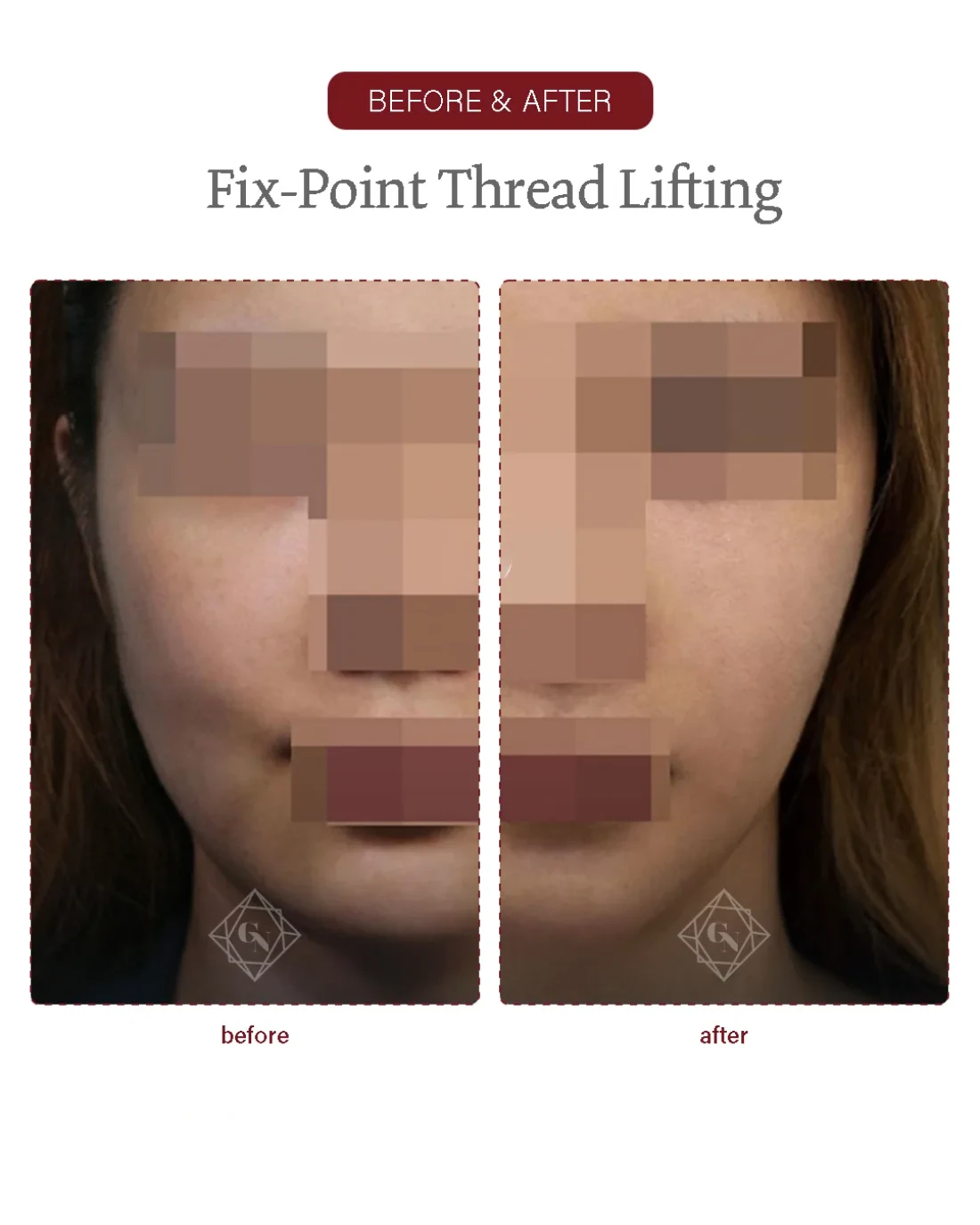
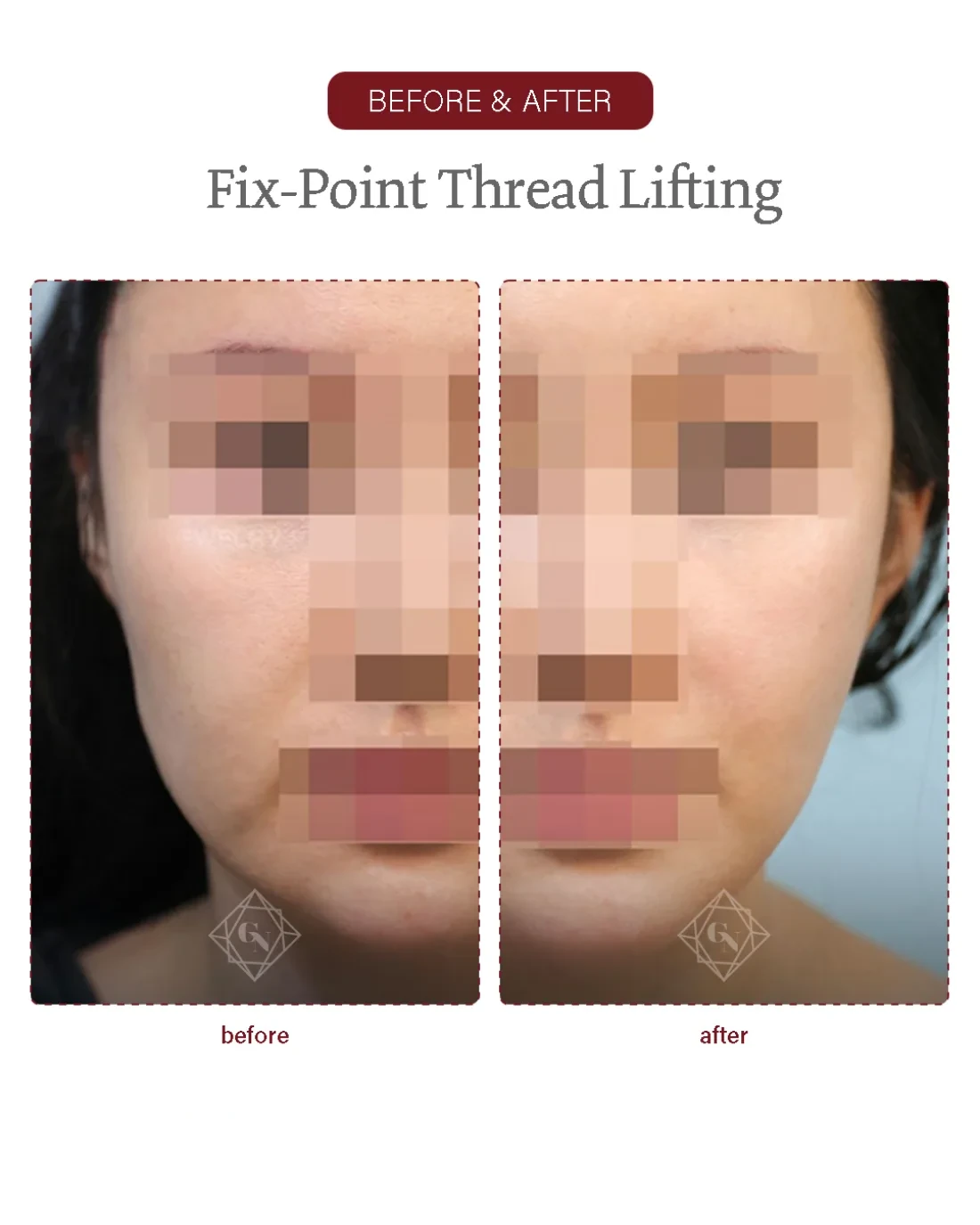
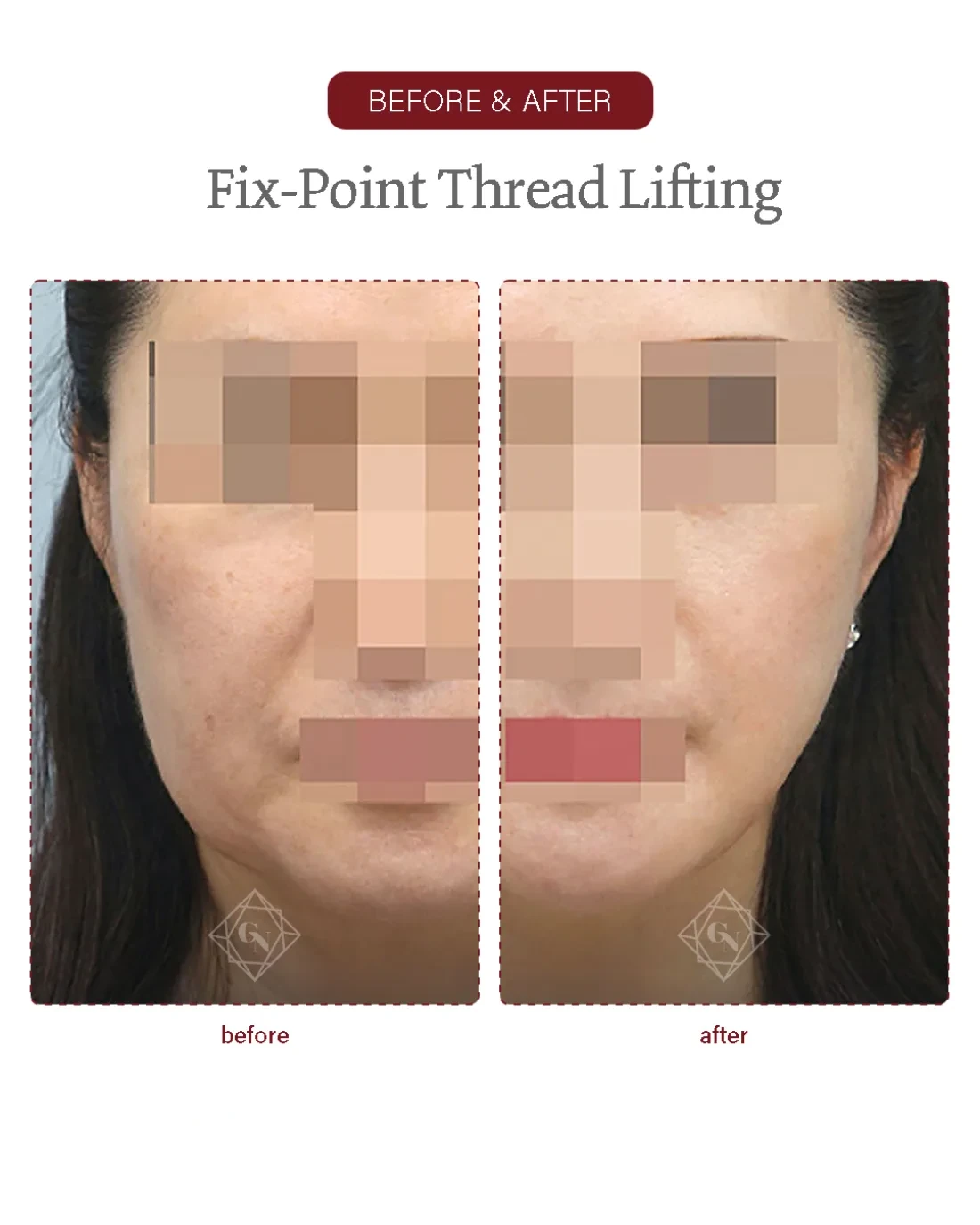
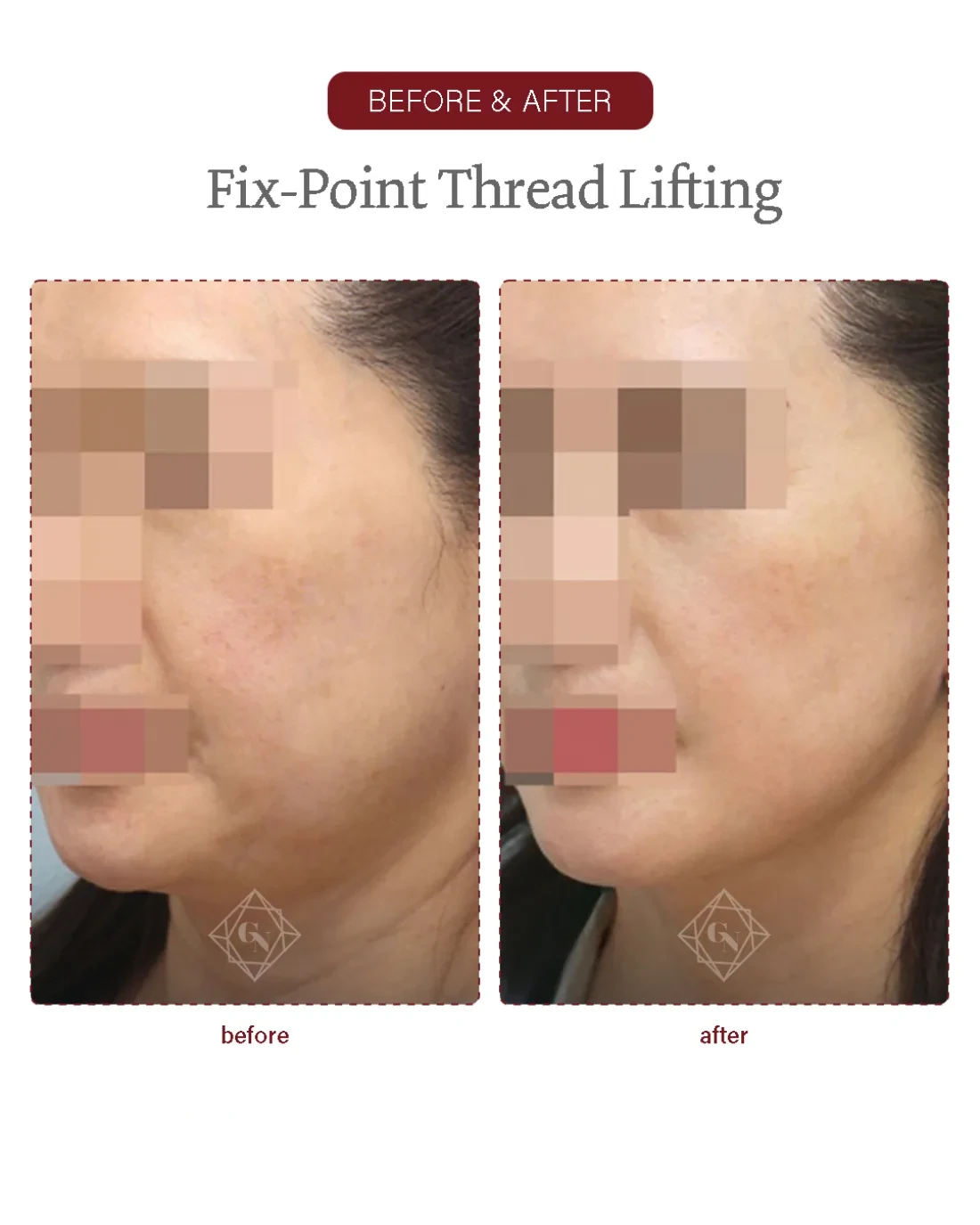
Thread-lift and contouring results of actual Garnet patients (published with consent, with date, procedure and clinic labelled). The lift is temporary and results, recovery and suitability vary by individual and are not guaranteed.
Prices
Price at Garnet
Thread lift
From₩100,000 + VAT per threadExcluding VAT (10% VAT is added at payment)Book now
Same price as Korean patients. Prices shown exclude 10% VAT; your written quote, issued after the in-person consultation, shows the full amount payable.
Dr. In-Soo Baek
Director & sole operating surgeon
Korean medical licence no. 77407
Operate on what you came for. Trained at Korea University Medical Center. Every case planned, performed and reviewed by the same hands.
1Operating surgeon
~2Surgeries per day
7Registered techniques
Board-certified plastic surgeon
Plastic surgery training at Korea University College of Medicine & graduate school
Korean Society of Plastic and Reconstructive Surgeons member, in its facial-contour, eye & rhinoplasty groups
Consults, operates and follows up each case himself
Peer-reviewed papers behind the facts on this page. Each describes findings in its own study group — not results at Garnet — and none predicts your own outcome.
Khoury S et al. The Deep Plane versus SMAS Facelift: A Systematic Review and Meta-Analysis. Aesthetic Plastic Surgery. 2025. doi:10.1007/s00266-025-05118-x
Bray D et al. Male Deep-Plane Face and Neck Lifting. Facial Plastic Surgery Clinics of North America. 2024. doi:10.1016/j.fsc.2024.02.003
Surek CC et al. Deep Plane Anatomy for the Facelift Surgeon. Facial Plastic Surgery Clinics of North America. 2022. doi:10.1016/j.fsc.2022.01.015
FAQ
Common questions
How long does a deep plane facelift last?
A deep plane facelift gives a long-lasting, structural result. Long-term studies following facelift patients for around three decades suggest a median of roughly ten to eleven years before some consider a touch-up, though many never have one. The figure varies between people, and what stays consistent is that you continue to look younger than you would have without the operation.
Is a deep plane facelift permanent?
No facelift is permanent. A deep plane facelift turns the clock back by repositioning descended tissue, but from that younger-looking baseline your face continues to age normally. It gives a durable head start measured in years, and any clinic implying it stops ageing is overselling.
Why does a deep plane facelift last longer than a thread lift?
Because it works on a different layer. A thread lift suspends the skin temporarily and fades within a year or two as threads dissolve and tissue settles. A deep plane facelift releases and repositions the deeper SMAS and cheek pad, correcting the structural cause of descent instead of masking it. A single operation can therefore outlast repeated non-surgical treatments.
What makes one person's result last longer than another's?
Skin quality and elasticity, genetics and bone structure, and lifestyle all matter. Thicker, more elastic skin holds better; sun exposure, smoking and significant weight changes accelerate ageing of the skin and can shorten the apparent longevity. Protecting your skin and keeping your weight stable genuinely help the result last.
When might I need a deep plane facelift redone?
Many people never need it redone; others choose a smaller refining procedure years later as the face naturally softens again, often first in the neck and lower face. There is no fixed timetable — it depends on your individual ageing, skin and where you started. A revision is a choice you make later, if at all.
Will I keep looking younger as I age after a facelift?
Yes, in the sense that matters. You will continue to age, but you will look younger than you would have without the operation. The fair comparison is your face against where it would otherwise have been, and on that comparison the benefit lasts for years.
Does the surgeon's technique affect how long it lasts?
Yes. The lift's durability depends on how cleanly the deep SMAS layer is released and repositioned, and on re-draping the skin without tension. A meticulously executed deep-plane and dual-plane lift by an experienced board-certified surgeon is more likely to give a long-lasting, natural result than a hurried or superficial one.
Can I do anything to make my facelift last longer?
Yes. Protect your skin from the sun, avoid smoking, keep your weight stable, and follow a sensible skin-care routine. These do not change the structural lift underneath, but they slow ageing of the skin envelope, which is what most affects how long the result keeps looking fresh.
How can I get a realistic estimate for my own face?
Through an online consultation from abroad you can send photos and describe your concerns, and the surgeon can give a realistic view of how durable a lift is likely to be for your skin and degree of descent — before you commit to any travel. A realistic, individual estimate is more useful than a single quoted number.
My mom recently had a brow lift and lower blepharoplasty with Dr. Baek, and our experience has been wonderful so far. The Garnet team was incredibly kind and welcoming, with Kelly assisting us as our English consultant—she made everything…
I’m so happy I chose this clinic for my lower blepharoplasty. I was traveling from abroad by myself, so I was a little nervous, but from the beginning I felt comfortable and truly cared for. Everyone was kind, patient, and professional…
Came in for an in-person consult and ended up choosing Garnet and Dr.Baek for my non-incisional DES and tiplasty/alarplasty. I communicated with Kelly (English consultant) from the start till now (3 weeks post-op). She really help me feel…
My under-eyes have been sagging and folding for years... I tried to cover it up with makeup, but it actually got stuck in the wrinkles and made it stand out even more. While going for consultations, I noticed that the bigger the hospital…
Send photos and your question before you travel. An English-speaking coordinator reviews every enquiry and replies with guidance on whether surgery is appropriate, the likely plan and timing.
✓ Reviewed by the clinic coordinator, not a bot
✓ Photo-based pre-assessment before you fly
✓ Foreign-patient scheduling & after-care
✓ One surgeon for consultation, surgery and follow-up
Prefer to chat now? Reach the coordinator directly:









 T S7 months ago



