A deep plane facelift suits someone whose mid-face, jowls and jawline have genuinely descended, so that the deeper SMAS structure needs to be released and repositioned. It is a significant operation, and knowing if you are that person matters far more than the name of the procedure.
The short answer
A strong candidate has true structural descent across the mid-face, jowls and jawline, often with the neck involved. Early or surface-level laxity points elsewhere.
A deep plane facelift releases and repositions the SMAS layer down to the jawline, so it suits people who need a real, lasting structural change.
If sagging is earlier and confined to the lower face, a deep mini facelift or a non-surgical option is usually the better recommendation.
A careful assessment can also conclude that surgery is not the right answer for you, and a good surgeon will say so.
A deep plane facelift is built for a particular stage of facial ageing: the point where the mid-face has dropped, the cheek pad has slid downward, defined jowls have formed and the jawline has lost its line, and often where the neck has begun to descend with the rest. This is structural descent. Surface crepiness is a different problem, and structural descent is the change a deep plane lift is specifically designed to correct.
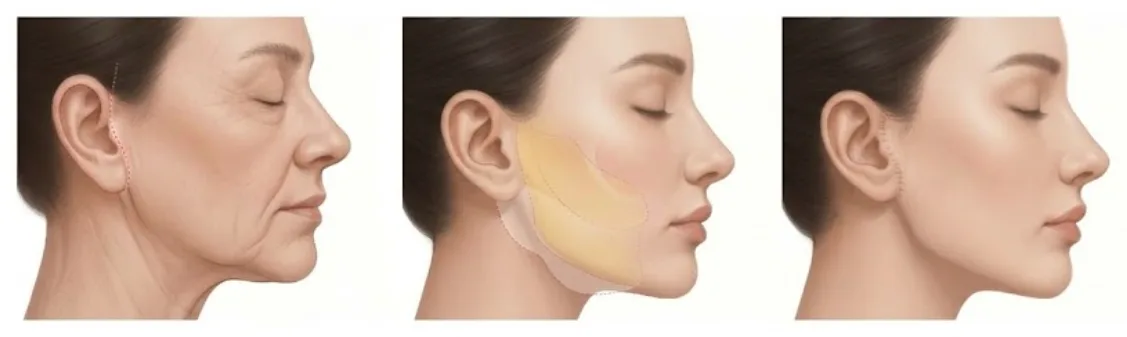
Illustration: the deeper facial layer (SMAS, shown in yellow) is released and repositioned as one unit with the skin, rather than pulling the skin alone.
What makes someone a good candidate is that the deeper layer can be repositioned to good effect. At Garnet the operation releases the SMAS in a deep-plane and dual-plane fashion down to the jawline, lifting the cheek and jowl as a single composite unit without pulling on skin. Because the result rests on repositioned deep tissue, it suits a person who wants a genuine, lasting structural change: someone who looks in the mirror and sees a face that has fallen and needs more than a touch-up.
Reasonable general health and realistic expectations matter as much as anatomy. The ideal candidate is often in their late forties through their sixties with moderate-to-advanced descent, though age is only a guide. Younger patients can occasionally suit it when descent is genuinely advanced, and well-selected older patients do very well. The assessment is individual and made on your face, whatever your birth year.
Signs
Signs a deep plane facelift may suit you
A few patterns tend to point toward this operation. The folds running from the nose to the mouth have deepened, your cheeks look flatter and lower than they used to, the jawline is blurred by jowls, and the neck has started to soften or band. Make-up, fillers and energy-based tightening no longer reach the problem, and lifting the skin upward with your fingers in the mirror reveals the result you are actually looking for. That is a sign the issue is structural.
Just as telling is what you are not chasing. A good candidate wants to look like a fresher, younger version of themselves ("younger, but still yourself") and does not want a different face. A deep plane facelift repositions your own anatomy, so it gives a natural look without a pulled or operated appearance. That is why it tends to suit people who fear looking overdone.
None of these signs is a diagnosis. They are reasons to get a proper opinion. Sometimes a smaller operation, or none yet, fits you better, and that is information worth having before you commit to surgery of this scale. If you are weighing the size of the operation against the size of your problem, our pages on how long a deep plane facelift lasts and the recovery timeline set out what you would be taking on.
vs Mini facelift
Deep plane facelift versus a mini facelift
The difference here is extent; the quality of the technique is the same. A deep mini facelift uses the same deep-plane principle but through a shorter incision, focused on the lower face and jawline, for earlier and more localised sagging. A full deep plane facelift uses a longer incision (from the temporal hairline, in front of and behind the ear) and releases the deep plane across the whole face down to the jawline, frequently combined with neck work, for more advanced or widespread descent.
Illustration: through a shorter incision around the ear (dotted), the deeper layer (yellow) is lifted using the deep-plane principle (Deep mini™).
With these two lifts, the right choice follows where your sagging sits. If your sagging is confined to the lower face and your mid-face and neck are largely unaffected, a mini facelift can give a clean result with a shorter scar and less downtime. But if the mid-face has dropped, the cheek has descended and the neck is involved, a mini lift will under-correct and leave you disappointed. A full deep plane facelift is then the better recommendation, even though it is the larger operation with a longer recovery.
A surgeon who performs both will tell you which one your face needs, even if you asked for the other. The mistake to avoid is choosing the smaller operation purely for the shorter downtime when your anatomy genuinely needs the larger one; that usually means paying for a result that under-delivers and arriving at the same decision again later.
vs Threads
Deep plane facelift versus threads and non-surgical options
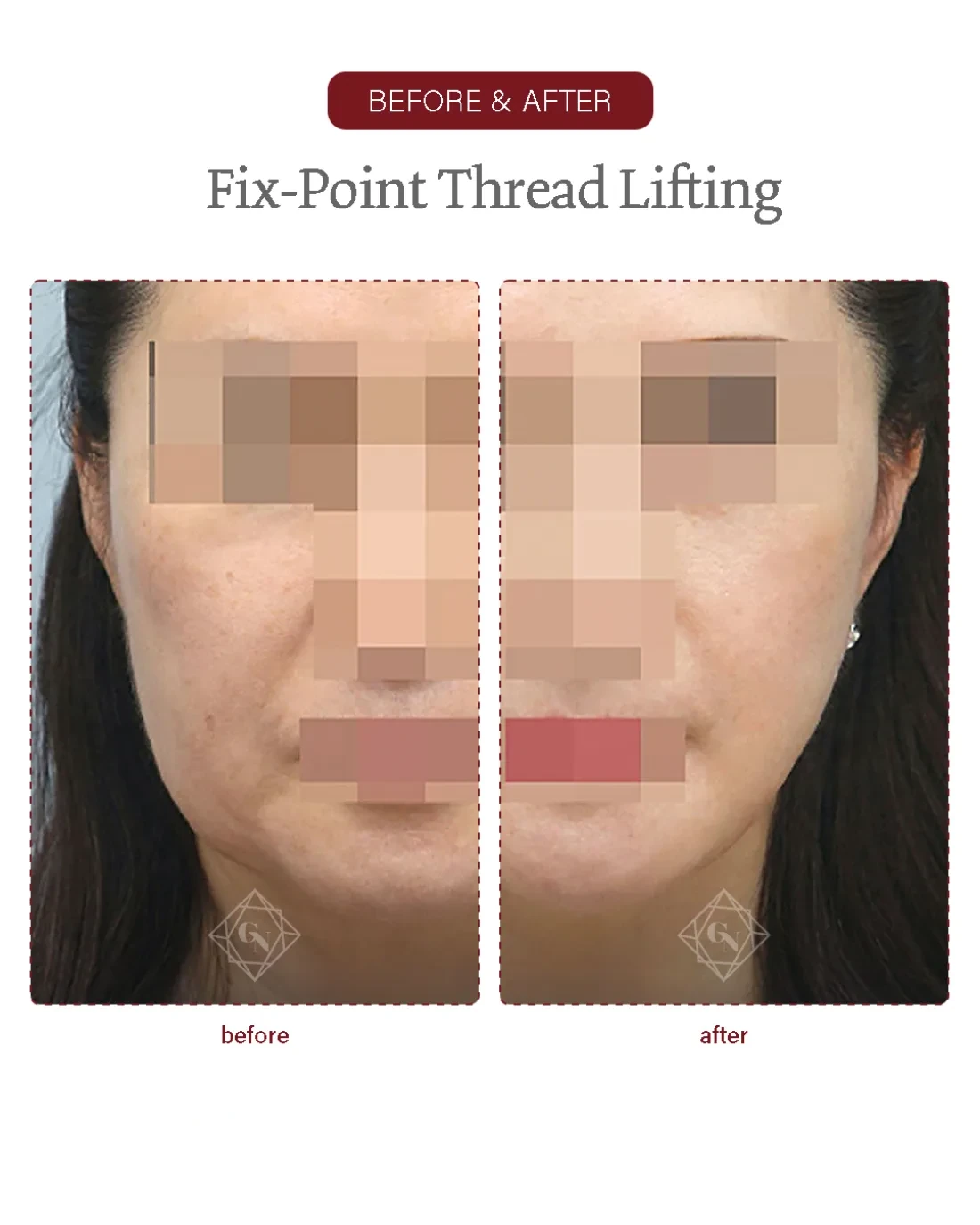
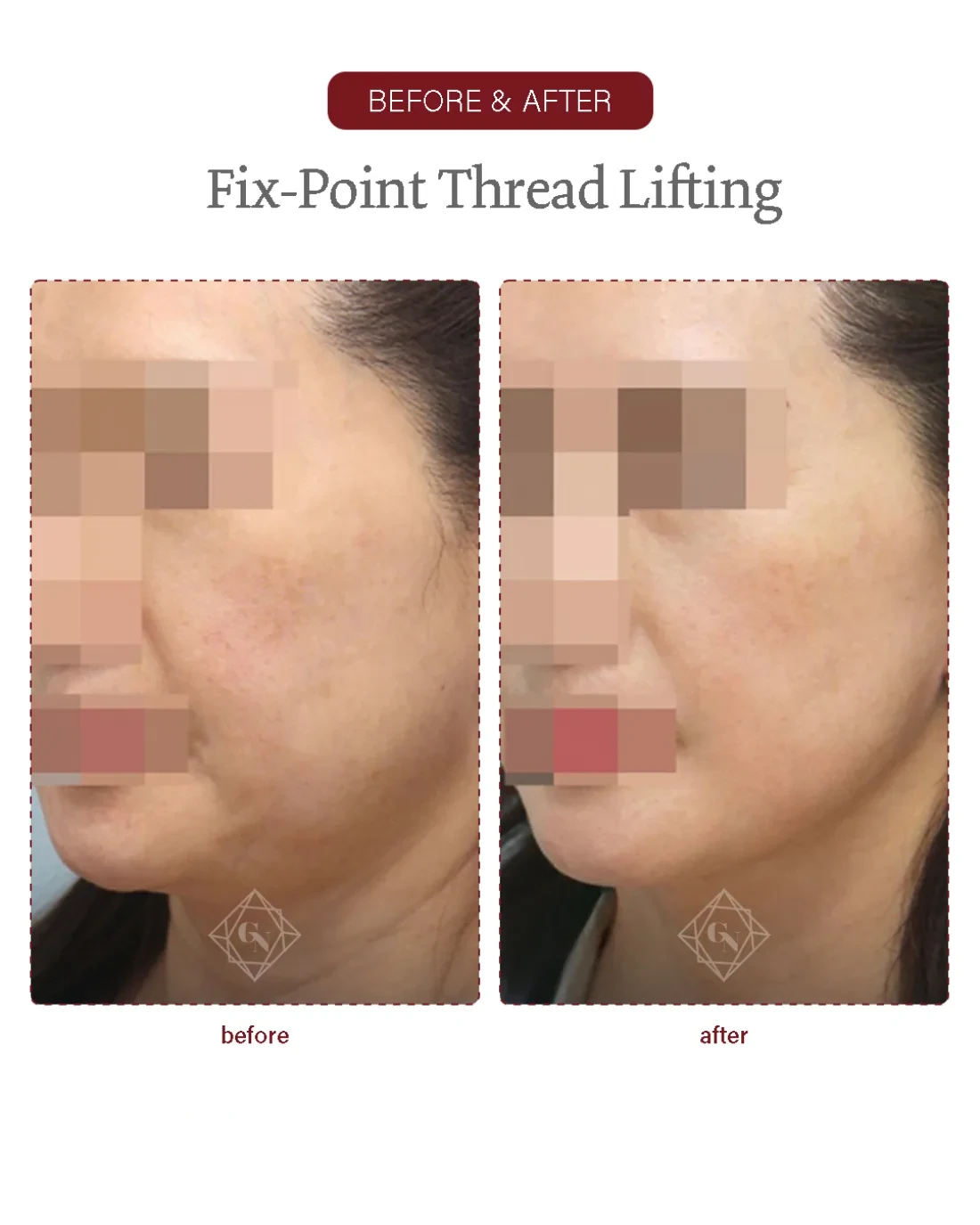
Threads and energy-based devices are often weighed against a facelift, but they do a fundamentally different job. A thread lift places sutures under the skin to create a temporary suspension, and devices tighten the surface; both have little downtime and can suit very early laxity or someone not ready for surgery. Their effect, though, is limited and fades, and they cannot reposition a descended mid-face or a defined jowl.
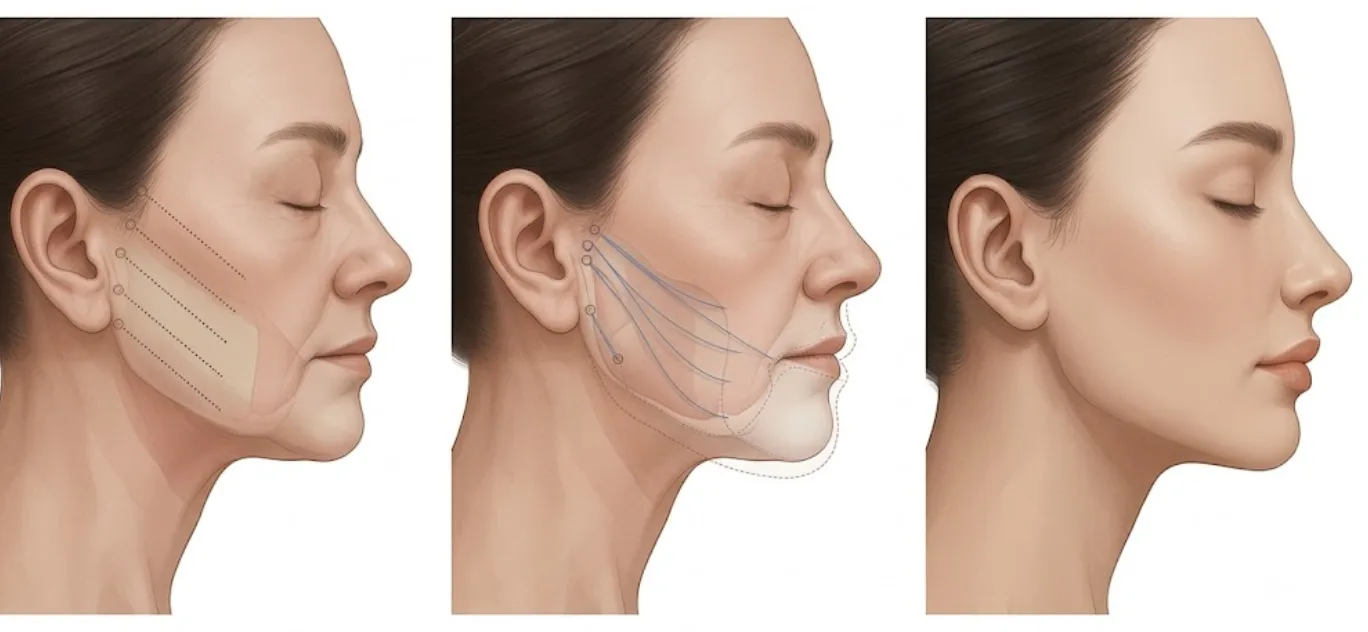
Illustration: barbed threads are placed along the paths shown and anchored at fixed points to lift early laxity of the lower face (Fixpoint Thread Lift™).
A deep plane facelift addresses the layer these options cannot reach. By releasing and repositioning the SMAS, it changes the structure itself. Threads suspend and devices tighten the surface, which is why a deep plane lift gives a far stronger, longer-lasting result for true descent. If your laxity is genuinely early and mild, threads or a device may be enough for now; if you have already tried them and found the benefit too small or too brief, that is often the sign you have outgrown them.
Between threads, devices and a deep plane lift, the degree of sagging is a better guide than downtime alone. Non-surgical options look appealing because they are minor, but choosing them when you actually need structural lifting usually means paying repeatedly for a result that keeps disappearing. A single, well-judged operation would have answered the problem.
When not
When a deep plane facelift is not the right choice
Some faces are a poor match for a full deep plane release. Very early or mild laxity rarely justifies an operation of this size. A deep mini facelift, threads or simply waiting is the better path, and a full deep plane lift would be more surgery than your face needs. The point of the assessment is to match the procedure to the problem, and that sometimes means recommending something smaller, or nothing yet.
General health and expectations matter as much as anatomy. Smoking, uncontrolled blood pressure, certain medical conditions and some medications can affect healing and the safety of the operation; these may need to be managed first or may rule surgery out for a time. And if what you are really seeking is a dramatically different face, no facelift is the right answer. A deep plane lift refreshes your own face, and an expectation of a new one is the thing to address first.
At Garnet, "this is not right for you" is a legitimate outcome of a deep plane facelift assessment. A recommendation against surgery, or for a smaller operation, is a sign the surgeon is matching the procedure to you. That is what you want before something as significant as a deep plane facelift.
At Garnet
How Garnet assesses deep plane facelift candidates
Garnet is a single-surgeon clinic in Apgujeong, Seoul. Dr. In-Soo Baek is a board-certified plastic surgeon (Korean medical licence no. 77407) and the only operating doctor. He examines your mid-face, jowls and neck himself, performs the deep plane facelift himself if it suits you, and reviews every follow-up. The person who judges your candidacy is the person who would operate on you.
The assessment is deliberately unhurried and frank. The clinic caps the day at two surgeries, addresses only the concern you came with, and charges no consultation or CT fee with no pressure to book the same day. There is therefore no incentive to talk you into an operation of this scale if you do not need it. If a mini facelift, a non-surgical option or simply waiting fits you better, that is what you will be told. Garnet is registered with Korea's foreign-patient programme for international visitors, with structured follow-ups at 1, 3 and 6 months.
To find out how much your mid-face and jowls have descended, start with a no-obligation online consultation from abroad. Send photos, describe what is bothering you, and get a clear view of whether a deep plane facelift, a smaller operation or none is right for you before you plan any travel. You can also read how Garnet looks after international facelift patients end to end.
Real Results
Before & After
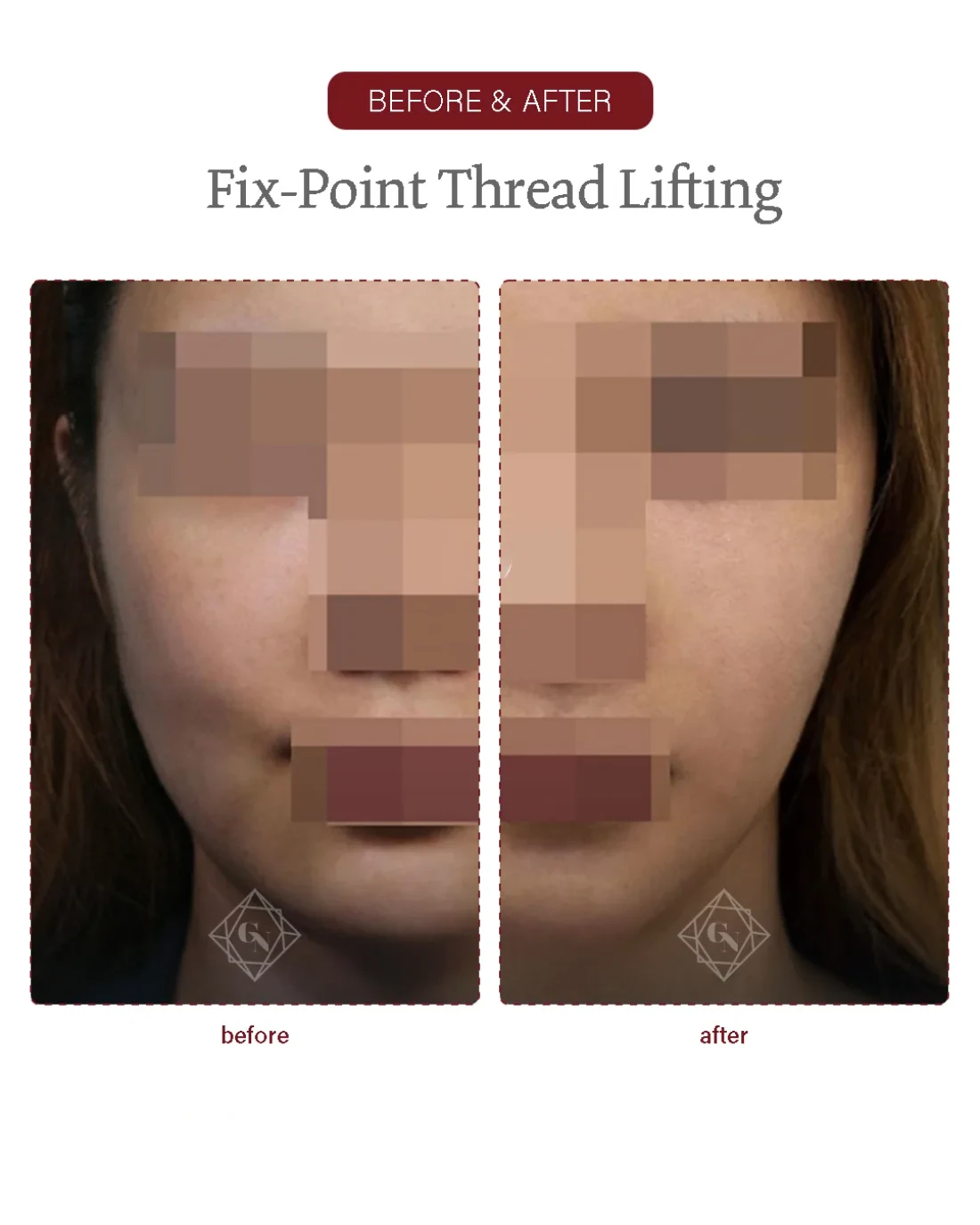
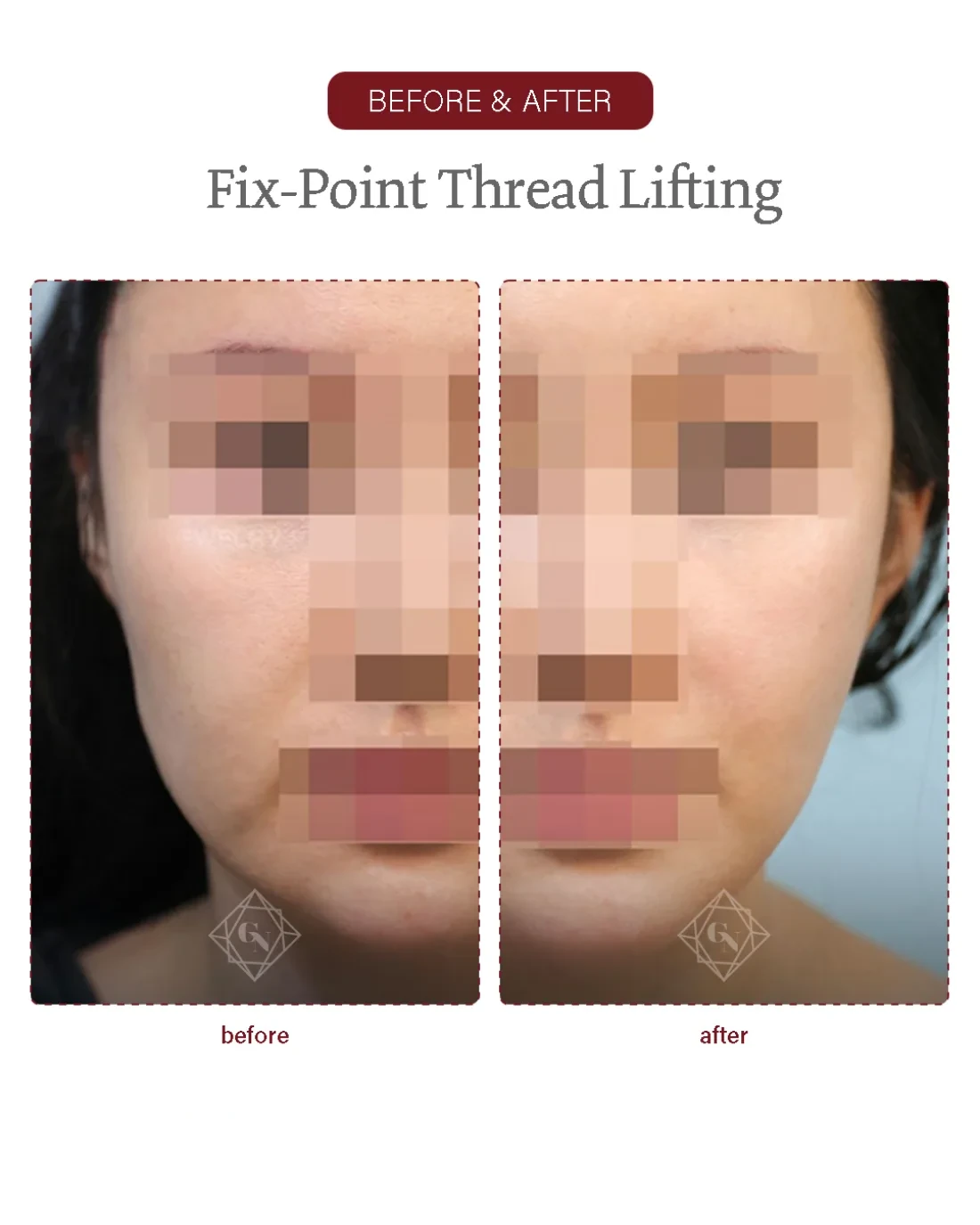
Thread-lift and contouring results of actual Garnet patients (published with consent, with date, procedure and clinic labelled). The lift is temporary and results, recovery and suitability vary by individual and are not guaranteed.
Prices
Price at Garnet
Thread lift
From₩100,000 + VAT per threadExcluding VAT (10% VAT is added at payment)Book now
Same price as Korean patients. Prices shown exclude 10% VAT; your written quote, issued after the in-person consultation, shows the full amount payable.
Dr. In-Soo Baek
Director & sole operating surgeon
Korean medical licence no. 77407
Operate on what you came for. Trained at Korea University Medical Center. Every case planned, performed and reviewed by the same hands.
1Operating surgeon
~2Surgeries per day
7Registered techniques
Board-certified plastic surgeon
Plastic surgery training at Korea University College of Medicine & graduate school
Korean Society of Plastic and Reconstructive Surgeons member, in its facial-contour, eye & rhinoplasty groups
Consults, operates and follows up each case himself
Peer-reviewed papers behind the facts on this page. Each describes findings in its own study group — not results at Garnet — and none predicts your own outcome.
Kamer FM et al. Deep plane rhytidectomy: a personal evolution. Facial Plastic Surgery Clinics of North America. 2005. doi:10.1016/j.fsc.2004.04.011
Becker FF et al. Deep-Plane Face-lift vs Superficial Musculoaponeurotic System Plication Face-lift. Archives of Facial Plastic Surgery. 2004. doi:10.1001/archfaci.6.1.8
Khoury S et al. The Deep Plane versus SMAS Facelift: A Systematic Review and Meta-Analysis. Aesthetic Plastic Surgery. 2025. doi:10.1007/s00266-025-05118-x
FAQ
Common questions
Who is a good candidate for a deep plane facelift?
Typically someone with true structural descent across the mid-face, jowls and jawline, often with the neck involved. They want a genuine, lasting structural lift and accept the larger operation and longer recovery this involves. It often suits people from their late forties through their sixties, though the assessment is individual.
Am I suitable for a deep plane facelift if my sagging is only mild?
Usually not yet. Mild or early laxity is better served by a deep mini facelift, threads or simply waiting, because a full deep plane lift would be more surgery than the problem needs. A deep plane facelift is most worthwhile when there is real descent of the mid-face and jowls to reposition. A careful assessment, including photos in an online consultation, is the way to know.
What's the difference between a deep plane facelift and a mini facelift?
The difference is extent. A deep mini facelift uses the same deep-plane principle through a shorter incision for earlier, localised lower-face sagging. A full deep plane facelift uses a longer incision and releases the deep plane across the whole face to the jawline, often with neck work, for more advanced descent. If the mid-face and neck are involved, the full lift is usually the better choice.
Is a deep plane facelift better than threads or non-surgical tightening?
It does a different job. Threads and energy devices tighten or suspend the surface temporarily and suit very early laxity, but they cannot reposition a descended mid-face or a defined jowl. A deep plane facelift releases and repositions the SMAS, giving a far stronger, longer-lasting result for true descent. The right choice depends on the degree of sagging more than on downtime.
When is a deep plane facelift not recommended?
When laxity is too early or mild to justify an operation of this size, when general health factors such as smoking, uncontrolled blood pressure or certain conditions affect healing and safety, or when the goal is a dramatically different face. In those cases a smaller procedure, medical optimisation first, or no surgery is the better path.
What age is right for a deep plane facelift?
There is no fixed age. Many candidates are from their late forties through their sixties, when descent of the mid-face and jowls is moderate to advanced. But age is only a guide: well-selected younger patients with genuine descent and healthy older patients can both do well. The operation is matched to your anatomy.
Will a deep plane facelift make me look different or pulled?
It is designed to refresh your face. Because it repositions your own deeper tissue as a composite unit without pulling tight on skin, the result tends to look natural: a younger version of yourself. A deep plane lift cannot give you a different face, so raise any hope of a dramatic change before you book.
Does a good surgeon ever advise against a deep plane facelift?
Yes, and that is a good sign. A careful assessment can conclude that a mini facelift, a non-surgical option or waiting suits you better, or that surgery is not right for you at all. At a single-surgeon clinic with no consultation fee and no pressure to book, there is no incentive to recommend an operation of this scale you do not need.
Can I find out if I'm a candidate before flying to Korea?
Yes. Through an online consultation from abroad you can send photos and describe your concerns, and the surgeon can give a clear view of whether a deep plane facelift, a smaller operation or none is right for you, all before you commit to any travel or cost.
My mom recently had a brow lift and lower blepharoplasty with Dr. Baek, and our experience has been wonderful so far. The Garnet team was incredibly kind and welcoming, with Kelly assisting us as our English consultant—she made everything…
I’m so happy I chose this clinic for my lower blepharoplasty. I was traveling from abroad by myself, so I was a little nervous, but from the beginning I felt comfortable and truly cared for. Everyone was kind, patient, and professional…
Came in for an in-person consult and ended up choosing Garnet and Dr.Baek for my non-incisional DES and tiplasty/alarplasty. I communicated with Kelly (English consultant) from the start till now (3 weeks post-op). She really help me feel…
My under-eyes have been sagging and folding for years... I tried to cover it up with makeup, but it actually got stuck in the wrinkles and made it stand out even more. While going for consultations, I noticed that the bigger the hospital…
Not sure whether a deep plane facelift, a mini lift or something simpler fits you? Send photos for a no-obligation pre-assessment before you plan a trip.
Send photos and your question before you travel. An English-speaking coordinator reviews every enquiry and replies with guidance on whether surgery is appropriate, the likely plan and timing.
✓ Reviewed by the clinic coordinator, not a bot
✓ Photo-based pre-assessment before you fly
✓ Foreign-patient scheduling & after-care
✓ One surgeon for consultation, surgery and follow-up
Prefer to chat now? Reach the coordinator directly:








 T S7 months ago



