Under-eye “bags” usually come down to one of two situations: fat that bulges forward and needs repositioning, or that same fat combined with loose skin and a tired lower lid that needs a proper lift. Those two situations are corrected by two different operations, through two different incisions, with two different recoveries. This page explains what causes eye bags, which Garnet procedure suits which case, and how a consultation decides between them.
The short answer
Eye bags are not all the same: some are bulging fat with good skin, others are bulging fat plus loose skin and a hollow tear-trough.
Bulging fat with good skin is often addressed by under-eye fat repositioning through a scarless inside-the-lid incision; fat plus loose skin usually needs a lower blepharoplasty.
The incision, and whether there is any visible scar, depends on which procedure you need. That is a clinical assessment of the lower lid; a photo alone cannot settle it.
At Garnet the same board-certified surgeon assesses your skin and fat and chooses the approach, aiming for a smoother, rested lower lid that does not look hollowed.
The puffiness under the eyes is usually the fat pads that cushion the eyeball pushing forward as the thin membrane that once held them back weakens with age. When that fat bulges, it casts a shadow and, together with the groove of the tear trough just below it, creates the classic “bag and dark circle” look. In younger patients, or those with good skin quality, the skin over the area is still firm, and the problem is essentially the position of the fat.
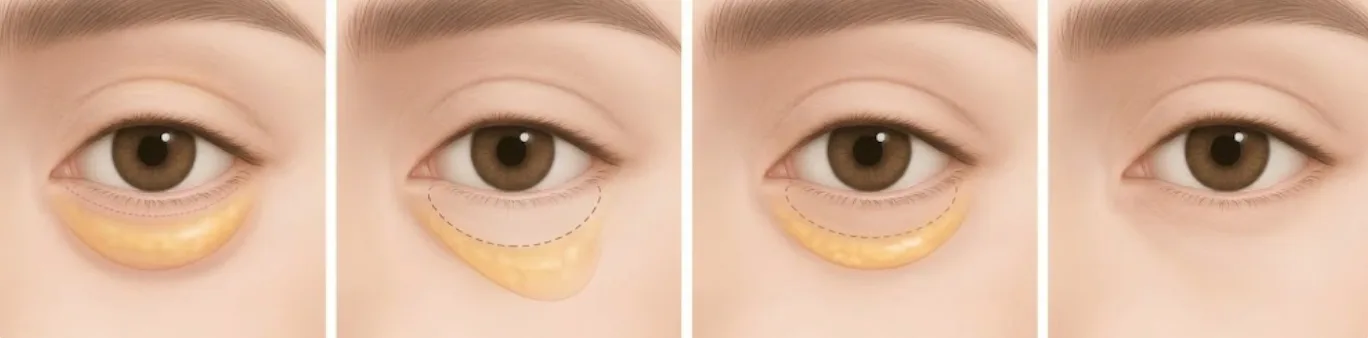
Illustration: working from inside the lower lid, the under-eye fat (yellow) is moved down into the hollow instead of being removed; the dashed line shows where it sat.
In other people the story is different: the fat bulges and the lower-lid skin has become lax and crepey, the muscle has loosened, and the whole lower lid looks tired. Here it is not enough to deal with the fat alone, because leaving loose skin behind would still look aged. This is why eye-bag surgery is not one operation: the right procedure depends on whether the skin is still good or has loosened.
The two routes that follow, under-eye fat repositioning for bulging fat with good skin and lower blepharoplasty for fat plus loose skin, address these two situations differently, and understanding them makes a consultation much easier to follow.
Fat repositioning
When under-eye fat repositioning fits
If the bulge is mostly forward-sitting fat and your lower-lid skin is still firm, the elegant option is often under-eye fat repositioning. Simply removing the fat can leave the area looking hollow later. Here the herniated fat is moved down over the orbital rim and fixed in place, so it fills the tear-trough groove instead of bulging above it. The result aims to be a smoother transition from lid to cheek.
What makes this appealing to many patients is the approach: at Garnet it is performed transconjunctivally, through an incision on the inside of the lower lid, so there is no external skin cut, no external suture to remove, and minimal downtime. Because the fat is repositioned and kept, it also tends to avoid the sunken look that pure fat removal can cause years down the line.
The catch is that it does nothing for loose skin. If your lower-lid skin has already become lax and wrinkled, an inside-the-lid fat procedure alone will not tighten it. That is where the second route comes in.
When you need a lift
When the lower lid needs a proper lift
When the bags come with loose, crepey skin and a lax lower lid, repositioning fat is only part of the answer, because the skin and support need addressing too. The operation for this is lower blepharoplasty, which at Garnet is a four-step lift performed through an external incision just under the lash line: the fat is repositioned, the deeper mid-face fat (the SOOF) is lifted, the muscle is re-suspended, and the excess skin is redraped and trimmed.
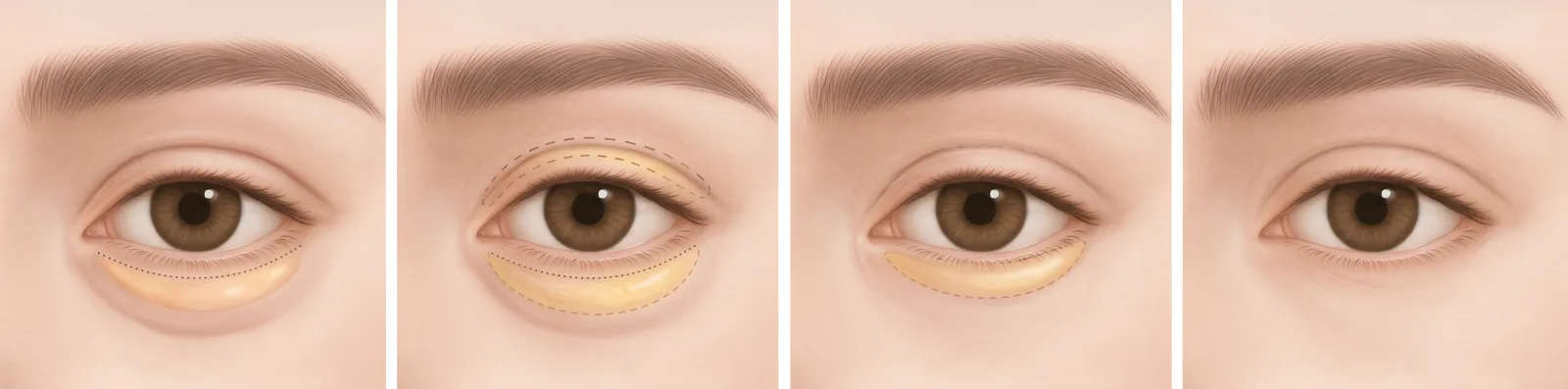
Illustration: through a fine line just below the lashes, the under-eye fat (yellow) is repositioned over the bony rim to fill the groove rather than removed.
That multi-layer approach is why it suits older or more advanced cases: besides flattening a bulge, it re-tightens and re-supports the whole lower lid. Because it uses an external incision, sutures are removed at around seven days, and the incision is placed close under the lashes so the line has the best chance to settle discreetly.
Choose between a scarless fat procedure and a full lift by what your lid actually needs; how gentle each sounds is a poor guide. Doing the smaller procedure when the skin needs a lift leaves a tired result; doing the bigger one when a simple fat reposition would do is more than necessary. That trade-off is exactly what an assessment resolves.
Scar question
Will eye-bag removal leave a scar?
This is one of the first questions patients ask, and the answer depends entirely on which procedure you need. Under-eye fat repositioning is done through the inside of the lid (transconjunctival), so there is no external skin incision and therefore no external scar. That is one of its main attractions for younger patients with good skin.
Lower blepharoplasty, because it also has to remove and redrape skin, does use an external incision just beneath the lash line. That does leave a fine external line, but it is placed right under the lashes, and once healed it is designed to settle into the natural lid margin where it is difficult to notice. Sutures come out at around seven days.
So the scarless option exists, but only for the right candidate. If your lower-lid skin needs tightening, an external incision under the lashes is part of the trade for a properly lifted lid. An examination of your own lids shows which situation you are in, and the scar question is answered from that.
How it is decided
How the right approach is chosen
The deciding factor is the quality of your lower-lid skin and the degree of laxity, alongside how much fat is bulging and how deep the tear trough is. A pinch and stretch of the lower-lid skin, and watching how it recoils, tells a surgeon whether the skin will do well with a scarless fat reposition or whether it genuinely needs the support of a lift. This is a hands-on assessment; it is not something you or anyone else can settle from a selfie.
It is also why a careful consultation matters. Some patients arrive expecting the biggest operation and are told a simple fat repositioning is enough; others hoped for the scarless route but have skin that would look better after a lower blepharoplasty. A surgeon who tells you the smaller option is enough, or that you may not need surgery yet, is giving you useful information.
The aim in either case is the same: a smoother, rested lower lid that does not look hollowed out. Over-aggressive fat removal is a common cause of that hollow, aged look years later, which is one reason repositioning fat is often preferred to simply excising it.
At Garnet
How Garnet approaches eye bags
Garnet is a single-surgeon clinic in Apgujeong, Seoul. Dr. In-Soo Baek is a board-certified plastic surgeon (Korean medical licence no. 77407) who assesses the fat, the tear trough and the quality of your lower-lid skin, then recommends either a scarless fat reposition or a four-step lower-lid lift depending on what the anatomy needs. The same surgeon performs the operation and reviews you at follow-up, so the assessment and the surgery stay consistent.
With the schedule capped at two surgeries a day, the consultation is unhurried, and the aim is a natural, rested lower lid that is not over-hollowed. Garnet is registered with Korea's foreign-patient programme, so you can begin with an online consultation: send photos, describe how your bags change through the day, and hear whether repositioning or a lift is likely to suit you before you plan any travel.
Real Results
Before & After
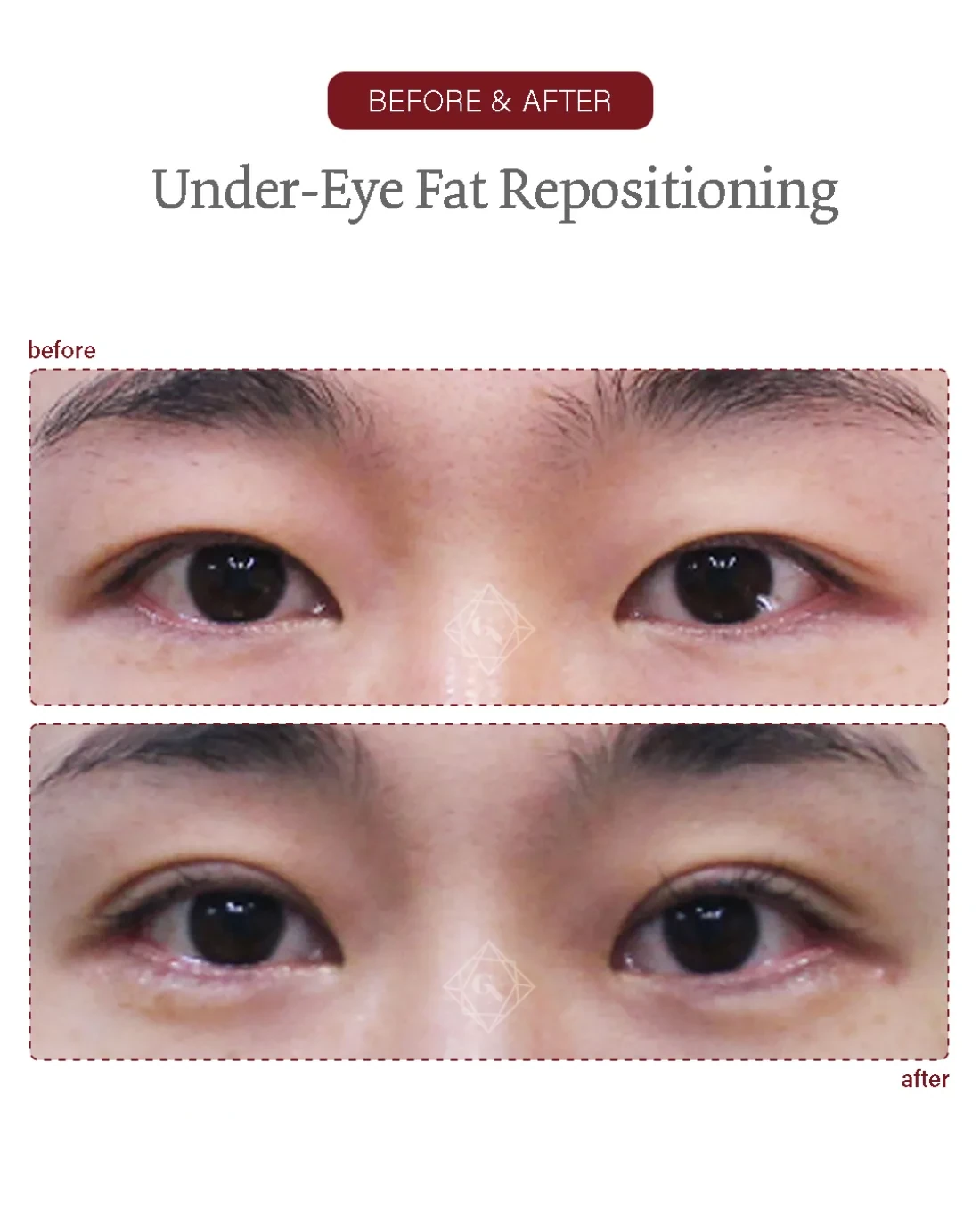
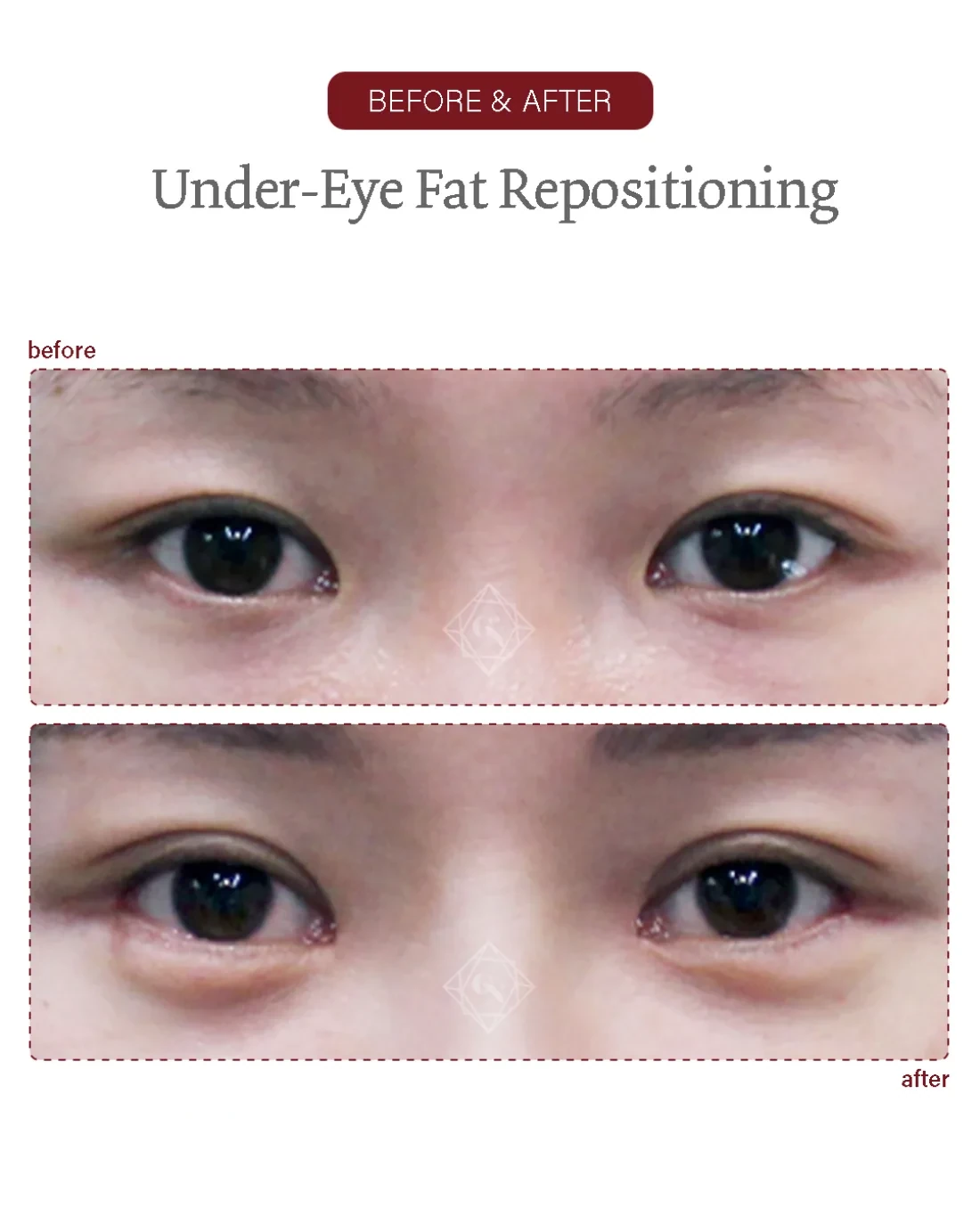
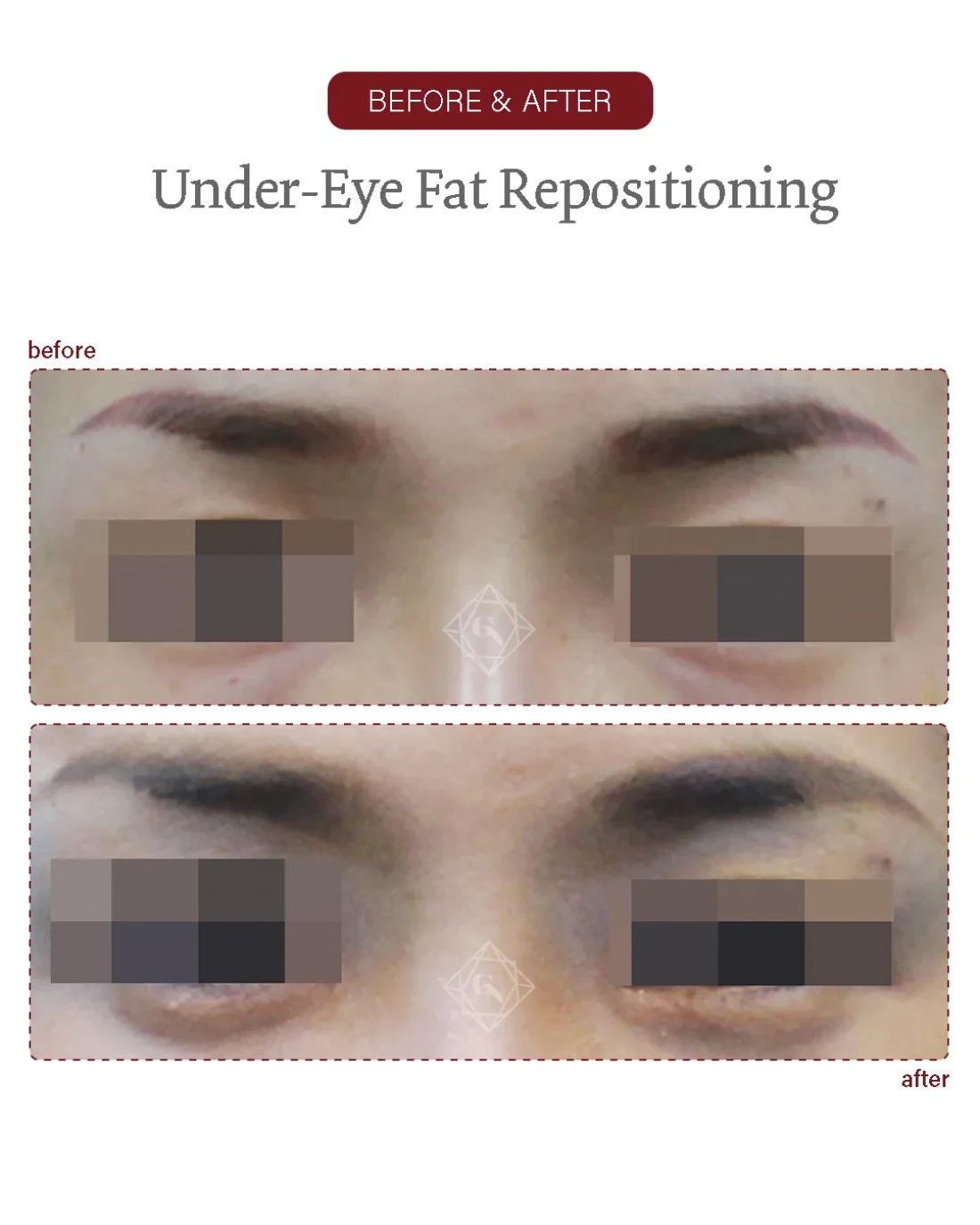
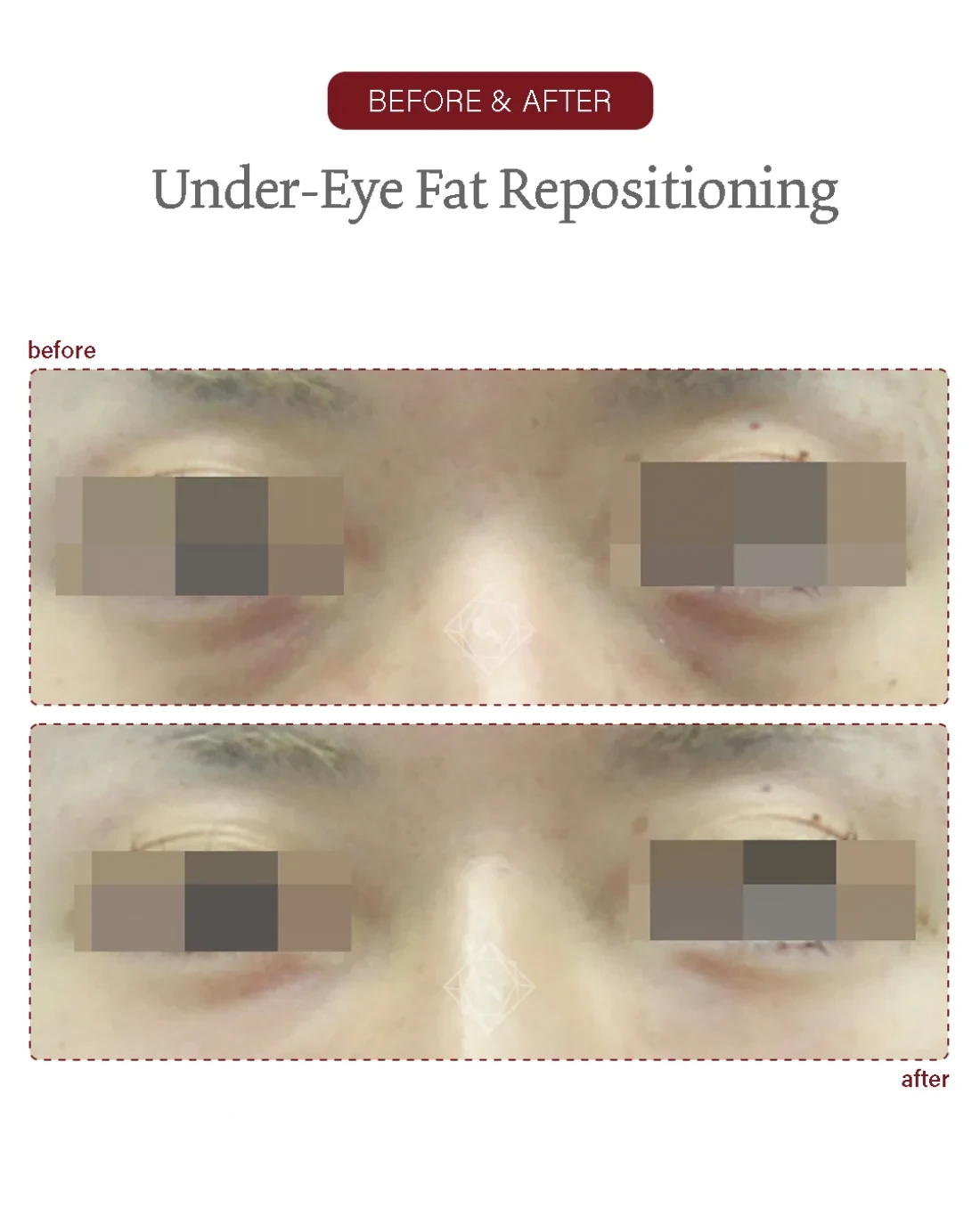
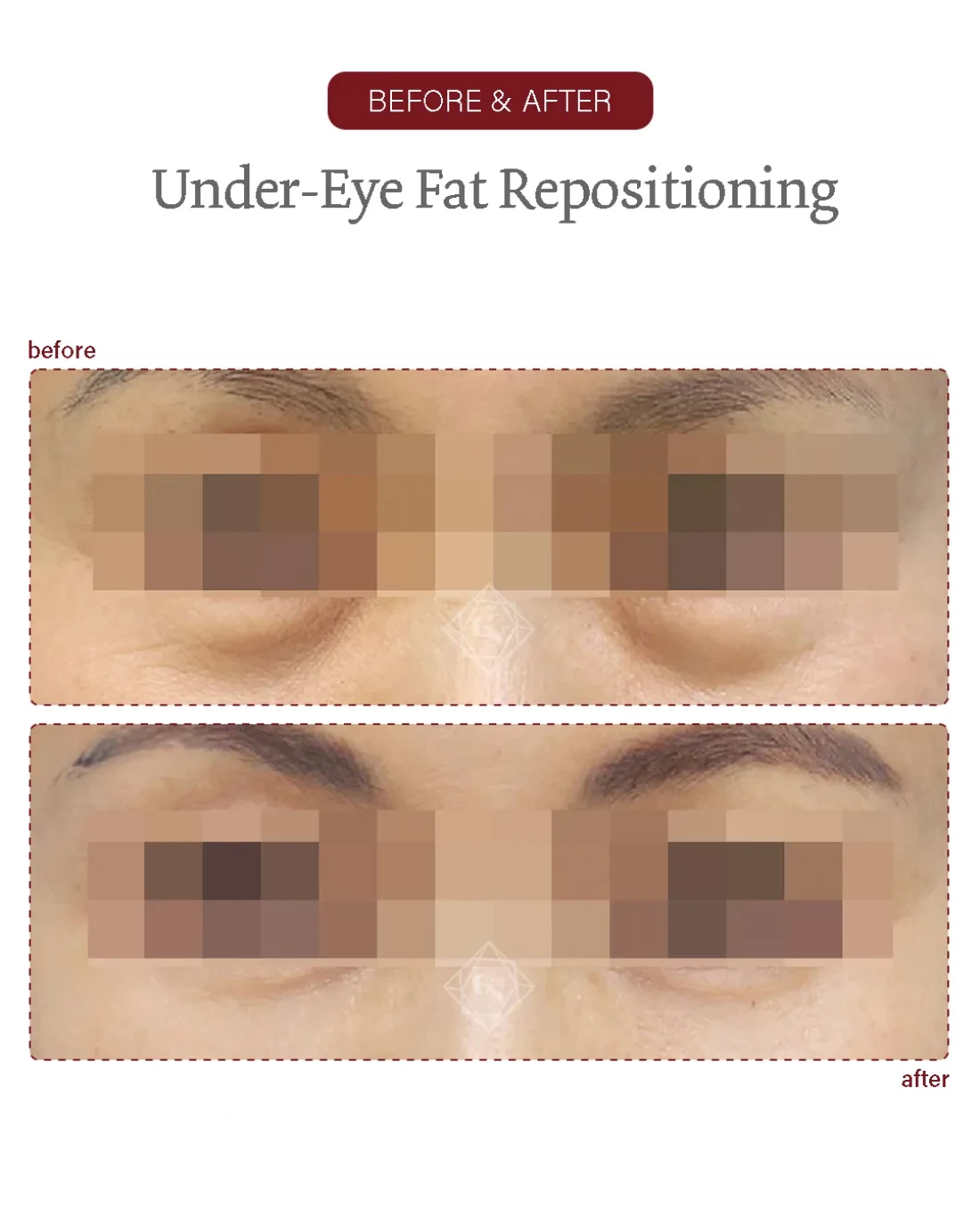
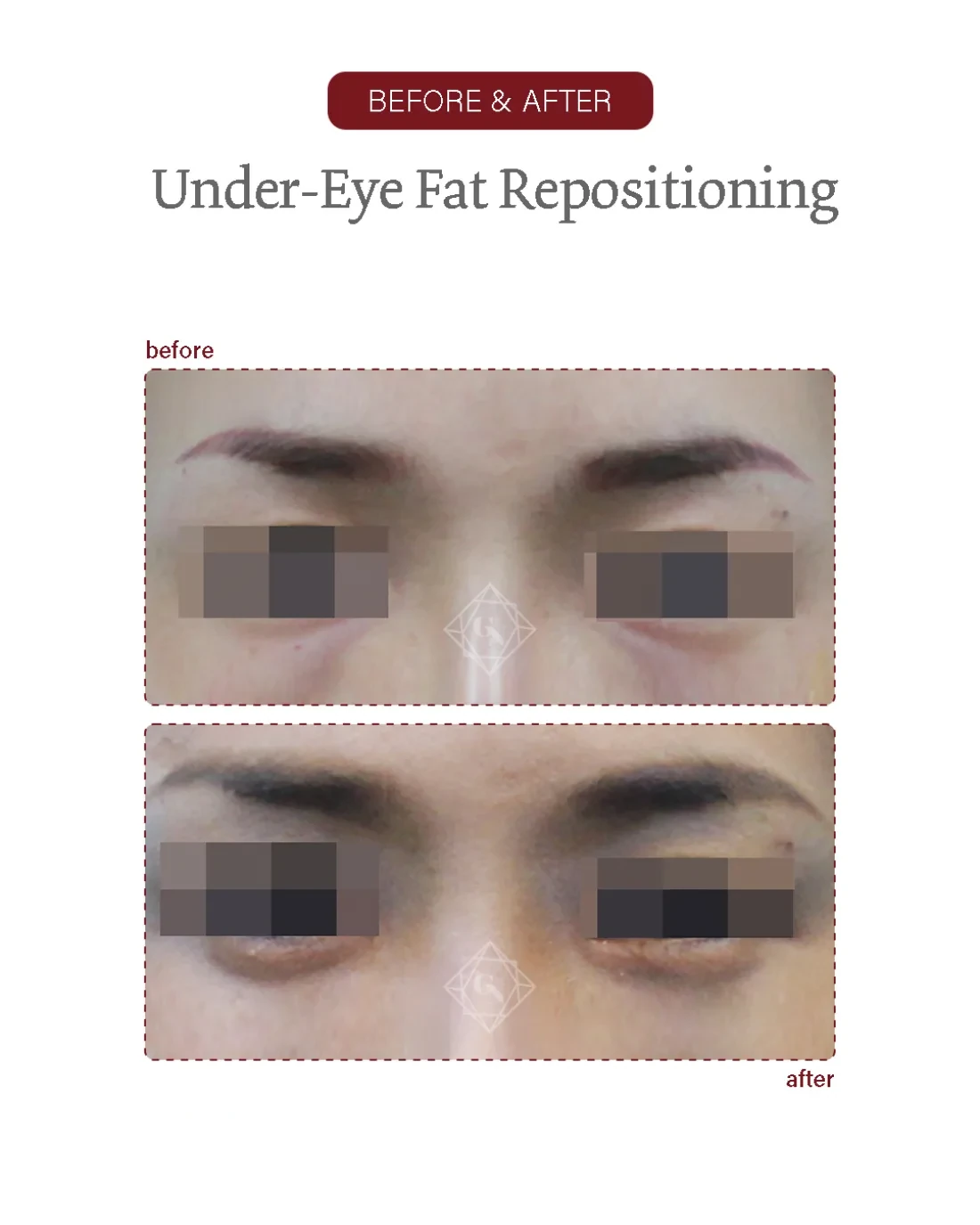
Under-eye fat repositioning before/after of actual Garnet patients (published with consent; each set labelled with date, procedure and clinic). Photographed under comparable conditions. Results, recovery and suitability vary by individual and are not guaranteed.
Prices
Price at Garnet
Under-eye fat repositioning
From₩2,500,000 + VATExcluding VAT (10% VAT is added at payment)Book now
Same price as Korean patients. Prices shown exclude 10% VAT; your written quote, issued after the in-person consultation, shows the full amount payable.
Dr. In-Soo Baek
Director & sole operating surgeon
Korean medical licence no. 77407
Operate on what you came for. Trained at Korea University Medical Center. Every case planned, performed and reviewed by the same hands.
1Operating surgeon
~2Surgeries per day
7Registered techniques
Board-certified plastic surgeon
Plastic surgery training at Korea University College of Medicine & graduate school
Korean Society of Plastic and Reconstructive Surgeons member, in its facial-contour, eye & rhinoplasty groups
Consults, operates and follows up each case himself
Peer-reviewed papers behind the facts on this page. Each describes findings in its own study group — not results at Garnet — and none predicts your own outcome.
Tarabishy S et al. Lower Lid Blepharoplasty, Selecting Your Approach. Clinics in Plastic Surgery. 2025. doi:10.1016/j.cps.2024.08.003
Warren RJ. Blending the Lower Lid Cheek Junction. Clinics in Plastic Surgery. 2025. doi:10.1016/j.cps.2024.07.004
Chen CF et al. Carbon Dioxide Laser Transconjunctival Lower Blepharoplasty: An Objective and Quantitative Comparison to Monopolar Electrosurgery. Plastic & Reconstructive Surgery. 2023. doi:10.1097/prs.0000000000010255
Sarhaddi D et al. Transconjunctival Lower Lid Blepharoplasty with and Without Fat Preservation and Skin Resurfacing. Facial Plastic Surgery Clinics of North America. 2021. doi:10.1016/j.fsc.2021.01.004
FAQ
Common questions
How are eye bags removed in Korea?
By one of two operations depending on the cause. When the bulge is fat with firm skin, under-eye fat repositioning moves the fat over the orbital rim through a scarless inside-the-lid incision. When there is fat plus loose skin, a lower blepharoplasty lifts and re-supports the whole lower lid through an external incision under the lashes. A consultation confirms which you need.
Is it fat repositioning or lower blepharoplasty that I need?
It depends on your lower-lid skin. If the skin is still firm and the issue is bulging fat, fat repositioning is often enough. If the skin has become lax and crepey along with the fat, a lower blepharoplasty is usually needed to tighten and re-support it. Only a hands-on assessment of the skin can decide between them.
Does eye bag removal leave a scar?
Under-eye fat repositioning is done through the inside of the lid, so it leaves no external scar. Lower blepharoplasty uses a fine incision just beneath the lash line, which does leave an external line, but it is placed under the lashes where it settles discreetly once healed. Which applies depends on which procedure you need.
Will removing the fat make my under-eyes look hollow?
Simply removing large amounts of fat can leave the area looking sunken over time. That is why repositioning the fat, moving it to fill the tear trough so none is discarded, is often preferred. The goal is a smooth lid-to-cheek transition without a hollow. Your surgeon plans this to avoid over-removal.
Can eye bags be treated without surgery?
Mild puffiness may respond to non-surgical measures, and a surgeon may tell you plainly that surgery is not yet warranted. But once the fat has herniated forward or the lower-lid skin has loosened, those are structural changes that creams and devices do not reverse. An assessment tells you whether you have reached that point.
How long is recovery after eye-bag surgery?
Under-eye fat repositioning has minimal downtime with no external suture removal. Lower blepharoplasty has sutures removed at around seven days, with visible bruising and swelling easing over roughly two to three weeks and fine settling over a few months. Your surgeon gives a timeline for the exact procedure you have.
Are eye bags the same as dark circles?
Not exactly, though they overlap. A bulging fat pad casts a shadow that reads as a dark circle, and a deep tear trough adds to it, so repositioning fat can lighten that shadowing. But pigment-based dark circles are a separate issue that surgery does not treat. A consultation separates what is structural from what is pigment.
Can I get an assessment before flying to Korea?
Yes. Garnet is registered with Korea's foreign-patient programme and offers an online consultation: send photos, describe how your bags look and change through the day, and hear whether fat repositioning or a lift is likely to suit you before you plan travel.
Will the same surgeon who assesses me do the operation?
Yes. Garnet is a single-surgeon clinic, so the board-certified surgeon who examines your lower lids and decides the approach is the one who performs the surgery and reviews you afterwards. That continuity keeps the plan and the operation aligned.
Is eye-bag surgery permanent?
It gives a lasting improvement, but it does not stop ageing. Repositioned fat and a lifted lower lid hold well, yet the tissues continue to age gently over the years. A consultation sets a realistic expectation for how long your particular result should last.
My mom recently had a brow lift and lower blepharoplasty with Dr. Baek, and our experience has been wonderful so far. The Garnet team was incredibly kind and welcoming, with Kelly assisting us as our English consultant—she made everything…
I’m so happy I chose this clinic for my lower blepharoplasty. I was traveling from abroad by myself, so I was a little nervous, but from the beginning I felt comfortable and truly cared for. Everyone was kind, patient, and professional…
Came in for an in-person consult and ended up choosing Garnet and Dr.Baek for my non-incisional DES and tiplasty/alarplasty. I communicated with Kelly (English consultant) from the start till now (3 weeks post-op). She really help me feel…
My under-eyes have been sagging and folding for years... I tried to cover it up with makeup, but it actually got stuck in the wrinkles and made it stand out even more. While going for consultations, I noticed that the bigger the hospital…
Send photos and your question before you travel. An English-speaking coordinator reviews every enquiry and replies with guidance on whether surgery is appropriate, the likely plan and timing.
✓ Reviewed by the clinic coordinator, not a bot
✓ Photo-based pre-assessment before you fly
✓ Foreign-patient scheduling & after-care
✓ One surgeon for consultation, surgery and follow-up
Prefer to chat now? Reach the coordinator directly:








 T S7 months ago



