Facial liposuction removes fat cells from under the chin, along the jawline or in the cheeks, and those cells do not grow back, so the change is lasting. Your face is still subject to weight change and ageing, which can affect how the result looks over time. This page explains both halves of that answer plainly, so you know what to expect for the long term.
The short answer
Fat cells removed during liposuction do not regenerate. In that sense the result is permanent.
Significant weight gain can still enlarge the fat cells that remain, softening the contour even though the treated cells are gone.
Ageing continues regardless: skin laxity over the years can change how a refined jawline or neck looks, independent of the fat.
A stable weight and good skin care protect your result the most, and your surgeon sets realistic expectations before surgery.
The answer has two parts. The fat that is removed during facial liposuction is gone for good: the fat cells are physically extracted and do not grow back. In that important sense, the change to your contour is permanent and most patients keep the improvement for many years.
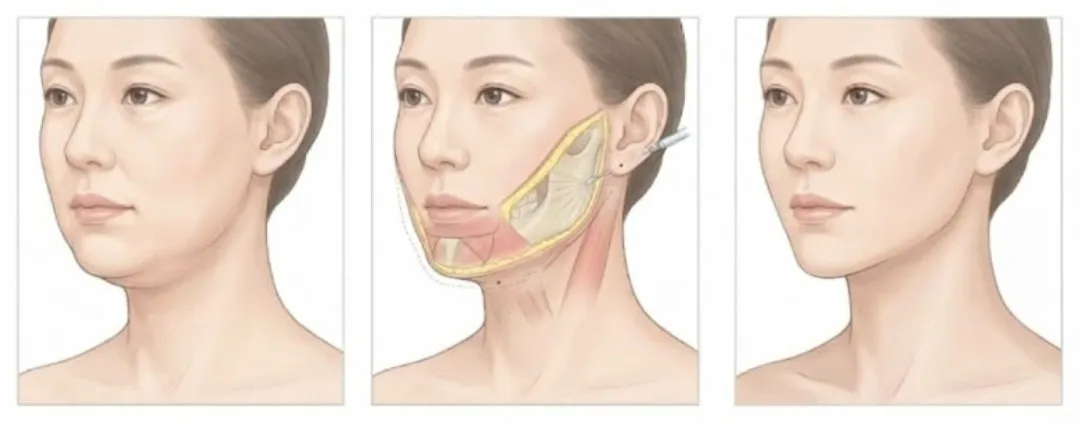
Illustration: excess fat along the jawline, cheeks and neck (outlined) is removed through tiny hidden openings for a sharper contour.
The qualification is that your face does not stop living afterwards. Your weight can change, and you continue to age, and both of those affect how the result looks over time. So it is more accurate to say that liposuction makes a lasting change to one factor, the amount of fat in the treated area, while other factors keep moving. Understanding that distinction is the key to having realistic expectations and being satisfied for the long term.
We would be cautious of anyone who promises a result that never changes. No facial procedure freezes a face in time. What facial liposuction does is remove a fat deposit durably. It cannot stop the rest of ageing, and Dr. Baek says so before you commit.
Why it lasts
Why the removed fat doesn't come back
Adults have a largely fixed number of fat cells. Liposuction works by removing a portion of the cells in a specific area (under the chin, along the jawline, in the cheeks or neck), so that the deposit physically shrinks. Because those particular cells are gone, the area cannot return to its previous fullness in the same way, even if you put on some weight.
This is what makes facial liposuction a durable contouring procedure. Unlike treatments that need topping up, the structural change (fewer fat cells in the treated zone) is permanent. It is one of the reasons patients choose surgical contouring over non-surgical alternatives when they want a lasting refinement of the jawline or neck.
What remains is a smaller population of fat cells in the treated area. Those cells are still capable of enlarging if you gain significant weight, which is the part of the picture covered next. The baseline, though, has been durably reduced.
Weight gain
How weight gain affects your result
Removing fat cells does not stop the ones that remain from getting bigger. If you gain a meaningful amount of weight after surgery, the fat cells left in the treated area, and elsewhere in the face, can enlarge and soften the contour you achieved. The result does not disappear, because there are far fewer cells than before, but it can become less defined than it was just after recovery.
This is why a stable weight is the single most useful thing you can do to protect a facial liposuction result. It is also why surgeons assess weight stability beforehand: operating when someone is above their natural stable weight can give a result that shifts once the weight changes. The most predictable, long-lasting outcomes come when your weight is steady before and after.
Major weight loss after surgery has its own effect: it can reduce remaining fat further but may also reveal skin laxity, depending on your skin quality. The steadier your weight, the more reliably your contour holds, which links closely to who is a good candidate in the first place.
Ageing
Ageing, skin laxity and your long-term result
Even with a stable weight, your face continues to age. Over the years skin gradually loses elasticity and the deeper tissues descend, which can soften a jawline or relax the neck regardless of how much fat was removed. This is a normal, gradual process and not a failure of the surgery. It does mean the look you have a year after liposuction is not necessarily the look you will have in a decade.
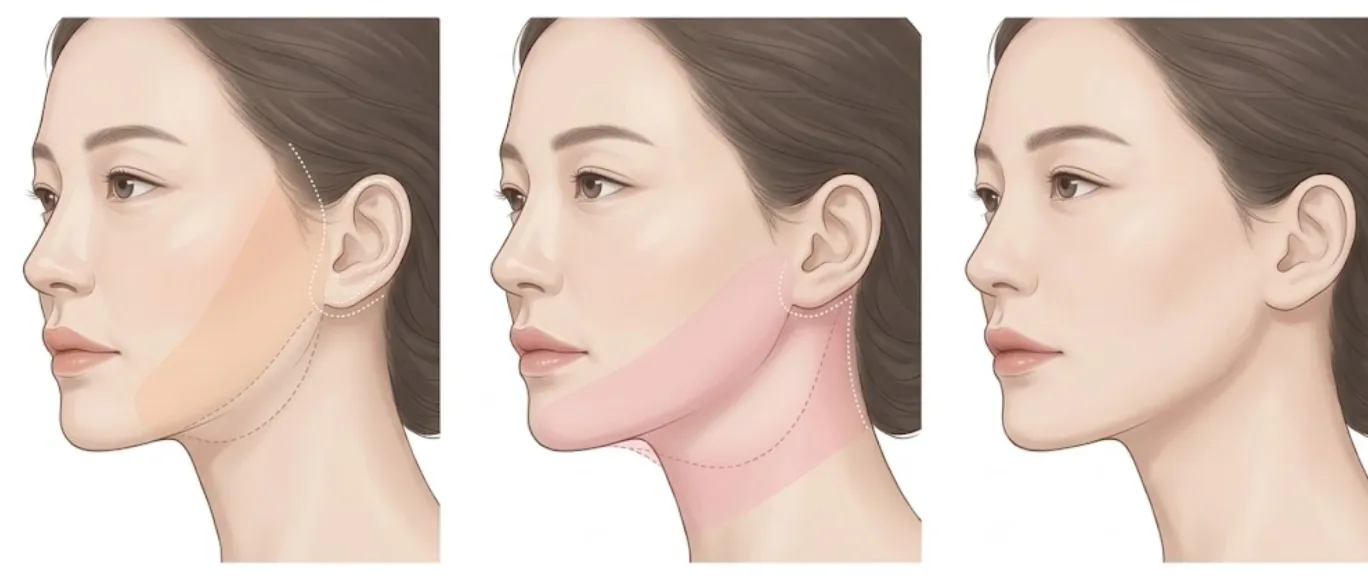
Illustration: through a fine line around the ear (dotted), the sagging lower face and neck are lifted up and back toward the ear (shaded); the dashed outline shows the old contour.
How noticeable this is depends largely on your skin quality and genetics. Patients with firmer skin tend to hold a liposuction result longer; those whose skin laxity advances may eventually find that what was a fat problem becomes more of a skin problem. At that stage, if you wanted further refinement, the appropriate procedure might no longer be liposuction at all but a neck lift or Pelican neck contouring to tighten skin and muscle.
None of this undoes the original benefit. It simply reflects that ageing continues. Thinking of liposuction as a durable reduction of fat, layered onto a face that keeps changing, is the realistic way to understand its longevity.
Protecting results
How to protect your result for the long term
The two biggest levers are within your control. Keeping a stable weight prevents the remaining fat cells from enlarging and is the most effective way to preserve your contour. Looking after your skin with sun protection, not smoking and a sensible skincare routine supports elasticity, which helps the skin keep redraping well as you age. Neither is dramatic, but together they make the difference between a result that holds and one that softens early.
Following your surgeon's after-care also matters in the first weeks: wearing the compression garment as advised helps the skin settle smoothly onto the new contour and supports a clean final shape. Garnet's structured follow-ups at 1, 3 and 6 months exist partly to check that your result is settling as it should, and the same surgeon who operated reviews you, including by messenger once you have flown home.
Beyond that, realistic expectations are their own form of protection: knowing that the fat change is durable while ageing continues means you are satisfied with what the procedure genuinely delivers. For the practical side of planning, see what affects the cost of facial liposuction and our guide to an online consultation from abroad.
Revisiting it
Would I ever need it redone?
Most people who keep a stable weight do not need facial liposuction repeated, because the fat cells removed do not regenerate. The treated area stays durably reduced. Where someone does seek further work later, it is usually because their face has changed for a different reason: significant weight gain, or skin laxity that has advanced with age. The original fat has not “come back.”
If the new concern is fat from substantial weight gain, a touch-up could in principle be considered, but addressing the weight first usually gives a clearer picture of whether anything is needed. If the new concern is loose skin, the right answer is generally a skin-tightening procedure such as a neck lift. Removing more fat from lax skin tends to make laxity more obvious.
A careful surgeon tells these situations apart and does not reflexively offer the same procedure again. Because Garnet performs the full range of neck and jawline procedures, the recommendation can match what your face actually needs at that point. For many patients, that is simply maintaining a good result they already have.
Real Results
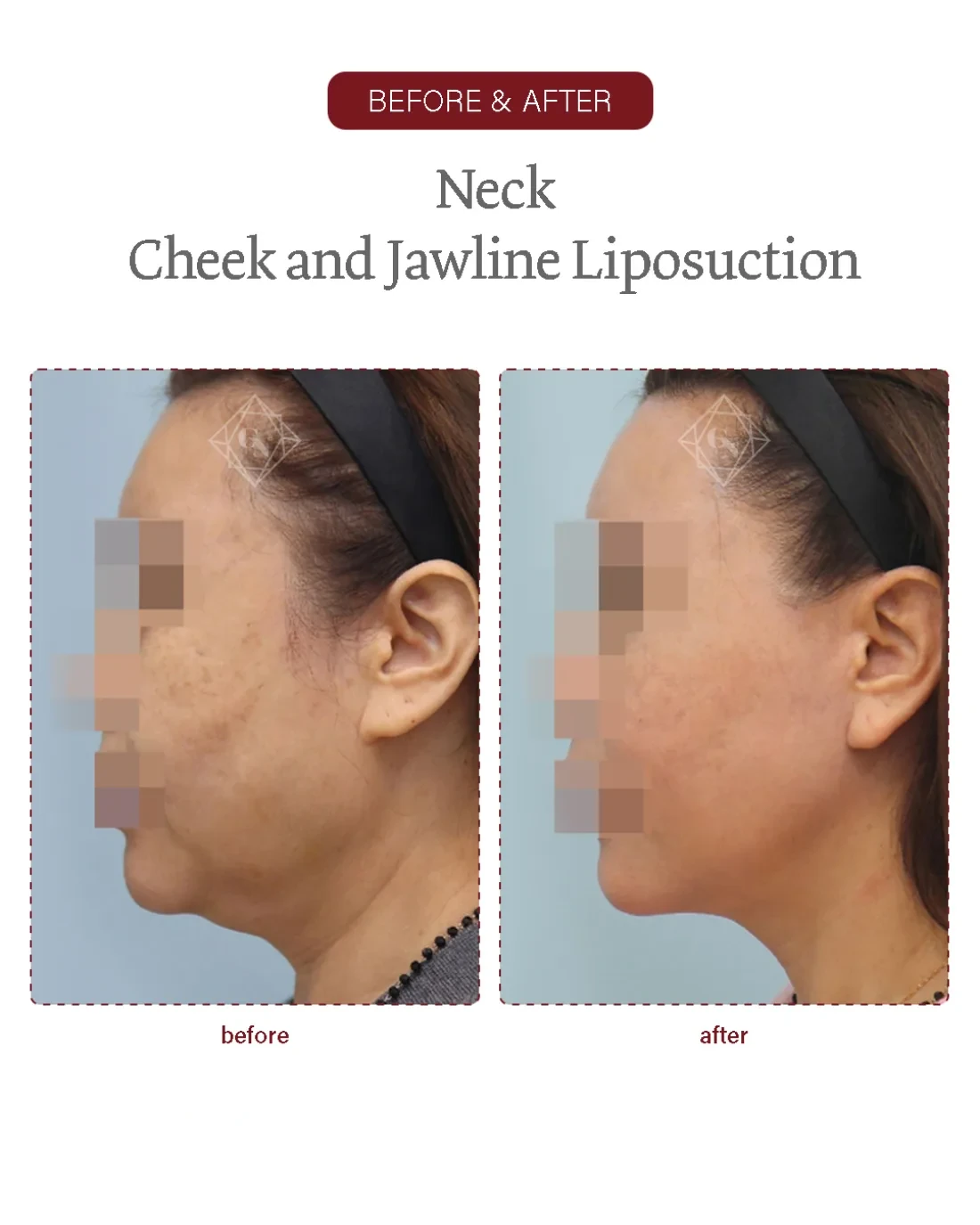
Before & After
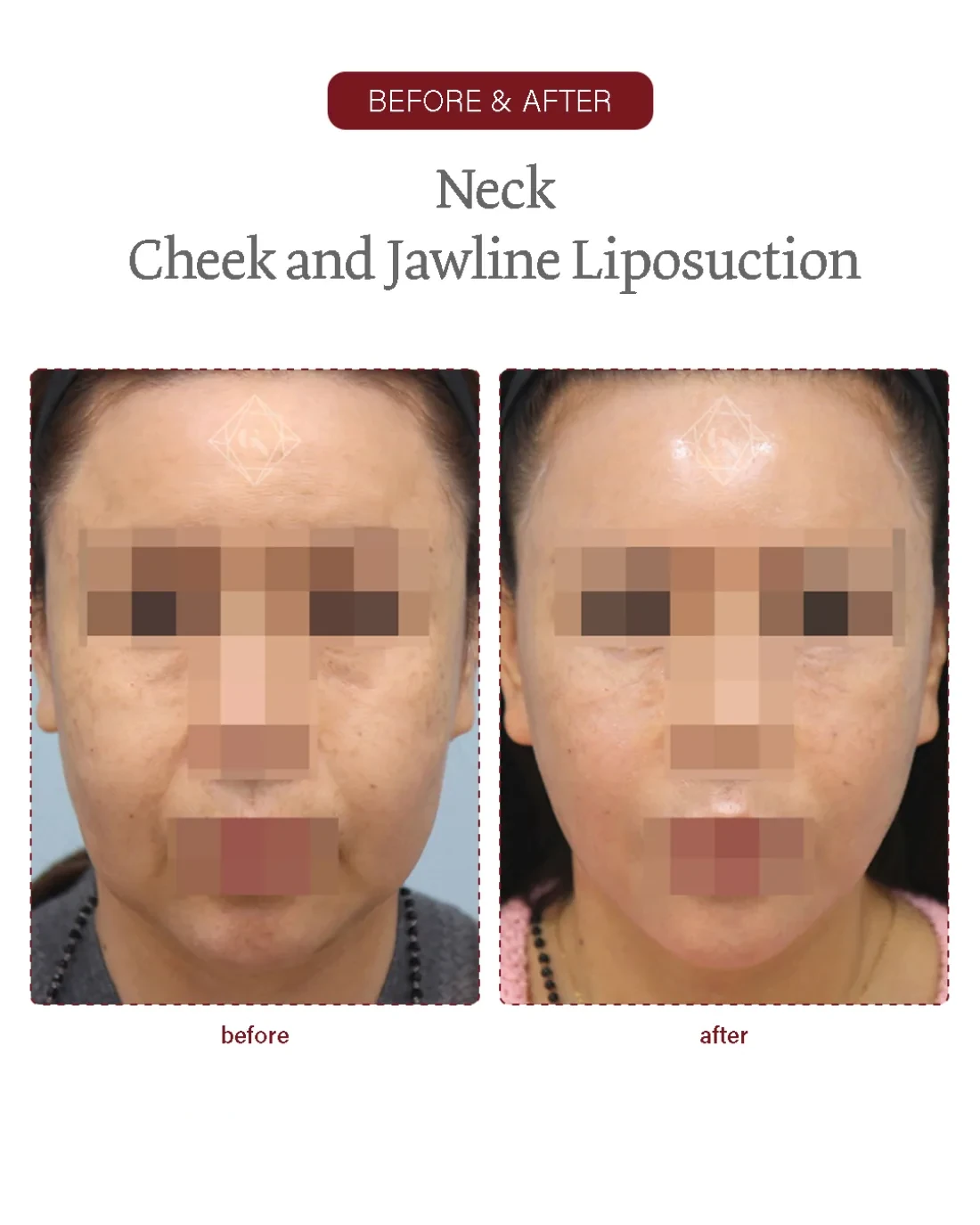
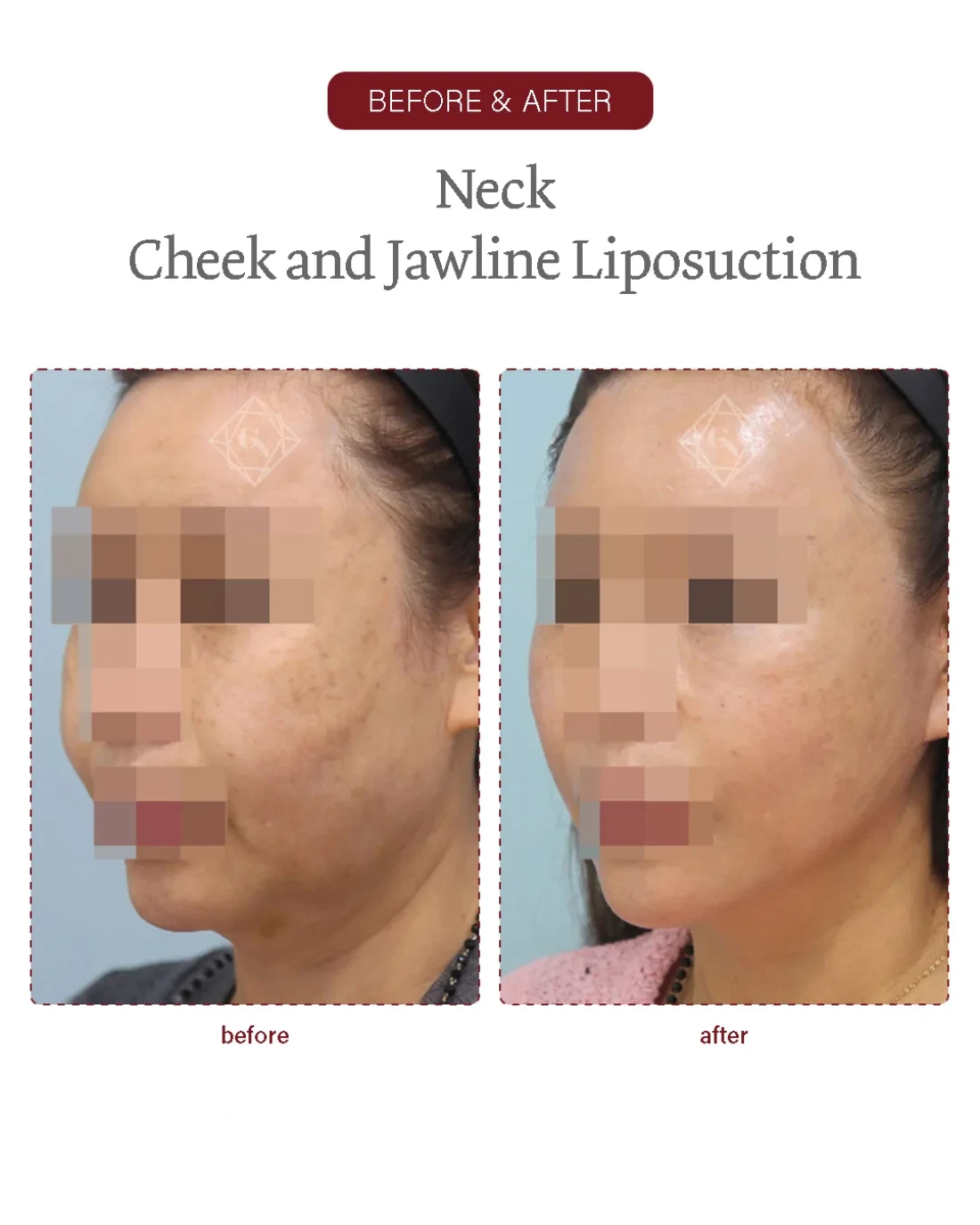
Neck and jawline contouring results of actual Garnet patients (published with consent, with date, procedure and clinic labelled). Results, recovery and suitability vary by individual and are not guaranteed.
Prices
Price at Garnet
Pelican™ — double chin & neck lines
From₩4,000,000 + VATExcluding VAT (10% VAT is added at payment)Book now
Same price as Korean patients. Prices shown exclude 10% VAT; your written quote, issued after the in-person consultation, shows the full amount payable.
Dr. In-Soo Baek
Director & sole operating surgeon
Korean medical licence no. 77407
Operate on what you came for. Trained at Korea University Medical Center. Every case planned, performed and reviewed by the same hands.
1Operating surgeon
~2Surgeries per day
7Registered techniques
Board-certified plastic surgeon
Plastic surgery training at Korea University College of Medicine & graduate school
Korean Society of Plastic and Reconstructive Surgeons member, in its facial-contour, eye & rhinoplasty groups
Consults, operates and follows up each case himself
Peer-reviewed papers behind the facts on this page. Each describes findings in its own study group — not results at Garnet — and none predicts your own outcome.
Pinto EBDS et al. Submental Skin: Morphohistological Study of Interest to Liposuction. Aesthetic Plastic Surgery. 1997. doi:10.1007/s002669900142
Giampapa VC et al. Neck recontouring with suture suspension and liposuction: An alternative for the early rhytidectomy candidate. Aesthetic Plastic Surgery. 1995. doi:10.1007/bf00451093
Asken S. Facial Liposuction and Microlipoinjection. The Journal of Dermatologic Surgery and Oncology. 1988. doi:10.1111/j.1524-4725.1988.tb03504.x
FAQ
Common questions
How long does facial liposuction last?
The fat cells removed during facial liposuction do not grow back, so the contour change is lasting and most patients keep the improvement for many years. The qualification is that your face continues to age and your weight can change, both of which affect how the result looks over time. The result is durable, and it still ages.
Is facial liposuction permanent?
Yes, in the most important sense: the fat cells extracted are physically gone and do not regenerate, so the treated area stays durably reduced. It is not permanent in the sense of stopping all change: significant weight gain can enlarge the remaining cells, and ageing continues regardless. No facial procedure freezes a face in time.
Why doesn't the removed fat come back?
Adults have a largely fixed number of fat cells. Liposuction removes a portion of the cells in the treated area, so the deposit physically shrinks and cannot return to its former fullness in the same way. That structural change is what makes facial liposuction a durable way to contour the jawline and chin.
What happens if I gain weight after facial liposuction?
The fat cells that remain in the treated area and elsewhere can enlarge and soften the contour you achieved. The result does not disappear, because there are far fewer cells than before, but it can become less defined. Keeping a stable weight is the single most useful thing you can do to protect your result.
Does ageing affect my facial liposuction result?
Yes. Even at a stable weight, skin gradually loses elasticity and deeper tissues descend over the years, which can soften a jawline or relax the neck independent of the fat. This is normal ageing and does not mean the surgery failed. How noticeable it is depends largely on your skin quality and genetics.
How can I make my result last longer?
Keep a stable weight, look after your skin with sun protection and a sensible routine, avoid smoking, and follow your surgeon's after-care, including wearing the compression garment as advised so the skin settles smoothly. Structured follow-ups help confirm the result is settling well. Realistic expectations also help you stay satisfied long term.
Will I ever need facial liposuction redone?
Most people who keep a stable weight do not, because the removed fat cells do not regenerate. Where someone seeks more work later, it is usually due to significant weight gain or advancing skin laxity. The original fat does not return. The right answer then may be maintenance, a touch-up, or a different procedure entirely.
If my skin sags later, is more liposuction the answer?
Usually not. Removing more fat from lax skin tends to make the laxity more obvious. If skin laxity becomes the main concern with age, a skin-tightening procedure such as a neck lift or Pelican neck contouring is generally more appropriate than further liposuction.
Does the compression garment affect how long results last?
Wearing the compression garment as advised mainly helps in the early healing phase. It supports the skin redraping smoothly onto the new contour and a clean final shape. A well-settled result is a good starting point, but long-term longevity depends most on stable weight and skin quality over the years.
Is liposuction more lasting than non-surgical fat reduction?
Surgical liposuction removes a portion of fat cells durably, so the structural change is permanent in the treated area, whereas many non-surgical options give more gradual or temporary change. Which suits you depends on your anatomy and goals. Dr. Baek explains the trade-offs for your chin and jawline and does not assume surgery is right for everyone.
My mom recently had a brow lift and lower blepharoplasty with Dr. Baek, and our experience has been wonderful so far. The Garnet team was incredibly kind and welcoming, with Kelly assisting us as our English consultant—she made everything…
I’m so happy I chose this clinic for my lower blepharoplasty. I was traveling from abroad by myself, so I was a little nervous, but from the beginning I felt comfortable and truly cared for. Everyone was kind, patient, and professional…
Came in for an in-person consult and ended up choosing Garnet and Dr.Baek for my non-incisional DES and tiplasty/alarplasty. I communicated with Kelly (English consultant) from the start till now (3 weeks post-op). She really help me feel…
My under-eyes have been sagging and folding for years... I tried to cover it up with makeup, but it actually got stuck in the wrinkles and made it stand out even more. While going for consultations, I noticed that the bigger the hospital…
Wondering how a facial liposuction result would hold up for you? Send photos of your jawline for a no-obligation pre-assessment before you plan a trip.
Send photos and your question before you travel. An English-speaking coordinator reviews every enquiry and replies with guidance on whether facial liposuction is appropriate for you, the likely plan and timing.
✓ Reviewed by the clinic coordinator, not a bot
✓ Photo-based pre-assessment before you fly
✓ Foreign-patient scheduling & after-care
✓ One surgeon for consultation, surgery and follow-up
Prefer to chat now? Reach the coordinator directly:








 T S7 months ago



