Forehead reduction shortens a tall, high forehead by advancing the hairline forward. It suits some people far better than others, and it is a different operation from a forehead lift. This page explains who genuinely benefits, why your hairline matters as much as your forehead height, and when an assessment would point you elsewhere.
The short answer
Forehead reduction suits people with a genuinely tall or high forehead who want it shorter. It lowers the hairline; it does not lift the brows.
Hairline density matters: a healthy, stable hairline helps screen the incision and tends to give the most satisfying result.
It is a different operation from a forehead lift, which raises the brows. Choosing between them is part of the assessment.
The right answer comes from a board-certified surgeon assessing you in person, who may recommend the procedure, a different one, or neither.
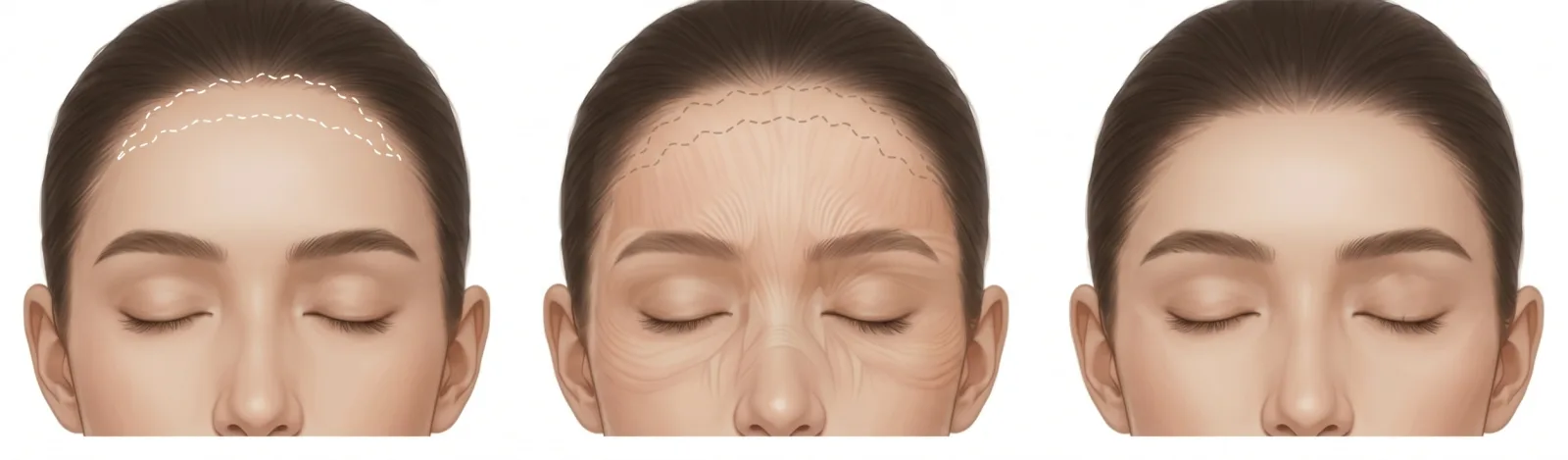
Forehead reduction addresses one specific concern: a forehead that is taller or higher than a person would like. The surgeon advances the hairline forward with a fine incision along it, removes a strip of forehead skin and brings the hairline down, so the forehead reads as shorter and the upper-face proportions feel more balanced. It is about height and proportion; wrinkles and brow position are a separate matter.
Illustration: through a fine line along the hairline (dotted), the hairline is brought forward to shorten a tall forehead.
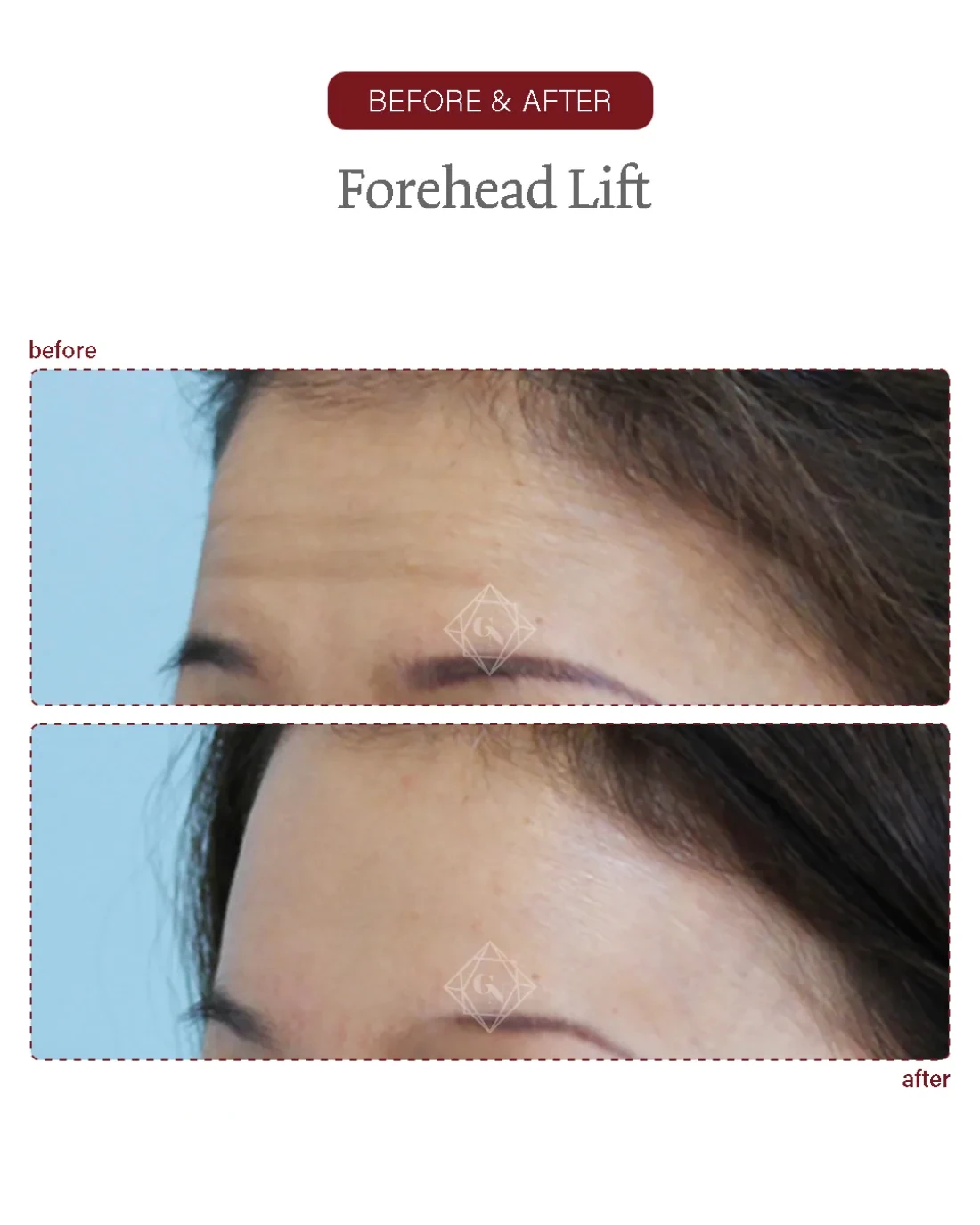
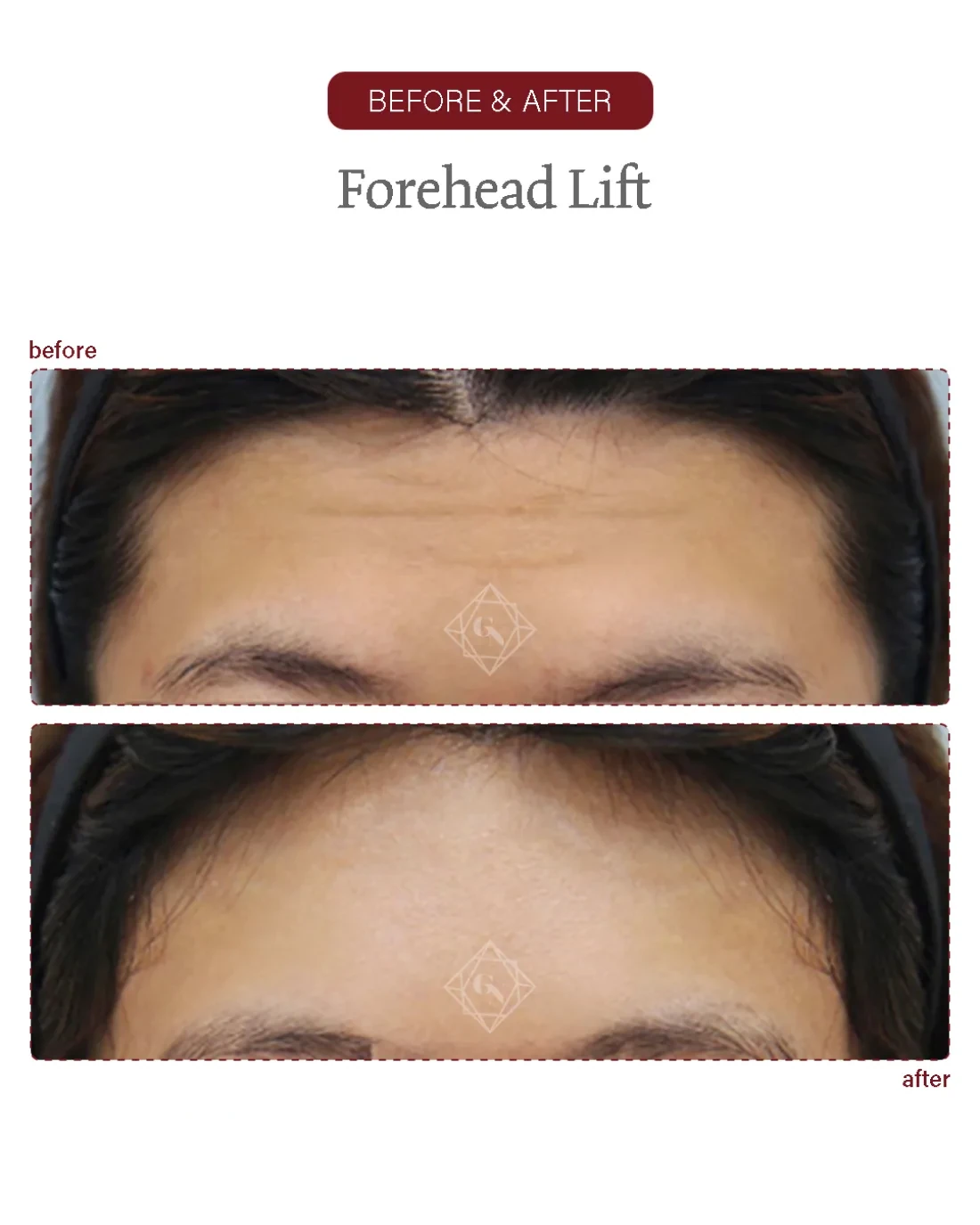
That is an important distinction, because people often confuse it with a forehead lift, which raises sagging brows and smooths the upper face but does not lower the hairline. If your concern is heavy or dropping brows and forehead lines, a lift is the relevant operation; if your concern is simply that your forehead is too tall, hairline lowering is the one to consider. They solve different problems.
Understanding which problem you actually have is the whole point of candidacy. A good candidate for forehead reduction is, first and foremost, someone whose concern is forehead height. At Garnet that judgement is made by a board-certified plastic surgeon, Dr. In-Soo Baek, who only recommends the operation when it genuinely fits the goal.
Good candidate
Who is a good candidate
The clearest candidate is someone with a genuinely tall or high forehead who is bothered by that proportion and wants it shorter. People in this group often feel their face looks longer than it is, style their hair to cover the forehead, or feel their features sit low on a large upper face. For them, lowering the hairline can rebalance the proportions in a way that nothing else achieves.
Beyond the concern itself, a good candidate is in reasonable general health, has realistic expectations about what a few centimetres of change will and will not do, and understands that the hairline incision is the part that takes time to mature. Someone who wants a natural rebalancing of proportion, and not a dramatic transformation, tends to be the most satisfied with the result.
Scalp characteristics matter too. A scalp with reasonable laxity that can be released and advanced comfortably makes the operation more straightforward, while a very tight scalp may change the plan or the amount of advancement that is realistic. This is exactly the kind of thing assessed in person, which is why a consultation matters more than a self-diagnosis from a photo.
Hairline matters
Why your hairline matters as much as your forehead
With forehead reduction, the hairline is the target and also where the incision lives, so its condition shapes both candidacy and result. A healthy, stable hairline with good density helps screen the fine incision as hair grows through and around it, which is a large part of why the line settles into something discreet over time.
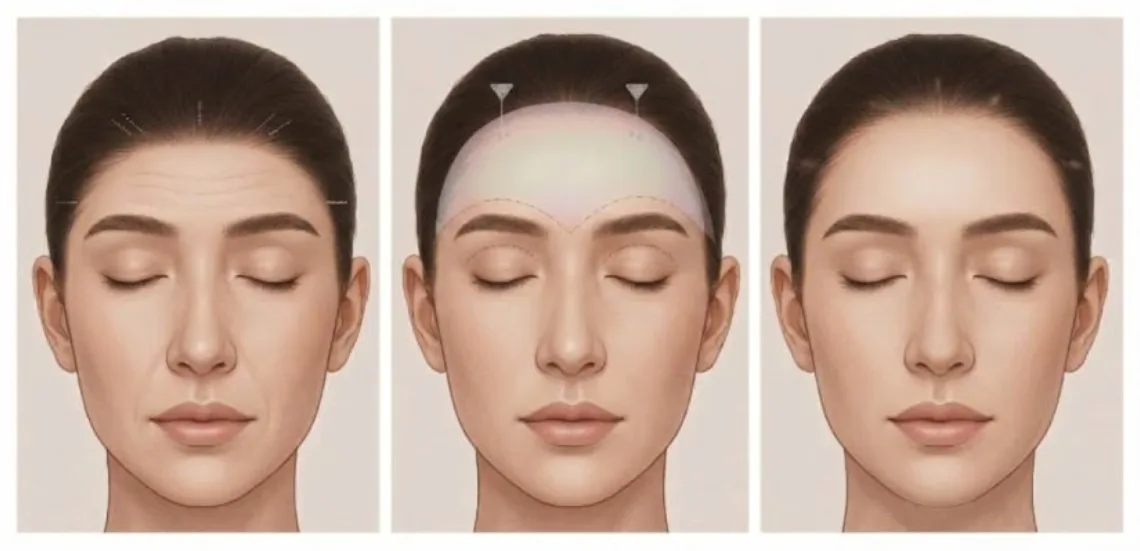
Illustration: the forehead and brow are lifted from within and held at fixation points behind the hairline (Pentafix™), rather than pulled at the skin.
That makes hairline density a genuine consideration. People with a dense, stable hairline tend to be the most satisfied candidates, because the new hairline reads naturally and the incision is well camouflaged. A thinner hairline, a history of recession or a family pattern of hair loss can affect how well the incision hides and whether lowering the hairline is the ideal plan. All of this is looked at directly during the assessment, never assumed.
This is also why "who it is for" cannot be answered by forehead height alone. Two people with equally tall foreheads may be very different candidates depending on their hairlines. If your hairline is not well suited to lowering, a careful surgeon will say so and discuss alternatives, including a forehead lift if your underlying concern turns out to be brow position more than forehead height.
Reduction vs lift
Forehead reduction or forehead lift?
Because the names sound similar, it is worth being precise. Forehead reduction lowers a tall hairline to shorten the forehead; a forehead lift raises the brows and smooths the upper face. One changes forehead height and proportion; the other changes brow position and the look of the upper third of the face. Choosing the wrong one for your concern leads to disappointment, however well it is performed.
Sometimes the line between them is not obvious to a patient. A low brow can make a forehead look heavy, while a high hairline makes it look tall, and the two can feel similar in the mirror. Distinguishing which is actually driving your concern is precisely what a good consultation does, and it is why looking at your own face is not the same as a surgeon examining it.
Occasionally a person's goals point toward addressing both proportion and brow position, and that is a conversation worth having openly. The answer might be one operation, the other, both discussed, or neither. An assessment that is willing to say "this is not the right operation for you" is doing its job. You can explore the alternative in our guide to forehead lift.
When not recommended
When forehead reduction is not recommended
Forehead reduction is not the right choice for everyone, and a responsible surgeon will say so. If your actual concern is brow heaviness or forehead lines, lowering the hairline will not address it. If your forehead is already in proportion, there is little to gain. And if your hairline is unstable or thinning, or there is a clear pattern of recession, lowering it may not be advisable and is discussed candidly.
Unrealistic expectations are another reason to pause. This operation rebalances proportion by a measured amount; it cannot completely reshape the face, and someone expecting a dramatic transformation may be better served by a frank conversation than by surgery. General health factors that affect any operation are weighed as well. None of this is a verdict from a distance. It is exactly what an in-person assessment is for.
At Garnet there is no over-recommendation: only the concern you came in for is addressed, and the surgeon will tell you plainly if a hairline-lowering procedure is not right for you, including advising against it. That candour is the point; there is no same-day sell. Our guide on choosing a board-certified plastic surgeon explains why that candour matters.
Assessment
How forehead reduction candidacy is assessed
Deciding whether forehead reduction is right for you is a clinical judgement, made by examining your forehead height and proportions, the position and density of your hairline, your scalp laxity and your goals together. No single measurement decides it. The same board-certified surgeon who would perform the operation is the one who makes this assessment, which keeps the advice and the plan in one consistent voice.
Garnet structures this around an unhurried consultation, with no consultation or CT fee and no pressure to book the same day. The aim is to tell you plainly whether you are a good candidate, what a realistic result would look like, and whether a hairline-lowering approach, a different procedure or none is the better path for you specifically.
If you are abroad, you do not need to fly first to find out. Send photos for an online consultation from abroad and the surgeon can give a preliminary view of whether forehead reduction suits your hairline and forehead. If it does, our recovery timeline and cost guides help you plan the rest.
Real Results
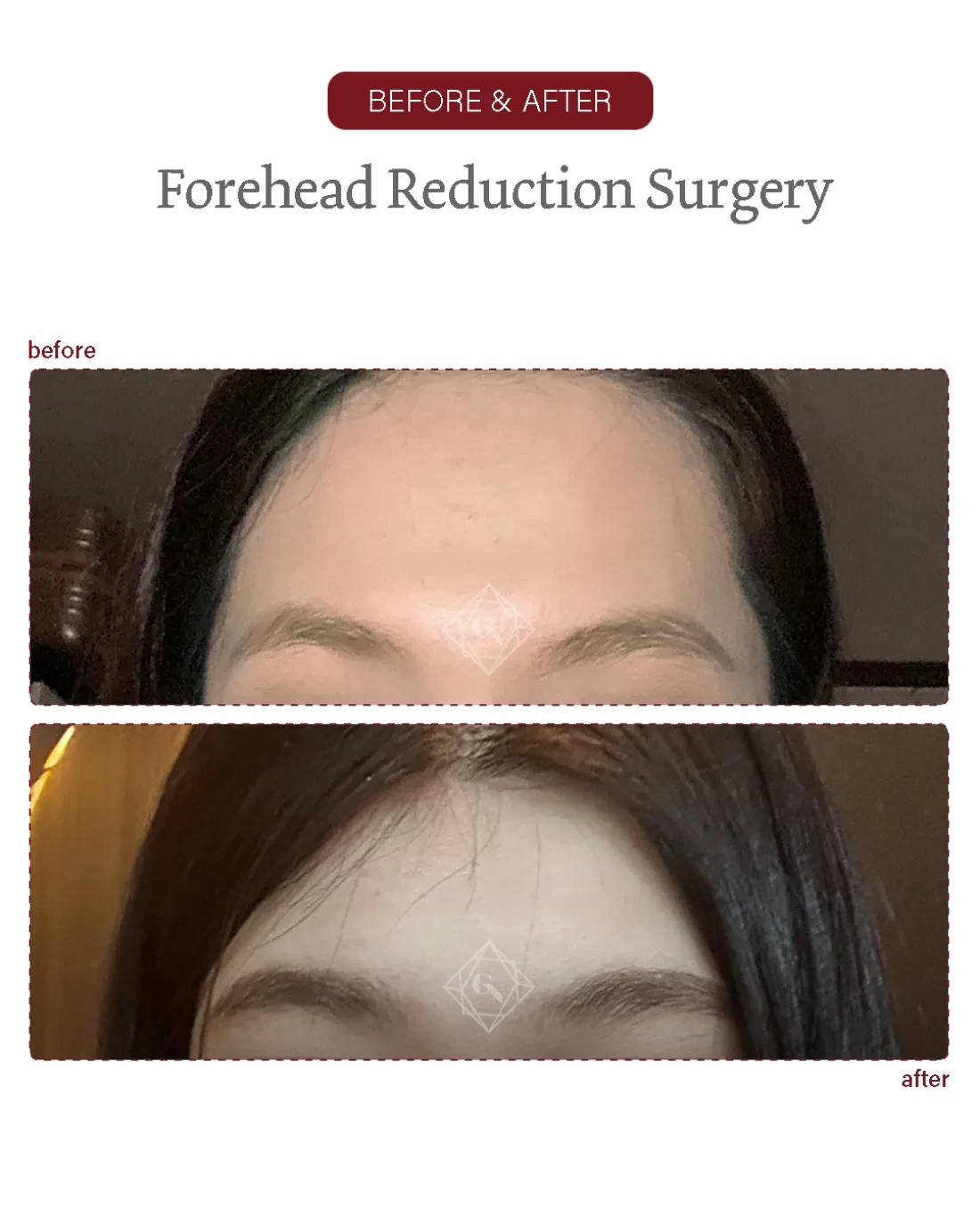
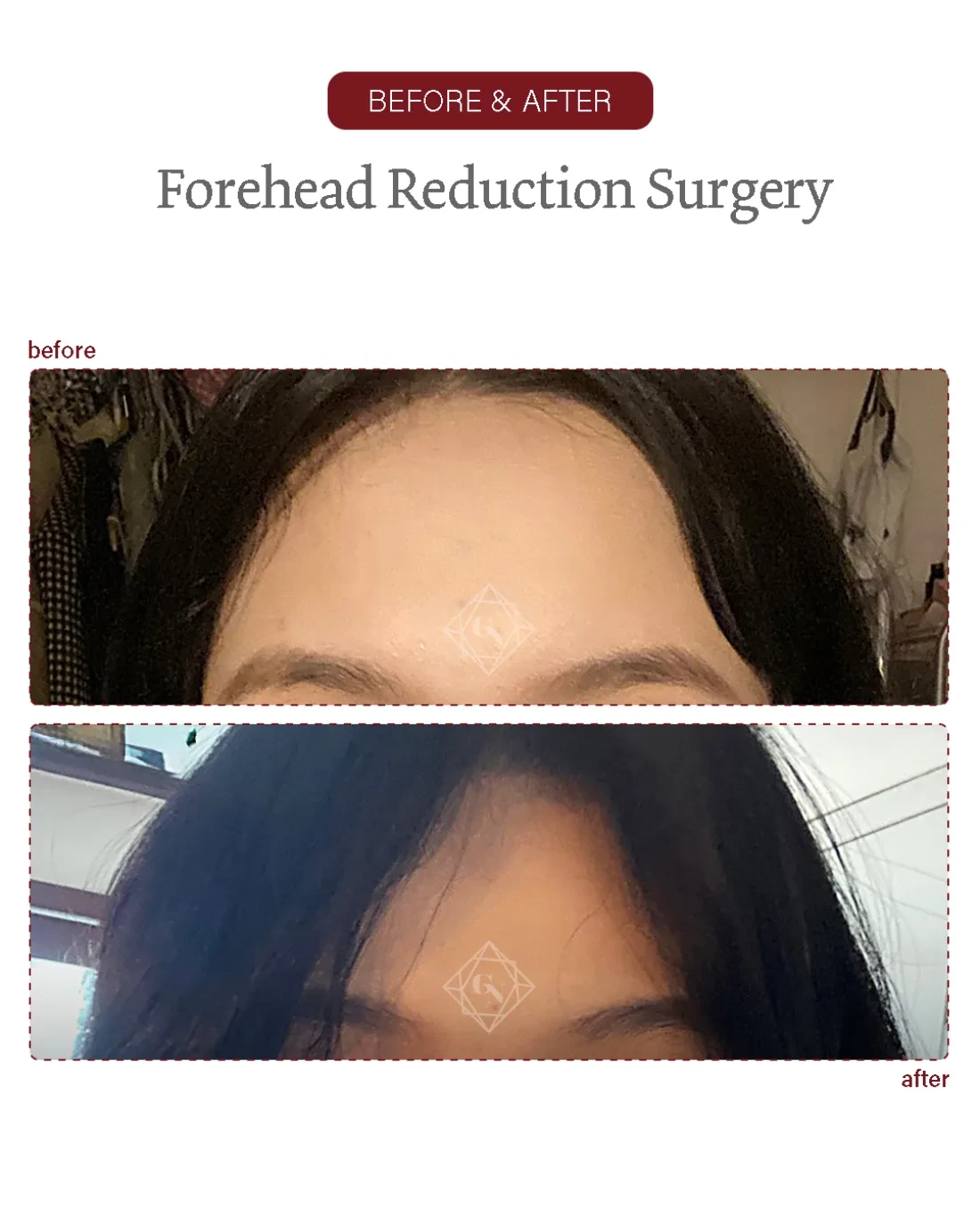
Before & After
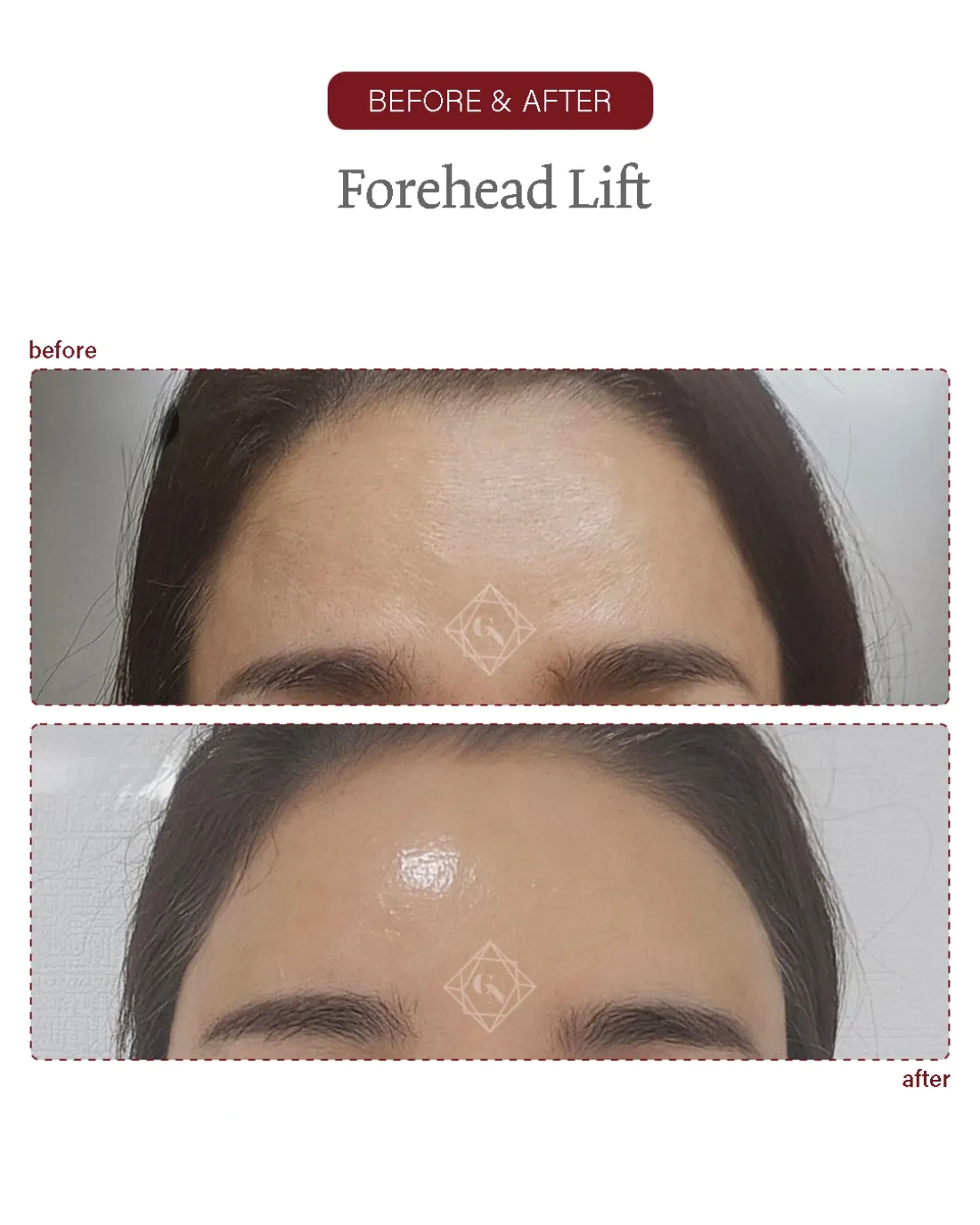
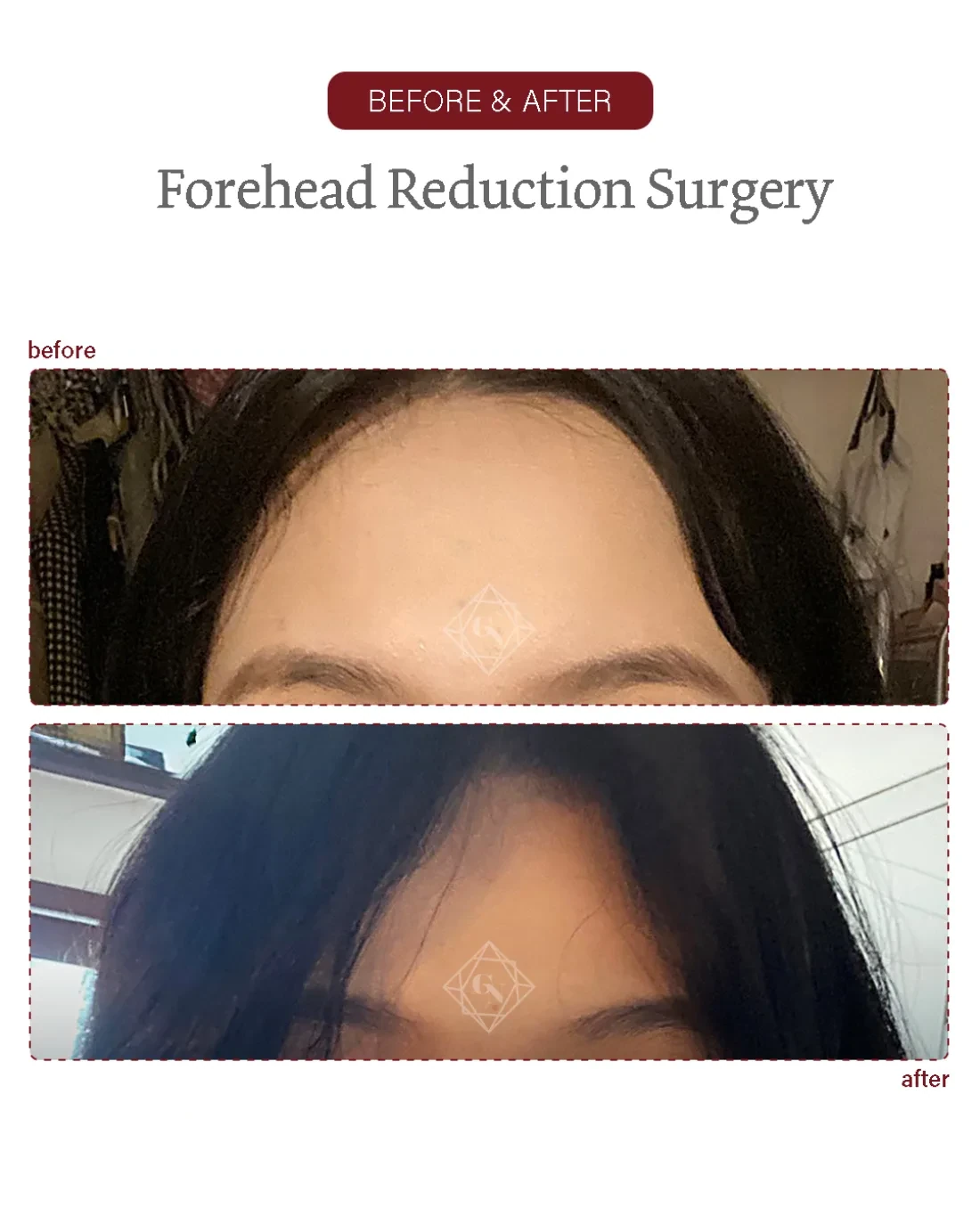
Forehead reduction before/after sets of actual Garnet patients (published with consent). Results, recovery and scar appearance vary by individual, depend on scalp laxity and hair density, and are not guaranteed.
Prices
Price at Garnet
Forehead reduction
₩7,000,000 + VATExcluding VAT (10% VAT is added at payment)Book now
Same price as Korean patients. Prices shown exclude 10% VAT; your written quote, issued after the in-person consultation, shows the full amount payable.
Dr. In-Soo Baek
Director & sole operating surgeon
Korean medical licence no. 77407
Operate on what you came for. Trained at Korea University Medical Center. Every case planned, performed and reviewed by the same hands.
1Operating surgeon
~2Surgeries per day
7Registered techniques
Board-certified plastic surgeon
Plastic surgery training at Korea University College of Medicine & graduate school
Korean Society of Plastic and Reconstructive Surgeons member, in its facial-contour, eye & rhinoplasty groups
Consults, operates and follows up each case himself
Peer-reviewed papers behind the facts on this page. Each describes findings in its own study group — not results at Garnet — and none predicts your own outcome.
Núñez-Castañeda JM et al. Considerations in Forehead Reduction for Men. Facial Plastic Surgery. 2023. doi:10.1055/s-0043-1777319
Lee SH et al. Forehead Reduction Surgery via an Anterior Hairline Pretrichial Incision in Asians: A Review of 641 Cases. Aesthetic Plastic Surgery. 2021. doi:10.1007/s00266-020-02103-4
Epstein J et al. Hairline-Lowering Surgery. Facial Plastic Surgery Clinics of North America. 2020. doi:10.1016/j.fsc.2020.01.002
FAQ
Common questions
Who is a good candidate for forehead reduction?
Someone with a genuinely tall or high forehead who wants it shorter, in reasonable health, with realistic expectations and ideally a healthy, stable hairline that helps screen the incision. It lowers the hairline to rebalance proportion; it does not lift the brows.
Am I suitable for forehead reduction?
It depends on whether your concern is forehead height (suited to hairline lowering) or brow position (suited to a forehead lift), plus your hairline density and scalp laxity. The reliable way to know is an in-person or photo-based assessment by the surgeon; self-diagnosis is not enough.
When is forehead reduction not recommended?
When your real concern is brow heaviness or forehead lines more than height, when the forehead is already in proportion, when the hairline is thinning or receding, or when expectations are unrealistic. A responsible surgeon will say so and discuss alternatives, including advising against surgery.
Does my hairline affect whether I am a candidate?
Yes, significantly. The incision sits along the hairline, so a dense, stable hairline helps camouflage it and tends to give the most satisfying result. A thinner hairline or a pattern of recession can change the plan and is discussed candidly at assessment.
What is the difference between forehead reduction and a forehead lift?
Forehead reduction lowers a tall hairline to shorten the forehead; a forehead lift raises the brows and smooths the upper face. One changes forehead height and proportion, the other changes brow position. Choosing between them is part of the consultation.
Can forehead reduction completely transform my face?
It rebalances proportion by a measured amount and does not reshape the whole face. Patients who want a natural rebalancing are usually the most satisfied; anyone expecting a dramatic transformation is better served by a frank conversation about realistic results first.
Will the surgeon tell me if I am not a good candidate?
Yes. At Garnet there is no over-recommendation. Only the concern you came in for is addressed, and the board-certified surgeon will tell you directly if a hairline-lowering procedure is not right for you, including advising against it.
Does a thinning hairline rule me out?
Not automatically, but it is an important factor because the incision lives in the hairline and a thinning or receding line can affect how well it hides and whether lowering it is advisable. This is assessed individually; a photo alone cannot rule it in or out.
How is candidacy assessed?
By examining your forehead height and proportions, hairline position and density, scalp laxity and goals together. One measurement is never enough. The same board-certified surgeon who would operate makes the assessment, with no consultation or CT fee and no pressure to book the same day.
Can I find out whether my hairline suits forehead reduction before flying to Korea?
Yes. Send photos for an online consultation from abroad and the surgeon can give a preliminary view of whether a hairline-lowering approach suits your forehead and hairline, before you commit to travel.
My mom recently had a brow lift and lower blepharoplasty with Dr. Baek, and our experience has been wonderful so far. The Garnet team was incredibly kind and welcoming, with Kelly assisting us as our English consultant—she made everything…
I’m so happy I chose this clinic for my lower blepharoplasty. I was traveling from abroad by myself, so I was a little nervous, but from the beginning I felt comfortable and truly cared for. Everyone was kind, patient, and professional…
Came in for an in-person consult and ended up choosing Garnet and Dr.Baek for my non-incisional DES and tiplasty/alarplasty. I communicated with Kelly (English consultant) from the start till now (3 weeks post-op). She really help me feel…
My under-eyes have been sagging and folding for years... I tried to cover it up with makeup, but it actually got stuck in the wrinkles and made it stand out even more. While going for consultations, I noticed that the bigger the hospital…
Not sure whether shortening your forehead is the right operation for you? Send photos of your hairline and forehead for a no-obligation pre-assessment before you plan a trip.
Send photos and your question before you travel. An English-speaking coordinator reviews every enquiry and replies with plain guidance on whether forehead reduction is appropriate for you, the likely plan and timing.
✓ Reviewed by the clinic coordinator, not a bot
✓ Photo-based pre-assessment before you fly
✓ Foreign-patient scheduling & after-care
✓ One surgeon for consultation, surgery and follow-up
Prefer to chat now? Reach the coordinator directly:








 T S7 months ago



