Forehead reduction shortens a tall forehead by advancing the hairline forward and removing a strip of skin along it. Recovery is therefore mostly about a fine incision that runs along your hairline; the brow is not moved. This page walks through what to expect day by day, what is normal, and when it is safe to travel home.
The short answer
Forehead reduction here means hairline advancement. The incision sits along the hairline, so most of recovery is wound healing and forehead swelling with little deep tissue downtime.
Most people are presentable enough to go out in about a week to ten days, with the incision the slowest part to mature.
Tightness, numbness behind the incision and mild swelling are normal early on; spreading redness, fever or worsening pain are not.
The same surgeon who operates also reviews your recovery, with structured follow-ups at 1, 3 and 6 months, including remote check-ins after you fly home.
What forehead reduction recovery actually involves
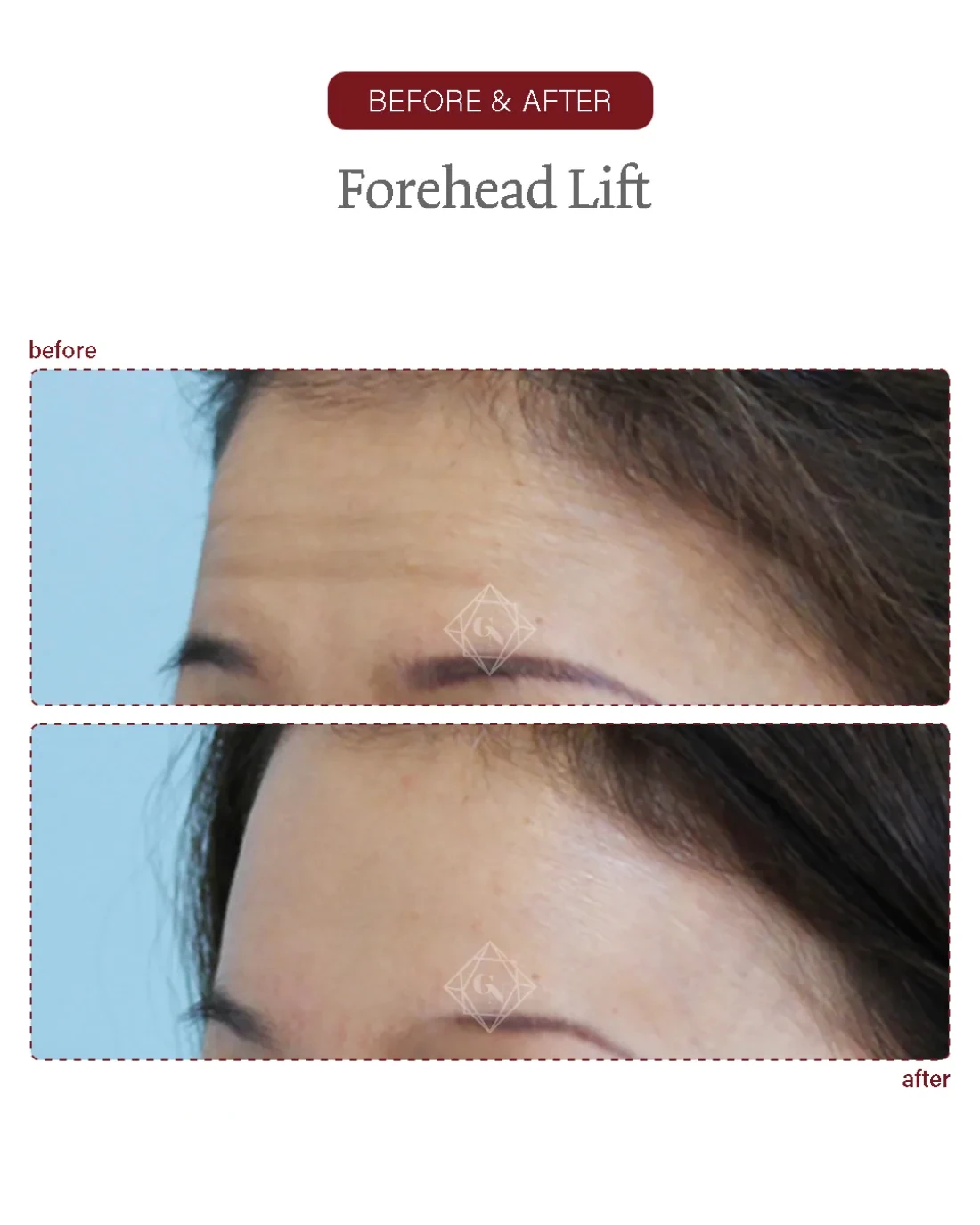
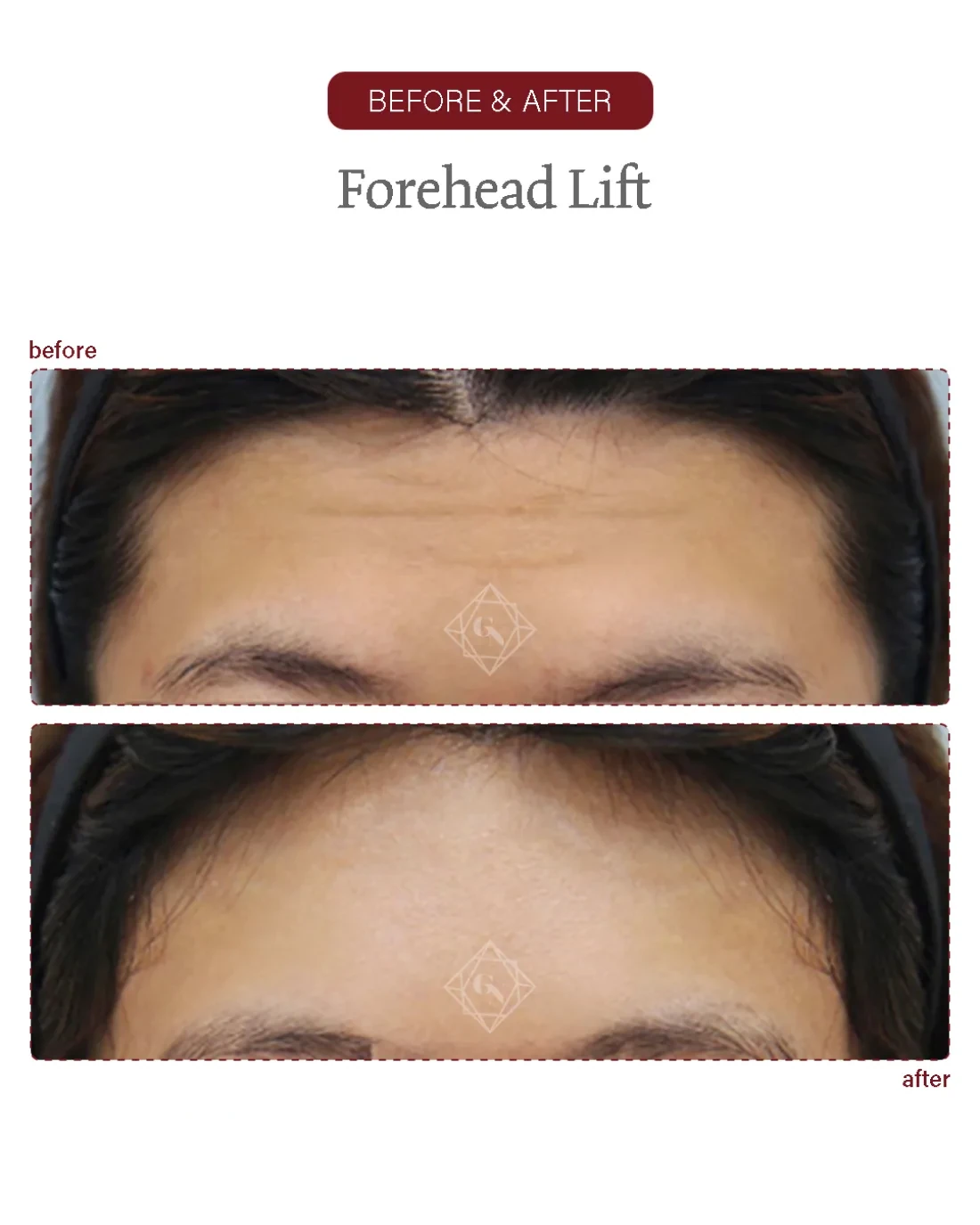
It helps to be clear about what this operation is, because it shapes the whole recovery. Forehead reduction shortens the height of a tall forehead by advancing the hairline forward: the surgeon makes a fine incision along the hairline, releases the scalp, draws it down, removes a strip of forehead skin and closes the new, lower hairline. This is a different operation from a forehead lift, which raises the brows and smooths the upper face without lowering the hairline. Do not assume the two recover the same way.
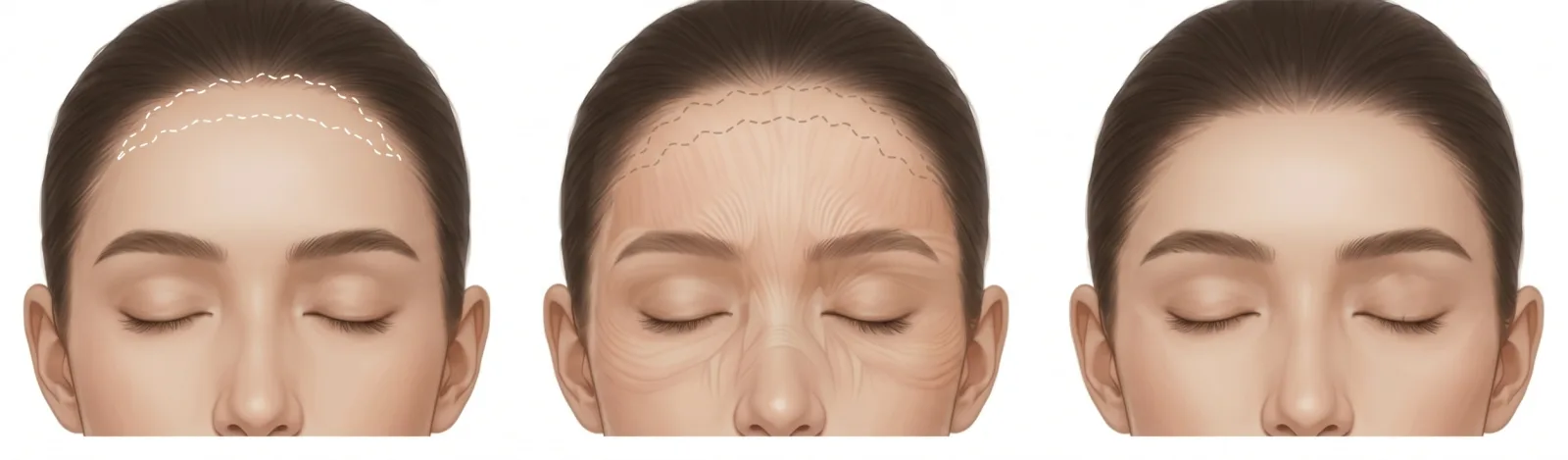
Illustration: through a fine line along the hairline (dotted), the hairline is brought forward to shorten a tall forehead.
Because the work sits at the skin and scalp level along the hairline, recovery is driven by two things: the incision healing and the forehead settling as swelling resolves. There is no deep muscle re-draping the way some lifts involve, so many patients find the day-to-day downtime more straightforward than they expected. The part that takes longest is simply the incision maturing into a quiet line hidden in the hair.
At Garnet the operation is performed by a board-certified plastic surgeon, Dr. In-Soo Baek, who also sees you through each stage of healing. Knowing that the same surgeon plans, operates and reviews your recovery is reassuring when you are far from home and trying to judge whether something is normal.
First days
The first few days, day by day
On the day of surgery and the first night, expect a snug dressing or light wrap around the head and a feeling of tightness across the forehead. That tightness is the scalp settling into its new position and is expected. Some patients have a mild headache and a dull, pressured sensation; simple prescribed pain relief usually manages it well, and most people are surprised that the discomfort feels mostly like pressure.
Over days two and three, forehead swelling tends to build before it eases, and you may notice puffiness that can track down toward the upper eyelids. This is gravity moving fluid, and it settles. Keeping your head elevated, including propped up when you sleep, and using cool compresses around (not directly on) the incision as advised helps the swelling come down faster. Bruising, if any, is usually limited.
By around days three to five the worst of the swelling has typically peaked and begun to recede. The incision is kept clean and dry as instructed, and you will have clear guidance on washing your hair gently around it. This is the right window for a first follow-up so the surgeon can check the wound, confirm healing is on track and answer the questions that always come up once you are home from the clinic.
First two weeks
The first two weeks and beyond
Through the first week the forehead becomes noticeably calmer. Many patients feel presentable enough to go out, run errands and meet people in around seven to ten days, especially as the hairline incision is naturally screened by hair growing through and around it. A degree of residual swelling and a tight feeling can linger, but it is usually subtle to others by this point.
Sutures or staples along the hairline are removed once the wound has knit. The surgeon judges the exact day at your follow-up, since hairline incisions heal at individual rates. Numbness or odd sensations behind the incision (toward the top of the scalp) are common in the early weeks as small nerves recover; this typically fades gradually over weeks to a few months and is part of normal healing.
From two weeks onward you ease back toward normal life. Light daily activity is fine early; sweaty exercise, saunas, swimming and anything that strains or stretches the forehead and scalp are reintroduced more cautiously over the following weeks on the surgeon's advice, to protect the incision while it matures. The fine line itself continues to soften and settle over months — see who forehead reduction suits for how hairline density affects how well it hides.
Normal vs red flags
What is normal, and what is a red flag
Most of what you will feel in the first two weeks is expected: tightness across the forehead, mild to moderate swelling that peaks early then fades, puffiness that can drift toward the eyes, numbness or tingling behind the incision, and a forehead that feels firm or slightly different to the touch. Mild, well-controlled discomfort and a sensation of pulling at the new hairline are normal as everything settles.
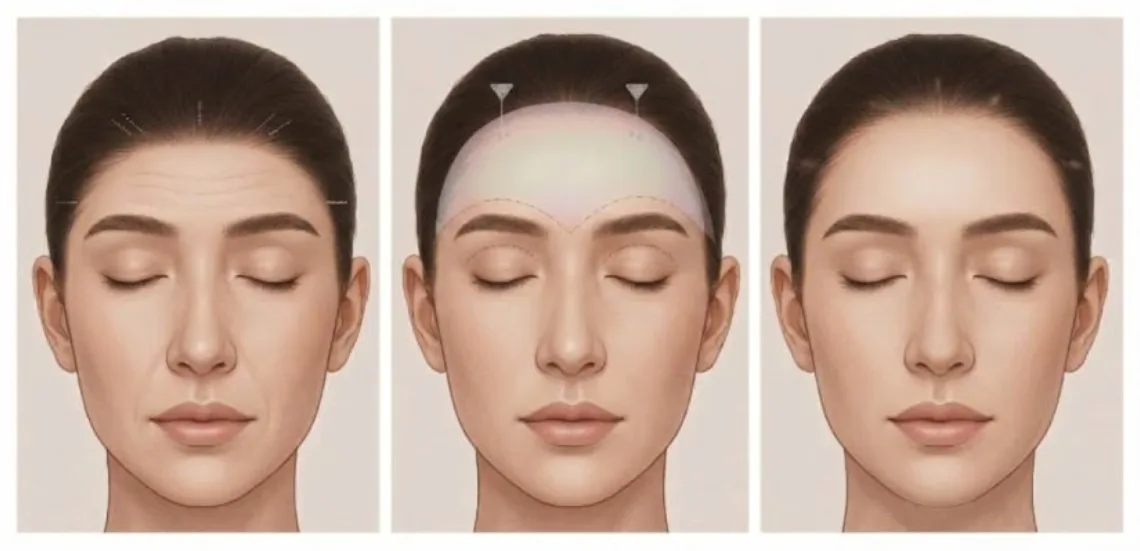
Illustration: the forehead and brow are lifted from within and held at fixation points behind the hairline (Pentafix™), rather than pulled at the skin.
Some things deserve a prompt message to the clinic. Spreading redness or warmth around the incision, pain that increases after the first few days, fever, discharge or a wound that opens, or sudden marked swelling on one side are all reasons to make contact. Being far from home makes this guidance more valuable. Knowing exactly who to message and what to watch for is part of safe after-care.
Because Garnet is a single-surgeon clinic, the doctor who knows your case is the one reviewing these concerns, and you are given clear instructions on how to reach the clinic after you travel home. If you are weighing this procedure against brow-raising surgery, our guide on forehead lift sets out how that recovery differs.
When to fly
When it is safe to fly home
Many international patients plan to stay in Korea long enough for an early wound check and, where practical, suture removal before flying, so the surgeon can confirm the incision is healing cleanly. A common comfortable window is around a week or so, but the right timing is individual and is judged at your follow-up by how the hairline incision looks. Our general guidance on when you can fly after surgery and how long to stay in Korea covers how to build your trip around this.
On the flight itself, keep hydrated, move and stretch your legs periodically as you would after any surgery, and keep the incision protected and dry. A hat is an easy way to shield the hairline and keep pressure off it in transit. Avoid anything that strains the forehead, and follow the specific hair-washing and wound-care instructions you were given.
Garnet is registered with Korea's foreign-patient programme, and the same surgeon continues to review your recovery remotely after you return home. Sending progress photos lets the doctor confirm the incision is maturing as it should and advise on when to resume fuller activity. You can begin all of this with an online consultation from abroad before you travel.
Follow-up
Aftercare and the follow-up schedule
Good aftercare is mostly straightforward and consistent: keep the incision clean and dry as instructed, sleep with your head elevated in the early days, be gentle with your hair around the new hairline, protect the line from sun as it matures, and reintroduce strenuous activity gradually on the surgeon's timeline. The incision is the part of this procedure that rewards patience.
Garnet structures follow-up at 1, 3 and 6 months, with the same board-certified surgeon at each review. The early reviews focus on wound healing and swelling; the later ones on how the hairline has settled, how the line is maturing and how the lower forehead is sitting overall. For patients abroad, these reviews continue by remote check-in, which is why clear progress photos of the hairline matter.
If you want a realistic picture of your own recovery before committing to travel, the most useful step is a pre-assessment. You can send photos for a no-obligation review of your hairline, forehead height and what your recovery would likely involve. See what affects the cost of forehead reduction as you plan, and start with an online assessment.
Real Results
Before & After
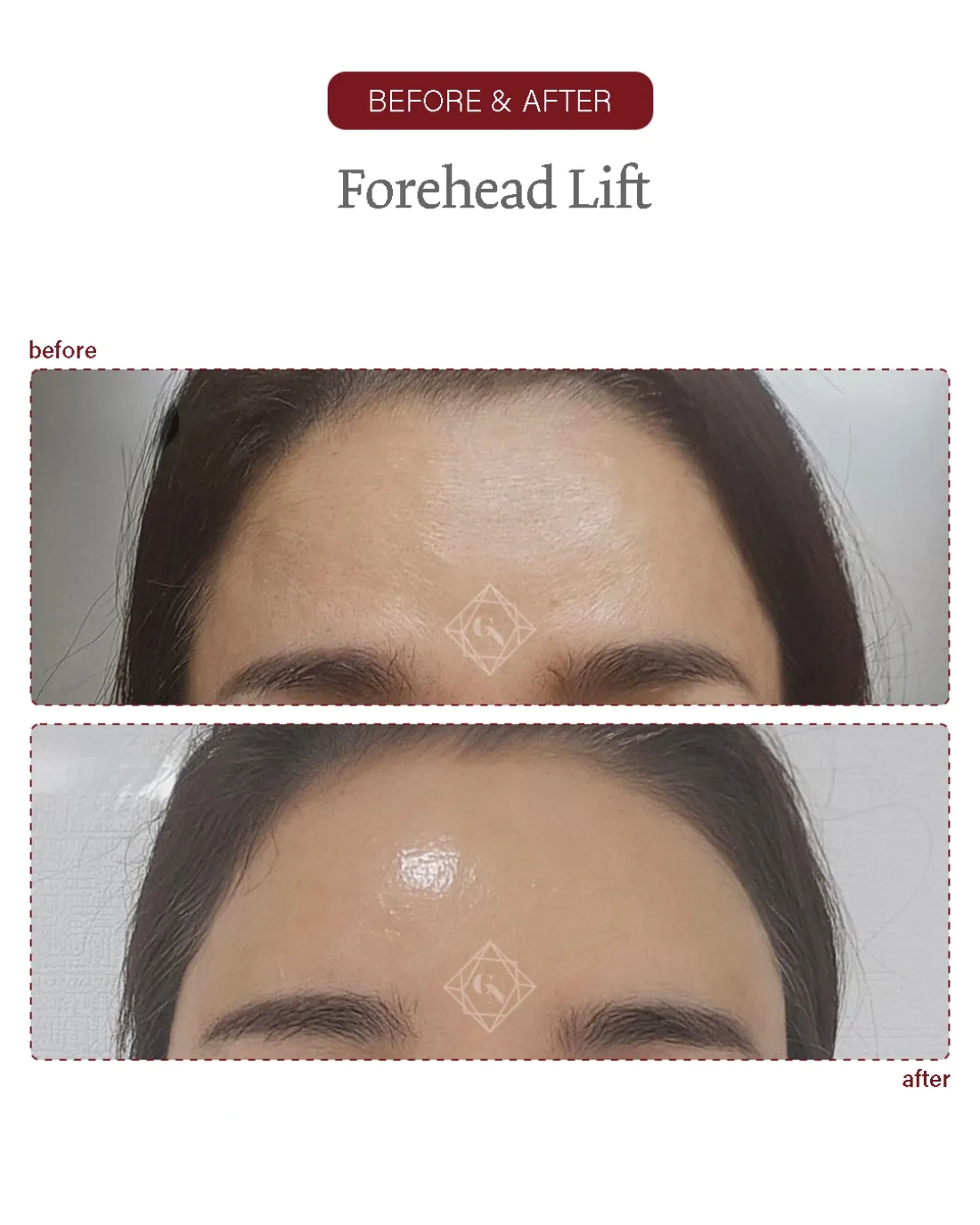
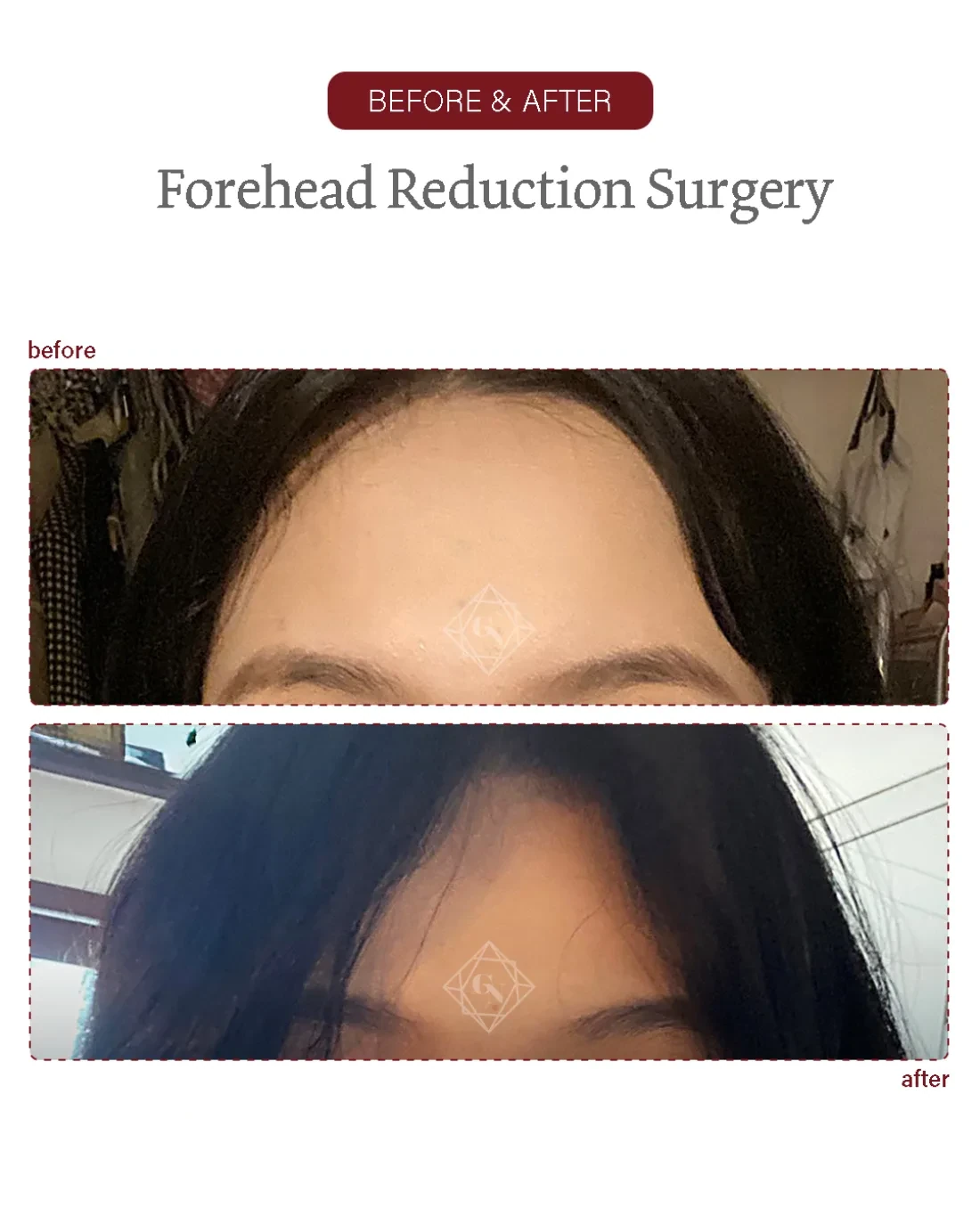
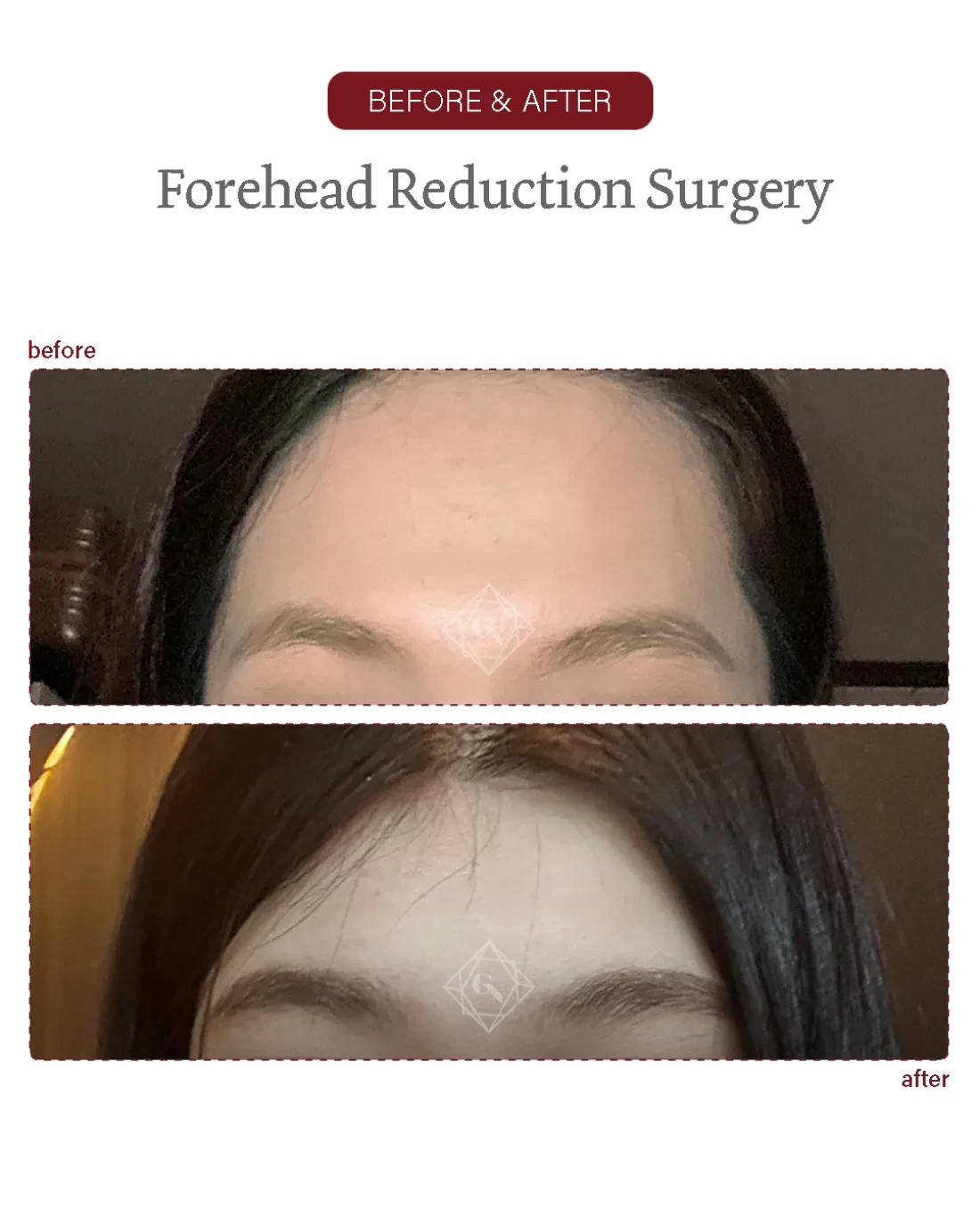
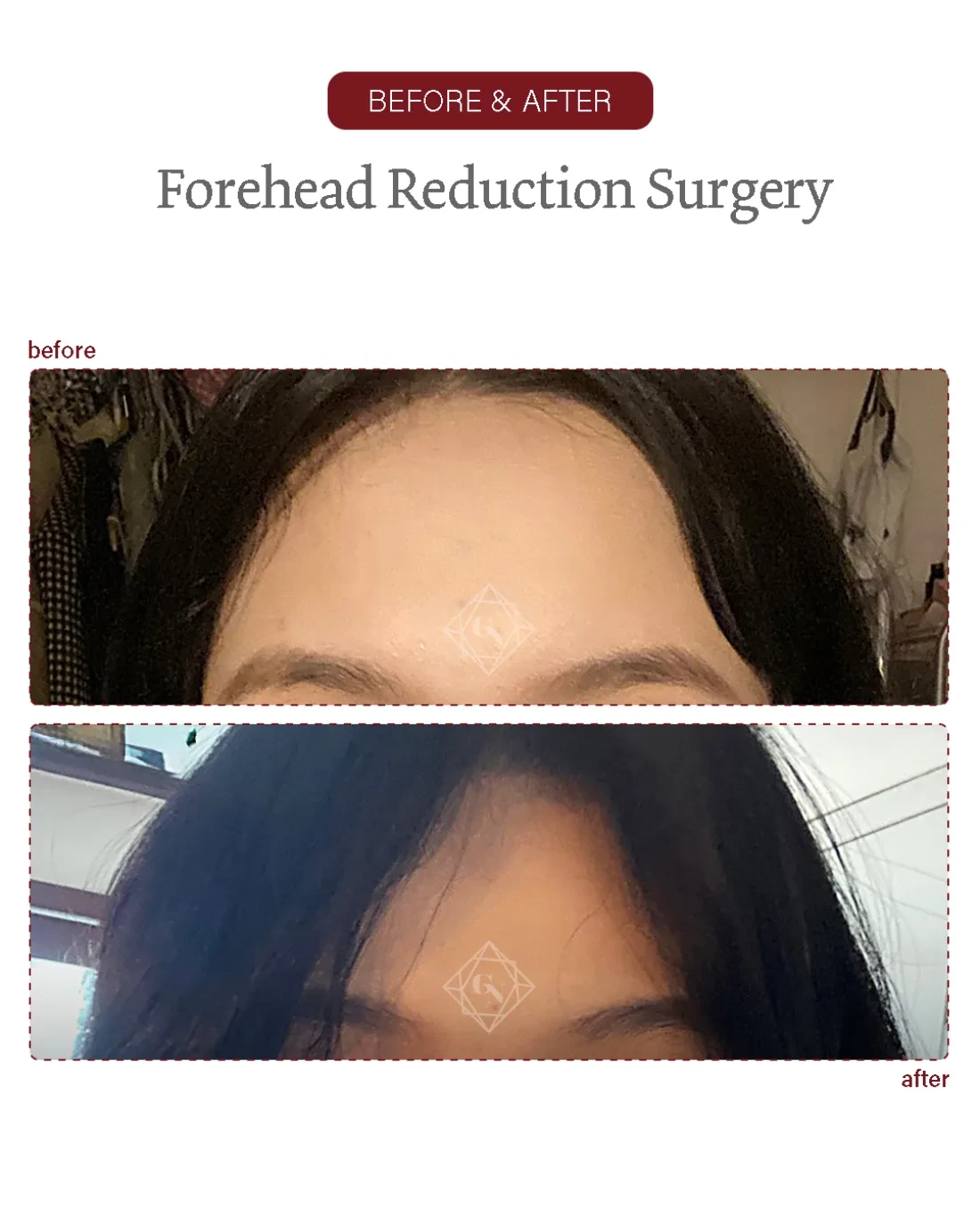
Forehead reduction before/after sets of actual Garnet patients (published with consent). Results, recovery and scar appearance vary by individual, depend on scalp laxity and hair density, and are not guaranteed.
Prices
Price at Garnet
Forehead reduction
₩7,000,000 + VATExcluding VAT (10% VAT is added at payment)Book now
Same price as Korean patients. Prices shown exclude 10% VAT; your written quote, issued after the in-person consultation, shows the full amount payable.
Dr. In-Soo Baek
Director & sole operating surgeon
Korean medical licence no. 77407
Operate on what you came for. Trained at Korea University Medical Center. Every case planned, performed and reviewed by the same hands.
1Operating surgeon
~2Surgeries per day
7Registered techniques
Board-certified plastic surgeon
Plastic surgery training at Korea University College of Medicine & graduate school
Korean Society of Plastic and Reconstructive Surgeons member, in its facial-contour, eye & rhinoplasty groups
Consults, operates and follows up each case himself
Peer-reviewed papers behind the facts on this page. Each describes findings in its own study group — not results at Garnet — and none predicts your own outcome.
Arnaoutakis D. Hairline-Lowering Surgery. Facial Plastic Surgery Clinics of North America. 2026. doi:10.1016/j.fsc.2025.08.003
Gupta N et al. Forehead Contouring. Facial Plastic Surgery Clinics of North America. 2023. doi:10.1016/j.fsc.2023.03.003
Núñez-Castañeda JM et al. Considerations in Forehead Reduction for Men. Facial Plastic Surgery. 2023. doi:10.1055/s-0043-1777319
FAQ
Common questions
How long does forehead reduction recovery take?
Most people are presentable enough for daily life in about a week to ten days, as the early forehead swelling settles and the hairline incision is screened by hair. The incision itself is the slowest part and continues to mature and soften over months, with numbness behind it fading gradually.
What is forehead reduction recovery like day by day?
The first night brings tightness across the forehead; swelling typically peaks around days two to three then eases by days three to five; by the end of the first week the forehead is much calmer. Sutures along the hairline come out once the wound has knit, on a day the surgeon judges at follow-up.
When can I return to work after forehead reduction?
Many patients return to desk-based work or go out comfortably in around seven to ten days, when swelling has largely settled and the incision is hidden in the hair. The exact timing depends on your healing and how visible or physical your work is, and is confirmed at your follow-up.
Does forehead reduction recovery hurt a lot?
Most patients describe pressure and tightness at the hairline, and find prescribed pain relief manages it well. A mild headache and a pulling feeling at the new hairline are common early and settle within the first days.
When can I wash my hair after forehead reduction?
You are given specific instructions on gentle hair washing around the incision and when it is safe to start. Until then the incision is kept clean and dry, and you wash carefully so as not to disturb the healing hairline. Your surgeon confirms the timing at your first wound check.
Is numbness behind the incision normal?
Yes. Numbness, tingling or odd sensations behind the hairline incision toward the top of the scalp are common as small nerves recover, and typically fade gradually over weeks to a few months. It is part of normal healing.
When can I exercise again after forehead reduction?
Light daily activity is fine early, but sweaty exercise, saunas, swimming and anything that strains or stretches the forehead and scalp are reintroduced more cautiously over the following weeks, on your surgeon's advice, to protect the maturing incision.
When is it safe to fly home after forehead reduction?
Many international patients stay long enough for an early wound check and, where practical, suture removal first, often around a week or so, but the right timing is individual and judged at follow-up. On the flight, keep hydrated, move your legs and keep the incision protected and dry.
What are the warning signs I should report?
Contact the clinic promptly for spreading redness or warmth around the incision, pain that increases after the first days, fever, discharge, a wound that opens, or sudden marked one-sided swelling. The same surgeon who knows your case reviews these concerns.
Will the same surgeon follow my recovery?
Yes. Garnet is a single-surgeon clinic, so the board-certified surgeon who operates also reviews your recovery at structured follow-ups at 1, 3 and 6 months, and continues to check in remotely with progress photos after you fly home.
My mom recently had a brow lift and lower blepharoplasty with Dr. Baek, and our experience has been wonderful so far. The Garnet team was incredibly kind and welcoming, with Kelly assisting us as our English consultant—she made everything…
I’m so happy I chose this clinic for my lower blepharoplasty. I was traveling from abroad by myself, so I was a little nervous, but from the beginning I felt comfortable and truly cared for. Everyone was kind, patient, and professional…
Came in for an in-person consult and ended up choosing Garnet and Dr.Baek for my non-incisional DES and tiplasty/alarplasty. I communicated with Kelly (English consultant) from the start till now (3 weeks post-op). She really help me feel…
My under-eyes have been sagging and folding for years... I tried to cover it up with makeup, but it actually got stuck in the wrinkles and made it stand out even more. While going for consultations, I noticed that the bigger the hospital…
Send photos and your question before you travel. An English-speaking coordinator reviews every enquiry and replies with guidance on whether surgery is appropriate, the likely plan and timing.
✓ Reviewed by the clinic coordinator, not a bot
✓ Photo-based pre-assessment before you fly
✓ Foreign-patient scheduling & after-care
✓ One surgeon for consultation, surgery and follow-up
Prefer to chat now? Reach the coordinator directly:








 T S7 months ago



