Full facial rejuvenation is a plan for the eyes, the mid-face and jawline, and lost volume in the cheeks, and it decides what to treat, in what order, and how much can safely be done together. Done well, it reads as a rested version of you; done blindly, as too much at once. The difference is sequencing and careful judgement.
The short answer
A full-face plan considers the eyes, facial lifting and volume together, then decides what actually needs treating, which is often less than everything.
Some elements combine safely in one session; others are better staged, and that judgement depends on your face and overall surgical load. No fixed formula applies.
The order matters: a surgeon sequences a plan so each stage builds on the last and total operating time stays within safe limits.
A single surgeon planning the whole face keeps it looking like one coherent shape across the eyes, mid-face and jawline.
Full facial rejuvenation is a plan for one face. It is the surgeon's answer to a broader question than any single procedure: what would make this whole face look rested and younger, but still like itself? The answer usually treats some parts of the face and deliberately leaves others alone.
That framing matters because a face ages in several ways at once: the eyelids grow heavy or hollow, the mid-face and jawline descend, and volume thins in the cheeks and temples. A complete plan looks at all of these together, works out which are actually your concern, and then decides how they fit into a safe sequence. It is emphatically not a case of doing every possible procedure because they are available.
So the first job of a full-face consultation is subtraction as much as addition: identifying which elements will genuinely change how you look, and setting aside those that would add operating time and swelling without a meaningful benefit. A plan that recommends everything is a warning sign.
The elements
The elements a full-face plan considers
There are broadly three areas a full-face plan weighs up. First, the eyes: heavy upper lids, or hollowing and shadows beneath. Upper-lid heaviness is addressed by upper blepharoplasty, while under-eye shadowing and puffiness can be improved by under-eye fat repositioning, which moves herniated fat over the orbital rim instead of removing it. The eyes are often the single most 'ageing' feature, so they carry a lot of weight in the overall impression.
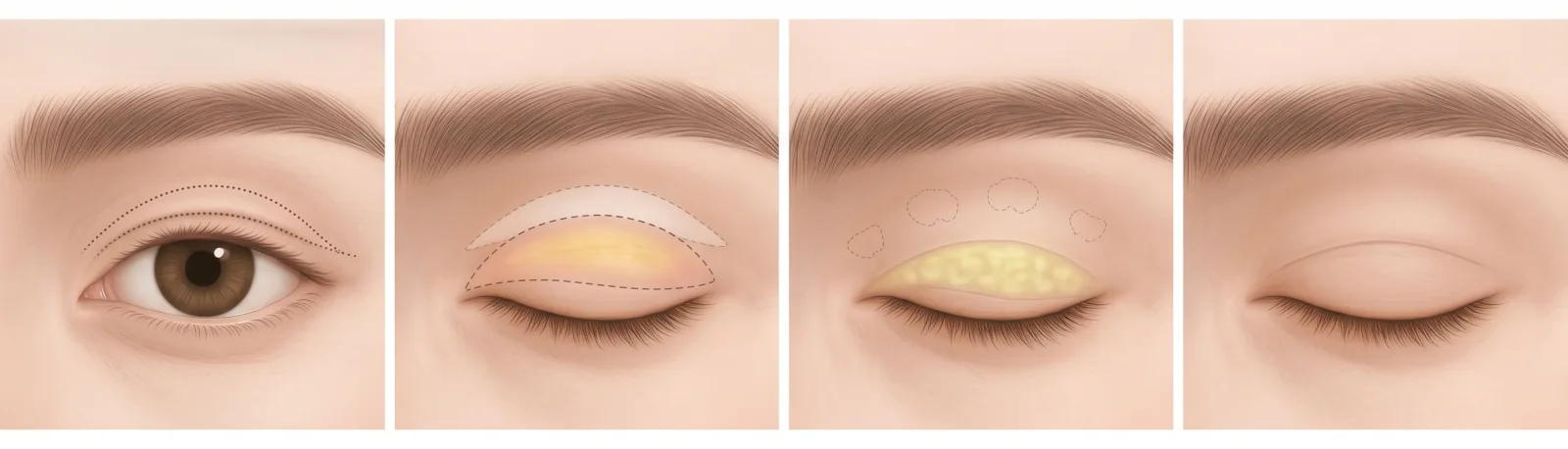
Illustration: the planned crease is marked, the excess upper-lid skin and selected fat pads are addressed through that line.
Second, position: the mid-face and jawline that have descended. This is the domain of a deep-plane facelift, which releases and repositions the SMAS layer to the jawline without pulling on skin. Third, volume: the softness lost from cheeks and temples, restored with fat grafting using your own fat. Position and volume frequently belong in the same conversation, because a lift moves tissue back while a graft replaces what has thinned.
Not every plan touches all three. Someone whose main issue is tired-looking eyes and good facial position needs eye work and no lift. Someone with heavy jowls and full cheeks needs a lift and no added volume. The value of thinking about the whole face is that nothing important gets missed and nothing unnecessary gets added.
At once or staged
Can it all be done at once, or is it staged?
Some of these elements combine comfortably in one session; others are better staged across separate visits. The deciding factors are total operating time, the anaesthetic load, and how much healing tissue can reasonably manage at once. A wish to do everything on one trip does not decide it. A lift and fat grafting, for instance, are commonly done together because they address the same face as one shape. Eyelid work can often be added to that.
But there is a ceiling. Combining too many major procedures in a single session lengthens time under anaesthetic and stacks swelling, which is why a careful surgeon caps how much is done together and may recommend splitting a very large plan. Whether your specific combination is one session or two is a clinical judgement made at consultation. There is no universal number that applies to every face. This is exactly the question the guide on how many procedures can be done at once looks at in detail.
Staging is not a failure of planning; often it is good planning. Splitting a large rejuvenation into two sensible stages can mean shorter individual recoveries and a lower single-session load, and it lets the surgeon see how the first stage settled before finalising the second.
Sequencing
How a full-face plan is sequenced safely
When a plan is staged, the order is chosen deliberately. Generally the structural, position-changing work (the lift) anchors the plan, because it re-establishes the underlying shape that the finer adjustments then refine. Volume is judged against that new position, not the old one, and eyelid refinements are made knowing how the surrounding face now sits. Sequencing this way means each stage builds on the last.
Within a single combined session, the same logic applies to the running order on the day: deeper structural work first, then volume, then finer refinements, so that later steps account for what earlier ones changed. Throughout, the surgeon is watching total time and the patient's overall surgical load, keeping the session within limits that protect safety.
The thread that ties all of this together is a single person holding the whole plan in their head. When one surgeon assesses, sequences and performs the work, the face is treated as one coherent shape across every stage. The lift, the volume and the eyes relate to each other, and follow-up reviews track how the whole plan is settling across the face.
At Garnet
How Garnet builds a full-face plan
Garnet is a single-surgeon clinic in Apgujeong, Seoul. Dr. In-Soo Baek is a board-certified plastic surgeon (Korean medical licence no. 77407) who performs eye surgery, facial lifting and fat grafting himself, so a full-face plan is designed and carried out by one person, with no division between doctors. At consultation he assesses which elements (eyes, lift, volume) would genuinely change how you look, advises plainly which to leave alone, and decides whether your plan is one session or is better staged.
Because the same surgeon consults, operates and follows up, with structured reviews at 1, 3 and 6 months, the whole plan stays consistent from first assessment through recovery, and any second stage is judged against how the first one settled. The clinic caps the day at two operations, so a combined session has unhurried time and is never rushed to fit everything in. You can start with a no-obligation online assessment and send photos so the surgeon can outline a realistic plan before you plan any travel.
Real Results
Before & After
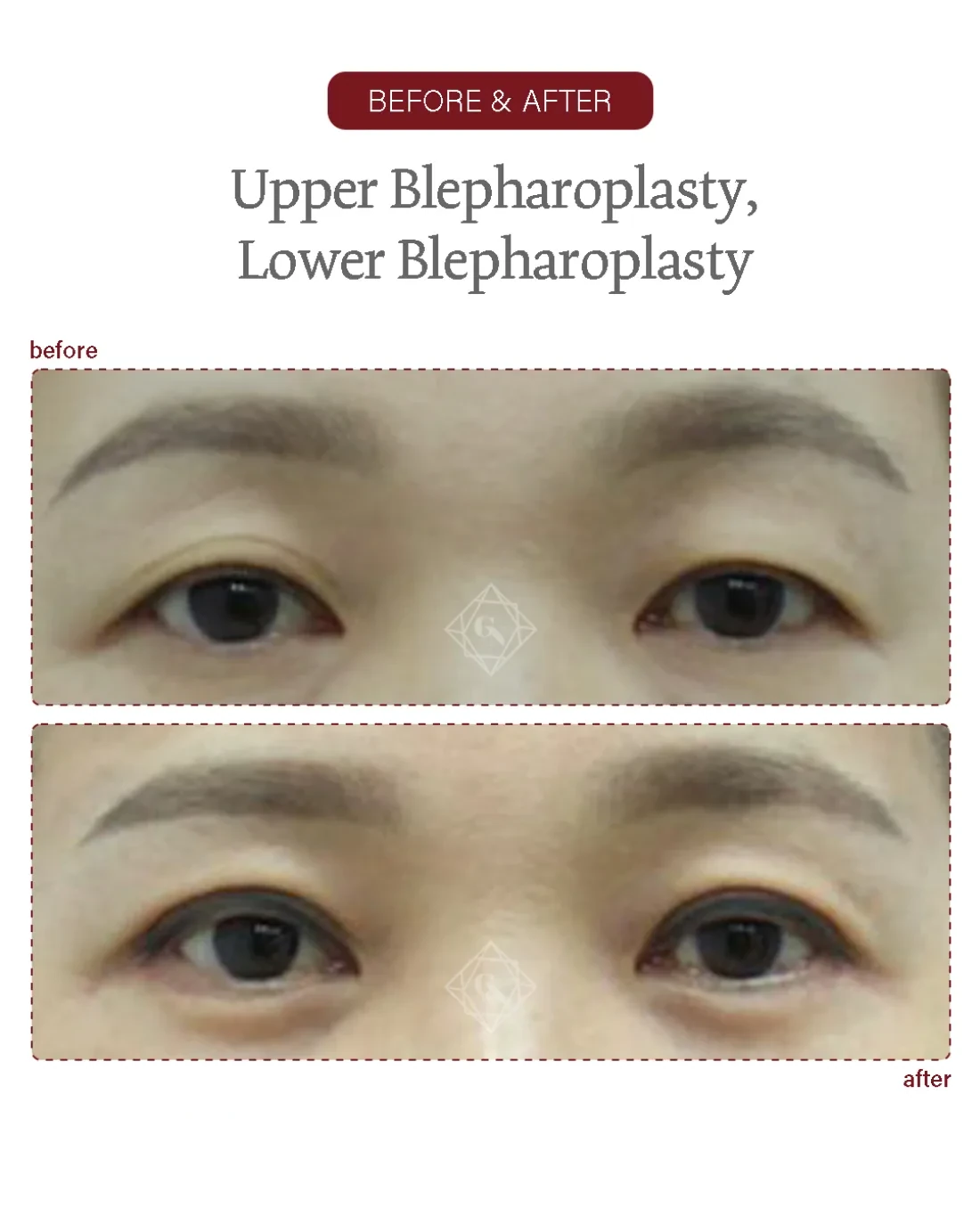
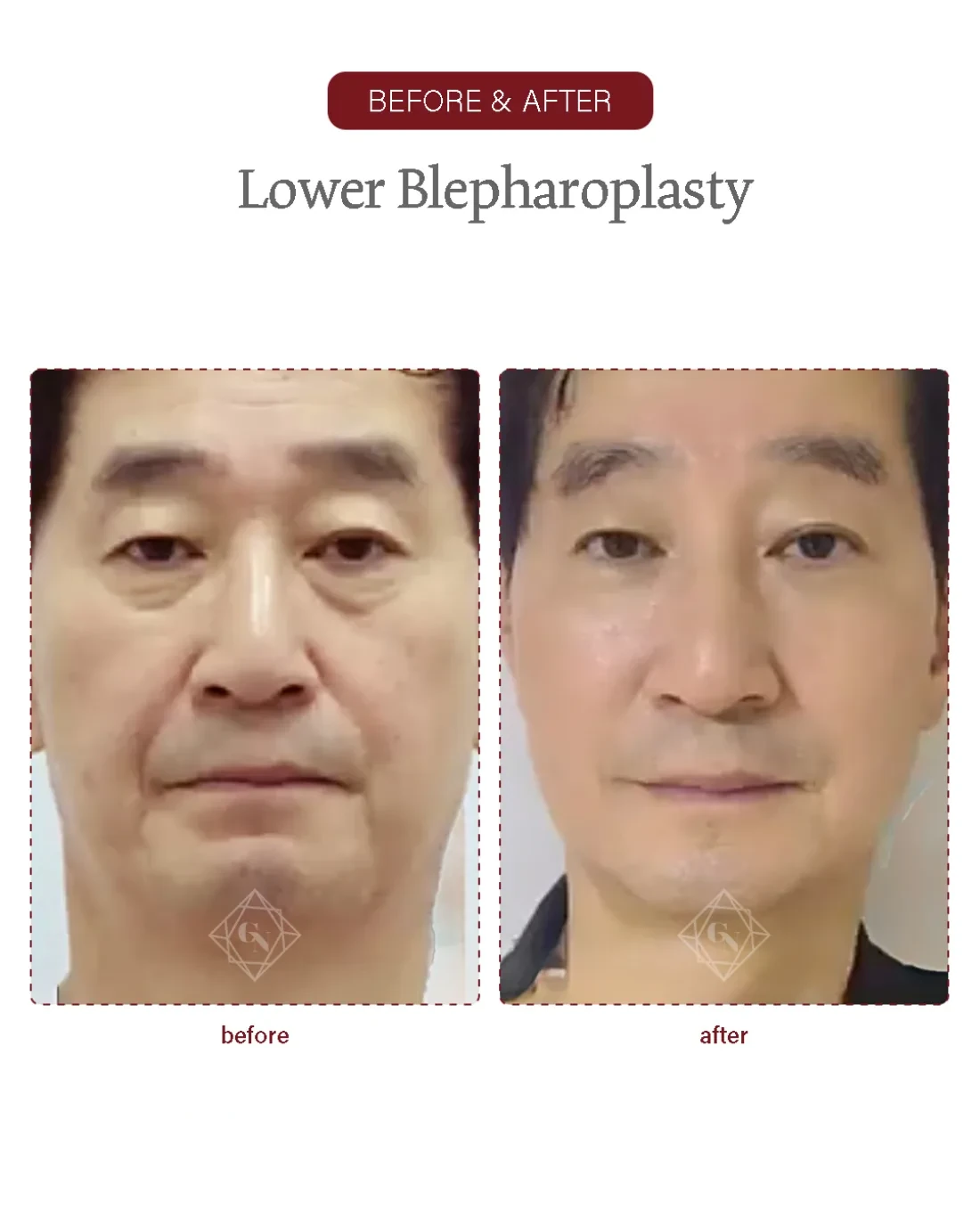
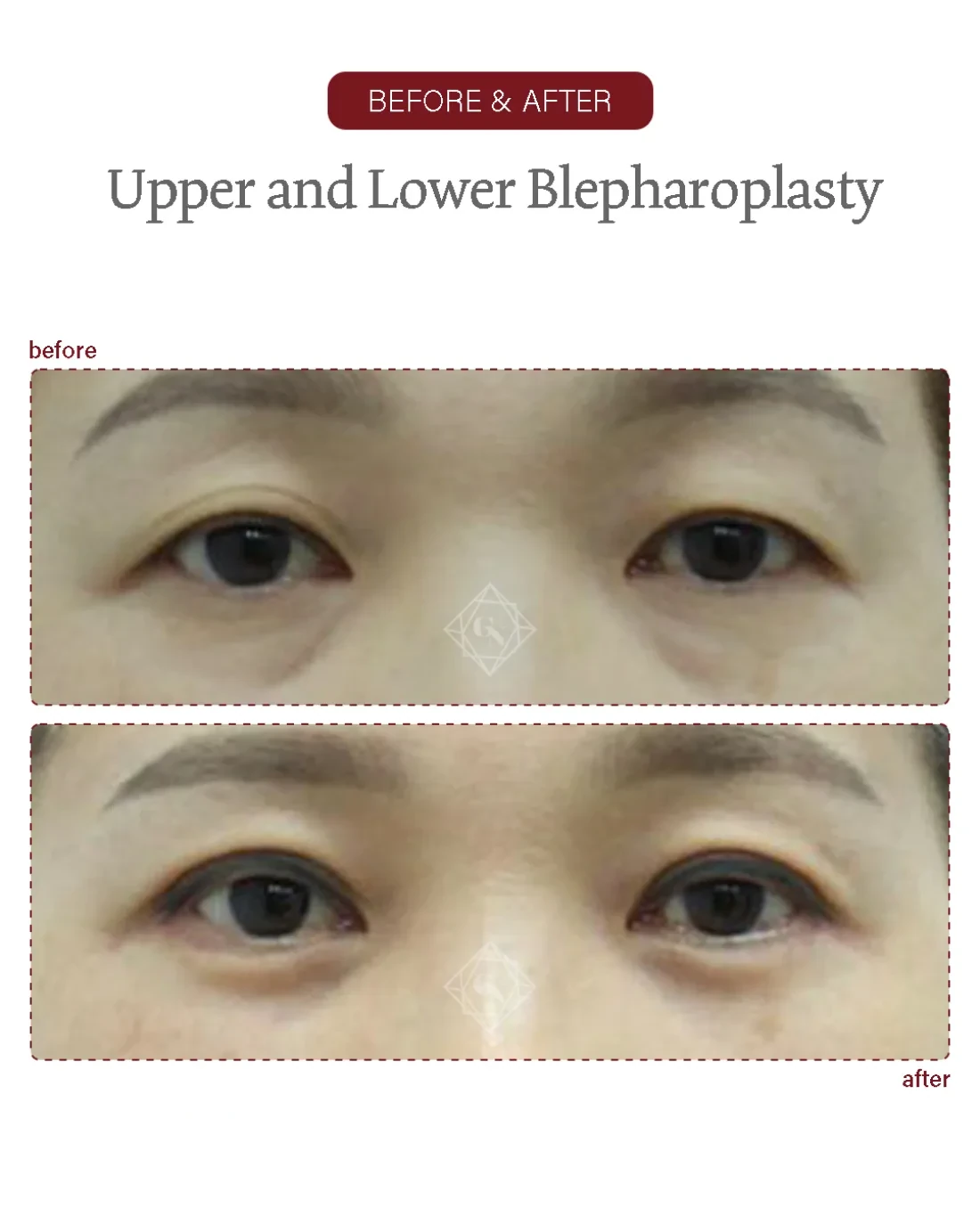
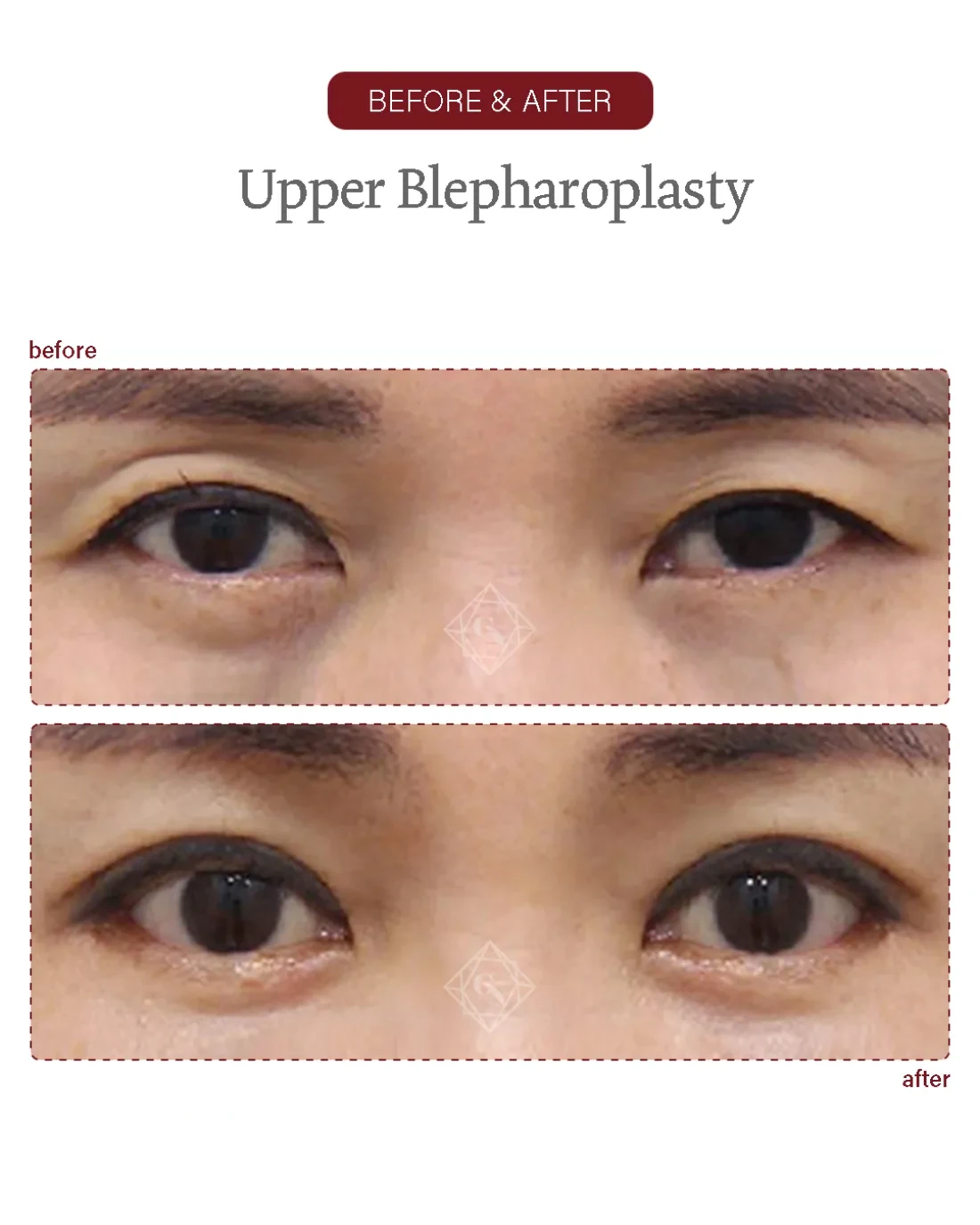
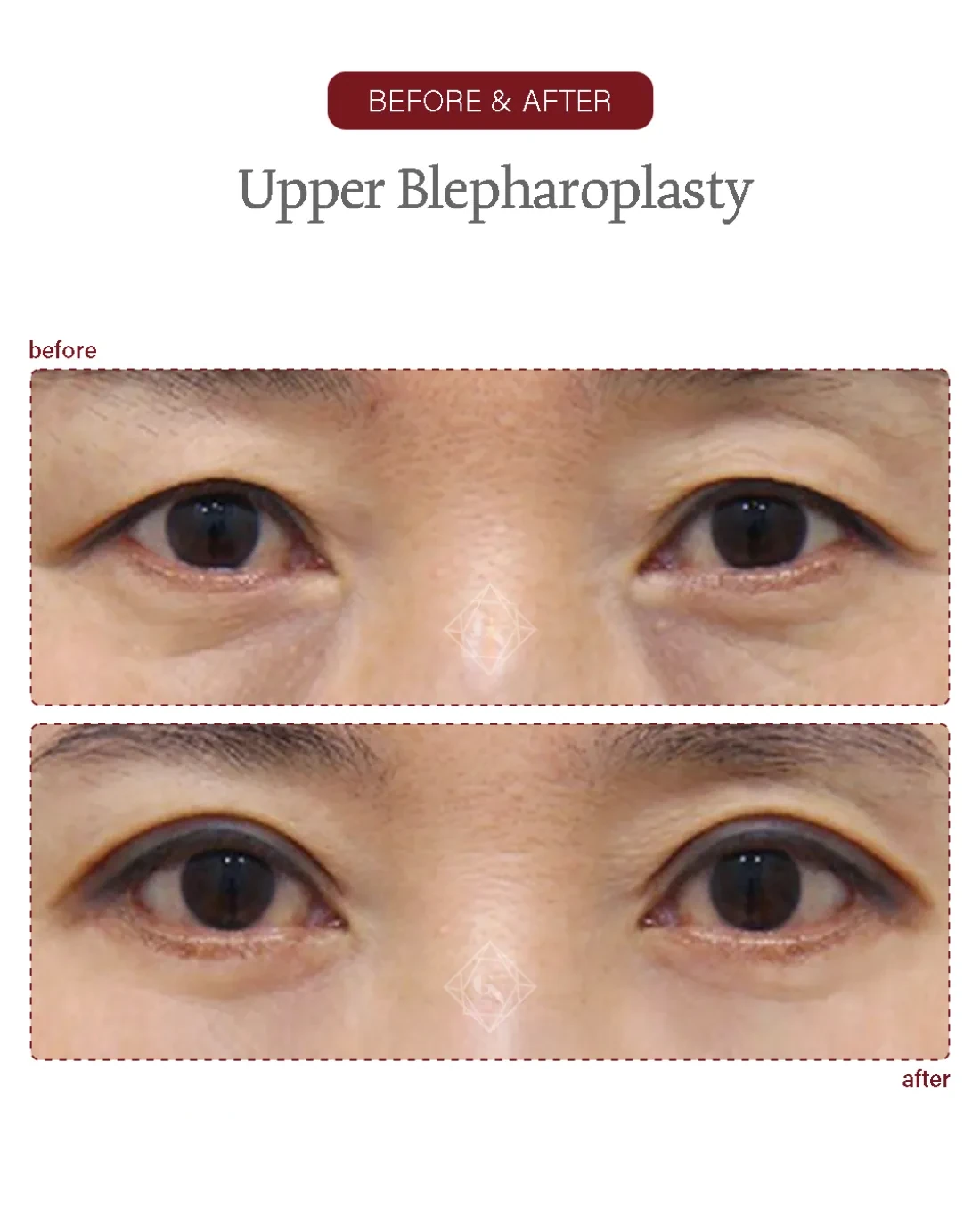
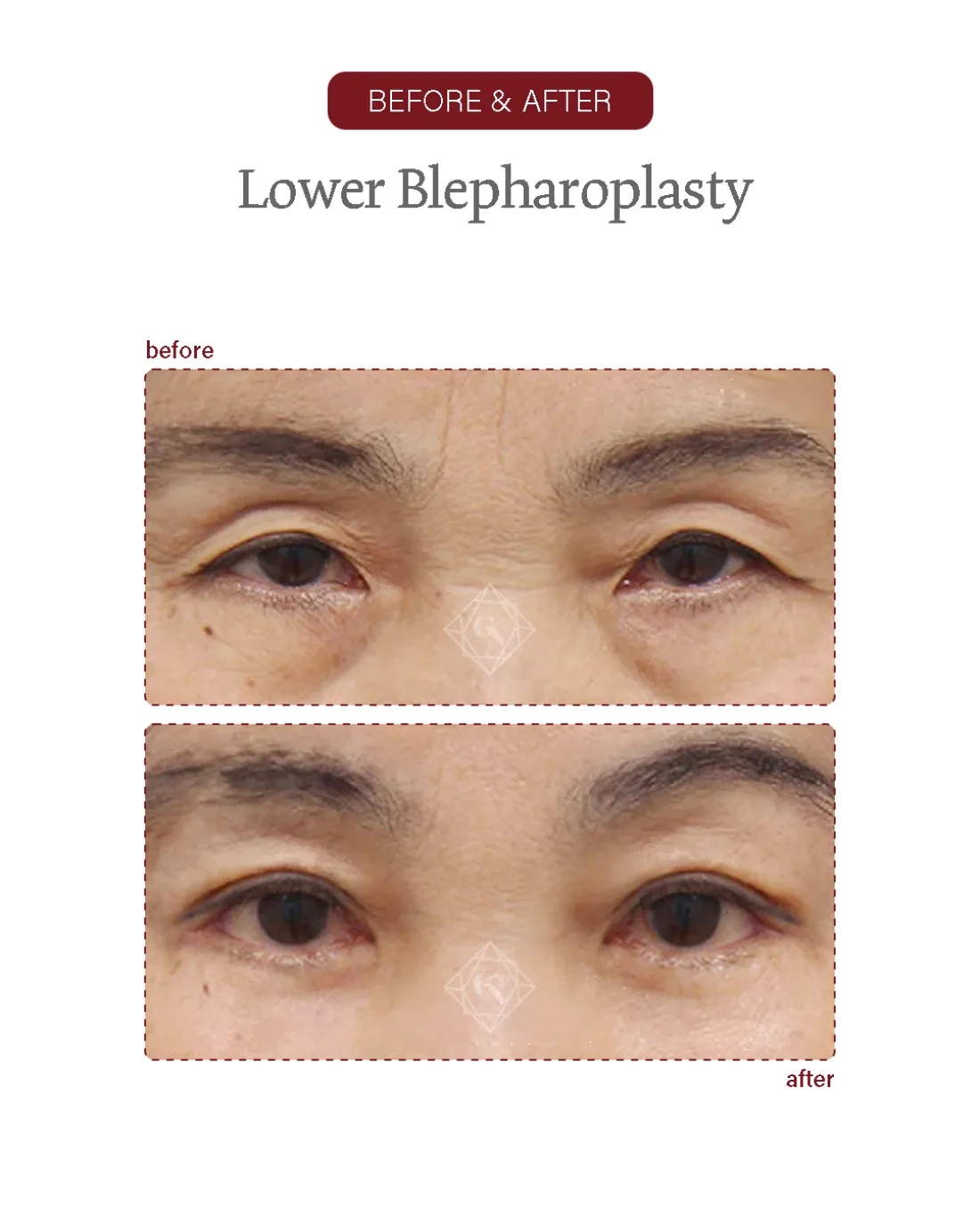
Eyelid before/after examples of actual Garnet patients (published with consent). Results, recovery and suitability vary by individual and are not guaranteed; the right approach is decided at an in-person consultation.
Prices
Price at Garnet
Upper blepharoplasty
From₩3,500,000 + VATExcluding VAT (10% VAT is added at payment)Book now
Same price as Korean patients. Prices shown exclude 10% VAT; your written quote, issued after the in-person consultation, shows the full amount payable.
Dr. In-Soo Baek
Director & sole operating surgeon
Korean medical licence no. 77407
Operate on what you came for. Trained at Korea University Medical Center. Every case planned, performed and reviewed by the same hands.
1Operating surgeon
~2Surgeries per day
7Registered techniques
Board-certified plastic surgeon
Plastic surgery training at Korea University College of Medicine & graduate school
Korean Society of Plastic and Reconstructive Surgeons member, in its facial-contour, eye & rhinoplasty groups
Consults, operates and follows up each case himself
Peer-reviewed papers behind the facts on this page. Each describes findings in its own study group — not results at Garnet — and none predicts your own outcome.
Becker FF et al. Deep-Plane Face-lift vs Superficial Musculoaponeurotic System Plication Face-lift. Archives of Facial Plastic Surgery. 2004. doi:10.1001/archfaci.6.1.8
Chopan M et al. The Minimal Access Cranial Suspension Lift. Clinics in Plastic Surgery. 2019. doi:10.1016/j.cps.2019.06.005
Rohrich RJ et al. Prediction of Facial Aging Using the Facial Fat Compartments. Plastic & Reconstructive Surgery. 2020. doi:10.1097/prs.0000000000007624
Koroma P et al. Deep Plane Facelifts: A Systematic Review and Meta-Analysis of Outcomes. Aesthetic Plastic Surgery. 2026. doi:10.1007/s00266-026-06138-x
FAQ
Common questions
What does full facial rejuvenation involve?
It is a plan covering more than one operation. The surgeon looks at the whole face (the eyes, the lift of the mid-face and jawline, and lost volume) and decides which elements actually need treating and how they fit into a safe sequence. Often it treats some areas and deliberately leaves others alone.
Can everything be done at once?
Some elements combine comfortably in one session; others are better staged. It depends on total operating time, the anaesthetic load and how much healing the tissue can reasonably manage. A lift and fat grafting are commonly done together, and eyelid work can often be added, but very large plans may be split for safety.
How is a staged plan decided?
At consultation, based on your face. The surgeon works out which elements genuinely change how you look, then decides whether they fit safely in one session or are better split into two sensible stages. Staging is often simply good planning. It can mean shorter individual recoveries and a lower single-session load.
Which order are the procedures done in?
The structural, position-changing work (the lift) usually anchors the plan, because it re-establishes the underlying shape. Volume is then judged against that new position, and eyelid refinements are made knowing how the surrounding face sits. Sequencing this way means each stage builds on the last.
Do I need work on every part of my face?
Almost certainly not. A good full-face assessment is as much about what to leave alone as what to treat. Someone with tired eyes and good facial position needs eye work and no lift; someone with heavy jowls and full cheeks needs a lift and no added volume. A plan that recommends everything is a warning sign.
Is it safer to split a big plan into stages?
It can be. Splitting a large rejuvenation into two sensible stages reduces the single-session operating time and anaesthetic load, can mean shorter individual recoveries, and lets the surgeon see how the first stage settled before finalising the second. Whether staging is right for you is judged case by case.
How long does a full-face plan take to recover from?
It depends on which elements are done and whether they are combined or staged. A plan built around a lift recovers over weeks of settling swelling, with sutures typically out around 10 to 14 days, while eyelid and volume work follow their own timelines. The surgeon can give you a realistic schedule for your specific plan.
Will my face still look like me after full rejuvenation?
That is the aim of a well-judged plan: a rested, younger version of your own face that is not altered into someone else's. Treating the whole face as one coherent shape, and declining work that would add change without benefit, is how a natural result is protected. No result can be guaranteed, but the plan is built around looking like yourself.
Who plans and performs all the different procedures?
Ideally one surgeon. When a single surgeon assesses, sequences and performs eye work, lifting and volume, the face is treated as one shape across every stage and is never handed between doctors, and follow-up tracks how the whole plan is settling.
Can I get a full-face plan outlined before I travel?
Yes. You can send photographs for a pre-assessment in an online consultation, and the surgeon can outline which elements are worth treating, whether it is one session or staged, and a realistic timeline before you commit to any travel.
My mom recently had a brow lift and lower blepharoplasty with Dr. Baek, and our experience has been wonderful so far. The Garnet team was incredibly kind and welcoming, with Kelly assisting us as our English consultant—she made everything…
I’m so happy I chose this clinic for my lower blepharoplasty. I was traveling from abroad by myself, so I was a little nervous, but from the beginning I felt comfortable and truly cared for. Everyone was kind, patient, and professional…
Came in for an in-person consult and ended up choosing Garnet and Dr.Baek for my non-incisional DES and tiplasty/alarplasty. I communicated with Kelly (English consultant) from the start till now (3 weeks post-op). She really help me feel…
My under-eyes have been sagging and folding for years... I tried to cover it up with makeup, but it actually got stuck in the wrinkles and made it stand out even more. While going for consultations, I noticed that the bigger the hospital…
Send photos and your question before you travel. An English-speaking coordinator reviews every enquiry and replies with guidance on whether surgery is appropriate, the likely plan and timing.
✓ Reviewed by the clinic coordinator, not a bot
✓ Photo-based pre-assessment before you fly
✓ Foreign-patient scheduling & after-care
✓ One surgeon for consultation, surgery and follow-up
Prefer to chat now? Reach the coordinator directly:








 T S7 months ago



