These two procedures are often confused because both target tired-looking lower eyelids, but they solve different problems. Under-eye fat repositioning is a scarless approach for younger eyes with bulging fat and good skin; lower blepharoplasty is a fuller lift that also addresses loose skin and muscle. Choosing well comes down to what your lower lids actually need. Which one sounds less invasive matters far less.
The short answer
Under-eye fat repositioning is scarless (transconjunctival) with minimal downtime; it repositions bulging fat but does not remove loose skin.
Lower blepharoplasty uses an external incision below the lash line and is a four-step lift that also addresses skin and muscle laxity.
The deciding factor is your anatomy: younger eyes with fat bulges and tight skin often suit repositioning; eyes with excess skin or wrinkling usually need the fuller procedure.
An in-person or photo assessment of your lower lids is the only reliable way to choose. At Garnet the same board-certified surgeon evaluates and, if you proceed, operates and follows up.
Both under-eye fat repositioning and lower blepharoplasty aim to make the lower eyelids look smoother and more rested, so patients often assume they are interchangeable. They are not. The difference is in what is causing the tired look and therefore what each procedure corrects.
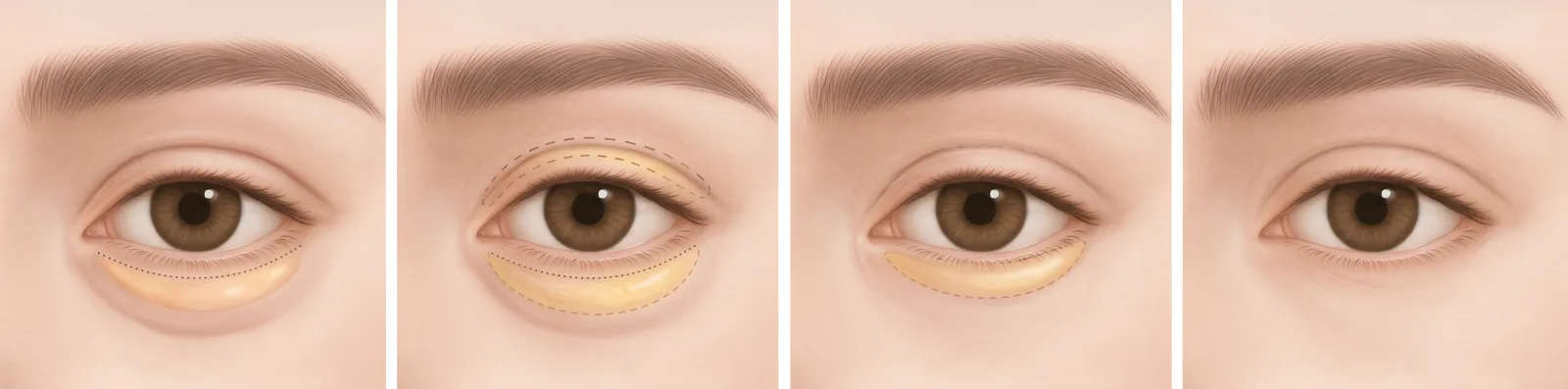
Illustration: through a fine line just below the lashes, the under-eye fat (yellow) is repositioned over the bony rim to fill the groove rather than removed.
Under-eye bags can come from herniated fat pushing forward, from a hollow tear-trough below the bulge, from loose or crepey lower-lid skin, from muscle laxity, or from a mix of all of these. Fat repositioning is designed mainly for the first two, bulging fat and the hollow beneath it, in eyes that still have good skin tone. Lower blepharoplasty is designed to handle the fuller picture, including skin and muscle, when fat alone is not the whole story.
That is why the right answer is rarely "whichever is less invasive". A scarless procedure that leaves loose skin untouched will disappoint someone whose main issue is skin laxity, and a full four-step lift is more than younger eyes with isolated fat bulges actually need. The goal is matching the procedure to the anatomy.
Fat repositioning
Under-eye fat repositioning: the scarless option
Under-eye fat repositioning at Garnet is performed through a transconjunctival incision, that is, from inside the lower eyelid, so there is no visible external scar. The herniated fat that creates the bag is not removed. The surgeon repositions it forward over the orbital rim and fixes it in place, smoothing the transition between the bulge above and the hollow tear-trough below.
Because nothing is cut on the skin surface and the approach is hidden, downtime is comparatively minimal and there is no external suture removal. That makes it an appealing choice for people who want a refreshed under-eye with a shorter, lower-profile recovery. The key limitation is the other side of that same feature: working from inside the lid, it does not tighten or remove loose skin or address significant muscle laxity.
So the ideal candidate is someone, often younger, whose main concern is a fat bulge and the shadow or hollow beneath it, with lower-lid skin that is still firm enough not to need tightening. For those eyes it can deliver a natural, rested look with a gentler recovery than a full lift.
Lower blepharoplasty
Lower blepharoplasty: the four-step Quad Plus lift
Lower blepharoplasty at Garnet uses the four-step Quad Plus method through a transcutaneous incision: an external cut just below the lash line, set in the natural lower-lid crease. The four steps are fat repositioning, a SOOF (sub-orbicularis fat) lift, orbicularis muscle suspension and skin redraping. In other words, it addresses fat, deep midface fat, muscle and skin in one procedure.
That external access is exactly what lets it do more: because the surgeon can lift muscle and redrape skin, the procedure can correct loose, crepey or excess lower-lid skin and muscle laxity that a scarless approach cannot reach. The trade-off is a fine external suture line, which sits in the lash-line crease and fades over weeks, and a somewhat longer recovery, with sutures removed at about day 7.
This is the right tool when the under-eye problem is more than just a fat bulge: when there is excess or wrinkled skin, the lower lid has descended, or multiple layers need correcting together. The recovery is more involved than the scarless option, which the lower blepharoplasty recovery timeline sets out day by day.
The differences
The real differences side by side
Incision and scar: fat repositioning is transconjunctival (inside the lid, no external scar); lower blepharoplasty is transcutaneous (a fine external line below the lashes that fades over weeks). What each treats: repositioning handles fat bulges and the tear-trough hollow only; lower blepharoplasty also handles loose skin and muscle laxity.
Downtime: the scarless procedure generally has minimal downtime with no external suture removal; the Quad Plus lift involves more swelling and bruising early on, with sutures out at about day 7 and a settled result over the following months. Scope: repositioning is the more targeted, lower-profile option; lower blepharoplasty is the more complete correction when several issues coexist.
Neither is simply "better". They sit on a spectrum from targeted to extensive. A patient with isolated fat bulges and tight skin is over-treated by a full lift, while a patient with loose skin is under-treated by repositioning alone. Matching the procedure to what your lower lids actually show is the whole point of the consultation.
Who suits which
Who tends to suit each procedure
Under-eye fat repositioning tends to suit younger patients, or anyone whose lower-lid skin is still firm, whose main concern is a forward fat bulge with a hollow beneath it, and who values a shorter, lower-profile recovery. If you pinch the lower-lid skin and it snaps back well, and the problem is mostly puffiness with little wrinkling, you are more likely to be in this group.
Lower blepharoplasty tends to suit patients who have loose, crepey or excess lower-lid skin, visible muscle laxity, or a descended lower lid in addition to (or instead of) fat bulges. In those situations simply repositioning fat would leave the skin issue unaddressed. It is also the route when several layers need correcting together for a balanced result.
These are tendencies. Many people sit in between, with some fat bulging and some early skin change, where either could be defensible depending on priorities. That is exactly the kind of judgement that needs a real assessment; a self-diagnosis cannot make it. A careful surgeon will sometimes recommend the less extensive option, or advise that neither is needed yet.
How to choose
How to choose between the two, and how Garnet decides
The single most reliable way to choose is an assessment of your actual anatomy: the quality and amount of your lower-lid skin, how much fat is herniating, the depth of the tear trough, and the position of the lid. No online checklist can substitute for that, because the same photo can hide skin laxity that only shows on examination, or reveal a tear-trough hollow that changes the plan.
At Garnet, the same board-certified plastic surgeon, Dr. In-Soo Baek, performs the consultation, the surgery and the follow-ups. That continuity matters here: the person recommending fat repositioning over a fuller lift (or the reverse) is the same person who will carry out and stand behind that decision. No consultant hands you on to an operating surgeon you have not met. Garnet's approach is to address only what you came for, without over-recommending the larger procedure.
You do not have to decide before you travel. You can send photos for a pre-assessment in an online consultation, and the surgeon will tell you which option fits, or whether a procedure is warranted at all. If cost is part of your decision, the factors are set out on the lower blepharoplasty cost in Korea page.
Real Results
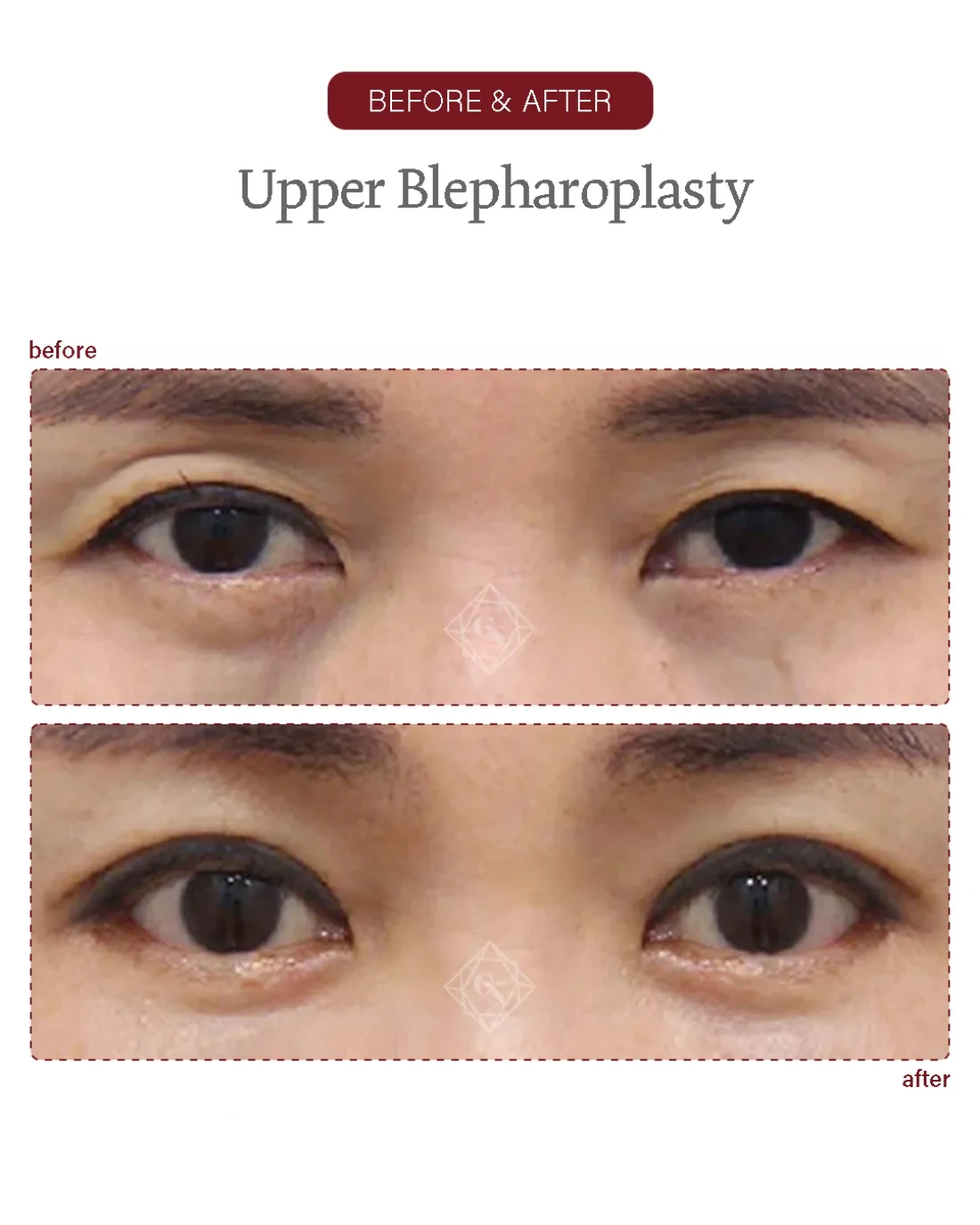
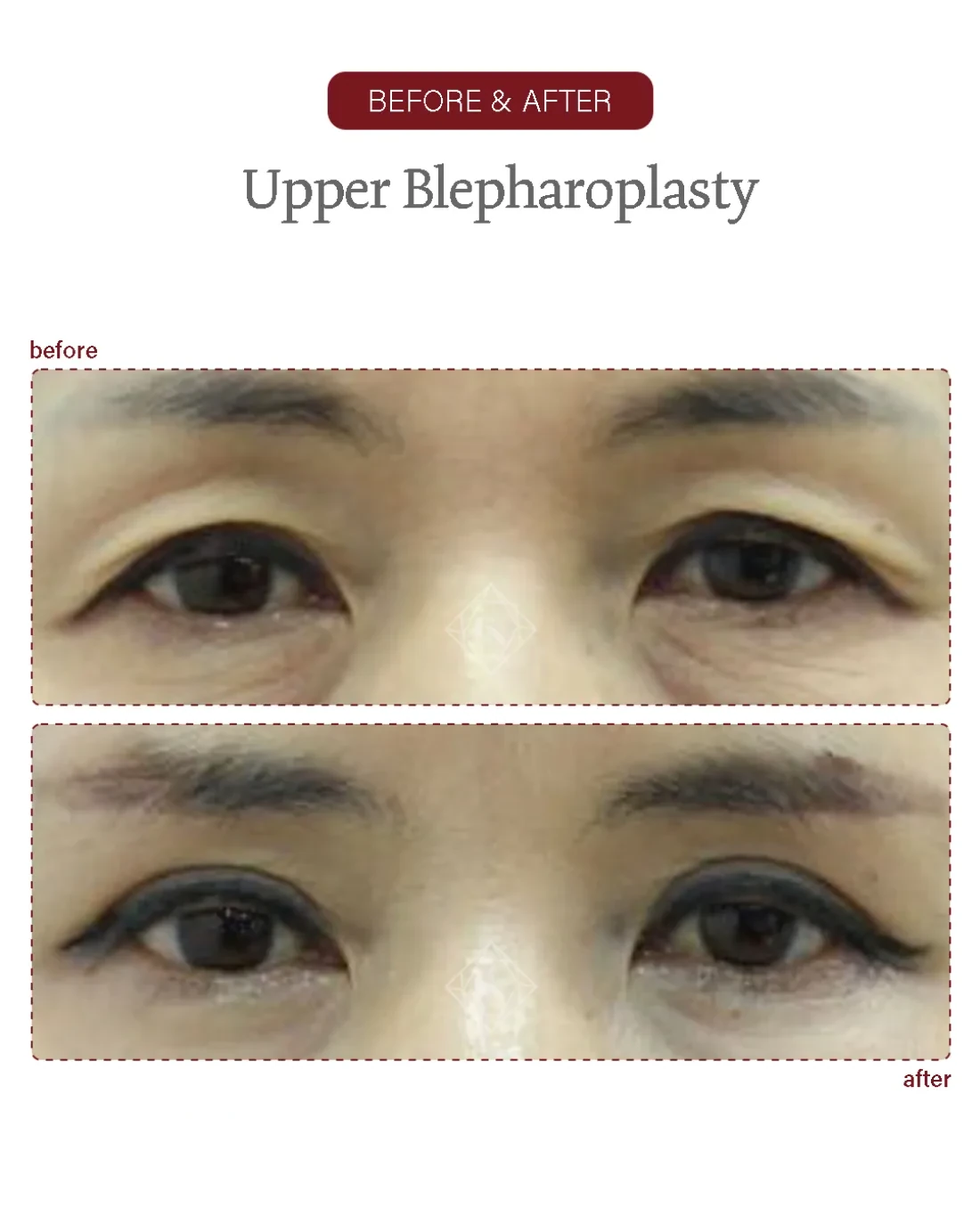
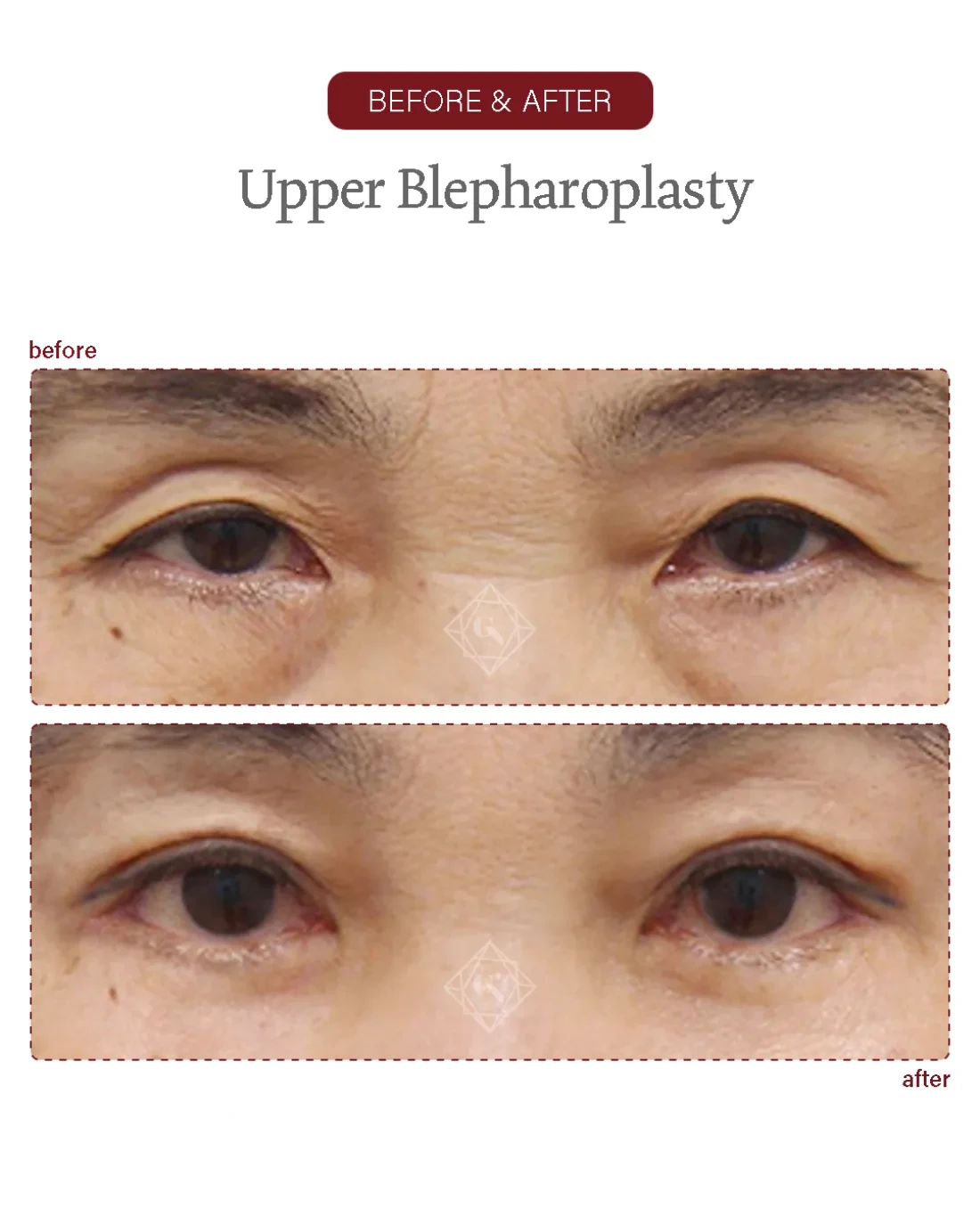
Before & After
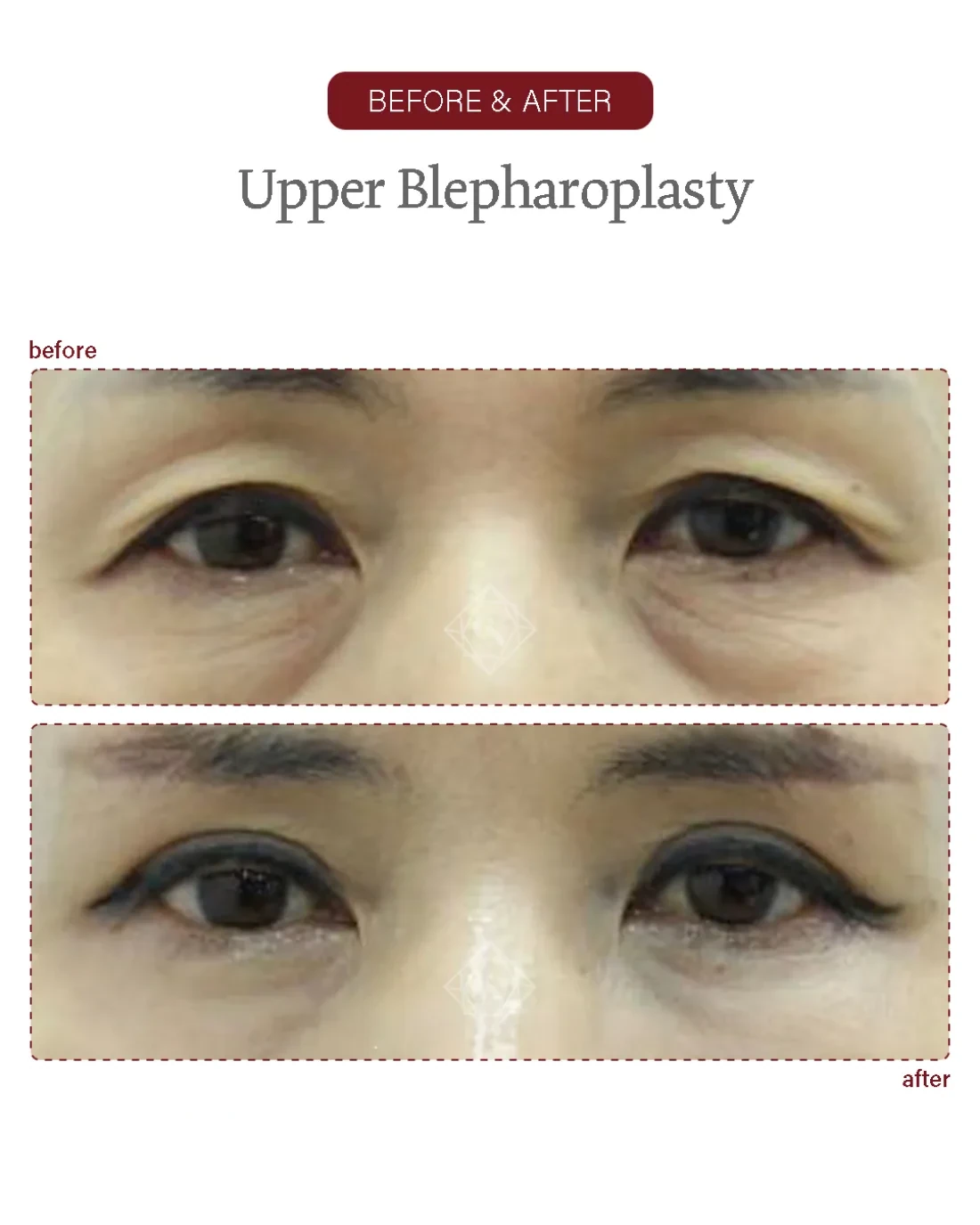
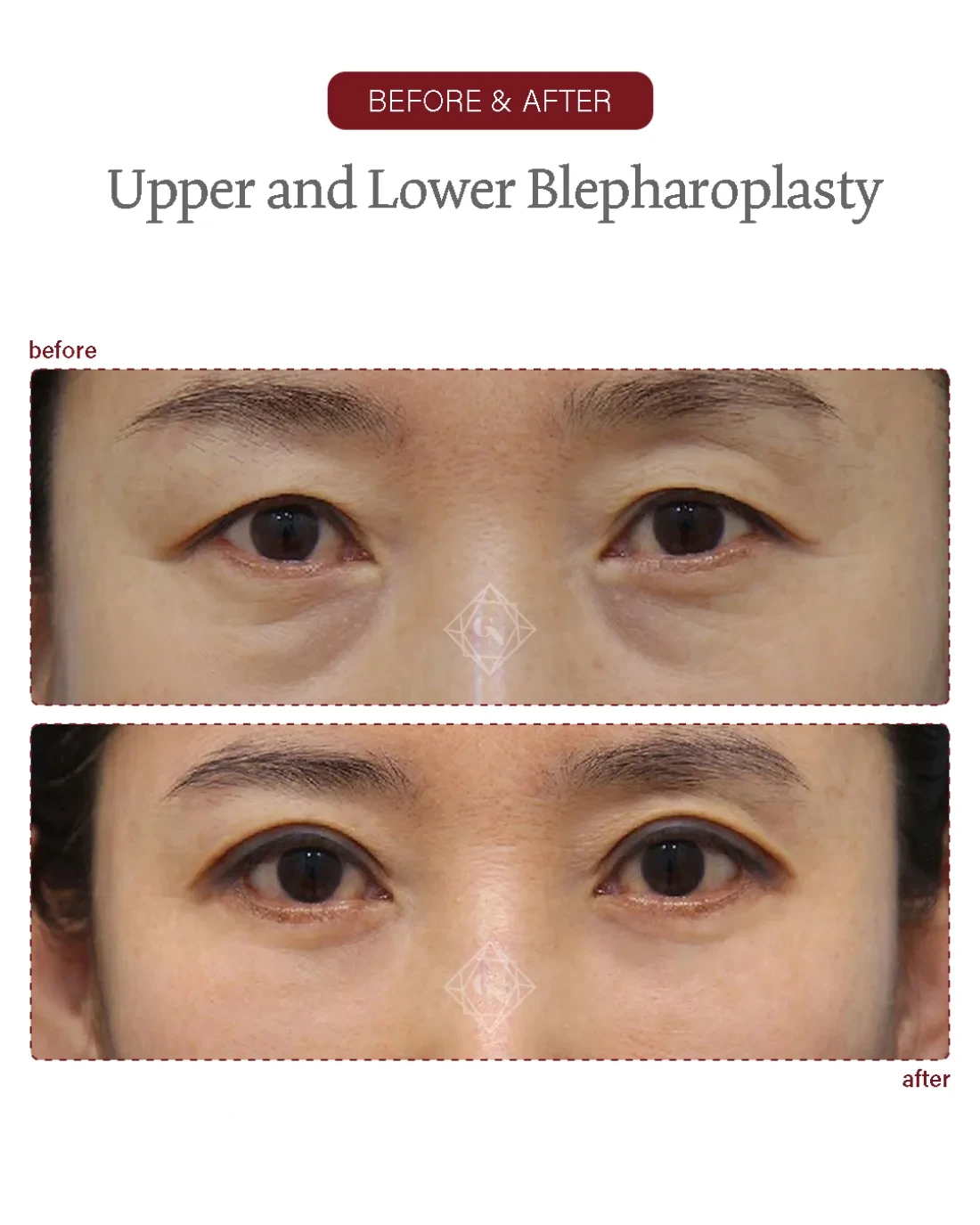
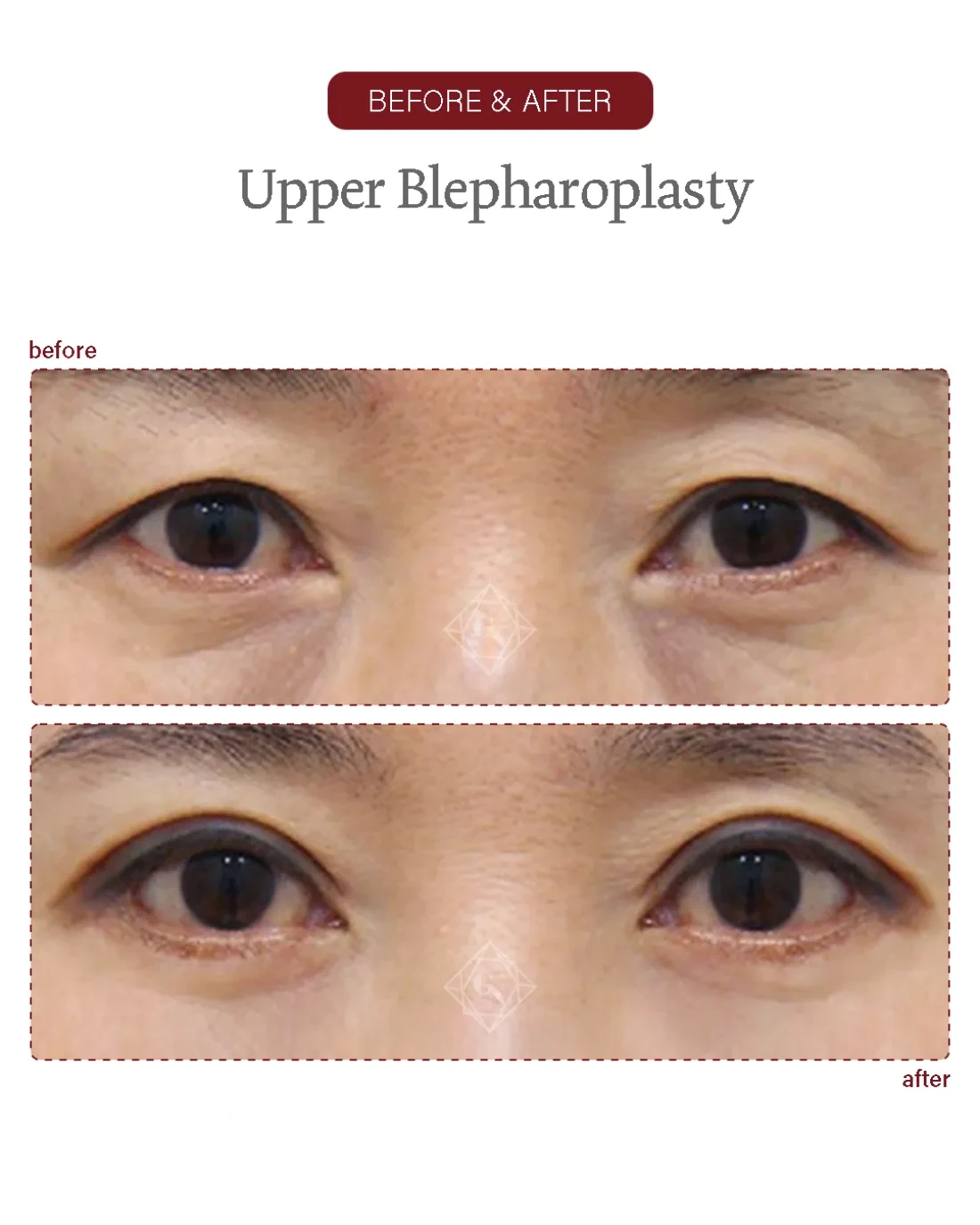
Eyelid before/after examples of actual Garnet patients (published with consent). Results, recovery and suitability vary by individual and are not guaranteed; the right approach depends on an in-person examination.
Prices
Price at Garnet
Lower blepharoplasty
From₩3,500,000 + VATExcluding VAT (10% VAT is added at payment)Book now
Same price as Korean patients. Prices shown exclude 10% VAT; your written quote, issued after the in-person consultation, shows the full amount payable.
Dr. In-Soo Baek
Director & sole operating surgeon
Korean medical licence no. 77407
Operate on what you came for. Trained at Korea University Medical Center. Every case planned, performed and reviewed by the same hands.
1Operating surgeon
~2Surgeries per day
7Registered techniques
Board-certified plastic surgeon
Plastic surgery training at Korea University College of Medicine & graduate school
Korean Society of Plastic and Reconstructive Surgeons member, in its facial-contour, eye & rhinoplasty groups
Consults, operates and follows up each case himself
Peer-reviewed papers behind the facts on this page. Each describes findings in its own study group — not results at Garnet — and none predicts your own outcome.
Rao V et al. Lower Lid Blepharoplasty in Men. Clinics in Plastic Surgery. 2022. doi:10.1016/j.cps.2021.12.001
Sarhaddi D et al. Transconjunctival Lower Lid Blepharoplasty with and Without Fat Preservation and Skin Resurfacing. Facial Plastic Surgery Clinics of North America. 2021. doi:10.1016/j.fsc.2021.01.004
Branham GH. Lower Eyelid Blepharoplasty. Facial Plastic Surgery Clinics of North America. 2016. doi:10.1016/j.fsc.2015.12.004
FAQ
Common questions
What is the difference between lower blepharoplasty and under-eye fat repositioning?
Under-eye fat repositioning is a scarless, transconjunctival procedure that repositions bulging fat over the orbital rim but does not remove loose skin. Lower blepharoplasty uses an external incision below the lashes and is a four-step lift (the Quad Plus method) that also addresses skin and muscle laxity. Put simply, repositioning is more targeted with less downtime, while lower blepharoplasty treats more layers.
Is lower blepharoplasty or under-eye fat repositioning better for me?
Neither is universally better; it depends on your anatomy. If your main issue is a fat bulge with firm, good-quality lower-lid skin, fat repositioning may suit you. If you also have loose, crepey or excess skin or muscle laxity, lower blepharoplasty is usually needed because repositioning alone would leave the skin untreated. An assessment of your lower lids is the only reliable way to decide.
How do I choose between lower blepharoplasty and under-eye fat repositioning?
Base the decision on what your lower lids actually need. The key questions are how good your skin tone is, how much fat is bulging, and whether the lid has descended. A surgeon assesses this in person or from photos; at Garnet the same board-certified surgeon who evaluates you also operates and follows up, so the recommendation is consistent.
Does under-eye fat repositioning leave a scar?
No. It is performed through a transconjunctival incision inside the lower eyelid, so there is no external scar. That scarless access is one of its main appeals, along with comparatively minimal downtime and no external suture removal. The trade-off is that, working from inside the lid, it cannot tighten or remove loose skin.
Which has a longer recovery, lower blepharoplasty or fat repositioning?
Lower blepharoplasty generally has the longer recovery: it involves more early swelling and bruising and has external sutures removed at about day 7, with the result settling over the following months. Under-eye fat repositioning is scarless with comparatively minimal downtime and no external suture removal, which makes it the lower-profile option for suitable candidates.
Can fat repositioning fix loose under-eye skin?
No. Fat repositioning addresses bulging fat and the tear-trough hollow, but because it works from inside the lid it does not tighten or remove loose, crepey or excess skin. If skin laxity is a significant part of your concern, lower blepharoplasty, which redrapes skin and suspends muscle, is the procedure that addresses it.
Can the two procedures be combined?
Whether elements of fat repositioning and skin or muscle correction are addressed together depends entirely on your individual anatomy and is a surgical judgement to be made for your lids. The right combination, or whether one procedure alone is enough, is decided at assessment by the surgeon who will perform it.
Which procedure is more expensive?
Cost depends on the complexity of what is done, and prices are confirmed at consultation instead of quoted in advance, in line with Korean medical advertising rules. As a general principle, a four-step lift involves more surgical work than a targeted one. The lower blepharoplasty cost in Korea page explains the factors that affect price.
Will a surgeon ever recommend the less extensive option?
Yes. A careful surgeon will recommend fat repositioning over a fuller lift when your anatomy suits it, or advise that no procedure is needed yet. Garnet's stated approach is to address only what you came for without over-recommending the larger operation, and the same surgeon makes and carries out that recommendation, which keeps it consistent.
My mom recently had a brow lift and lower blepharoplasty with Dr. Baek, and our experience has been wonderful so far. The Garnet team was incredibly kind and welcoming, with Kelly assisting us as our English consultant—she made everything…
I’m so happy I chose this clinic for my lower blepharoplasty. I was traveling from abroad by myself, so I was a little nervous, but from the beginning I felt comfortable and truly cared for. Everyone was kind, patient, and professional…
Came in for an in-person consult and ended up choosing Garnet and Dr.Baek for my non-incisional DES and tiplasty/alarplasty. I communicated with Kelly (English consultant) from the start till now (3 weeks post-op). She really help me feel…
My under-eyes have been sagging and folding for years... I tried to cover it up with makeup, but it actually got stuck in the wrinkles and made it stand out even more. While going for consultations, I noticed that the bigger the hospital…
If you are unsure which under-eye procedure fits you, send photos for a no-obligation pre-assessment and the surgeon will tell you which option suits your anatomy, or whether you need one at all.
Send photos and your question before you travel. An English-speaking coordinator reviews every enquiry and replies with guidance on whether surgery is appropriate, the likely plan and timing.
✓ Reviewed by the clinic coordinator, not a bot
✓ Photo-based pre-assessment before you fly
✓ Foreign-patient scheduling & after-care
✓ One surgeon for consultation, surgery and follow-up
Prefer to chat now? Reach the coordinator directly:









 T S7 months ago



