After lower blepharoplasty, sutures come out around day 7 and the visible part of recovery is measured in days to 2 or 3 weeks, while the final, settled result takes a few months. This page walks through the timeline for the transcutaneous Quad Plus method day by day, so you can plan your trip and your time off realistically.
The short answer
Sutures come out at about day 7; by then most patients are presentable enough for low-key activity, though some swelling and a faint pink line remain.
Bruising and swelling peak in the first 48–72 hours, then fade steadily. Cold compresses early and head elevation make a real difference.
Most international patients plan around 7–10 days in Korea so the same surgeon can remove sutures and review the early result before they fly.
The settled, final appearance takes roughly 1–3 months as deep swelling resolves; Garnet reviews you at 1, 3 and 6 months, including by messenger after you return home.
What lower blepharoplasty recovery actually involves
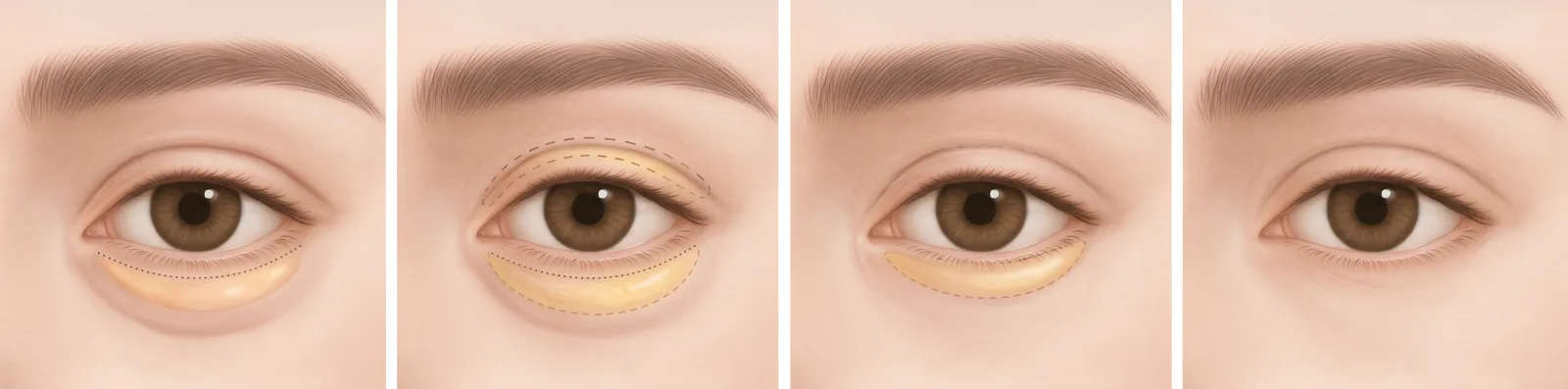
Lower blepharoplasty at Garnet uses a transcutaneous approach (an external incision just below the lash line) as part of the four-step Quad Plus method: fat repositioning, a SOOF (sub-orbicularis fat) lift, orbicularis muscle suspension and skin redraping. Because it works through the skin and adjusts both fat and muscle, recovery is a little more involved than a scarless under-eye procedure, but the sequence is predictable.
Illustration: through a fine line just below the lashes, the under-eye fat (yellow) is repositioned over the bony rim to fill the groove rather than removed.
Two things drive how the first weeks feel: swelling and bruising. Both are normal, both peak early, and both resolve in a fairly orderly way. The external suture line is fine and sits in the natural lower-lid crease, so it fades over weeks. Knowing roughly when each stage happens makes the process far less anxious, because you are watching an expected curve.
One caveat: everyone heals at a slightly different pace. Age, skin thickness, how much was done and your own tendency to bruise all shift the timeline by days. The ranges below are typical and are not promises. If you want to compare this with the scarless option, the lower blepharoplasty vs under-eye fat repositioning page covers the difference in downtime directly.
Days 1–7
Days 1 to 7: the first week, day by day
Day of surgery and day 1: the procedure is done and you go back to your accommodation the same day. Expect tightness, mild soreness and the start of swelling around the lower lids. Cold compresses and keeping your head elevated, including sleeping propped up, are the most useful things you can do now. Discomfort is usually mild and manageable with the medication provided.
Days 2–3: this is when swelling and bruising are at their most visible. Bruising can spread a little down the cheek and take on the usual colour changes as it resolves. This is expected and not a setback. Continue cold compresses for the first 48–72 hours, avoid bending over or heavy lifting, and rest. Many international patients find these the days to stay quiet near their accommodation and skip sightseeing.
Days 4–7: the worst swelling starts to settle and bruising begins to fade and can be covered with light make-up once your surgeon says it is fine. Around day 7 the external sutures are removed. This is quick and is when the same surgeon checks your early result. After suture removal a faint pink line remains where the incision was; this continues to soften over the following weeks. By the end of week one most people feel presentable enough for relaxed activity, though they do not yet look fully settled.
Weeks 2–6
Weeks 2 to 6: looking presentable again
Through weeks 2 and 3 residual swelling keeps fading and any remaining bruising clears. This is the window in which most people feel comfortable returning to office work and ordinary social situations; the eyes look noticeably calmer, even if you can still detect minor puffiness yourself. Many patients time a return to work for somewhere in this range instead of the day-7 mark.
By weeks 4 to 6 the lower lids look natural to other people in everyday settings, and the incision line continues to mature and pale. You can gradually return to light exercise as your surgeon advises, building back up gradually before any intense workouts. Sun protection over the healing line matters in this phase, as fresh scars can darken with UV exposure.
Looking good in normal life by a few weeks is not the same as the fully settled final result. Deeper tissue swelling, the kind only you tend to notice, can linger and is what resolves over the following months. If your trip timing is tight, the guides on how long to stay in Korea and when you can fly after surgery help you plan the days that matter most.
Months 1–6
Months 1, 3 and 6: the settled result
The final appearance of lower blepharoplasty is judged over months. Most of the deep swelling resolves within the first one to three months, and the under-eye area progressively looks smoother and more rested as the repositioned fat and lifted tissue settle into place. The incision line typically continues to fade across this period until it is hard to see in normal light.
Garnet builds structured review into this timeline with follow-ups at 1, 3 and 6 months. Because the same board-certified surgeon who consulted and operated also reviews each follow-up, the person assessing your healing already knows exactly what was done and what to expect. There is no hand-off to a different doctor. That continuity matters most in the months when subtle changes are still happening.
For international patients who have already flown home, these reviews can continue remotely. You can send photos and updates by messenger so the surgeon can confirm you are healing as expected, flag anything that needs attention, and advise on aftercare without you having to return to Seoul. If you ever do want an in-person check, you are welcome to come back, but most healing questions can be handled at a distance.
Red flags
Red flags: when to contact the clinic
Most of what you will see in the first two weeks (swelling, bruising, mild tightness, a pink incision line, watery or slightly dry eyes) is normal and resolves on its own. Knowing what is not routine is what keeps you safe, especially once you are back in your own country.
Contact the clinic promptly if you notice rapidly worsening swelling on one side, pain that increases after the first few days, a fever, spreading redness or heat around the incision, discharge that looks like pus, or any sudden change in vision. Persistent inability to fully close the eye, or pronounced pulling of the lower lid downward, should also be reported promptly.
Because Garnet is a single-surgeon clinic, raising a concern reaches the surgeon who operated on you, who can advise whether something is expected, needs a photo review, or warrants in-person care where you are. If you are abroad and a symptom is acute, seek local medical attention first and inform the clinic in parallel. Quick communication is always better than waiting to see if something settles.
Aftercare
Aftercare that genuinely helps recovery
The aftercare that makes the biggest difference is simple and front-loaded. In the first 2–3 days, cold compresses and keeping your head elevated reduce how much swelling and bruising you accumulate. Sleeping with an extra pillow for the first week or so helps overnight fluid drain away from the lids.
Keep the incision area clean and follow the surgeon's instructions on ointment and gentle care, and avoid rubbing or pulling at the lower lids. Hold off on strenuous exercise, bending over and heavy lifting until cleared, since these raise pressure around the eyes and can worsen swelling. Alcohol and smoking both slow healing and are best to pause around the procedure. Once the line has begun to heal, diligent sun protection helps it fade well.
Eye drops or lubrication may be advised if your eyes feel dry, and you should keep any planned suture-removal and review appointments. For international patients, that means timing your stay so the day-7 suture removal happens before you fly. If you are recovering in the city for a few days, the guide on recovering in Seoul after surgery covers the practical side, and you can raise any question in an online consultation before you travel.
Real Results
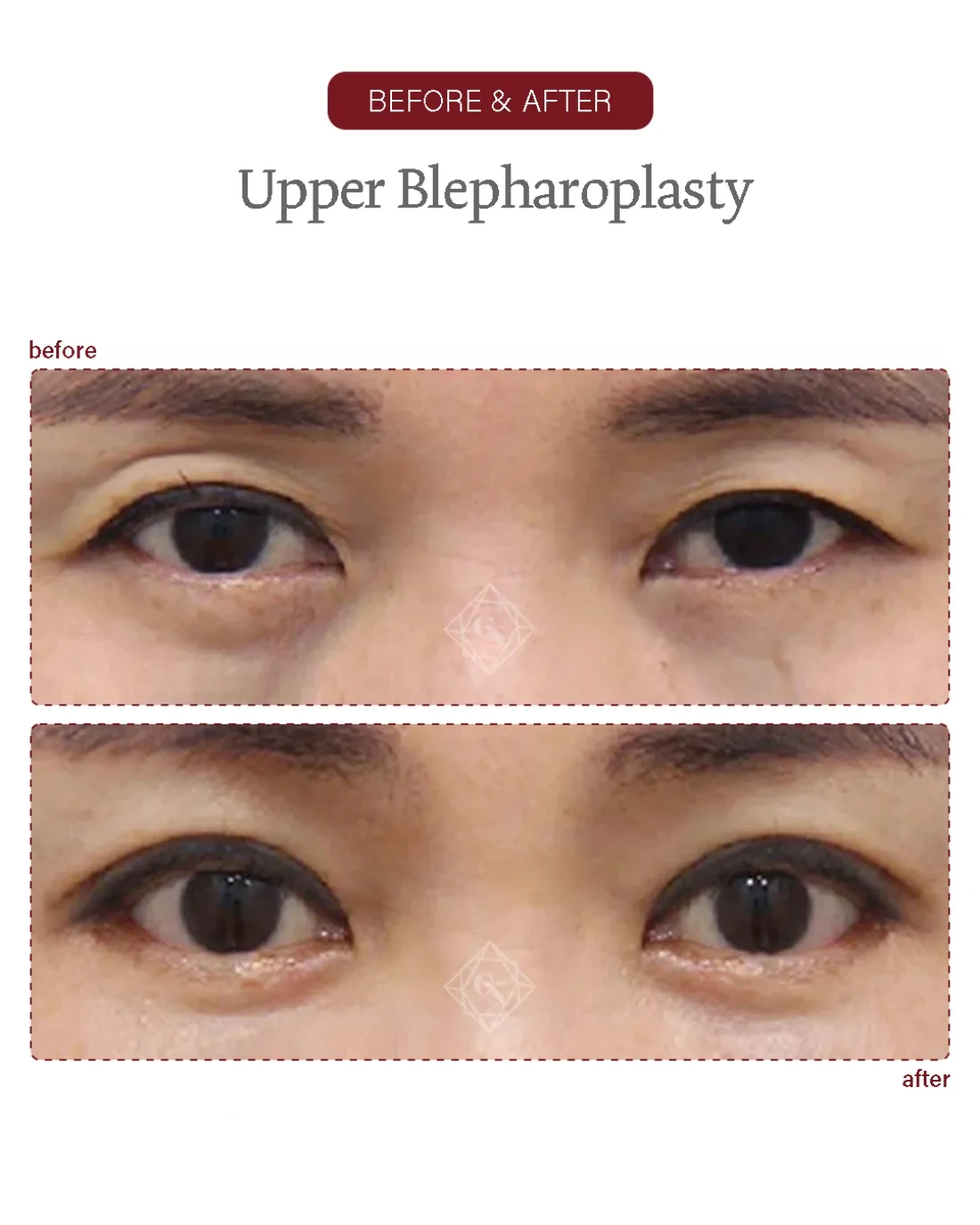
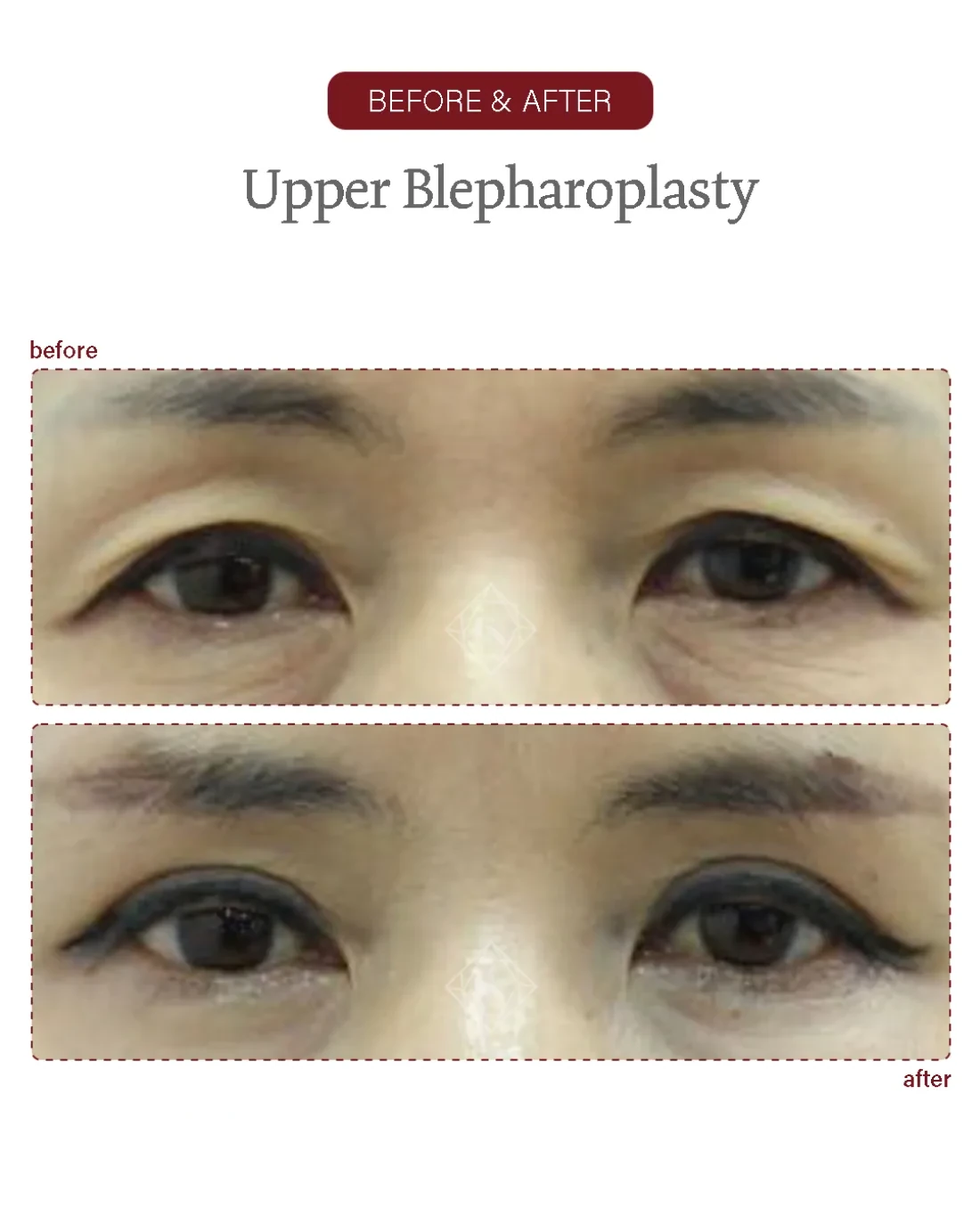
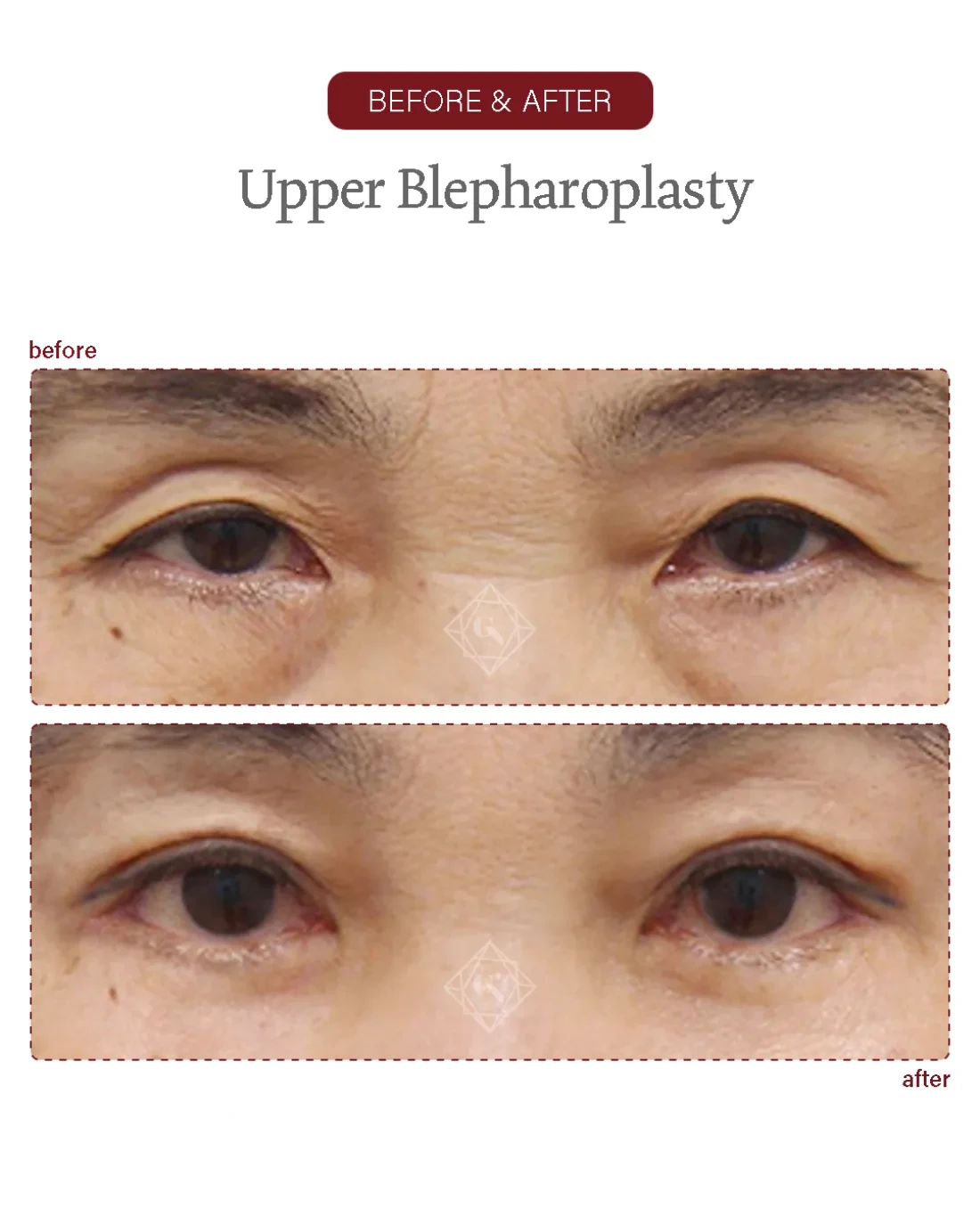
Before & After
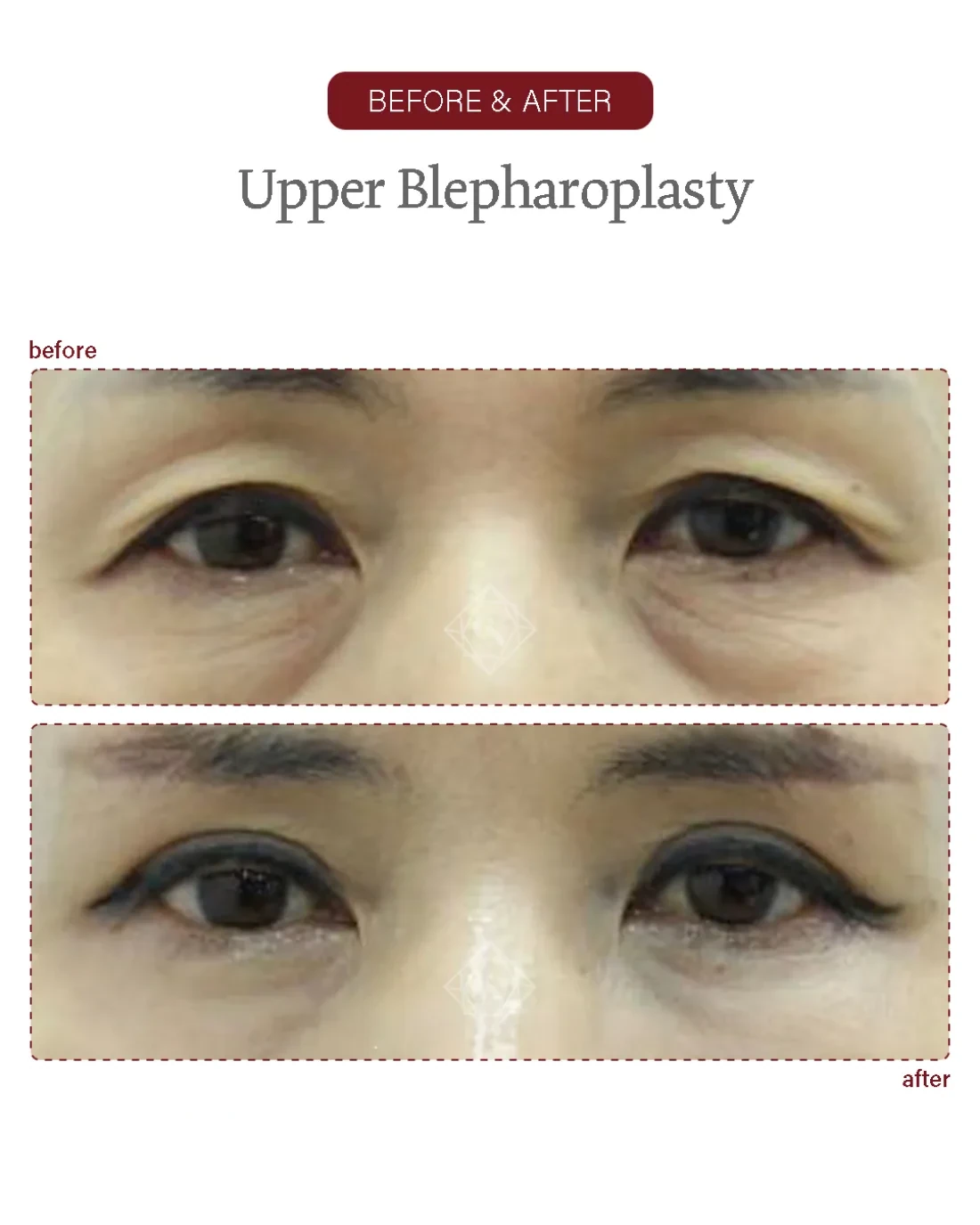
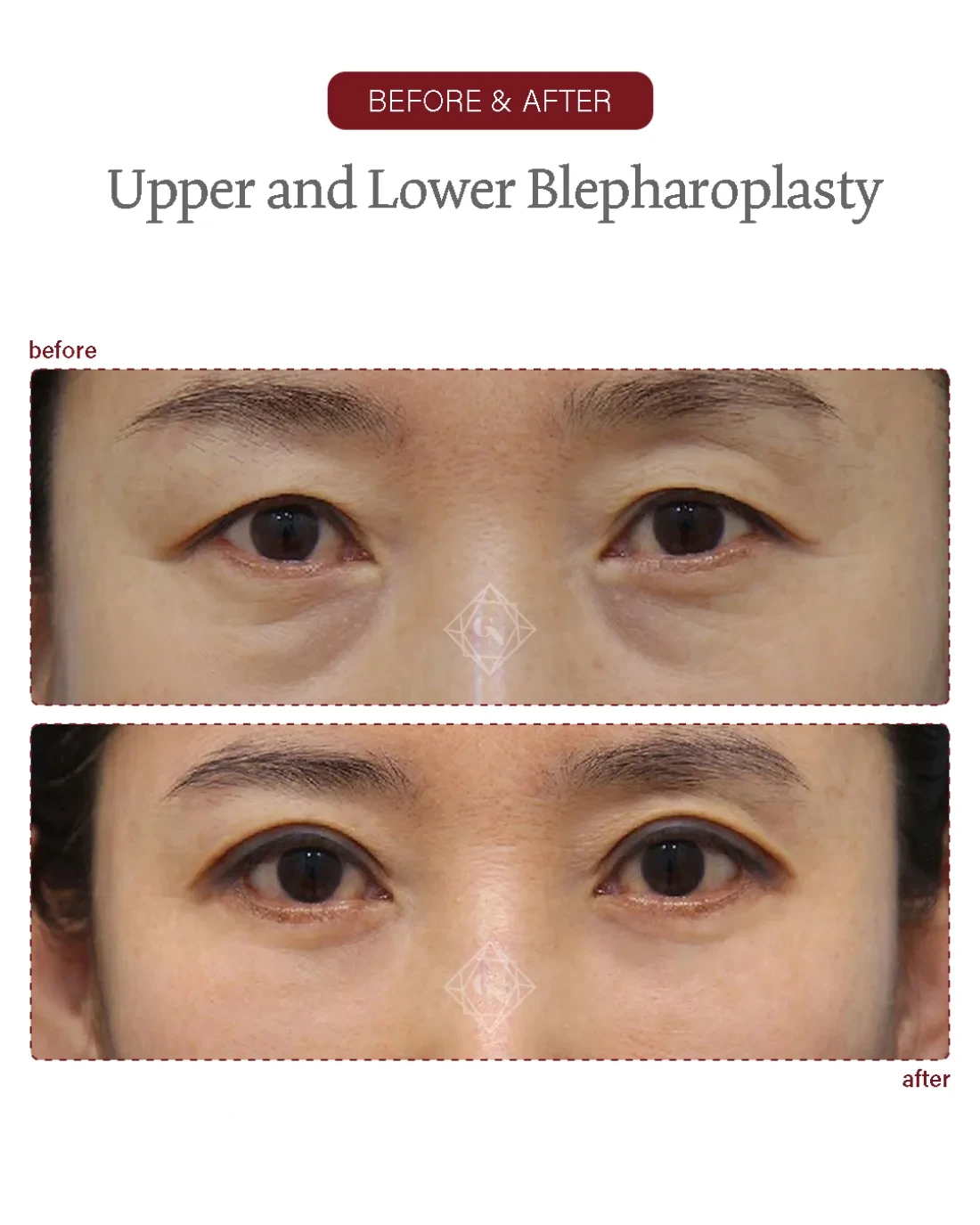
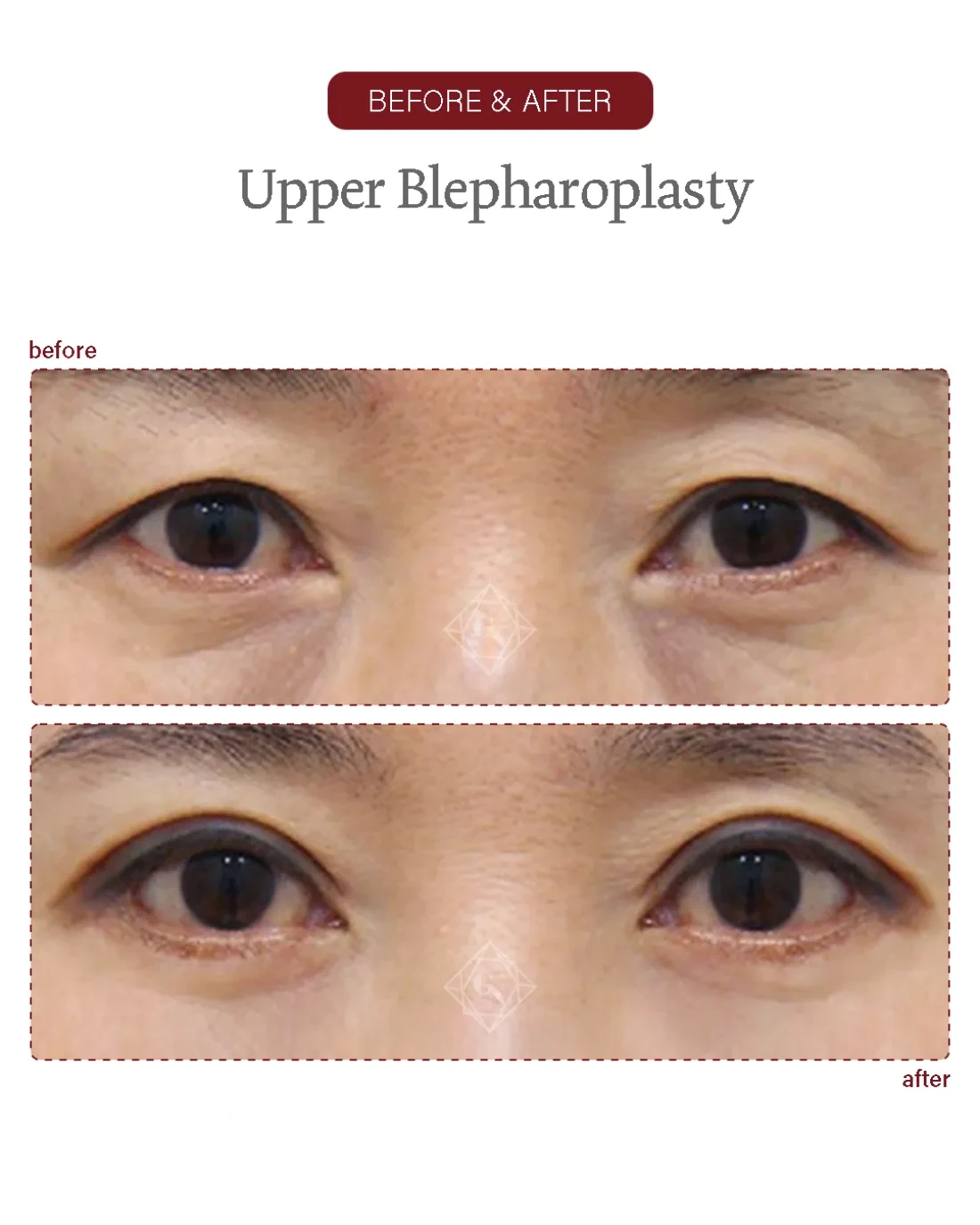
Eyelid before/after examples of actual Garnet patients (published with consent). Results, recovery and suitability vary by individual and are not guaranteed; the right approach depends on an in-person examination.
Prices
Price at Garnet
Lower blepharoplasty
From₩3,500,000 + VATExcluding VAT (10% VAT is added at payment)Book now
Same price as Korean patients. Prices shown exclude 10% VAT; your written quote, issued after the in-person consultation, shows the full amount payable.
Dr. In-Soo Baek
Director & sole operating surgeon
Korean medical licence no. 77407
Operate on what you came for. Trained at Korea University Medical Center. Every case planned, performed and reviewed by the same hands.
1Operating surgeon
~2Surgeries per day
7Registered techniques
Board-certified plastic surgeon
Plastic surgery training at Korea University College of Medicine & graduate school
Korean Society of Plastic and Reconstructive Surgeons member, in its facial-contour, eye & rhinoplasty groups
Consults, operates and follows up each case himself
Peer-reviewed papers behind the facts on this page. Each describes findings in its own study group — not results at Garnet — and none predicts your own outcome.
Rao V et al. Lower Lid Blepharoplasty in Men. Clinics in Plastic Surgery. 2022. doi:10.1016/j.cps.2021.12.001
Sarhaddi D et al. Transconjunctival Lower Lid Blepharoplasty with and Without Fat Preservation and Skin Resurfacing. Facial Plastic Surgery Clinics of North America. 2021. doi:10.1016/j.fsc.2021.01.004
Murri M et al. An Update on Lower Lid Blepharoplasty. Seminars in Plastic Surgery. 2017. doi:10.1055/s-0037-1598632
FAQ
Common questions
How long does lower blepharoplasty recovery take?
The visible recovery from lower blepharoplasty is measured in days to a few weeks: sutures come out around day 7, most swelling and bruising fade within 2–3 weeks, and the eyes look natural to others by roughly 4–6 weeks. The fully settled final result, as deeper swelling resolves, takes about 1–3 months. Healing pace varies by person, so these are typical ranges and carry no guarantee.
What is lower blepharoplasty recovery like day by day?
Day 1 brings tightness and the start of swelling; days 2–3 are when bruising and swelling peak, helped by cold compresses and head elevation; by days 4–7 the swelling eases and bruising fades. Sutures are removed at about day 7 with an early review by the same surgeon. From week 2 onward the eyes progressively look calmer and more presentable.
When can I return to work after lower blepharoplasty?
Many patients return to desk or office work somewhere between the end of the first week and around two weeks, once sutures are out and bruising can be covered or has faded. If your job is public-facing or physical, allowing closer to two weeks is more comfortable. The exact timing depends on how visible any residual swelling is and what your work involves.
What aftercare follows lower blepharoplasty?
Cold compresses and head elevation in the first 2–3 days, keeping the incision clean and following ointment instructions, avoiding rubbing the lower lids, and pausing strenuous exercise, bending, heavy lifting, alcohol and smoking until cleared. Sun protection helps the incision line fade. International patients should time their stay so the day-7 suture removal and early review happen before flying.
How long should I stay in Korea for lower blepharoplasty recovery?
Many international patients plan around 7–10 days so the same surgeon can remove the sutures at about day 7 and review the early result before they fly home. That window covers the most important in-person milestone; the rest of healing can be followed remotely. The guide on how long to stay in Korea for surgery has more detail on planning your trip.
When can I fly home after lower blepharoplasty?
Flying is usually planned for after suture removal and the early review around day 7, so the surgeon can confirm you are healing well before you travel. Your specific timing should be confirmed with the surgeon, as it depends on how your recovery is progressing. The when-can-I-fly-after-surgery guide covers the general considerations.
When does swelling go down after lower blepharoplasty?
Swelling peaks in the first 48–72 hours, then fades steadily; most of it is gone within 2–3 weeks, and the eyes look natural to others by about 4–6 weeks. The last, subtle deep swelling that only you tend to notice resolves over the following one to three months as the result settles.
Is lower blepharoplasty recovery painful?
Most patients describe tightness and mild soreness, usually well controlled with the medication provided. The first few days are the most uncomfortable. If pain increases after the early days, that is worth reporting to the clinic, as recovery should trend toward feeling better.
What are the warning signs to watch for during recovery?
Contact the clinic for rapidly worsening or one-sided swelling, increasing pain after the first few days, fever, spreading redness or heat, pus-like discharge, any sudden change in vision, or a lower lid that pulls noticeably downward or will not close. These are not routine and should be reviewed promptly; if a symptom is acute and you are abroad, seek local care and inform the clinic in parallel.
How do follow-ups work if I live abroad?
Garnet reviews lower blepharoplasty at 1, 3 and 6 months, and for international patients these can continue remotely. You can send photos and updates by messenger to the same board-certified surgeon who operated, who confirms you are healing as expected and advises on aftercare. You are welcome to return in person, but most recovery questions can be handled at a distance.
My mom recently had a brow lift and lower blepharoplasty with Dr. Baek, and our experience has been wonderful so far. The Garnet team was incredibly kind and welcoming, with Kelly assisting us as our English consultant—she made everything…
I’m so happy I chose this clinic for my lower blepharoplasty. I was traveling from abroad by myself, so I was a little nervous, but from the beginning I felt comfortable and truly cared for. Everyone was kind, patient, and professional…
Came in for an in-person consult and ended up choosing Garnet and Dr.Baek for my non-incisional DES and tiplasty/alarplasty. I communicated with Kelly (English consultant) from the start till now (3 weeks post-op). She really help me feel…
My under-eyes have been sagging and folding for years... I tried to cover it up with makeup, but it actually got stuck in the wrinkles and made it stand out even more. While going for consultations, I noticed that the bigger the hospital…
Send photos and your question before you travel. An English-speaking coordinator reviews every enquiry and replies with guidance on whether surgery is appropriate, the likely plan and timing.
✓ Reviewed by the clinic coordinator, not a bot
✓ Photo-based pre-assessment before you fly
✓ Foreign-patient scheduling & after-care
✓ One surgeon for consultation, surgery and follow-up
Prefer to chat now? Reach the coordinator directly:









 T S7 months ago



