Most people feel little to nothing during a pelican neck lift, which is done under local anaesthesia with sedation. In the days afterward the area under the chin and along the neck feels tight and sore. Sharp pain is unusual, and most of the discomfort is predictable and manageable.
The short answer
During a pelican neck lift you should feel no pain. Anaesthesia is chosen so the surgery is comfortable from start to finish.
Afterward, most people describe tightness, swelling and a pulling sensation under the chin and along the neck. Severe pain is uncommon.
Discomfort is usually highest for the first two to three days and settles steadily from there.
At a single-surgeon clinic the same board-certified surgeon plans your anaesthesia, performs the surgery and reviews your comfort at follow-up.
A pelican neck lift is a contouring procedure that reshapes a double chin and the neck-band area through a small submental incision hidden under the chin. Because it works on the soft tissue of the chin and neck and leaves deep facial structures alone, it is typically performed under local anaesthesia with sedation. The treatment area is fully numbed while you rest in a relaxed, drowsy state. The exact approach is decided case by case, depending on how much contouring is planned and your own preferences and medical history.
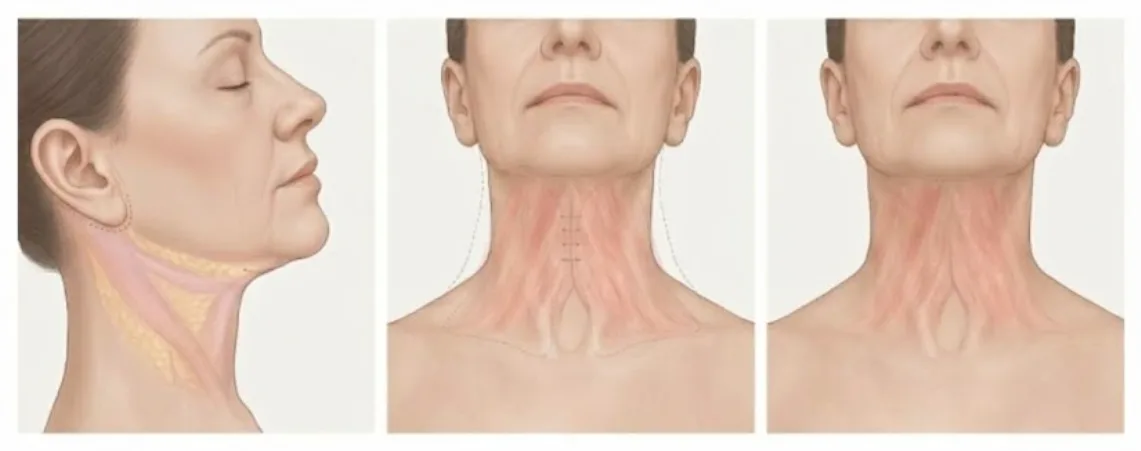
Illustration: fat beneath the jaw (yellow) and loose neck muscle bands are contoured for a cleaner chin and neckline (Pelican™).
Sedation is not the same as the general anaesthesia used for major surgery: you breathe on your own and are not put fully under, which is part of why recovery from the anaesthetic itself tends to be quick. Whatever combination is used, the goal is the same: you feel no pain while the surgeon works, and the experience stays calm.
Your anaesthesia plan is something to confirm clearly before the day. In an online consultation you can ask what will be used, how you are monitored, and what to expect as it wears off. For an overview of the procedure itself, see the main pelican neck lift page.
During surgery
What the procedure actually feels like
Once the area is numbed and sedation has taken effect, you should not feel pain during the surgery. Some people are aware of gentle pressure or movement under the chin as the surgeon contours the tissue, but this is sensation without discomfort, and with sedation many remember little of it. The submental incision is small and placed in the natural shadow beneath the chin, so the surgeon works through a discreet access point with no long cut.
Because Garnet caps the day at a small number of surgeries and runs to roughly one patient per hour, the procedure is not rushed. An unhurried pace matters for comfort: the surgeon has time to make sure numbing is complete before starting and to check in as the work progresses. There is no rush to the next case.
If at any point you were to feel something sharp, that is information to share immediately so more local anaesthetic can be added. Feeling pain during the procedure is not something you should expect or accept.
First days
Discomfort in the first days after surgery
Most of the discomfort people associate with a pelican neck lift comes in the days after the procedure. As the anaesthetic wears off, the area under the chin and along the neck usually feels tight, swollen and tender, with a pulling or pressure sensation when you turn or tilt your head. Most people describe this as soreness and stiffness. It is rarely severe and is generally well controlled with the medication your surgeon provides.
Discomfort tends to peak in the first two to three days, alongside the most visible swelling, and then eases steadily over the following week. A support garment or wrap around the chin and neck is often part of recovery; it can feel snug, but the gentle compression usually makes the area feel more stable and comfortable. Sleeping with your head elevated and avoiding heavy neck movement in the early days both help.
For a fuller day-by-day picture of swelling, garment use and milestones, see the pelican neck lift recovery timeline. Pain and recovery overlap, but they are separate questions. This page focuses on comfort, while the timeline page maps the whole healing course.
Managing it
How comfort is managed before, during and after
Comfort is planned in advance. Before surgery, the surgeon reviews your medical history and any medication you take so the anaesthesia and aftercare plan suit you. During the procedure, complete numbing of the area is confirmed before any work begins. Afterward, you are given clear instructions and medication to keep soreness manageable, along with guidance on the support garment, head positioning and which movements to avoid early on.
Simple measures make a real difference in the first days: keeping your head elevated, using any cold or compression exactly as advised, resting your neck instead of testing its range of motion, and taking medication on the schedule given before discomfort builds. Staying hydrated and avoiding alcohol and strenuous activity also help swelling, and therefore tightness, settle faster.
Knowing who to contact if something feels off is part of comfort too. At a single-surgeon clinic the operating surgeon stays involved in your recovery, so questions about soreness go to the person who actually performed your surgery. You can ask exactly how after-care and follow-up work in your online consultation before you travel.
Red flags
Normal soreness versus signs to report
Tightness, swelling, bruising and general soreness that improves a little each day are the expected pattern after a pelican neck lift. So is a temporary numb or tingling feeling around the chin and neck as nerves settle. None of these mean something has gone wrong; they are part of normal healing and tend to ease over the first weeks.
Some signs deserve a prompt message to your clinic: pain that is getting worse after the first few days, swelling that suddenly increases on one side, spreading redness or warmth, fever, unusual discharge from the incision, or difficulty breathing or swallowing. These are uncommon, but knowing the difference between ordinary soreness and a warning sign means you can act early if needed.
If you have travelled home before these questions arise, an established follow-up channel matters. Ask before booking how the clinic supports recovery remotely — see recovering in Seoul after surgery and how the surgeon reviews you afterward, so you are never left guessing about what is normal.
At Garnet
How comfort is handled at a single-surgeon clinic
Garnet is a single-surgeon clinic in Apgujeong, Seoul. Dr. In-Soo Baek is a board-certified plastic surgeon (Korean medical licence no. 77407) and the only operating doctor. He reviews your history and plans the anaesthesia, performs the pelican neck lift himself, and sees you through follow-up at one, three and six months. The same person responsible for your comfort during surgery is the one who answers your questions about soreness afterward.
The clinic deliberately keeps the day small, at around one patient per hour and only a couple of surgeries, so no part of your care is hurried: numbing is confirmed properly, the contouring is unhurried, and your questions are answered without pressure. A dedicated coordinator stays with you from consultation through recovery, which is reassuring when you are managing discomfort in an unfamiliar city.
If your main worry is pain, the most useful step is to ask directly. You can request a no-obligation online assessment, send photos, and have the anaesthesia plan and recovery explained clearly before you decide anything.
Real Results
Before & After
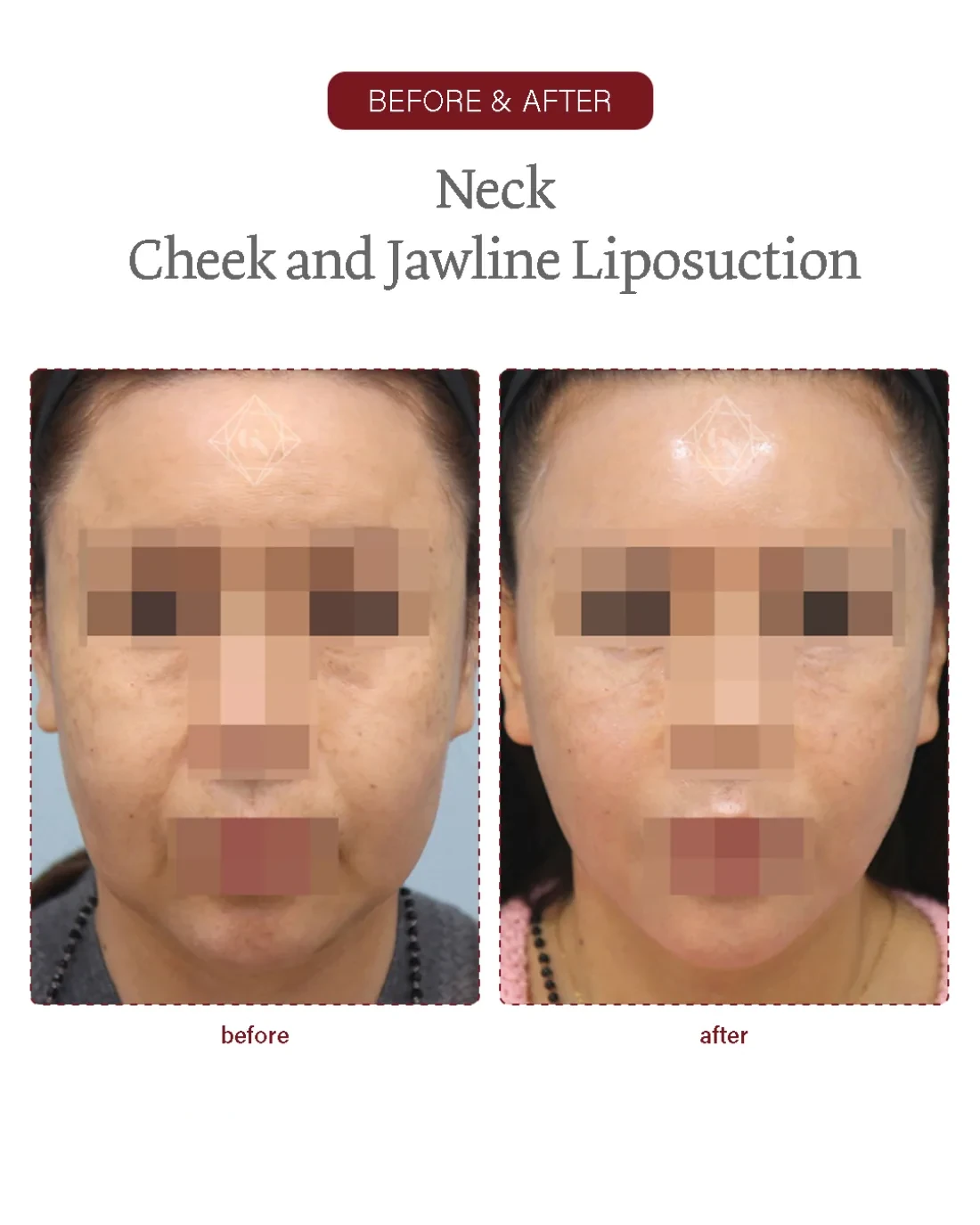
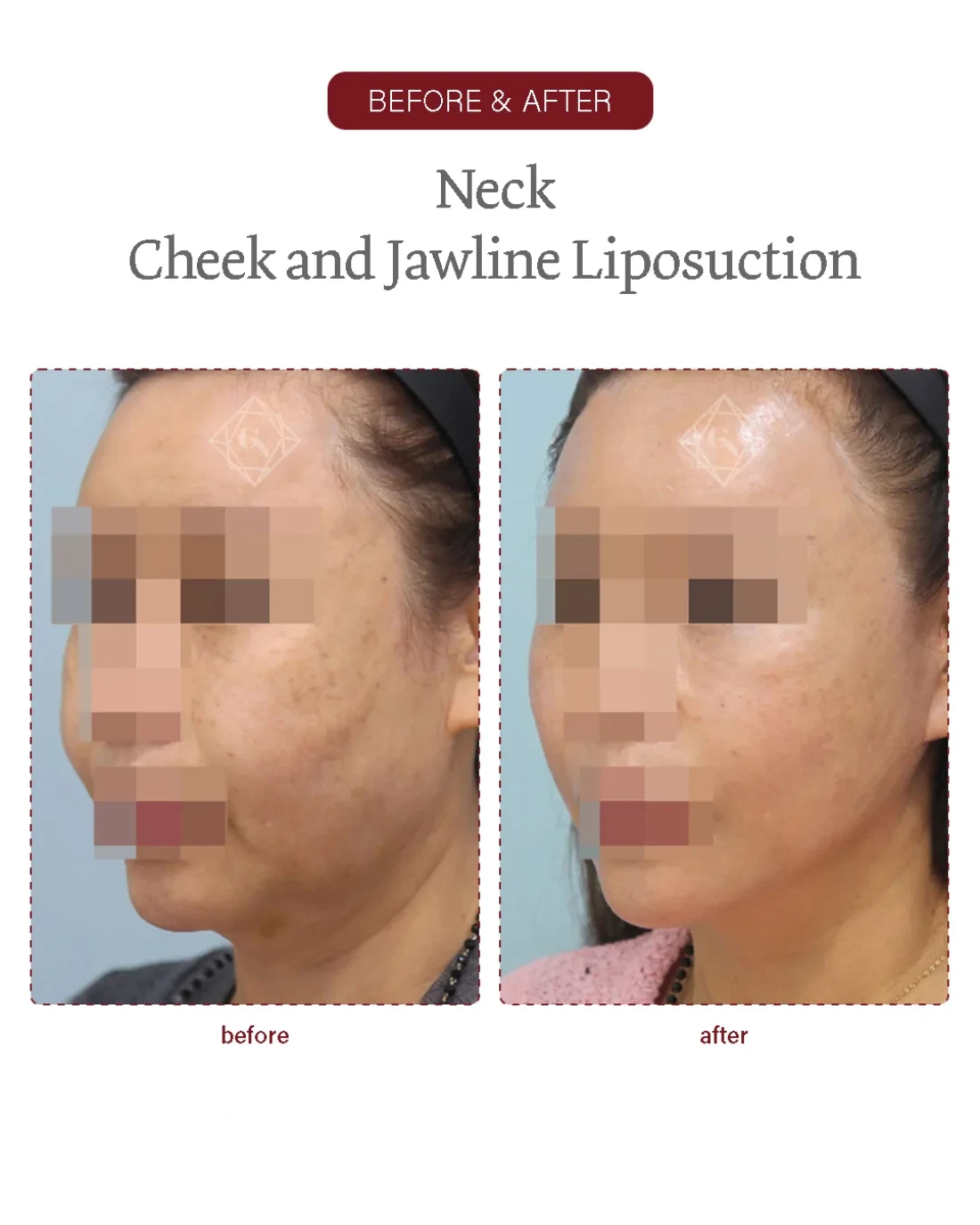
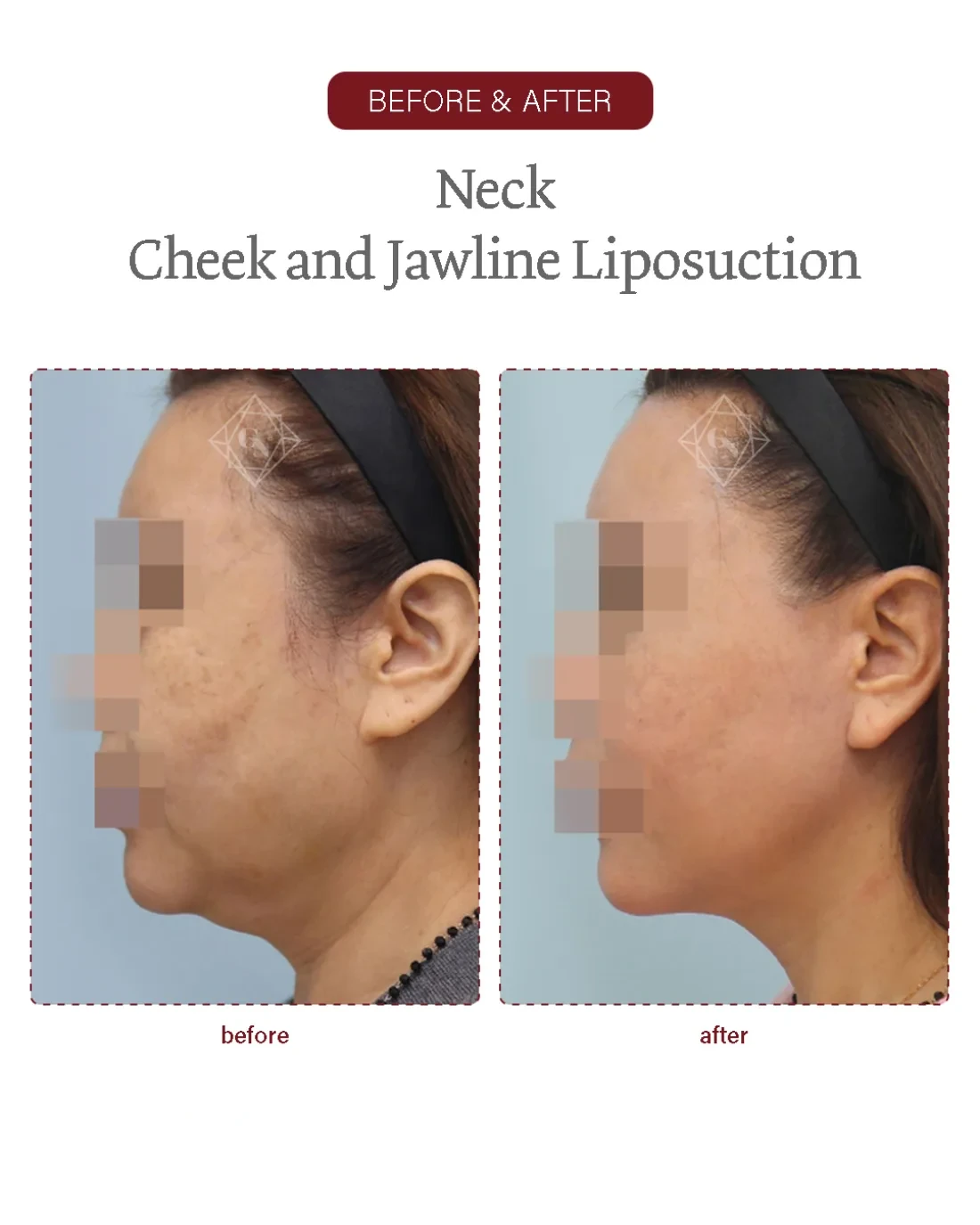
Neck and jawline contouring results of actual Garnet patients (published with consent, with date, procedure and clinic labelled). Results, recovery and suitability vary by individual and are not guaranteed.
Prices
Price at Garnet
Pelican™ — double chin & neck lines
From₩4,000,000 + VATExcluding VAT (10% VAT is added at payment)Book now
Same price as Korean patients. Prices shown exclude 10% VAT; your written quote, issued after the in-person consultation, shows the full amount payable.
Dr. In-Soo Baek
Director & sole operating surgeon
Korean medical licence no. 77407
Operate on what you came for. Trained at Korea University Medical Center. Every case planned, performed and reviewed by the same hands.
1Operating surgeon
~2Surgeries per day
7Registered techniques
Board-certified plastic surgeon
Plastic surgery training at Korea University College of Medicine & graduate school
Korean Society of Plastic and Reconstructive Surgeons member, in its facial-contour, eye & rhinoplasty groups
Consults, operates and follows up each case himself
Peer-reviewed papers behind the facts on this page. Each describes findings in its own study group — not results at Garnet — and none predicts your own outcome.
Fedok FG. Another Look at Platysmaplasty in Facelifting. Facial Plastic Surgery. 2020. doi:10.1055/s-0040-1714062
Roy S et al. The Difficult Neck in Facelifting. Facial Plastic Surgery. 2017. doi:10.1055/s-0037-1598073
Vanaman M et al. Neck Rejuvenation Using a Combination Approach. Dermatologic Surgery. 2016. doi:10.1097/dss.0000000000000699
FAQ
Common questions
Is a pelican neck lift painful?
You should feel no pain during the procedure itself, because the area is fully numbed and sedation keeps you relaxed. Afterward, most people describe tightness, swelling and soreness under the chin and along the neck. Severe pain is uncommon, and this is usually well controlled with the medication your surgeon provides.
What anaesthesia is used for a pelican neck lift?
A pelican neck lift is typically performed under local anaesthesia with sedation, so the treatment area is completely numbed while you rest in a drowsy, relaxed state. The exact plan depends on how much contouring is planned and your medical history, and is confirmed with you before surgery.
Will I be awake during the surgery?
With local anaesthesia and sedation you are not put fully under as you would be for major surgery, but you are deeply relaxed and often remember little of it. You breathe on your own, which is part of why recovery from the anaesthetic tends to be quick. Your surgeon will explain exactly what to expect for your case.
How much does it hurt after a pelican neck lift?
Discomfort is usually highest in the first two to three days, alongside the most swelling, and then settles steadily over the following week. Most people describe tightness and a pulling sensation, and sharp pain is uncommon. Prescribed medication, a support garment and keeping your head elevated all help keep it manageable.
How long does the soreness last?
The most noticeable soreness and tightness ease over the first one to two weeks as swelling goes down, though some firmness or odd sensation around the chin and neck can linger longer as tissues settle. For the full healing course, see the pelican neck lift recovery timeline.
Can I take painkillers after the surgery?
Yes. Your surgeon provides medication and instructions for keeping discomfort manageable, including which medicines to take and which to avoid. Taking them on the schedule given, before soreness builds, generally keeps you more comfortable in the early days.
Does the support garment hurt?
A support garment or wrap around the chin and neck can feel snug, but the gentle compression usually makes the area feel more stable and supported. Your clinic will explain how long to wear it and how it helps swelling and contour settle.
What pain after surgery is not normal?
Tightness, swelling and soreness that improve a little each day are expected. Pain that worsens after the first few days, sudden one-sided swelling, spreading redness or warmth, fever, unusual discharge, or any difficulty breathing or swallowing are signs to contact your clinic promptly.
Who manages my comfort if I have already flown home?
At a single-surgeon clinic the operating surgeon stays involved in recovery and can review you after you return home, with clear guidance on what is normal and when to seek local care. It is worth confirming how this remote follow-up works before you book.
Can I ask about pain and anaesthesia before travelling?
Yes. You can confirm the anaesthesia plan, what the procedure feels like, and how soreness is managed in an online consultation before you commit to travel, along with a pre-assessment from photos.
My mom recently had a brow lift and lower blepharoplasty with Dr. Baek, and our experience has been wonderful so far. The Garnet team was incredibly kind and welcoming, with Kelly assisting us as our English consultant—she made everything…
I’m so happy I chose this clinic for my lower blepharoplasty. I was traveling from abroad by myself, so I was a little nervous, but from the beginning I felt comfortable and truly cared for. Everyone was kind, patient, and professional…
Came in for an in-person consult and ended up choosing Garnet and Dr.Baek for my non-incisional DES and tiplasty/alarplasty. I communicated with Kelly (English consultant) from the start till now (3 weeks post-op). She really help me feel…
My under-eyes have been sagging and folding for years... I tried to cover it up with makeup, but it actually got stuck in the wrinkles and made it stand out even more. While going for consultations, I noticed that the bigger the hospital…
Send photos and your question before you travel. An English-speaking coordinator reviews every enquiry and replies with guidance on whether surgery is appropriate, the likely plan and timing.
✓ Reviewed by the clinic coordinator, not a bot
✓ Photo-based pre-assessment before you fly
✓ Foreign-patient scheduling & after-care
✓ One surgeon for consultation, surgery and follow-up
Prefer to chat now? Reach the coordinator directly:









 T S7 months ago



