A common worry about a pelican neck lift is the scar: where it is, whether anyone will see it, and how it changes over time. The reassuring part is that the incision is deliberately placed in the natural shadow under the chin, and that with good aftercare a fine scar in that location is hard to notice once it has matured.
The short answer
The pelican neck lift uses a small submental incision placed under the chin, in its natural shadow, where it is easy to keep hidden.
A fresh scar looks red or firm at first; this is normal, and most scars soften and fade over months as they mature.
Scar healing varies by person and skin type, but placement and aftercare both work in your favour with this technique.
At a single-surgeon clinic the surgeon who placed the incision reviews how it heals at follow-up, including remotely after you fly home.
A pelican neck lift reshapes the double-chin and neck-band area, and the access point for that contouring is a small submental incision, meaning it sits under the chin. Nothing is cut on the front of the neck or along the jawline. This is the natural crease beneath the chin, a spot that is already shadowed and not easily seen at a normal viewing angle. Working through this single discreet access point is part of what keeps the visible footprint of the surgery small.
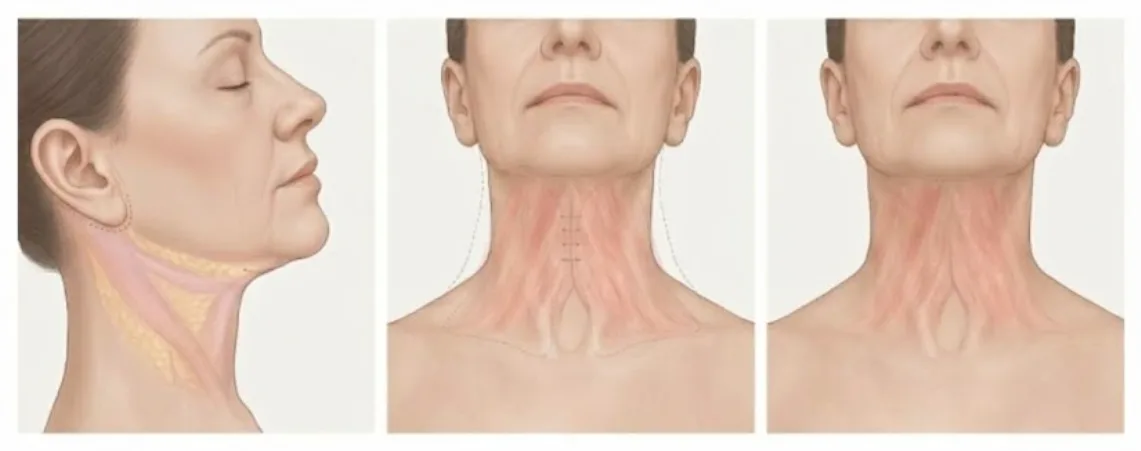
Illustration: fat beneath the jaw (yellow) and loose neck muscle bands are contoured for a cleaner chin and neckline (Pelican™).
Because the incision is tucked under the chin, it is not in the line of sight when someone looks at you face-on, and it falls into shadow when your head is level. For the procedure overview and how the contouring itself works, see the main pelican neck lift page; this page stays focused on the scar: its placement, how it heals, and how to help it fade.
The pelican method is a trademarked surgical approach at Garnet, and the submental placement is a deliberate part of it. Where an incision sits is one of the most important factors in how noticeable a scar ends up being, which is exactly why this technique hides it under the chin.
Why hidden
Why the submental scar stays hard to see
Three things work together to keep a submental scar inconspicuous. First, location: the under-chin crease is naturally shadowed and out of the direct line of sight, so even a faint line is hard to spot at conversational distance. Second, size: the incision is small, because the contouring is done through a discreet access point with no long open cut. Third, maturation: scars in this area typically settle into a fine line as they heal, especially when aftercare is followed.
Any surgery that breaks the skin leaves some mark. The goal is a scar that is fine, flat, pale and well-hidden; no scar at all is not a realistic goal. With a submental incision, the combination of a concealed location and a small access point gives that goal a strong head start.
How visible a scar ends up also depends on individual factors covered further down: skin type, how you heal and how closely you follow aftercare. But placement is the part that is decided by the technique, and the under-chin position is one of the most forgiving on the face and neck.
Healing timeline
How the scar heals and changes over time
Scar healing follows a fairly predictable arc, even though the pace varies between people. In the first weeks the incision is closed and protected while the surface knits together; a fresh scar at this stage often looks pink or red and feels slightly firm, which is normal. Over the following months it gradually softens, flattens and fades, with the redness easing as the scar matures. Scar maturation is a slow process measured in months, so patience is part of it.
Recovery of the wider area (swelling, tightness and the contour settling) runs alongside scar healing but is a separate question; the pelican neck lift recovery timeline maps the full healing course day by day and week by week. Garnet does not publish a fixed suture-removal date for this procedure, so confirm your specific aftercare schedule, including any stitch care, directly with the surgeon at consultation instead of relying on a generic number.
What matters most is the trajectory: a scar that is gradually getting flatter, paler and softer over weeks and months is healing as expected. If a scar instead becomes raised, thickened, increasingly red or itchy over time, that is worth raising with your surgeon, as early guidance can help.
Aftercare
Aftercare that helps a scar fade well
You have real influence over how a scar matures, and a few habits make a meaningful difference. Keep the incision clean and follow the wound-care instructions you are given exactly; avoid putting tension on the area by limiting heavy neck movement early on; and protect the healing scar from sun, since ultraviolet exposure can darken a young scar and is one of the easiest things to get wrong. Sun protection over the chin and neck, once the wound is suitably healed, is worth the effort for months.
Beyond the basics, follow whatever scar-care your surgeon recommends before reaching for products on your own. What suits one stage of healing may not suit another. Not smoking, staying hydrated and giving the area time to settle all support good healing. A support garment, where used, also helps the underlying tissue settle, which indirectly helps the scar by reducing tension.
Because the early days overlap with general soreness and swelling, the pain and anaesthesia page is a useful companion, and recovering in Seoul after surgery covers what the first stretch looks like before you head home.
What affects it
What affects how a scar looks for you
Even with the same technique and the same surgeon, scars heal differently from person to person, and it helps to know what is in play. Skin type and tone matter. Some skin is more prone to pigment changes or to raised scarring, and a careful surgeon factors this into the plan and the aftercare advice. Age, general health, smoking and how diligently you follow wound care all influence the final result too.
A frank assessment of your own skin and healing tendencies is part of a good consultation, and it is one reason a pre-assessment is valuable before you commit. If you have a history of thick or raised scars, say so early, because it changes the advice you should be given. You can raise all of this in an online consultation before travelling.
None of this changes the core advantage of the technique, a small, hidden, under-chin incision. It does mean your individual outcome has to be discussed for you specifically and cannot be promised in advance. Realistic, individual expectations are the right foundation.
At Garnet
How scar healing is reviewed at a single-surgeon clinic
Garnet is a single-surgeon clinic in Apgujeong, Seoul. Dr. In-Soo Baek is a board-certified plastic surgeon (Korean medical licence no. 77407) and the only operating doctor; he places the incision, performs the pelican neck lift himself, and reviews how the scar heals at follow-up. The pelican method is registered as a trademark, and the submental, under-chin placement is a deliberate part of keeping the scar discreet.
Because the same surgeon follows you through recovery, with structured check-ins at 1, 3 and 6 months, scar healing is assessed by the person who actually made the incision. It is never handed to someone unfamiliar with your case. For international patients, that review continues remotely after you fly home: you can share photos of the under-chin line and hear whether it is maturing as expected.
If the scar is your main concern, the most useful step is a frank conversation about your skin and healing before anything is booked. You can request a no-obligation online assessment, send photos, and have incision placement, healing and aftercare explained for your situation.
Real Results
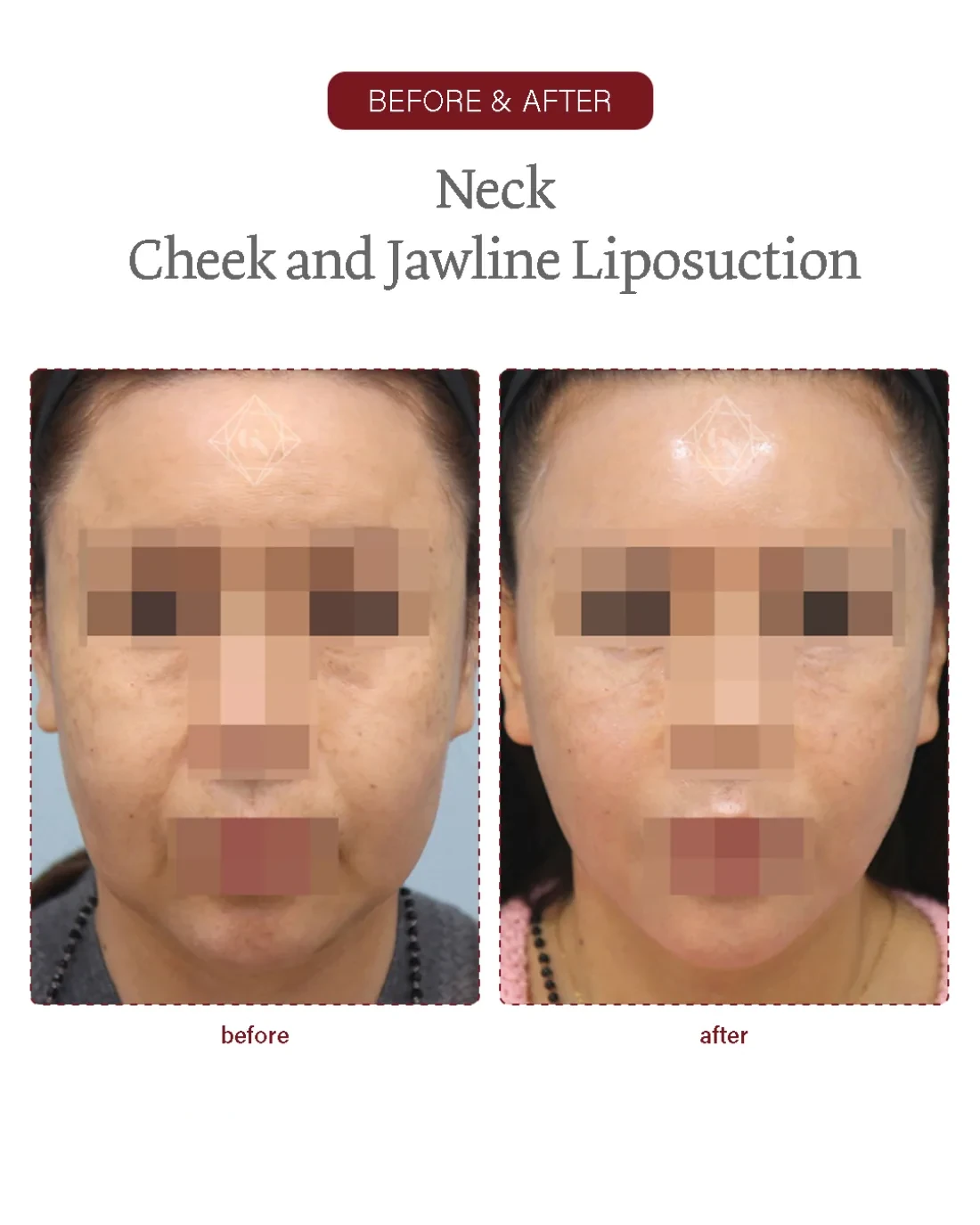
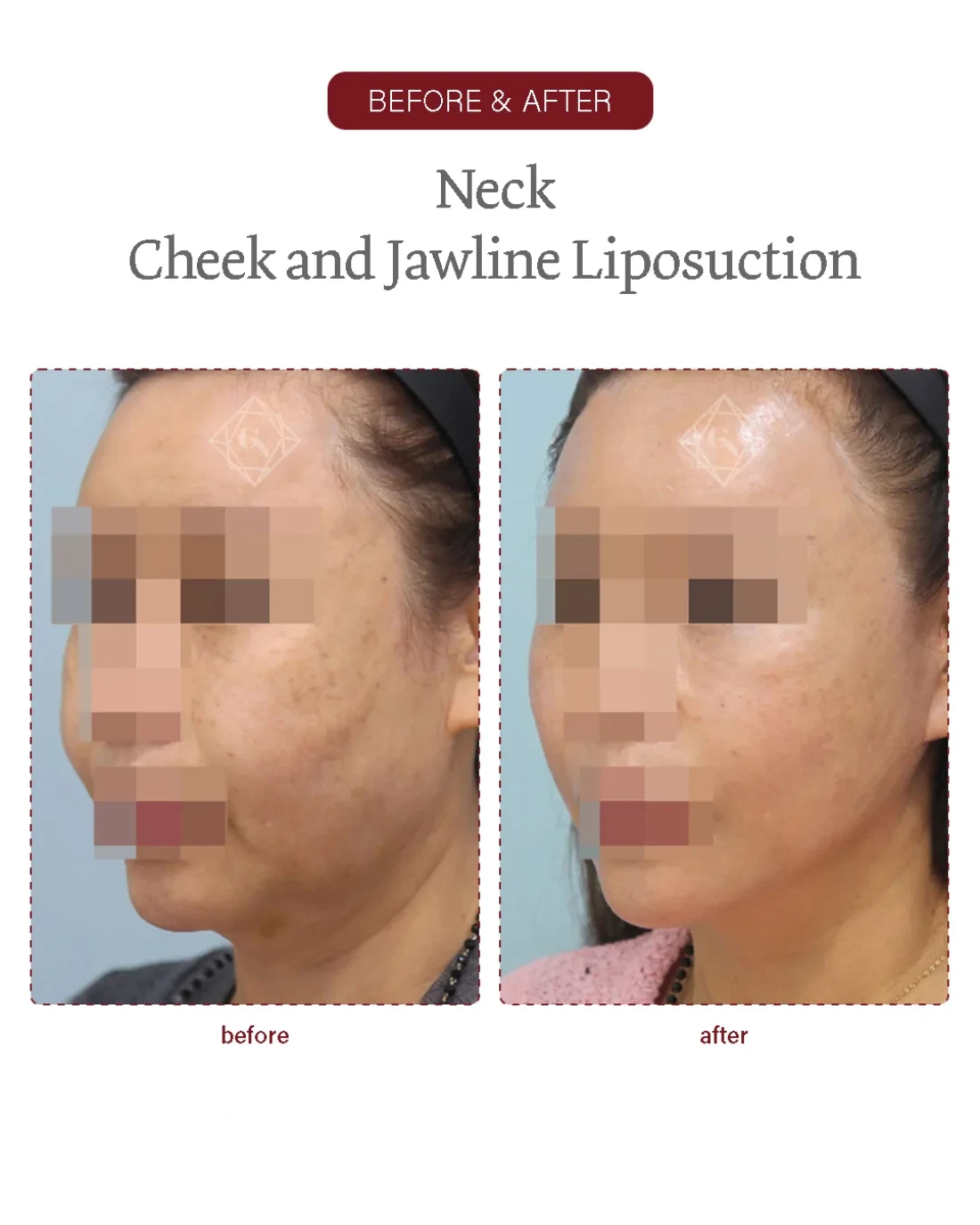
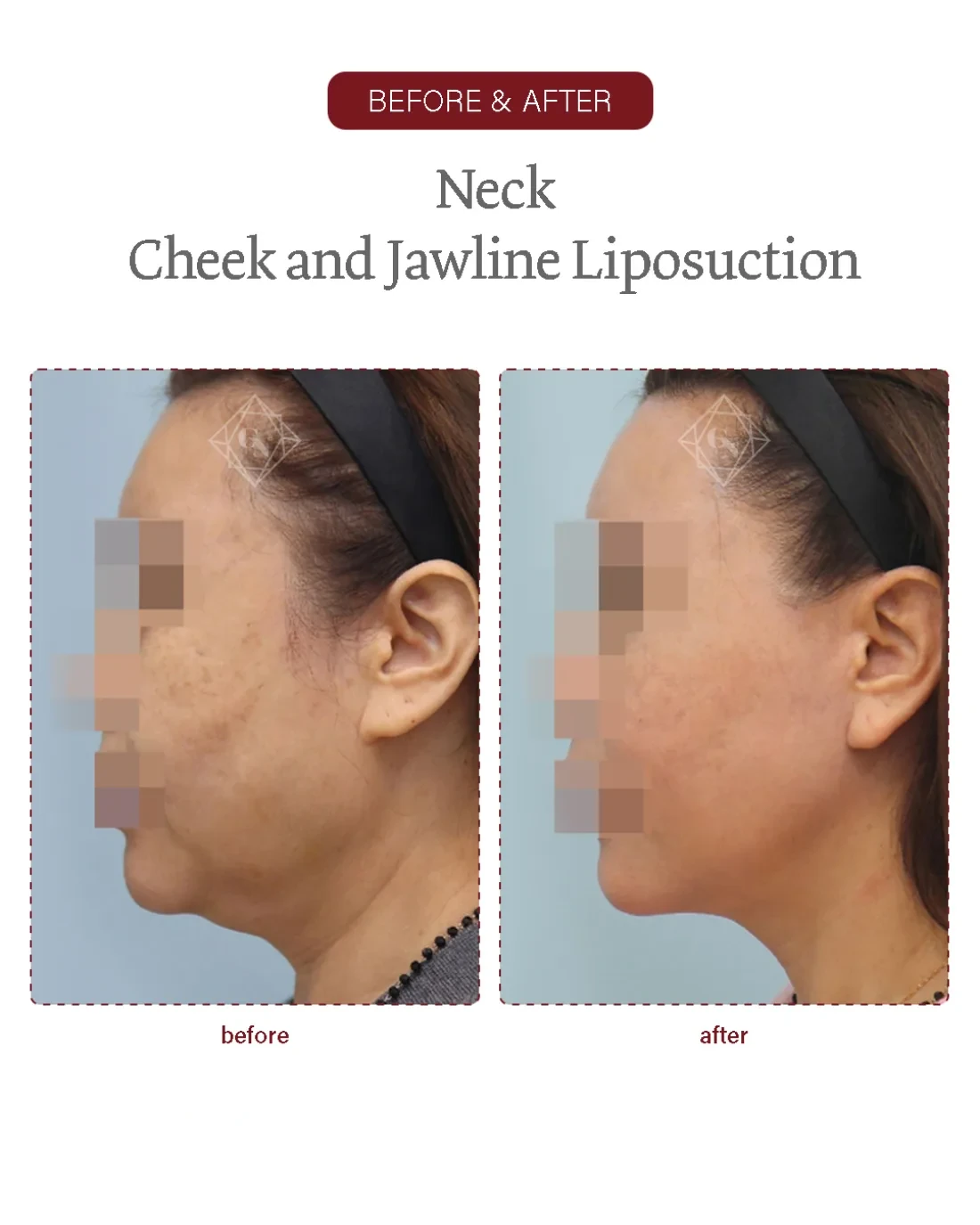
Before & After
Neck and jawline contouring results of actual Garnet patients (published with consent, with date, procedure and clinic labelled). Results, recovery and suitability vary by individual and are not guaranteed.
Prices
Price at Garnet
Pelican™ — double chin & neck lines
From₩4,000,000 + VATExcluding VAT (10% VAT is added at payment)Book now
Same price as Korean patients. Prices shown exclude 10% VAT; your written quote, issued after the in-person consultation, shows the full amount payable.
Dr. In-Soo Baek
Director & sole operating surgeon
Korean medical licence no. 77407
Operate on what you came for. Trained at Korea University Medical Center. Every case planned, performed and reviewed by the same hands.
1Operating surgeon
~2Surgeries per day
7Registered techniques
Board-certified plastic surgeon
Plastic surgery training at Korea University College of Medicine & graduate school
Korean Society of Plastic and Reconstructive Surgeons member, in its facial-contour, eye & rhinoplasty groups
Consults, operates and follows up each case himself
Peer-reviewed papers behind the facts on this page. Each describes findings in its own study group — not results at Garnet — and none predicts your own outcome.
Joseph JH et al. A Two-Stage Injection Technique and Dose-Ranging Study Using High-Dose AbobotulinumtoxinA for Treating Platysmal Bands. Journal of Drugs in Dermatology. 2023. doi:10.36849/jdd.7537
Meningaud JP et al. Facelift: Assessment of Total Platysma Muscle Transection to Prevent the Recurrence of Platysmal Bands. Aesthetic Plastic Surgery. 2023. doi:10.1007/s00266-023-03664-w
Watson D. Submentoplasty. Facial Plastic Surgery Clinics of North America. 2005. doi:10.1016/j.fsc.2005.04.008
FAQ
Common questions
Where are the scars after a pelican neck lift?
The pelican neck lift uses a small submental incision placed under the chin, in its natural crease and shadow. The front of the neck and the jawline are left without an incision. Working through this single discreet access point keeps the visible footprint of the surgery small and the scar easy to conceal.
Will a pelican neck lift scar be visible?
Any surgery that breaks the skin leaves some mark, but a submental scar is well-positioned to stay hard to see: it sits in the shadow under the chin, out of the direct line of sight, and the incision is small. As it matures it typically settles into a fine, pale line that is difficult to notice at normal distance.
How do pelican neck lift scars heal over time?
A fresh scar often looks pink or red and feels slightly firm at first, which is normal. Over the following months it gradually softens, flattens and fades. Scar maturation is slow and measured in months, so a scar that is steadily getting flatter and paler is healing as expected.
When are the stitches removed after a pelican neck lift?
Garnet does not publish a single fixed suture-removal date for this procedure, so confirm your specific stitch care and aftercare schedule directly with the surgeon at consultation. A generic number would not fit your case.
How can I help my scar fade?
Keep the incision clean and follow your wound-care instructions exactly, avoid tension on the area by limiting heavy neck movement early on, protect the healing scar from sun once it is suitably healed, and follow any scar-care your surgeon recommends. Not smoking and staying hydrated also support good healing.
Does skin type affect how a pelican neck lift scar looks?
Yes. Skin type and tone influence healing — some skin is more prone to pigment changes or raised scarring, as do age, general health, smoking and how closely you follow aftercare. If you have a history of thick or raised scars, mention it early so your advice can be tailored.
Will the scar be raised or lumpy?
Most submental scars settle into a flat, fine line as they mature. If a scar instead becomes raised, thickened, increasingly red or itchy over time, raise it with your surgeon, since early guidance can help. This is one reason follow-up with the surgeon who made the incision is valuable.
How long does it take for the scar to fully mature?
Scar maturation is a gradual process that continues over many months, with the redness easing and the line softening and flattening as it goes. The wider recovery (swelling and the contour settling) runs on its own timeline, covered on the pelican neck lift recovery timeline page.
Can my scar be reviewed after I fly home?
Yes. At a single-surgeon clinic the surgeon who placed the incision continues to review your healing after you return home. You can share photos and get clear guidance on whether the scar is maturing as expected, alongside structured follow-up at 1, 3 and 6 months.
Can I ask about scarring before I travel?
Yes. You can discuss incision placement, your skin and healing tendencies, and realistic expectations for your scar in an online consultation before committing to travel, with a pre-assessment from photos.
My mom recently had a brow lift and lower blepharoplasty with Dr. Baek, and our experience has been wonderful so far. The Garnet team was incredibly kind and welcoming, with Kelly assisting us as our English consultant—she made everything…
I’m so happy I chose this clinic for my lower blepharoplasty. I was traveling from abroad by myself, so I was a little nervous, but from the beginning I felt comfortable and truly cared for. Everyone was kind, patient, and professional…
Came in for an in-person consult and ended up choosing Garnet and Dr.Baek for my non-incisional DES and tiplasty/alarplasty. I communicated with Kelly (English consultant) from the start till now (3 weeks post-op). She really help me feel…
My under-eyes have been sagging and folding for years... I tried to cover it up with makeup, but it actually got stuck in the wrinkles and made it stand out even more. While going for consultations, I noticed that the bigger the hospital…
Concerned about scarring from a pelican neck lift? Send photos for a no-obligation pre-assessment and have incision placement and healing explained for your skin before you plan a trip.
Send photos and your question before you travel. An English-speaking coordinator reviews every enquiry and replies with plain guidance on whether a pelican neck lift is appropriate for you, the likely plan and timing.
✓ Reviewed by the clinic coordinator, not a bot
✓ Photo-based pre-assessment before you fly
✓ Foreign-patient scheduling & after-care
✓ One surgeon for consultation, surgery and follow-up
Prefer to chat now? Reach the coordinator directly:









 T S7 months ago



