Pelican neck contouring reshapes the area under the chin and along the neckline, but the result you see on day one is not the result you keep. Like any procedure that re-drapes skin and soft tissue, the defined contour reveals itself gradually. Knowing the realistic timeline keeps you calm through the weeks when it looks worse before it looks right.
The short answer
Pelican neck contouring (Pelican™, a trademarked submental method at Garnet) treats the double chin and neck bands through a small under-chin access point.
The very early weeks look fuller and tighter than the final result because of swelling. This is expected and is not a sign of failure.
Most patients see a clearly improved jaw-and-neck line by 4–6 weeks, with the contour continuing to refine for several months.
The same board-certified surgeon who operated reviews your progress at structured 1, 3 and 6-month follow-ups, so the settling of your neck is tracked at each stage.
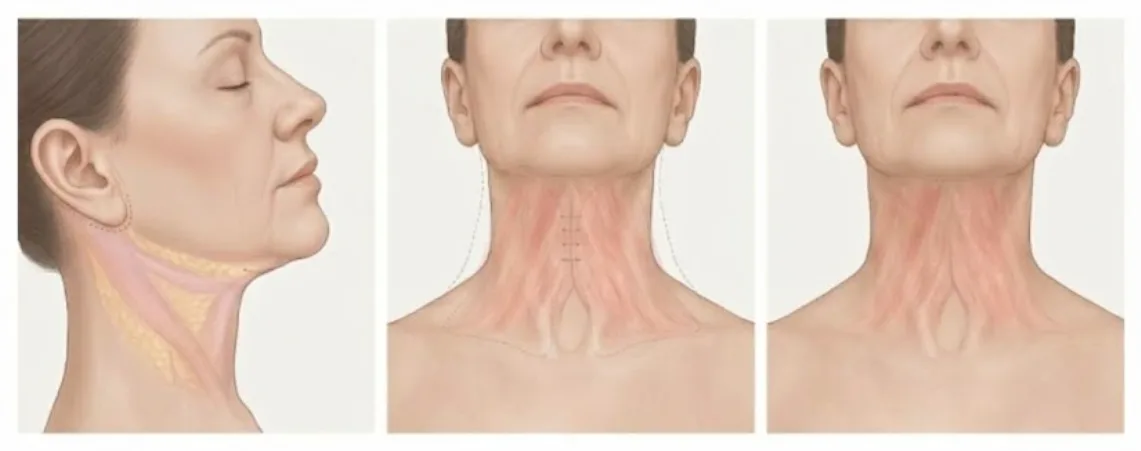
Pelican neck contouring addresses two things at once: the fullness under the chin (the double chin) and the slack or banding along the front of the neck. At Garnet it is performed through a small access point under the chin (the Pelican™ submental method, registered as a trademark), so the work happens beneath the surface, where fat is reduced and the neck-and-jaw line is redefined. Because the change is structural and cannot be judged on the skin alone, the contour needs time to emerge as tissues settle into their new shape.
Illustration: fat beneath the jaw (yellow) and loose neck muscle bands are contoured for a cleaner chin and neckline (Pelican™).
This is why a results timeline matters more here than with a surface treatment. You are not waiting for a mark to fade; you are waiting for swelling to leave and for the deeper layers to relax into the new contour. Understanding that distinction is the difference between a calm recovery and three weeks of unnecessary worry. It is the reason this page goes deeper into the timeline than the short summary on the main procedure cell.
First two weeks
The first two weeks: fuller before it is finer
In the first few days the under-chin and neck area feels firm and looks fuller than you expected. This is normal swelling, and it is at its peak in the first 48–72 hours before it slowly begins to subside. Many patients are surprised that the area can look heavier than before surgery at this stage. That is fluid, and it is temporary. A compression garment, if your surgeon recommends one, helps the tissues settle evenly.
By the end of the second week the most obvious swelling has eased and you can usually return to normal daily life and social settings, though the jawline is not yet sharp. Bruising, if any, fades within this window. This is also when people who do not understand the timeline panic, so it is worth repeating: at two weeks you are seeing an improving but unfinished result. The contour you keep comes later. For how this overlaps with practical downtime, see the pelican neck recovery timeline.
If you have travelled for surgery, this is the period where the same surgeon who operated reviews you in person before you fly home, so any early swelling under the chin is assessed in person.
Weeks to 3 months
Weeks three to twelve: the contour appears
Between roughly week four and week six, most patients notice the turning point: the residual puffiness drops away and a genuinely cleaner jaw-and-neck line emerges. This is usually the first time the result looks like the change you came for, and it is when before-and-after photos start to show a clear difference. The skin continues to re-drape over the new, slimmer contour through this period.
From around six weeks to three months the refinement is subtler: deep swelling that is invisible to you but still present continues to resolve, and the area softens from firm to natural. Sensation, which can feel slightly numb or tight near the access point early on, normalises over these weeks. If you are deciding whether this versus a different approach suits your neck, the comparison in how long pelican neck results last is a useful companion read.
It is also normal for the two sides to settle at slightly different speeds. Minor asymmetry during healing is part of the process and typically evens out as swelling finishes, which is exactly what the scheduled follow-ups are designed to confirm.
Final result
When the result is genuinely final
The final, settled contour is usually visible by around three months and fully mature by six months. By three months the great majority of swelling has gone and the jaw-and-neck definition you see is close to what you keep; the months that follow simply allow the last deep swelling to leave and the skin to finish tightening over the new shape. This is why Garnet's review schedule runs out to six months and does not stop at one.
How crisp the final line looks depends on your starting anatomy: skin thickness, skin elasticity and how much laxity was present beforehand. These are assessed before surgery, and no particular line is promised in advance. A single procedure produces a clear improvement for most people; your surgeon will tell you candidly during the online assessment what is realistic for your neck specifically, including whether the neckline, the chin or both are driving the look you want to change.
Normal vs not
What is normal, and what is worth a message
Normal during the settling months: firmness under the chin, mild tightness or pulling when you turn your head, temporary numbness near the access point, slight unevenness between sides, and a contour that keeps improving week to week. None of these mean the result has failed. They are the ordinary signposts of tissue that is still settling.
Worth contacting the clinic promptly: swelling that increases after the first few days, redness and warmth that is spreading, fluid collection that feels like a soft pocket, fever, or pain that worsens instead of easing. These are uncommon but are exactly the things your surgeon wants to hear about early. Because the operating surgeon manages your recovery directly, you message the person who knows your case, and after you return home that contact continues by messenger.
If you are weighing this procedure at all, reading who pelican neck contouring is for alongside this timeline will give you a fuller picture before you decide.
At Garnet
How Garnet tracks your result over time
Garnet is a single-surgeon clinic in Apgujeong, Seoul. Dr. In-Soo Baek is a board-certified plastic surgeon (Korean medical licence no. 77407) and the only operating doctor. He consults, performs the procedure himself and reviews each follow-up. The clinic schedules structured reviews at 1, 3 and 6 months, which maps almost exactly onto the pelican neck results timeline: the 1-month check catches the early turning point, the 3-month check confirms the near-final contour, and the 6-month check signs off the mature result.
Because the same surgeon sees you at each stage, the settling is compared against your own earlier photos, and any asymmetry is watched as it resolves. For international patients this continuity carries on after you fly home through remote follow-up, so distance does not interrupt the one part of this procedure that genuinely takes time. You can start with a no-obligation online assessment to understand the realistic timeline for your own neck before you plan a trip.
Real Results
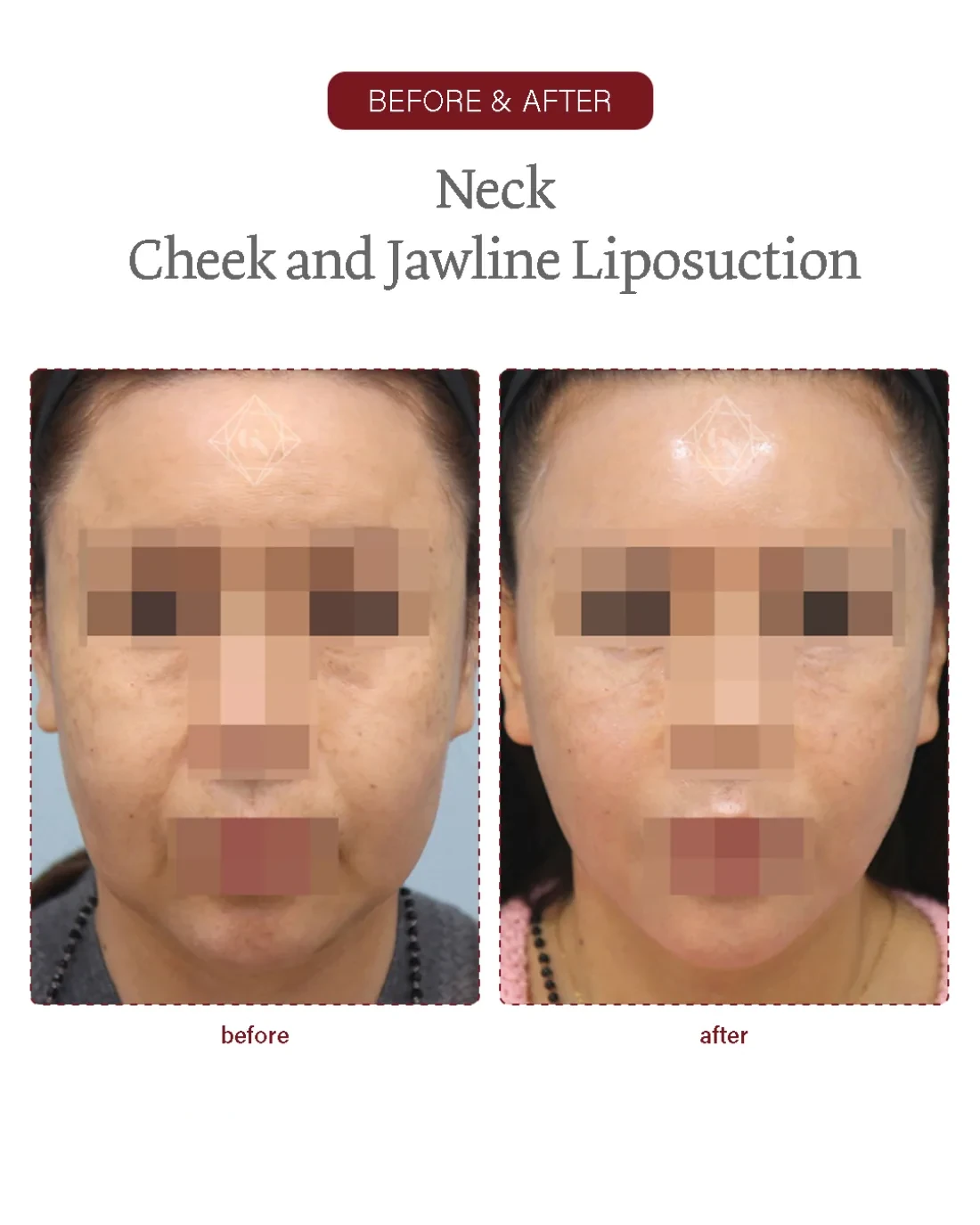
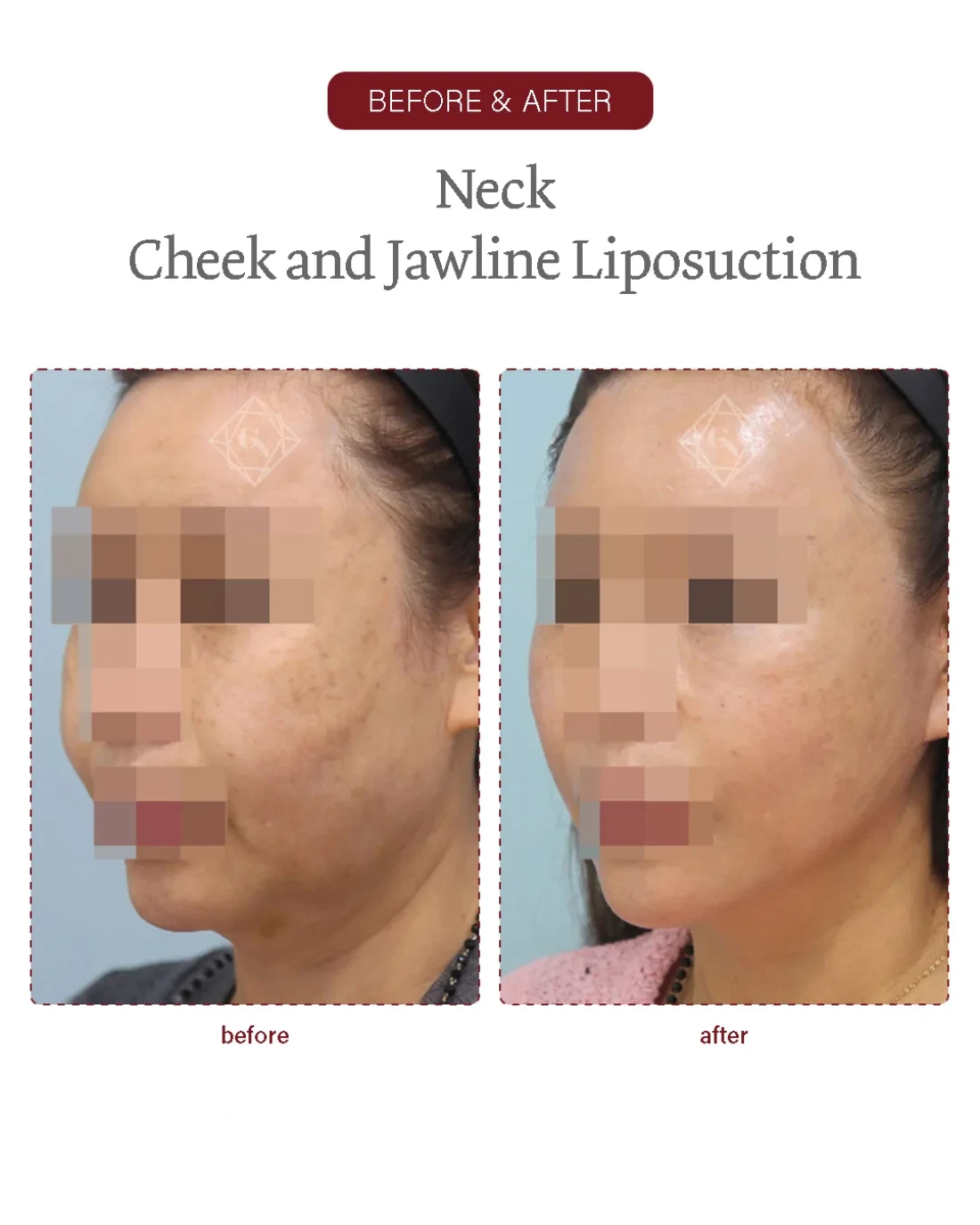
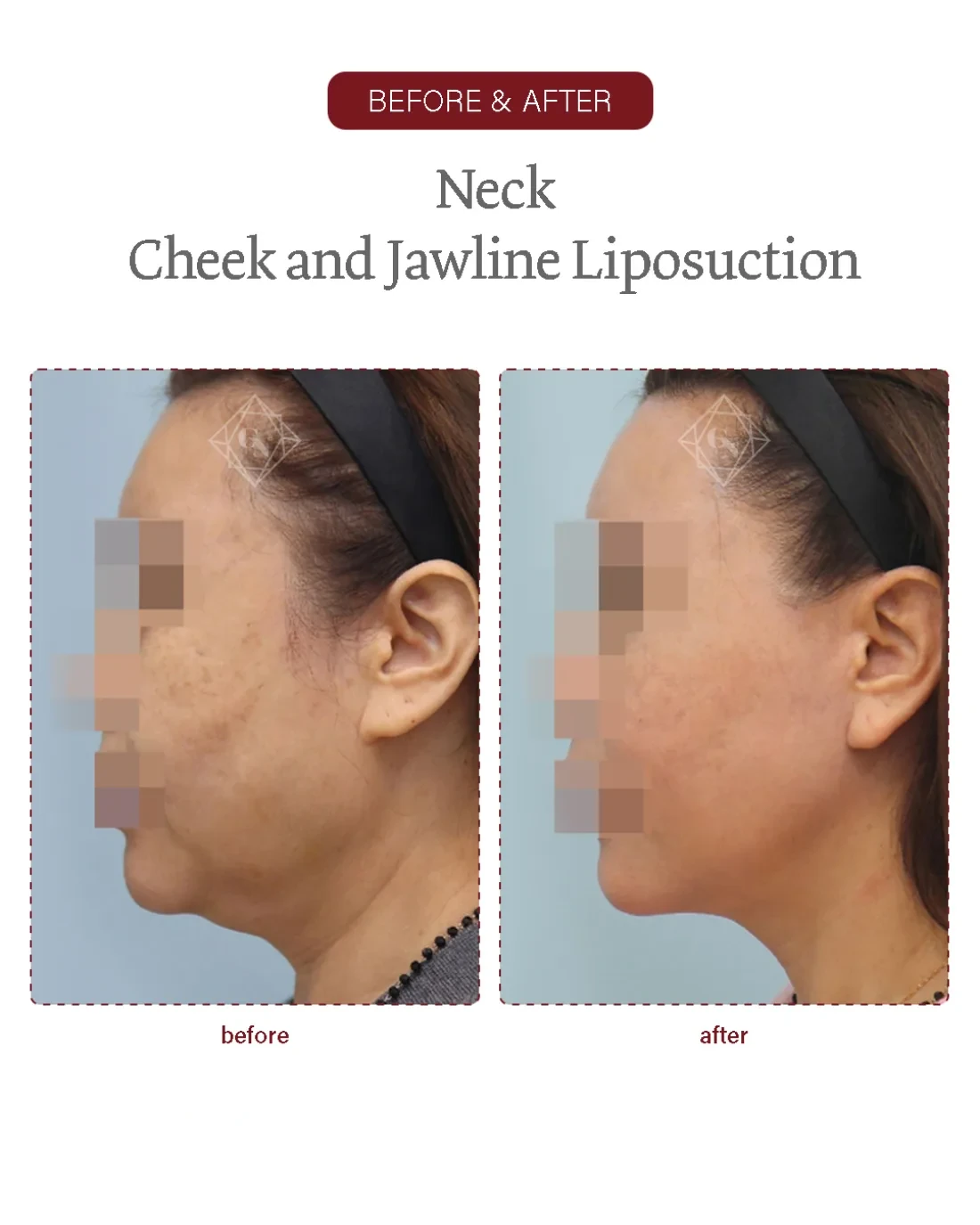
Before & After
Neck and jawline contouring results of actual Garnet patients (published with consent, with date, procedure and clinic labelled). Results, recovery and suitability vary by individual and are not guaranteed.
Prices
Price at Garnet
Pelican™ — double chin & neck lines
From₩4,000,000 + VATExcluding VAT (10% VAT is added at payment)Book now
Same price as Korean patients. Prices shown exclude 10% VAT; your written quote, issued after the in-person consultation, shows the full amount payable.
Dr. In-Soo Baek
Director & sole operating surgeon
Korean medical licence no. 77407
Operate on what you came for. Trained at Korea University Medical Center. Every case planned, performed and reviewed by the same hands.
1Operating surgeon
~2Surgeries per day
7Registered techniques
Board-certified plastic surgeon
Plastic surgery training at Korea University College of Medicine & graduate school
Korean Society of Plastic and Reconstructive Surgeons member, in its facial-contour, eye & rhinoplasty groups
Consults, operates and follows up each case himself
Peer-reviewed papers behind the facts on this page. Each describes findings in its own study group — not results at Garnet — and none predicts your own outcome.
Vanaman M et al. Neck Rejuvenation Using a Combination Approach. Dermatologic Surgery. 2016. doi:10.1097/dss.0000000000000699
Prager W et al. IncobotulinumtoxinA for the Treatment of Platysmal Bands. Dermatologic Surgery. 2015. doi:10.1097/dss.0000000000000177
Sherif R et al. Management of Platysmal Banding in Face and Neck Lift Surgery. Plastic & Reconstructive Surgery. 2025. doi:10.1097/prs.0000000000012727
FAQ
Common questions
When will I see the final results of pelican neck contouring?
The contour is usually clearly visible by around three months and fully mature by six months. You will see meaningful improvement much earlier, typically a cleaner jaw-and-neck line by 4 to 6 weeks, but the last deep swelling takes longer to leave, which is why follow-ups run out to six months.
Why does my neck look fuller right after pelican neck surgery?
Early fullness under the chin is swelling. Swelling peaks in the first two to three days and can briefly make the area look heavier than before surgery. It then subsides over the following weeks, and the slimmer contour emerges as the fluid leaves and the tissues settle.
When is the swelling gone after pelican neck contouring?
The obvious swelling eases within the first two weeks, most of it has resolved by around six weeks, and the deep swelling you cannot see finishes settling over the following months. This is the main reason the result keeps refining for up to six months.
How does the result change over time?
It improves in stages: fuller and firm in the first two weeks, a clearly better jaw-and-neck line by four to six weeks, near-final definition by three months, and a fully settled contour by six months. The change is gradual.
When can I return to normal life and social settings?
Most patients return to everyday activities and social settings by around two weeks, once the most visible swelling has eased. The jawline will not be fully sharp yet at that point, but it will look natural enough for daily life while it continues to refine.
Is some asymmetry between the two sides normal while healing?
Yes. The two sides often settle at slightly different speeds, so minor unevenness during the healing months is common and usually resolves as swelling finishes. Your surgeon watches this at each follow-up, which is part of why reviews are scheduled at one, three and six months.
Will one procedure be enough to see a clear result?
For most people a single procedure produces a clear, lasting improvement in the chin and neckline. How crisp the final line looks depends on your skin thickness, elasticity and starting laxity, which your surgeon assesses before surgery; no particular line is promised in advance.
How does Garnet track whether my result is settling correctly?
The same board-certified surgeon who operated reviews you at structured 1, 3 and 6-month follow-ups, comparing your contour against your own earlier photos. For international patients this continues remotely after you return home, so the months-long settling is still tracked.
Can I tell from before-and-after photos what my timeline will be?
Before-and-after photos are usually taken once the contour has settled, so they show the end point and leave out the week-by-week journey. Your own timeline depends on your anatomy; an online assessment is the most reliable way to understand what is realistic for your neck specifically.
My mom recently had a brow lift and lower blepharoplasty with Dr. Baek, and our experience has been wonderful so far. The Garnet team was incredibly kind and welcoming, with Kelly assisting us as our English consultant—she made everything…
I’m so happy I chose this clinic for my lower blepharoplasty. I was traveling from abroad by myself, so I was a little nervous, but from the beginning I felt comfortable and truly cared for. Everyone was kind, patient, and professional…
Came in for an in-person consult and ended up choosing Garnet and Dr.Baek for my non-incisional DES and tiplasty/alarplasty. I communicated with Kelly (English consultant) from the start till now (3 weeks post-op). She really help me feel…
My under-eyes have been sagging and folding for years... I tried to cover it up with makeup, but it actually got stuck in the wrinkles and made it stand out even more. While going for consultations, I noticed that the bigger the hospital…
Send photos and your question before you travel. An English-speaking coordinator reviews every enquiry and replies with guidance on whether surgery is appropriate, the likely plan and timing.
✓ Reviewed by the clinic coordinator, not a bot
✓ Photo-based pre-assessment before you fly
✓ Foreign-patient scheduling & after-care
✓ One surgeon for consultation, surgery and follow-up
Prefer to chat now? Reach the coordinator directly:









 T S7 months ago



