The price of ptosis correction depends on how much the levator muscle in your upper eyelid needs adjusting and on what the quote includes, so there is no single number. This page explains the factors that move the cost, what a complete quote should cover, and how to weigh value against the lowest figure, so you can plan with realistic expectations before you travel.
The short answer
Ptosis correction is functional eye-opening surgery, so the cost depends on how much the levator muscle needs adjusting and whether one or both eyes are treated. There is no flat catalogue price.
Combining it with double-eyelid surgery changes the figure: it is one operation through one incision, so it is rarely the simple sum of two separate prices.
A meaningful quote includes the surgery, anaesthesia, the operating facility, suture removal and your follow-up reviews. Ask what is and is not covered.
The cheapest quote is not automatically good value; who operates, how unhurried the assessment is, and the after-care all sit inside the price.
What you are actually paying for in ptosis correction
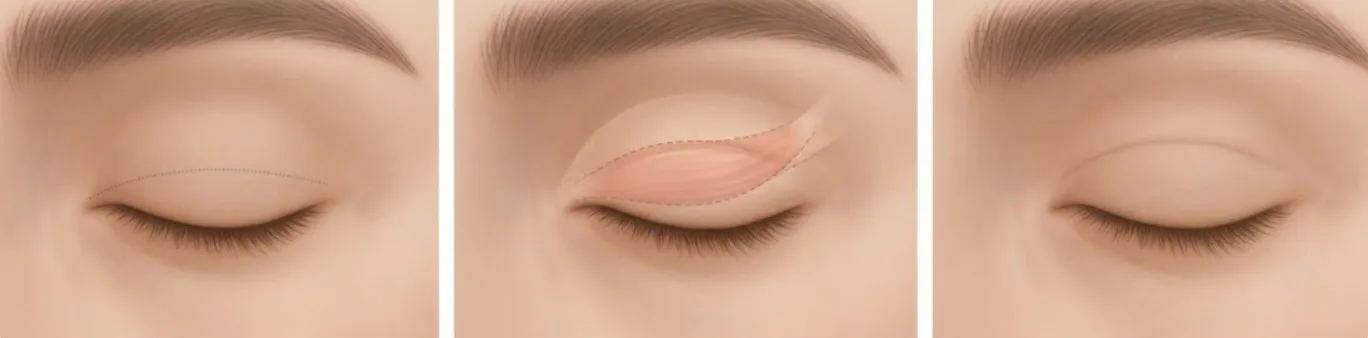
Ptosis correction is surgery that adjusts the strength of the levator muscle that lifts the upper eyelid, so the eye opens fully and symmetrically. It has no fixed sticker price. At Garnet this is done through an incision in the lid crease, where the surgeon can see the muscle directly and fine-tune how much it lifts. What you pay for is that surgical judgement and precision. For an overview of the procedure itself, see the ptosis correction page; this page focuses only on what drives the cost.
Illustration: through the crease line, the muscle that opens the eye (shown beneath the lid) is tightened so the lid rests higher.
Because the muscle adjustment is individual, the price reflects the work your eyes specifically need. A mild, even droop on both sides is a different operation from a marked droop on one side that also pulls the lids out of balance. That is why a careful clinic gives a figure only after assessing your eyes. The assessment is what makes the number meaningful.
Cost factors
The factors that move the price
Several things determine where a ptosis correction quote lands. The degree of droop matters: a small adjustment to a muscle that is only slightly weak is different surgical work from a larger correction. Whether one eye or both eyes are treated changes it, as does asymmetry: eyes that droop by different amounts need different adjustment on each side to finish level. The technique also matters; an incisional approach that lets the surgeon set and check muscle strength directly is more involved than a simple skin trim.
The surgeon and the setting are part of the price too. A board-certified plastic surgeon who performs the operation personally, in a clinic that caps how many cases it takes in a day, is offering something different from a high-volume room. None of these factors is a trick to inflate a bill. Each reflects real surgical work, and together they explain why two quotes for 'ptosis correction' can differ and why a number quoted sight-unseen should be treated with caution.
Finally, your own anatomy plays a role. Thicker lids, a previous eyelid surgery to revise, or a droop caused by a stretched muscle attachment rather than a weak muscle can each change the plan. This is why a pre-assessment, ideally from photos in an online consultation, gives a far more reliable figure than a generic price list.
Combined surgery
How combining it with double-eyelid surgery changes the cost
Ptosis correction is very often done together with double-eyelid surgery, because the same lid-crease incision that creates or refines a double eyelid also gives access to the levator muscle underneath. When the two are combined, the cost is rarely the simple sum of two separate prices: it is one operation, one incision and one recovery, so part of the work overlaps. Many patients find that adding muscle correction to a planned double-eyelid procedure costs less than they expected for what it adds.
It also works the other way. Some people arrive wanting only a double eyelid and learn at assessment that a degree of ptosis is part of why their eyes look tired or sleepy. In that case correcting the muscle is what actually achieves the look they want, and the quote reflects both elements done as one. The surgeon's job here is to tell you what your eyes need without upselling. The goal is the result, and the price follows the plan. You can read more about how the eyelid procedures relate on the who is it for page.
What's included
What a complete quote should include
Before you compare numbers, find out what each number covers. A complete ptosis correction quote should account for the surgeon's fee, anaesthesia, the use of the operating facility, your suture removal at around seven days, and the structured follow-up reviews afterwards. Some quotes look cheaper only because they leave items out and add them back later, so the question worth asking is simple: is this the all-in figure, and what happens if I need a follow-up visit?
It is also worth confirming the practical extras that matter to an international patient: whether the consultation and any imaging are charged, whether after-care reviews are included once you have flown home, and what a revision would involve if the result needed fine-tuning. At a clinic with structured follow-ups at one, three and six months, those reviews are part of the care and are not booked as separate appointments. Asking these questions up front is the most reliable way to compare like with like, and you can ask all of them, with photos, before you commit to travel through an online assessment.
Value
Reading the value of a ptosis quote beyond the cheapest number
Eye-opening surgery is delicate work, and the lowest quote is not automatically the right decision. The price quietly contains things that are hard to see on a list: who actually performs the operation, how much unhurried time your case gets, and how carefully the muscle is set so both eyes finish symmetrical. A correction that is slightly under- or over-done is the most common reason for a revision, and a revision costs time, money and recovery you did not plan for.
Value is best read as the result you are likely to get and the care wrapped around it (a careful assessment, a surgeon who operates personally, suture removal and real follow-up) set against the figure. A fair, clearly explained quote from a board-certified plastic surgeon who tells you plainly what your eyes need is usually better value than the cheapest number from a clinic that cannot tell you who will be in the operating room. For broader context on what drives surgical pricing in Korea, see the cost guide.
At Garnet
How Garnet handles cost
Garnet is a single-surgeon clinic in Apgujeong, Seoul, where Dr. In-Soo Baek, a board-certified plastic surgeon (Korean medical licence no. 77407), consults, performs the surgery himself and reviews every follow-up. Because of that, a ptosis correction quote is given after he has assessed your eyes and reflects what your eyes actually need: how much the muscle should be adjusted, whether one or both eyes are treated, and whether it is combined with double-eyelid surgery.
The clinic does not charge a consultation or imaging fee and does not pressure you to book on the day, and follow-up reviews at 1, 3 and 6 months are part of the care and carry no separate cost. The most useful first step is a pre-assessment: send photos in an online consultation and you can get a realistic, itemised idea of what your procedure would involve before you plan a trip.
Real Results
Before & After
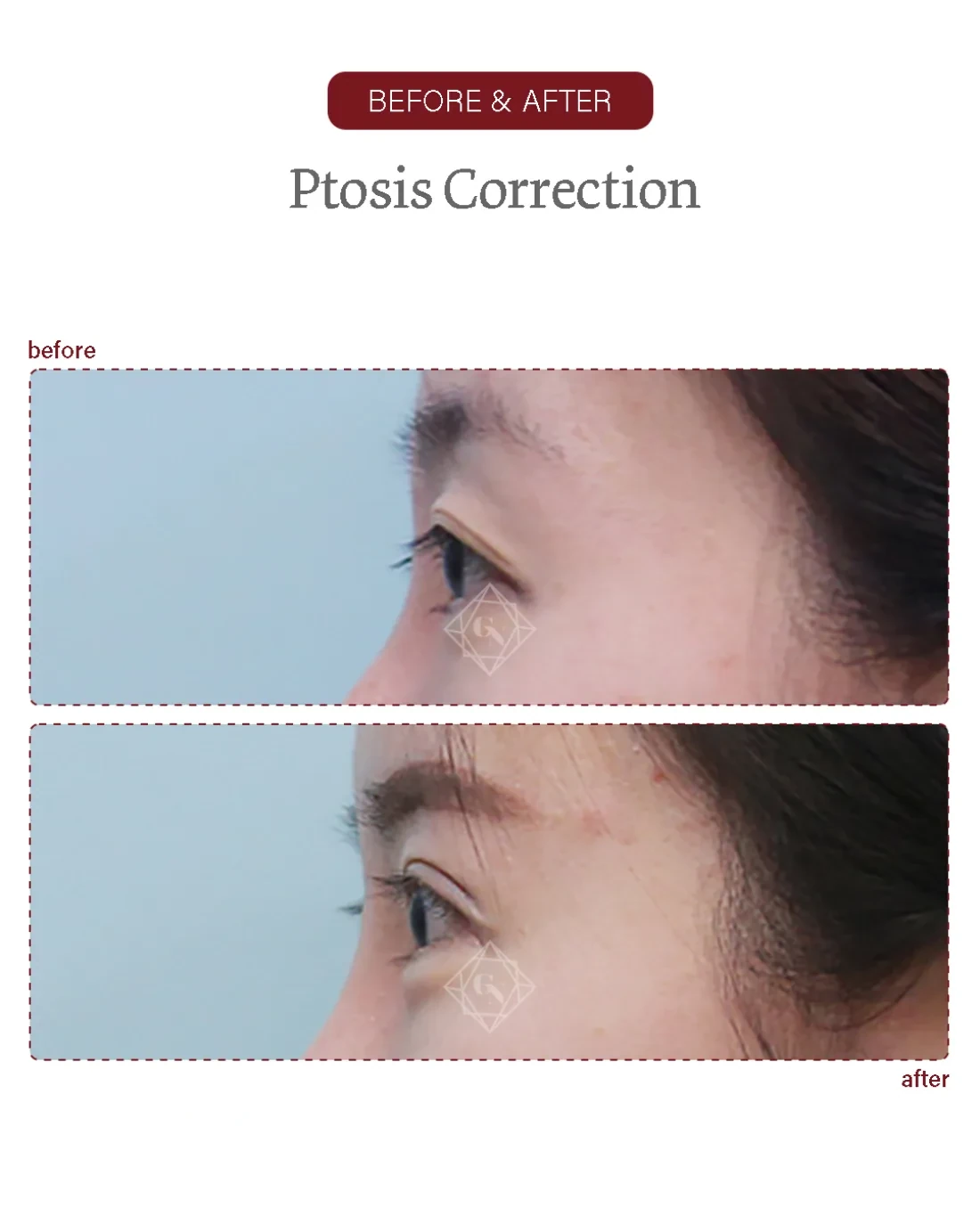
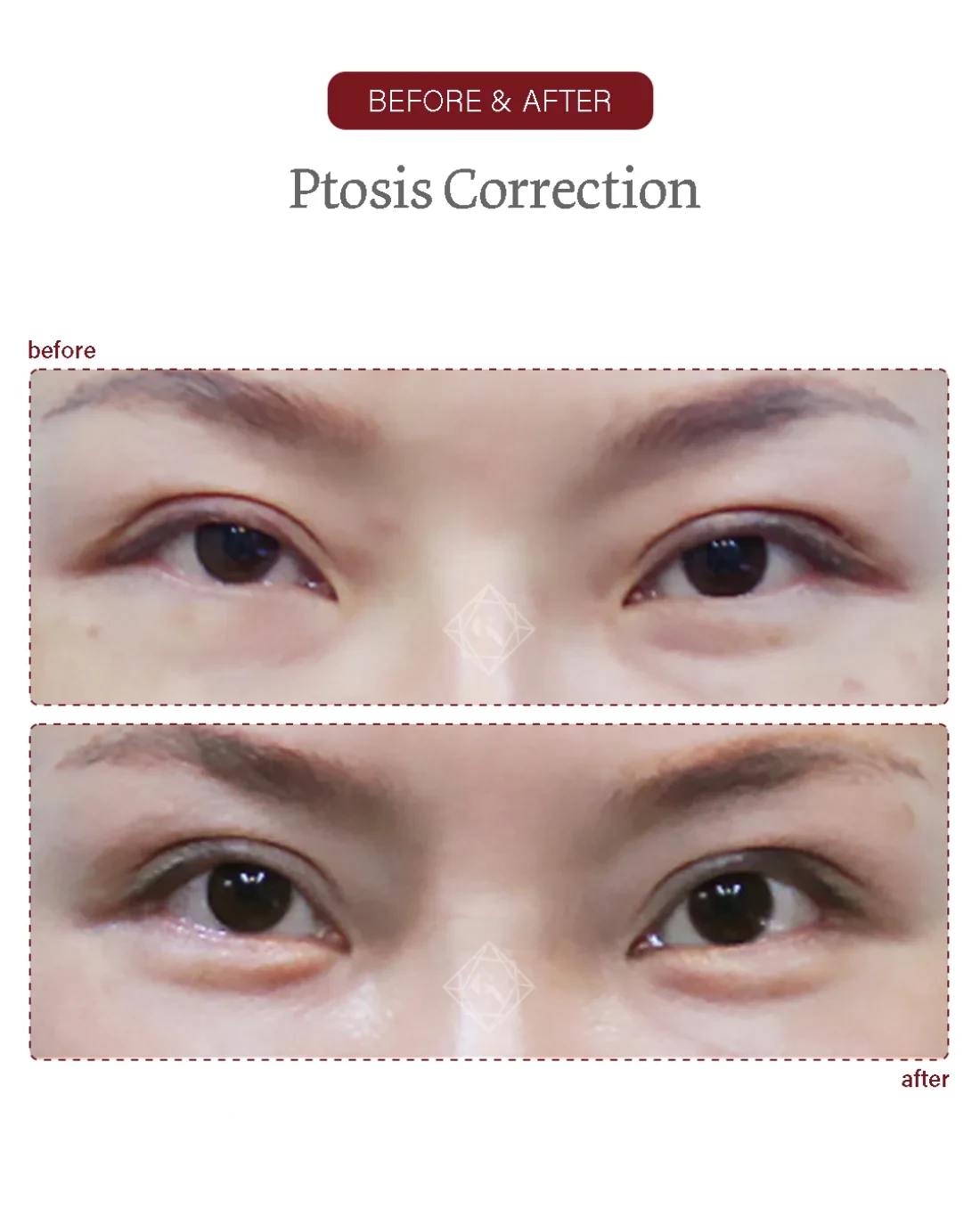
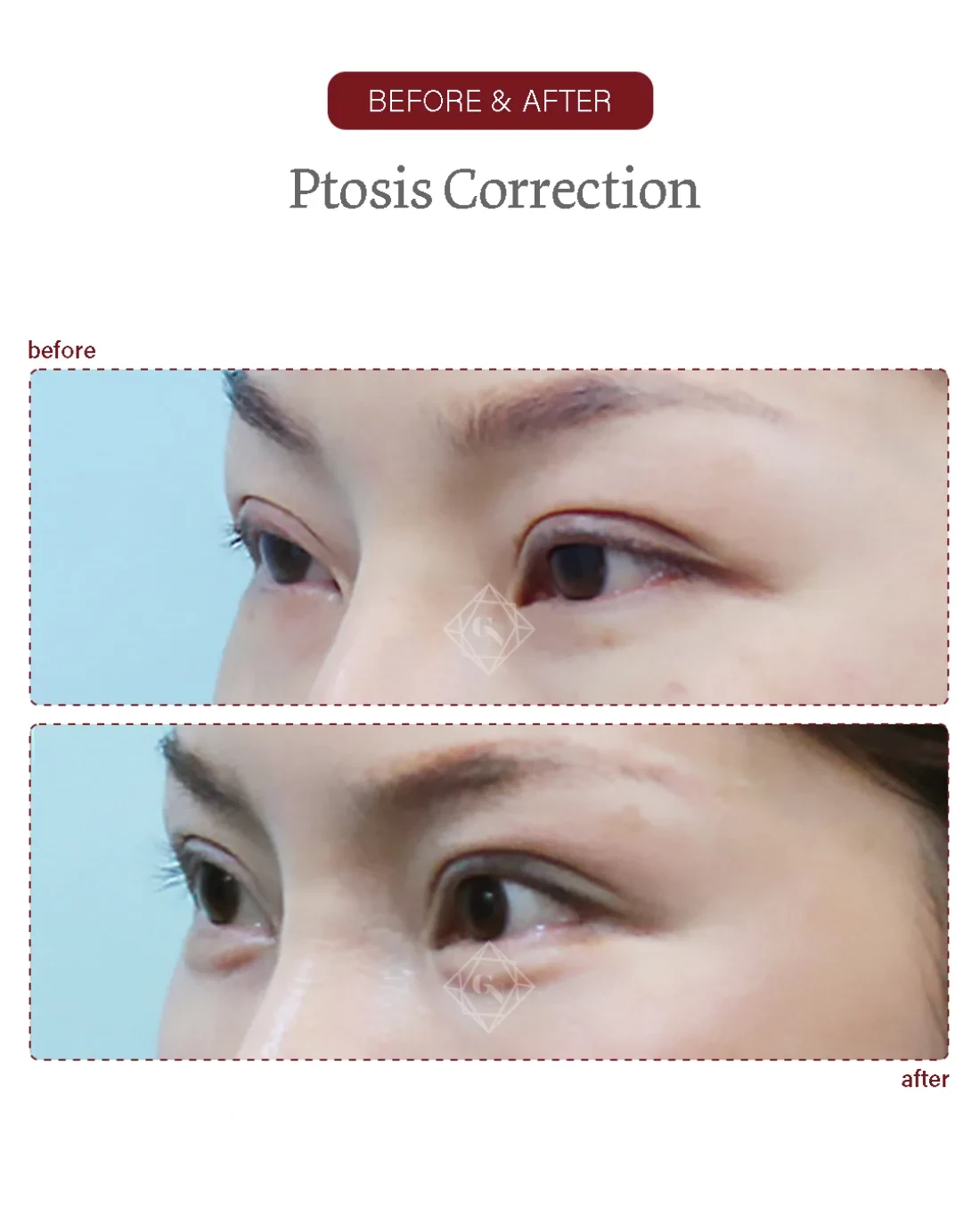
Ptosis-correction before/after examples of actual Garnet patients (published with consent). Results, recovery and suitability vary by individual and are not guaranteed; the right approach is decided at an in-person consultation.
Dr. In-Soo Baek
Director & sole operating surgeon
Korean medical licence no. 77407
Operate on what you came for. Trained at Korea University Medical Center. Every case planned, performed and reviewed by the same hands.
1Operating surgeon
~2Surgeries per day
7Registered techniques
Board-certified plastic surgeon
Plastic surgery training at Korea University College of Medicine & graduate school
Korean Society of Plastic and Reconstructive Surgeons member, in its facial-contour, eye & rhinoplasty groups
Consults, operates and follows up each case himself
Peer-reviewed papers behind the facts on this page. Each describes findings in its own study group — not results at Garnet — and none predicts your own outcome.
Pelton RW. Evaluation and Management of Blepharoptosis. Facial Plastic Surgery. 2022. doi:10.1055/a-1868-0986
Henry N et al. The Ever-Present Costs of Cosmetic Surgery Tourism: A 5-Year Observational Study. Aesthetic Plastic Surgery. 2021. doi:10.1007/s00266-021-02183-w
Bacharach J et al. A review of acquired blepharoptosis: prevalence, diagnosis, and current treatment options. Eye. 2021. doi:10.1038/s41433-021-01547-5
Venditto C et al. Complications of Cosmetic Surgery Tourism: Case Series and Cost Analysis. Aesthetic Surgery Journal. 2020. doi:10.1093/asj/sjaa092
FAQ
Common questions
How much does ptosis correction cost in Korea?
There is no single flat price, because ptosis correction is functional surgery that adjusts the eye-opening muscle by an amount specific to your eyes. The figure depends on the degree of droop, whether one or both eyes are treated, and whether it is combined with double-eyelid surgery. A reliable number comes from an assessment of your eyes. Careful clinics therefore quote after seeing photos.
What affects the cost of ptosis correction?
The main factors are the degree of droop and how much the levator muscle needs adjusting, whether one or both eyes are treated, any asymmetry that needs different correction on each side, and the technique used. The surgeon and the setting also matter. A board-certified surgeon operating personally in an unhurried clinic is different work from a high-volume room.
Why is ptosis correction cheaper when combined with double-eyelid surgery?
Because the same lid-crease incision used for double-eyelid surgery also gives access to the levator muscle, the two are done as one operation through one incision with one recovery. Part of the work overlaps, so the combined figure is usually less than two separate procedures added together.
What should be included in a ptosis correction quote?
A complete quote should cover the surgeon's fee, anaesthesia, the operating facility, suture removal at around seven days, and your follow-up reviews. Ask whether it is the all-in figure, whether consultation or imaging are charged, and what a revision would involve. Some quotes look cheaper only because items are added back later.
Is ptosis correction in Korea cheaper than in other countries?
Many international patients find the value attractive, but the right comparison looks past the headline price to what the figure includes and the result you are likely to get. A clearly explained, all-in quote from a board-certified plastic surgeon who operates personally is usually better value than the lowest number from a clinic that cannot confirm who will perform the surgery.
Is the cheapest ptosis correction the right choice?
Not necessarily. Eye-opening surgery is delicate, and an under- or over-corrected muscle is the most common reason for a revision, which costs more time and recovery than the original. The price quietly includes who operates, how unhurried the case is, and the after-care, so value is a better guide than the lowest figure.
Do I need to pay for a consultation or imaging to get a quote?
At some clinics yes, at others no. At Garnet there is no consultation or imaging fee, and you can get a pre-assessment from photos in an online consultation before you travel, so you can understand what your procedure would involve without committing to a trip first.
Will I be charged extra for follow-up visits?
Ask before booking, because practice varies. At a clinic with structured follow-ups at one, three and six months, those reviews are part of the care. After you fly home, the operating surgeon can continue to review your recovery by messenger.
Can I get a price before flying to Korea?
Yes. You can send photos in an online consultation and receive a realistic, itemised idea of what your ptosis correction would involve, including whether combining it with double-eyelid surgery makes sense, before you plan any travel or commit to a date.
Does a more expensive quote mean a better result?
Not by itself. A higher price can reflect a personal surgeon, unhurried time and thorough after-care, but it can also reflect overheads you are not benefiting from. The useful question is what the figure includes and who will operate. A fair, clearly explained quote matters more than the highest or lowest number.
My mom recently had a brow lift and lower blepharoplasty with Dr. Baek, and our experience has been wonderful so far. The Garnet team was incredibly kind and welcoming, with Kelly assisting us as our English consultant—she made everything…
I’m so happy I chose this clinic for my lower blepharoplasty. I was traveling from abroad by myself, so I was a little nervous, but from the beginning I felt comfortable and truly cared for. Everyone was kind, patient, and professional…
Came in for an in-person consult and ended up choosing Garnet and Dr.Baek for my non-incisional DES and tiplasty/alarplasty. I communicated with Kelly (English consultant) from the start till now (3 weeks post-op). She really help me feel…
My under-eyes have been sagging and folding for years... I tried to cover it up with makeup, but it actually got stuck in the wrinkles and made it stand out even more. While going for consultations, I noticed that the bigger the hospital…
Want a realistic idea of what your ptosis correction would involve? Send photos for an itemised pre-assessment before you plan a trip, with no consultation fee and no obligation.
Send photos and your question before you travel. An English-speaking coordinator reviews every enquiry and replies with guidance on whether surgery is appropriate, the likely plan and timing.
✓ Reviewed by the clinic coordinator, not a bot
✓ Photo-based pre-assessment before you fly
✓ Foreign-patient scheduling & after-care
✓ One surgeon for consultation, surgery and follow-up
Prefer to chat now? Reach the coordinator directly:









 T S7 months ago



