Ptosis correction adjusts the strength of the muscle that opens the eye, so recovery is less about a wound and more about swelling settling and the eyelid finding its final position. The surgery is done through an incision in the lid crease with sutures removed at about 7 days. Knowing what each stage looks like keeps the early swelling and temporary unevenness from worrying you.
The short answer
Ptosis correction at Garnet is an incisional procedure done in the lid crease, with sutures removed at around day seven.
The first three to four days bring the most swelling and bruising; cold compresses, head elevation and rest do most of the work.
Early asymmetry and a slightly 'surprised' or under-corrected look are normal while swelling settles; the eyelid height keeps refining for weeks to months.
Garnet's same-surgeon model means structured follow-up at one, three and six months tracks how the lid settles, by messenger if you have returned home.
Ptosis correction works by adjusting the strength of the levator, the muscle that lifts the upper eyelid, through an incision in the lid crease. Because that muscle and the surrounding tissue have been worked on, the first two to three days bring the most swelling and often some bruising. The lid can feel tight and look puffy, and it is normal for the eyes not to open evenly at this stage; that is swelling, not the result.
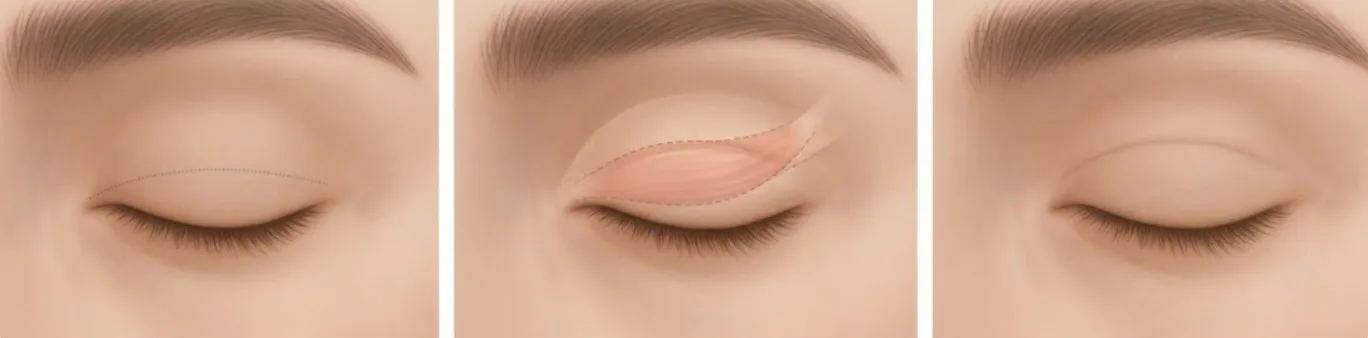
Illustration: through the crease line, the muscle that opens the eye (shown beneath the lid) is tightened so the lid rests higher.
Aftercare in these days is simple and matters a lot. Cold compresses in the first 48 hours help limit swelling, resting with your head elevated reduces puffiness, and avoiding strenuous activity, bending and heavy lifting keeps pressure off the area. Discomfort is typically mild, without sharp pain, and the eyes may feel dry or slightly gritty. The clinic will advise on lubricating drops if needed.
This is the stage that looks the most dramatic and worries patients the most, which is exactly why it helps to know it is the peak. From here, the trend is steadily downward: each day the swelling eases a little and the lid begins to settle.
Days 4 to 7
Days 4 to 7: bruising fades and sutures come out
Through the back half of the first week the swelling visibly recedes and any bruising starts to turn and fade. The eyes open more evenly than they did on day two, though some puffiness remains and the lid crease may still look a little high or uneven. Both are normal at this point. Many patients feel presentable enough for low-key activity by the end of the week, while still looking freshly operated up close.
The key milestone is suture removal at around day seven. This is a quick in-clinic step: the fine sutures along the lid crease are removed and the surgeon checks that the incision is healing cleanly and the early lid height is heading in the right direction. For patients who have travelled to Seoul, this is the visit to plan the stay around, so the operating surgeon can remove the sutures and review the early result in person.
Once the sutures are out, the incision is closed and the most visibly 'post-surgical' phase is largely behind you. What remains is the slower work of swelling fully resolving and the eyelid height refining toward its final position.
Weeks 2 to 6
Weeks 2 to 6: settling in and returning to normal
By the second week most patients are comfortable in normal daily life. Residual swelling continues to fade, the lid crease softens and looks more natural, and any bruising has usually resolved. Light makeup can typically be worn once the surgeon confirms the incision has healed enough. Follow the clinic's specific timing for your lids; a general rule does not apply.
This is also the phase where it is important to be patient with appearance. Because the surgery adjusts muscle strength, the eyelids may not look perfectly symmetrical yet, and the result can look slightly under- or over-open while swelling is still present. Mild asymmetry between the two eyes during this window is common and usually evens out as the swelling settles. Strenuous exercise is generally reintroduced gradually over these weeks on the surgeon's advice.
By around six weeks the eye looks substantially more natural and settled, and most social and work concerns have passed. The eyelid height, however, is still fine-tuning. The final, stable position takes a little longer, which is what the next stage covers.
Months 1 to 6
Months 1 to 6: the eyelid finds its final position
Ptosis correction is judged over months, not weeks, because the lid height continues to refine as the last swelling resolves and the adjusted muscle settles into its new working tension. From one to three months the eye looks increasingly natural, asymmetry continues to even out, and the crease takes on its mature shape. By three to six months most patients are at, or close to, their final result.
It is worth setting this expectation from the start: a result that looks slightly high, slightly low or slightly uneven at three or four weeks is not the finished result, and it is usually a mistake to judge the outcome before the months have done their work. This is precisely why Garnet's follow-up is structured at 1, 3 and 6 months, the points where the surgeon can confirm the lid is settling as planned.
For the small number of cases where the height needs a touch of refinement, that judgement is made once things have stabilised. Early swelling is no basis for it. The ptosis correction revision and correction guide covers how and when that is considered. For most patients, though, the months are simply a matter of watching a natural, even result emerge.
Aftercare
Aftercare and the red flags worth knowing
Good aftercare is mostly common sense applied consistently. In the first days, use cold compresses, keep your head elevated when resting, and avoid bending, lifting and strenuous activity. Keep the incision clean as instructed, do not rub the eyes, and protect the area from the sun as it heals. Reintroduce exercise, makeup and normal routines on the timeline the surgeon gives you, without rushing them.
Most recoveries are uneventful, but it is worth knowing the difference between normal and concerning. Swelling, bruising, mild discomfort, dryness and early unevenness are all expected. What is not routine, and warrants prompt contact with the clinic, includes pain that worsens instead of improving, spreading redness or signs of infection, sudden changes in vision, or bleeding that does not settle. Knowing these in advance means you can act early and avoid needless worry.
If you have returned to your home country, this aftercare guidance continues remotely. Because the same surgeon manages your recovery, you can send photographs and describe any concern, and get a clear read on whether what you are seeing is normal healing or something to look at more closely. This is the continuity described in the guide for online consultation from abroad.
At Garnet
How follow-up works at Garnet
Garnet is a single-surgeon clinic in Apgujeong, Seoul, registered with Korea's foreign-patient programme. Dr. In-Soo Baek is a board-certified plastic surgeon (Korean medical licence no. 77407) and the only operating doctor — he consults, performs the ptosis correction himself, removes your sutures and conducts every follow-up. Because ptosis correction is judged over months as the lid settles, having the same surgeon track it from day one through the final result is the model that suits it well.
Follow-up is structured at one, three and six months, continuing by messenger if you have travelled home, with a dedicated coordinator helping throughout your stay. If you are weighing the procedure, you can read the full overview on the ptosis correction cell page, or begin with a no-obligation online assessment to discuss what your recovery would realistically look like.
Real Results
Before & After
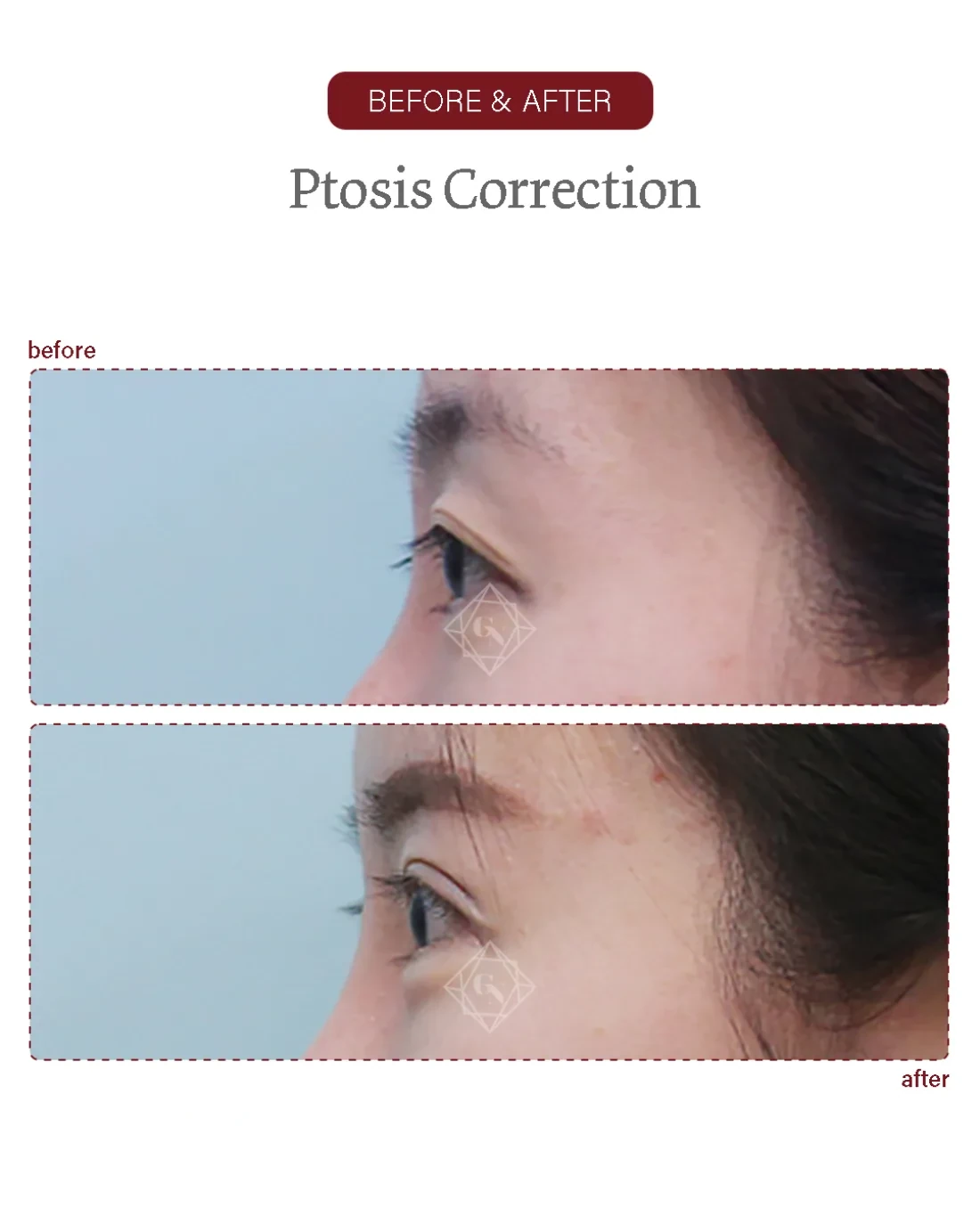
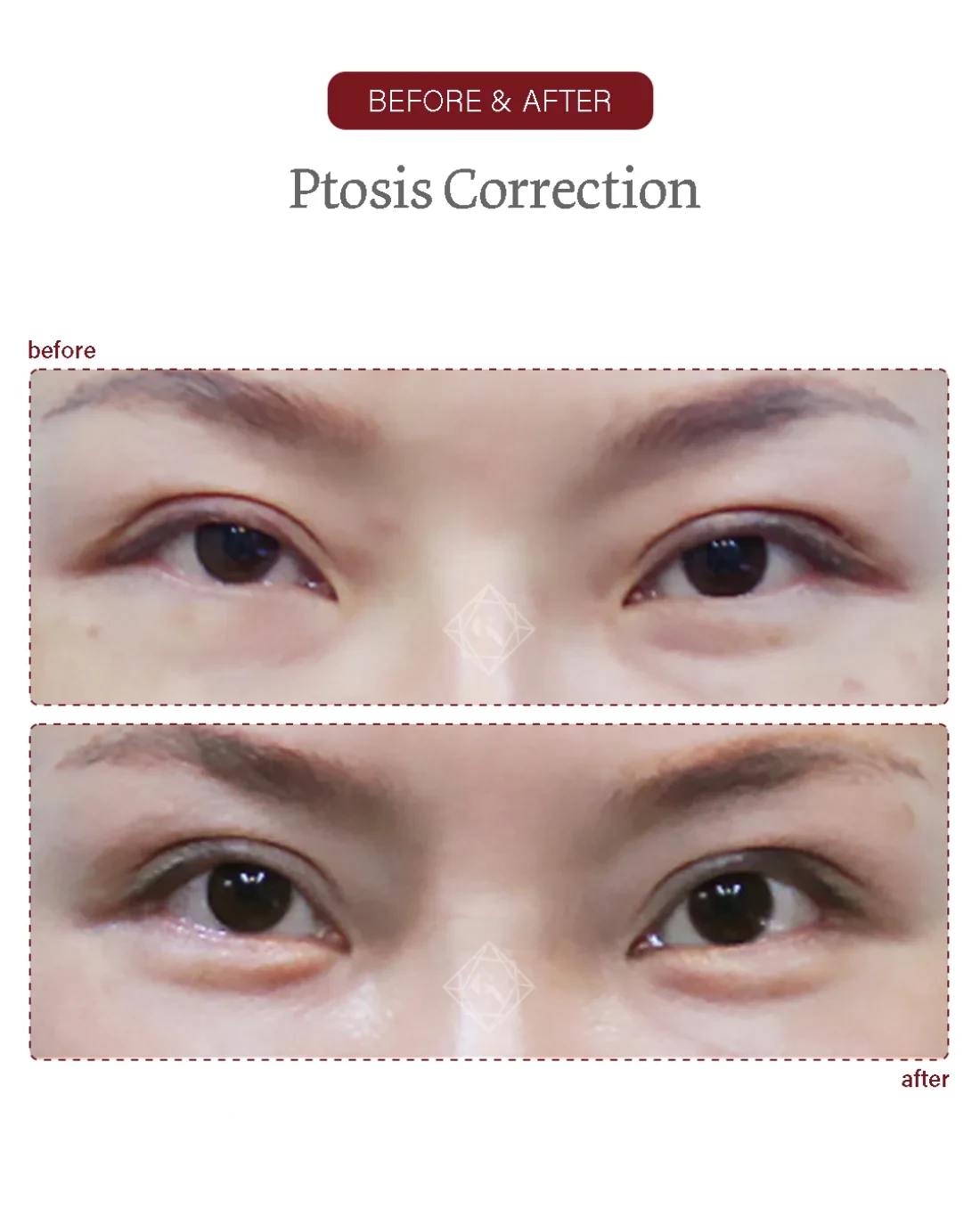
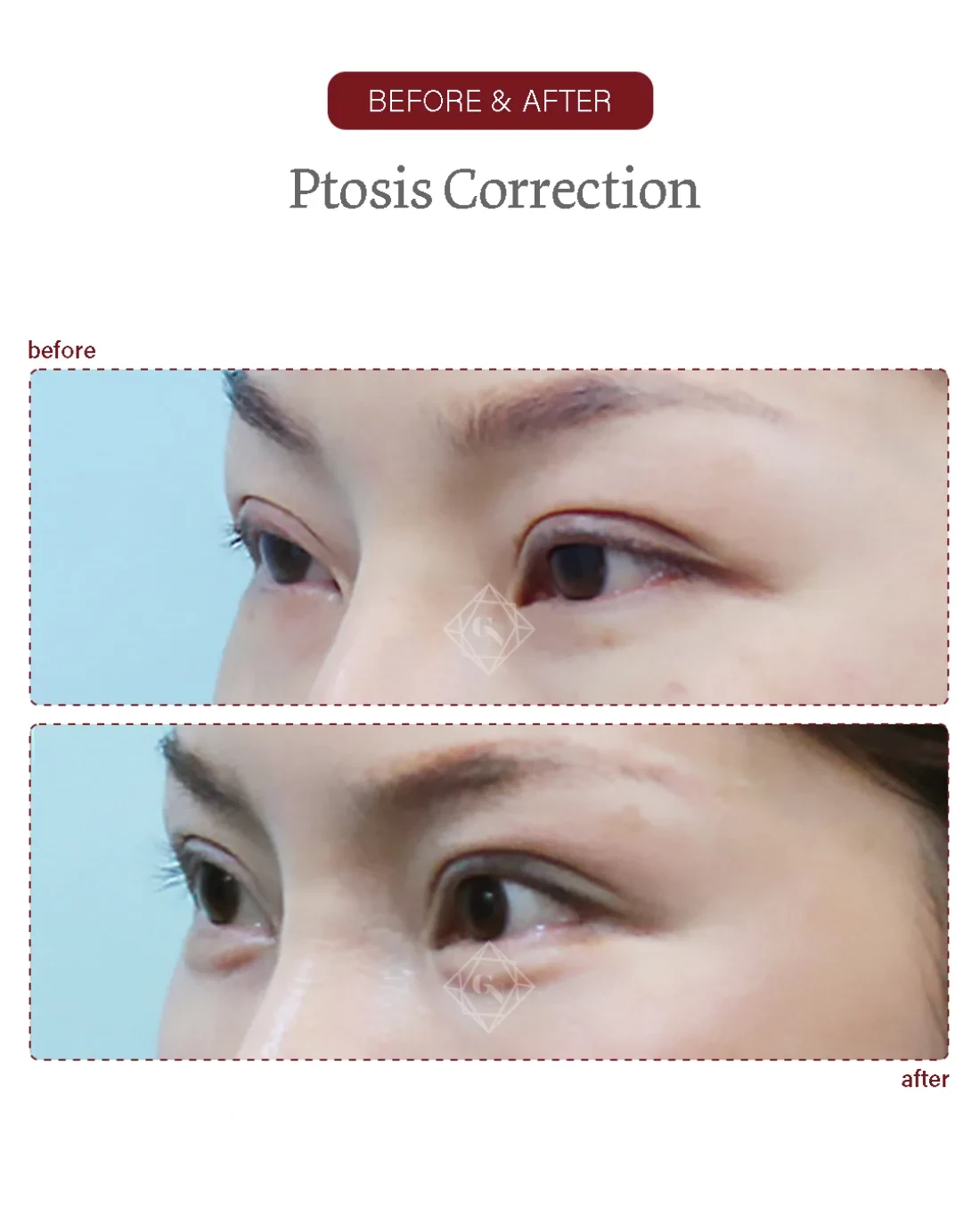
Ptosis-correction before/after examples of actual Garnet patients (published with consent). Results, recovery and suitability vary by individual and are not guaranteed; the right approach is decided at an in-person consultation.
Dr. In-Soo Baek
Director & sole operating surgeon
Korean medical licence no. 77407
Operate on what you came for. Trained at Korea University Medical Center. Every case planned, performed and reviewed by the same hands.
1Operating surgeon
~2Surgeries per day
7Registered techniques
Board-certified plastic surgeon
Plastic surgery training at Korea University College of Medicine & graduate school
Korean Society of Plastic and Reconstructive Surgeons member, in its facial-contour, eye & rhinoplasty groups
Consults, operates and follows up each case himself
Peer-reviewed papers behind the facts on this page. Each describes findings in its own study group — not results at Garnet — and none predicts your own outcome.
Shields M et al. Blepharoptosis correction. Current Opinion in Otolaryngology & Head and Neck Surgery. 2003. doi:10.1097/00020840-200308000-00009
Deenstra W et al. Correction of Severe Blepharoptosis. Annals of Plastic Surgery. 1996. doi:10.1097/00000637-199604000-00004
Pelton RW. Evaluation and Management of Blepharoptosis. Facial Plastic Surgery. 2022. doi:10.1055/a-1868-0986
FAQ
Common questions
How long does ptosis correction recovery take?
The most visible recovery happens over the first one to two weeks: swelling peaks in the first three to four days, sutures come out at around day seven, and by two weeks most patients are comfortable in daily life. The eyelid height keeps refining, though, and the final, settled result is usually judged at three to six months.
What is ptosis correction recovery like day by day?
Days one to three bring the most swelling and bruising. Days four to seven see the bruising fade, the eyes open more evenly, and the sutures removed at about day seven. Weeks two to six are settling-in, with residual swelling fading and normal life resuming. Months one to six are when the lid height refines to its final position.
When can I return to work after ptosis correction?
Many patients feel presentable for low-key activity by the end of the first week, especially after sutures are removed, though some swelling remains and the eyes look freshly operated up close. Work that is not physically strenuous is often manageable around then; jobs needing a fully settled appearance may warrant a little longer.
What aftercare follows ptosis correction?
In the first days, use cold compresses, keep your head elevated, avoid bending and strenuous activity, and keep the incision clean without rubbing the eyes. Protect the area from the sun, reintroduce exercise and makeup on the surgeon's timeline, and attend the structured one, three and six-month follow-ups.
Is it normal for my eyes to look uneven after ptosis correction?
Yes, early on. Because the surgery adjusts muscle strength, mild asymmetry and a slightly under- or over-open look are common while swelling is present, and they usually even out as it settles. The lid height refines over months, which is why the result is judged at 3 to 6 months; the first weeks are too early.
When do the sutures come out?
The fine sutures along the lid crease are removed at around day seven, in a quick in-clinic visit where the surgeon also checks the incision is healing cleanly and the early lid height is on track. International patients should plan their stay in Seoul around this milestone so the operating surgeon removes them in person.
When will I see the final result of ptosis correction?
Most patients are at or close to their final result by three to six months. The eye looks substantially more natural by around six weeks, but the eyelid height continues to fine-tune as the last swelling resolves and the adjusted muscle settles, so it is wise not to judge the outcome before the months have done their work.
What red flags should I watch for during recovery?
Swelling, bruising, mild discomfort, dryness and early unevenness are all normal. Contact the clinic promptly for pain that worsens over time, spreading redness or signs of infection, sudden changes in vision, or bleeding that does not settle. Knowing these in advance means you can act early and avoid needless worry.
Can the surgeon follow my recovery if I live abroad?
Yes. Because the same surgeon who operated manages your recovery, you can send photographs at the one, three and six-month points after returning home, and get a clear read on whether what you are seeing is normal healing or something to look at more closely.
My mom recently had a brow lift and lower blepharoplasty with Dr. Baek, and our experience has been wonderful so far. The Garnet team was incredibly kind and welcoming, with Kelly assisting us as our English consultant—she made everything…
I’m so happy I chose this clinic for my lower blepharoplasty. I was traveling from abroad by myself, so I was a little nervous, but from the beginning I felt comfortable and truly cared for. Everyone was kind, patient, and professional…
Came in for an in-person consult and ended up choosing Garnet and Dr.Baek for my non-incisional DES and tiplasty/alarplasty. I communicated with Kelly (English consultant) from the start till now (3 weeks post-op). She really help me feel…
My under-eyes have been sagging and folding for years... I tried to cover it up with makeup, but it actually got stuck in the wrinkles and made it stand out even more. While going for consultations, I noticed that the bigger the hospital…
Wondering what your ptosis correction recovery would really look like? Send photos for a no-obligation assessment and a clear picture of the timeline before you plan anything.
Send photos and your question before you travel. An English-speaking coordinator reviews every enquiry and replies with guidance on whether surgery is appropriate, the likely plan and timing.
✓ Reviewed by the clinic coordinator, not a bot
✓ Photo-based pre-assessment before you fly
✓ Foreign-patient scheduling & after-care
✓ One surgeon for consultation, surgery and follow-up
Prefer to chat now? Reach the coordinator directly:









 T S7 months ago



