A ptosis correction that left the eyes still heavy, opened too far, or uneven is one of the most common reasons international patients seek a revision. Revision is more demanding than a first operation, so the assessment, the timing and the surgeon matter even more.
The short answer
Revision ptosis correction usually addresses one of three things: under-correction (the lid still droops), over-correction (the eye opens too wide or won't close fully), or asymmetry between the two eyes.
Most surgeons wait until the first result has fully settled, commonly around 6 months, before judging whether a revision is needed. Early swelling and scar softening change the apparent height.
Revision works on scarred tissue from the previous surgery, so it calls for an unhurried assessment of what is realistic. Nobody can promise to perfect both eyes.
A single-surgeon clinic, where the same board-certified surgeon assesses, operates and follows up, keeps the plan and the responsibility for your revision in one place.
Why a previous ptosis correction may need revising
Ptosis correction adjusts the strength of the levator, the muscle that lifts the upper eyelid, so the eye opens to a natural height. When a first operation doesn't land where it should, the reasons usually fall into three groups. Under-correction is the most common: the lid still sits low and the eye looks sleepy or strained, often because the muscle was tightened too conservatively. Over-correction is the opposite: the eye opens too wide, shows white above the iris, or doesn't close completely, which can cause dryness and a startled look. Asymmetry means the two eyes settled at different heights, which the eye is very good at noticing even when each side alone looks acceptable.
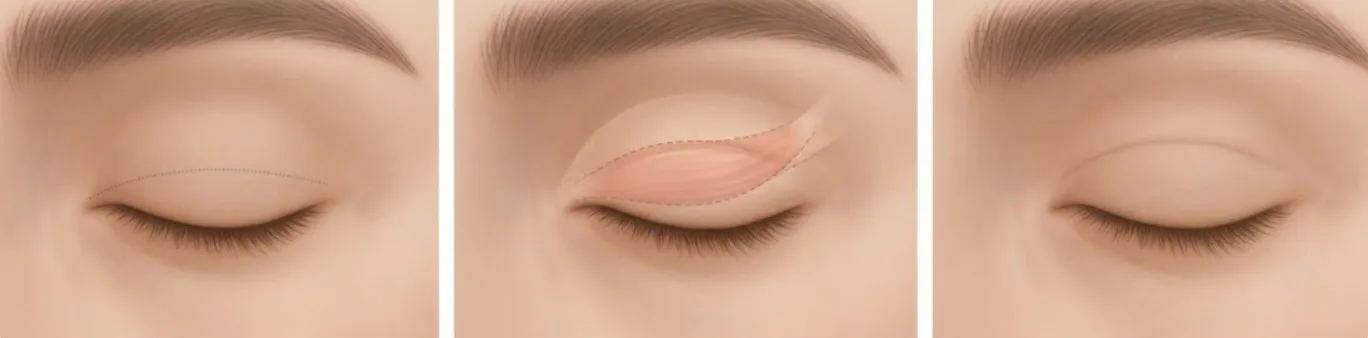
Illustration: through the crease line, the muscle that opens the eye (shown beneath the lid) is tightened so the lid rests higher.
Less commonly, the crease can sit too high or unevenly, or the original ptosis correction may have been combined with a double-eyelid procedure that healed unpredictably. The point of a revision consultation is to work out which of these is actually driving your concern, because the fix for under-correction is very different from the fix for an eye that won't close.
It is worth being clear with yourself about what bothers you: height, symmetry, the crease shape, or how the eye feels as well as how it looks. A precise complaint leads to a precise plan, and helps the surgeon tell you plainly whether surgery is the right answer at all.
Timing
When a ptosis correction revision should be considered
The single biggest mistake in revision is operating too soon. After a first ptosis correction the lid height keeps changing for months: early swelling can make the eye look over-opened, and as the internal scar softens the lid often settles lower than it looked at one week. Judging a result before it has matured leads to revisions that chase a moving target.
For that reason most surgeons wait until the result has fully stabilised, commonly around 6 months, before deciding a revision is genuinely needed, unless there is a clear functional problem such as an eye that cannot close and is causing exposure or persistent dryness, which is assessed sooner. If you are within the first few months after your original surgery, the most useful step is often to wait, protect the eye and re-photograph before rebooking anything.
If your first surgery was elsewhere, bring whatever records you have: the operation note, what technique was used, and clear before-and-after photos including your pre-surgery eyes. That history shapes a safer revision plan, and you can review it in an online consultation before committing to travel.
Assessment
What a ptosis revision assessment looks for
A revision assessment is more detailed than a first-time consultation because it has to read the previous surgery as well as the eye. The surgeon measures how far the lid lifts on its own (the levator's working strength) and checks the height of each lid at rest, in upgaze and in downgaze, because under- and over-correction can look similar in a single photo. They also check that the eye closes fully, since an eye that doesn't close completely changes what a revision can safely aim for.
Scarring from the first operation matters too. Revision works through tissue that has already healed once, so the surgeon assesses how mobile the lid is and how the existing crease and incision have settled. Where there is over-correction, the question is whether the muscle can be released enough to lower the lid without losing lift; where there is under-correction, whether there is healthy muscle to tighten further.
The most important part of the assessment is the conclusion. Sometimes the answer is a straightforward revision; sometimes it is to wait longer; and sometimes it is that a near-perfect match of both eyes is not realistic and a measured improvement is the sensible goal. A surgeon who says this plainly, including "this may not need surgery", is giving you better information than one who guarantees symmetry.
How it works
How the revision is performed
At Garnet, ptosis correction is an incisional procedure through the natural upper-lid crease, and revision follows the same route. The previous crease line is reopened so the work is hidden in the fold, with no new scar added. Through that incision the surgeon adjusts the strength of the eye-opening muscle: tightening it further to lift an under-corrected lid, or releasing and resetting it to bring down an over-corrected one. The aim is a height that matches the other eye in natural gaze, with a clean, even crease.
Because revision works on tissue that has healed once, fine adjustment is the whole task. The surgeon may check lid height with you cooperating during the procedure to fine-tune symmetry, and any uneven or thickened crease from the first surgery can be tidied at the same time. Where the original problem was asymmetry, both eyes may be addressed so they settle as a pair.
Sutures sit along the crease line and are removed at about seven days, the same as a first ptosis correction. Revision is technically more demanding than the first operation, which is exactly why the assessment and the surgeon's experience with the eye-opening muscle carry more weight than the procedure being labelled a "redo".
Recovery
Recovery and what a realistic result looks like
Early recovery after a revision resembles the first surgery: swelling and bruising are most noticeable in the first week, sutures come out around day 7, and the crease looks tight and slightly high at first. As with any ptosis surgery, the height keeps refining for weeks to months as swelling resolves and the internal scar softens. The eye you see at 1 week is an early stage, and that is normal.
It is worth setting expectations for symmetry specifically. The two eyes can heal at slightly different speeds, so a small difference in the early weeks does not mean the revision has failed; it usually evens out as both sides settle. Patience through this window is part of the treatment, and rushing to judge it is what creates a cycle of repeated operations.
Structured follow-up matters most for revisions, because the surgeon needs to track the settling height over time. The same surgeon reviews you at set points and remains reachable after you fly home, so small concerns are caught early and managed calmly without a premature third operation. For the day-by-day picture, see the parent ptosis correction page and the sibling guide on what to expect as the result settles.
At Garnet
How Garnet approaches revision ptosis correction
Garnet is a single-surgeon clinic in Apgujeong, Seoul. Dr. In-Soo Baek is a board-certified plastic surgeon (Korean medical licence no. 77407) and the only operating doctor. He carries out the revision assessment himself, performs the surgery, and reviews every follow-up at 1, 3 and 6 months. For a revision, that continuity is the point: the person who plans your correction is the person accountable for how it settles.
Because the day is capped at two surgeries, a revision assessment is given unhurried time to read the previous result, measure both lids carefully and explain plainly what is and isn't achievable. Garnet is registered with Korea's foreign-patient programme, so international patients can review their history and photos in an online consultation first, then plan a single trip with after-care that continues by messenger once they return home.
Real Results
Before & After
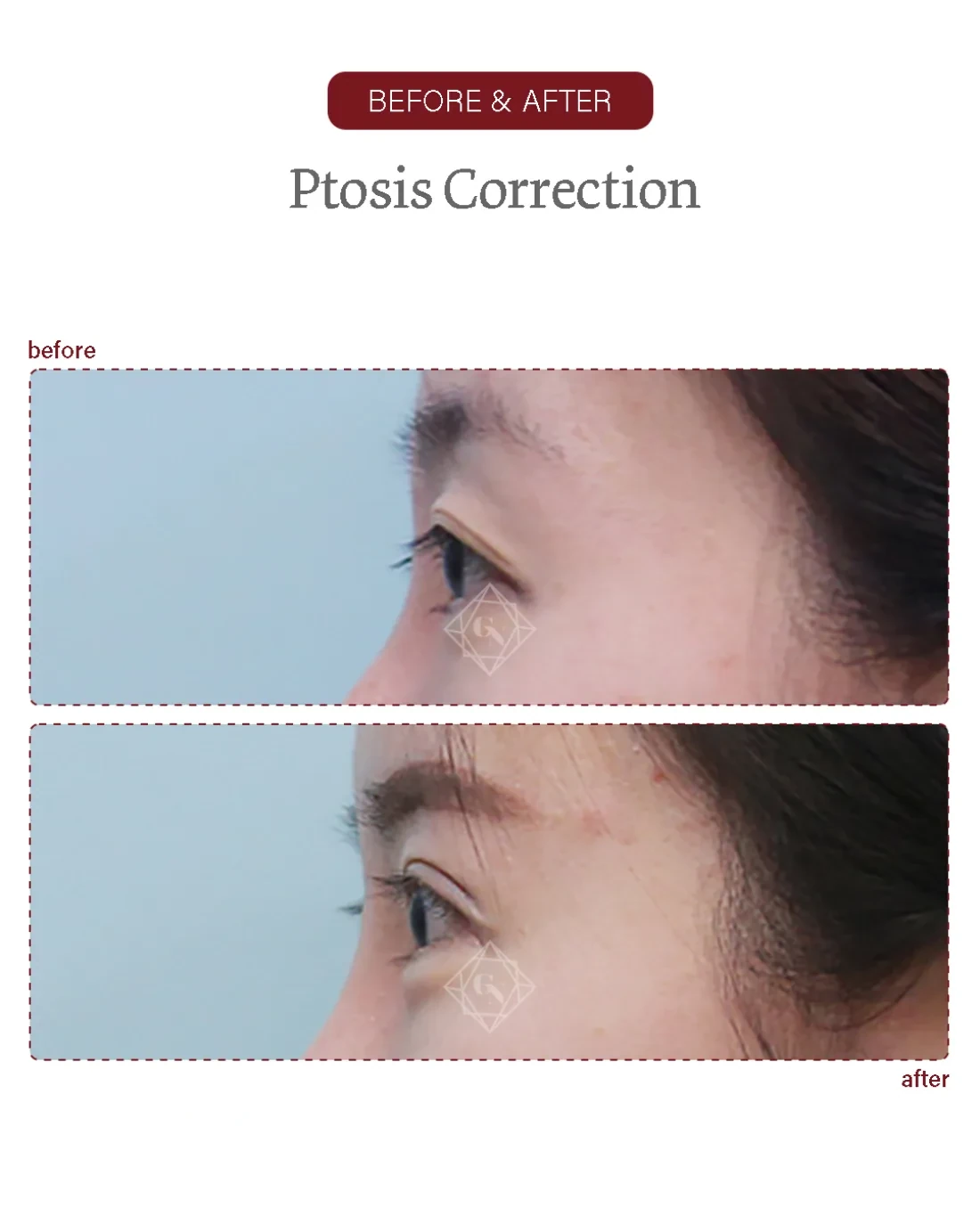
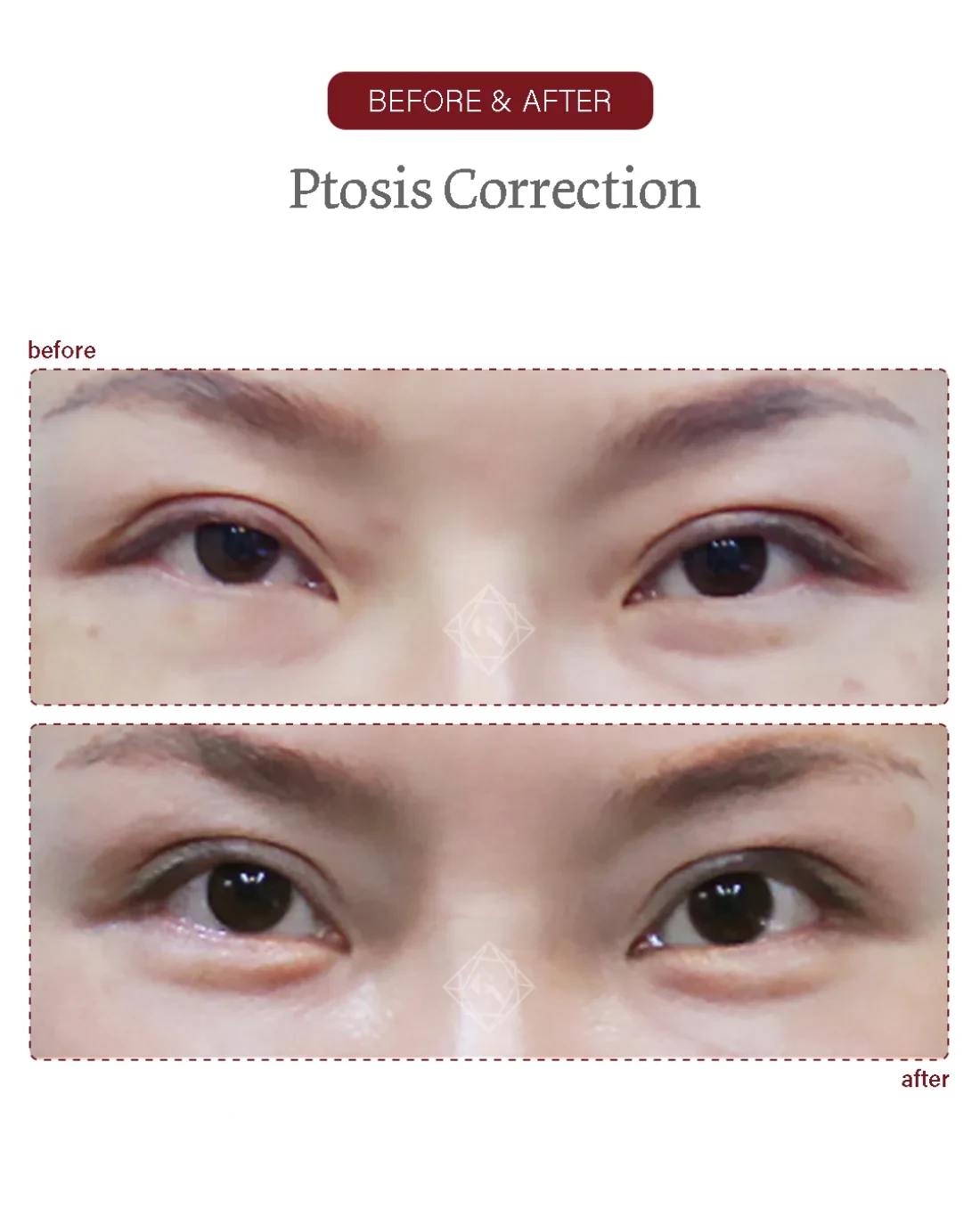
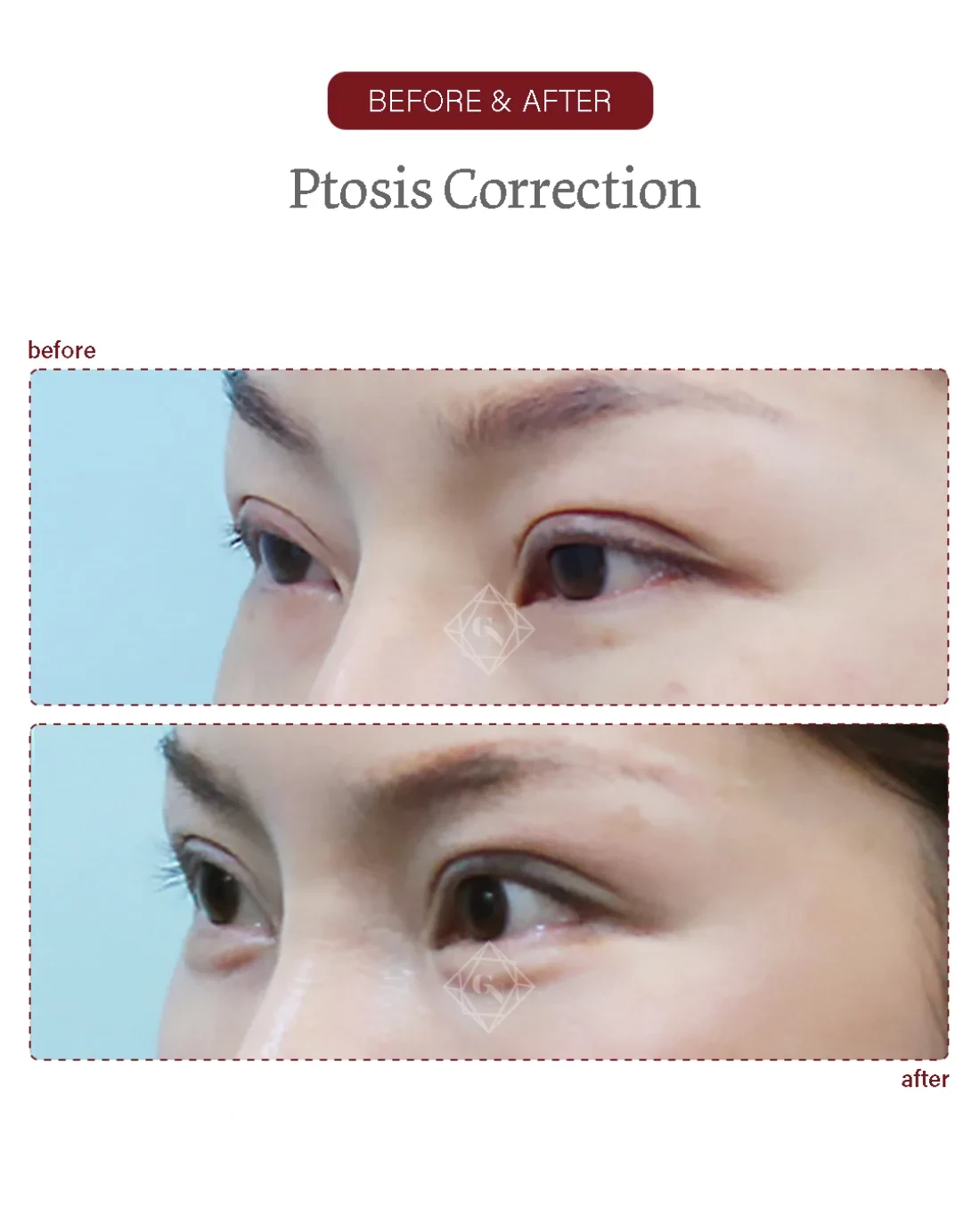
Ptosis-correction before/after examples of actual Garnet patients (published with consent). Results, recovery and suitability vary by individual and are not guaranteed; the right approach is decided at an in-person consultation.
Dr. In-Soo Baek
Director & sole operating surgeon
Korean medical licence no. 77407
Operate on what you came for. Trained at Korea University Medical Center. Every case planned, performed and reviewed by the same hands.
1Operating surgeon
~2Surgeries per day
7Registered techniques
Board-certified plastic surgeon
Plastic surgery training at Korea University College of Medicine & graduate school
Korean Society of Plastic and Reconstructive Surgeons member, in its facial-contour, eye & rhinoplasty groups
Consults, operates and follows up each case himself
Peer-reviewed papers behind the facts on this page. Each describes findings in its own study group — not results at Garnet — and none predicts your own outcome.
Bacharach J et al. A review of acquired blepharoptosis: prevalence, diagnosis, and current treatment options. Eye. 2021. doi:10.1038/s41433-021-01547-5
Kokubo K et al. Comparison of postoperative recurrence rates between levator aponeurosis advancement and external Müller's muscle tucking for acquired blepharoptosis. Journal of Plastic, Reconstructive & Aesthetic Surgery. 2021. doi:10.1016/j.bjps.2021.03.086
Kashkouli MB et al. Postoperative levator function change in patients with unilateral myogenic versus aponeurotic blepharoptosis. Journal of Plastic, Reconstructive & Aesthetic Surgery. 2019. doi:10.1016/j.bjps.2019.06.005
FAQ
Common questions
Can a previous ptosis correction be corrected?
Yes. A revision can address an under-corrected lid that still droops, an over-corrected eye that opens too wide or won't fully close, or asymmetry between the two eyes. Revision works on tissue that has already healed once, so it is more demanding than a first operation and depends on a careful assessment of what is realistic for your eyes.
When should I consider a ptosis correction revision?
Usually once the first result has fully settled, commonly around 6 months, because lid height keeps changing as swelling resolves and the internal scar softens. The exception is a clear functional problem, such as an eye that cannot close and is causing dryness, which is reviewed sooner. Operating before the result matures risks chasing a moving target.
What is the difference between under-correction and over-correction?
Under-correction means the muscle was tightened too conservatively, so the lid still sits low and the eye looks heavy. Over-correction means the eye opens too far, may show white above the iris and can struggle to close fully. They are corrected in opposite ways, so the assessment first works out which one you have.
How is revision ptosis correction performed?
Through the existing upper-lid crease, so no new scar line is added. The surgeon re-adjusts the strength of the eye-opening muscle (tightening it to lift an under-corrected lid or releasing it to lower an over-corrected one) and aims for a height that matches the other eye in natural gaze. Sutures along the crease come out at about 7 days.
Will my eyes be perfectly symmetrical after a revision?
A measured improvement is a realistic goal; perfect symmetry cannot be promised, especially when working through previously operated tissue. The two eyes can also heal at slightly different speeds, so a small early difference often evens out as both sides settle. The assessment will tell you what degree of match is achievable for you specifically.
Is revision more painful or higher risk than the first surgery?
Revision is technically more demanding because it works on healed, scarred tissue, but recovery feels similar to a first ptosis correction: swelling and bruising in the first week, sutures out around day 7. The added complexity is in the planning and the fine adjustment, which is why an experienced surgeon and an unhurried assessment matter most.
Do I need my original surgery records for a revision?
They help. The operation note, the technique used and clear photos (including your eyes before the first surgery) let the surgeon plan a safer revision. If you don't have full records, an examination can still establish much of what is needed, but bring whatever you have to your consultation.
Can I get a revision if my first surgery was at another clinic?
Yes. Many revision patients had their first ptosis correction elsewhere, including in another country. The assessment focuses on your current eyes and any records you can provide; where the original surgery was done matters little. You can review your history and photos in an online consultation before deciding to travel.
How long after a revision will I see the final result?
Expect the crease to look tight and slightly high at first, then refine over weeks to months as swelling resolves and the scar softens. Because revision settling can take time, structured follow-up at set points is especially useful, and the same surgeon reviewing you helps avoid rushing into a further operation.
Does Garnet treat international revision patients?
Yes. Garnet is registered with Korea's foreign-patient programme, and Dr. In-Soo Baek, a board-certified plastic surgeon, personally handles the revision assessment, surgery and follow-up. International patients can start with an online consultation to review their history and photos before planning a trip.
My mom recently had a brow lift and lower blepharoplasty with Dr. Baek, and our experience has been wonderful so far. The Garnet team was incredibly kind and welcoming, with Kelly assisting us as our English consultant—she made everything…
I’m so happy I chose this clinic for my lower blepharoplasty. I was traveling from abroad by myself, so I was a little nervous, but from the beginning I felt comfortable and truly cared for. Everyone was kind, patient, and professional…
Came in for an in-person consult and ended up choosing Garnet and Dr.Baek for my non-incisional DES and tiplasty/alarplasty. I communicated with Kelly (English consultant) from the start till now (3 weeks post-op). She really help me feel…
My under-eyes have been sagging and folding for years... I tried to cover it up with makeup, but it actually got stuck in the wrinkles and made it stand out even more. While going for consultations, I noticed that the bigger the hospital…
If you are unhappy with a previous ptosis correction, send your history and clear photos for a no-obligation pre-assessment of whether a revision is right for you.
Send photos and your question before you travel. An English-speaking coordinator reviews every enquiry and replies with guidance on whether surgery is appropriate, the likely plan and timing.
✓ Reviewed by the clinic coordinator, not a bot
✓ Photo-based pre-assessment before you fly
✓ Foreign-patient scheduling & after-care
✓ One surgeon for consultation, surgery and follow-up
Prefer to chat now? Reach the coordinator directly:









 T S7 months ago



