Both stem cell fat grafting and standard fat grafting move your own fat from a donor area such as the abdomen or thigh to add soft, natural volume to your face. The difference lies in how the harvested fat is prepared before it is reinjected. This page explains that difference factually so you can have an informed conversation with your surgeon. It makes no claim that one is superior to the other.
The short answer
Both procedures transfer your own fat to add volume; the difference is in how the harvested fat is processed before reinjection.
Standard fat grafting reinjects the harvested fat after basic processing; stem cell (stromal-fraction-supplemented) grafting adds a concentrated cell fraction to the fat.
Recovery is broadly similar for both: two areas heal, a harvest site and the grafted face, with no long incisions.
Which approach suits you is a clinical judgement for your surgeon; Garnet is not designated for advanced regenerative medicine and makes no survival or efficacy claims.
It helps to start with what these two procedures share, because it is most of the picture. Both are autologous fat transfers. They take fat from a donor area such as the abdomen or thigh, process it, and reinject it through a fine cannula to add soft volume to the face. Both restore fullness with your own tissue instead of a synthetic filler, and both belong to the broader fat grafting family.
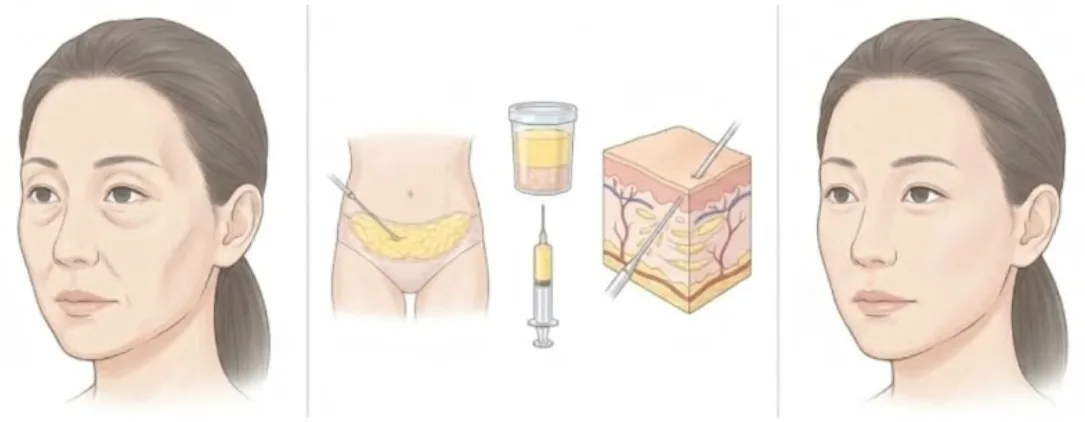
Illustration: the patient's own fat is taken, processed, and re-placed beneath the skin where volume has been lost.
The point of difference is a single step in the middle: how the harvested fat is prepared before it goes back in. Standard fat grafting reinjects the fat after a basic cleaning and concentration. Stem cell fat grafting (more precisely, stromal-fraction-supplemented grafting) adds a concentrated fraction of cells, separated from a portion of the harvested fat, into the graft.
This page describes that distinction neutrally. It does not claim that either technique gives better graft survival, a longer-lasting result, or a superior outcome. Those are clinical questions that depend on the individual, and Korean medical-advertising rules require them to be discussed factually and not advertised. For a procedure overview, see stem cell fat grafting; for recovery specifics, see the recovery timeline.
Standard
What standard fat grafting involves
In a standard fat graft, fat is gently harvested from a donor area through a cannula, then processed (typically cleaned and concentrated) to separate usable fat from fluid and other components. The prepared fat is then reinjected in fine layers into the area being volumised, such as the cheeks, temples or under-eye region.
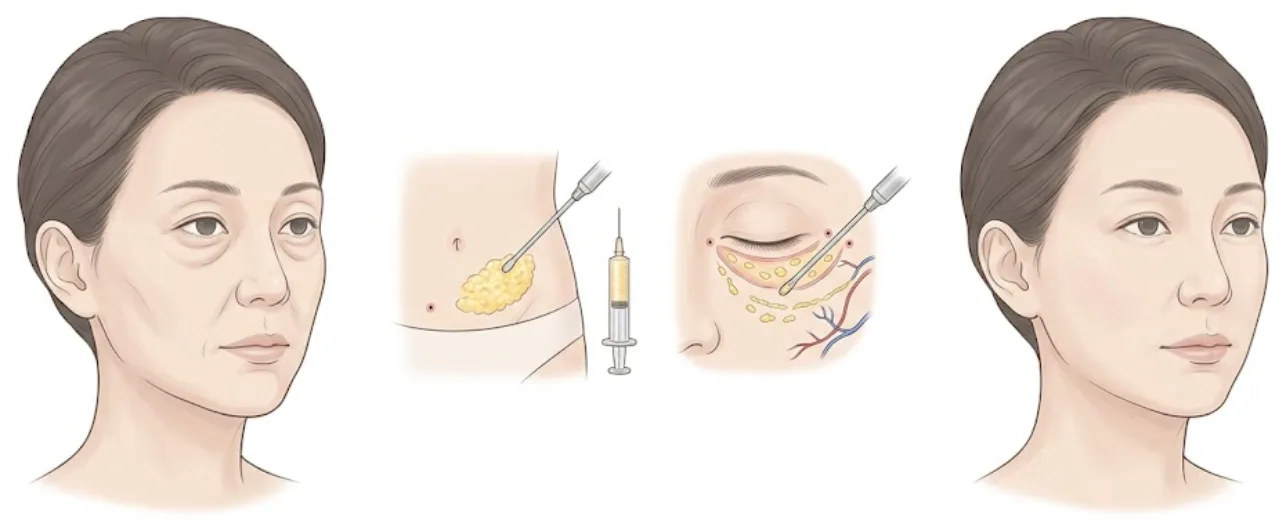
Illustration: the patient's own fat is gently taken from a donor area such as the abdomen, refined, and placed in small amounts where volume has been lost.
Because it relies only on basic processing, standard fat grafting is the more straightforward of the two preparations and is widely performed. At Garnet, related techniques in the fat grafting family include PRP-supplemented micro-fat grafting for delicate areas such as the eyelid and under-eye, where very fine, even placement matters.
As with any fat transfer, a portion of the grafted fat is naturally reabsorbed in the weeks after surgery, so the face looks fuller at first and settles toward its lasting volume. This is normal for both standard and stem cell grafting, and no fixed amount of retained volume is promised for either.
Stem cell
What the stem cell (stromal-fraction) step adds
Stem cell fat grafting follows the same harvest-and-reinject pathway, with one extra step: a portion of the harvested fat is processed to separate a concentrated stromal-cell fraction, which is then added back into the graft before it is reinjected. This is why the more accurate term is stromal-fraction-supplemented fat grafting; "stem cell" is the shorthand.
Precision matters here. The supplemented fraction is a processing variation of the same autologous fat transfer. It does not turn the procedure into a different category of treatment, and it is not, in this clinical context, the kind of advanced cell therapy that requires separate designation. Garnet performs stromal-fraction-supplemented grafting as a fat-transfer technique and is not designated for advanced regenerative (cell-therapy) medicine.
Because of those same medical-advertising rules, this page does not claim the added fraction improves graft survival or produces a better or longer-lasting result. Whether the additional step is appropriate for you is a clinical decision for your surgeon, made on your anatomy and goals. The factual version of this conversation happens at your consultation.
Recovery
How recovery compares between the two
From a patient's point of view, recovery is broadly similar for both techniques, because both involve the same two healing areas: the donor site where fat was harvested, and the recipient area on the face where it was placed. Neither uses long incisions. Access is through fine cannula points, so there are no significant scar lines to heal in either case.
For both, the first three to five days carry the most swelling and bruising, many patients feel presentable within about a week, and most return to a full routine by around six weeks. For both, the grafted area looks fuller at first and settles over the following weeks as some fat is naturally reabsorbed. The full day-by-day picture is in the stem cell fat grafting recovery timeline.
The recovery for standard and stem cell grafting is usually much the same. What differs is the preparation step, and that is chosen on clinical grounds. The aftercare principles, such as keeping the grafted area undisturbed and avoiding heat and firm pressure early on, are the same for both.
Choosing
How to choose between them with your surgeon
Because both techniques share a goal and a recovery, the right choice is best made with a surgeon who assesses you in person. An internet comparison cannot do that. The factors that matter (the area being treated, how much volume you want, your donor fat, your skin and your goals) are individual, and a careful surgeon will explain why a particular approach fits your case.
A useful question to bring to the consultation is simply: "For my anatomy and what I want, which approach do you recommend, and why?" A considered answer may be either technique, or it may be that fat grafting is not the ideal route for you at all and a different procedure suits you better. A surgeon who only ever recommends the more elaborate option is worth questioning.
Be cautious of any clinic that markets one technique as guaranteeing better survival or a superior result; reputable surgeons in Korea discuss these factually, in line with medical-advertising rules. You can ask for that neutral assessment in an online consultation from abroad before you travel.
At Garnet
How Garnet approaches this choice
Garnet is a single-surgeon clinic in Apgujeong, Seoul. Dr. In-Soo Baek is a board-certified plastic surgeon (Korean medical licence no. 77407) and the only operating doctor. He consults, performs the procedure himself and reviews each follow-up, so the surgeon who advises you on standard versus stem cell grafting is the same one who carries it out.
Garnet performs stromal-fraction-supplemented fat grafting as a fat-transfer technique and is not designated for advanced regenerative medicine; it makes no claims of superior graft survival or efficacy for either approach, and follows Korea's medical-advertising rules. The clinic's stated approach is not to over-recommend. Only the area you came for is addressed, and you should hear plainly which technique, if any, suits you.
That neutral assessment is the point of the consultation. You can begin with a no-obligation online assessment, ask which approach fits your anatomy and goals, and get a clear, factual answer before you decide anything.
Real Results
Before & After
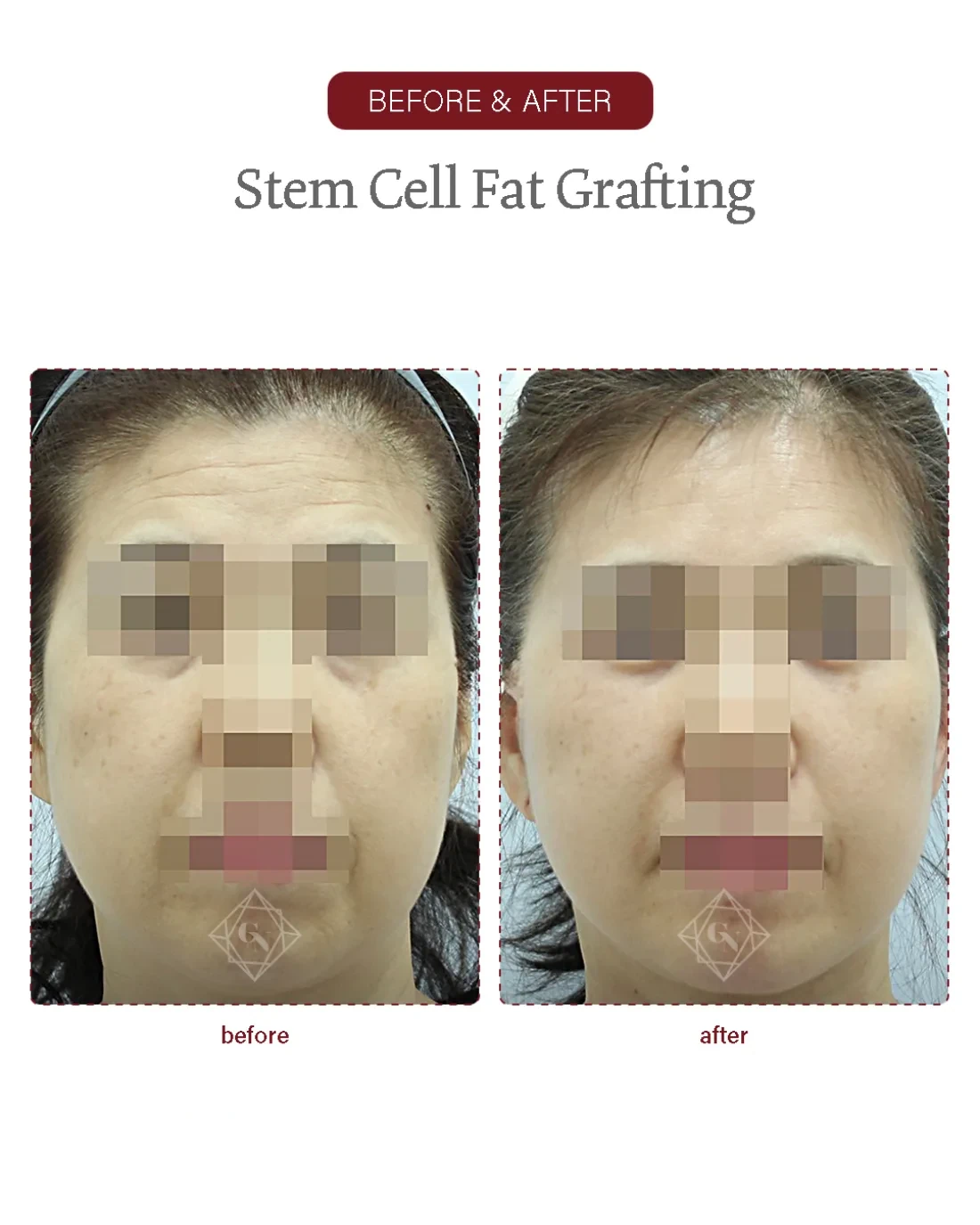
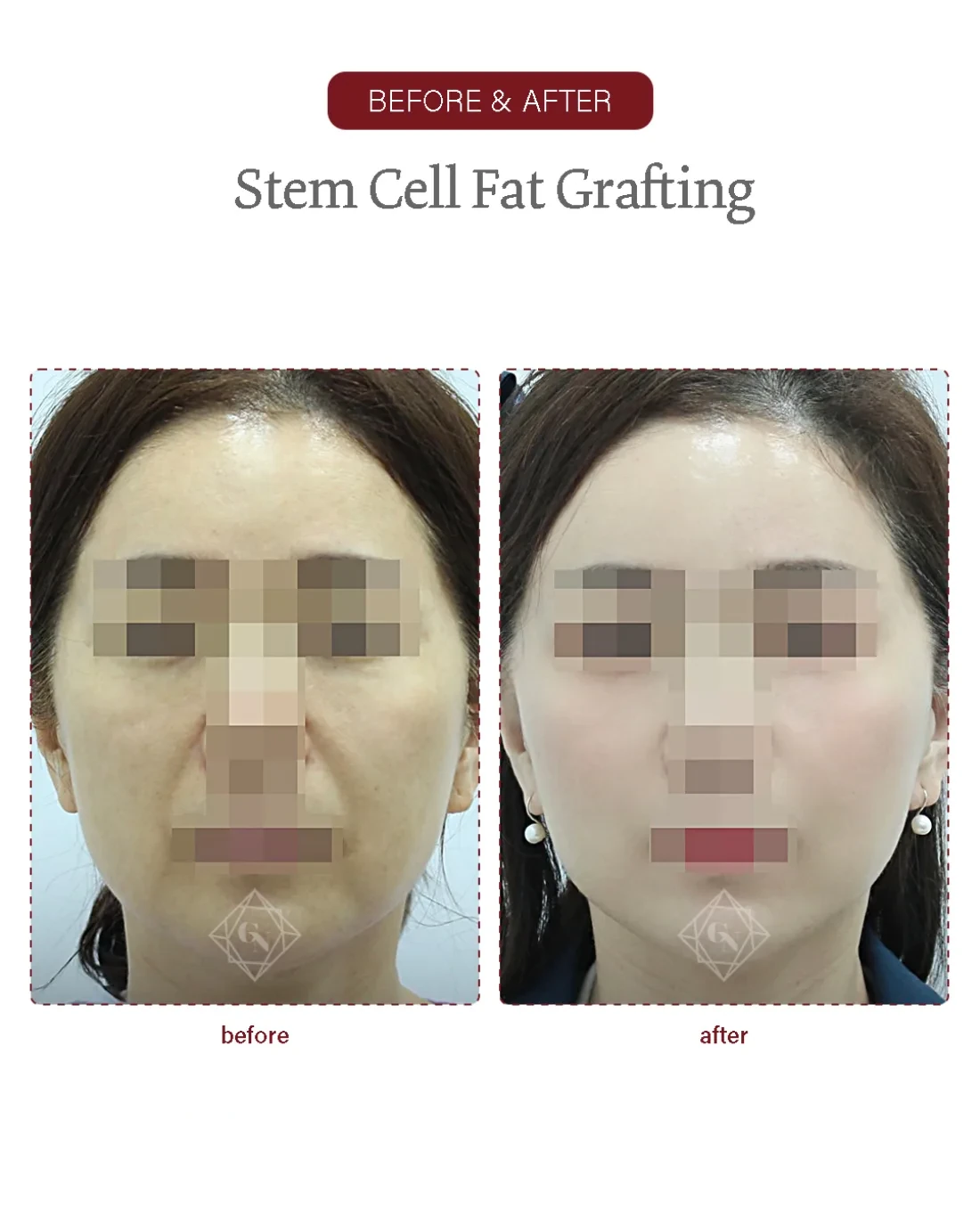
Fat-grafting and contouring results of actual Garnet patients (published with consent, with date, procedure and clinic labelled). Results, the amount of fat retained, recovery and suitability vary by individual and are not guaranteed.
Prices
Price at Garnet
Stem cell fat grafting
From₩3,500,000 + VATExcluding VAT (10% VAT is added at payment)Book now
Same price as Korean patients. Prices shown exclude 10% VAT; your written quote, issued after the in-person consultation, shows the full amount payable.
Dr. In-Soo Baek
Director & sole operating surgeon
Korean medical licence no. 77407
Operate on what you came for. Trained at Korea University Medical Center. Every case planned, performed and reviewed by the same hands.
1Operating surgeon
~2Surgeries per day
7Registered techniques
Board-certified plastic surgeon
Plastic surgery training at Korea University College of Medicine & graduate school
Korean Society of Plastic and Reconstructive Surgeons member, in its facial-contour, eye & rhinoplasty groups
Consults, operates and follows up each case himself
Peer-reviewed papers behind the facts on this page. Each describes findings in its own study group — not results at Garnet — and none predicts your own outcome.
Giannakaki AG et al. Stem-Cell-Assisted Lipotransfer and Platelet-Rich Plasma in Breast Reconstruction: A Literature Review. Aesthetic Plastic Surgery. 2025. doi:10.1007/s00266-025-04921-w
Yang Z et al. Fat Grafting for Facial Rejuvenation in Asians. Clinics in Plastic Surgery. 2020. doi:10.1016/j.cps.2019.08.003
Shen S et al. Comparative Efficacy and Safety of Cell-Assisted and Conventional Lipotransfer in Facial Filling: A Systematic Review and Meta-Analysis. Aesthetic Plastic Surgery. 2023. doi:10.1007/s00266-023-03650-2
Tonnard P et al. Fat Grafting for Facial Rejuvenation with Nanofat Grafts. Clinics in Plastic Surgery. 2020. doi:10.1016/j.cps.2019.08.006
FAQ
Common questions
What is the difference between stem cell fat grafting and standard fat grafting?
Both transfer your own fat to add facial volume; the difference is in preparation. Standard grafting reinjects the fat after basic cleaning and concentration, while stem cell (stromal-fraction-supplemented) grafting adds a concentrated cell fraction, separated from a portion of the harvested fat, into the graft.
Does stem cell fat grafting last longer than standard fat grafting?
That is a clinical question that depends on the individual, and it should be discussed factually with your surgeon instead of being advertised. This page makes no claim that either technique produces better graft survival or a longer-lasting result; the right choice is a personal clinical judgement.
Is stem cell fat grafting better than standard fat grafting?
Neither is presented as better here. They are two related preparations of the same fat-transfer procedure, and which suits you depends on your anatomy, the area treated and your goals. A careful surgeon will explain which they recommend for your case and why, factually.
Is stem cell fat grafting an advanced cell therapy?
In this context it is a fat-transfer technique in which a concentrated stromal-cell fraction is added to the graft. It is not the kind of advanced regenerative cell therapy that requires separate designation. Garnet performs it as a fat-transfer technique and is not designated for advanced regenerative medicine.
How do I choose between stem cell and standard fat grafting?
Decide with a surgeon who assesses you in person. The area treated, the volume wanted, your donor fat and your skin all matter and are individual. Ask which approach the surgeon recommends for your anatomy and why, and be cautious of any clinic marketing one as a guaranteed better result.
Is the recovery different between the two?
Recovery is broadly similar. Both involve two healing areas, the harvest site and the grafted face, with fine cannula access and no long incisions, the most swelling in the first three to five days, presentability within about a week, and a full routine by around six weeks.
Does the grafted fat fully stay with either technique?
With both standard and stem cell grafting, a portion of the transferred fat is naturally reabsorbed in the early weeks, so the face looks fuller at first and settles toward its lasting volume. What survives is generally durable, though surgeons do not promise a fixed amount.
What is stromal-fraction-supplemented fat grafting?
It is the more precise term for what is often called stem cell fat grafting: a concentrated stromal-cell fraction, separated from a portion of the harvested fat, is added back into the graft before reinjection. It is a processing variation of the same autologous fat transfer.
Can I ask which approach suits me before I travel?
Yes. You can send photos and ask for a neutral assessment in an online consultation from abroad. The surgeon will explain which technique fits your anatomy and goals, or whether fat grafting is the right route for you at all, before you commit to a trip.
My mom recently had a brow lift and lower blepharoplasty with Dr. Baek, and our experience has been wonderful so far. The Garnet team was incredibly kind and welcoming, with Kelly assisting us as our English consultant—she made everything…
I’m so happy I chose this clinic for my lower blepharoplasty. I was traveling from abroad by myself, so I was a little nervous, but from the beginning I felt comfortable and truly cared for. Everyone was kind, patient, and professional…
Came in for an in-person consult and ended up choosing Garnet and Dr.Baek for my non-incisional DES and tiplasty/alarplasty. I communicated with Kelly (English consultant) from the start till now (3 weeks post-op). She really help me feel…
My under-eyes have been sagging and folding for years... I tried to cover it up with makeup, but it actually got stuck in the wrinkles and made it stand out even more. While going for consultations, I noticed that the bigger the hospital…
Send photos and your question before you travel. An English-speaking coordinator reviews every enquiry and replies with guidance on whether surgery is appropriate, the likely plan and timing.
✓ Reviewed by the clinic coordinator, not a bot
✓ Photo-based pre-assessment before you fly
✓ Foreign-patient scheduling & after-care
✓ One surgeon for consultation, surgery and follow-up
Prefer to chat now? Reach the coordinator directly:








 T S7 months ago



