Recovery from stem cell fat grafting involves two areas healing at the same time: the donor site, often the abdomen or thigh, where fat was gently harvested through a cannula, and the recipient area on the face where it was placed. That makes it different from most facial surgery. Neither involves long incisions, and knowing what each feels like day by day makes the first weeks far less anxious.
The short answer
Two areas recover in parallel: the harvest site (often abdomen or thigh) and the grafted facial area, each with its own mild timeline.
The first three to five days carry the most swelling and bruising; many patients feel presentable for low-key activity within about a week.
Grafted fat that survives is permanent, but some volume settles in the first weeks, so the face looks fuller at first than it will at the final result.
Gentle aftercare in the early weeks (no firm pressure, heat or vigorous exercise on the treated face) protects the settling graft.
Stem cell fat grafting is a transfer procedure: fat is taken from one part of the body and placed in another. At Garnet the technique is stromal-fraction-supplemented fat grafting, in which the harvested fat is processed before it is reinjected. Because of this, recovery follows two overlapping timelines: the donor (harvest) site and the recipient (grafted) area.
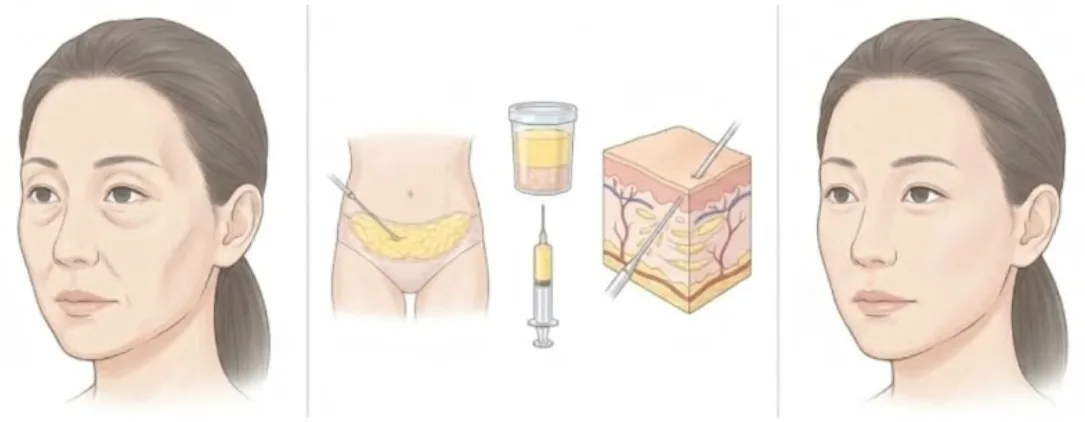
Illustration: the patient's own fat is taken, processed, and re-placed beneath the skin where volume has been lost.
Both areas are accessed through fine cannula points with no long cuts, so there are no significant incision lines to heal. The harvest site, commonly the abdomen or thigh, tends to feel bruised and tender, a little like a deep workout ache. The grafted facial area feels swollen and firm more than painful. Knowing which sensation belongs to which area stops normal healing from feeling alarming.
This page focuses only on the recovery timeline. For what the procedure does and who it suits, see the stem cell fat grafting cell; for how it differs from a standard transfer, see stem cell vs standard fat grafting; and for the broader family of techniques, the fat grafting overview is a useful companion.
Days 1 to 5
Days one to five: the most swelling
The first few days carry the bulk of the visible recovery. The grafted facial area is at its most swollen, which can make the result look fuller and rounder than the final outcome. This is expected and is part of how the graft is meant to look while it settles. Cold compresses, keeping the head elevated when resting, and gentle movement help the swelling subside.
The harvest site is usually the more physically tender of the two during this window. Many surgeons advise wearing a light compression garment over the donor area to control swelling and support the tissue; the ache is generally manageable and eases noticeably over the first few days. Bruising at either site appears in this period and is normal.
This is also the most important phase for protecting the graft: the freshly placed fat needs to be left undisturbed, so firm pressure, massage, sleeping face-down and heat on the treated face are all avoided. Most patients rest quietly for these first days and leave sightseeing for later. The practicalities of staying nearby are covered in the guide on recovering in Seoul after surgery.
Weeks 1 to 2
Weeks one and two: looking presentable again
By the end of the first week the sharpest swelling and most of the bruising have begun to settle, and many patients feel comfortable with low-key activity and being seen in public. The face still looks fuller than the final result and may feel firm or slightly numb in places, but the dramatic early puffiness has eased.
The harvest site continues to feel less tender through the second week, and the deep-ache sensation fades. Light walking is encouraged throughout, as gentle movement supports circulation, while anything strenuous is still held back to protect both the donor area and the settling graft on the face.
For international patients, this is typically the window in which the surgeon clears you to fly home. The result you travel with is genuine but still has some early fullness that will settle, so the face you see at two weeks is not yet the finished one. The guide on when you can fly after surgery explains how this timing is judged.
Weeks 3 to 6
Weeks three to six: the volume settles
From around week three the residual swelling continues to resolve and the grafted volume begins to settle toward its lasting level. Not all transferred fat survives. A portion is naturally reabsorbed in the early weeks, which is why the face looks fuller at first and gradually softens to a more natural result. This settling is a normal, expected part of the process; the result itself is not being lost.
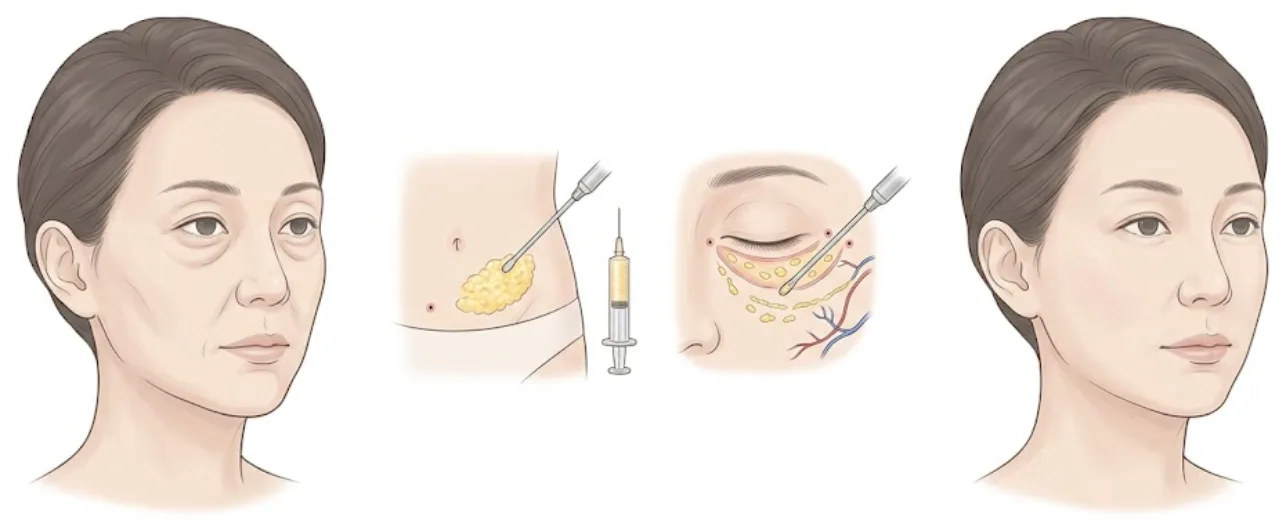
Illustration: the patient's own fat is gently taken from a donor area such as the abdomen, refined, and placed in small amounts where volume has been lost.
By six weeks most patients have returned to their full routine, including exercise, once their surgeon confirms the graft is stable. The treated face usually feels softer and more natural by this stage, and any firmness or minor lumpiness from the early weeks generally smooths out as the tissue finishes integrating.
Because some volume reabsorbs, surgeons do not promise a fixed amount of retained fat. Garnet follows Korea's medical-advertising rules and does not make graft-survival or efficacy guarantees. What survives the early weeks is generally durable; how much that is varies between people, and your surgeon will discuss realistic expectations with you. For longevity specifically, the fat grafting overview is a useful reference.
Aftercare
Aftercare that protects the settling graft
The single most important principle of stem cell fat grafting aftercare is to leave the grafted area undisturbed while it settles. In the first weeks that means no firm pressure or massage on the treated face, no sleeping face-down, and avoiding heat sources such as saunas, hot baths and intense sun, all of which can disturb the freshly placed fat.
Vigorous exercise and anything that raises blood pressure sharply are held back until your surgeon clears you, usually around the six-week mark. The harvest site benefits from a light compression garment if your surgeon recommends one, and from gentle care while the bruising fades. Eating and hydrating normally, and not smoking, support healthy tissue recovery in both areas.
Because aftercare details depend on exactly what was done and where the fat was placed, the most reliable instructions are the ones your own surgeon gives you. At Garnet the operating surgeon provides these directly and reviews how you are healing. You can ask what your specific aftercare would involve in an online consultation from abroad before you commit to travel.
Follow-ups
Follow-ups, travel and remote review
Because the grafted volume settles over weeks and the final result appears over a few months, follow-up matters. Garnet schedules structured reviews at one, three and six months. That cadence tracks the settling of the graft, so each review catches a meaningful stage in how the fat integrates, beyond a simple wound check.
Garnet is a single-surgeon clinic in Apgujeong, Seoul. Dr. In-Soo Baek is a board-certified plastic surgeon (Korean medical licence no. 77407) and the only operating doctor, and he performs the harvest and the grafting himself and reviews each follow-up, so the same person who placed the fat is the one judging how it settles.
For international patients, that continuity carries on after you return home: the surgeon can continue to review your photos remotely at the three- and six-month points, when the lasting result comes into focus. You can start with a no-obligation online assessment and ask what your own recovery is likely to look like, week by week.
Real Results
Before & After
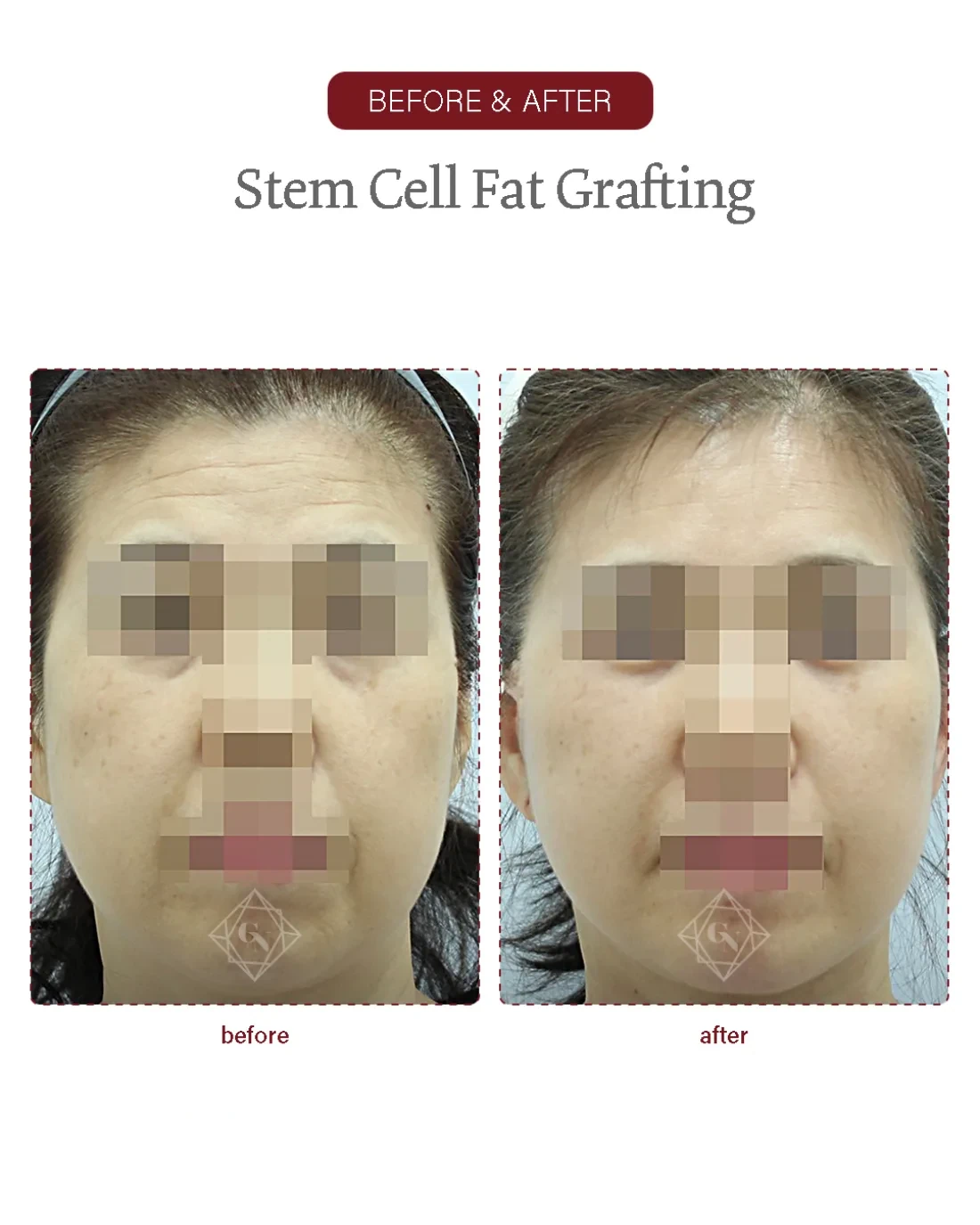
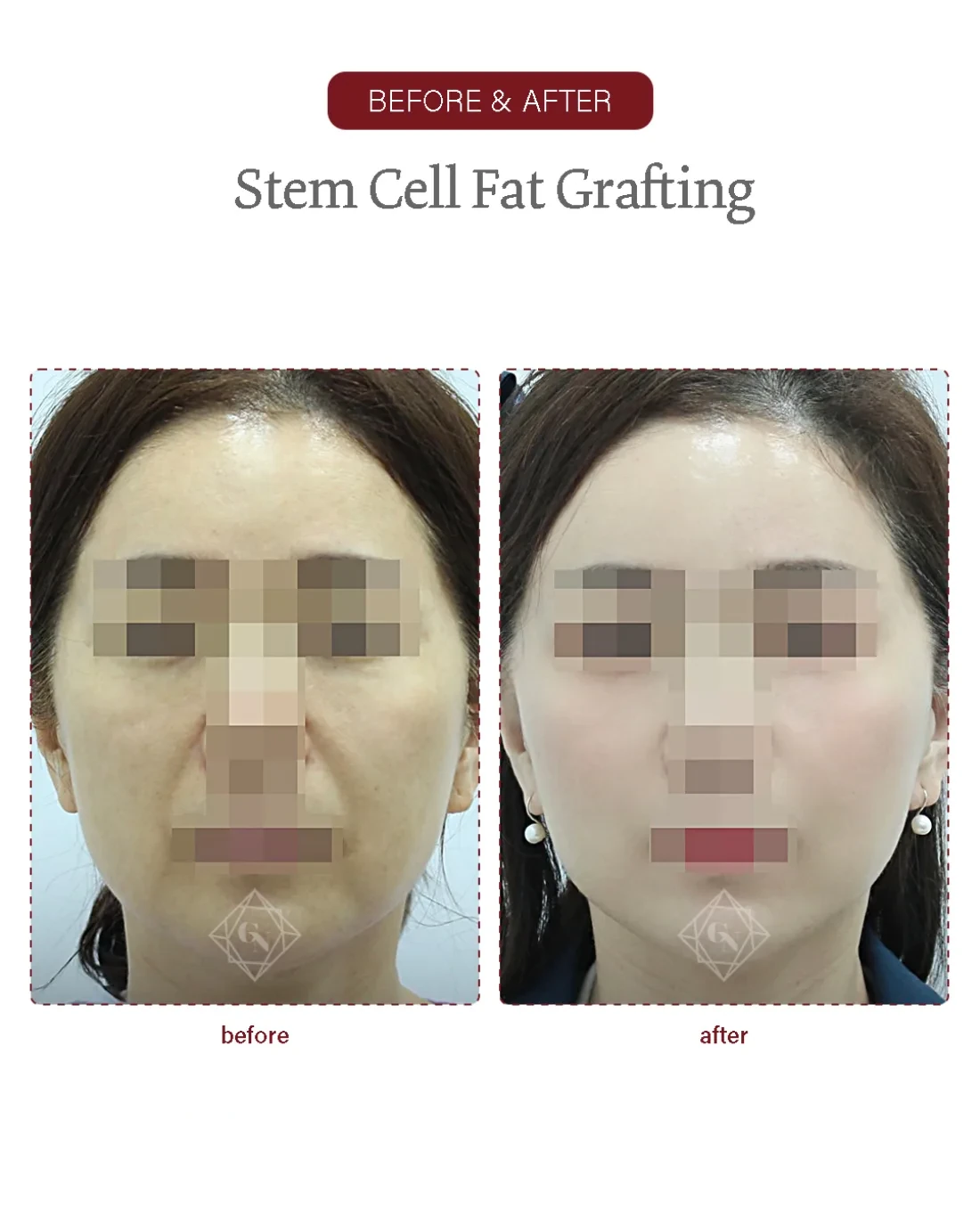
Fat-grafting and contouring results of actual Garnet patients (published with consent, with date, procedure and clinic labelled). Results, the amount of fat retained, recovery and suitability vary by individual and are not guaranteed.
Prices
Price at Garnet
Stem cell fat grafting
From₩3,500,000 + VATExcluding VAT (10% VAT is added at payment)Book now
Same price as Korean patients. Prices shown exclude 10% VAT; your written quote, issued after the in-person consultation, shows the full amount payable.
Dr. In-Soo Baek
Director & sole operating surgeon
Korean medical licence no. 77407
Operate on what you came for. Trained at Korea University Medical Center. Every case planned, performed and reviewed by the same hands.
1Operating surgeon
~2Surgeries per day
7Registered techniques
Board-certified plastic surgeon
Plastic surgery training at Korea University College of Medicine & graduate school
Korean Society of Plastic and Reconstructive Surgeons member, in its facial-contour, eye & rhinoplasty groups
Consults, operates and follows up each case himself
Peer-reviewed papers behind the facts on this page. Each describes findings in its own study group — not results at Garnet — and none predicts your own outcome.
Giannakaki AG et al. Stem-Cell-Assisted Lipotransfer and Platelet-Rich Plasma in Breast Reconstruction: A Literature Review. Aesthetic Plastic Surgery. 2025. doi:10.1007/s00266-025-04921-w
Shen S et al. Comparative Efficacy and Safety of Cell-Assisted and Conventional Lipotransfer in Facial Filling: A Systematic Review and Meta-Analysis. Aesthetic Plastic Surgery. 2023. doi:10.1007/s00266-023-03650-2
Wufuer M et al. Improving Facial Fat Graft Survival Using Stromal Vascular Fraction–Enriched Lipotransfer: A Multicenter Randomized Controlled Study. Plastic & Reconstructive Surgery. 2023. doi:10.1097/prs.0000000000010625
FAQ
Common questions
How long does stem cell fat grafting recovery take?
The most swelling and bruising are in the first three to five days, many patients feel presentable for low-key activity within about a week, and most return to full routine including exercise by around six weeks once the surgeon confirms the graft is stable.
What is recovery like day by day?
Days one to five carry the most swelling at the grafted face and the most tenderness at the harvest site; by the end of week one the puffiness eases; weeks three to six see the volume settle toward its lasting level as some grafted fat is naturally reabsorbed.
Why are there two areas to recover from?
Stem cell fat grafting transfers fat from one part of the body to another, so the donor (harvest) site and the recipient (grafted) face heal at the same time. Both are accessed through fine cannula points without long incisions, so there are no significant cut lines to heal.
When can I return to work after stem cell fat grafting?
Many patients feel comfortable with low-key activity and being seen in public by the end of the first week, when the sharpest swelling and bruising have settled. Strenuous work and exercise are usually held back until around six weeks to protect the settling graft.
Why does my face look fuller right after the procedure?
Early swelling plus the freshly placed fat make the grafted area look fuller and rounder at first. A portion of the transferred fat is naturally reabsorbed over the first weeks, so the face gradually softens to a more natural result as the volume settles.
What aftercare follows stem cell fat grafting?
Leave the grafted area undisturbed: no firm pressure, massage or sleeping face-down on the treated face, and avoid heat such as saunas and hot baths in the early weeks. A light compression garment may be advised for the harvest site, and vigorous exercise waits until you are cleared.
When can I fly home after stem cell fat grafting?
International patients are typically cleared to fly around one to two weeks after surgery, once the early swelling and bruising have settled. The result you travel with is genuine but still has some early fullness that will settle over the following weeks and months.
Does all the grafted fat stay?
No. Some of the transferred fat is naturally reabsorbed in the early weeks, which is normal and expected. What survives this settling period is generally durable. Surgeons do not promise a fixed amount, and Garnet does not make graft-survival guarantees.
How will Garnet follow my recovery after I go home?
Garnet schedules follow-up at one, three and six months, tracking the graft as it settles. For international patients, the same surgeon who performed the harvest and grafting can continue to review your photos remotely at the three- and six-month points when the final result appears.
My mom recently had a brow lift and lower blepharoplasty with Dr. Baek, and our experience has been wonderful so far. The Garnet team was incredibly kind and welcoming, with Kelly assisting us as our English consultant—she made everything…
I’m so happy I chose this clinic for my lower blepharoplasty. I was traveling from abroad by myself, so I was a little nervous, but from the beginning I felt comfortable and truly cared for. Everyone was kind, patient, and professional…
Came in for an in-person consult and ended up choosing Garnet and Dr.Baek for my non-incisional DES and tiplasty/alarplasty. I communicated with Kelly (English consultant) from the start till now (3 weeks post-op). She really help me feel…
My under-eyes have been sagging and folding for years... I tried to cover it up with makeup, but it actually got stuck in the wrinkles and made it stand out even more. While going for consultations, I noticed that the bigger the hospital…
To see what your own stem cell fat grafting recovery would look like week by week, send photos for a no-obligation pre-assessment before you plan a trip.
Send photos and your question before you travel. An English-speaking coordinator reviews every enquiry and replies with guidance on whether surgery is appropriate, the likely plan and timing.
✓ Reviewed by the clinic coordinator, not a bot
✓ Photo-based pre-assessment before you fly
✓ Foreign-patient scheduling & after-care
✓ One surgeon for consultation, surgery and follow-up
Prefer to chat now? Reach the coordinator directly:








 T S7 months ago



