A sub-brow lift is a focused operation for one specific problem: heaviness in the upper eyelid caused by the eyebrow itself sitting low. It is not the right answer for everyone with “tired eyes,” so the most useful thing you can do before booking is work out whether your heaviness actually comes from brow descent, and how a sub-brow lift compares with the alternatives.
The short answer
The ideal candidate has lateral upper-lid hooding driven by a low or descended brow. Loose eyelid skin alone points elsewhere.
A sub-brow lift lifts and anchors the brow tissue through an incision at the eyebrow; an upper blepharoplasty removes lid skin instead.
If you have a heavy upper lid but a normally positioned brow, upper blepharoplasty is usually the better fit.
An in-person or online assessment of where your heaviness comes from matters more than choosing a procedure name in advance.
A sub-brow lift addresses heaviness and hooding in the outer, upper part of the eyelid that comes from the eyebrow sitting too low. As the brow descends with age, it pushes the soft tissue of the upper lid downward, so the eye looks tired, the lid space shrinks and the outer corner feels weighed down, even when the eyelid skin itself is not especially loose. The operation works on the brow and leaves the lid skin alone: at Garnet's sub-brow lift, the incision is placed just below or above the eyebrow, a strip of tissue is removed, and the deeper muscle layer is suspended and fixed so the brow is held at a slightly higher, more rested position.
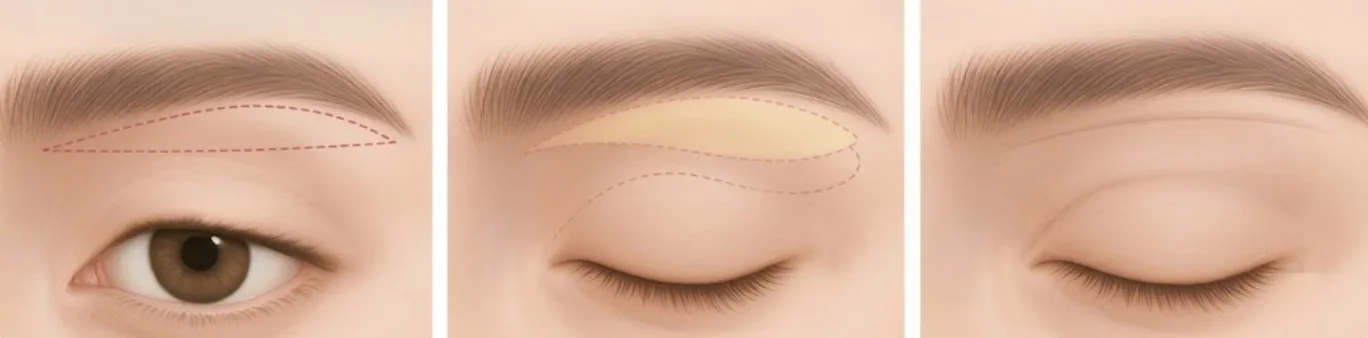
Illustration: a strip of excess skin is taken from just below the eyebrow (dotted line), so the heavy upper lid opens without touching the eyelid itself. The fine line sits along the lower brow edge.
Because the lift is anchored with an orbicularis suspension fixation, the result is structural. The brow is repositioned and held in place, which a simple skin trim cannot do. The trade-off is a fine scar line along the brow, and sutures that come out at about 7 days. That is the core of the procedure; this page is about whether your particular anatomy is the kind it was designed for, so for the full overview start from the main sub-brow lift page.
Knowing what a sub-brow lift treats also tells you what it does not: it does not remove fat bags, it does not change the eyelid crease, and it does not lift the whole forehead. If your concern is something other than a heavy, brow-driven upper lid, a different operation will usually suit you better, and the comparisons below help you see which.
Good candidate
Who tends to be a good candidate
The clearest candidate has lateral upper-lid hooding caused by a low or descended brow. A simple self-check: if you gently lift the tail of your eyebrow upward with a fingertip and the heaviness over the outer lid eases and the eye opens up, your problem is likely brow position, the territory a sub-brow lift is built for. People in this group are often in their forties, fifties and beyond, frequently raise their forehead unconsciously to keep the lids up, and describe the outer eye as the area that looks tired.
Good candidates also tend to want a targeted, anchored change and are not looking for a dramatic one. A sub-brow lift suits someone who wants the brow restored to where it used to sit, with a natural, still-recognisable result. That fits Garnet's approach of treating only the area you came for, without over-recommending. Stable general health, realistic expectations about a fine brow-line scar, and the ability to attend a follow-up for suture removal at around day 7 all make for a smoother experience.
It is also reasonable to be a candidate for a sub-brow lift combined with another eye procedure — for example, where brow descent and a separate eyelid issue coexist. That is a judgement for the surgeon to make in person, weighing what each operation contributes; if you are weighing the broader eye options, the international-patient guide explains how a pre-assessment works before you travel.
Vs blepharoplasty
Sub-brow lift vs upper blepharoplasty
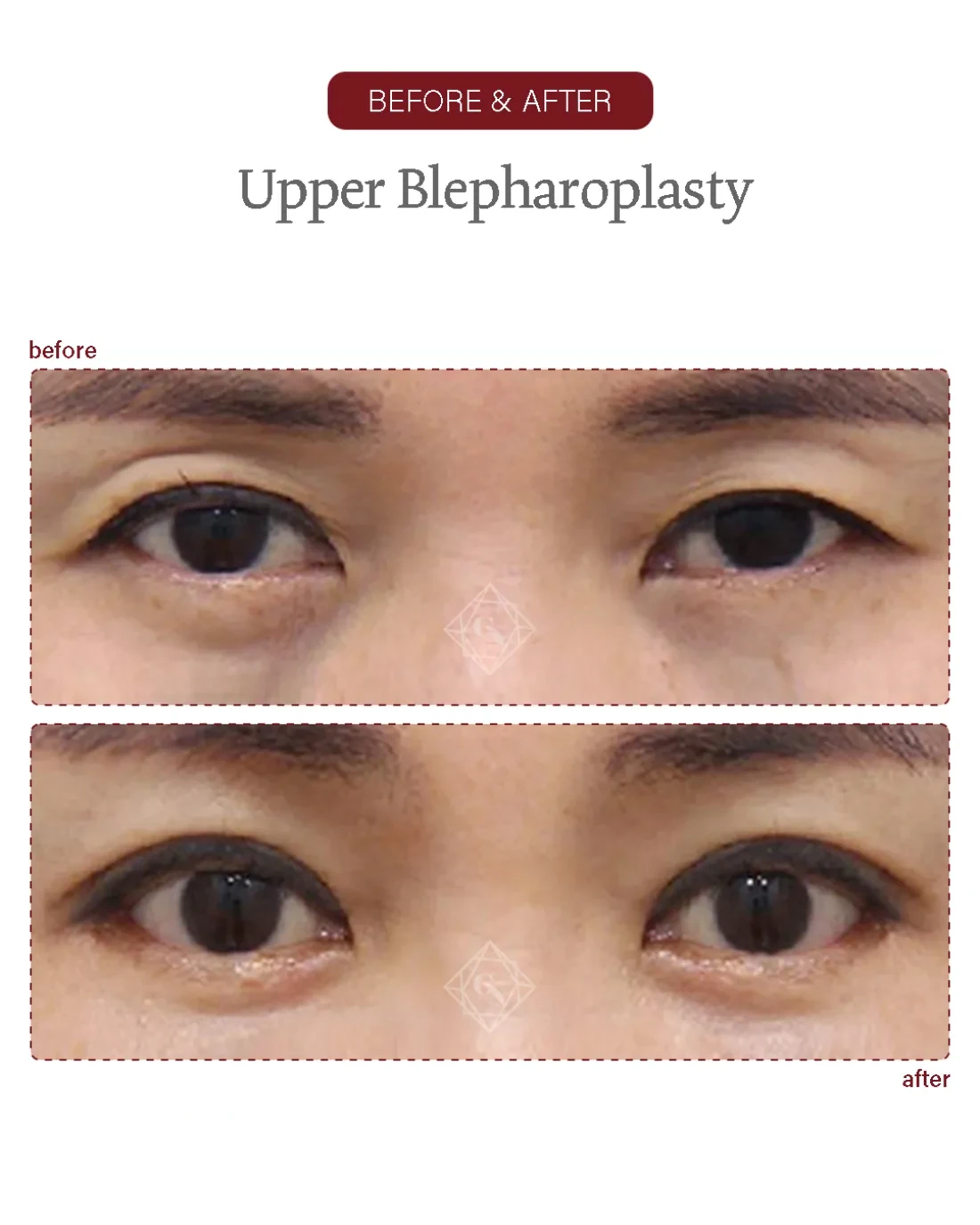
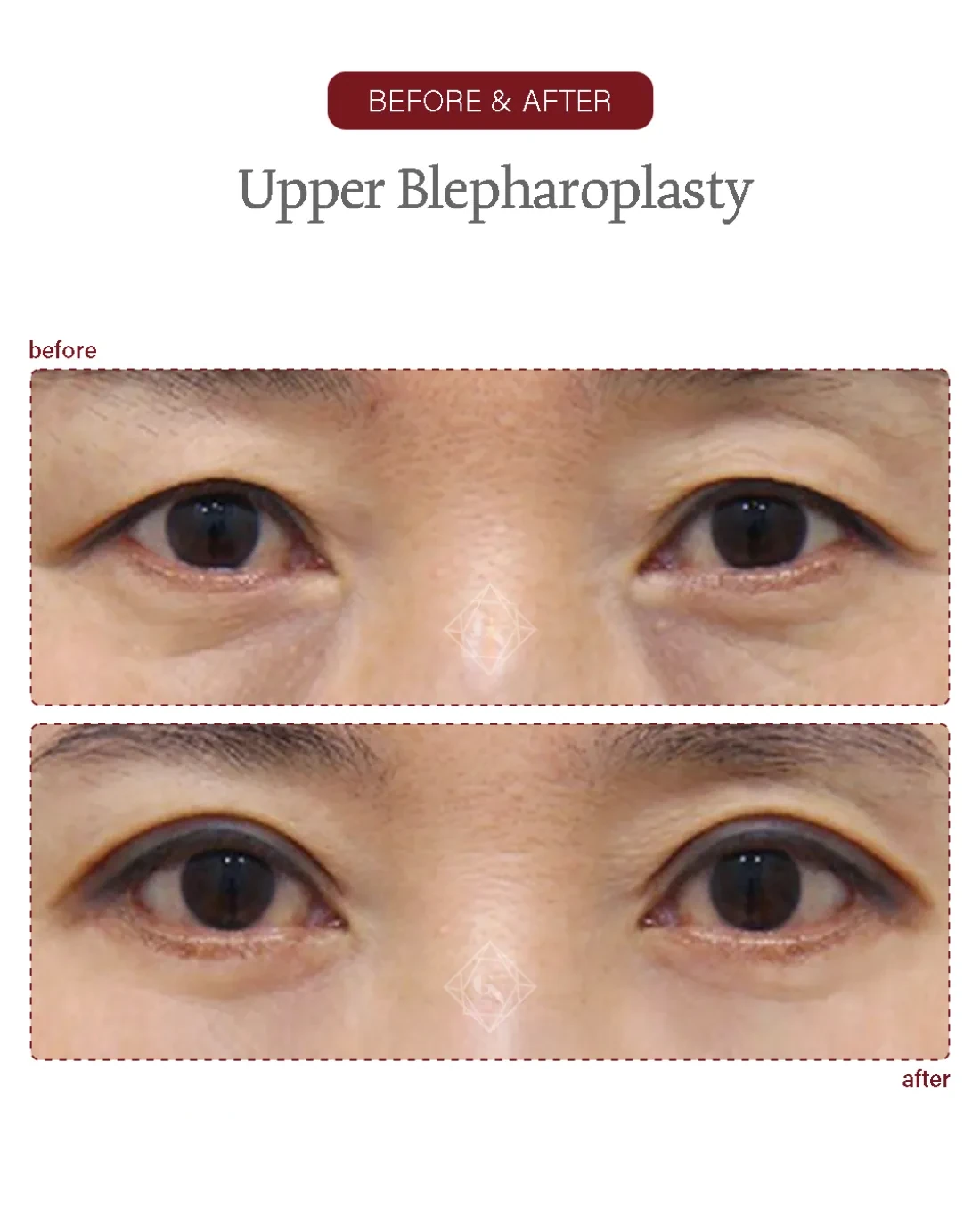
This is the comparison that matters most, because the two are easily confused. An upper blepharoplasty removes excess skin (and sometimes fat) from the eyelid itself, working from a crease incision on the lid. A sub-brow lift leaves the lid skin alone and instead lifts the eyebrow, removing tissue and anchoring the brow through an incision at the brow line. Both can make a heavy upper eye look lighter, but they fix different causes.
The deciding factor is where the heaviness comes from. If your brow sits at a normal height and the problem is genuinely loose lid skin, an upper blepharoplasty is usually the better choice and a sub-brow lift would be the wrong operation. If your lid skin is reasonable but the brow has dropped and is pressing down on the outer lid, the sub-brow lift addresses the actual cause; a blepharoplasty alone might thin the skin while leaving the low brow, and an over-aggressive lid skin removal in a low-brow patient can even pull the brow down further. This is precisely why a careful assessment beats picking a procedure by name.
In some faces both are present, and the surgeon may recommend one, the other, or a combination, sequenced so the result stays natural. Neither operation is superior, and they are not interchangeable. If your real question is recovery rather than candidacy once you have chosen, the recovery timeline walks through what the sub-brow lift route looks like day by day.
Vs forehead lift
Sub-brow lift vs a forehead (brow) lift
A forehead lift (also called a brow lift) raises the brows by working higher up, through the scalp or hairline, and lifts the whole brow and forehead region, often softening forehead lines at the same time. A sub-brow lift is a much more localised operation: it lifts the brow from directly beneath or above it, so the change is concentrated where the lid heaviness is, usually toward the outer brow, without altering the forehead or hairline.
Which suits you depends on how much lift you need and where. If the whole brow has descended and you also want forehead smoothing, a forehead lift may be more appropriate. If the issue is focal (the outer brow and the heaviness it creates over the lid), a sub-brow lift offers a smaller, more contained operation with the scar hidden along the brow instead of in the scalp. For many international patients who want a targeted, natural change with a shorter, more predictable recovery, the localised approach is the better match, but only an in-person look can confirm that.
A sub-brow lift also keeps the option of combining it with eyelid surgery cleaner, because it does not commit the whole forehead. As with the blepharoplasty comparison, the answer comes from your anatomy: at Garnet, Dr. Baek assesses brow height, forehead position and lid skin together, then recommends the smallest operation that achieves what you came for.
Not recommended
When a sub-brow lift is not recommended
A sub-brow lift is not the right operation when the brow sits at a normal height and the heaviness is purely loose eyelid skin, which is upper blepharoplasty territory. It is also not the answer for under-eye bags or lower-lid puffiness, for changing the double-eyelid crease, or for drooping that comes from the eyelid muscle itself, which is a different problem with a different fix. Choosing a sub-brow lift for any of these would mean operating on the wrong layer.
There are also general reasons to wait or reconsider: uncontrolled health conditions, unrealistic expectations about a brow-line scar, or a desire for a dramatic, refreshed-but-changed look that does not match what a focal lift can give. A patient who is uncomfortable with any visible scar near the brow, however fine, may not be a good fit. A careful surgeon will say so, and at Garnet, declining to recommend surgery that will not help you is a normal part of the assessment.
Finally, if you are unsure which category you fall into, that uncertainty is normal and is exactly what the consultation resolves. You do not need to diagnose yourself before you arrive; you need a clear, unhurried read of your anatomy. You can begin that remotely: the online consultation lets the surgeon review photos and tell you plainly whether a sub-brow lift, another operation, or no surgery is the right call.
At Garnet
How candidacy is assessed at Garnet
Garnet is a single-surgeon clinic in Apgujeong, Seoul. Dr. In-Soo Baek is a board-certified plastic surgeon (Korean medical licence no. 77407), and he personally carries out the consultation, the operation and every follow-up, so the person assessing whether you are a candidate is the same person who would perform the surgery. The assessment looks at brow height, lid skin, the cause of the heaviness and the result you want, then matches the smallest effective operation to it.
That model is built for exactly this kind of decision. Because the day is capped and there is no pressure to book, the consultation has room to explain why a sub-brow lift, an upper blepharoplasty or a combination fits you, or why none of them do. There is no consultation or CT fee and no over-recommendation; you are only advised on the area you came for, with structured follow-up at 1, 3 and 6 months if you proceed.
If you are international, you can have this assessment before you ever fly. Send photos for a pre-read through the online consultation, or see how the in-person visit is structured in your first consultation at Garnet, so you arrive already knowing whether this is your operation.
Real Results
Before & After
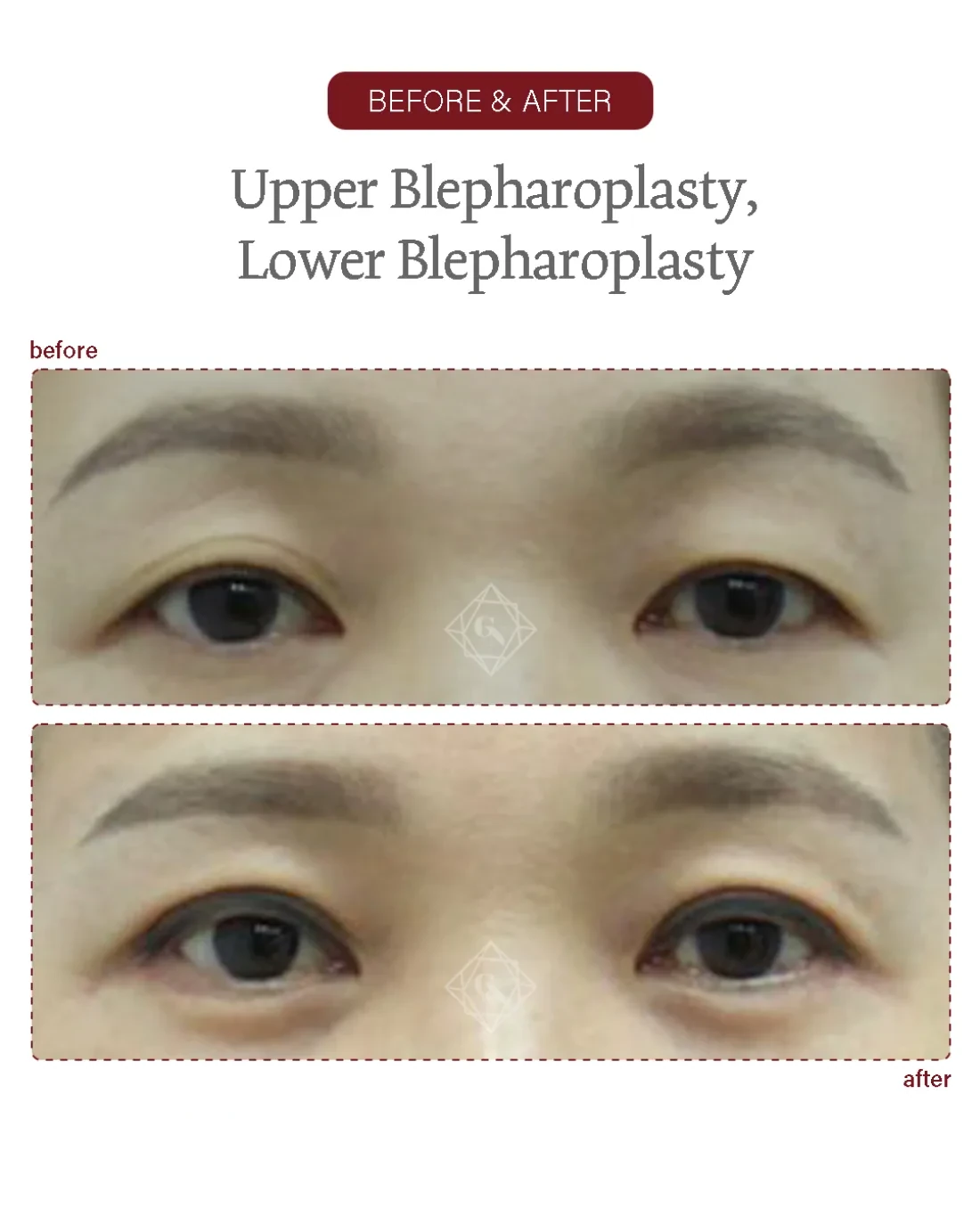
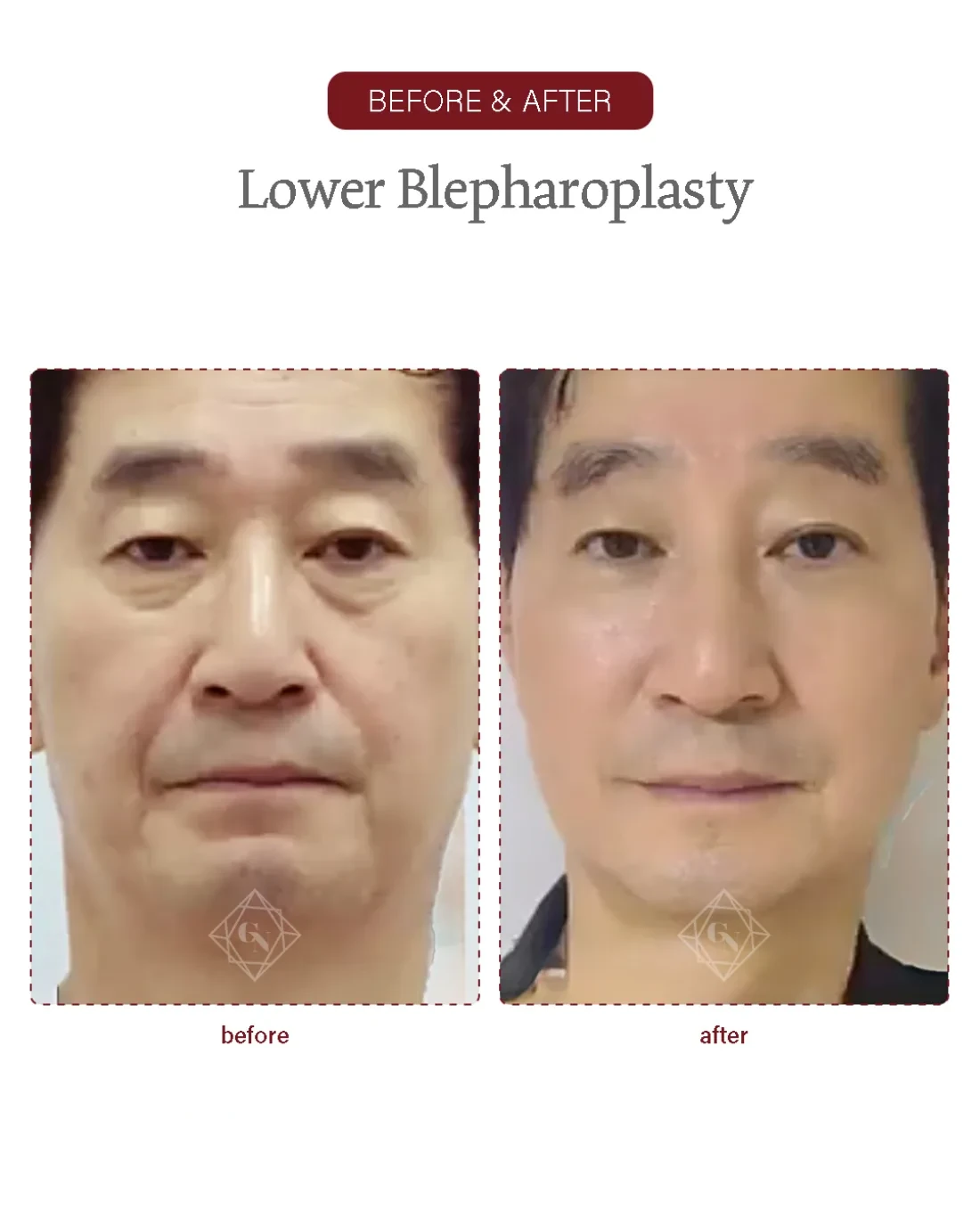
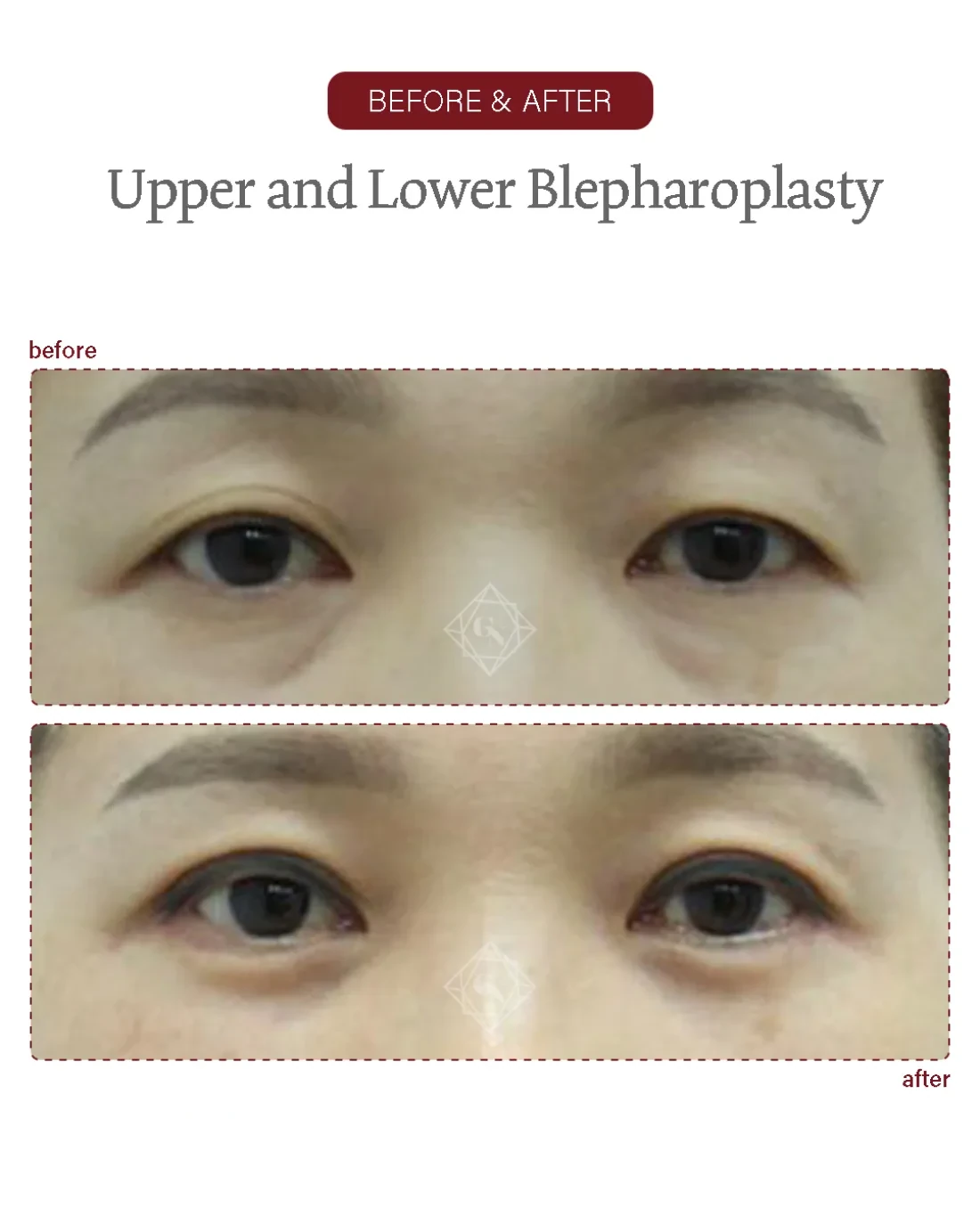
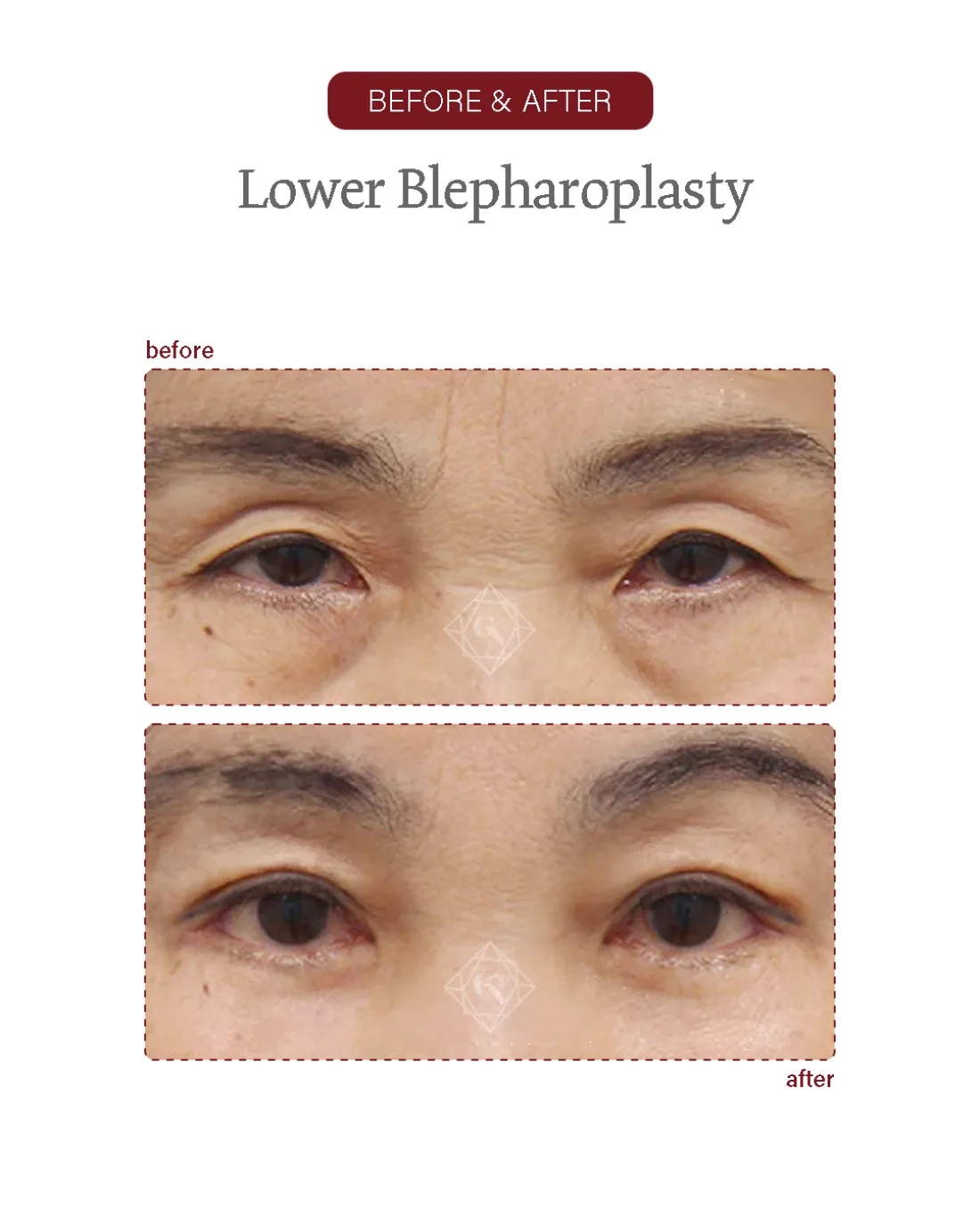
Eyelid before/after examples of actual Garnet patients (published with consent). Results, recovery and suitability vary by individual and are not guaranteed; the right approach is decided at an in-person consultation.
Prices
Price at Garnet
Upper blepharoplasty
From₩3,500,000 + VATExcluding VAT (10% VAT is added at payment)Book now
Same price as Korean patients. Prices shown exclude 10% VAT; your written quote, issued after the in-person consultation, shows the full amount payable.
Dr. In-Soo Baek
Director & sole operating surgeon
Korean medical licence no. 77407
Operate on what you came for. Trained at Korea University Medical Center. Every case planned, performed and reviewed by the same hands.
1Operating surgeon
~2Surgeries per day
7Registered techniques
Board-certified plastic surgeon
Plastic surgery training at Korea University College of Medicine & graduate school
Korean Society of Plastic and Reconstructive Surgeons member, in its facial-contour, eye & rhinoplasty groups
Consults, operates and follows up each case himself
Peer-reviewed papers behind the facts on this page. Each describes findings in its own study group — not results at Garnet — and none predicts your own outcome.
Eid L et al. Subbrow Blepharoplasty in Caucasians. Plastic & Reconstructive Surgery. 2021. doi:10.1097/prs.0000000000007633
Jung GS. Modified Infrabrow Excision Blepharoplasty for Severity of Medial Blepharochalasia. Plastic Surgery. 2020. doi:10.1177/2292550320928555
Kim HS et al. Subbrow Lift Using Frontalis Sling to Correct Lateral Orbital Laxity. Aesthetic Plastic Surgery. 2020. doi:10.1007/s00266-020-01879-9
FAQ
Common questions
Who is a good candidate for a sub-brow lift?
The clearest candidate has heaviness and hooding in the outer upper eyelid caused by a low or descended eyebrow. Loose lid skin alone is a different problem. A simple sign is that gently lifting the brow tail with a fingertip eases the heaviness and opens the eye. Stable general health and realistic expectations about a fine brow-line scar also help.
How do I know if my heavy eyelid is from my brow or my eyelid skin?
If lifting your eyebrow upward with a fingertip relieves the heaviness, the cause is likely brow descent, which a sub-brow lift addresses. If the heaviness stays even with the brow lifted, it is more likely loose eyelid skin, which suits an upper blepharoplasty. An in-person or photo assessment confirms which layer is responsible.
Is a sub-brow lift the same as an upper blepharoplasty?
No. An upper blepharoplasty removes excess skin from the eyelid itself, while a sub-brow lift leaves the lid skin alone and instead lifts and anchors the eyebrow through an incision at the brow line. They treat different causes of a heavy upper eye, so the right one depends on whether your brow or your lid skin is the problem.
What is the difference between a sub-brow lift and a forehead lift?
A forehead lift raises the entire brow and forehead from higher up, near the scalp or hairline, and can smooth forehead lines. A sub-brow lift is localised: it lifts the brow from directly beneath or above it, concentrating the change where the lid heaviness is, usually at the outer brow, without altering the forehead or hairline.
When is a sub-brow lift not recommended?
It is not recommended when the brow sits at a normal height and the heaviness is purely loose lid skin, for under-eye bags, for changing the eyelid crease, or for drooping caused by the eyelid muscle itself. Uncontrolled health conditions and discomfort with any fine brow-line scar are also reasons to reconsider.
Can a sub-brow lift be combined with eyelid surgery?
Yes, where brow descent and a separate eyelid issue coexist, a sub-brow lift can be combined with an eyelid procedure. Whether that is appropriate and how it is sequenced is a judgement the surgeon makes in person, weighing what each operation contributes to a natural, balanced result.
Will a sub-brow lift leave a visible scar?
The incision is placed just below or above the eyebrow, so the scar follows the brow line and is designed to be discreet, with sutures removed at about 7 days. As with any incision it remains a fine line; candidates who would be uncomfortable with any visible mark near the brow should discuss this carefully at consultation.
What ages suit a sub-brow lift?
There is no fixed age, but candidates are often in their forties, fifties and beyond, when the brow has begun to descend and press on the upper lid. The decision is based on your anatomy and the cause of your heaviness: younger patients with early brow descent can be suitable, and older patients with purely loose lid skin may not be.
Can I find out if I'm a candidate before travelling to Korea?
Yes. You can send photos for a pre-assessment through Garnet's online consultation, and the surgeon will tell you whether a sub-brow lift, another operation, or no surgery is the right choice before you commit to travel. The same surgeon then performs the procedure if you proceed.
Does Garnet recommend surgery if it won't help me?
No. Part of Garnet's assessment is declining to recommend an operation that will not benefit you, including saying when a sub-brow lift is the wrong procedure for your anatomy. There is no consultation fee and no pressure to book, so a plain answer, including no surgery, is a normal outcome.
My mom recently had a brow lift and lower blepharoplasty with Dr. Baek, and our experience has been wonderful so far. The Garnet team was incredibly kind and welcoming, with Kelly assisting us as our English consultant—she made everything…
I’m so happy I chose this clinic for my lower blepharoplasty. I was traveling from abroad by myself, so I was a little nervous, but from the beginning I felt comfortable and truly cared for. Everyone was kind, patient, and professional…
Came in for an in-person consult and ended up choosing Garnet and Dr.Baek for my non-incisional DES and tiplasty/alarplasty. I communicated with Kelly (English consultant) from the start till now (3 weeks post-op). She really help me feel…
My under-eyes have been sagging and folding for years... I tried to cover it up with makeup, but it actually got stuck in the wrinkles and made it stand out even more. While going for consultations, I noticed that the bigger the hospital…
Send photos and your question before you travel. An English-speaking coordinator reviews every enquiry and replies with guidance on whether surgery is appropriate, the likely plan and timing.
✓ Reviewed by the clinic coordinator, not a bot
✓ Photo-based pre-assessment before you fly
✓ Foreign-patient scheduling & after-care
✓ One surgeon for consultation, surgery and follow-up
Prefer to chat now? Reach the coordinator directly:









 T S7 months ago



