“One eye looks smaller than the other” is one of the most common concerns international patients bring to an eye consultation. Uneven eyes are a symptom with several possible causes. Whether correction helps, and which procedure it involves, depends entirely on what is driving the asymmetry.
The short answer
Uneven eyes usually come down to one of a few causes: a difference in eyelid muscle strength (ptosis), asymmetric skin or fold height, or a difference in the eye shape and outer corner. Each is corrected differently.
Some facial asymmetry is normal in everyone. The goal is a more balanced, natural match between the two eyes; identical eyes are not the aim.
A careful assessment measures both eyes against each other before deciding whether one, or both, needs surgery. Over-correcting the “good” eye is a real risk.
At Garnet, the same board-certified surgeon examines, plans and operates, so the asymmetry is judged and treated by one pair of hands.
Almost no one has perfectly symmetric eyes, and a small difference is normal; you notice your own far more than anyone else does. What patients usually mean by “uneven eyes” falls into a few distinct groups: one upper lid sits lower or the eye opens less (a muscle issue), the double-eyelid fold or the amount of upper-lid skin differs between sides, or the two eyes differ in shape and outer-corner position. These are different problems, and they lead to different corrections.
It matters which one you have, because operating on the wrong feature will not fix the asymmetry and can create a new one. A fold that looks uneven because one eye is opening less is a ptosis problem. Deepening the fold alone would leave the underlying mismatch untouched. This is why a symptom-led page like this one routes to more than one procedure.
The first step is measurement, before any booking. A good assessment compares the two sides directly (lid height, fold height, skin excess, corner shape and how each eye opens) and only then decides whether the answer is one procedure, a combination, or, sometimes, no surgery at all.
Muscle strength
When the cause is a difference in eyelid muscle strength
A frequent reason one eye looks smaller is that the muscle that lifts the upper lid (the levator) is weaker or set differently on that side, so the lid rests lower and the eye opens less. This is ptosis, and it is a common driver of true eye asymmetry. The tell is that the difference is in how much of the eye is open, beyond any difference in the crease.
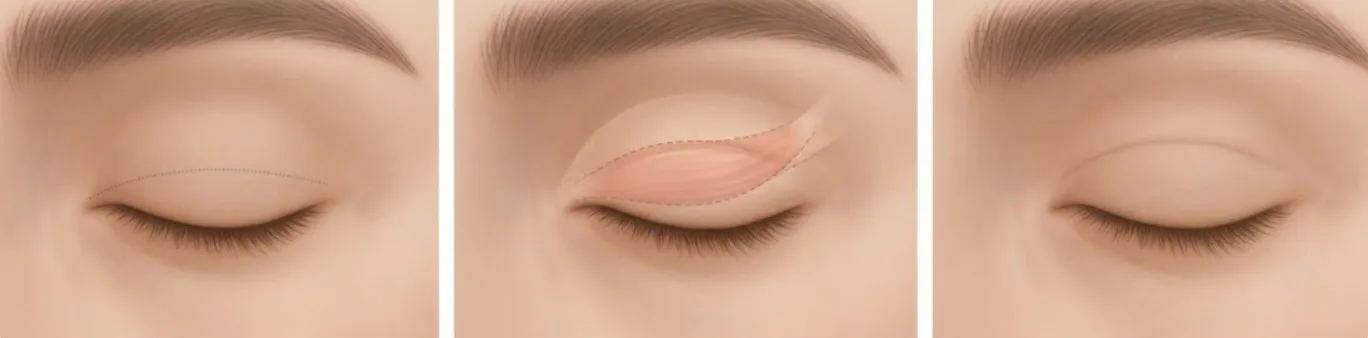
Illustration: through the crease line, the muscle that opens the eye (shown beneath the lid) is tightened so the lid rests higher.
Ptosis correction works by adjusting the strength of the eye-opening muscle through a lid-crease incision, so the treated eye opens to match the other side; sutures come out at about seven days. When the asymmetry is one-sided, the surgeon may operate on only the weaker eye. Because the two lids interact, fine-tuning is judgement-heavy, which is why it matters who examines and operates.
Ptosis and a double-eyelid fold are often addressed together, since correcting the opening usually changes how the fold sits. If your concern is that your eyes simply look heavy or sleepy as well as uneven, our companion guide on tired-looking eyes covers that overlap in more depth.
Skin & fold
When it's asymmetric skin or fold height
Sometimes the eyes open equally, but one upper lid carries more skin, or the double-eyelid fold sits at a different height on each side, so one eye looks fuller, hooded or “smaller” by comparison. Here the asymmetry is on the surface of the lid, while the opening mechanism is fine, and the correction is different again.
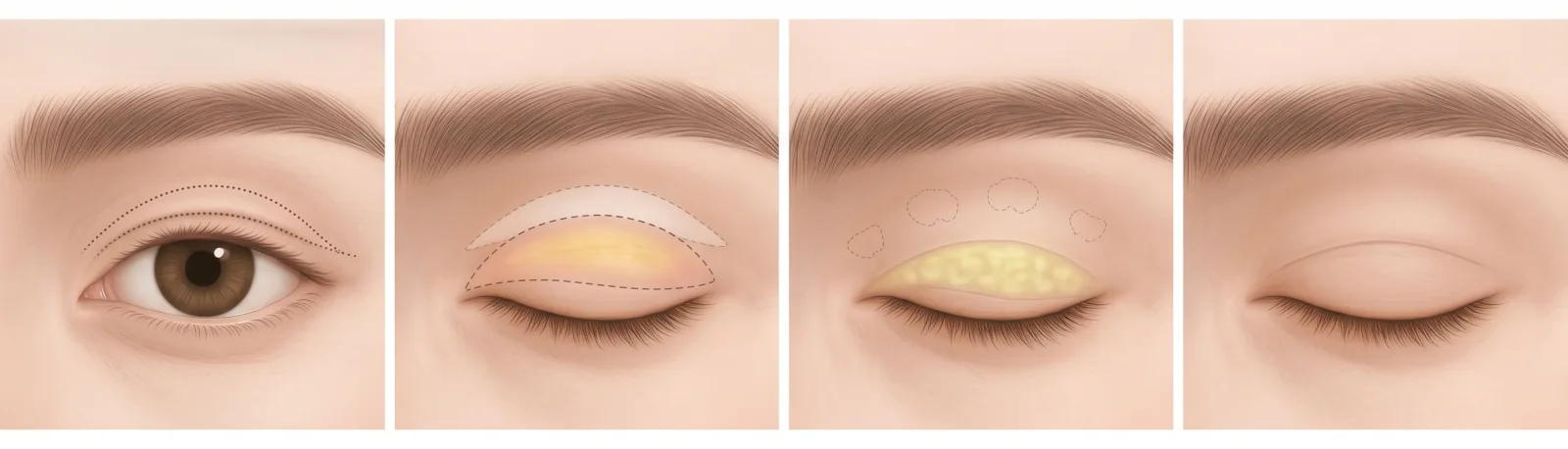
Illustration: the planned crease is marked, the excess upper-lid skin and selected fat pads are addressed through that line.
Where excess or uneven upper-lid skin is the issue (more common with age), upper blepharoplasty removes the redundant skin and tidies the tissue so both lids match more closely; sutures are removed at around seven days. Where the difference is in the fold itself, the plan centres on setting the crease to an even, balanced height, without removing skin. The two can be combined when both apply.
The key point for asymmetry is restraint: the aim is to bring the two lids into balance. Maximising the crease on both eyes is not the goal. A surgeon who over-corrects the side that was already fine simply moves the imbalance elsewhere, so a careful plan often does less.
Eye shape
When the difference is in eye shape and the outer corner
In some patients the two eyes differ in overall shape (length, slant, or how much the outer corner is exposed), so even with matched lids the eyes read as uneven. When the outer corner is the feature that differs, correction focuses there and leaves the upper lid alone.
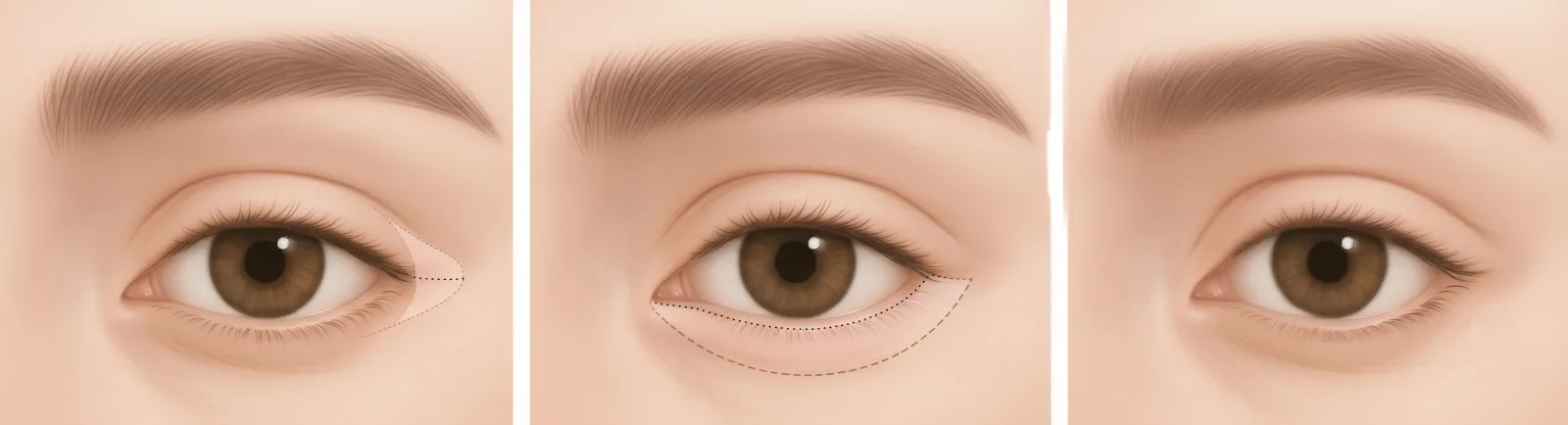
Illustration: the outer corner is extended and the lower-lid line gently lowered along the dotted lines, softening the angle of the eye.
Lateral canthoplasty adjusts the outer corner of the eye through a conjunctival (inner) incision, which can lengthen or reshape the eye to bring the two sides into closer balance; at Garnet this is offered under a registered surgical method, with sutures out at about 7 days. It is a delicate correction, and not everyone with uneven eyes needs it; many asymmetries are better solved at the lid or muscle level, above.
Because outer-corner surgery interacts with the shape you already have, it is one where a pre-assessment matters most. The right answer is sometimes to leave a naturally shorter eye alone instead of chasing a perfect match that would look operated.
Deciding
How to decide what, if anything, your eyes need
Start by having both eyes assessed together, ideally with clear front-on photos, so the difference is measured and not guessed. A thorough consultation should tell you which of the three groups above your asymmetry falls into, whether the fix is one-sided or two-sided, and whether one procedure or a combination is realistic. It should also say so when the difference is within the range of normal and surgery is not worth it.
Set expectations realistically. The goal is a more balanced, natural match between your two eyes; no face has two mathematically identical eyes. A small residual difference is normal and usually invisible to others. Beware any plan that promises perfect symmetry. Soft tissue heals with some variability, and that is a limit of surgery itself.
You can do most of this assessment before you travel. Send photos for a first read on which cause is likely driving your asymmetry and which of these procedures would apply, if any, through an online consultation from abroad.
At Garnet
How Garnet approaches uneven-eye correction
Garnet is a single-surgeon clinic in Apgujeong, Seoul, and Dr. In-Soo Baek, a board-certified plastic surgeon (Korean medical licence no. 77407), personally examines, plans, operates and follows up. For asymmetry that continuity matters: the same surgeon who measured the millimetre difference between your lids is the one adjusting it in theatre, and the same one reviewing you at 1, 3 and 6 months.
Because eye asymmetry can sit in the muscle, the skin and fold, or the eye shape, the plan is built around your specific cause with no fixed package: sometimes ptosis correction, sometimes upper blepharoplasty, sometimes an outer-corner adjustment, and sometimes only one eye. Garnet is registered with Korea's foreign-patient programme; you can begin with a no-obligation photo assessment before deciding whether a trip is worthwhile.
Real Results
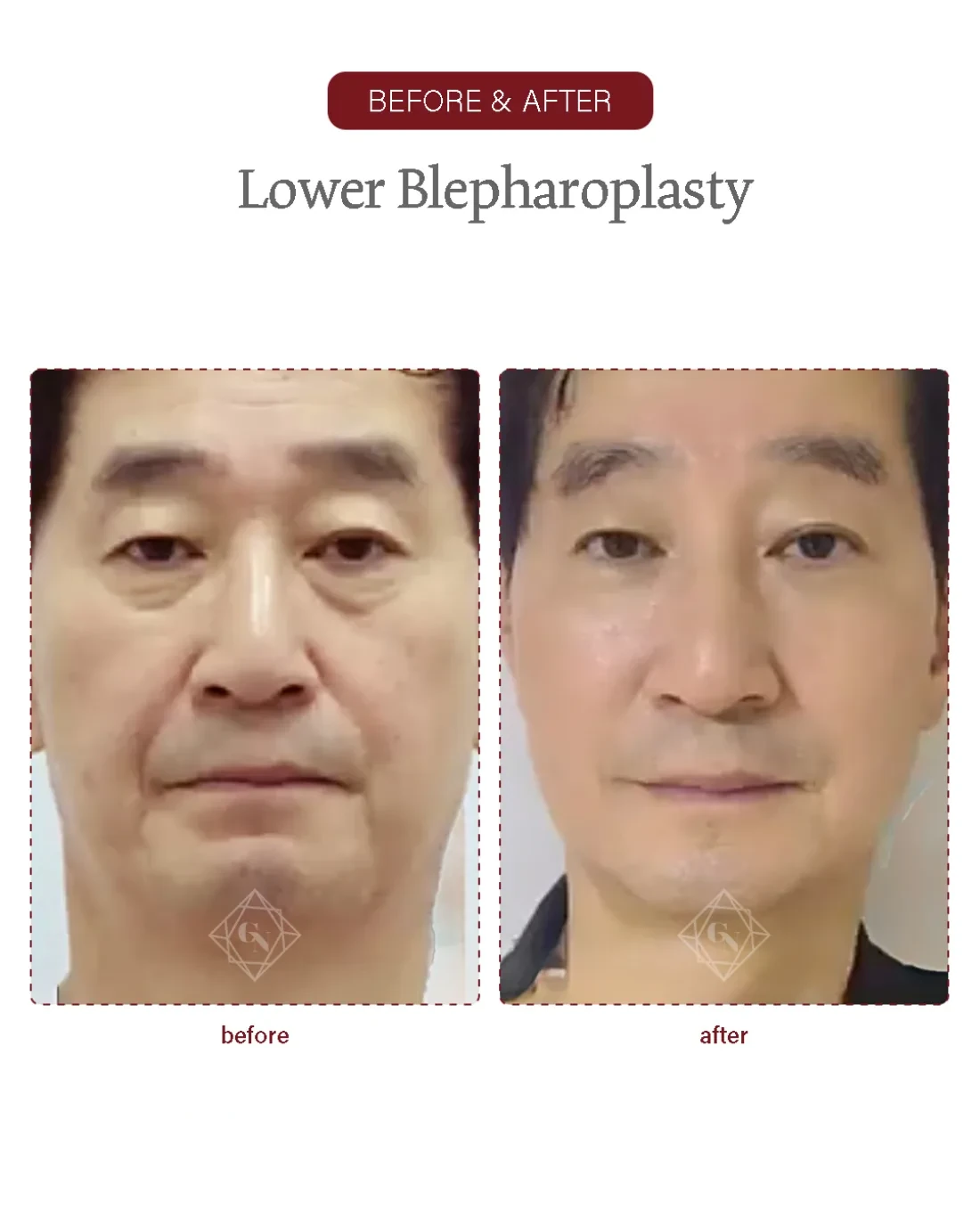
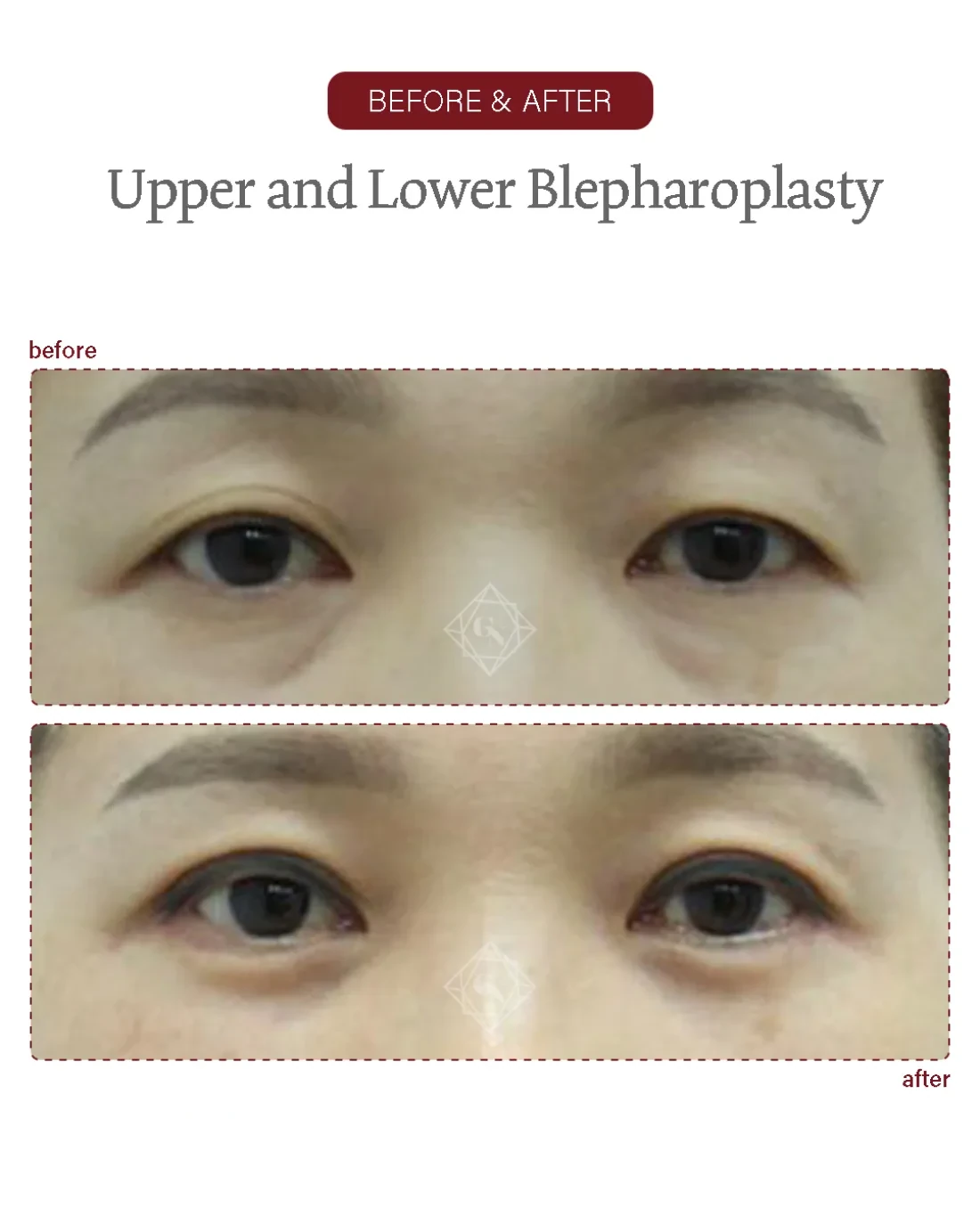
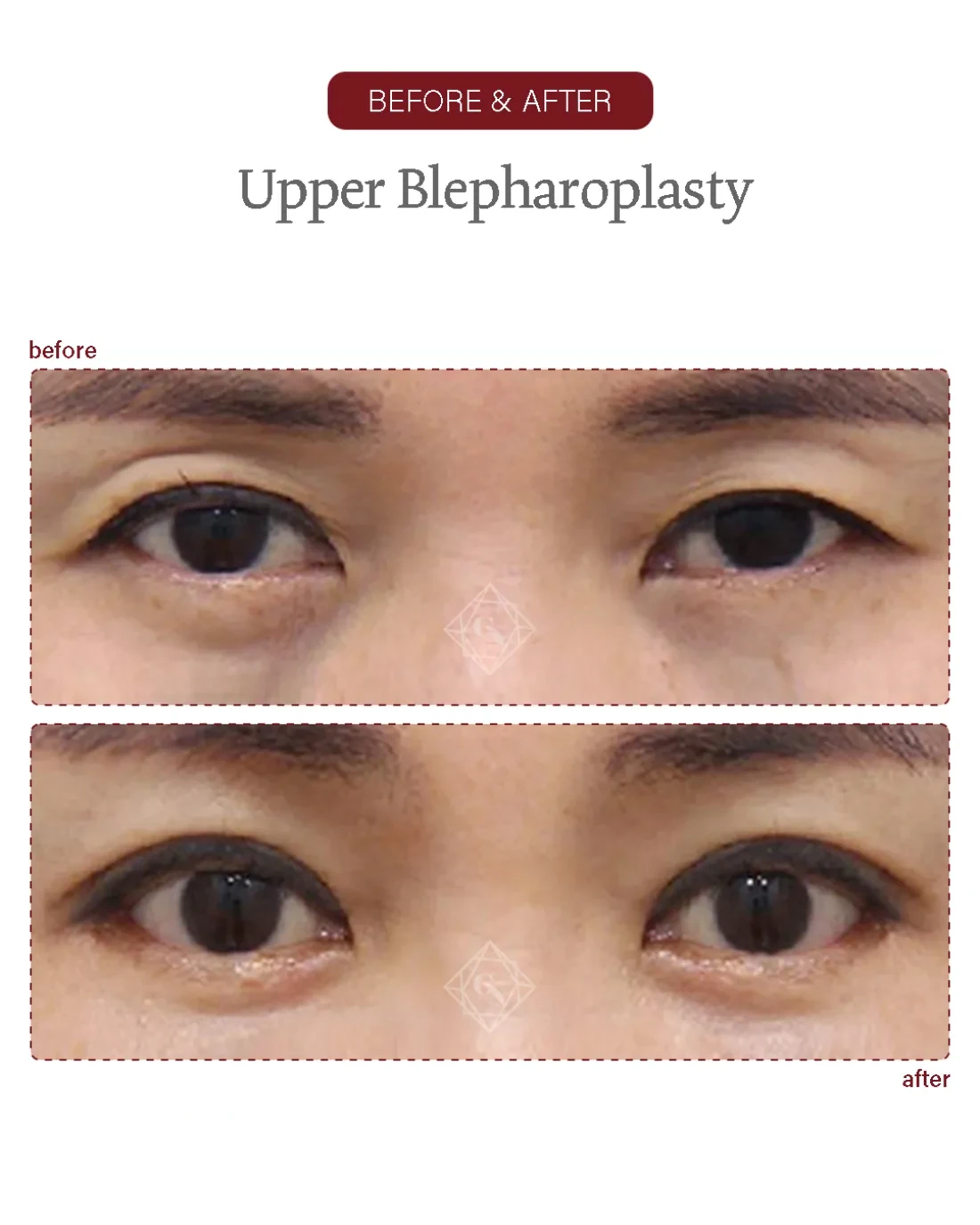
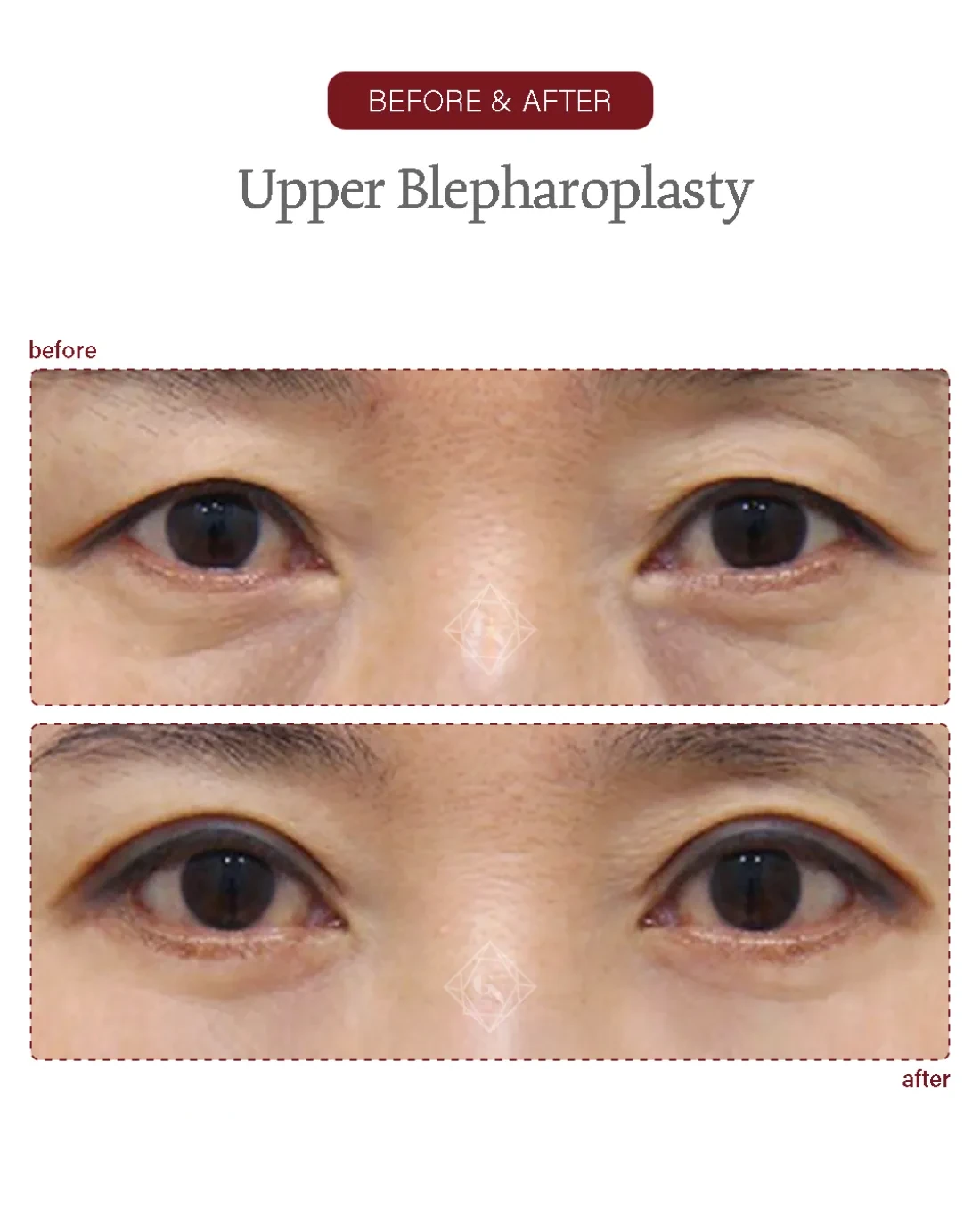
Before & After
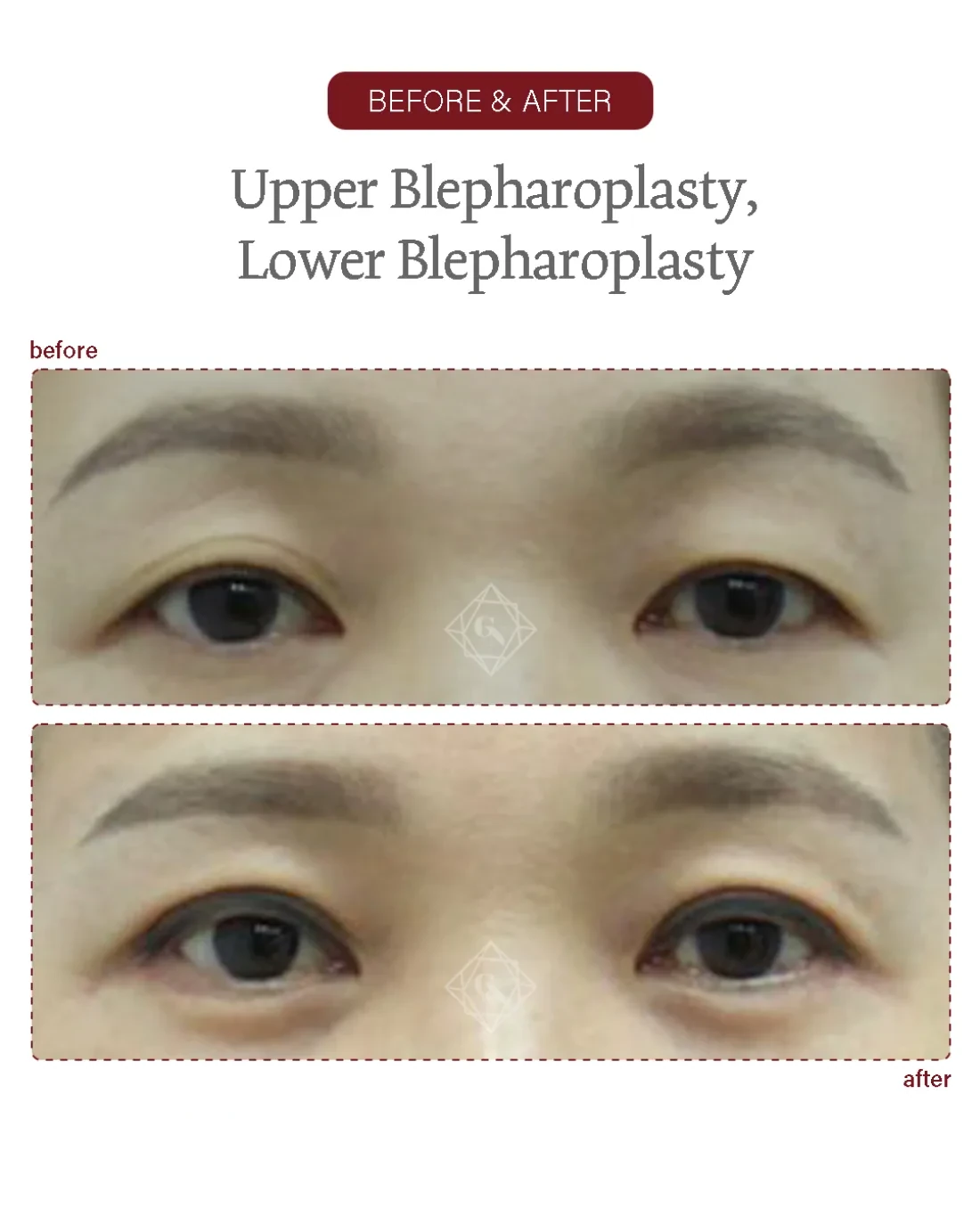
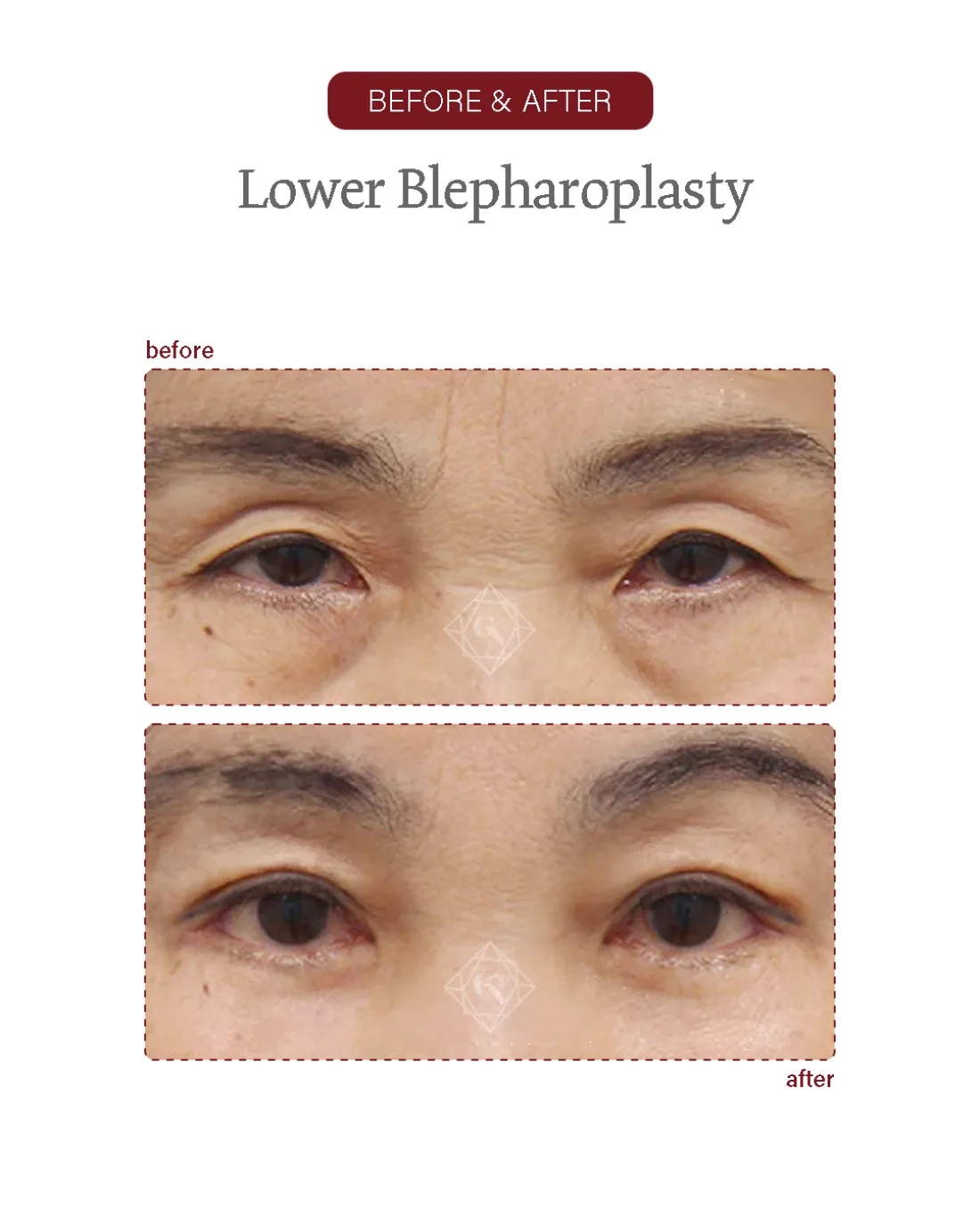
Eyelid before/after examples of actual Garnet patients (published with consent). Results, recovery and suitability vary by individual and are not guaranteed; the right approach is decided at an in-person consultation.
Prices
Price at Garnet
Upper blepharoplasty
From₩3,500,000 + VATExcluding VAT (10% VAT is added at payment)Book now
Same price as Korean patients. Prices shown exclude 10% VAT; your written quote, issued after the in-person consultation, shows the full amount payable.
Dr. In-Soo Baek
Director & sole operating surgeon
Korean medical licence no. 77407
Operate on what you came for. Trained at Korea University Medical Center. Every case planned, performed and reviewed by the same hands.
1Operating surgeon
~2Surgeries per day
7Registered techniques
Board-certified plastic surgeon
Plastic surgery training at Korea University College of Medicine & graduate school
Korean Society of Plastic and Reconstructive Surgeons member, in its facial-contour, eye & rhinoplasty groups
Consults, operates and follows up each case himself
Peer-reviewed papers behind the facts on this page. Each describes findings in its own study group — not results at Garnet — and none predicts your own outcome.
Shields M et al. Blepharoptosis correction. Current Opinion in Otolaryngology & Head and Neck Surgery. 2003. doi:10.1097/00020840-200308000-00009
Zhang Y et al. Less Is Better: Full-Incision Double-Eyelid Blepharoplasty with Rapid Recovery. Plastic & Reconstructive Surgery. 2023. doi:10.1097/prs.0000000000010700
Deenstra W et al. Correction of Severe Blepharoptosis. Annals of Plastic Surgery. 1996. doi:10.1097/00000637-199604000-00004
Yu P et al. Small-Incisional Techniques for Double-Eyelid Blepharoplasty: A Systematic Review. Aesthetic Plastic Surgery. 2022. doi:10.1007/s00266-022-03154-5
FAQ
Common questions
Why are my eyes uneven?
Uneven eyes usually trace to one of a few causes: a difference in the eyelid muscle strength so one eye opens less (ptosis), asymmetric upper-lid skin or double-eyelid fold height, or a difference in the eye shape and outer corner. Each has a different correction, so the first step is measuring both eyes together to identify which one applies.
Can uneven or asymmetric eyes be corrected surgically?
Often, yes, but which surgery depends on the cause. Muscle-strength differences are addressed with ptosis correction, skin or fold differences with upper blepharoplasty or fold adjustment, and outer-corner differences with lateral canthoplasty. Some asymmetry is within the normal range and is best left alone, and the assessment will tell you if yours is.
What causes asymmetric eyelids specifically?
Asymmetric eyelids commonly come from one lid opening less than the other (a levator-muscle difference), one lid carrying more skin than the other, or the double-eyelid crease sitting at a different height on each side. Ageing tends to accentuate skin and fold differences, while muscle differences can be present from earlier.
Do you operate on one eye or both?
It depends on the assessment. When the asymmetry is clearly one-sided, the surgeon may correct only the weaker or fuller eye to match the other. Because the two lids interact, though, the plan is decided after measuring both together. Sometimes a small adjustment to both eyes gives a more balanced result than working on one alone.
Can surgery make my eyes perfectly symmetrical?
No surgery can guarantee perfectly identical eyes, and no natural face has them. The realistic goal is a more balanced, natural match, with any small remaining difference usually invisible to others. A plan that promises perfect symmetry is over-promising against how soft tissue heals.
Is uneven-eye surgery risky?
Every operation carries risk, and eye surgery in particular calls for a careful, restrained hand. The main pitfall in asymmetry work is over-correcting the side that was already fine. Choosing a board-certified plastic surgeon who assesses carefully, and confirming that the same surgeon operates, are the most useful safeguards.
How long is recovery for these eye procedures?
For ptosis correction, upper blepharoplasty and lateral canthoplasty, sutures typically come out at about seven days, with visible swelling settling over the following weeks and finer results continuing to refine over some months. Your exact timeline depends on which procedure or combination you have.
Can you assess my uneven eyes before I travel to Korea?
Yes. You can send clear front-on photos and get a first read on which cause is likely driving your asymmetry and which procedure would apply, if any, in an online consultation from abroad, before committing to a trip. The same surgeon then confirms in person at your in-clinic consultation.
Will correcting ptosis also fix my uneven fold?
Often it changes it. Because the double-eyelid crease sits on top of the eye-opening mechanism, correcting a weaker lid usually alters how the fold looks, and the two are frequently planned together. Whether your fold then needs any separate adjustment is decided as part of the same assessment.
My mom recently had a brow lift and lower blepharoplasty with Dr. Baek, and our experience has been wonderful so far. The Garnet team was incredibly kind and welcoming, with Kelly assisting us as our English consultant—she made everything…
I’m so happy I chose this clinic for my lower blepharoplasty. I was traveling from abroad by myself, so I was a little nervous, but from the beginning I felt comfortable and truly cared for. Everyone was kind, patient, and professional…
Came in for an in-person consult and ended up choosing Garnet and Dr.Baek for my non-incisional DES and tiplasty/alarplasty. I communicated with Kelly (English consultant) from the start till now (3 weeks post-op). She really help me feel…
My under-eyes have been sagging and folding for years... I tried to cover it up with makeup, but it actually got stuck in the wrinkles and made it stand out even more. While going for consultations, I noticed that the bigger the hospital…
If you are unsure what's making your eyes look uneven, send clear front-on photos for a no-obligation assessment of the likely cause and which correction, if any, would suit, before you plan a trip.
Send photos and your question before you travel. An English-speaking coordinator reviews every enquiry and replies with guidance on whether eye surgery is appropriate for you, the likely plan and timing.
✓ Reviewed by the clinic coordinator, not a bot
✓ Photo-based pre-assessment before you fly
✓ Foreign-patient scheduling & after-care
✓ One surgeon for consultation, surgery and follow-up
Prefer to chat now? Reach the coordinator directly:







 T S7 months ago



