Being told you look tired when you feel fine is one of the most common reasons people look into eye surgery. The tired look almost always traces to the eyes, but to different features in different people, which is why there is no single operation for it.
The short answer
A tired look usually comes from one of three things: a heavy or low upper lid, excess upper-lid skin weighing the eye down, or a hollow, shadowed under-eye, and sometimes a combination.
The upper lid and the under-eye are separate problems with separate corrections, so the first step is working out which one is driving your tired look.
The realistic goal is to look more rested and awake in a natural way. A subtle change is what reads as refreshed.
At Garnet the same board-certified surgeon assesses the whole eye, so an upper-lid and under-eye plan is judged as one.
A tired look is a signal the face sends from a few specific features. The upper eye can look heavy in two different ways: the lid itself sits low and the eye doesn't open fully (a muscle matter), or there is surplus skin resting on the lashes and weighing the eye down (a skin matter). Lower down, a hollow or shadowed under-eye reads as fatigue even when the upper eye is fine. Frequently it is a mix of these.
It matters which one is yours, because the corrections are different and aimed at different places. Adding a crease or trimming skin does nothing for a lid that is simply opening less; conversely, lifting the opening does nothing for a heavy fold of surplus skin or a shadowed hollow beneath. Chasing the wrong feature is the usual reason a “refresh” disappoints.
Because the tired look is a symptom and not a diagnosis, this page routes to more than one procedure (upper-lid and under-eye options) and keeps the goal modest. The aim is to look rested and like yourself, with the eye's character unchanged. Working out which feature to treat is the whole of the decision.
Upper lid
When it's the upper lid opening less
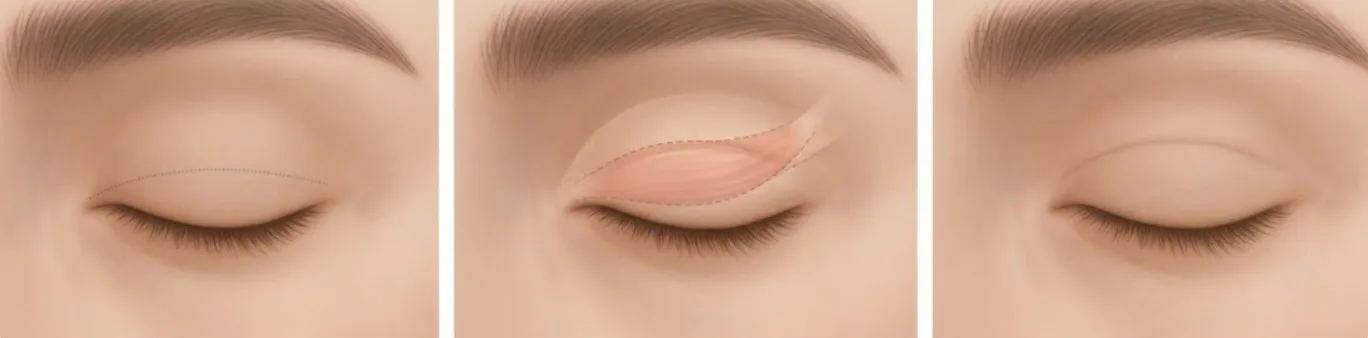
One of the most common drivers of a tired look is a lid that rests low, so the eye simply doesn't open as fully as it could, and you can look sleepy or half-closed even when alert. This is a muscle issue: the strength of the eye-opening (levator) muscle. It is corrected with ptosis correction, which adjusts that muscle's strength through a lid-crease incision so the eye opens more fully, with sutures out at about 7 days.
Illustration: through the crease line, the muscle that opens the eye (shown beneath the lid) is tightened so the lid rests higher.
The effect people describe after well-judged ptosis correction is looking more awake without looking different. The eye opens to a natural degree, short of a startled look. Because the crease and the opening interact, ptosis work often influences the double-eyelid fold as well, and the two are commonly planned together.
The restraint here is deliberate. Over-opening the eye trades a tired look for a surprised one, which is why judgement, and never maximal correction, is what makes the result read as simply rested. This is also why who assesses and operates matters for such a fine adjustment.
Excess skin
When it's excess upper-lid skin weighing the eye down
The other upper-eye cause is surplus skin. With age the upper-lid skin loosens and can rest on the lashes, hooding the eye and giving a heavy, tired appearance even when the eye itself opens normally. Here the mechanism is different, since the cause lies in the skin instead of the muscle, so the correction is different too.
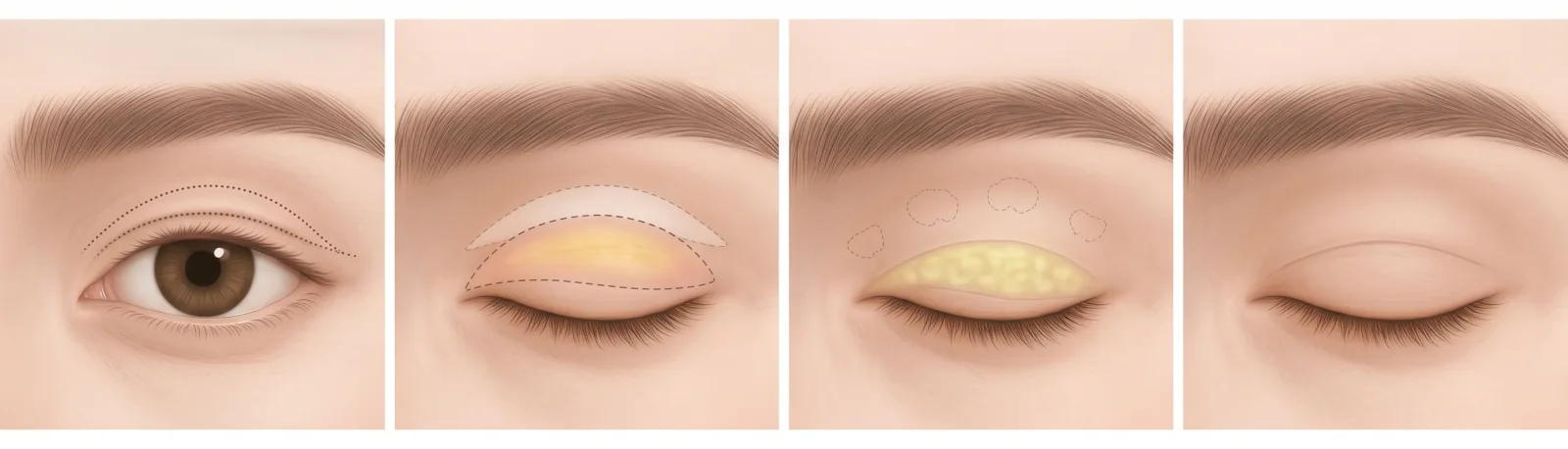
Illustration: the planned crease is marked, the excess upper-lid skin and selected fat pads are addressed through that line.
Upper blepharoplasty removes the redundant skin and tidies the underlying tissue so the eye looks lighter and more open, with sutures removed at around 7 days. When both surplus skin and a low-opening lid are present, which is common in older patients, upper blepharoplasty and ptosis correction are frequently combined, because trimming skin alone would leave a lid that still opens too little.
As with the muscle work, the aim is a rested, natural look. Removing exactly enough skin to lift the hood, and no more, is what keeps the result looking like a well-slept version of you.
Under-eye
When the tired look is coming from the under-eye
Not every tired look is about the upper eye. A hollow, puffy or shadowed under-eye (a bag sitting above a groove, or a flat sunken area catching shadow) reads as fatigue on its own, and no amount of upper-lid work will change it. When the lower lid is the source, the correction happens there.
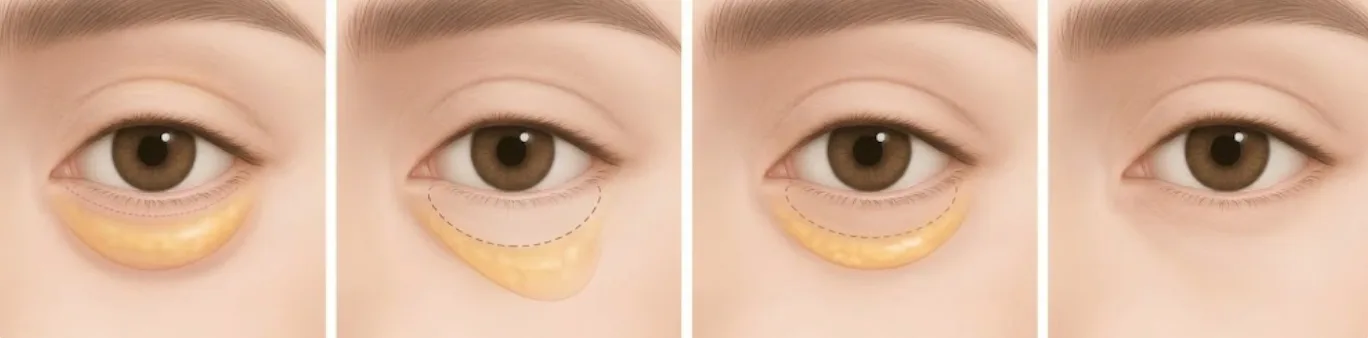
Illustration: working from inside the lower lid, the under-eye fat (yellow) is moved down into the hollow instead of being removed; the dashed line shows where it sat.
Where there is a bag-and-groove, under-eye fat repositioning moves the bulging fat down over the rim to smooth the step, done through the inner lid so there is no external scar and no suture removal. Where the under-eye is genuinely flat, a small amount of added volume is used instead; our dedicated guide on dark circles and under-eye hollows goes into that choice in depth.
Many patients' tired look is a combination of an upper-lid issue and an under-eye one, which is exactly why assessing the whole eye together, instead of fixing one half and leaving the other, is what produces a genuinely refreshed result.
Deciding
How to decide upper lid, under-eye, or both
Start by locating the tiredness. Look front-on in even light and note where the heaviness sits: in the upper lid (the eye looks half-closed, or skin rests on the lashes) or below the eye (a shadow, bag or hollow). Often it is both, and mapping which features contribute, and how much, is what a good consultation does before proposing anything. Clear photos make this far easier to judge.
From there the plan follows the cause: a low-opening lid points to ptosis correction, surplus skin to upper blepharoplasty, a shadowed or hollow under-eye to a lower-lid procedure, and a mixed picture to a combination. Keep expectations realistic. The goal is to look more rested and awake, in a way that still looks like you; a plan promising a dramatically transformed eye is aiming at the wrong target.
You can do most of this assessment before travelling. Send clear, evenly lit photos for a read on which feature is driving your tired look and which procedure, if any, would help, through an online consultation from abroad.
At Garnet
How Garnet approaches the tired-eye look
Garnet is a single-surgeon clinic in Apgujeong, Seoul, and Dr. In-Soo Baek, a board-certified plastic surgeon (Korean medical licence no. 77407), personally examines the whole eye, decides between an upper-lid and under-eye approach or a combination, operates himself, and reviews you at 1, 3 and 6 months. Because the tired look often comes from more than one feature, having one surgeon judge the upper lid and under-eye together is what keeps the result balanced.
The plan is built around your specific cause, with no fixed package: sometimes ptosis correction, sometimes upper blepharoplasty, sometimes under-eye work, and often a modest combination aimed at looking rested. Garnet is registered with Korea's foreign-patient programme; you can begin with a no-obligation photo assessment before deciding whether a trip is worthwhile.
Real Results
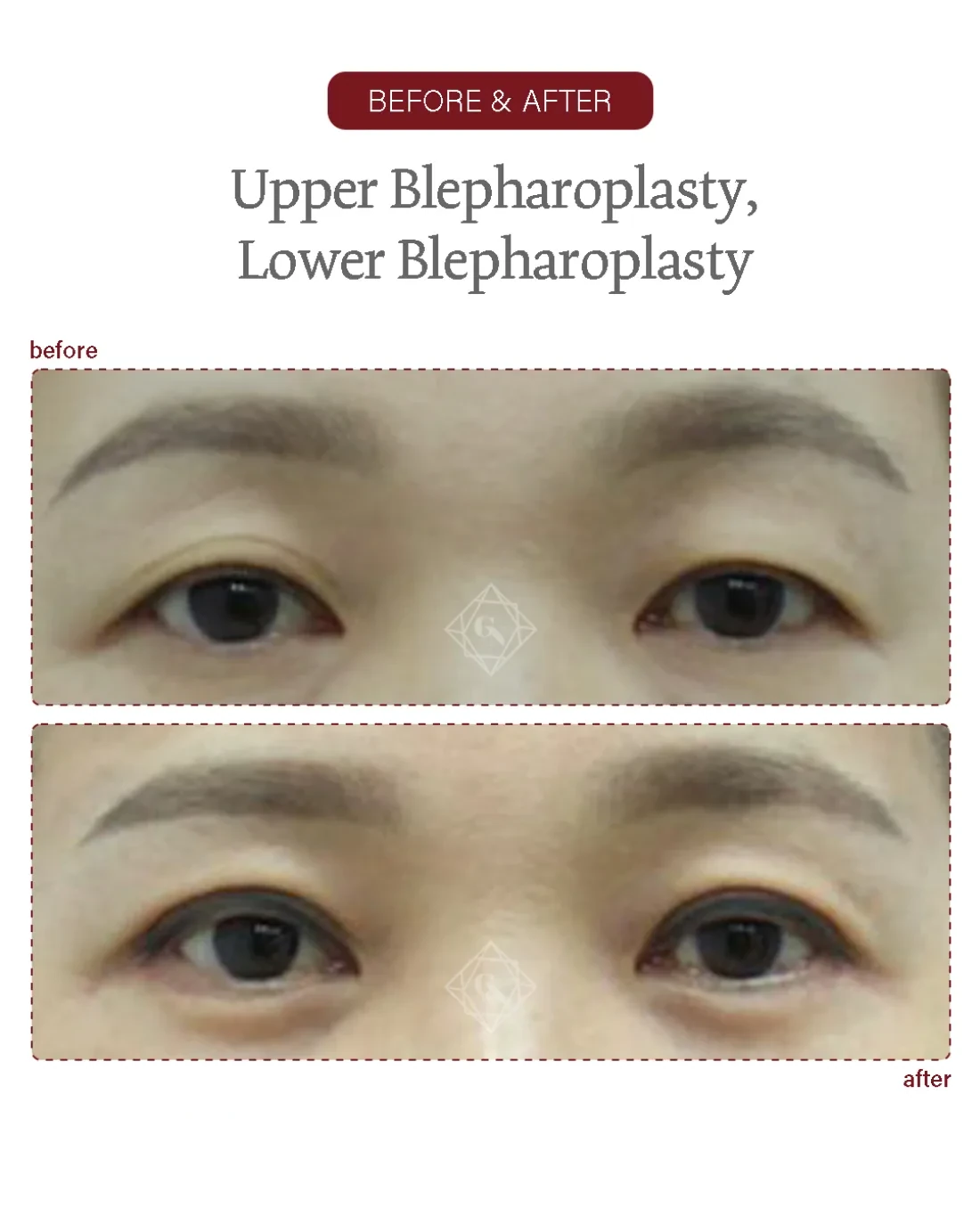
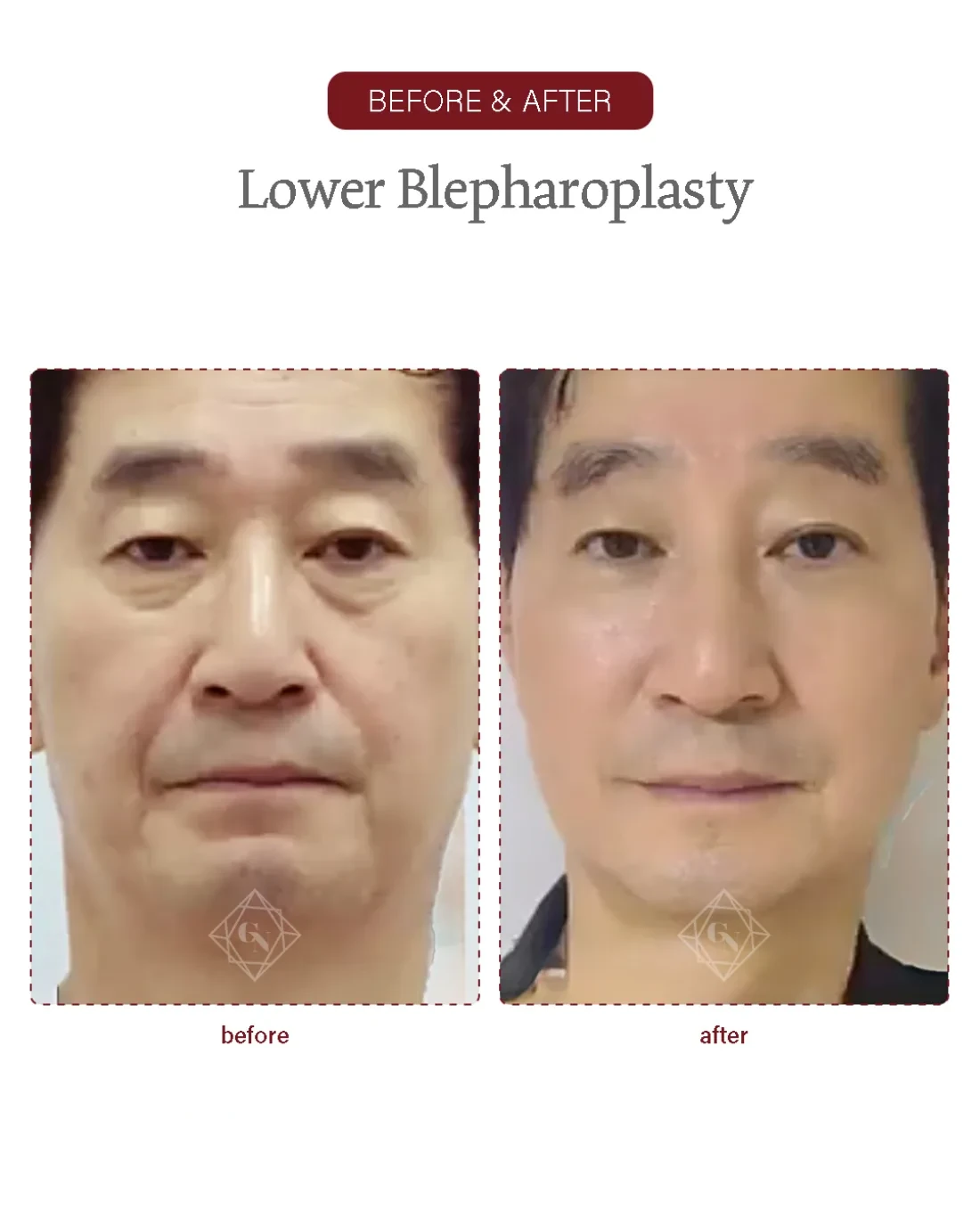
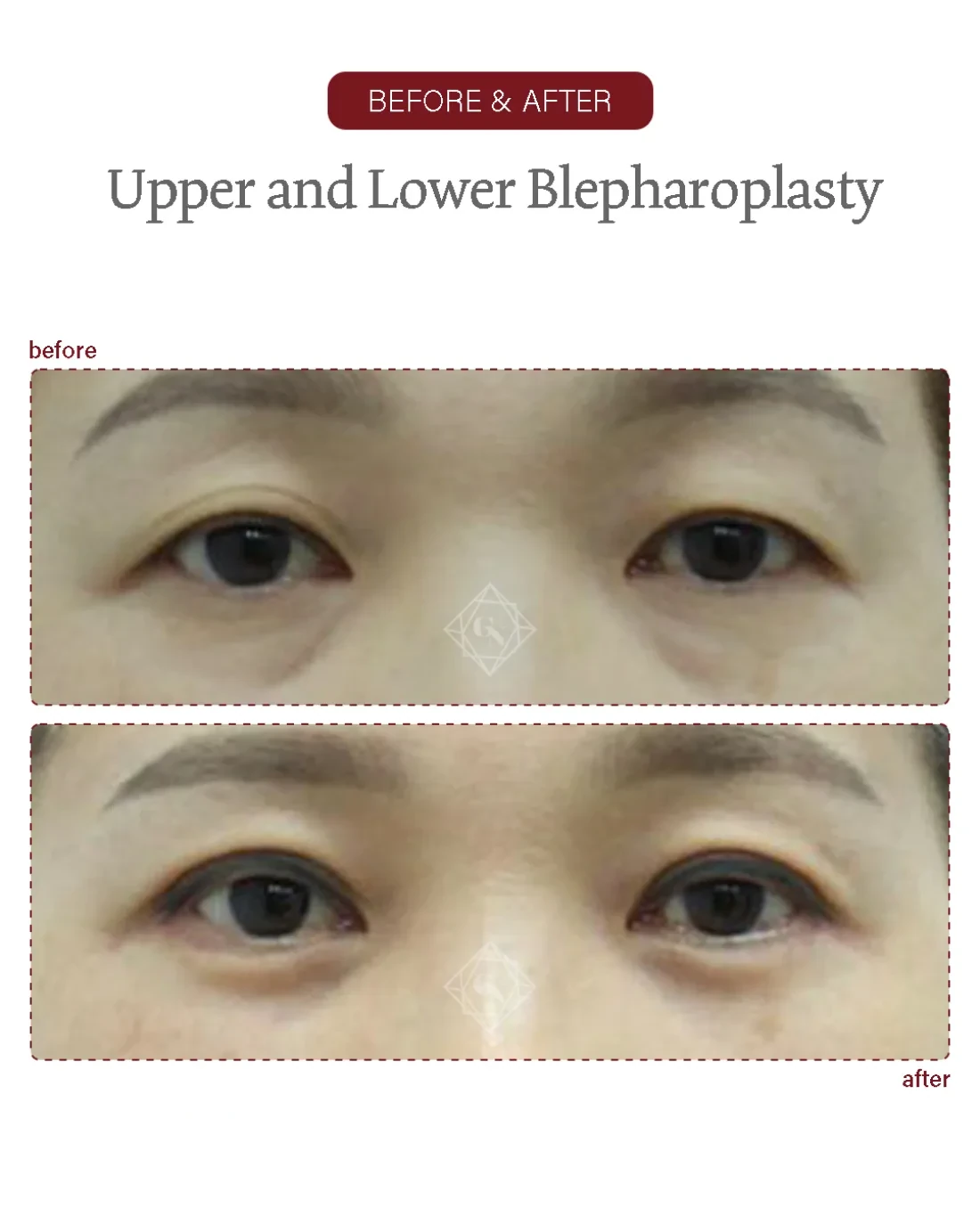
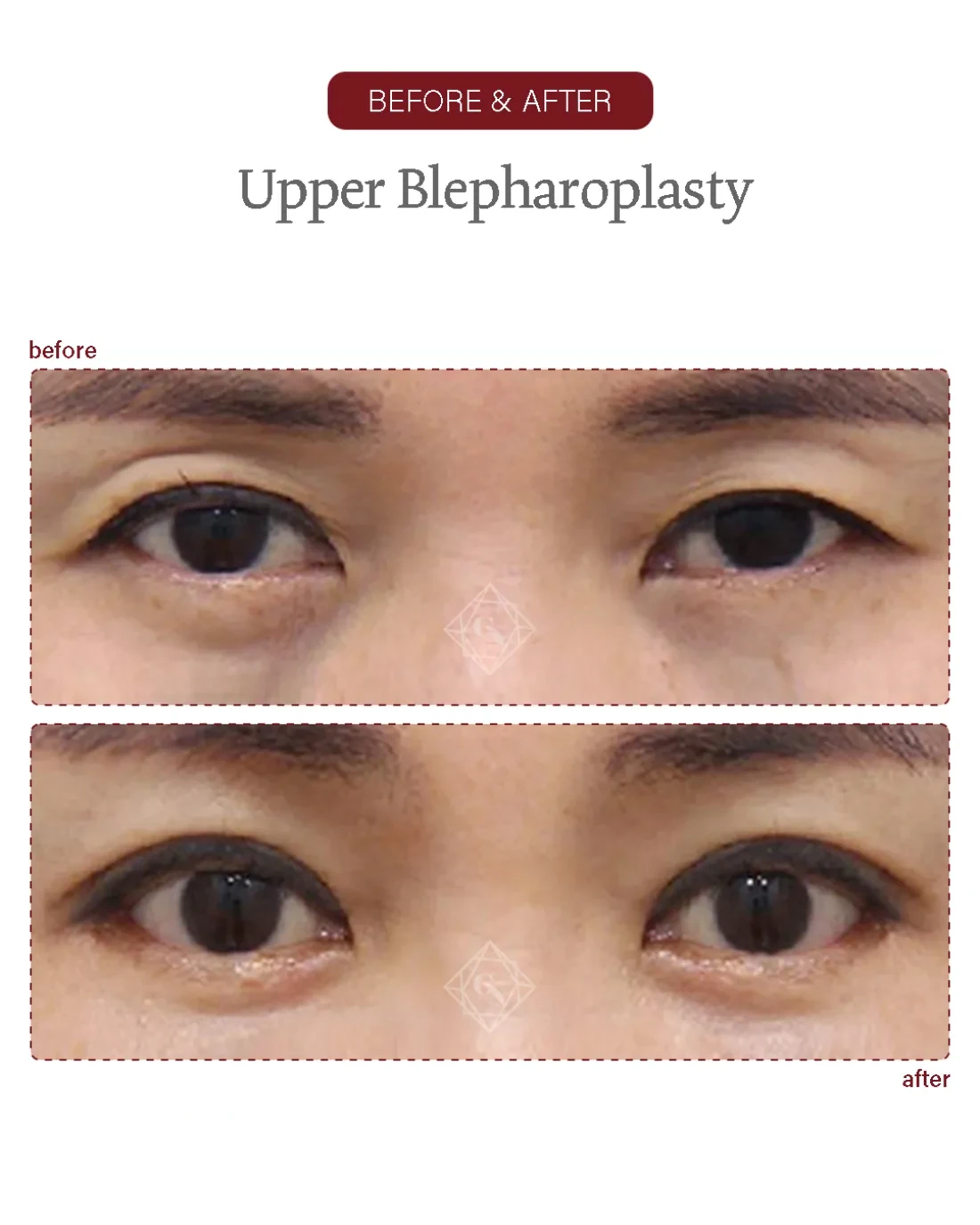
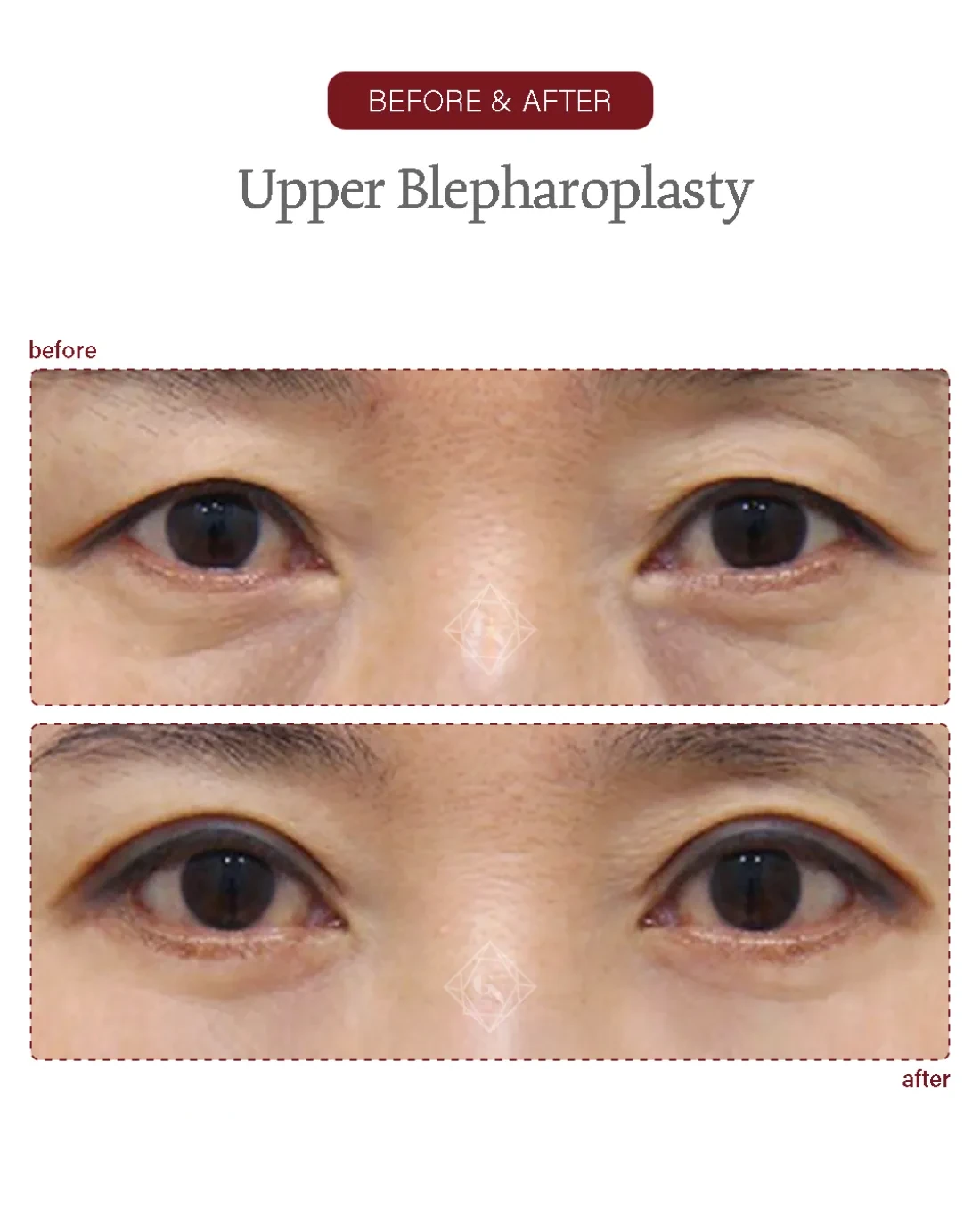
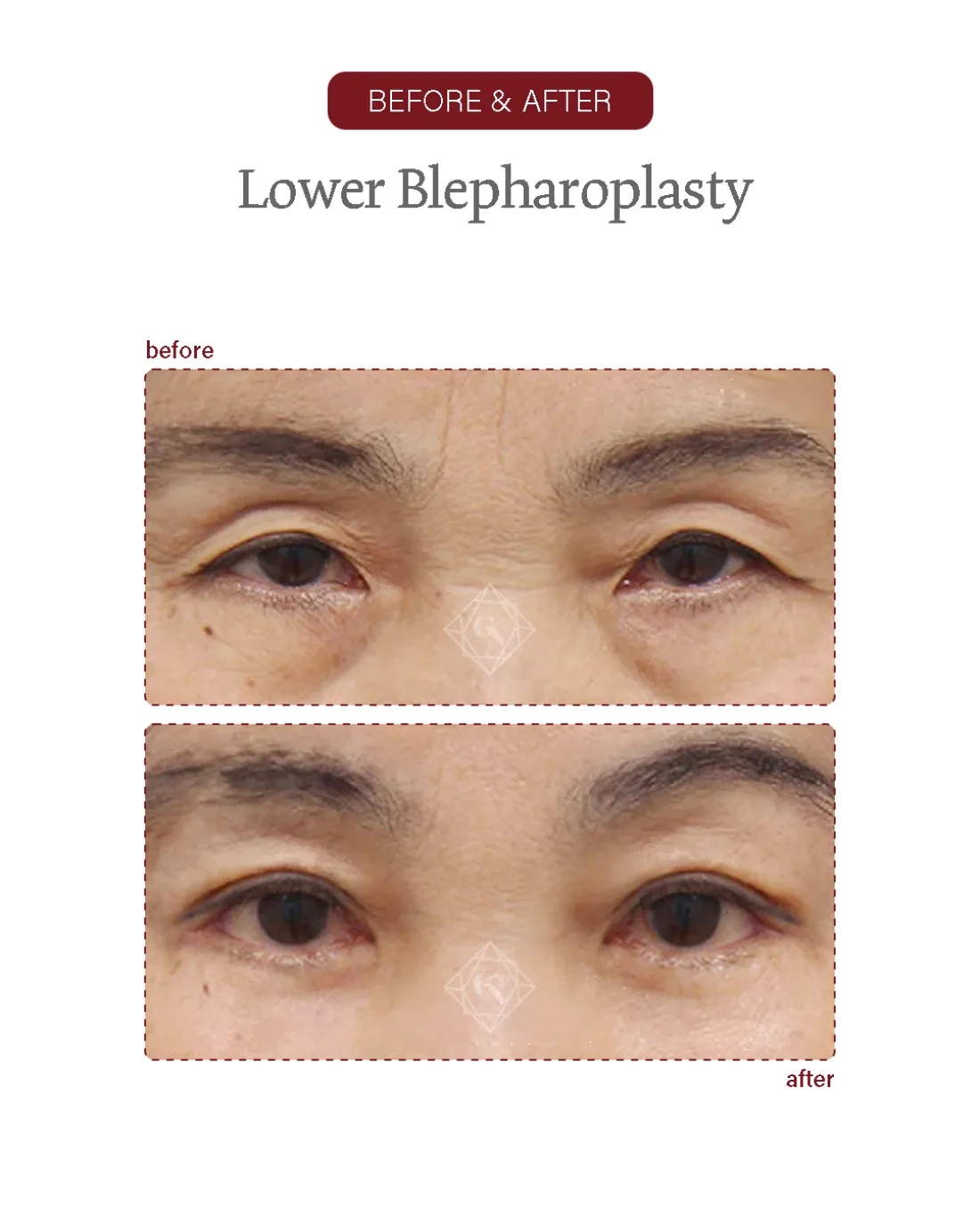
Before & After
Eyelid before/after examples of actual Garnet patients (published with consent). Results, recovery and suitability vary by individual and are not guaranteed; the right approach is decided at an in-person consultation.
Prices
Price at Garnet
Upper blepharoplasty
From₩3,500,000 + VATExcluding VAT (10% VAT is added at payment)Book now
Same price as Korean patients. Prices shown exclude 10% VAT; your written quote, issued after the in-person consultation, shows the full amount payable.
Dr. In-Soo Baek
Director & sole operating surgeon
Korean medical licence no. 77407
Operate on what you came for. Trained at Korea University Medical Center. Every case planned, performed and reviewed by the same hands.
1Operating surgeon
~2Surgeries per day
7Registered techniques
Board-certified plastic surgeon
Plastic surgery training at Korea University College of Medicine & graduate school
Korean Society of Plastic and Reconstructive Surgeons member, in its facial-contour, eye & rhinoplasty groups
Consults, operates and follows up each case himself
Peer-reviewed papers behind the facts on this page. Each describes findings in its own study group — not results at Garnet — and none predicts your own outcome.
Hollander MHJ et al. Functional outcomes of upper eyelid blepharoplasty: A systematic review. Journal of Plastic, Reconstructive & Aesthetic Surgery. 2019. doi:10.1016/j.bjps.2018.11.010
Pimentel de Figueiredo AR. Blepharoptosis. Seminars in Ophthalmology. 2010. doi:10.3109/08820538.2010.496695
Barmettler A et al. Upper Eyelid Blepharoplasty: A Novel Method to Predict and Improve Outcomes. Aesthetic Surgery Journal. 2018. doi:10.1093/asj/sjy167
Finsterer J. Ptosis: Causes, Presentation, and Management. Aesthetic Plastic Surgery. 2003. doi:10.1007/s00266-003-0127-5
FAQ
Common questions
Why do my eyes always look tired?
A tired look usually comes from the eyes rather than sleep: a heavy or low upper lid that opens less, surplus upper-lid skin resting on the lashes, or a hollow or shadowed under-eye. Many people have a combination. Identifying which feature is driving it is the first step, because each is corrected differently.
What surgery makes eyes look less tired?
There is no single operation. A low-opening lid is addressed with ptosis correction, surplus upper-lid skin with upper blepharoplasty, and a shadowed or hollow under-eye with a lower-lid procedure such as fat repositioning. The right choice, or combination, depends on which feature is making you look tired.
Is it the upper or lower lid making me look tired?
Often you can tell from the mirror: upper-lid tiredness shows as a heavy, half-closed look or skin resting on the lashes, while lower-lid tiredness shows as a shadow, bag or hollow beneath the eye. Frequently both contribute, which is why assessing the whole eye together matters.
What's the difference between ptosis correction and upper blepharoplasty?
Ptosis correction adjusts the eye-opening muscle so a low-resting lid opens more fully; that is a muscle issue. Upper blepharoplasty removes surplus upper-lid skin that is hooding the eye; that is a skin issue. When both a low opening and excess skin are present, the two are commonly combined.
Will eye surgery make me look surprised instead of rested?
It shouldn't, when it's well judged. The risk with over-correction, opening the eye too far, is a startled look, so the aim is a natural degree of opening. Choosing a surgeon who works with restraint and assesses carefully is how you get a rested result.
Can under-eye bags make me look tired even if my upper eyes are fine?
Yes. A bag-and-groove or a hollow under-eye reads as fatigue on its own, and no upper-lid surgery will change it. When the lower lid is the source, fat repositioning or a small amount of added volume addresses it directly, as covered in our under-eye hollows guide.
How long is recovery for tired-eye surgery?
For upper-lid procedures like ptosis correction and upper blepharoplasty, sutures typically come out at about 7 days, with swelling settling over the following weeks. Under-eye fat repositioning is done inside the lid with no suture removal. Your exact timeline depends on which procedure or combination you have.
Can you tell me what's making my eyes look tired before I travel?
Yes. Sending clear, evenly lit front-on photos lets us tell you if your tired look is coming from the upper lid, the under-eye, or both, and which procedure, if any, would help, in an online consultation before you commit to a trip.
Will treating tired eyes change how I look?
The goal is to look more rested and awake while still looking like yourself and keeping the eye's character. Well-judged surgery reads as a well-slept version of you; any plan promising a transformed eye is aiming at the wrong target for this concern.
Can upper-lid and under-eye work be done together?
Yes. Because a tired look often comes from both, an upper-lid procedure and an under-eye one are frequently planned together so the whole eye is balanced. Whether you need one or both is decided by assessing the upper lid and under-eye at the same consultation.
My mom recently had a brow lift and lower blepharoplasty with Dr. Baek, and our experience has been wonderful so far. The Garnet team was incredibly kind and welcoming, with Kelly assisting us as our English consultant—she made everything…
I’m so happy I chose this clinic for my lower blepharoplasty. I was traveling from abroad by myself, so I was a little nervous, but from the beginning I felt comfortable and truly cared for. Everyone was kind, patient, and professional…
Came in for an in-person consult and ended up choosing Garnet and Dr.Baek for my non-incisional DES and tiplasty/alarplasty. I communicated with Kelly (English consultant) from the start till now (3 weeks post-op). She really help me feel…
My under-eyes have been sagging and folding for years... I tried to cover it up with makeup, but it actually got stuck in the wrinkles and made it stand out even more. While going for consultations, I noticed that the bigger the hospital…
If you are unsure whether your tired look comes from the upper lid, the under-eye, or both, send clear, evenly lit photos for a no-obligation assessment of what's driving it before you plan a trip.
Send photos and your question before you travel. An English-speaking coordinator reviews every enquiry and replies with guidance on whether surgery is appropriate, the likely plan and timing.
✓ Reviewed by the clinic coordinator, not a bot
✓ Photo-based pre-assessment before you fly
✓ Foreign-patient scheduling & after-care
✓ One surgeon for consultation, surgery and follow-up
Prefer to chat now? Reach the coordinator directly:







 T S7 months ago



