“Dark circles” and “tired under-eyes” are among the most searched-for concerns, but they are not one problem. The shadow under your eyes can come from a hollow that catches light, from pigment in the skin, or from a puffy bag above a groove. Surgery only helps the structural kinds.
The short answer
Under-eye shadowing has several causes: a hollow or groove (the tear trough), a puffy fat bag casting a shadow, thin or pigmented skin, or simple sleep and lifestyle. Only the structural causes respond to surgery.
When the problem is a bag-and-groove, repositioning the existing fat over the rim usually gives a smoother, more natural result than adding volume.
When the problem is a flat hollow with little bulge, carefully added fat can soften the shadow; the two approaches are often combined.
Pigment-driven dark circles are a skin issue. A careful assessment will say when surgery is not the answer.
Under-eye darkness is rarely one thing. The most common structural cause is a groove, the tear trough, where the cheek meets the lower lid; the recess catches shadow and reads as a dark circle. Often a small pad of orbital fat bulges just above that groove, so you get a puffy bag and a hollow together, and the contrast between them deepens the shadow. Other cases are a genuinely flat hollow with almost no bulge, where the whole under-eye has lost volume.
Then there are the causes surgery does not fix: pigment in the skin (true darkening of the skin itself), very thin skin that shows the bluish muscle and vessels beneath, and everyday factors like sleep, allergies and fluid. These can co-exist with a structural groove, which is why some people are disappointed by surgery that was aimed at the wrong cause. Naming which factor dominates is the whole game.
That is why a symptom page like this routes to more than one option. Sometimes the answer is skincare or a dermatology referral, and this page says so. The decision starts with looking at whether the darkness is a shadow (structural, potentially surgical) or a colour (pigment, not surgical).
Repositioning
When it's a bag-and-groove: fat repositioning
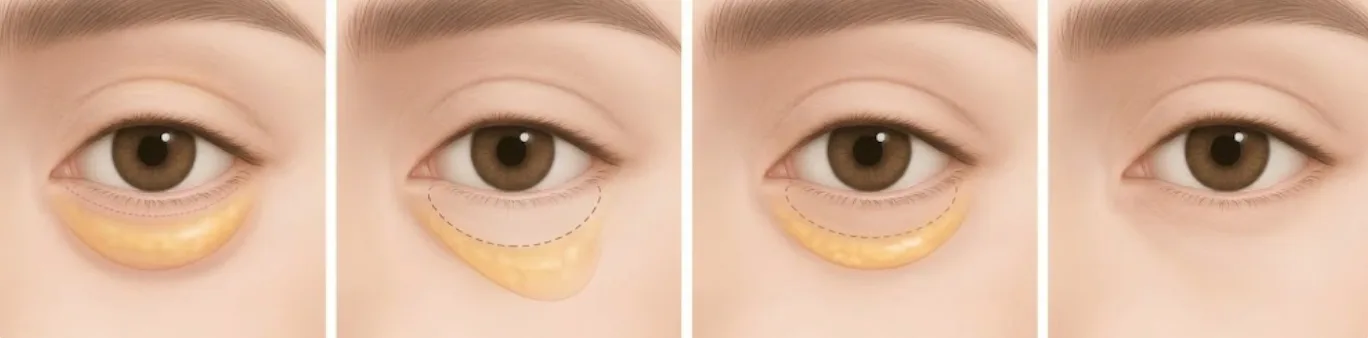
The most common surgical pattern is the puffy bag sitting above a hollow groove. Here the aim is not to remove fat and not simply to fill the groove, but to move the fat that is already bulging down into the hollow, smoothing the step between them. That is what under-eye fat repositioning does.
Illustration: working from inside the lower lid, the under-eye fat (yellow) is moved down into the hollow instead of being removed; the dashed line shows where it sat.
At Garnet this is performed through a transconjunctival (inner-lid) approach, so there is no external scar line: the herniated fat is repositioned over the orbital rim and fixed in place, which flattens the bag-and-groove in one step. Because the incision is inside the lid, there is no suture removal and downtime is relatively contained, though swelling and some bruising are normal for the first weeks.
Repositioning is generally preferred over just adding volume when there is fat to redistribute, because it uses your own tissue in its natural plane and tends to look smoother over time. It does not, however, do anything for pigment or thin-skin darkness. Those need a separate, non-surgical route.
Grafting
When it's a true hollow: fat grafting
Some under-eyes are simply flat or sunken, with little or no bag to reposition. Here the shadow comes from lost volume, and there is no bulge-and-groove step. In that situation there is nothing to move down, so the answer is to add a small, carefully controlled amount of volume back.
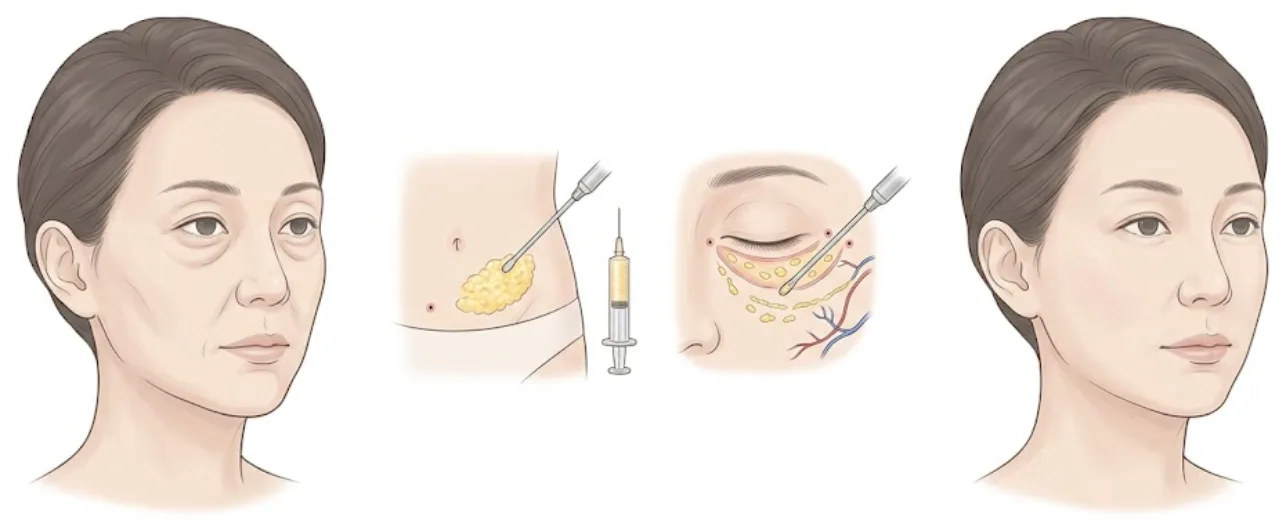
Illustration: the patient's own fat is gently taken from a donor area such as the abdomen, refined, and placed in small amounts where volume has been lost.
Fat grafting takes fat from your own abdomen or thigh and places it as fine micro-fat under the eye to soften the hollow; at Garnet the under-eye is one of the areas grafted, and the technique is deliberately conservative here because the skin is thin and over-filling shows. Placed judiciously, it fills the recess so it catches less shadow.
The trade-off to understand is that grafted fat is living tissue: a proportion of it settles and the rest is reabsorbed, so results refine over months and a touch-up is sometimes discussed. Under the eye especially, the safer plan is to add a little at a time and not chase a fully flat surface in one go.
When it's both
When repositioning and grafting are combined
In practice, many under-eyes are a mix: a bag-and-groove on the inner side and a genuine hollow further out, or a groove that repositioning smooths but leaves a shallow flat area that benefits from a little added volume. In those cases fat repositioning and a small amount of fat grafting are planned together as one operation.
This is decided before surgery because the two work on different problems: repositioning redistributes what is bulging, grafting replaces what is missing. Judging how much of each you need is a matter of examining the contour in person and in photos, and it is the kind of assessment that benefits from being done by the surgeon who will actually operate.
Neither procedure touches pigment. If part of your darkness is colour, the plan may be surgery for the contour of the tear trough and a separate skin-focused route for the pigment. Each step is set out so you know what it can and cannot change.
Deciding
How to decide what will actually help
Begin with the shadow-versus-colour question. A simple check many surgeons use: if the darkness largely disappears when the skin under your eye is gently stretched or lit from below, it is mostly a shadow (structural, and potentially surgical); if it stays as a brown or bluish tint, pigment or thin skin is driving it, and surgery will disappoint. Photos in even light help this call enormously.
From there the plan follows the cause: a bag-and-groove points to repositioning, a flat hollow to grafting, a mix to both, and a pigment or lifestyle picture to non-surgical care. Set expectations realistically: surgery can soften a structural shadow and give a smoother, fresher under-eye, but it will not deliver a completely uniform, shadow-free result, and any plan promising that is over-selling.
You can get most of this triage done before you fly. Send clear, evenly lit photos for a first read on whether your dark circles are structural, and which of these procedures applies, if any, through an online consultation from abroad.
At Garnet
How Garnet approaches under-eye hollows
Garnet is a single-surgeon clinic in Apgujeong, Seoul, and Dr. In-Soo Baek, a board-certified plastic surgeon (Korean medical licence no. 77407), personally assesses the under-eye, decides between repositioning, grafting or a combination, performs the surgery himself and reviews you at 1, 3 and 6 months. For a contour as subtle as the under-eye, the same surgeon judges and executes the plan.
Sometimes the answer is that the darkness is pigment and there is no surgical hollow. You should expect a clear read on what surgery can and cannot change for you, with no pressure to book. Garnet is registered with Korea's foreign-patient programme, so you can begin with a no-obligation photo assessment and only travel if the cause is one surgery can genuinely help.
Real Results
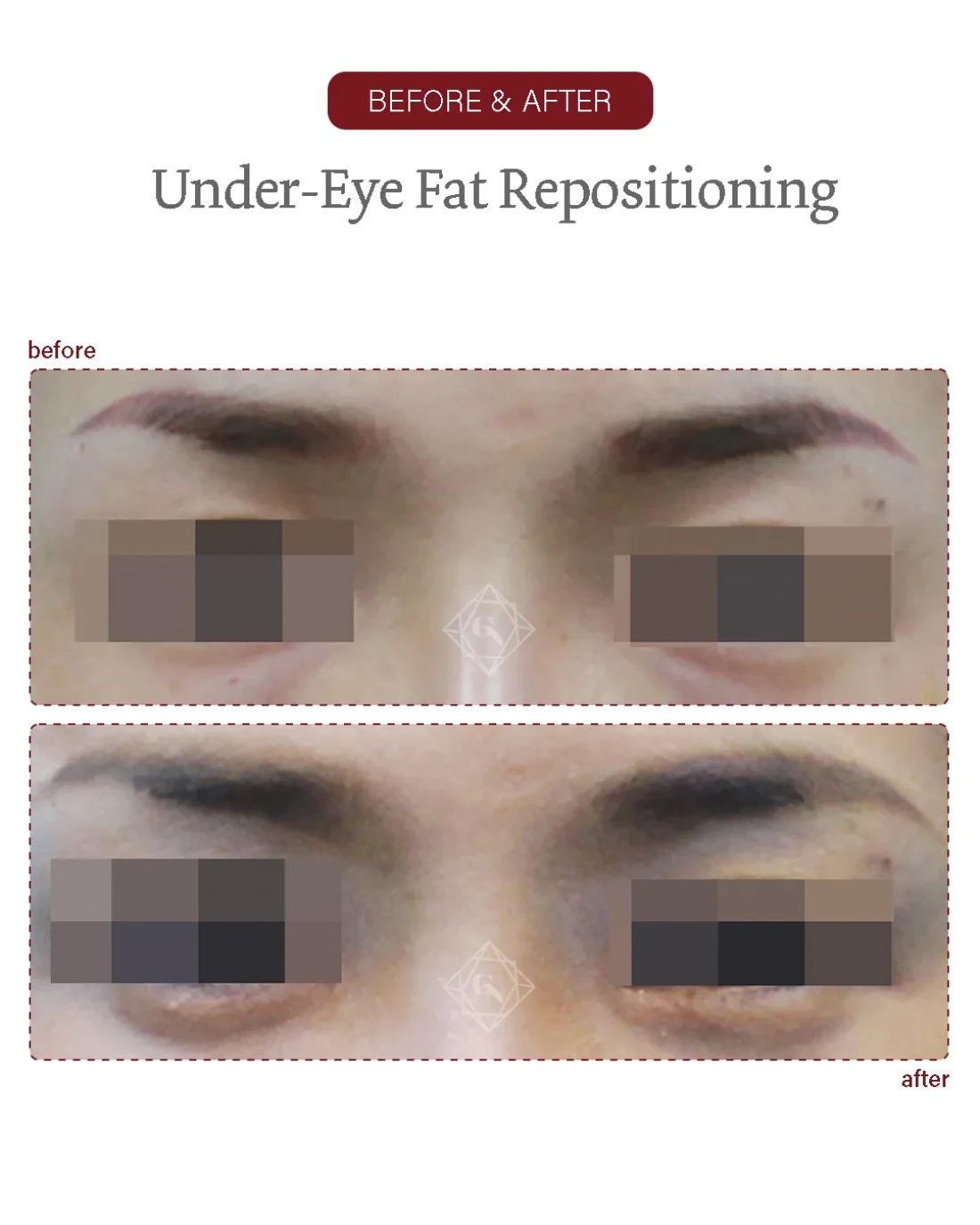
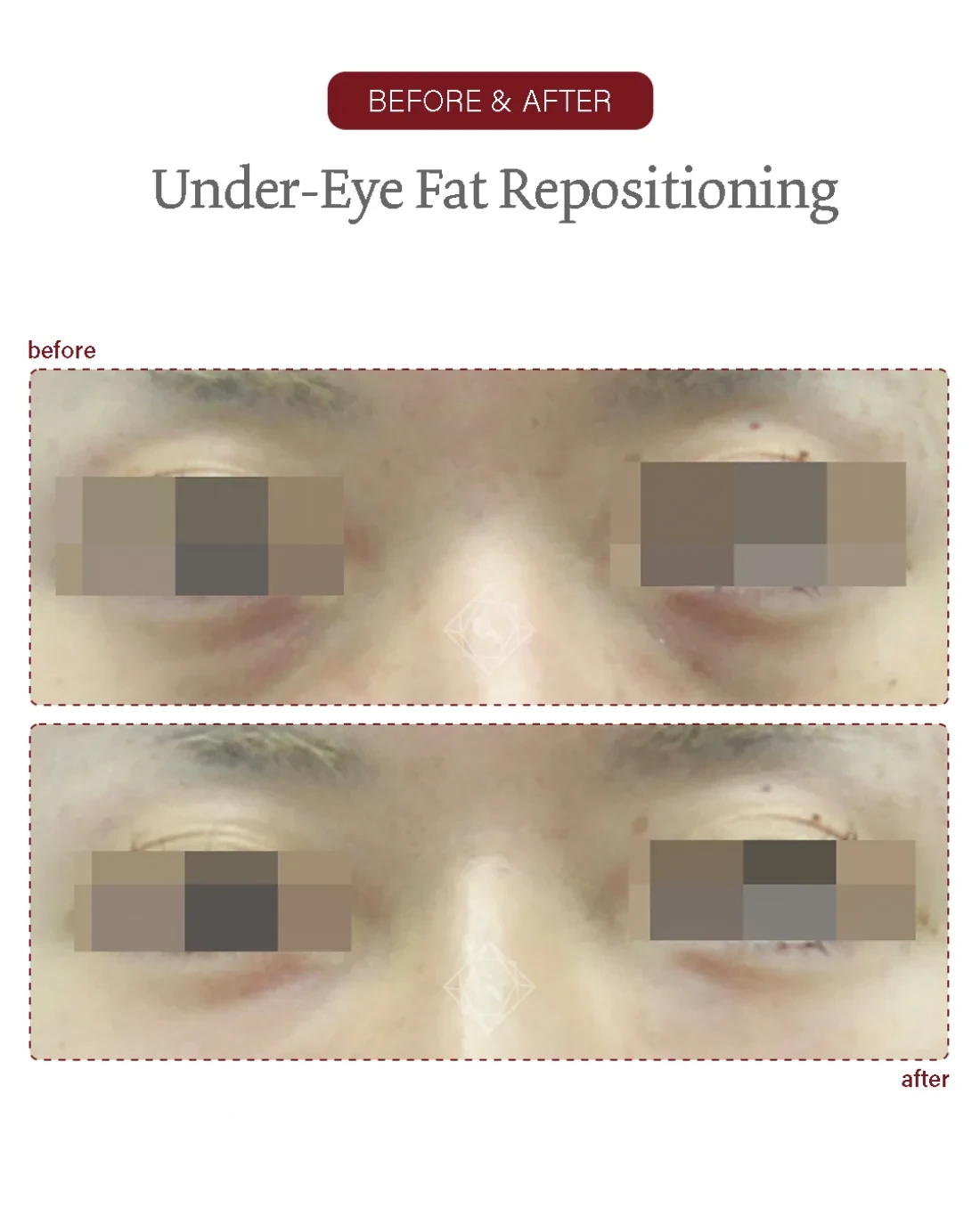
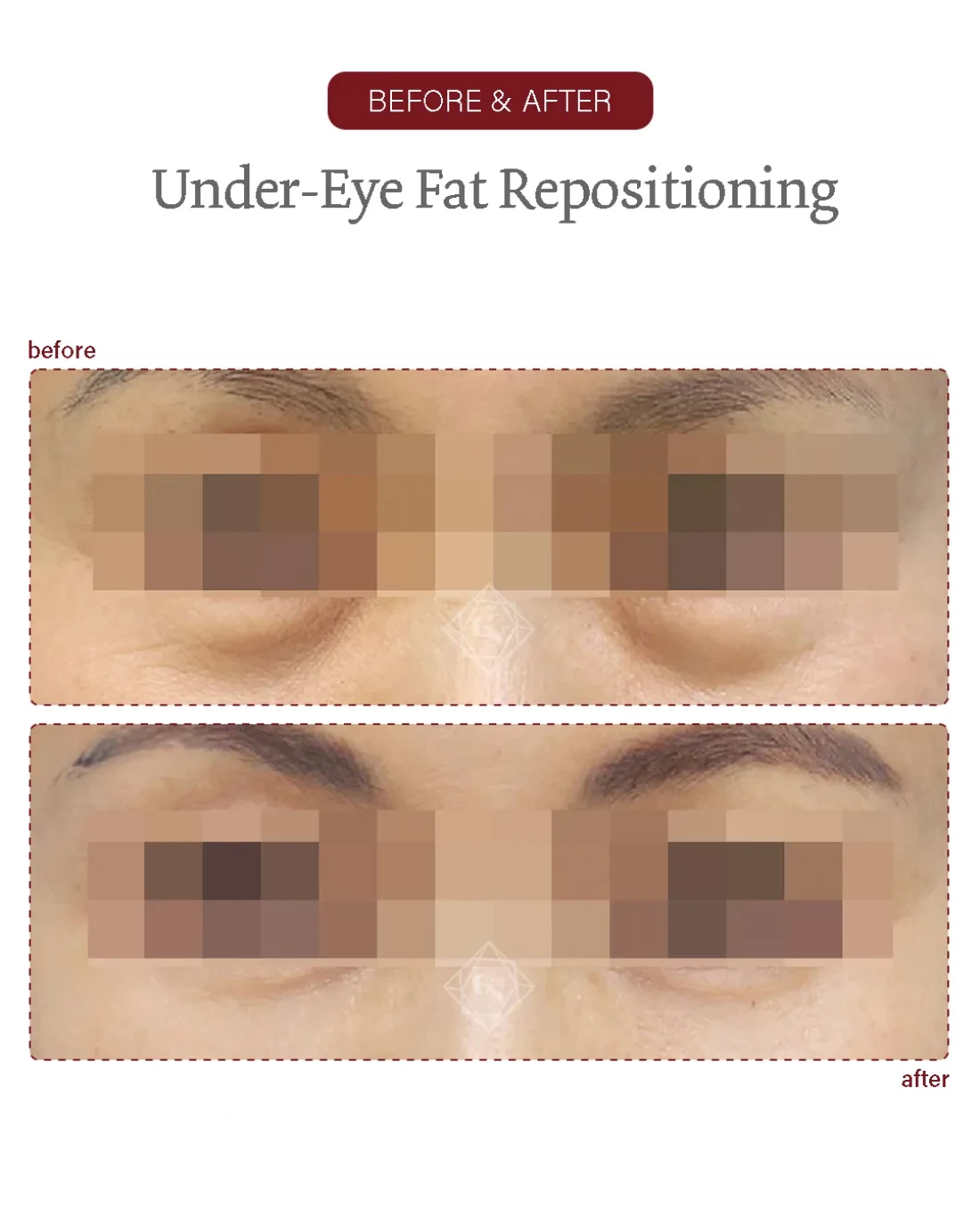
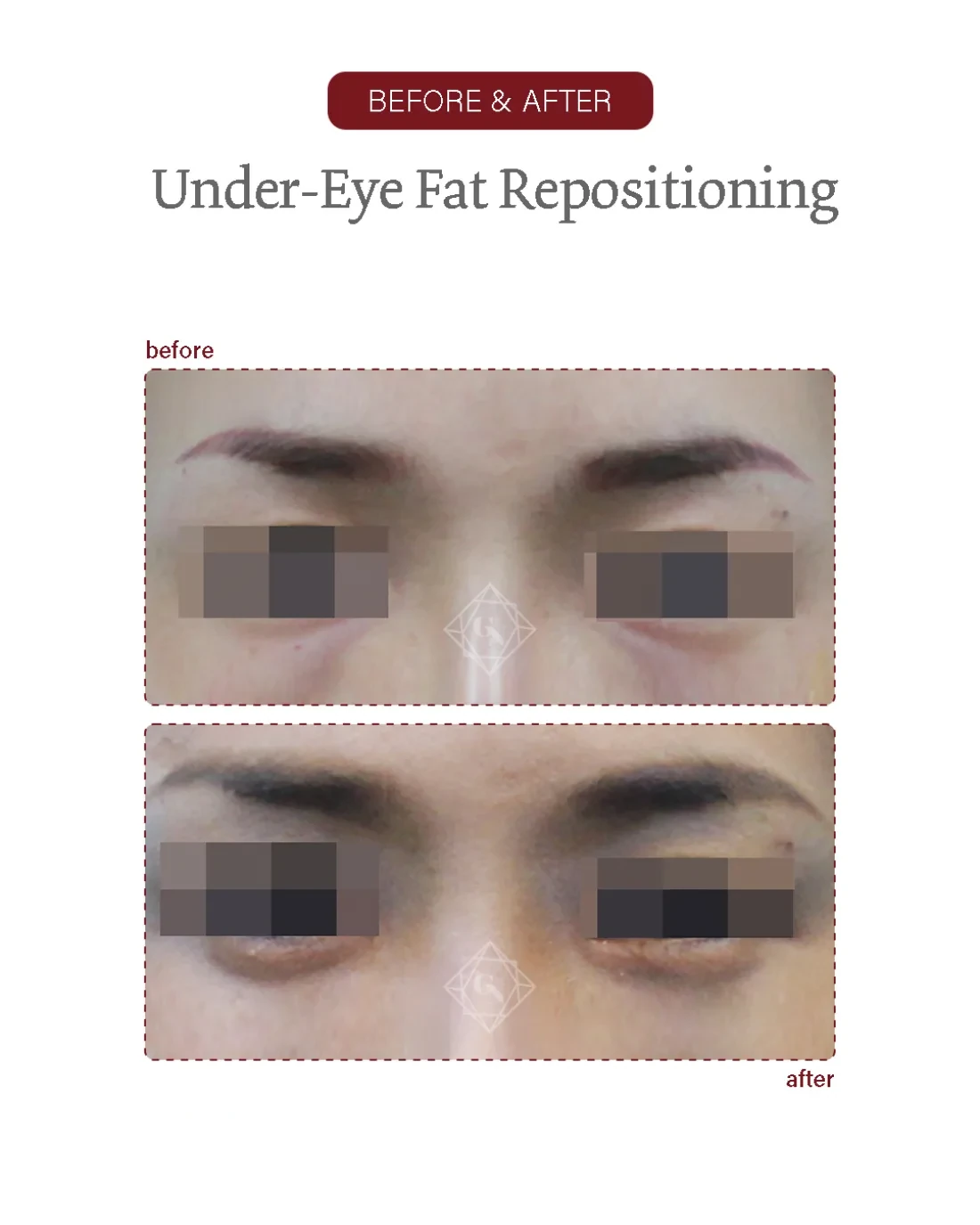
Before & After
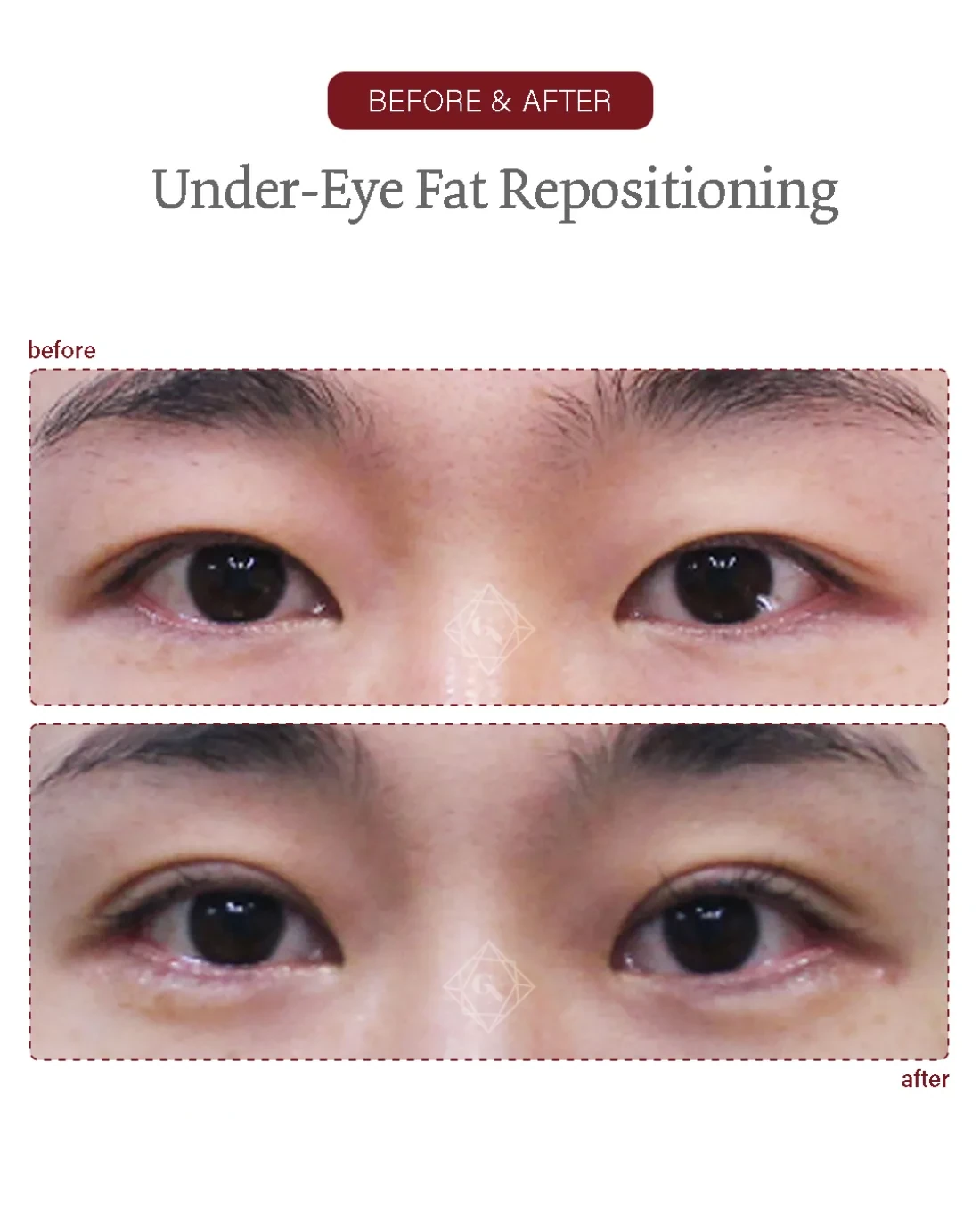
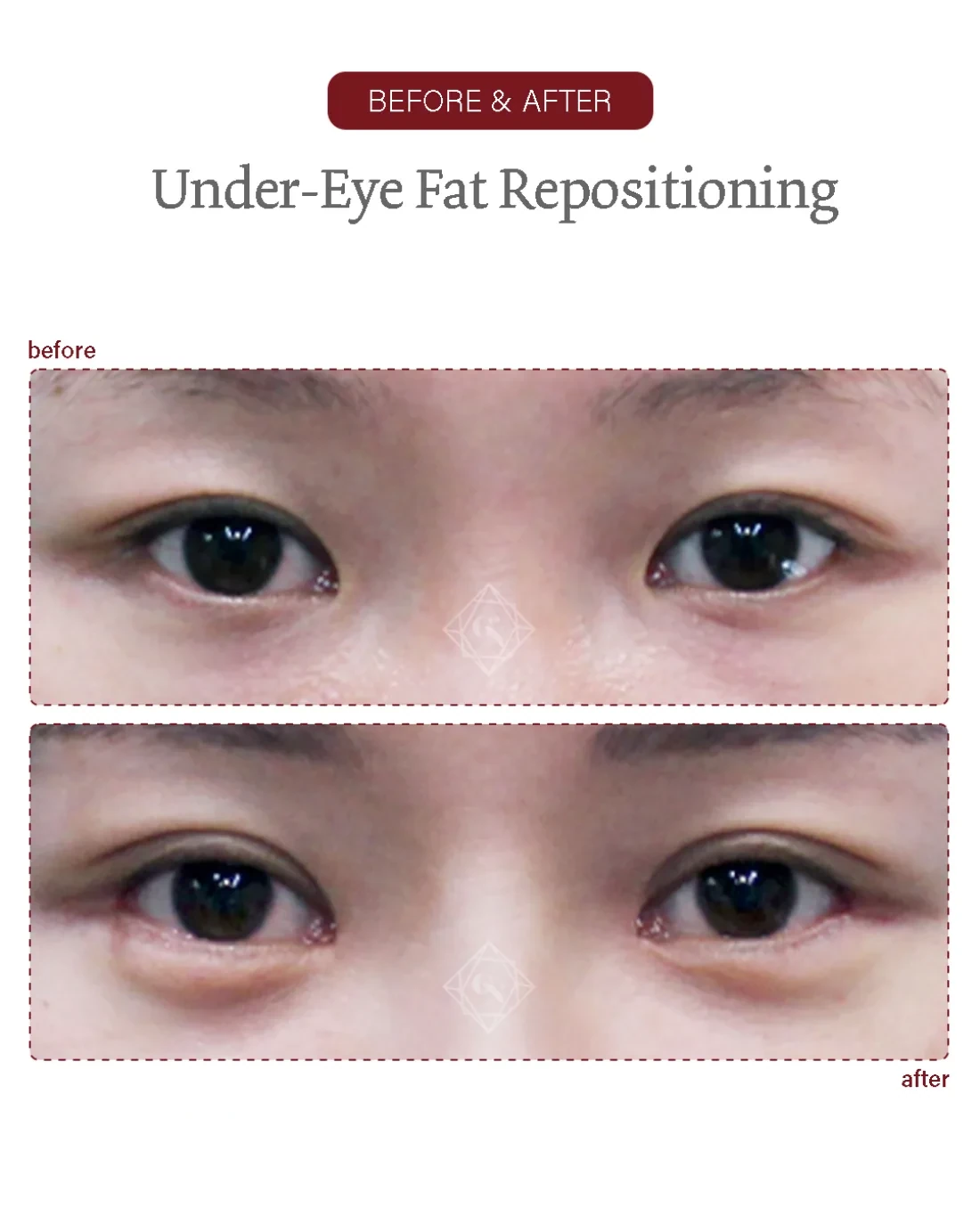
Under-eye fat repositioning before/after of actual Garnet patients (published with consent; each set labelled with date, procedure and clinic). Photographed under comparable conditions. Results, recovery and suitability vary by individual and are not guaranteed.
Prices
Price at Garnet
Under-eye fat repositioning
From₩2,500,000 + VATExcluding VAT (10% VAT is added at payment)Book now
Same price as Korean patients. Prices shown exclude 10% VAT; your written quote, issued after the in-person consultation, shows the full amount payable.
Dr. In-Soo Baek
Director & sole operating surgeon
Korean medical licence no. 77407
Operate on what you came for. Trained at Korea University Medical Center. Every case planned, performed and reviewed by the same hands.
1Operating surgeon
~2Surgeries per day
7Registered techniques
Board-certified plastic surgeon
Plastic surgery training at Korea University College of Medicine & graduate school
Korean Society of Plastic and Reconstructive Surgeons member, in its facial-contour, eye & rhinoplasty groups
Consults, operates and follows up each case himself
Peer-reviewed papers behind the facts on this page. Each describes findings in its own study group — not results at Garnet — and none predicts your own outcome.
Fedok FG. Transconjunctival Lower Blepharoplasty. Facial Plastic Surgery Clinics of North America. 2026. doi:10.1016/j.fsc.2025.08.005
Susanna CN et al. Lower Blepharoplasty. Facial Plastic Surgery Clinics of North America. 2026. doi:10.1016/j.fsc.2026.06.012
Fakih-Gomez N. Lower Blepharoplasty. Facial Plastic Surgery Clinics of North America. 2026. doi:10.1016/j.fsc.2026.06.011
Termanini KM et al. Tear Trough Deformity: Update on Anatomy and Clinical Management. Aesthetic Surgery Journal. 2026. doi:10.1093/asj/sjag070
FAQ
Common questions
What surgery treats under-eye hollows?
It depends on the cause. A puffy bag sitting above a groove is usually treated with under-eye fat repositioning, which moves the bulging fat down into the hollow with no external scar. A genuinely flat hollow with no bulge is softened with a small amount of fat grafting. Many under-eyes need a combination of the two.
Are dark circles fixable with surgery?
Only the structural kind. If the darkness is a shadow cast by a groove or a fat bag, surgery can soften it. If it is pigment in the skin, thin skin showing the vessels beneath, or a lifestyle factor, surgery will not help. Those need skin-focused, non-surgical care instead.
Fat repositioning or fat grafting for hollows — which is better?
Neither is universally better; they treat different problems. Repositioning redistributes fat that is already bulging and is preferred when there is a bag-and-groove. Grafting adds volume back when the under-eye is simply flat and sunken. They are often combined, and which you need is decided by examining your contour.
How do I know if my dark circles are a shadow or pigment?
A rough guide: if the darkness fades when the skin is gently stretched or lit from below, it is mostly a structural shadow that surgery may help; if it stays as a brown or bluish colour, pigment or thin skin is the main cause and surgery will not change it. An in-person or photo assessment confirms this.
Does under-eye fat repositioning leave a scar?
At Garnet it is done through a transconjunctival approach (an incision inside the lower lid), so there is no external scar line and no suture to remove. Swelling and some bruising in the first weeks are normal, with the contour settling over the following weeks and months.
Does grafted fat under the eye last?
Grafted fat is living tissue, so a proportion settles and the rest is gradually reabsorbed; the volume that survives is generally lasting, and results refine over some months. Because the under-eye skin is thin, the placement is deliberately conservative, and a small touch-up is sometimes discussed instead of over-filling at once.
Will surgery completely remove my dark circles?
No procedure can promise a completely uniform, shadow-free under-eye. Surgery can meaningfully soften a structural shadow and give a smoother, fresher look, but some subtlety remains, and any pigment component needs separate care. A sound plan tells you what each step can and cannot change.
Can you assess my under-eyes before I travel to Korea?
Yes. Sending clear, evenly lit photos lets us give a first read on whether your dark circles are structural, and which procedure applies, if any, in an online consultation before you commit to a trip. The surgeon then confirms in person at your in-clinic consultation.
Is under-eye fat repositioning painful?
It is done under appropriate anaesthesia, and because the incision is inside the lid there is no external wound to care for. Most discomfort is mild and short-lived, with swelling and bruising being the main early effects; the surgeon reviews your recovery at structured follow-ups.
Can lower-lid work be combined with treating the bag?
Yes. Repositioning already addresses the bag-and-groove in one step, and where a flat area remains, a little fat grafting can be added in the same plan. The combination is decided in advance by examining the whole under-eye contour, so you know what is being done and why.
My mom recently had a brow lift and lower blepharoplasty with Dr. Baek, and our experience has been wonderful so far. The Garnet team was incredibly kind and welcoming, with Kelly assisting us as our English consultant—she made everything…
I’m so happy I chose this clinic for my lower blepharoplasty. I was traveling from abroad by myself, so I was a little nervous, but from the beginning I felt comfortable and truly cared for. Everyone was kind, patient, and professional…
Came in for an in-person consult and ended up choosing Garnet and Dr.Baek for my non-incisional DES and tiplasty/alarplasty. I communicated with Kelly (English consultant) from the start till now (3 weeks post-op). She really help me feel…
My under-eyes have been sagging and folding for years... I tried to cover it up with makeup, but it actually got stuck in the wrinkles and made it stand out even more. While going for consultations, I noticed that the bigger the hospital…
If you are not sure whether your dark circles are a fixable hollow or something surgery can't change, send clear, evenly lit photos for a no-obligation assessment of the cause before you plan a trip.
Send photos and your question before you travel. An English-speaking coordinator reviews every enquiry and replies with guidance on whether under-eye surgery is appropriate for you, the likely plan and timing.
✓ Reviewed by the clinic coordinator, not a bot
✓ Photo-based pre-assessment before you fly
✓ Foreign-patient scheduling & after-care
✓ One surgeon for consultation, surgery and follow-up
Prefer to chat now? Reach the coordinator directly:








 T S7 months ago



