Corset platysmaplasty repairs the neck muscle under anaesthesia, so you feel nothing during the operation. The days that follow are dominated by tightness and swelling, with little sharp pain, and that discomfort is manageable and steadily eases.
The short answer
You feel nothing during the operation: corset platysmaplasty is done under anaesthesia, so there is no pain while the muscle is repaired.
The dominant sensation afterwards is tightness and pressure across the front of the neck. That tightness is a sign the corset is doing its job.
Discomfort is typically worst in the first couple of days, then eases steadily; most patients manage well with the prescribed pain relief.
Knowing what is normal, and the few red flags that are not, is what keeps the recovery calm.
Is corset platysmaplasty painful? What patients report
For most patients, corset platysmaplasty is far more comfortable than they fear. The procedure tightens the neck muscle through a small incision under the chin (submental), and what people actually report afterwards is tightness, pressure and swelling across the front of the neck. Sharp, stabbing pain is uncommon. That tightness is the corset effect: the re-tightened platysma muscle pulls the neck into a flatter, firmer position. It feels unfamiliar, but it is a normal and expected sensation and does not mean something is wrong.
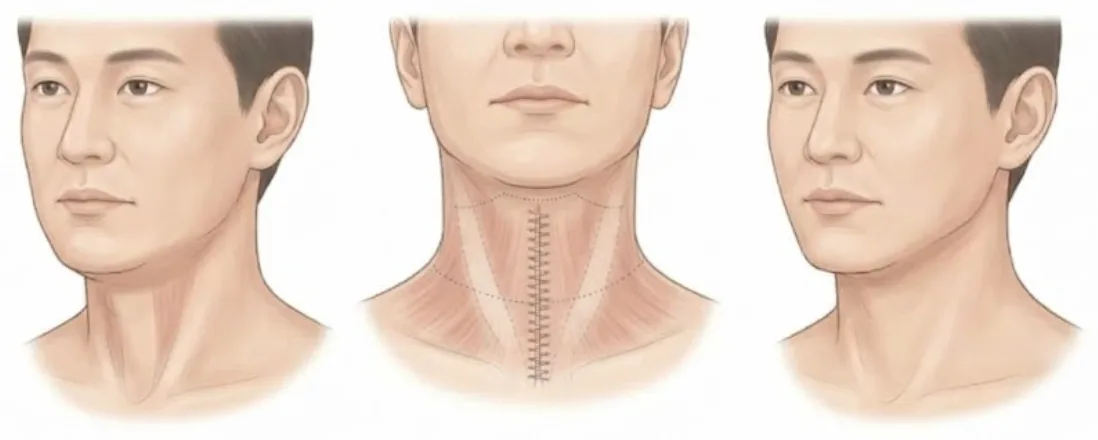
Illustration: the neck muscle (platysma) is drawn back together along the midline, like lacing a corset, to firm the neck.
It is important to separate two different things people lump together as ‘pain’. During the operation itself you feel nothing, because you are under anaesthesia. After surgery, the discomfort is real but moderate and predictable, and it is at its most noticeable in the first day or two before easing steadily over the following days. This is the pattern expected of a muscle-plication procedure; the broader healing arc is set out on the sibling recovery timeline page.
We avoid promising it will be comfortable, because everyone’s pain tolerance differs. What we can say is that the sensations are well understood, that they are managed with prescribed pain relief, and that the great majority of patients describe the experience as ‘tight and swollen’ more than ‘painful’. The parent corset platysmaplasty page covers the procedure overview; this page goes deep on comfort.
Anaesthesia
What anaesthesia is used for corset platysmaplasty?
Corset platysmaplasty is carried out so that you feel nothing while the muscle is being repaired. Depending on the extent of the work and whether it is combined with other neck or facial surgery, the anaesthetic plan is tailored to keep you comfortable and safe throughout. It is agreed with you in advance, before the day of surgery. The aim is a calm, controlled procedure in which the surgeon can do precise, unhurried muscle work while your comfort is fully managed.
The specific anaesthetic approach is something the surgeon and the team confirm with you at consultation, taking into account your health, the scope of surgery and how much is being done in one sitting. Because Garnet is a single-surgeon clinic that caps the day at two operations, your case is not rushed between rooms. The surgeon has time to plan anaesthesia and surgery around you.
What matters for your peace of mind is that the choice of anaesthesia is a medical decision made for safety and comfort, and that you can ask exactly how it will work before you commit. International patients can raise all of this in an online consultation, so there are no surprises when you arrive in Seoul.
Surgery day
What surgery day actually feels like
On the day, you will not feel the incision, the muscle plication or the stitching; that is the whole point of anaesthesia. The submental incision is small and placed under the chin, where it is hidden in the natural shadow beneath the jaw, and the surgeon works through it to re-approximate the separated muscle edges in the midline like the lacing of a corset. From your perspective, the surgical part is uneventful: you are comfortable throughout.
As the procedure ends and you become more alert, the first sensations are usually tightness and pressure around the neck, often with a supportive dressing or garment holding everything snug. Some grogginess is normal depending on the anaesthetic used. The team monitors you as you settle, and you are given clear, written aftercare guidance before you leave so you know exactly what to expect that evening and over the next few days.
Many international patients worry most about this transition from surgery to the first hours afterwards. In practice it is calm and well-supported, and at a single-surgeon clinic the same surgeon who operated is the one overseeing your immediate recovery. The first full day of healing, and what each day after looks like, is detailed on the recovery timeline page.
Recovery
How much discomfort is there during recovery?
The first one to two days are when discomfort is most noticeable: a tight, swollen, slightly bruised feeling across the front of the neck, sometimes with a sense of pressure when you swallow or turn your head. This is the muscle repair settling and the tissues reacting normally to surgery. Patients generally describe it as an ache and a tightness, and it responds well to the pain relief you are prescribed.
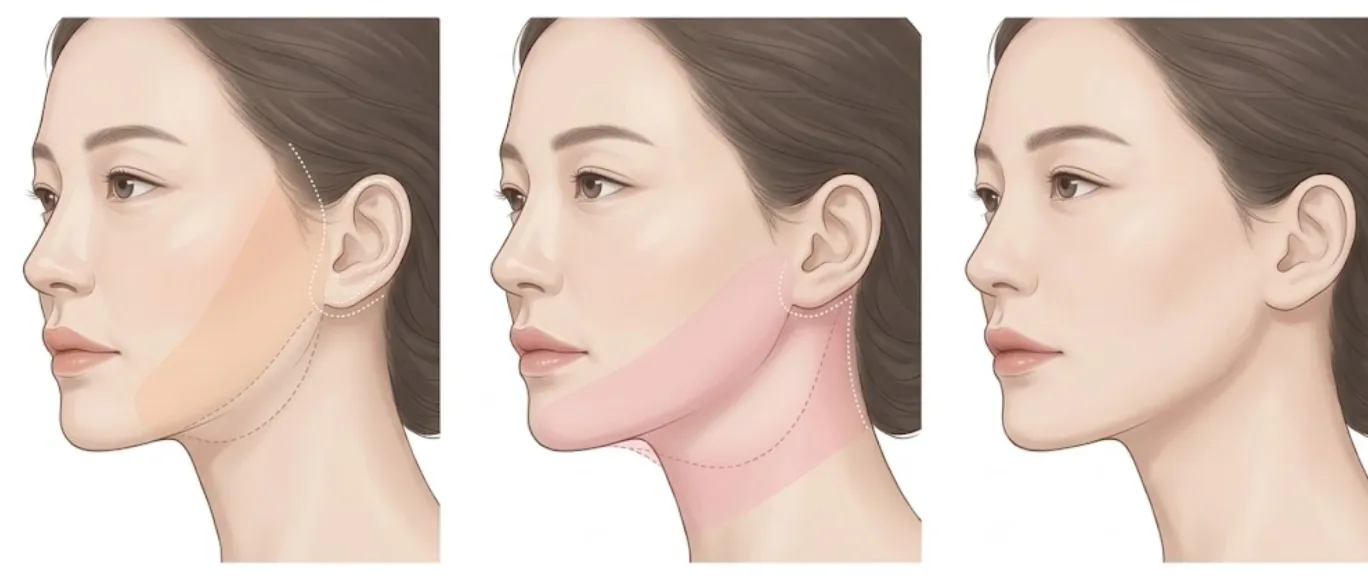
Illustration: through a fine line around the ear (dotted), the sagging lower face and neck are lifted up and back toward the ear (shaded); the dashed outline shows the old contour.
From around the third day, most patients notice the discomfort easing as the worst of the early swelling passes, even though tightness lingers longer. The neck can feel firm or ‘corseted’ for a few weeks as everything heals into place. Movement of the neck may feel restricted at first and then loosens gradually. Numbness or odd sensations over parts of the neck can occur as nerves recover and usually fade with time; this is expected.
Corset platysmaplasty works on the muscle and does not remove large amounts of tissue, so the discomfort profile is moderate compared with bigger neck surgery. If skin laxity also needs addressing and a fuller neck lift is performed, recovery sensations can be more involved, which is one reason the surgeon is careful to recommend the right operation for your anatomy, as discussed on the who is it for page.
Managing it
Managing comfort — and the red flags
Comfort is managed with prescribed pain relief, head elevation, gentle activity restriction and the supportive garment, which together control swelling and the tight feeling. Taking medication as directed before discomfort peaks, sleeping propped up, avoiding strenuous activity and following the aftercare instructions all make a real difference. Most patients find that taking pain relief on schedule, before the discomfort builds, keeps them comfortable through the early days.
Equally useful is knowing what is normal versus what is not. Tightness, moderate swelling, bruising, numbness and an aching feeling are all expected and improve over time. What is not expected, and should prompt you to contact the clinic promptly, is severe or rapidly worsening pain, marked one-sided swelling, signs of infection such as spreading redness, heat or fever, or any breathing or swallowing difficulty. Clear red-flag guidance turns a normal recovery into a calm one.
For international patients this is exactly why after-care continuity matters: you should always know who to contact. At a single-surgeon clinic the operating surgeon stays reachable and can continue to review you by messenger after you fly home. How that remote follow-up works, and how long to stay in Korea first, is covered on the international patients page.
At Garnet
How Garnet keeps you comfortable
Garnet is a single-surgeon clinic in Apgujeong, Seoul. Dr. In-Soo Baek is a board-certified plastic surgeon (Korean medical licence no. 77407) and the only operating doctor. He sees you at consultation, repairs the platysma through the incision under your chin himself and reviews every follow-up. For comfort that continuity matters: the surgeon who placed the muscle repair is the same person judging your swelling and discomfort afterwards, with structured reviews at 1, 3 and 6 months.
Because the clinic caps the day at two surgeries, with one patient seen at a time, your anaesthesia and recovery are not rushed between rooms. There is unhurried time to plan how you will be kept comfortable and to answer your questions in full. A dedicated coordinator stays with you from consultation through recovery, which for nervous international patients removes much of the anxiety that amplifies the experience of pain.
If your main worry is pain and anaesthesia, the ideal next step is to ask directly. You can send photos and questions for a no-obligation pre-assessment through an online consultation, so you know exactly what to expect before you ever travel to Seoul.
Real Results
Before & After
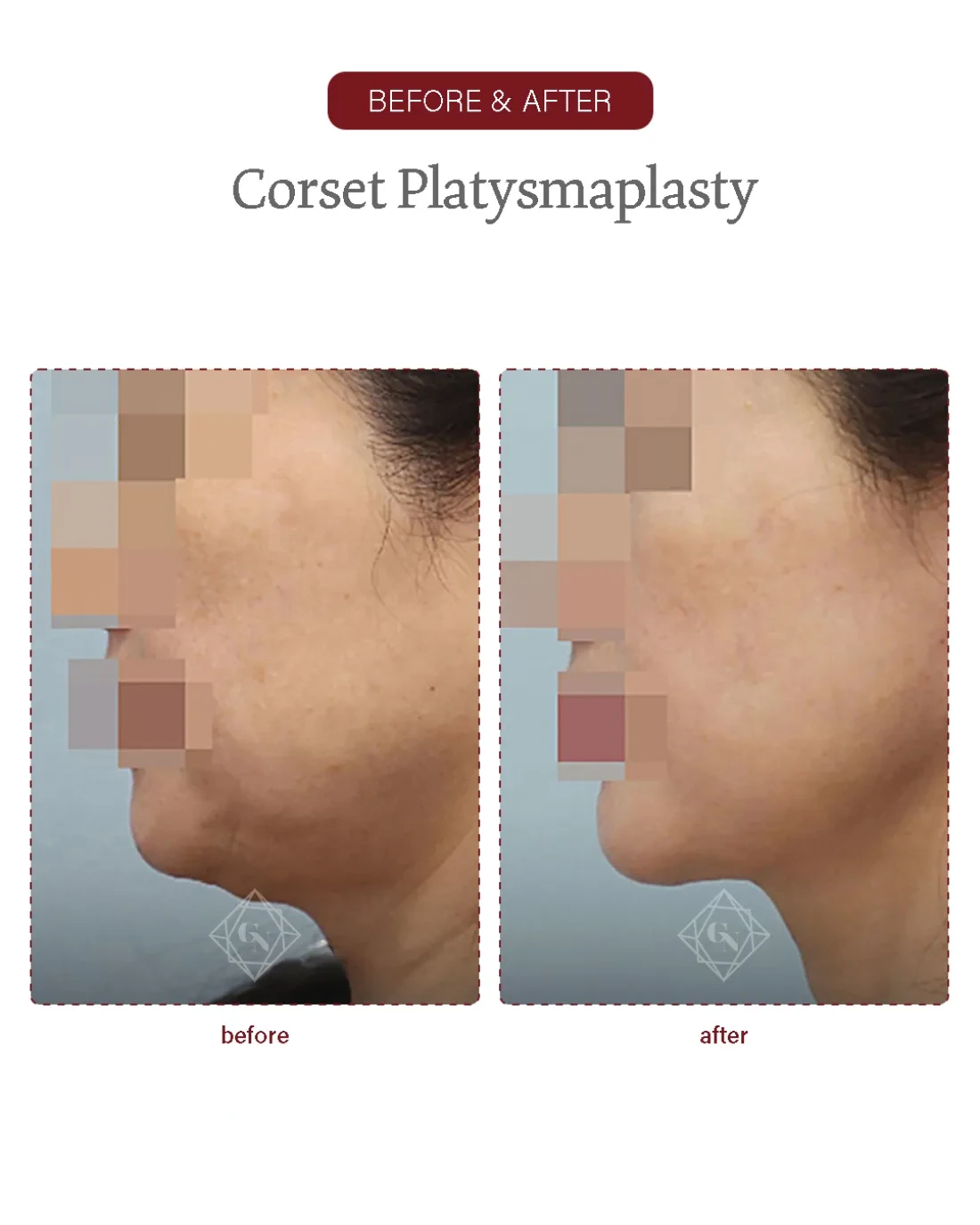
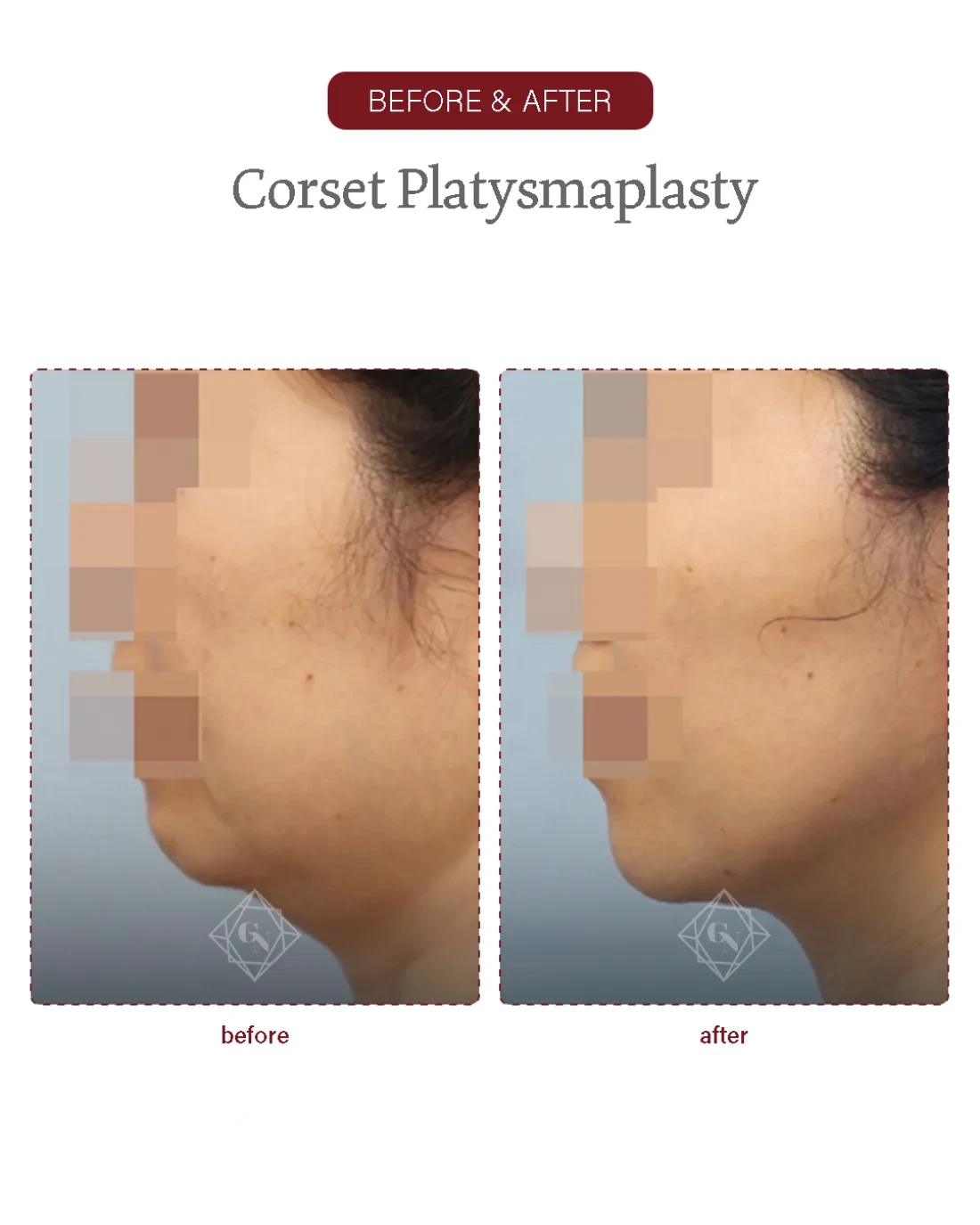
Corset platysmaplasty results of actual Garnet patients (published with consent). Results, recovery and suitability vary by individual, because skin quality, muscle laxity and neck shape differ, and outcomes are not guaranteed.
Dr. In-Soo Baek
Director & sole operating surgeon
Korean medical licence no. 77407
Operate on what you came for. Trained at Korea University Medical Center. Every case planned, performed and reviewed by the same hands.
1Operating surgeon
~2Surgeries per day
7Registered techniques
Board-certified plastic surgeon
Plastic surgery training at Korea University College of Medicine & graduate school
Korean Society of Plastic and Reconstructive Surgeons member, in its facial-contour, eye & rhinoplasty groups
Consults, operates and follows up each case himself
Peer-reviewed papers behind the facts on this page. Each describes findings in its own study group — not results at Garnet — and none predicts your own outcome.
Berry MG et al. Platysma-SMAS plication facelift. Journal of Plastic, Reconstructive & Aesthetic Surgery. 2010. doi:10.1016/j.bjps.2009.02.067
Henley JL et al. Contralateral Platysma Suspension. Archives of Facial Plastic Surgery. 2005. doi:10.1001/archfaci.7.2.119
Feldman JJ. Corset Platysmaplasty. Plastic and Reconstructive Surgery. 1990. doi:10.1097/00006534-199003000-00001
FAQ
Common questions
Is corset platysmaplasty painful?
Most patients find it far more comfortable than they feared. You feel nothing during the operation because it is done under anaesthesia, and afterwards the dominant sensation is tightness and pressure across the neck. Discomfort is most noticeable in the first day or two and then eases steadily; it is well managed with prescribed pain relief.
What anaesthesia is used for corset platysmaplasty?
The procedure is done so that you feel nothing while the muscle is repaired, and the exact anaesthetic plan is tailored to the extent of surgery and your health. It is agreed with you in advance, before the day of surgery. The goal is a calm, controlled procedure with your comfort and safety fully managed throughout.
Will I feel anything during the surgery?
No. You will not feel the incision, the muscle plication or the stitching, because you are under anaesthesia. From your perspective the surgical part is uneventful. You are comfortable throughout, and the first sensation you notice afterwards, as you become more alert, is usually tightness.
Why does my neck feel so tight after surgery?
Tightness comes from the corset effect, where the re-tightened platysma muscle holds the neck in a flatter, firmer position, plus normal swelling. It feels unfamiliar but it is expected and a sign the repair is doing its job. The firmness eases over the following weeks as the tissues settle and heal into place.
How long does the discomfort last?
Discomfort is usually worst for the first one to two days, then eases noticeably from around the third day as early swelling passes. A tight, ‘corseted’ feeling can linger for a few weeks while everything heals. Most patients are managing comfortably with prescribed pain relief well before the tightness fully resolves.
How is the pain managed?
With prescribed pain relief, head elevation, gentle activity restriction and a supportive garment that controls swelling and the tight feeling. Taking medication as directed before discomfort peaks, sleeping propped up and following the written aftercare instructions all help. Taking pain relief on schedule keeps most patients comfortable.
Is numbness after corset platysmaplasty normal?
Yes. Numbness or altered sensation over parts of the neck can occur as nerves recover from surgery and usually fades with time. It is an expected part of recovery. Persistent, severe or worsening symptoms should always be raised with the clinic, but mild numbness that gradually improves is part of normal healing.
What pain or symptoms are not normal?
Severe or rapidly worsening pain, marked one-sided swelling, signs of infection such as spreading redness, heat or fever, or any breathing or swallowing difficulty are not expected and should prompt you to contact the clinic promptly. Tightness, moderate swelling, bruising and numbness that improve over time are normal.
Is it more painful than a full neck lift?
Generally the discomfort is more moderate, because corset platysmaplasty works on the muscle and does not remove large amounts of tissue. If skin laxity also needs addressing and a fuller neck lift is performed, recovery sensations can be more involved. The surgeon recommends the operation that fits your anatomy and does not default to the bigger procedure.
Can I ask about pain and anaesthesia before travelling?
Yes. You can raise every question about anaesthesia, comfort and recovery in a no-obligation online consultation before you book, and send photos for a pre-assessment. International patients are encouraged to do this so there are no surprises when they arrive in Seoul.
My mom recently had a brow lift and lower blepharoplasty with Dr. Baek, and our experience has been wonderful so far. The Garnet team was incredibly kind and welcoming, with Kelly assisting us as our English consultant—she made everything…
I’m so happy I chose this clinic for my lower blepharoplasty. I was traveling from abroad by myself, so I was a little nervous, but from the beginning I felt comfortable and truly cared for. Everyone was kind, patient, and professional…
Came in for an in-person consult and ended up choosing Garnet and Dr.Baek for my non-incisional DES and tiplasty/alarplasty. I communicated with Kelly (English consultant) from the start till now (3 weeks post-op). She really help me feel…
My under-eyes have been sagging and folding for years... I tried to cover it up with makeup, but it actually got stuck in the wrinkles and made it stand out even more. While going for consultations, I noticed that the bigger the hospital…
Send photos and your question before you travel. An English-speaking coordinator reviews every enquiry and replies with guidance on whether surgery is appropriate, the likely plan and timing.
✓ Reviewed by the clinic coordinator, not a bot
✓ Photo-based pre-assessment before you fly
✓ Foreign-patient scheduling & after-care
✓ One surgeon for consultation, surgery and follow-up
Prefer to chat now? Reach the coordinator directly:








 T S7 months ago



