After corset platysmaplasty, a visibly tighter jawline and neck show early, once the dressing comes off. The final, settled contour emerges gradually as swelling resolves over the months that follow.
The short answer
A tighter, more defined neckline is usually visible once the dressing comes off, though early swelling masks it.
Corset platysmaplasty corrects the vertical platysmal banding by stitching the muscle in the midline, so the change you see is in the muscle structure beneath the skin.
Most of the swelling settles over the first weeks; the neck and jaw contour keeps refining for roughly three to six months.
At a single-surgeon clinic the same surgeon reviews your result at 1, 3 and 6 months, so progress is judged against your own starting point.
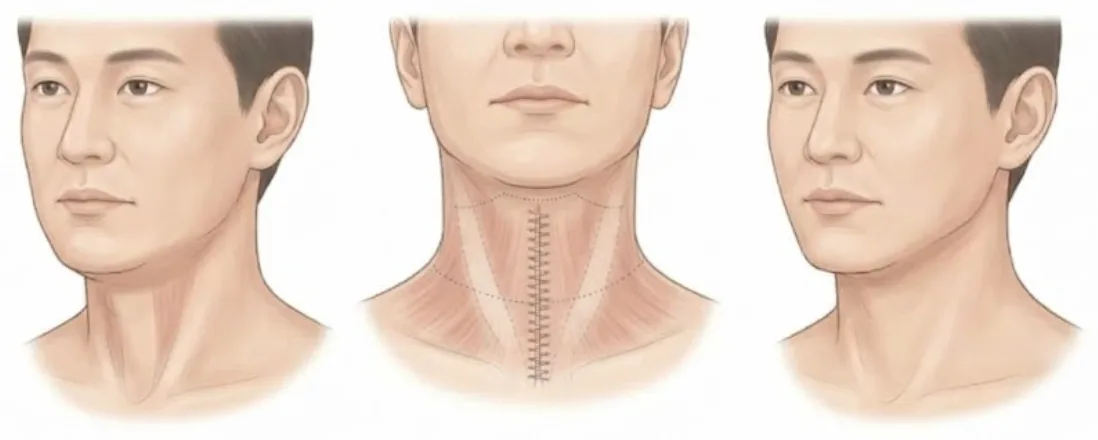
To understand the timeline, it helps to know what the surgery does. Corset platysmaplasty tightens the platysma, the broad muscle across the front of the neck, by drawing its two edges together and stitching them in the midline, like lacing a corset. This is done through a single small incision under the chin. The result is a re-defined angle between the chin and neck and a smoother line where vertical 'bands' used to show.
Illustration: the neck muscle (platysma) is drawn back together along the midline, like lacing a corset, to firm the neck.
Because the change is to the muscle structure beneath the skin surface, the improvement you eventually see is real and structural. But that same depth is why it takes time: the tissues need to settle, swelling has to resolve, and the new neckline reveals itself gradually. The full technique is set out in the corset platysmaplasty overview; this page focuses on the timeline of seeing it.
One framing helps throughout: 'result' is not a single moment but a curve. You will look better than before quite early, and then keep improving. Judging your neck too soon, while it is still swollen, gives an unfairly harsh impression of work that is still settling.
The first days and weeks
What you see in the first days and weeks
When the dressing comes off, many patients already see a tighter, more defined jaw-to-neck angle; the muscle has been tightened, so the underlying change is there immediately. At the same time the area is swollen and firm, and that swelling rounds out and softens the contour, hiding some of what was achieved. It is completely normal for the neck to look fuller before it looks sharper.
Through the first one to two weeks, swelling is at its peak and then begins to ease; bruising, if any, fades; and the under-chin area stays firm. This is also when sutures are usually removed, with timing confirmed by your surgeon. The neck can feel tight and numb, which is expected as the tissues settle around the new muscle position.
By the end of the first few weeks, a good portion of the early swelling has gone and the improvement becomes more convincing. This tracks closely with the wider corset platysmaplasty recovery timeline, which covers activity, garments and what is normal at each stage, because recovery and results move together.
How the contour settles
How the neckline settles over the months
From about one to three months, the deeper swelling continues to resolve and the contour keeps sharpening. The jaw angle looks cleaner, the under-chin fullness reduces, and the neck reads as longer and more defined. Firmness under the chin softens over this window. The 'hardening' some patients feel is part of normal healing.
By the three-to-six-month window, the tightened platysma and neckline are usually most of the way to final. Residual swelling that you might not even notice day-to-day is still leaving, so the neckline becomes a little crisper still. Most patients feel the contour has 'arrived' somewhere in this range, even though refinement continues quietly beyond it.
Because the same surgeon at Garnet reviews you at 1, 3 and 6 months, each of these stages is assessed against photos of your own starting point, so progress is judged on your own neck and jawline. If you want to understand how durable the settled result is, the how-long-it-lasts page covers longevity separately.
When the neck bands soften
When vertical neck bands soften and disappear
The vertical cords many patients dislike are the loose edges of the platysma muscle showing through. Corset platysmaplasty addresses these directly by stitching the muscle edges together in the midline, which is why it is chosen specifically for banding. Loose skin alone calls for a different plan. Immediately after surgery the bands are released, but swelling can blur whether they have fully gone.
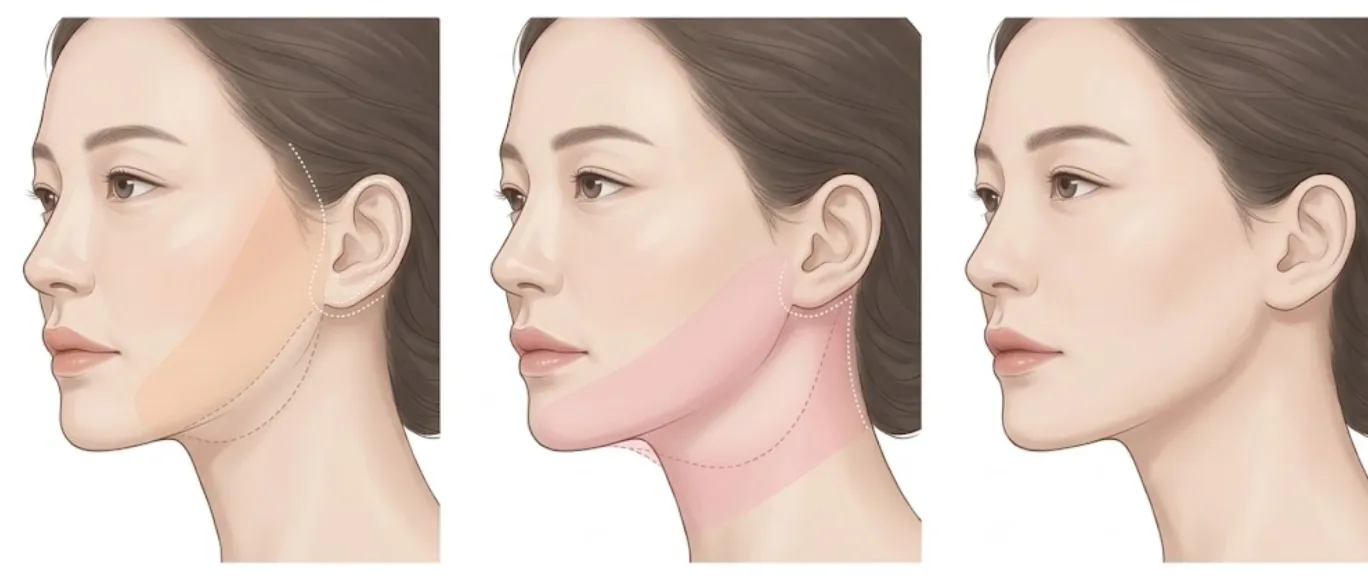
Illustration: through a fine line around the ear (dotted), the sagging lower face and neck are lifted up and back toward the ear (shaded); the dashed outline shows the old contour.
As swelling resolves over the first weeks to a couple of months, the banding typically reads as smoothed and the front of the neck looks flatter and more even. Some patients notice the bands fade gradually over weeks. That gradual softening is the swelling clearing to reveal the muscle's new position.
If skin laxity is your main issue and the bands are minor, the timeline and the procedure can differ. Your surgeon may discuss the broader neck lift, which addresses more skin. Which problem you actually have is something an assessment sorts out before surgery, so your expectations of the result match what the procedure can deliver.
When it is the final result
When can you call it the final result?
A fair rule of thumb: a clearly improved neckline within the first weeks, a convincing contour by three months, and the settled, final result by around six months, with slow refinement continuing afterward. Photographs at your follow-ups make this obvious, because the eye adjusts to gradual change and you can forget how the neck looked at the start.
Several things affect where you land on that curve: how much swelling you carry and how quickly it clears, your skin quality and age, whether liposuction was combined with the muscle work, and how closely you follow aftercare. These factors mostly change how fast your neckline gets there, less where it ends up.
The most reliable way to set your own expectations is a pre-assessment of your specific neck and platysma bands. You can send photos and ask what is realistic for your anatomy and timeline in an online consultation before you decide to travel.
Follow-up at Garnet
How Garnet tracks your result
Garnet is a single-surgeon clinic in Apgujeong, Seoul. As Garnet's only operating surgeon, Dr. In-Soo Baek (board-certified plastic surgeon, Korean medical licence no. 77407) consults on your neck, performs the platysma tightening himself and reviews every follow-up. For a results question that unfolds over months, that continuity is the point: the surgeon who tightened your platysma is the same one assessing how the contour settles at 1, 3 and 6 months.
Because the clinic caps the day at two surgeries, your neck follow-ups are unhurried, and there is no hard sell on more procedures. Garnet is registered with Korea's foreign-patient programme, so international patients can have these milestone reviews done remotely with photos after returning home.
If you are weighing whether the result is worth the trip, start with a clear, no-obligation read on your own neck through an online consultation from abroad, sent with photos of your platysma bands.
Real Results
Before & After
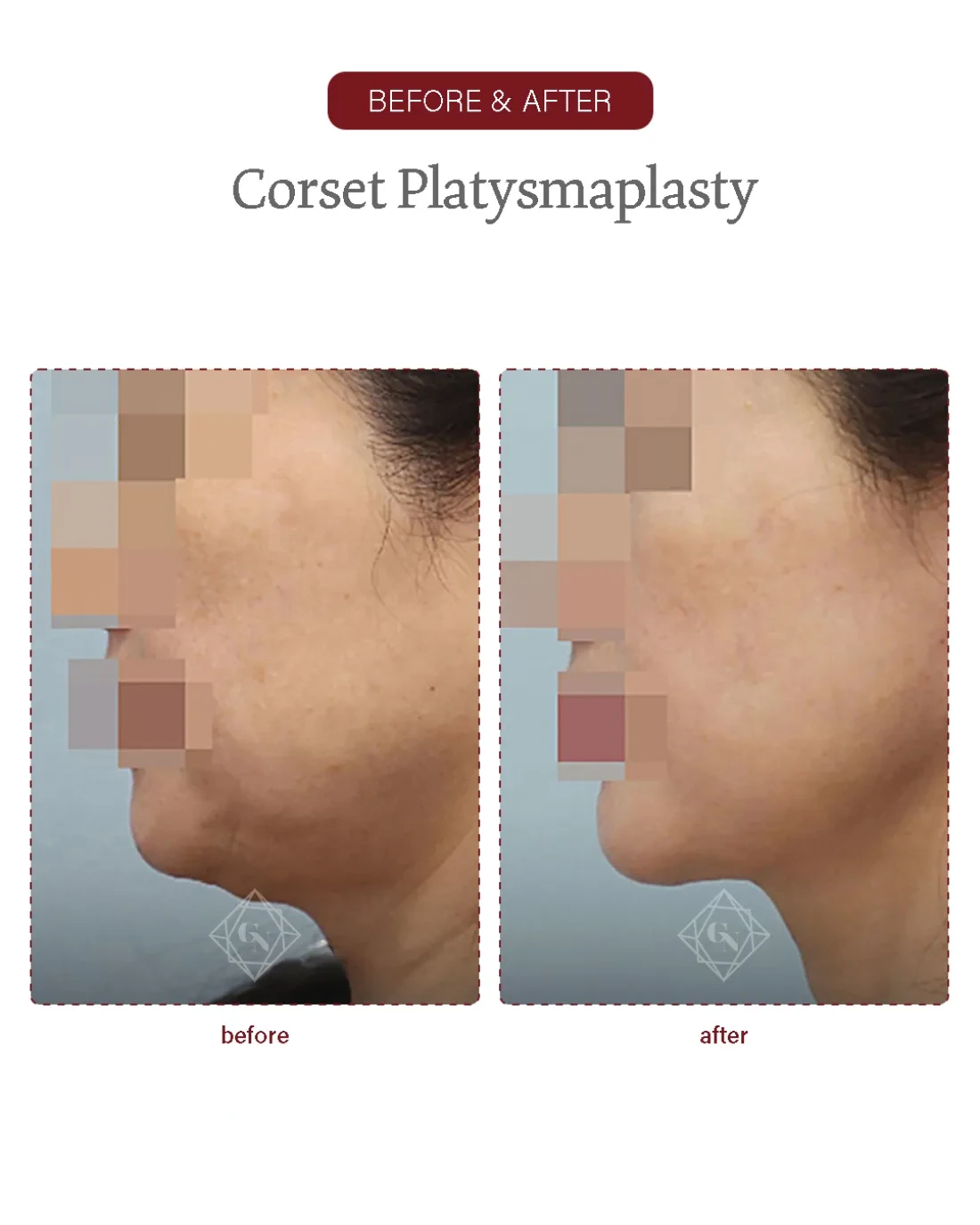
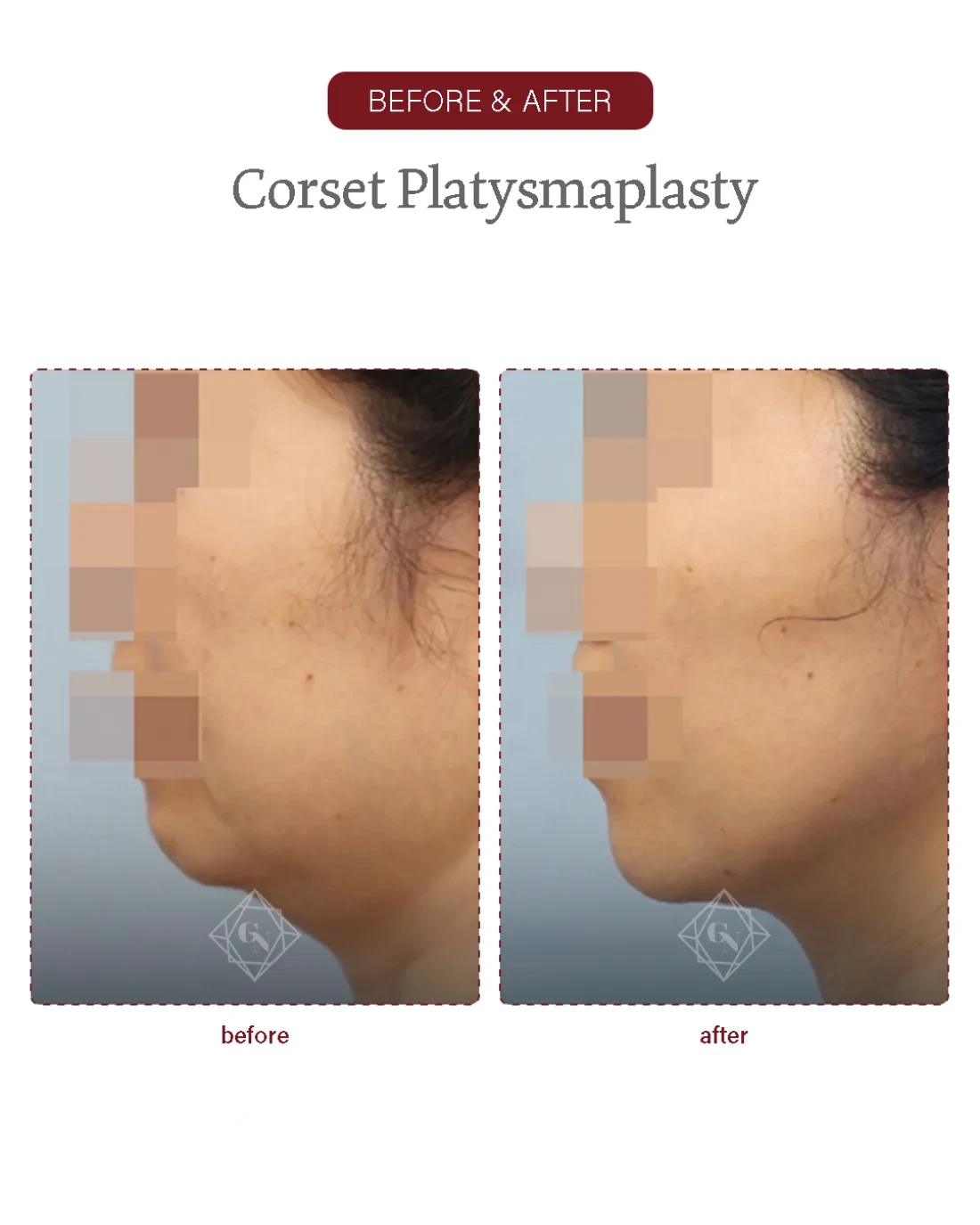
Corset platysmaplasty results of actual Garnet patients (published with consent). Results, recovery and suitability vary by individual, because skin quality, muscle laxity and neck shape differ, and outcomes are not guaranteed.
Dr. In-Soo Baek
Director & sole operating surgeon
Korean medical licence no. 77407
Operate on what you came for. Trained at Korea University Medical Center. Every case planned, performed and reviewed by the same hands.
1Operating surgeon
~2Surgeries per day
7Registered techniques
Board-certified plastic surgeon
Plastic surgery training at Korea University College of Medicine & graduate school
Korean Society of Plastic and Reconstructive Surgeons member, in its facial-contour, eye & rhinoplasty groups
Consults, operates and follows up each case himself
Peer-reviewed papers behind the facts on this page. Each describes findings in its own study group — not results at Garnet — and none predicts your own outcome.
Atiyeh B et al. Surgical Management of Platysma Bands: A Narrative Review of Evolving Concepts and Changing Techniques for Neck Rejuvenation. Aesthetic Plastic Surgery. 2023. doi:10.1007/s00266-023-03604-8
Gerecci D et al. Incorporating Midline Platysmaplasty with Lateral Superficial Muscular Aponeurotic System Facelifting. Facial Plastic Surgery Clinics of North America. 2020. doi:10.1016/j.fsc.2020.03.003
Choi J et al. Modified Medial and Lateral Platysmaplasty. Journal of Craniofacial Surgery. 2020. doi:10.1097/scs.0000000000006515
FAQ
Common questions
When will I see the final results of corset platysmaplasty?
A clearly tighter neckline shows within the first weeks once early swelling settles, a convincing contour by about three months, and the settled, final result by around six months, with slow refinement continuing afterward. The exact pace depends on your anatomy and how quickly your swelling clears.
What do I see right after surgery?
Once the dressing comes off, the underlying muscle tightening is already there, so the jaw-to-neck angle is improved, but swelling makes the neck look fuller and softer than it ultimately will. It is normal for the neck to look fuller before it looks sharper.
When is the swelling gone after corset platysmaplasty?
Most visible swelling eases over the first weeks, with deeper swelling continuing to resolve over one to three months. Residual swelling you may not even notice keeps leaving up to about six months, which is why the contour keeps refining.
When do the vertical neck bands disappear?
The bands are released at surgery because the muscle edges are stitched together, but swelling can blur the result early. They typically read as smoothed over the first weeks to a couple of months as swelling clears to reveal the muscle's new position.
Why does my neck look fuller, not slimmer, at first?
Swelling rounds out and masks the contour in the early phase. The structural change from tightening the platysma is already there underneath. It simply becomes visible as the swelling resolves over the following weeks and months.
What affects how fast I see results?
How much swelling you carry and how quickly it clears, your skin quality and age, whether liposuction was combined with the muscle work, and how closely you follow aftercare. These change the pace more than the final outcome.
How long should I wait before judging my result?
Avoid judging your neck while it is still swollen in the first weeks. A fair assessment is possible by around three months, and the settled result by about six months. Your follow-up photos make the gradual change clear.
Will the same surgeon review my progress?
At Garnet, yes. The same board-certified surgeon who performed your surgery reviews your result at 1, 3 and 6 months, judging it against photos of your own starting point.
Can my result be reviewed after I return home?
Yes. As an international patient you can send photos at each milestone so the same surgeon assesses how the contour is settling remotely, through Korea's foreign-patient programme support.
How long does the result last once it settles?
Corset platysmaplasty produces a structural change to the muscle, so the settled result is durable, though natural ageing continues. Longevity is covered separately on the corset platysmaplasty how-long-it-lasts page.
My mom recently had a brow lift and lower blepharoplasty with Dr. Baek, and our experience has been wonderful so far. The Garnet team was incredibly kind and welcoming, with Kelly assisting us as our English consultant—she made everything…
I’m so happy I chose this clinic for my lower blepharoplasty. I was traveling from abroad by myself, so I was a little nervous, but from the beginning I felt comfortable and truly cared for. Everyone was kind, patient, and professional…
Came in for an in-person consult and ended up choosing Garnet and Dr.Baek for my non-incisional DES and tiplasty/alarplasty. I communicated with Kelly (English consultant) from the start till now (3 weeks post-op). She really help me feel…
My under-eyes have been sagging and folding for years... I tried to cover it up with makeup, but it actually got stuck in the wrinkles and made it stand out even more. While going for consultations, I noticed that the bigger the hospital…
Send photos and your question before you travel. An English-speaking coordinator reviews every enquiry and replies with guidance on whether surgery is appropriate, the likely plan and timing.
✓ Reviewed by the clinic coordinator, not a bot
✓ Photo-based pre-assessment before you fly
✓ Foreign-patient scheduling & after-care
✓ One surgeon for consultation, surgery and follow-up
Prefer to chat now? Reach the coordinator directly:








 T S7 months ago



