A “droopy eyelid” usually means one of two very different things: the muscle that opens the eye is under-powered so the lid margin sits low (ptosis), or the eyelid skin has become loose and simply hangs lower. They can look alike in the mirror, but they are corrected by different operations. This page explains how to tell them apart, which Garnet procedure addresses each, and how a consultation confirms what is actually going on.
The short answer
A droopy eyelid has two main causes: a weak eye-opening muscle (true ptosis), or excess skin resting low over the lid. They need different surgery.
True ptosis is addressed by adjusting the eye-opening muscle (ptosis correction); loose, low-hanging skin is addressed by upper blepharoplasty; sometimes both are present and both are done.
The difference is where the lid margin sits, a clinical sign a surgeon checks in person because a photo cannot settle it.
At Garnet the same board-certified surgeon distinguishes muscle from skin and plans accordingly, so the operation matches the true cause of the droop.
When people say their eyelid is drooping, they are describing an appearance: the eye looks half-closed, tired, sometimes uneven. That appearance comes from two structurally different problems. In one, the levator muscle that lifts the upper eyelid is weak, so the lid margin (the edge of the lid, right at the lashes) rests lower than it should and covers part of the coloured iris. This is true ptosis. In the other, the muscle is working fine, but the eyelid skin above it has become loose and folds down, giving a drooped look even though the lid margin itself is in a normal position.
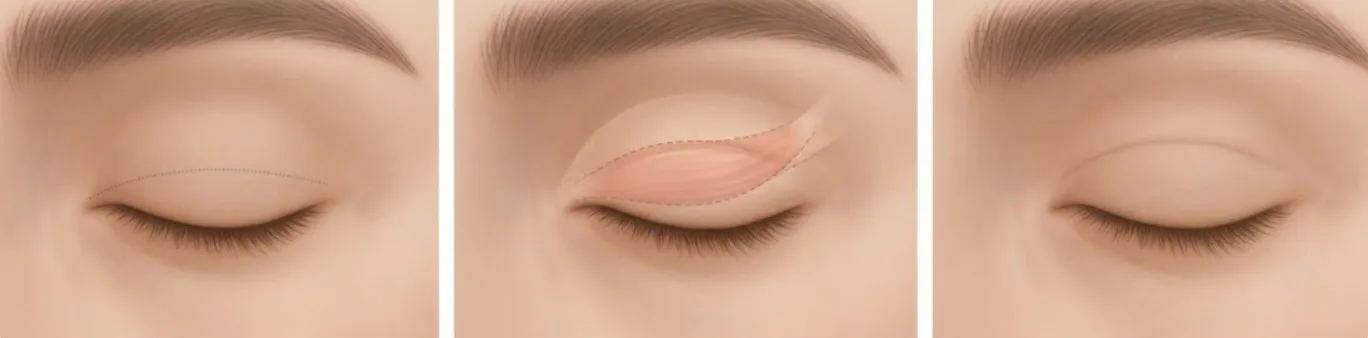
Illustration: through the crease line, the muscle that opens the eye (shown beneath the lid) is tightened so the lid rests higher.
The distinction is not academic. Correcting excess skin does nothing for a weak muscle, and adjusting a muscle does nothing for redundant skin. Doing the wrong one is the classic way a droopy-lid result disappoints. It is also common for both to be present at once, especially with age, in which case both need addressing in the same operation.
The two routes below, ptosis correction for a weak muscle and upper blepharoplasty for excess skin, target these two causes. Understanding the difference makes any consultation far clearer.
Weak muscle
When the eye-opening muscle is weak
If the lid margin itself sits low, covering more of the iris than it should when you look straight ahead, the issue is usually the eye-opening muscle, and the operation for it is ptosis correction. Through an incision in the lid crease, the strength of the levator (eye-opening) muscle is adjusted so the lid opens more fully and the eye looks more awake. It is a precise adjustment, because the goal is symmetry and a natural opening. Lifting as high as possible is not the aim.
Ptosis can be present from birth or develop with age, and it often hides behind what a person assumes is just tired or heavy eyes. Because it changes how far the eye opens, which is a functional change as well as a cosmetic one, it is one of the most important things to identify correctly before any eyelid surgery. At Garnet it is an incisional procedure with sutures removed at around seven days.
No amount of skin removal fixes true ptosis. If the muscle is the problem and only skin is taken away, the eye will still look half-closed. That is why the assessment, not the label, has to come first.
Excess skin
When it is loose, low-hanging skin
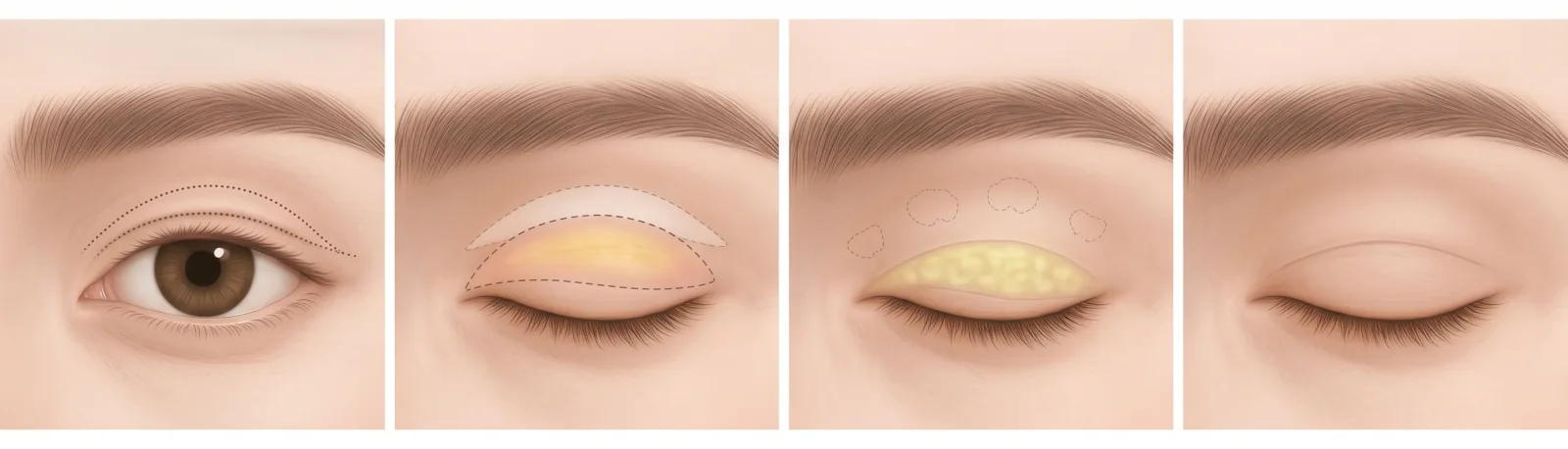
In the other common scenario the muscle is perfectly strong, but the upper-lid skin has stretched and become redundant, so it hangs down over the crease and creates a drooped, heavy look. Here the operation that helps is upper blepharoplasty: through an incision hidden in the natural upper-lid crease, the excess skin is removed and the tissue tidied, restoring a lighter, more open lid. The lid margin was never low; it was just hidden behind the skin.
Illustration: the planned crease is marked, the excess upper-lid skin and selected fat pads are addressed through that line.
Because the incision follows the crease, the line usually settles into the fold and becomes hard to see over the following months. Sutures come out at around seven days. This is the right route when the assessment shows that skin resting low causes the drooping and the lid margin itself sits normally.
When both a weak muscle and excess skin are present, a common combination after middle age, ptosis correction and skin removal are frequently done together in one operation. What the surgeon is deciding at the consultation is which of these, or which combination, is driving your particular droop.
Telling them apart
How to tell ptosis from excess skin
The single most useful sign is where the lid margin sits when you look straight ahead. If the very edge of the lid at the lashes covers more of the iris than normal, that points to a weak eye-opening muscle and true ptosis. If the lid margin is in a normal position but the skin above folds down over it, that points to excess skin. A surgeon confirms this by gently lifting the skin and watching how much the eye actually opens underneath.
You cannot reliably make this call yourself, and neither can anyone from a single photo. That is exactly why an in-person or careful online assessment matters. The routes are not interchangeable: ptosis correction strengthens the muscle, while upper blepharoplasty removes skin. A consultation confirms whether it is one, the other, or both.
A careful surgeon may also tell you the droop is mild, or one-sided, or that a smaller operation than you expected will do. That kind of candid assessment, including whether surgery is warranted at all, is more reassuring than a plan that defaults to the largest option.
What to expect
What correction realistically achieves
Done for the right reason, correcting a droopy eyelid can make the eyes look more open, more awake and more even. Where a weak muscle is the cause, it can also improve how far the eye opens as well as how it looks. There are limits. Perfect symmetry between two eyes is not something anyone can promise; eyes are naturally a little different, and the aim is a balanced, natural result. An identical pair is not the target.
Recovery for the crease-incision procedures at Garnet involves sutures out at around seven days, with swelling and bruising easing over the following two to three weeks and fine settling continuing for a few months. In the early weeks the lids can look a little tight or slightly over- or under-open as swelling resolves, which is why the surgeon's follow-ups matter.
If both muscle and skin are treated together, the plan follows how far the lid margin sits low and how much skin folds over it. The goal throughout is a rested, natural look that still reads as your own eyes.
At Garnet
How Garnet approaches a droopy eyelid
Garnet is a single-surgeon clinic in Apgujeong, Seoul. Dr. In-Soo Baek is a board-certified plastic surgeon (Korean medical licence no. 77407) who examines where your lid margin sits and how far the eye opens, then determines whether the droop is a weak muscle, excess skin, or both. He then plans ptosis correction, skin removal, or a combination accordingly. The same surgeon who assesses you performs the operation and reviews you at follow-up at 1, 3 and 6 months, so the diagnosis and the surgery stay aligned.
Because the schedule is capped at two surgeries a day, the consultation is unhurried, and the emphasis is on a natural, balanced opening that is not over-corrected. Garnet is registered with Korea's foreign-patient programme, so you can start with an online consultation: send photos looking straight ahead and describe when the droop is most noticeable, and you will get a clear view of the likely cause before you plan any travel.
Real Results
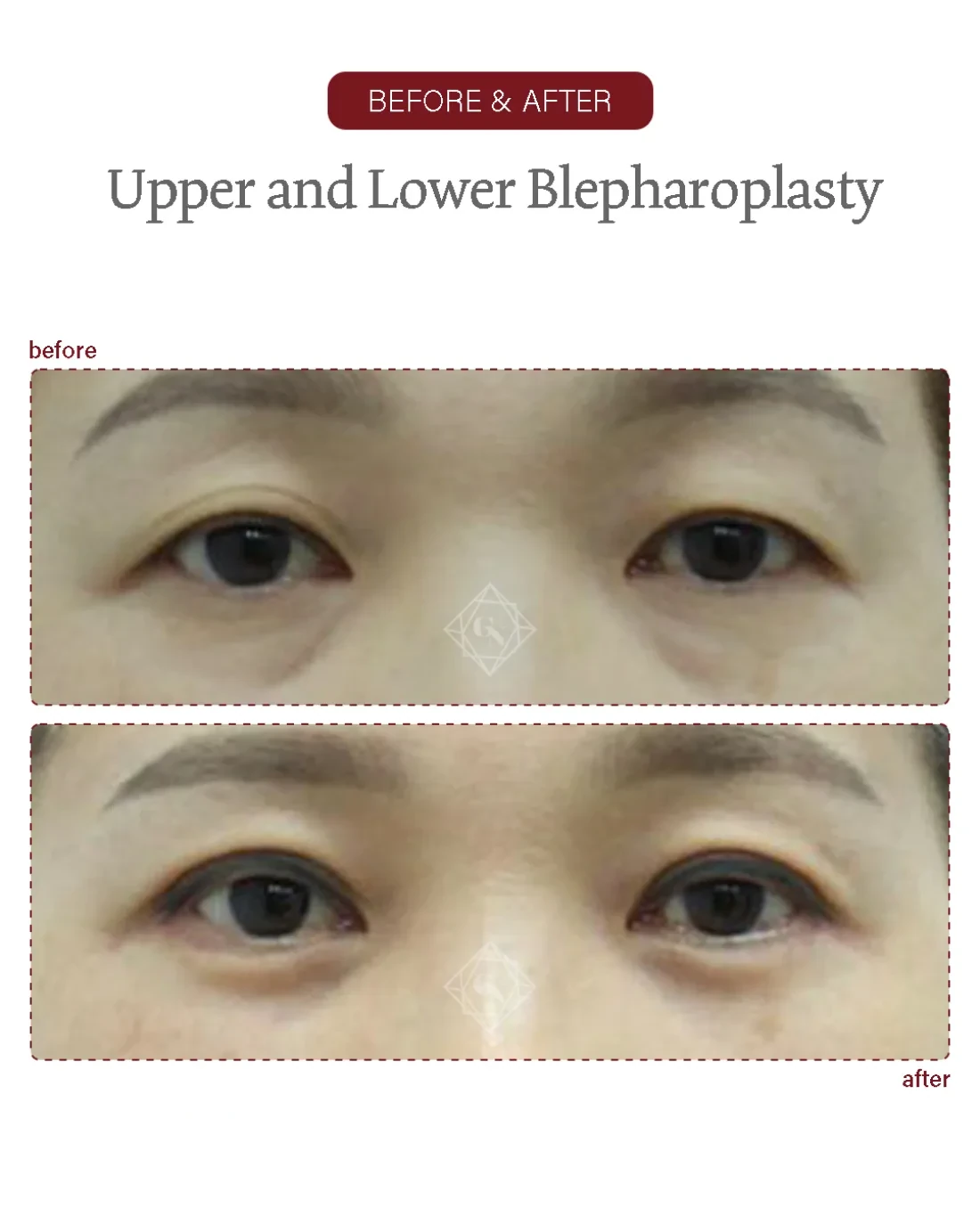
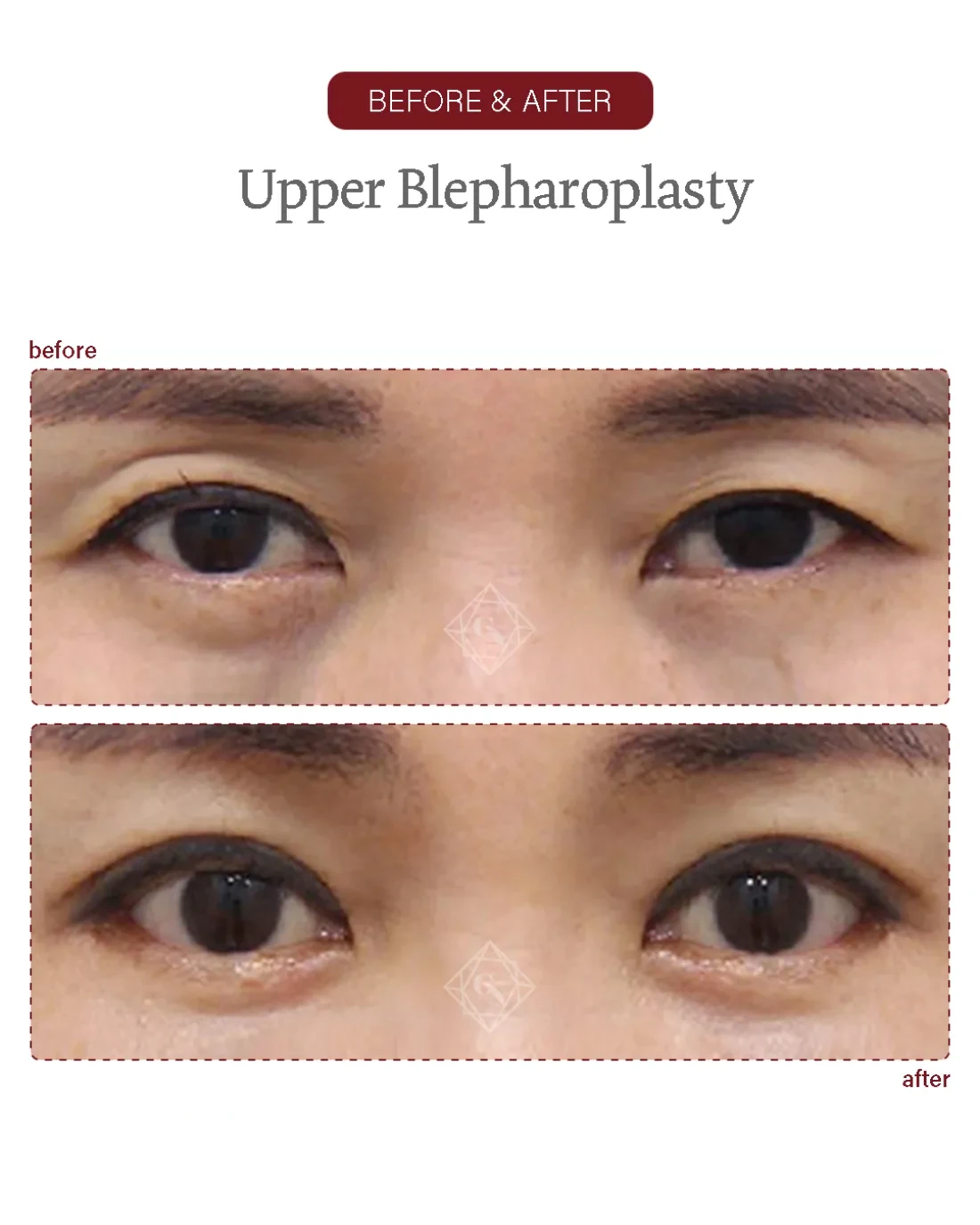
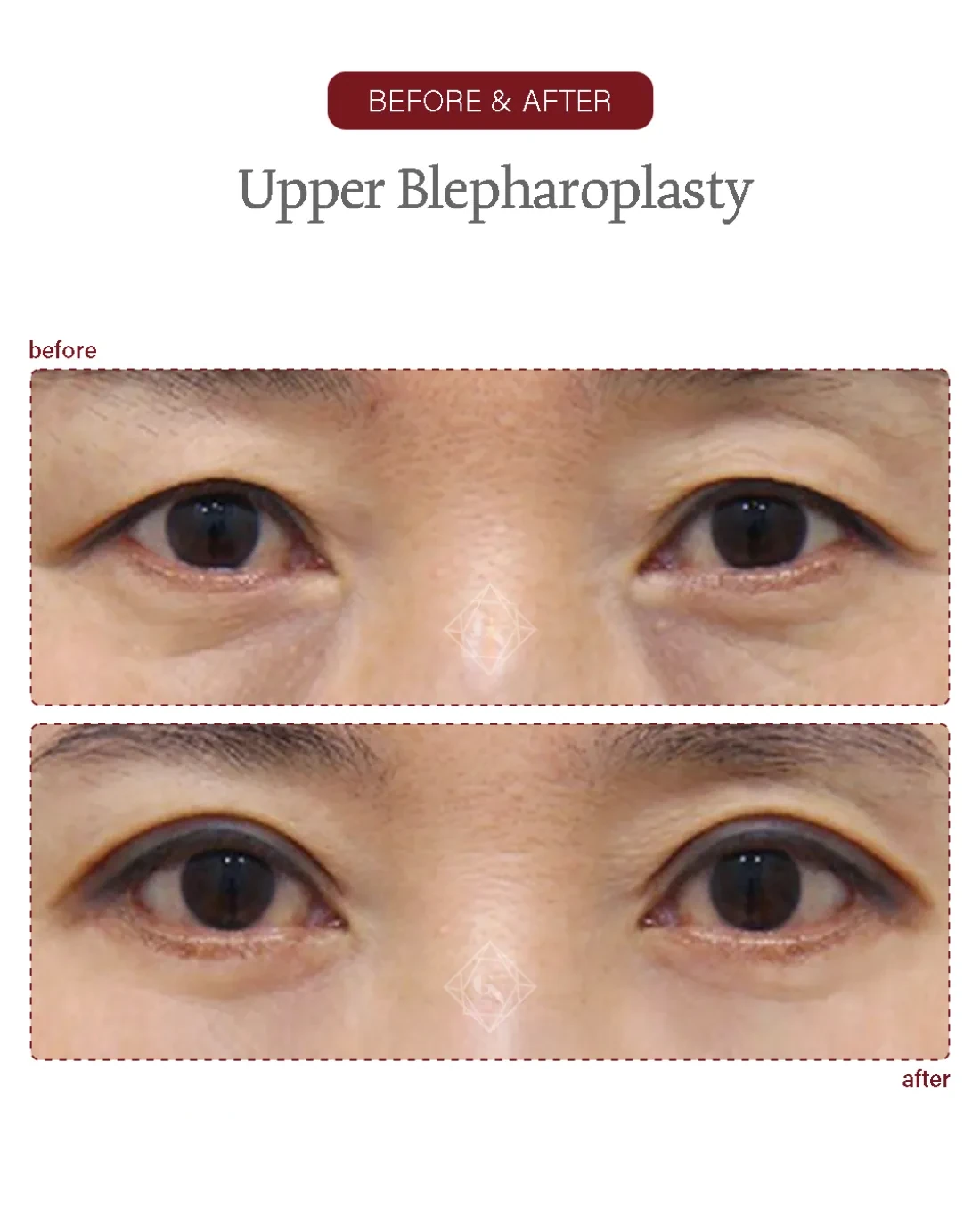
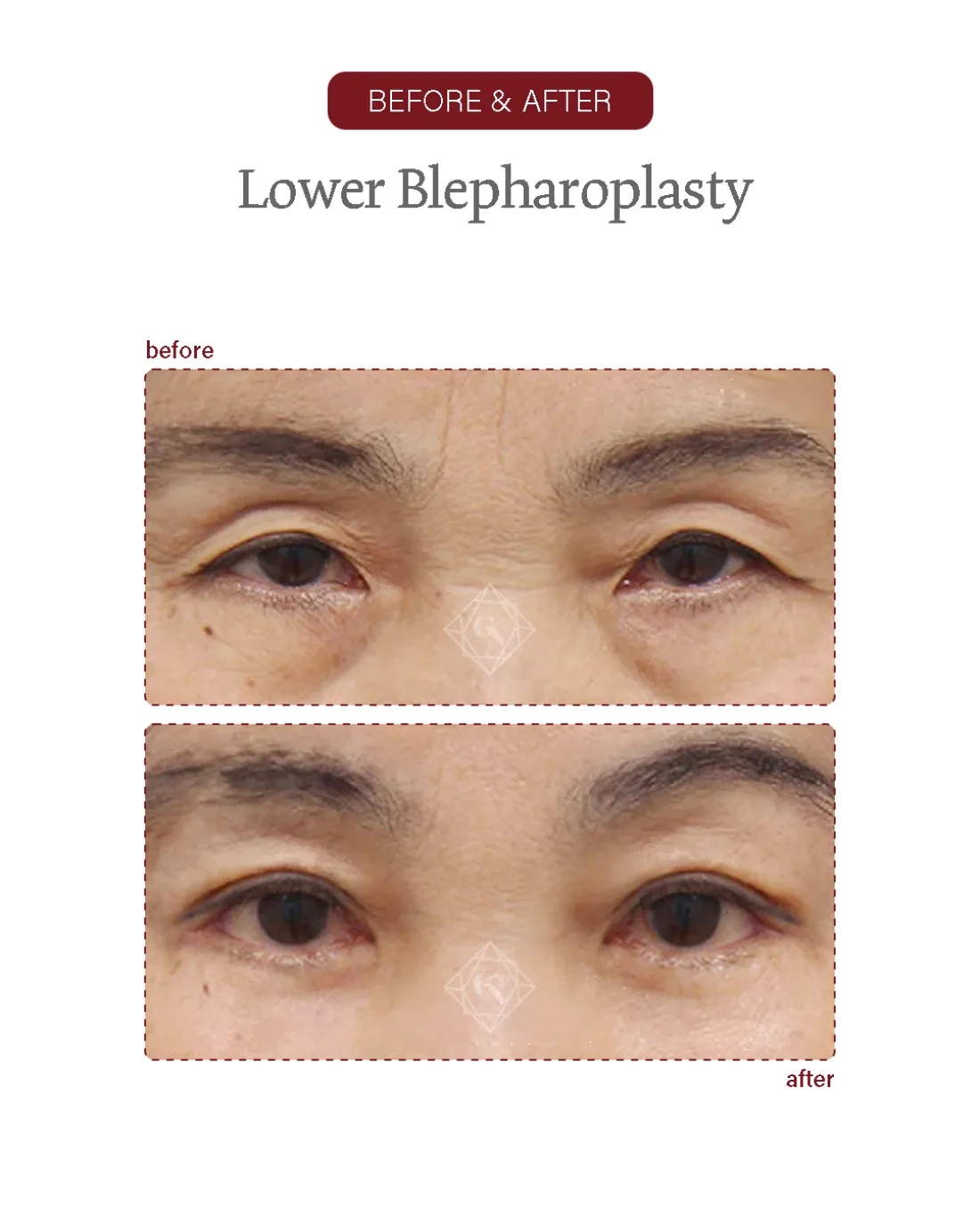
Before & After
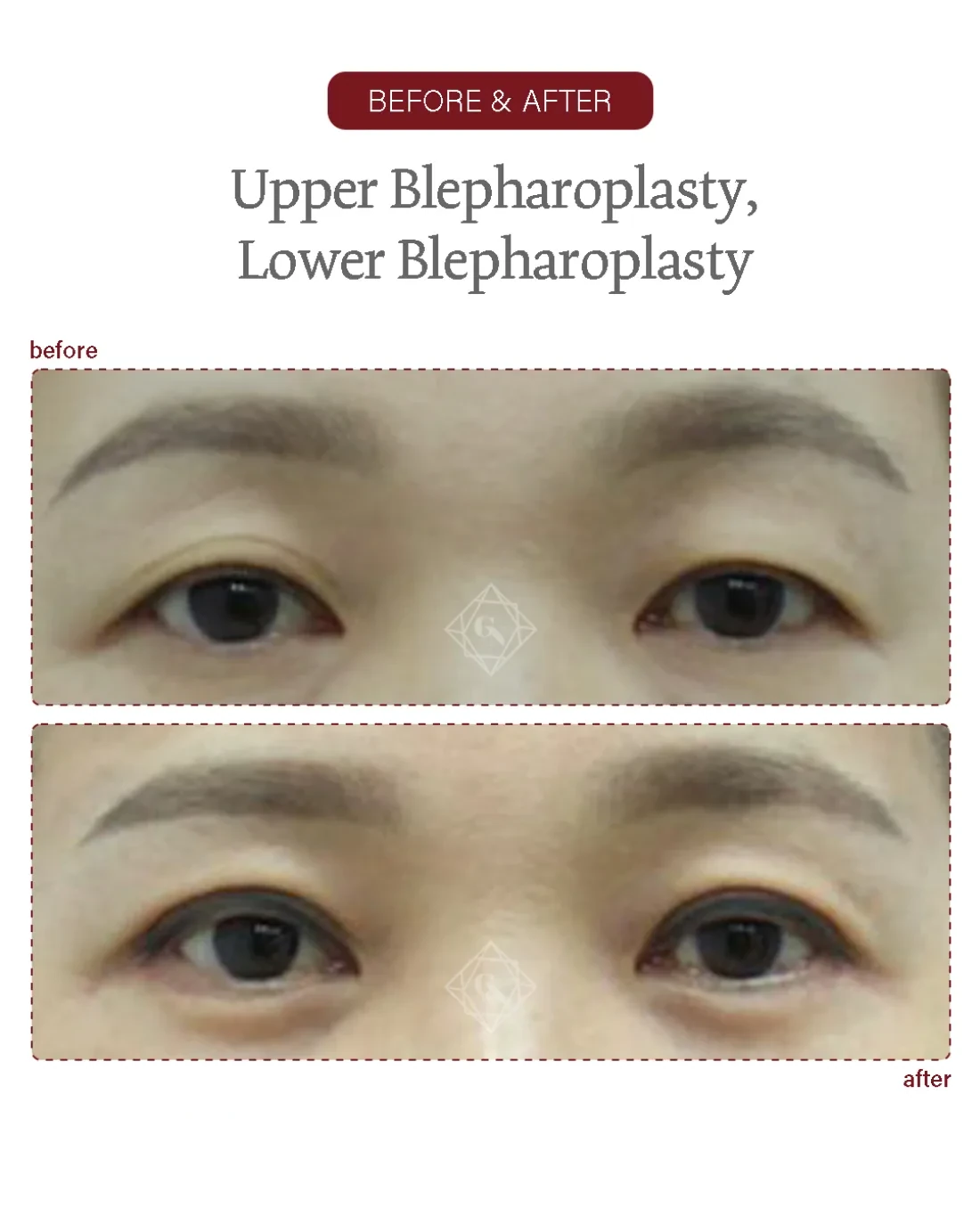
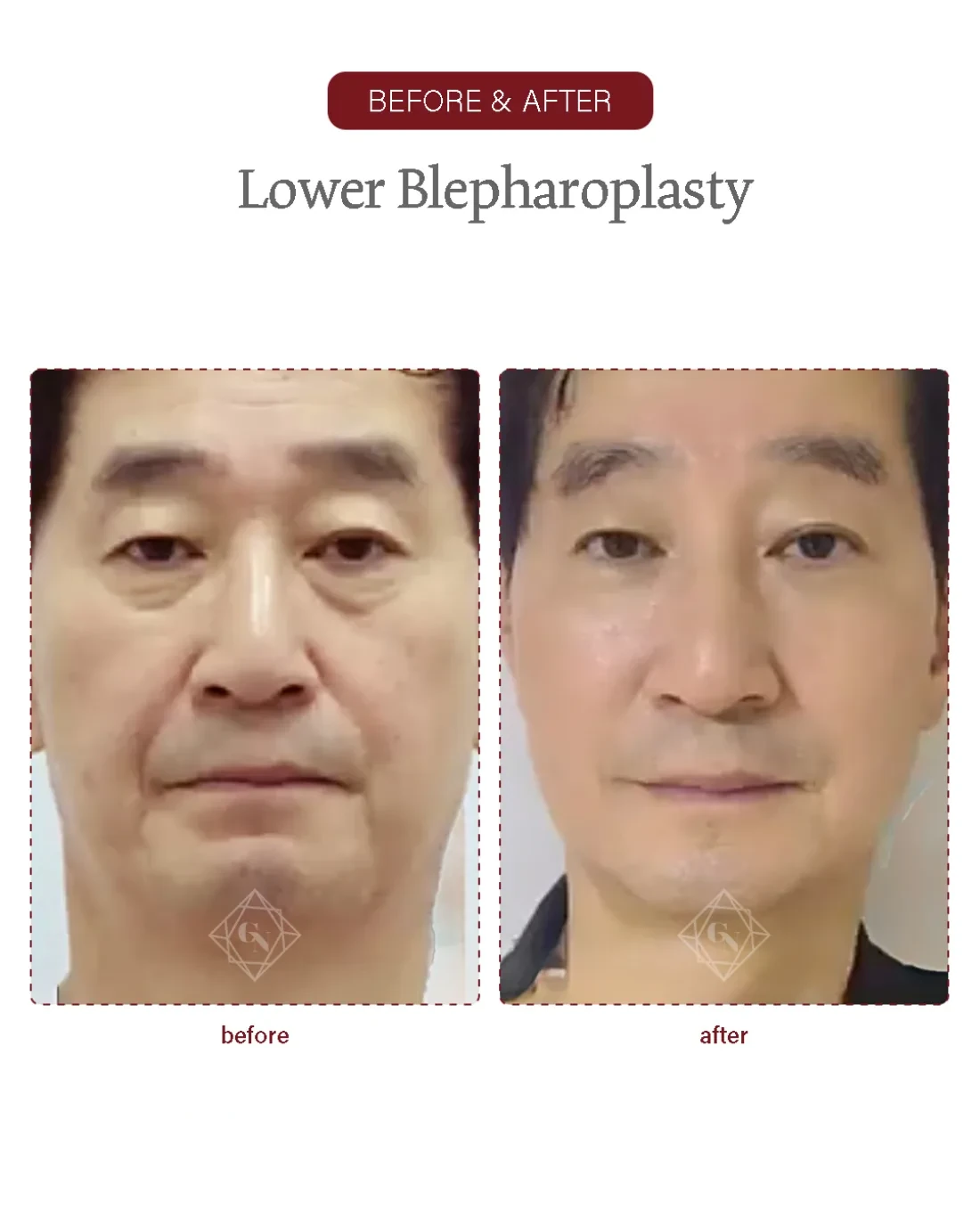
Eyelid before/after examples of actual Garnet patients (published with consent). Results, recovery and suitability vary by individual and are not guaranteed; the right approach is decided at an in-person consultation.
Prices
Price at Garnet
Upper blepharoplasty
From₩3,500,000 + VATExcluding VAT (10% VAT is added at payment)Book now
Same price as Korean patients. Prices shown exclude 10% VAT; your written quote, issued after the in-person consultation, shows the full amount payable.
Dr. In-Soo Baek
Director & sole operating surgeon
Korean medical licence no. 77407
Operate on what you came for. Trained at Korea University Medical Center. Every case planned, performed and reviewed by the same hands.
1Operating surgeon
~2Surgeries per day
7Registered techniques
Board-certified plastic surgeon
Plastic surgery training at Korea University College of Medicine & graduate school
Korean Society of Plastic and Reconstructive Surgeons member, in its facial-contour, eye & rhinoplasty groups
Consults, operates and follows up each case himself
Peer-reviewed papers behind the facts on this page. Each describes findings in its own study group — not results at Garnet — and none predicts your own outcome.
Liu CY et al. Blepharoptosis repair. Current Opinion in Otolaryngology & Head & Neck Surgery. 2018. doi:10.1097/moo.0000000000000463
Kao WK et al. Managing the Asian Eyelid. Facial Plastic Surgery Clinics of North America. 2022. doi:10.1016/j.fsc.2022.07.009
Huggins A et al. Clinical Evaluation of Blepharoptosis: Distinguishing Age-Related Ptosis from Masquerade Conditions. Seminars in Plastic Surgery. 2017. doi:10.1055/s-0037-1598188
Ge M et al. Mini-incision Blepharoplasty with Pretarsal Fasciectomy for Double-Eyelid Surgery. Aesthetic Plastic Surgery. 2021. doi:10.1007/s00266-021-02349-6
FAQ
Common questions
What surgery fixes droopy eyelids?
It depends on the cause. A weak eye-opening muscle (true ptosis) is corrected by adjusting that muscle through a lid-crease incision, while loose, low-hanging skin is corrected by upper blepharoplasty, which removes the excess skin. Sometimes both are present and both are done. A consultation confirms which applies to you.
Is a droopy eyelid ptosis or excess skin?
They look similar but differ in where the lid margin sits. In ptosis the eye-opening muscle is weak, so the very edge of the lid rests low and covers part of the iris. With excess skin the lid margin is normal but the skin above folds down. A surgeon tells them apart by lifting the skin and seeing how far the eye opens underneath.
Can a droopy eyelid affect my vision?
When the lid margin sits low enough to cover part of the pupil, a droopy eyelid from a weak muscle can affect the upper field of vision. In those cases ptosis correction is functional as well as cosmetic. Whether your droop reaches that point is something a consultation assesses directly.
Does droopy-eyelid surgery leave a scar?
Both routes use an incision in the natural upper-lid crease, so once healed the line usually settles into the fold and becomes difficult to see. The eyelid stitches come out at around seven days at Garnet, and the crease line keeps softening for months after that.
Can ptosis be corrected without surgery?
True ptosis is a weakness of the eye-opening muscle, which non-surgical treatments do not restore. A surgeon may tell you plainly that a mild droop does not yet warrant surgery, but once the muscle is the cause, correcting it is a surgical adjustment. Checking where your lid margin sits shows whether your levator weakness has reached that stage.
Will my eyes be perfectly symmetrical afterwards?
No surgeon can promise identical eyes; most people's eyes are naturally a little different to begin with. Correction aims for a balanced, natural result and improved symmetry. Realistic expectations depend on how different your two lids are to start with, and follow-ups help fine-tune healing.
How long is recovery after droopy-eyelid correction?
For the crease-incision procedures at Garnet, sutures come out at around seven days, with visible swelling and bruising easing over roughly two to three weeks and fine settling over a few months. In the early weeks the lids may look slightly tight or uneven as swelling resolves, which is normal.
Can droopy-eyelid surgery be combined with a double-eyelid crease?
Often yes. Ptosis correction and crease work can be planned together, and skin removal can be added when both are needed. Whether all three can safely go into one operation depends on your lid anatomy, so it is not promised in advance.
Can I get an assessment before flying to Korea?
Yes. Garnet is registered with Korea's foreign-patient programme and offers an online consultation: send photos looking straight ahead, describe when the droop is most noticeable, and get a clear view of whether it is muscle, skin or both before you commit to travel.
Will the surgeon who examines my eyelids also operate on them?
Yes. Garnet has one operating surgeon, so the board-certified surgeon who checks your lid margin and chooses between ptosis correction and skin removal also performs the operation and sees you at follow-up. That continuity keeps the diagnosis and the operation consistent.
My mom recently had a brow lift and lower blepharoplasty with Dr. Baek, and our experience has been wonderful so far. The Garnet team was incredibly kind and welcoming, with Kelly assisting us as our English consultant—she made everything…
I’m so happy I chose this clinic for my lower blepharoplasty. I was traveling from abroad by myself, so I was a little nervous, but from the beginning I felt comfortable and truly cared for. Everyone was kind, patient, and professional…
Came in for an in-person consult and ended up choosing Garnet and Dr.Baek for my non-incisional DES and tiplasty/alarplasty. I communicated with Kelly (English consultant) from the start till now (3 weeks post-op). She really help me feel…
My under-eyes have been sagging and folding for years... I tried to cover it up with makeup, but it actually got stuck in the wrinkles and made it stand out even more. While going for consultations, I noticed that the bigger the hospital…
Send photos and your question before you travel. An English-speaking coordinator reviews every enquiry and replies with plain guidance on whether eyelid surgery is appropriate for you, the likely plan and timing.
✓ Reviewed by the clinic coordinator, not a bot
✓ Photo-based pre-assessment before you fly
✓ Foreign-patient scheduling & after-care
✓ One surgeon for consultation, surgery and follow-up
Prefer to chat now? Reach the coordinator directly:








 T S7 months ago



