Facial liposuction of the neck, cheeks and jawline is done under anaesthesia, so you are comfortable during the procedure itself. Pain is the worry most people raise before the result. The part you actually feel is the recovery: a manageable soreness and tightness for a few days.
The short answer
Facial liposuction is performed under anaesthesia, so you do not feel the procedure itself. Most patients describe the experience as pressure and movement.
Afterwards the dominant sensations are soreness, swelling and tightness around the neck, jawline and cheeks, usually peaking in the first 2–3 days.
The compression garment can feel snug and is the most-mentioned source of early discomfort, but it is what keeps swelling and bruising down.
Pain that is worsening instead of easing, or one-sided and severe, is outside the normal pattern, and a single-surgeon clinic gives you one doctor to ask.
Facial liposuction at Garnet is done so that you do not feel the procedure. The treated areas (the neck, cheeks, jawline and the double-chin area beneath it) are numbed, and most facial liposuction is carried out under local anaesthesia with sedation, so you are relaxed and drowsy without being fully under. The exact approach depends on how much area is being treated and on your own comfort and medical history, and the surgeon plans it with you at the consultation ahead of the day.
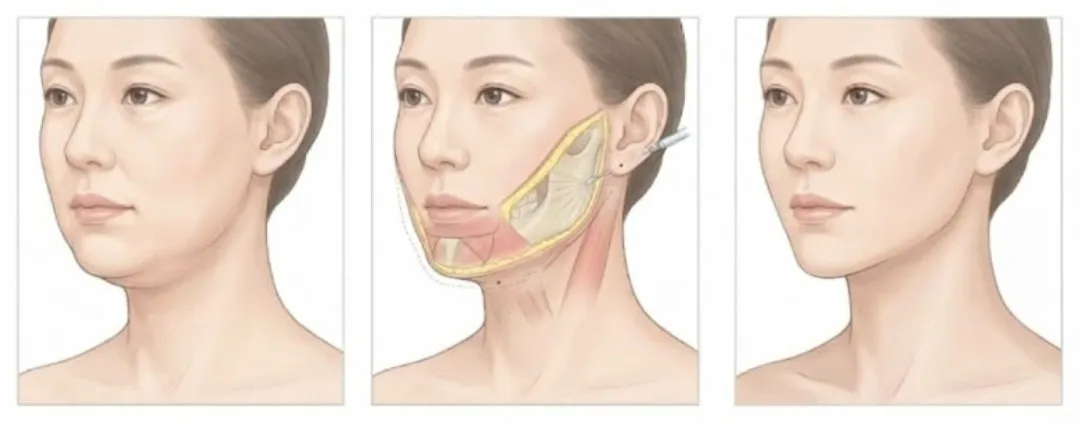
Illustration: excess fat along the jawline, cheeks and neck (outlined) is removed through tiny hidden openings for a sharper contour.
Because facial liposuction works through tiny submental and hidden access points with no open incisions, the anaesthesia requirement is modest compared with larger body or facial surgery. A numbing fluid is also infiltrated into the fat itself before any suction begins. This both anaesthetises the area and reduces bleeding and bruising, which is part of why the procedure is more comfortable than people expect.
Whatever combination is used, the principle is the same: you should not feel pain during the operation. If you are nervous about sedation specifically, that is a normal thing to raise. At a single-surgeon clinic the same board-certified surgeon who consults you is the one administering and supervising your care, so there is no gap between what you were told and what happens in the room.
During surgery
What you actually feel during the procedure
Once the area is numbed, the sensations people report during facial liposuction are pressure and movement. As the thin cannula passes through the fat under the chin and along the jawline, you may be aware of a tugging or vibrating feeling, and of the surgeon working. Under proper anaesthesia, facial liposuction does not bring the sharp, cutting pain that the word "surgery" suggests.
With sedation, many patients drift through the procedure with little clear memory of it. The facial liposuction itself is not a long operation, and Garnet caps the day to two surgeries with one patient per hour, so it is unhurried. The surgeon is not rushing between rooms while you are on the table. If at any point you do feel discomfort, more local anaesthetic can be added; you are not expected to simply tolerate pain.
It is worth separating the procedure from the idea of it. The anticipation is almost always worse than the reality, and a frank pre-operative talk in your consultation about exactly what you will feel tends to do more for nerves than any reassurance. You can read how the whole episode fits together on the parent facial liposuction page.
After surgery
Soreness, swelling and tightness in the first days
The discomfort you actually notice arrives after the anaesthesia wears off, and it is best described as soreness and tightness. The neck, jawline and cheeks feel swollen, firm and a little numb, and opening your mouth wide, chewing tougher food or turning your head quickly can feel tight. For most people this is very manageable with the medication you are sent home with, and it feels awkward and bruised more than sharp.
Swelling and that tight sensation typically peak around days 2 to 3 and then ease steadily. Bruising under the chin and along the jaw is common and settles over the following week or two. Some numbness or odd, prickly sensations as the small nerves recover are normal and resolve over weeks. This is expected. The detailed day-by-day picture lives on the recovery timeline page; here the point is simply that the sore phase is short and front-loaded.
Sleeping propped up on an extra pillow for the first few nights, keeping your head elevated and avoiding hot showers, alcohol and strenuous activity early on all reduce how sore and swollen you feel. None of this is dramatic, but it makes the first week noticeably more comfortable.
Compression
The compression garment and why it feels snug
If patients name one thing as the source of early discomfort, it is usually the compression garment, the snug chin-and-neck wrap worn after facial liposuction. It can feel tight and a little claustrophobic at first, especially while there is still swelling underneath it, and it is more of an inconvenience than genuine pain. But it is doing real work: steady compression reduces swelling and bruising, helps the treated skin settle smoothly against the new contour, and supports a cleaner, faster result.
The garment is generally worn closely in the first days and then for longer stretches over the following weeks, with the exact schedule given to you after surgery. It loosens in feel as the swelling goes down, and most people adjust to it within a day or two. Wearing it as advised is one of the simplest things within your control that genuinely affects both comfort and outcome.
Because facial liposuction relies on this compression, the practicalities matter for anyone planning around it, for example when travelling internationally, where you will be wearing the garment during part of your stay. International patients can read how that fits into a trip on the facial liposuction for international patients page.
Managing it
How discomfort is managed
You are not sent home to simply endure the soreness. After facial liposuction you are given pain relief and, where appropriate, anti-inflammatory and other supportive medication, with clear instructions on what to take and when. Used as directed, this keeps the first few days comfortable for the large majority of people — most need only simple oral pain relief after the initial day.
Practical measures do a lot of the work: head elevation, gentle cold application as advised, soft foods while chewing feels tight, plenty of rest and avoiding anything that raises blood pressure to the face (heavy exercise, bending, alcohol and saunas) in the early days. These reduce both swelling and the soreness that comes with it. Your coordinator and surgeon tell you exactly what is and is not allowed, so you are not guessing.
The advantage of a single-surgeon clinic here is continuity: the same surgeon who operated reviews how you are healing at structured follow-ups, and if your discomfort is not behaving as expected, you are talking to the person who knows your case. That same surgeon continues to be reachable for international patients after they fly home.
Red flags
When pain is not the normal pattern
Normal recovery pain follows a clear shape: it is worst in the first two to three days and then eases steadily. The signs worth flagging are the ones that break that pattern: pain that is getting worse after the first few days, severe pain that is clearly one-sided, marked redness and heat over an area, fever, or rapidly increasing swelling. These are uncommon, but they are the things to mention promptly.
Tightness, dull soreness, bruising, numbness and odd prickling sensations as nerves recover are all expected and not red flags. The useful instinct is to watch the direction of travel: improving is reassuring, worsening is worth a message. Because you have one named surgeon, you know exactly who to contact, and there is no ambiguity about who is responsible for your recovery.
If you have travelled for surgery, this matters even more, since you may be home before some of these questions arise. Garnet's structured follow-ups at 1, 3 and 6 months, and the ability to review you by message after you return, are designed so that distance does not leave you without a clear answer. You can ask any of this openly before you ever book, in an online consultation.
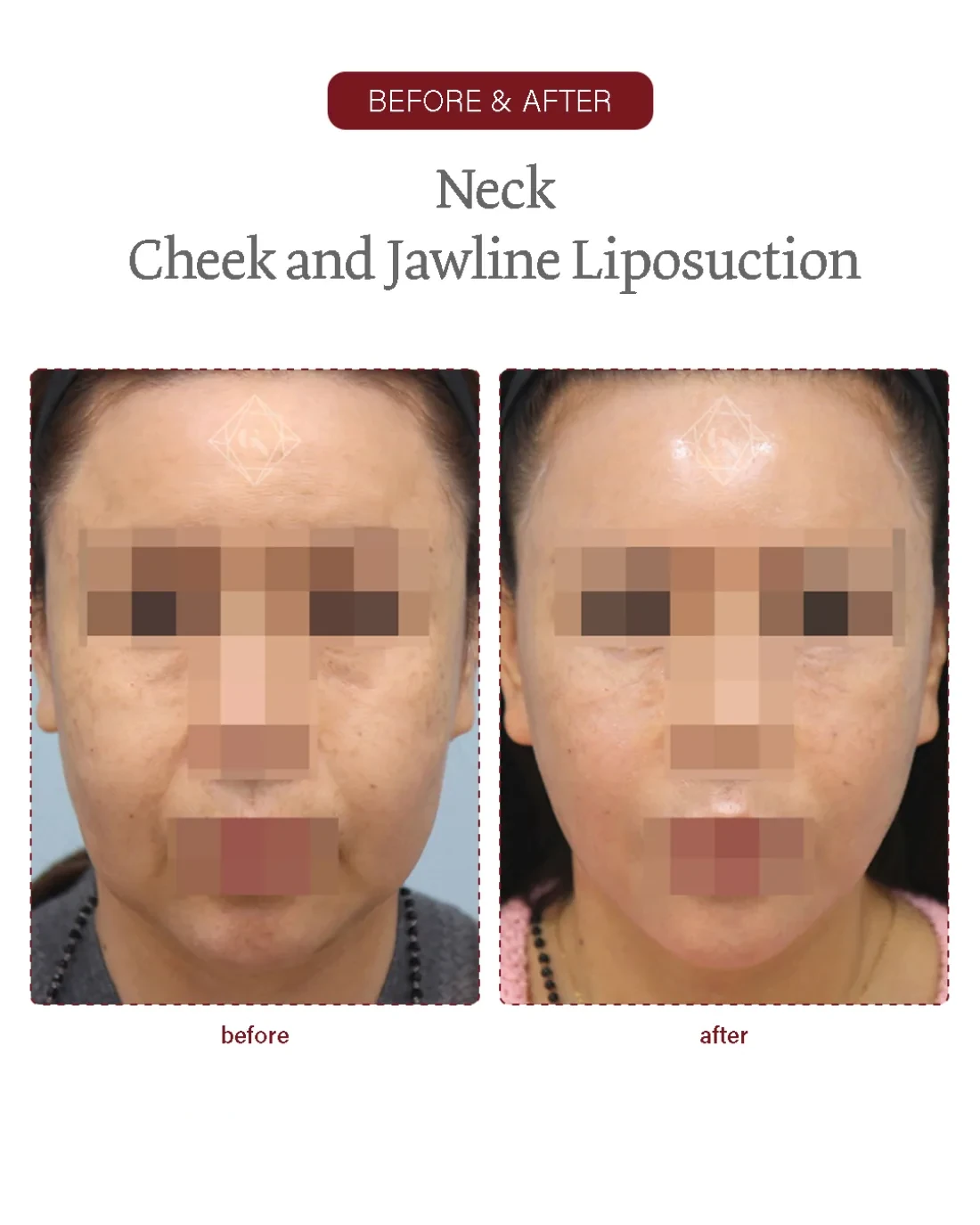
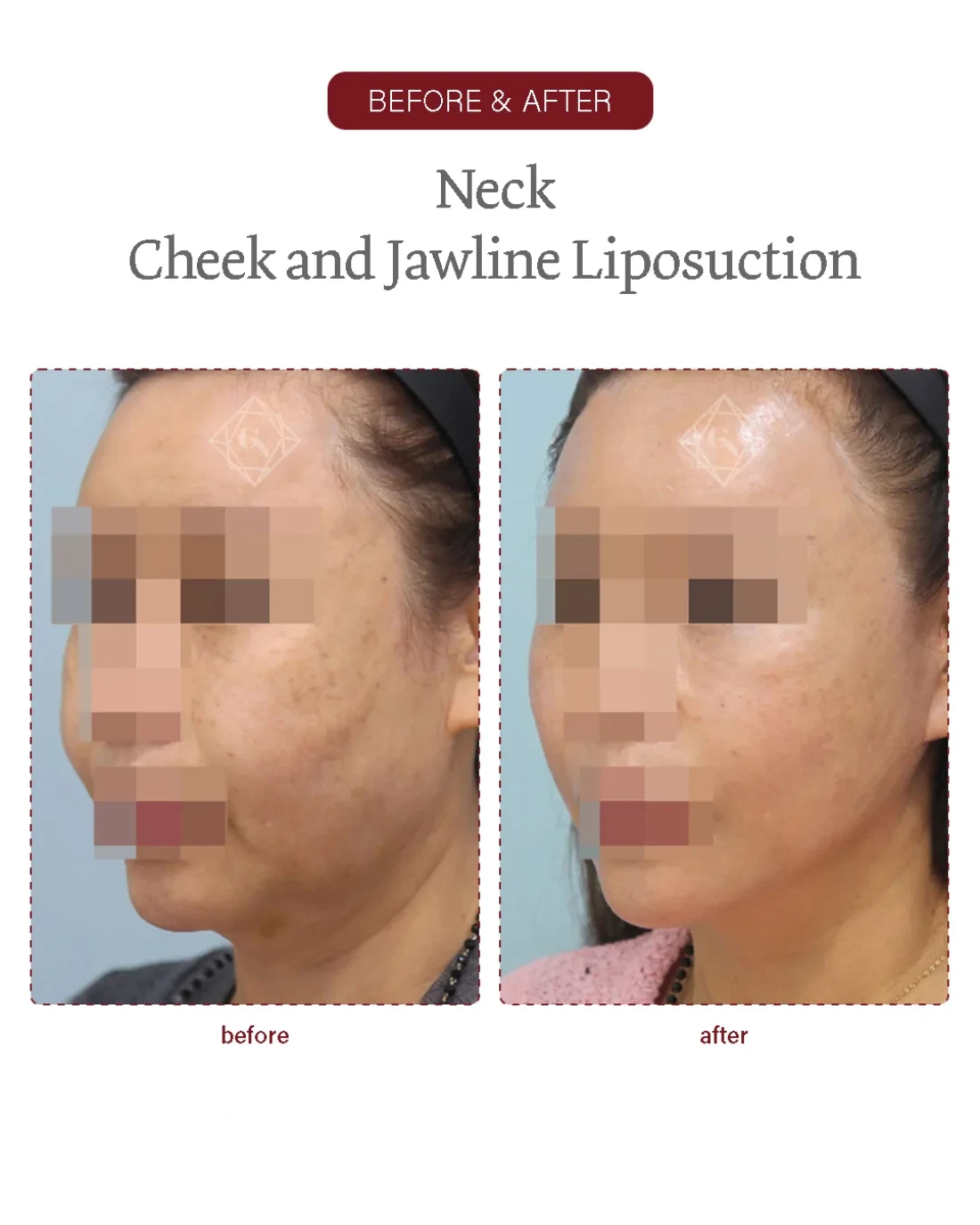
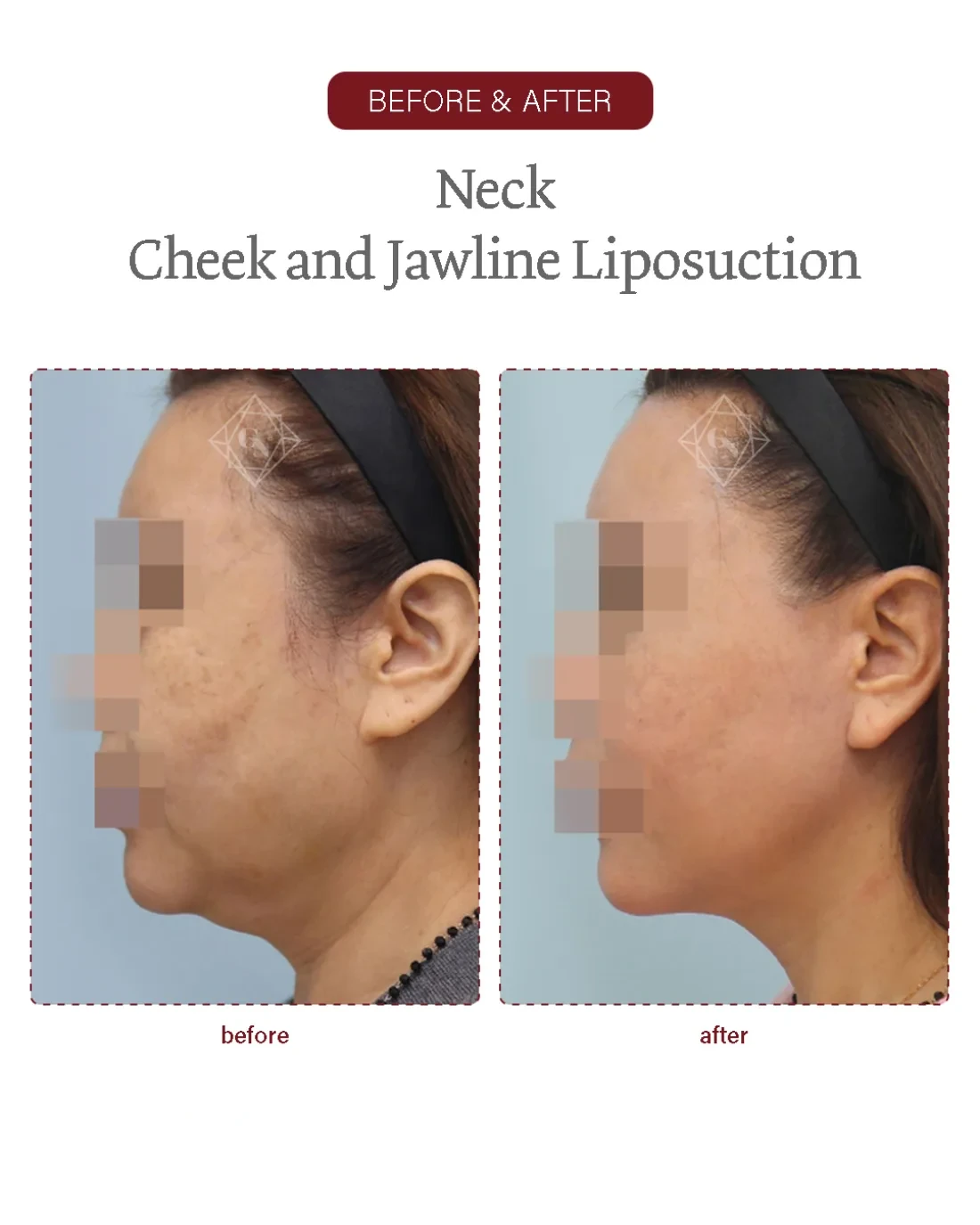
Real Results
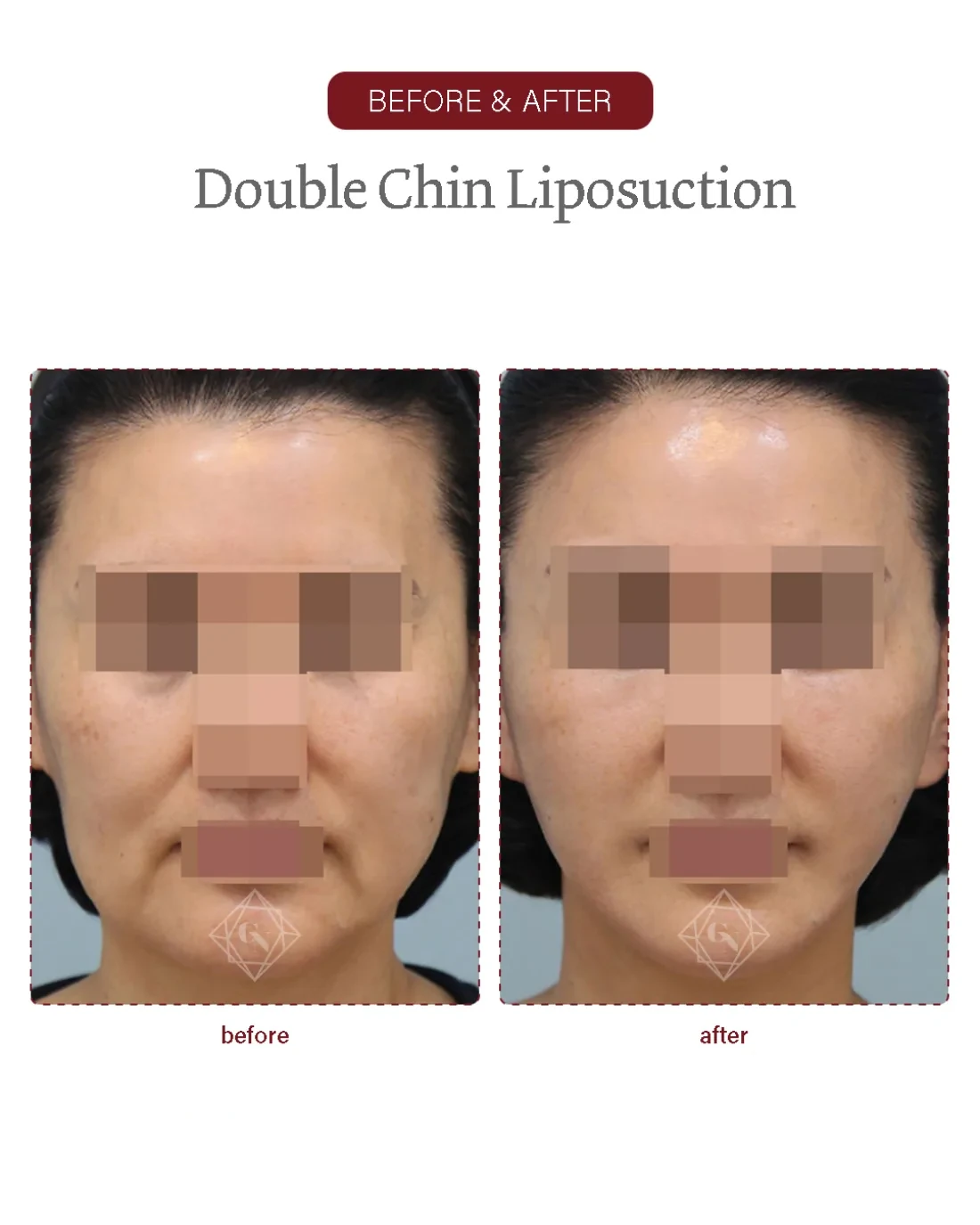
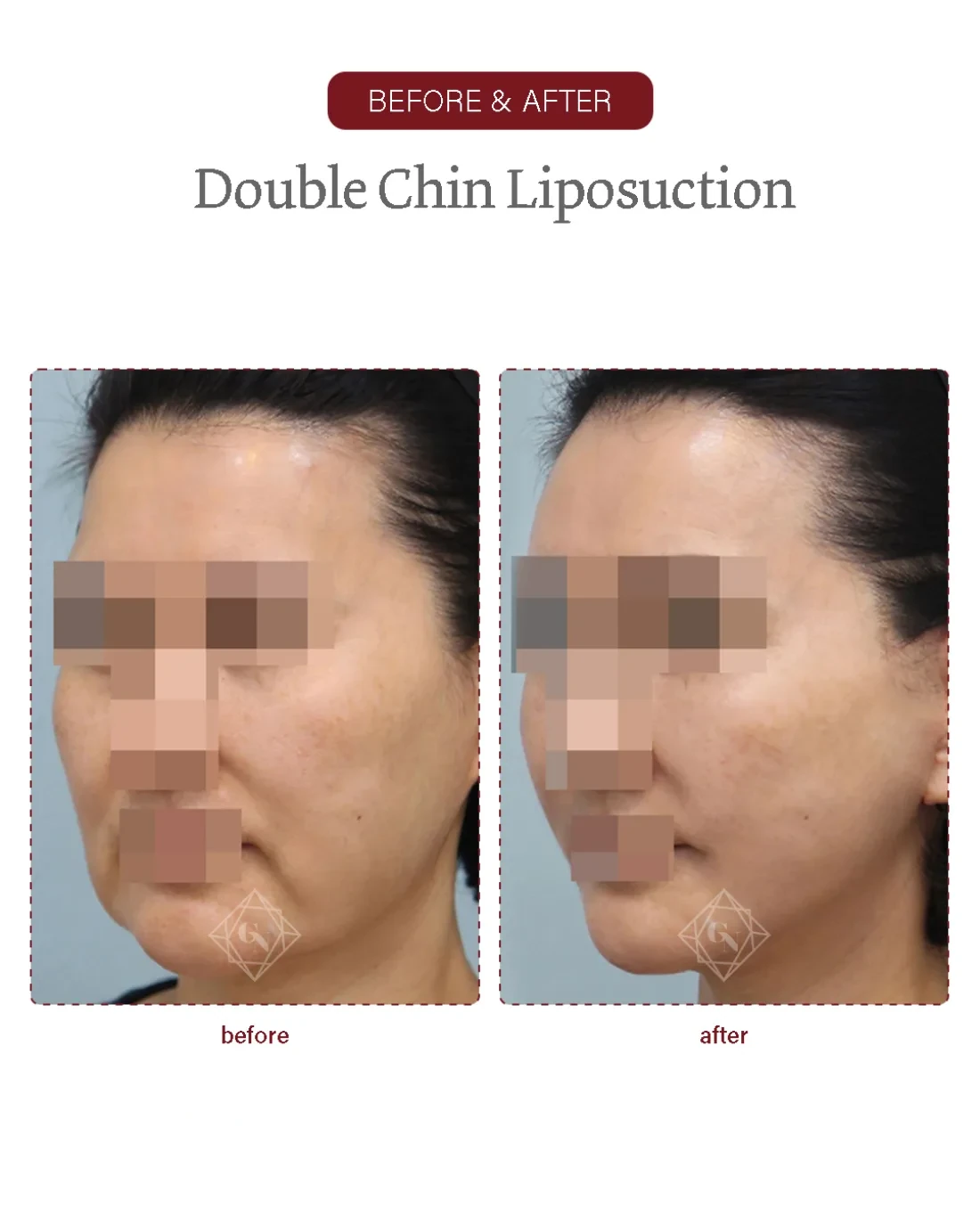
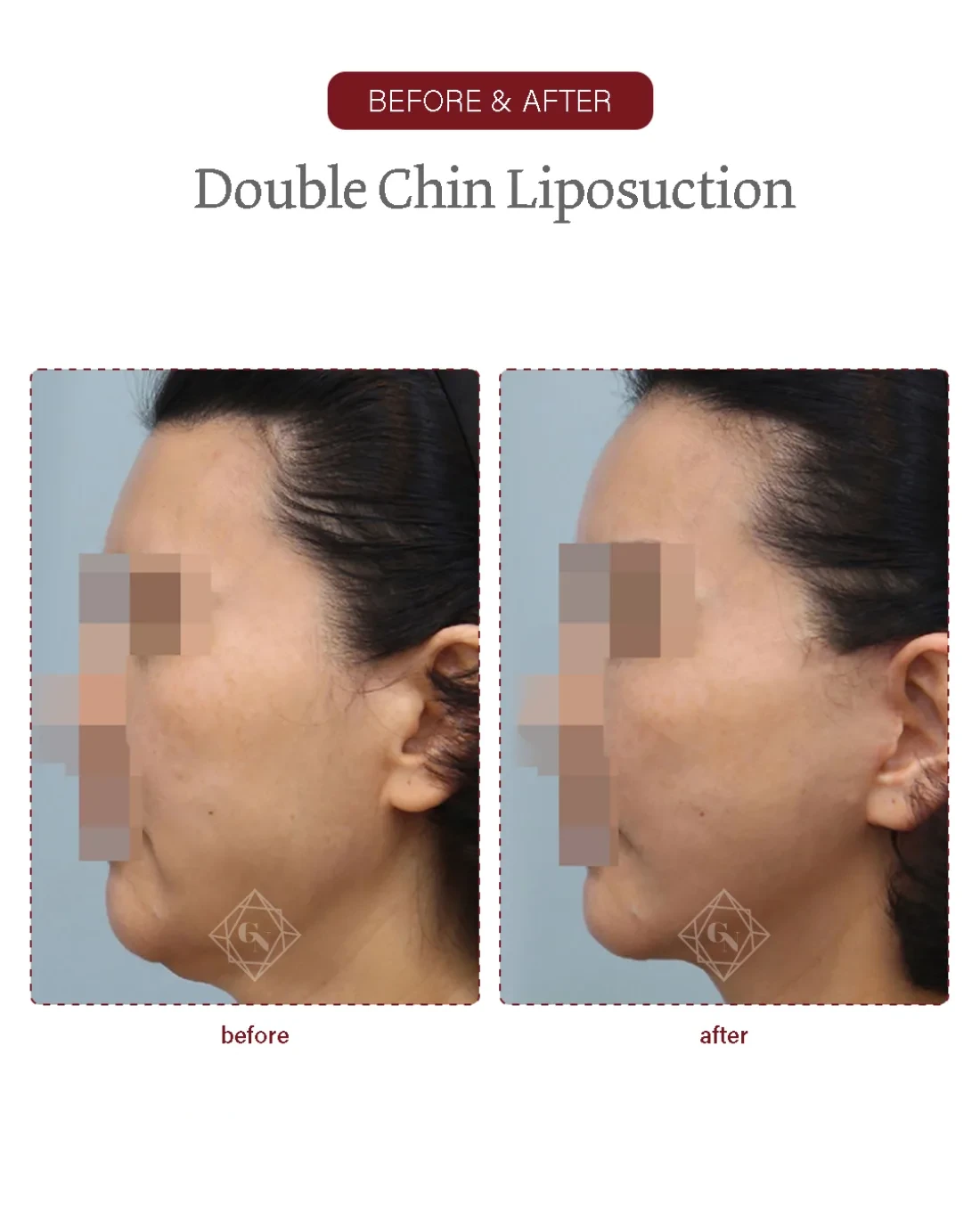
Before & After
Double-chin and neck/cheek/jawline liposuction results of actual Garnet patients (published with consent). Results, recovery and suitability vary by individual, because skin quality and fat distribution differ, and outcomes are not guaranteed.
Dr. In-Soo Baek
Director & sole operating surgeon
Korean medical licence no. 77407
Operate on what you came for. Trained at Korea University Medical Center. Every case planned, performed and reviewed by the same hands.
1Operating surgeon
~2Surgeries per day
7Registered techniques
Board-certified plastic surgeon
Plastic surgery training at Korea University College of Medicine & graduate school
Korean Society of Plastic and Reconstructive Surgeons member, in its facial-contour, eye & rhinoplasty groups
Consults, operates and follows up each case himself
Peer-reviewed papers behind the facts on this page. Each describes findings in its own study group — not results at Garnet — and none predicts your own outcome.
Tapia A et al. Liposuction in cervical rejuvenation. Aesthetic Plastic Surgery. 1987. doi:10.1007/bf01575493
Dedo DD. Liposuction of the Head and Neck. Otolaryngology–Head and Neck Surgery. 1987. doi:10.1177/019459988709700614
Okumura K et al. Efficacy of Fibrin Sealant in Submental Liposuction: A Prospective Randomized Study. Aesthetic Plastic Surgery. 2024. doi:10.1007/s00266-024-04615-9
FAQ
Common questions
Is facial liposuction painful during the procedure?
No. Facial liposuction is performed under anaesthesia, usually local anaesthesia with sedation, so you do not feel pain during the operation. Most people describe a sensation of pressure or tugging, and many remember little of it with sedation. More numbing can be added at any point if needed.
What anaesthesia is used for facial liposuction?
Facial liposuction is most often done under local anaesthesia with sedation, so you are relaxed and comfortable without full general anaesthesia. A numbing fluid is also infiltrated into the fat before suction, which both anaesthetises the area and reduces bleeding. The exact approach depends on the area treated and your medical history.
How much does it hurt after facial liposuction?
The sensation afterwards is more soreness and tightness than sharp pain. The neck, jawline and cheeks feel swollen and firm, peaking around days 2 to 3, then easing. Most people manage well with the oral pain relief they are given and find it an awkward, bruised feeling.
How long does the soreness last?
The most uncomfortable phase is short, typically the first 2 to 3 days, after which soreness and tightness ease steadily over the following week or two. Bruising settles over a week or two, and mild numbness or prickling as nerves recover can take a few weeks to fully resolve, which is normal.
Does the compression garment hurt?
It is snug more than painful. The chin-and-neck garment can feel tight and a little claustrophobic at first, especially while swelling is present, and it is the most commonly mentioned source of early discomfort. It loosens in feel as swelling goes down and does important work reducing swelling and helping the contour settle, so wearing it as advised is worthwhile.
Will I need strong painkillers?
Most people do not. After the first day, simple oral pain relief is usually enough, alongside any anti-inflammatory or supportive medication you are prescribed. You are given clear instructions on what to take and when, and the goal is to keep the early days comfortable so you are not left tolerating pain.
What can I do to feel more comfortable while recovering?
Keep your head elevated, sleep propped up for the first few nights, apply cold gently as advised, eat soft foods while chewing feels tight, and avoid alcohol, hot showers, saunas and strenuous activity early on. These measures reduce both swelling and the soreness that comes with it.
When is pain a sign something is wrong?
Normal pain eases after the first few days. Pain that is getting worse, severe one-sided pain, marked redness and heat, fever, or rapidly increasing swelling are not the usual pattern and should be raised promptly. At a single-surgeon clinic you have one named surgeon to contact directly, including by message after you return home.
Is facial liposuction more painful than other facial procedures?
Generally it is on the more comfortable end. It works through tiny submental and hidden access points without open incisions, so the anaesthesia requirement is modest and the recovery is mostly manageable soreness and swelling. Individual experience varies, which is why a pre-assessment of your specific case is useful.
Can I ask about pain and anaesthesia before I travel?
Yes. You can discuss exactly what you will feel, the anaesthesia plan and the recovery in an online consultation before booking, including sending photos for a pre-assessment. The same board-certified surgeon who would operate is the one you speak with, so the plan you hear is the plan that happens.
My mom recently had a brow lift and lower blepharoplasty with Dr. Baek, and our experience has been wonderful so far. The Garnet team was incredibly kind and welcoming, with Kelly assisting us as our English consultant—she made everything…
I’m so happy I chose this clinic for my lower blepharoplasty. I was traveling from abroad by myself, so I was a little nervous, but from the beginning I felt comfortable and truly cared for. Everyone was kind, patient, and professional…
Came in for an in-person consult and ended up choosing Garnet and Dr.Baek for my non-incisional DES and tiplasty/alarplasty. I communicated with Kelly (English consultant) from the start till now (3 weeks post-op). She really help me feel…
My under-eyes have been sagging and folding for years... I tried to cover it up with makeup, but it actually got stuck in the wrinkles and made it stand out even more. While going for consultations, I noticed that the bigger the hospital…
If you are worried about the pain or anaesthesia, send photos for a no-obligation pre-assessment and ask the surgeon exactly what to expect before you plan a trip.
Send photos and your question before you travel. An English-speaking coordinator reviews every facial liposuction enquiry and replies with guidance on whether surgery is appropriate, the likely plan and timing.
✓ Reviewed by the clinic coordinator, not a bot
✓ Photo-based pre-assessment before you fly
✓ Foreign-patient scheduling & after-care
✓ One surgeon for consultation, surgery and follow-up
Prefer to chat now? Reach the coordinator directly:









 T S7 months ago



