Recovery from facial liposuction of the neck, cheeks and jawline is shorter than most people fear, but the details matter: the compression garment, how swelling moves through the first weeks, and when it is genuinely fine to fly or return to work. This is a day-by-day timeline for international patients planning the procedure at Garnet in Seoul.
The short answer
Facial liposuction at Garnet treats the neck, cheek, jawline and double-chin through small hidden access points under the chin, so downtime centres on swelling. The wounds themselves are tiny.
A compression garment worn around the face and neck in the early days is the single most important factor in how smoothly you settle.
Most patients are presentable for everyday life within one to two weeks, with the sharper contour emerging over the following months as swelling resolves.
At a single-surgeon clinic the same surgeon reviews your recovery at 1, 3 and 6 months, including remote follow-up after you fly home.
What facial liposuction recovery actually involves
Facial liposuction at Garnet contours the neck, cheek, jawline and double-chin by removing small, targeted amounts of fat through tiny incisions placed under the chin and in other hidden access points. Because these openings are small and the work is beneath the skin, the recovery is dominated by swelling and the compression garment, and managing those well is what makes recovery comfortable.
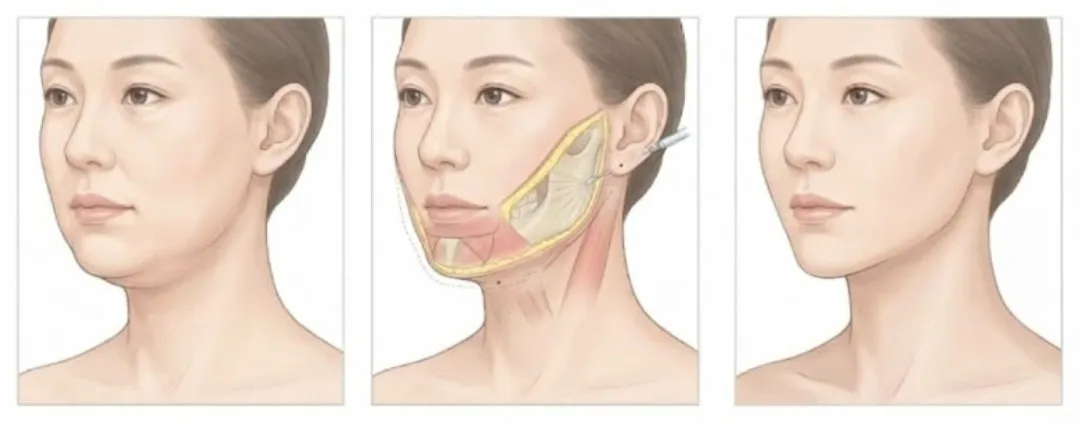
Illustration: excess fat along the jawline, cheeks and neck (outlined) is removed through tiny hidden openings for a sharper contour.
Most patients are surprised that the discomfort is modest and the visible downtime is fairly short. The trade-off is patience: while you look presentable within a week or two, the truly sharp, settled contour takes months to emerge as the last of the swelling leaves. The full procedure is described in the facial liposuction overview; this page goes deep on the recovery timeline.
One note for international patients: plan your stay around the early swelling and your first follow-up. The final result comes months later, and you can return home and have those later milestones reviewed remotely. The how long to stay in Korea guide helps you map this against your trip.
The first days
Day by day: the first week after facial liposuction
Days 1–2: Expect swelling, tightness and a firm, full feeling around the jaw and neck, plus possible mild bruising. You will usually be wearing the compression garment continuously. Discomfort is generally manageable with the medication your surgeon provides. Rest with your head elevated, even while sleeping, to help swelling drain.
Days 3–5: This is often when swelling and bruising peak, then begin to turn the corner. The face and neck can look fuller than your starting point. This is normal and temporary swelling. Keep wearing the garment as instructed, stay hydrated, and avoid bending, heavy lifting and salty food, which can prolong swelling.
Days 6–7: Many patients notice the worst is behind them: swelling is easing, bruising fading, and movement feels easier. If any sutures were placed at the access points, they are typically reviewed or removed around now, with timing confirmed by your surgeon. By the end of the first week the face often reads as 'puffy but presentable'.
The first weeks
Weeks two to twelve: the contour emerges
Week 2: Most patients are comfortable in everyday social and work situations. Residual swelling and some firmness under the chin remain, and the jawline is sharper than at day one but not yet final. Garment use often steps down to part-time around now, on your surgeon's advice. Gentle daily activity is fine; strenuous exercise still waits.
Weeks 3–6: Swelling continues to resolve and the jaw and neck contour becomes noticeably cleaner. Firmness under the chin (the 'hardening' phase as tissues settle) softens over this window and is a normal part of healing. This is when most patients feel they look meaningfully better than before.
Months 2–3 and beyond: The deeper, subtler swelling keeps leaving, and the contour refines toward its final, settled shape over roughly three to six months. Because the same surgeon at Garnet reviews you at 1, 3 and 6 months, each stage is judged against photos of your own starting point. If you want the results-only view, the facial liposuction results timeline covers when the contour is final.
The compression garment
The compression garment: why it matters most
The compression garment, a snug band worn around the face and neck, is the single most influential thing you control in recovery. It limits swelling, helps the skin redrape smoothly over the new contour, and supports the treated tissue while it settles. Wearing it consistently in the early days, then as your surgeon steps it down, genuinely affects how clean your final jawline looks.
Your surgeon will give you a specific schedule — typically near-continuous wear for the first days, then reducing over the following weeks. Follow that schedule even when the swelling looks better, because the garment is doing quiet work even when you feel fine. Keep it clean and wear it as fitted, without loosening it.
Alongside the garment, the basics matter: sleep with your head elevated, avoid salty food and alcohol that worsen swelling, skip strenuous activity, and protect the access points. These same principles run through the wider recovering in Seoul guidance for your in-country stay.
Work, travel and exercise
When can you work, fly and exercise?
Work: Many patients return to a desk-based or low-profile job within about a week, and feel comfortable in face-to-face settings by around two weeks, when residual swelling is easier to disguise. If your work is physically demanding, allow longer and confirm with your surgeon.
Flying home: International patients usually plan to stay for the early swelling and the first follow-up before travelling. Your readiness to fly depends on your individual recovery, so confirm timing with your surgeon before booking. The when can I fly guide explains the general considerations.
Exercise: Light walking is encouraged early to keep circulation moving, but strenuous exercise, heavy lifting and anything that raises blood pressure in the face are held off for several weeks, since they can worsen swelling and bruising. Your surgeon will clear you to ramp back up at your follow-ups based on how you are healing.
Recovery support at Garnet
How Garnet supports your facial liposuction recovery
Garnet is a single-surgeon clinic in Apgujeong, Seoul. Dr. In-Soo Baek, a board-certified plastic surgeon (Korean medical licence no. 77407), is the only operating surgeon. He performs your facial liposuction himself and reviews your recovery at every follow-up. For a recovery that unfolds over months, that continuity matters: the surgeon who treated each area is the same one assessing your swelling and contour at 1, 3 and 6 months.
Because the clinic caps the day at two surgeries, your aftercare is unhurried and coordinated, and a dedicated coordinator stays with you from consultation through recovery. Garnet is registered with Korea's foreign-patient programme, so international patients are supported through scheduling and the remote follow-ups that let your recovery be reviewed after you return home.
If you are planning the trip around recovery, the most useful first step is a read on your own neck, cheek and jaw anatomy and a realistic timeline. You can send photos and ask exactly what your recovery would look like in an online consultation before you commit to travel.
Real Results
Before & After
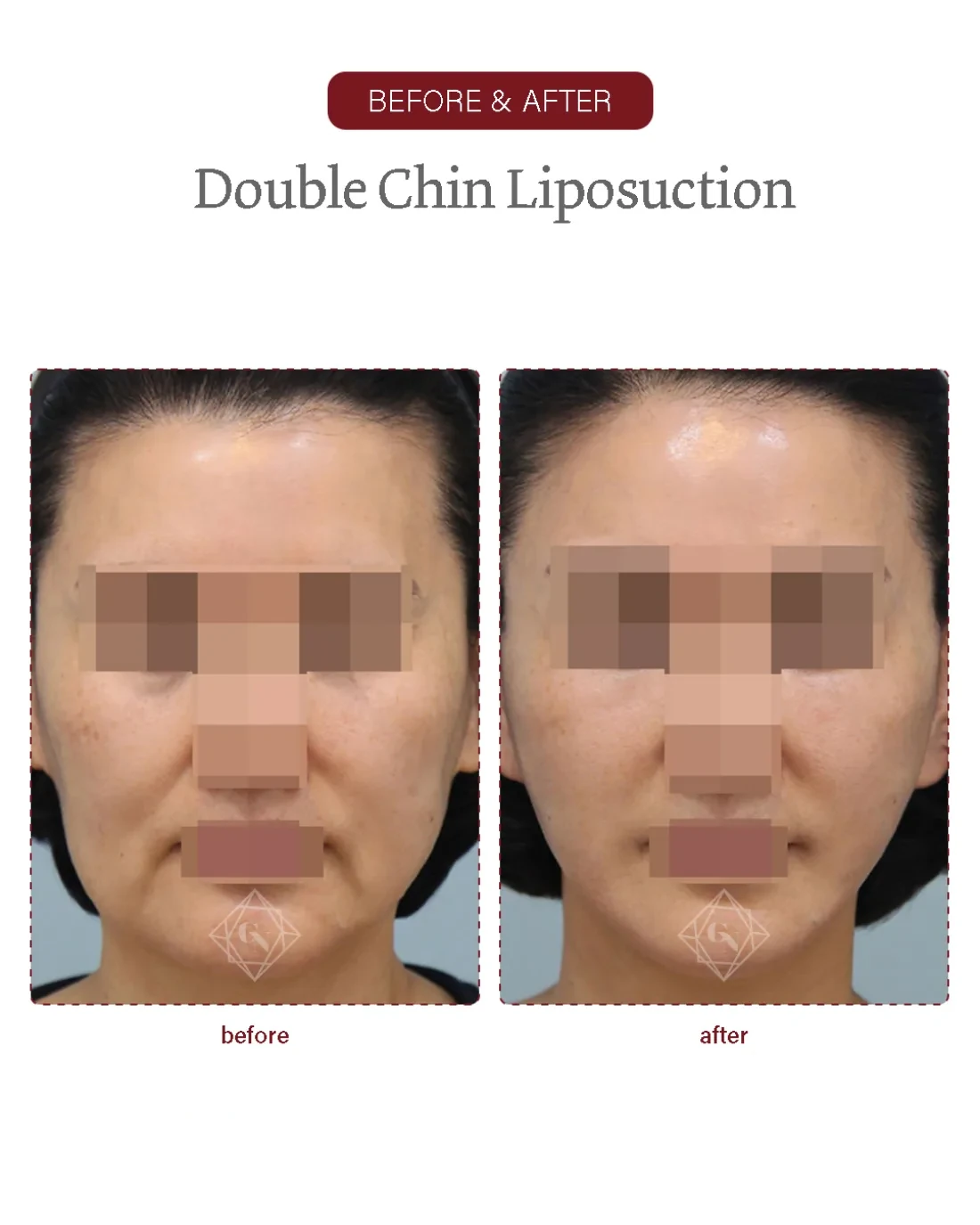
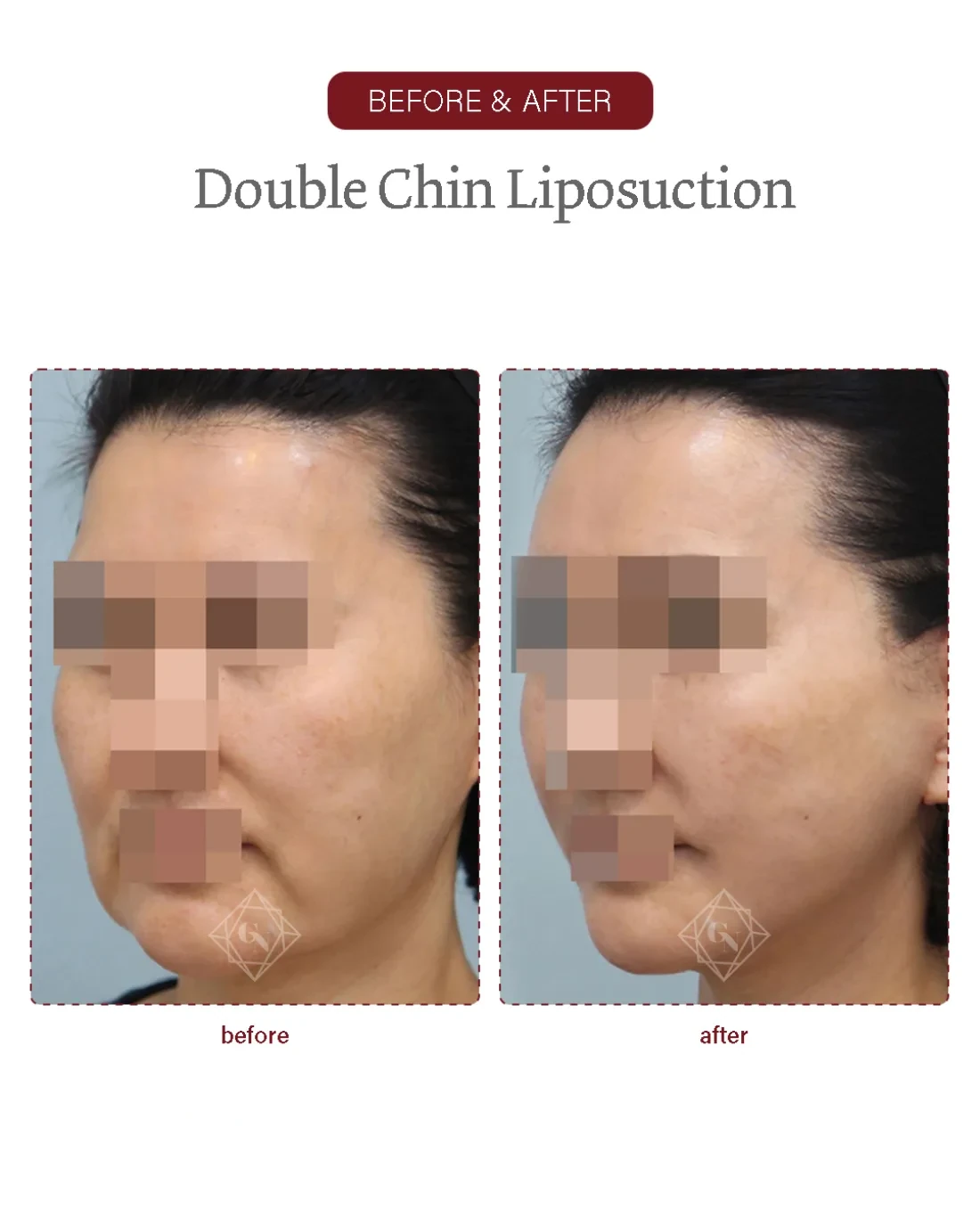
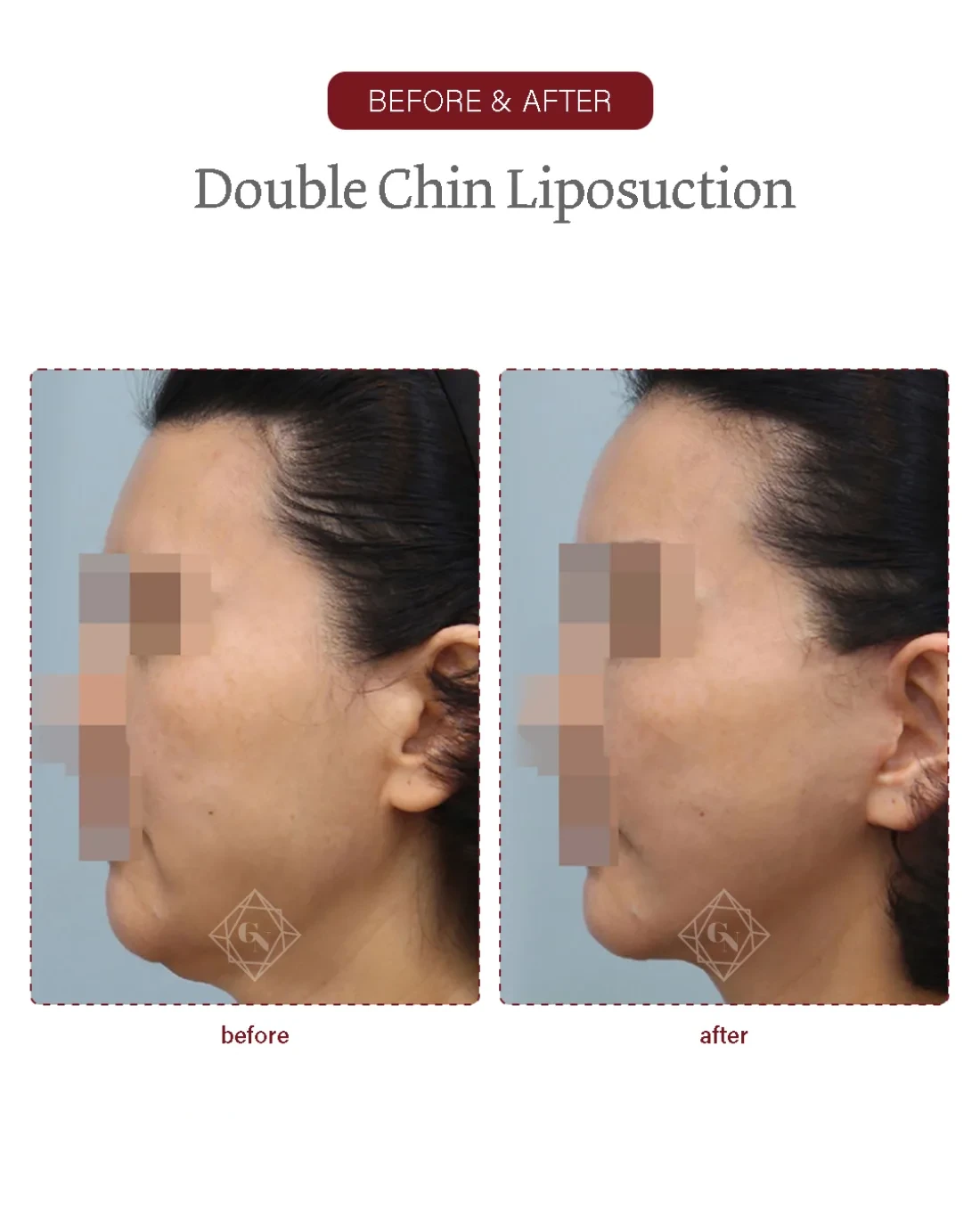
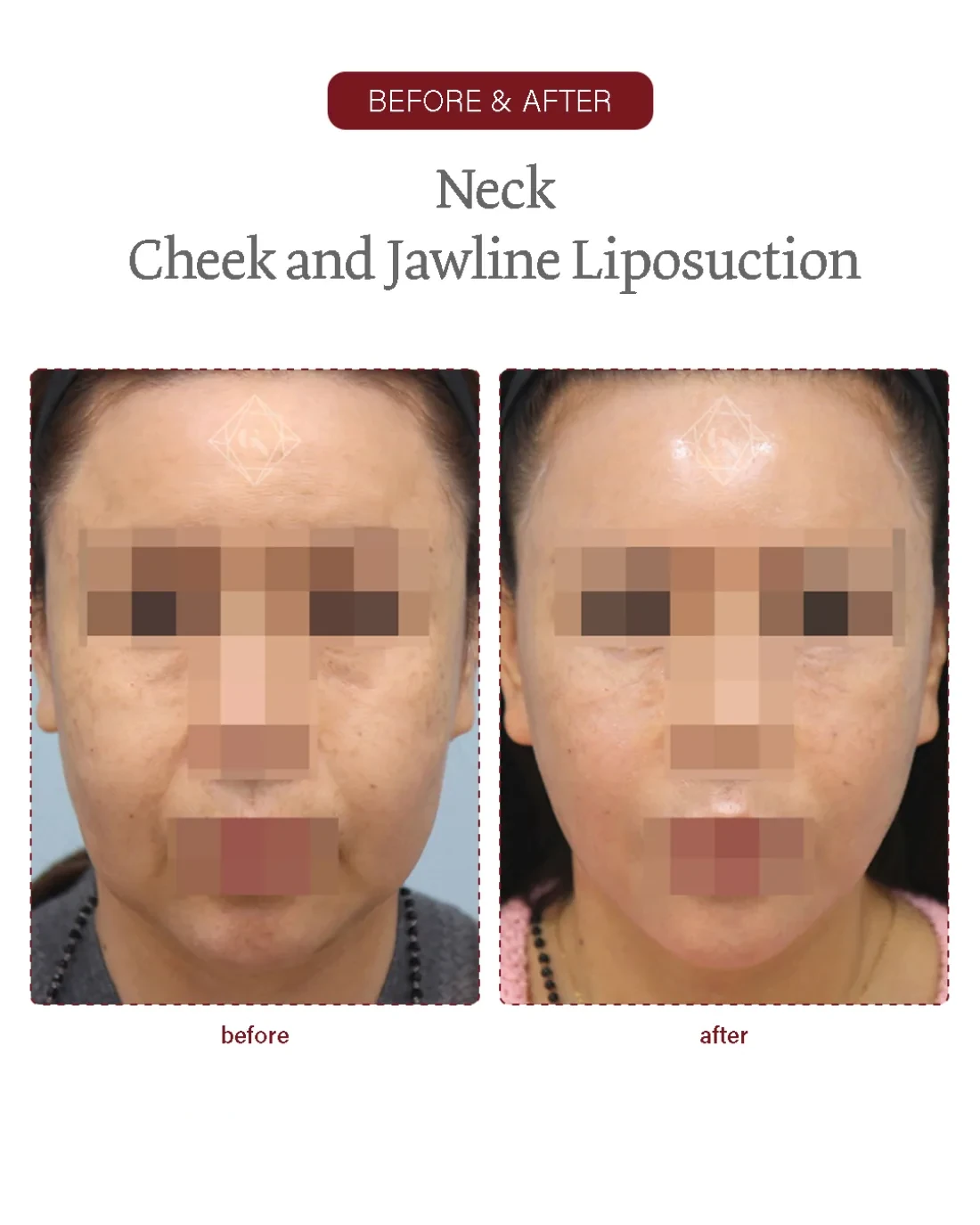
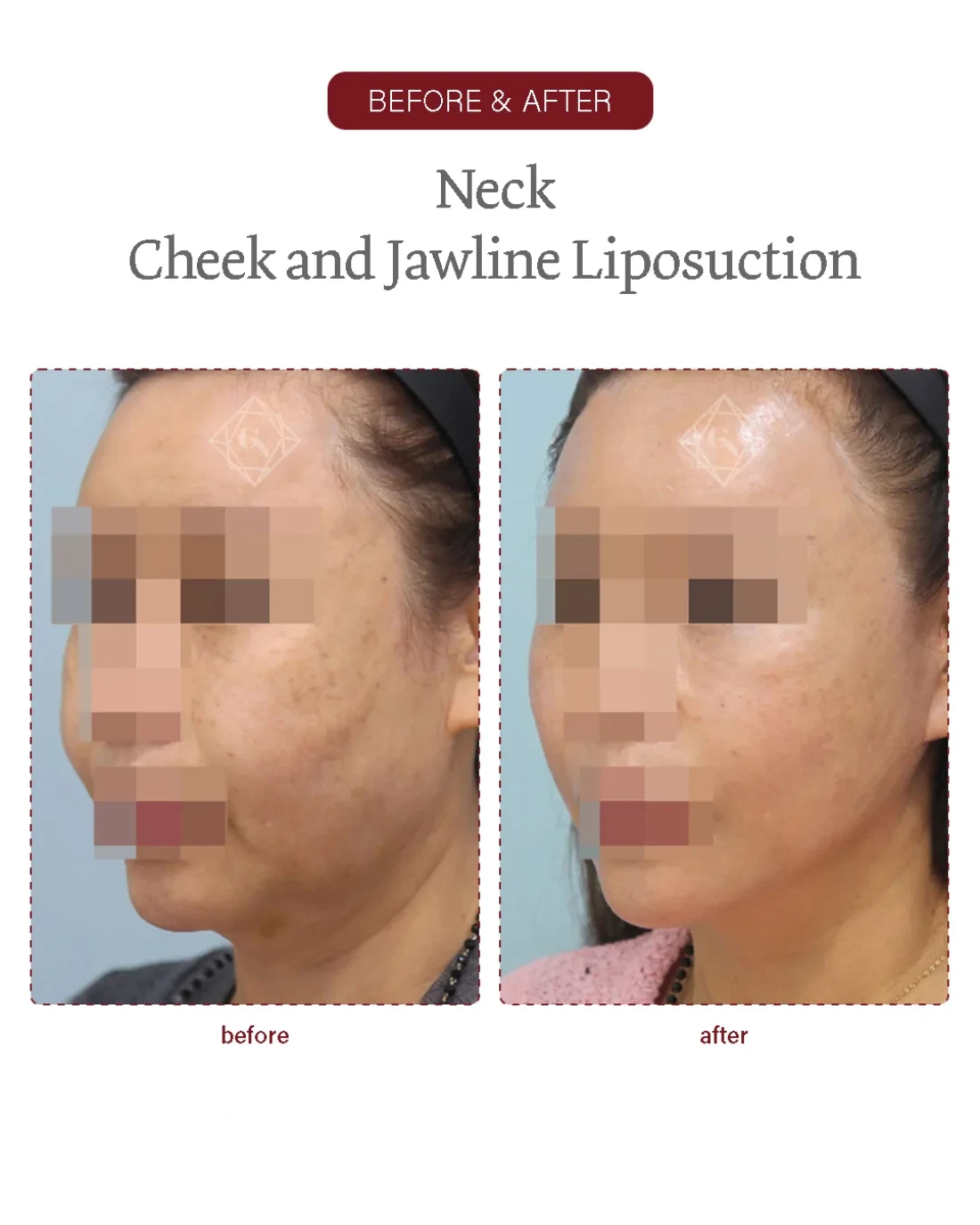
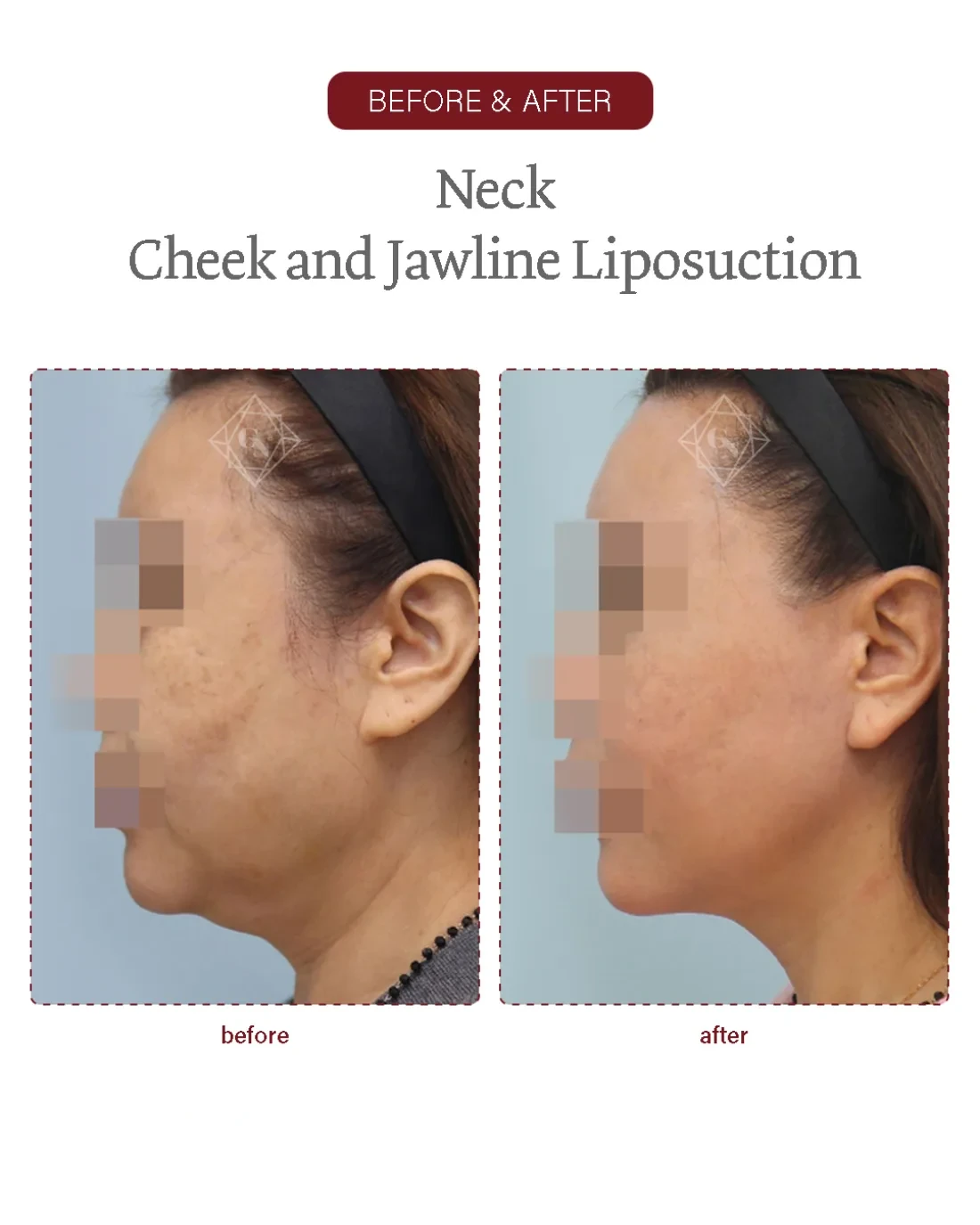
Double-chin and neck/cheek/jawline liposuction results of actual Garnet patients (published with consent). Results, recovery and suitability vary by individual, because skin quality and fat distribution differ, and outcomes are not guaranteed.
Dr. In-Soo Baek
Director & sole operating surgeon
Korean medical licence no. 77407
Operate on what you came for. Trained at Korea University Medical Center. Every case planned, performed and reviewed by the same hands.
1Operating surgeon
~2Surgeries per day
7Registered techniques
Board-certified plastic surgeon
Plastic surgery training at Korea University College of Medicine & graduate school
Korean Society of Plastic and Reconstructive Surgeons member, in its facial-contour, eye & rhinoplasty groups
Consults, operates and follows up each case himself
Peer-reviewed papers behind the facts on this page. Each describes findings in its own study group — not results at Garnet — and none predicts your own outcome.
Wang D et al. Fat Grafting Combined with Liposuction Improves Cosmetic Facial Contours in Asians. Clinics in Plastic Surgery. 2023. doi:10.1016/j.cps.2022.08.001
Collins PS et al. Evidence-Based Practice in Liposuction. Annals of Plastic Surgery. 2018. doi:10.1097/sap.0000000000001325
Rooijens PPGM et al. Combined Use of Ultrasound-Assisted Liposuction and Limited-Incision Platysmaplasty for Treatment of the Aging Neck. Aesthetic Plastic Surgery. 2008. doi:10.1007/s00266-008-9215-x
FAQ
Common questions
How long does facial liposuction recovery take?
Most patients are presentable for everyday life within one to two weeks, with swelling easing steadily after the first few days. The sharper, settled contour emerges over the following months as deeper swelling resolves, typically refining toward final over about 3 to 6 months.
What is facial liposuction recovery like day by day?
Days 1–2 bring swelling and tightness with the garment worn continuously; days 3–5 are often when swelling peaks then turns the corner; by days 6–7 the worst is usually behind you and the face reads as puffy but presentable. Each week after, the contour becomes cleaner.
When can I return to work after facial liposuction?
Many patients return to desk-based work within about a week and feel comfortable in face-to-face settings by around two weeks. Physically demanding work needs longer; confirm timing with your surgeon based on your recovery.
What aftercare follows facial liposuction?
The key elements are wearing the compression garment on schedule, sleeping with the head elevated, avoiding salty food, alcohol and strenuous activity early on, and protecting the access points. Your surgeon reviews progress at 1, 3 and 6 months and adjusts guidance to your healing.
Why do I need a compression garment?
The garment limits swelling, helps the skin redrape smoothly over the new contour, and supports the treated tissue as it settles. Wearing it consistently in the early days, then stepping it down on your surgeon's schedule, genuinely affects how clean the final jawline looks.
When can I fly home after facial liposuction?
International patients usually stay for the early swelling and first follow-up before travelling. Readiness depends on your individual recovery, so confirm the timing with your surgeon before booking a flight.
When can I exercise again?
Light walking is encouraged early to keep circulation moving, but strenuous exercise, heavy lifting and anything that raises facial blood pressure are held off for several weeks, since they worsen swelling. Your surgeon clears you to increase activity at your follow-ups.
Why does my face look fuller after surgery?
Swelling makes the face and neck look fuller than your starting point in the first days. This is normal and temporary. The contour the procedure achieved becomes visible as the swelling resolves over the following weeks and months.
How many days in Korea should I plan for facial liposuction?
Plan your stay around the early swelling and your first follow-up; the final result takes months. The how-long-to-stay-in-Korea guide helps map this against your trip, and later milestones can be reviewed remotely after you fly home.
Will the same surgeon manage my recovery?
At Garnet, yes. The same board-certified surgeon who performed your facial liposuction reviews your recovery at 1, 3 and 6 months, and international patients can have later follow-ups done remotely with photos through Korea's foreign-patient programme support.
My mom recently had a brow lift and lower blepharoplasty with Dr. Baek, and our experience has been wonderful so far. The Garnet team was incredibly kind and welcoming, with Kelly assisting us as our English consultant—she made everything…
I’m so happy I chose this clinic for my lower blepharoplasty. I was traveling from abroad by myself, so I was a little nervous, but from the beginning I felt comfortable and truly cared for. Everyone was kind, patient, and professional…
Came in for an in-person consult and ended up choosing Garnet and Dr.Baek for my non-incisional DES and tiplasty/alarplasty. I communicated with Kelly (English consultant) from the start till now (3 weeks post-op). She really help me feel…
My under-eyes have been sagging and folding for years... I tried to cover it up with makeup, but it actually got stuck in the wrinkles and made it stand out even more. While going for consultations, I noticed that the bigger the hospital…
Send photos and your question before you travel. An English-speaking coordinator reviews every enquiry and replies with guidance on whether surgery is appropriate, the likely plan and timing.
✓ Reviewed by the clinic coordinator, not a bot
✓ Photo-based pre-assessment before you fly
✓ Foreign-patient scheduling & after-care
✓ One surgeon for consultation, surgery and follow-up
Prefer to chat now? Reach the coordinator directly:









 T S7 months ago



