Facial liposuction works through a few tiny access points under the chin and in hidden creases, yet the word "scar" is what stops many people from considering it. They picture a visible line on the face. In reality those points are far smaller than the incisions most people imagine, and they typically fade to be hard to notice.
The short answer
Facial liposuction does not use long incisions. It works through a few tiny access points for the cannula, often just a few millimetres.
These are placed discreetly, typically under the chin (submental) and in hidden creases such as behind or near the ears, where they are not easily seen.
Small, well-placed access points generally heal into marks that fade and become inconspicuous over months.
How a scar matures depends on placement, care and your own skin, which is exactly what a pre-assessment and structured follow-up are for.
The reason facial liposuction scars are minor comes down to how the procedure is done. Fat is removed through a thin cannula, and the cannula only needs a tiny entry point to pass through — often just a few millimetres. There is no long incision and nothing is opened up; the access points are openings for an instrument and do not cut across the skin. This is the single biggest reason the scarring is so different from what the word "surgery" leads people to expect.
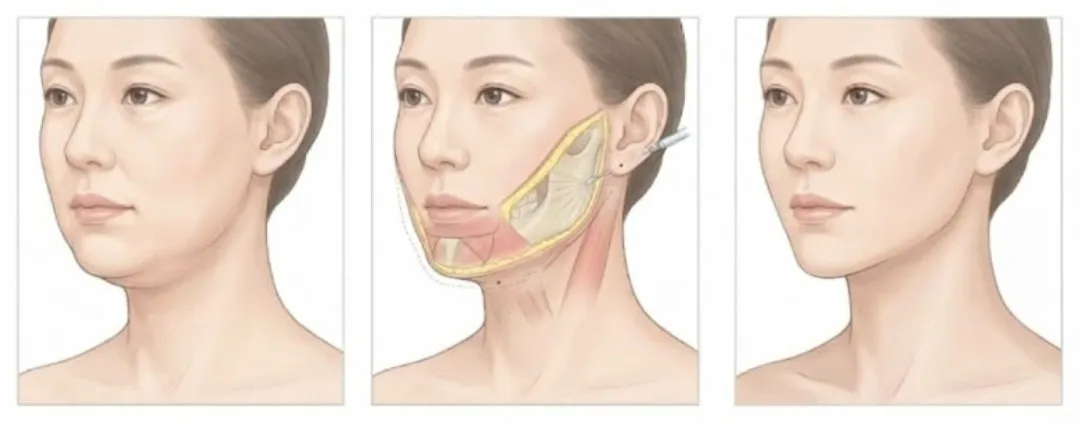
Illustration: excess fat along the jawline, cheeks and neck (outlined) is removed through tiny hidden openings for a sharper contour.
Garnet's facial liposuction is carried out through submental and hidden access (under the chin and in concealed creases) precisely so that the few small points needed are kept out of obvious view. Because the openings are small and the surrounding skin is not widely disturbed, they tend to heal quietly. The parent facial liposuction page covers the procedure as a whole; this page goes deep on the marks it leaves.
It helps to reset the mental image. Facial liposuction is a contouring procedure that works underneath the skin, and its incisions are the smallest part of it. The contour change is the visible result; the access points are designed to be the part nobody notices.
Placement
Where the access points are placed
Placement is everything with facial scars, and it is chosen for concealment. For facial liposuction the main access point is typically under the chin in the submental crease, where there is a natural shadow and fold that hides a small mark well. When the cheeks and jawline are treated, additional small points may be placed in hidden creases, such as just behind or below the ear, again where they sit out of normal sight lines.
Exactly which points are used depends on which areas are being treated (the neck, the cheeks, the jawline, the double-chin area, or a combination), and this is mapped to your particular case. Because the same board-certified surgeon plans and performs your surgery at a single-surgeon clinic, the placement decisions are made by the person who will actually be operating, with concealment in mind from the start.
The result of this thoughtful placement is that, once healed, the access points generally are not part of how your face reads to other people. They are small, they sit in shadows and creases, and they fade. Those three things together keep them inconspicuous.
Healing
How facial liposuction scars heal over time
Healing of a small access point follows a familiar arc. In the first weeks the point is closing and the surrounding area is settling through the swelling and bruising of the procedure generally. At this stage any mark can look a little pink or firm, which is normal early healing and not the final appearance. Over the following months the mark softens, flattens and fades, and small, well-placed points typically mature into something hard to notice.
Scar maturation is genuinely a months-long process, so patience matters; the appearance at a few weeks is not the appearance at six months. This is part of why facial liposuction recovery is best understood over time. The broader recovery timeline page sets out how swelling, bruising and the settling contour evolve alongside the access points.
Some temporary numbness or odd sensation around the access points and treated area is normal as small nerves recover, and it resolves over weeks. None of this is a scarring problem; it is ordinary healing. The thing to watch over the longer arc is simply that marks are fading and softening, which is the expected direction.
Aftercare
Caring for the access points as they heal
Good aftercare helps small marks fade well, and most of it is simple. Keeping the access points clean and following the wound-care instructions you are given protects the early healing. Once healed enough, sun protection over the area genuinely matters. Fresh marks can darken with sun exposure, so shielding them or using protection while they mature keeps them paler and less noticeable.
Avoiding anything that stresses the healing skin early on, such as picking, friction or harsh products over the area, also helps. Your surgeon and coordinator give you specific guidance for your case, and following it is the most reliable thing within your control. There is no need for anything elaborate; consistency with the basics does most of the work.
If you have any concern about how a mark is settling, you raise it at follow-up. Because facial liposuction relies on a compression garment in the early phase, that wrap is also part of the overall settling of the treated area. The page on what it feels like and the garment covers that side of recovery.
What affects it
What affects how the final scar looks
Several things shape how an access point ultimately looks. Placement and size are decided at surgery, and small, well-concealed points start with an advantage. Beyond that, your own skin and healing tendency play a role. Some people scar more readily than others, and individual factors such as a history of raised or pigmented scarring are worth flagging early so they can be planned for before surgery.
Aftercare is the part you most directly control: clean wound care, sun protection and avoiding early stress on the skin all influence the final result. Time is the other factor. Marks continue to improve over months, so "how will it look" is best judged once maturation is well along, several months after surgery.
Because so much depends on your individual case, a pre-assessment is genuinely useful. You can raise scarring specifically (your concerns, your skin history, where points would sit) in an online consultation before you ever commit, and get a frank answer about your own face.
At Garnet
How Garnet approaches scarring
Garnet's approach to facial liposuction is built around the same surgeon throughout, which matters for scars in two ways. First, the board-certified surgeon who plans where the small access points sit, with concealment in mind, is the one who performs the surgery, so the plan and the execution are the same hands. Second, the structured follow-ups at 1, 3 and 6 months mean the surgeon sees how your marks are maturing over the months that actually matter, beyond one early check.
The clinic caps the day to two surgeries with one patient per hour, so the work is unhurried and placement and closure are not rushed. For international patients, that continuity extends after you fly home, and the same surgeon can review how things are settling by message, which is reassuring when scar maturation plays out over months and you are no longer in Seoul.
None of this means promising a particular outcome, because individual healing varies. What it means is that the decisions that most affect your scarring (placement, careful technique, and follow-up over time) are made and overseen by one accountable surgeon. You can start with a no-obligation online assessment and ask about scarring directly.
Real Results
Before & After
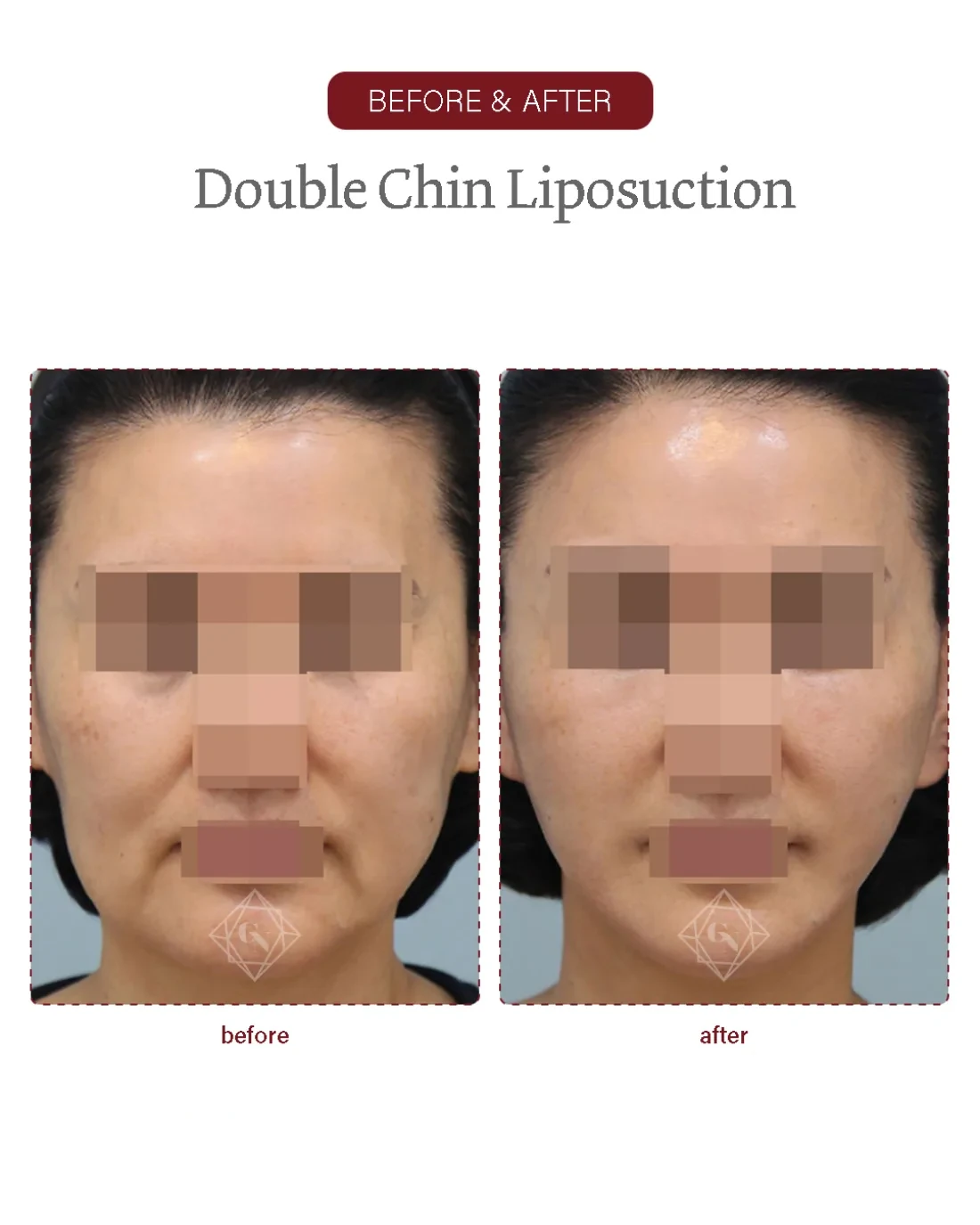
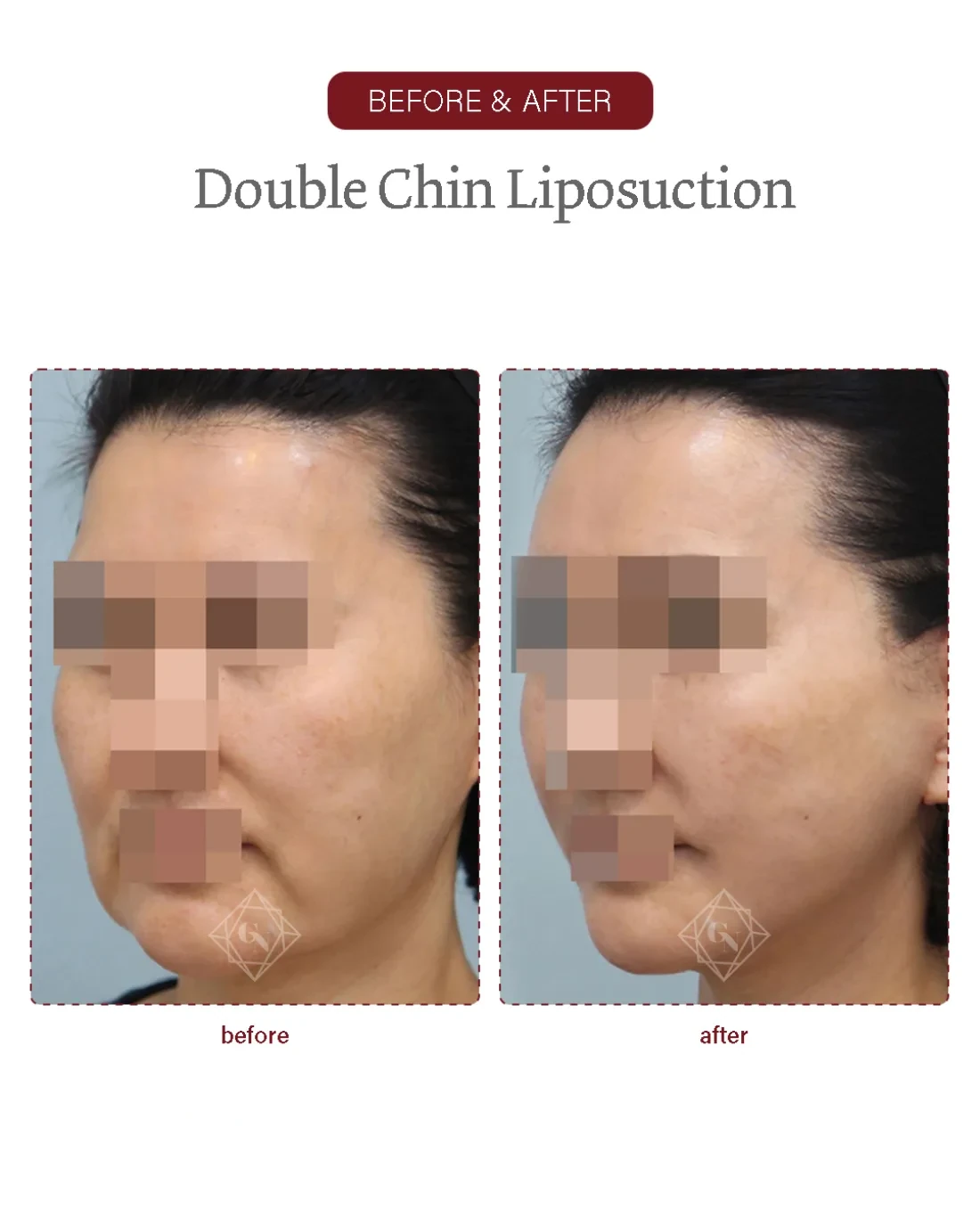
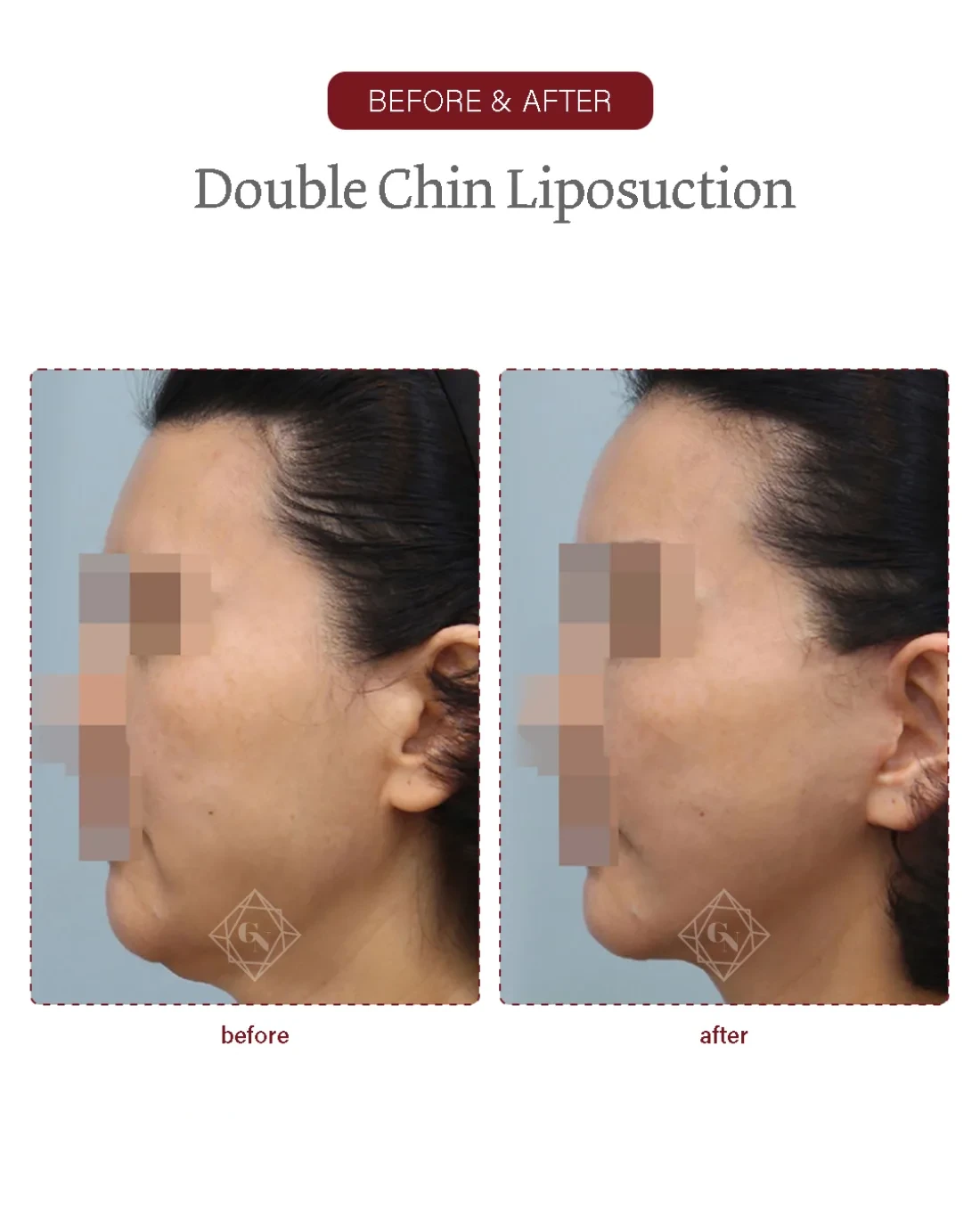
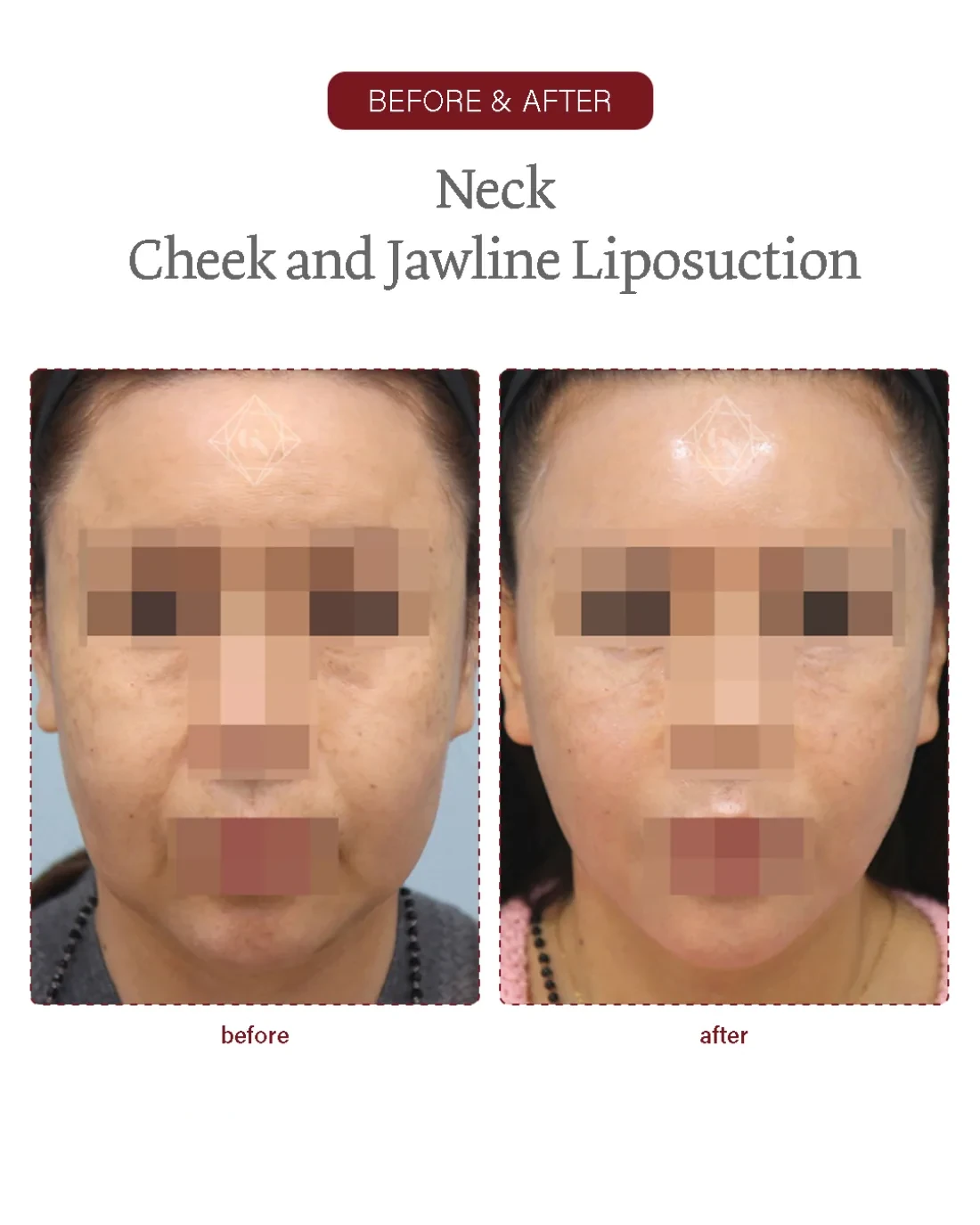
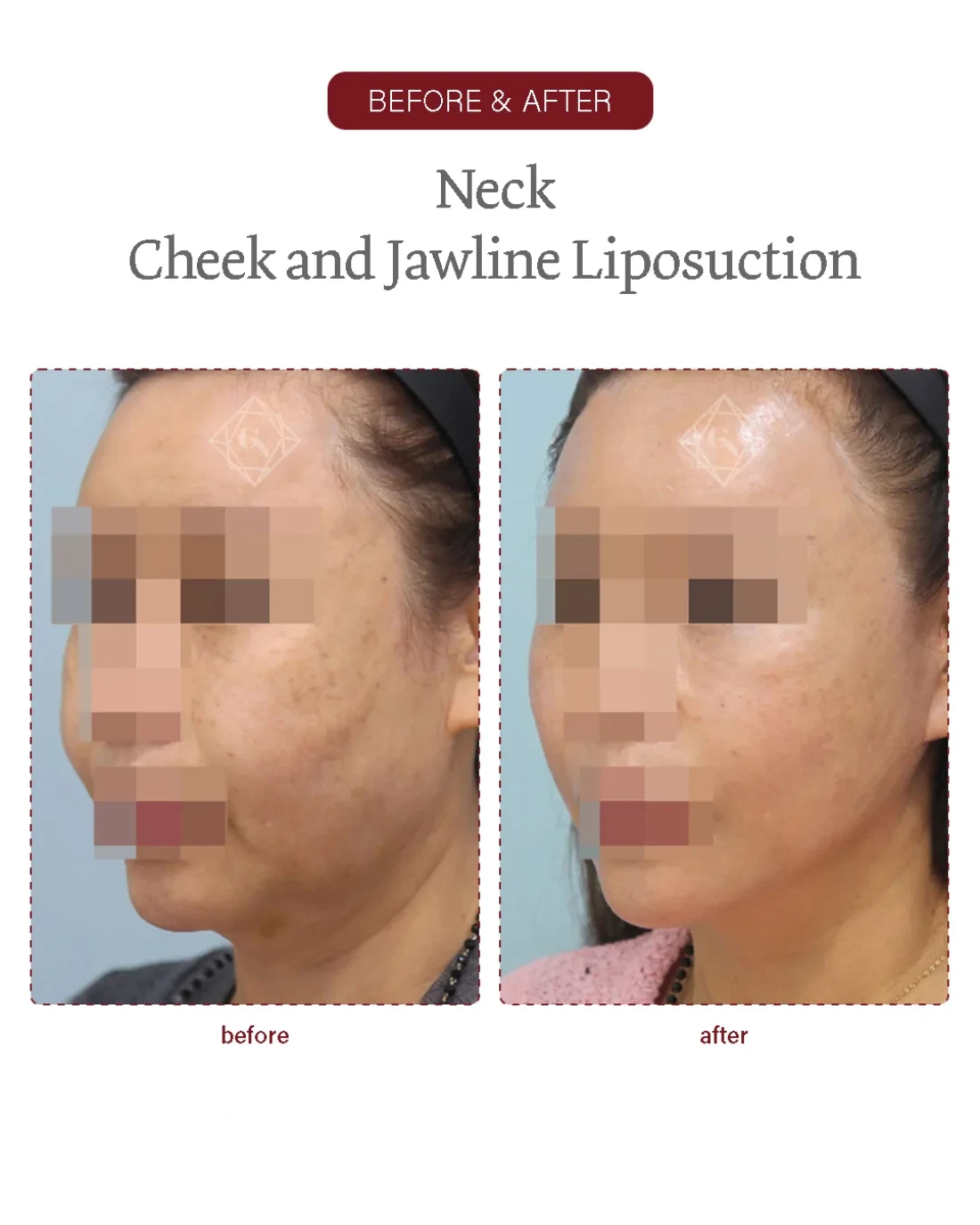
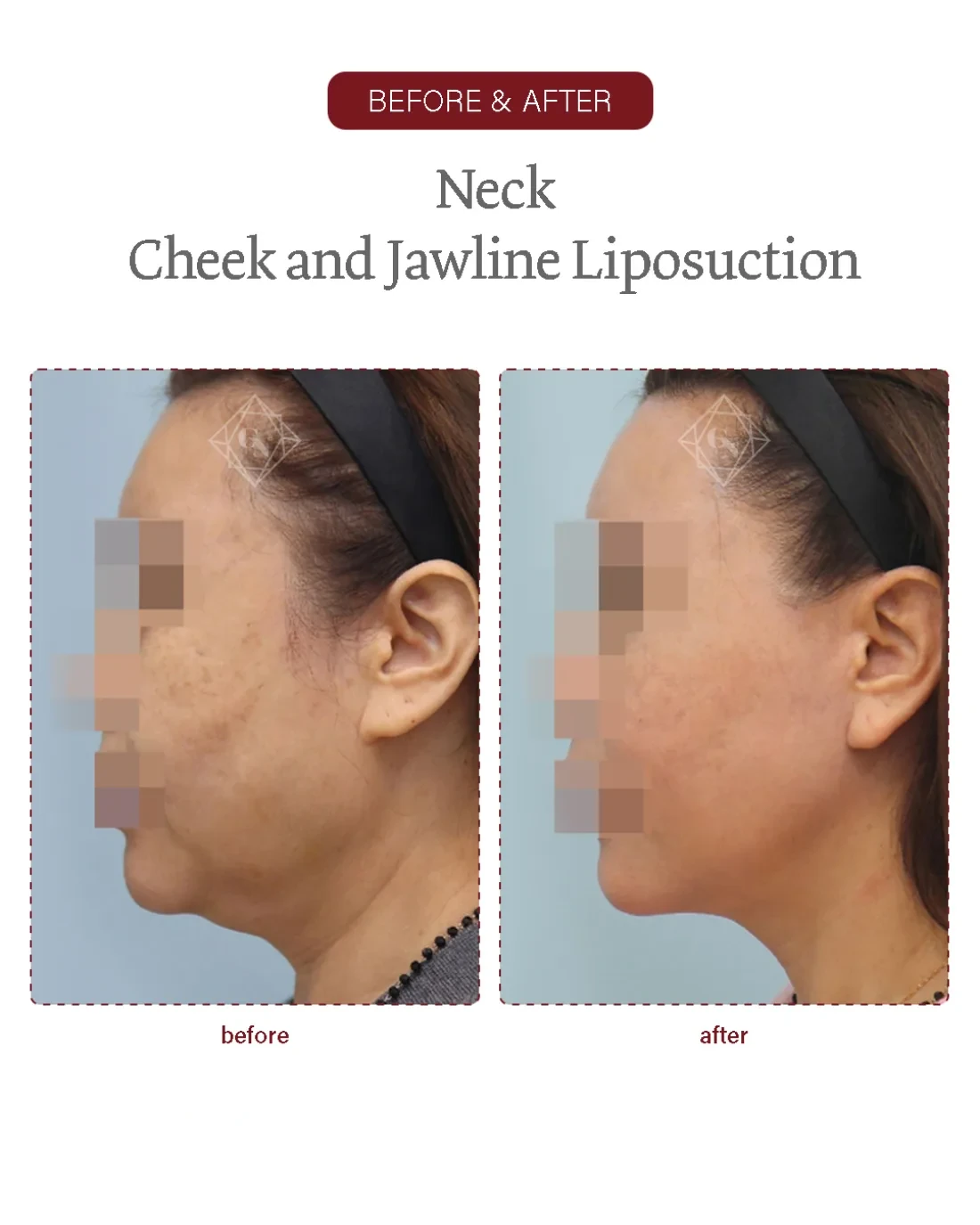
Double-chin and neck/cheek/jawline liposuction results of actual Garnet patients (published with consent). Results, recovery and suitability vary by individual, because skin quality and fat distribution differ, and outcomes are not guaranteed.
Dr. In-Soo Baek
Director & sole operating surgeon
Korean medical licence no. 77407
Operate on what you came for. Trained at Korea University Medical Center. Every case planned, performed and reviewed by the same hands.
1Operating surgeon
~2Surgeries per day
7Registered techniques
Board-certified plastic surgeon
Plastic surgery training at Korea University College of Medicine & graduate school
Korean Society of Plastic and Reconstructive Surgeons member, in its facial-contour, eye & rhinoplasty groups
Consults, operates and follows up each case himself
Peer-reviewed papers behind the facts on this page. Each describes findings in its own study group — not results at Garnet — and none predicts your own outcome.
Pinto EBDS et al. Submental Skin: Morphohistological Study of Interest to Liposuction. Aesthetic Plastic Surgery. 1997. doi:10.1007/s002669900142
Giampapa VC et al. Neck recontouring with suture suspension and liposuction: An alternative for the early rhytidectomy candidate. Aesthetic Plastic Surgery. 1995. doi:10.1007/bf00451093
Tapia A et al. Liposuction in cervical rejuvenation. Aesthetic Plastic Surgery. 1987. doi:10.1007/bf01575493
FAQ
Common questions
Where are the scars after facial liposuction?
Facial liposuction works through a few tiny access points and no long incisions. These are placed discreetly, typically under the chin in the submental crease, and when the cheeks or jawline are treated, in hidden creases such as just behind or below the ear, where they sit out of normal sight lines.
Will facial liposuction scars be visible?
They are designed not to be. The access points are only a few millimetres, placed in shadows and creases, and they fade and soften over months, so once healed they generally are not part of how your face reads to other people. Individual healing varies, which is why placement, aftercare and careful assessment matter.
How big are the access points?
They are small, often just a few millimetres, because they only need to allow a thin cannula to pass through. There is no long incision and nothing is opened up, which is the main reason facial liposuction scarring is so different from what the word surgery suggests.
How do facial liposuction scars heal over time?
In the first weeks a small point closes and may look slightly pink or firm, which is normal early healing. Over the following months it softens, flattens and fades, with small well-placed points typically maturing into something hard to notice. Maturation is a months-long process, so patience matters.
What can I do to keep the scars inconspicuous?
Keep the access points clean and follow your wound-care instructions, protect the area from sun once healed enough (fresh marks can darken with sun exposure), and avoid picking, friction or harsh products early on. Consistency with these basics does most of the work; your surgeon gives guidance specific to your case.
Does my own skin affect how the scar looks?
Yes. Individual healing tendency plays a role, since some people scar more readily than others. Factors such as a history of raised or pigmented scarring are worth flagging at consultation so they can be planned for. Placement and aftercare matter too, alongside time, since marks keep improving over months.
Is there numbness around the access points?
Some temporary numbness or odd sensation around the access points and treated area is normal as small nerves recover, and it resolves over weeks. This is ordinary healing and is unrelated to scarring. If anything is not settling as expected, you raise it at your follow-up.
Who decides where the access points go?
At a single-surgeon clinic, the same board-certified surgeon who performs your surgery plans the placement, with concealment in mind from the start. Because the planning and the operating are the same hands, the concealment decisions are made by the person who will actually be working on you.
How does Garnet follow up on scar healing?
Garnet organises structured reviews at 1, 3 and 6 months, so the surgeon sees how your marks are maturing over the months that matter. For international patients, the same surgeon can also review how things are settling by message after you fly home.
Can I ask about scarring before I book?
Yes. You can raise scarring specifically (your concerns, your skin history and where access points would sit) in an online consultation before committing, and get a frank, individual answer. The consultation and photo assessment carry no fee and no pressure to book.
My mom recently had a brow lift and lower blepharoplasty with Dr. Baek, and our experience has been wonderful so far. The Garnet team was incredibly kind and welcoming, with Kelly assisting us as our English consultant—she made everything…
I’m so happy I chose this clinic for my lower blepharoplasty. I was traveling from abroad by myself, so I was a little nervous, but from the beginning I felt comfortable and truly cared for. Everyone was kind, patient, and professional…
Came in for an in-person consult and ended up choosing Garnet and Dr.Baek for my non-incisional DES and tiplasty/alarplasty. I communicated with Kelly (English consultant) from the start till now (3 weeks post-op). She really help me feel…
My under-eyes have been sagging and folding for years... I tried to cover it up with makeup, but it actually got stuck in the wrinkles and made it stand out even more. While going for consultations, I noticed that the bigger the hospital…
If scarring concerns you, send photos for a no-obligation pre-assessment and ask the surgeon exactly where the small access points would sit before you book.
Send photos and your question before you travel. An English-speaking coordinator reviews every enquiry and replies with guidance on whether surgery is appropriate, the likely plan and timing.
✓ Reviewed by the clinic coordinator, not a bot
✓ Photo-based pre-assessment before you fly
✓ Foreign-patient scheduling & after-care
✓ One surgeon for consultation, surgery and follow-up
Prefer to chat now? Reach the coordinator directly:









 T S7 months ago



