Facial liposuction removes fat that does not come back, which makes it powerful and unforgiving in equal measure: too little leaves the original heaviness, too much can hollow or pull, and uneven removal can leave contour irregularities that only show once the swelling is gone. Revision is its own kind of correction. The right fix for the neck, cheeks or jawline is sometimes more liposuction, sometimes adding fat back, and very often simply waiting. This page sets out what facial liposuction revision really involves.
The short answer
Most early bumpiness, firmness and asymmetry after facial liposuction is swelling and healing tissue that can take months to fully settle.
Common revision reasons are under-resection (heaviness that remains), over-resection (hollowing or an over-pulled look), contour irregularities or lumpiness, asymmetry, and skin that has not redraped.
The fix is matched to the problem: careful touch-up liposuction or scar-tissue release for too much fat left, versus fat grafting to refill where too much was taken.
A careful assessment may conclude that the right answer is to wait for full settling, to treat the skin, or that revision is not warranted at all.
Facial liposuction is contouring by subtraction: fat is removed from the neck, cheeks, jawline or under the chin through hidden access points, and because fat cells do not regrow, the change is meant to be lasting. That permanence is exactly why an imperfect result is frustrating. The issues people bring to revision come from how much fat was taken, how evenly, and how the skin responded afterwards.
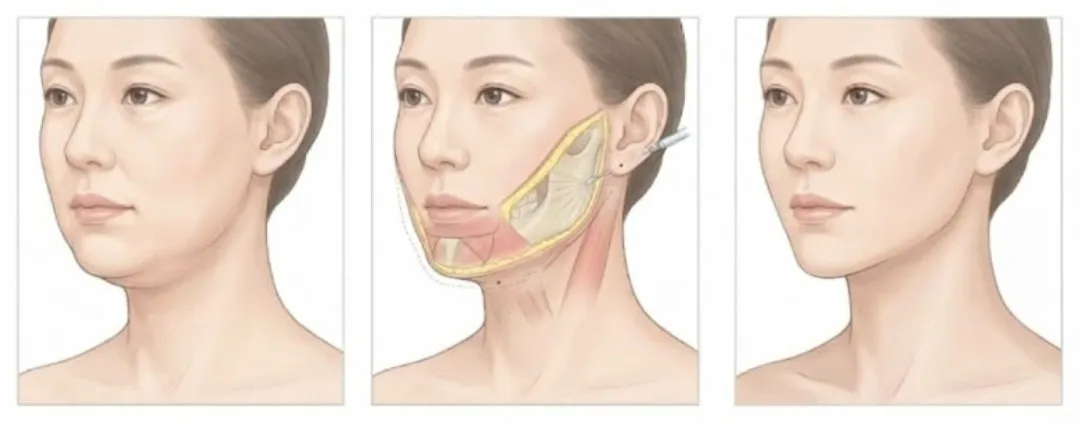
Illustration: excess fat along the jawline, cheeks and neck (outlined) is removed through tiny hidden openings for a sharper contour.
The recurring concerns fall into a few groups. Under-resection leaves the original fullness largely in place, so the jawline or double chin still looks heavy. Over-resection removes too much, which can hollow the cheeks, leave the neck looking gaunt or pulled, or expose underlying structures. Uneven removal leaves contour irregularities such as ridges, lumpiness or a step between treated and untreated areas. And separately from the fat, skin that was already lax may not redrape over a newly slimmer contour, leaving looseness that liposuction alone cannot tighten.
Separating these is essential, because they pull in opposite directions. Too much fat left over may call for a careful touch-up; too much removed usually needs fat added back; an irregular surface may need releasing and smoothing; and loose skin is a different problem again. Treating all dissatisfaction as a reason to remove more fat is the classic way to turn one problem into two.
What settles
What settles on its own after facial liposuction, and what does not
Much of what worries people in the first months after facial liposuction is swelling and healing. The final shape comes later. The neck and jaw swell, then firm up as the tissue heals, and this firmness can feel and look lumpy or uneven before it softens. Numbness, tightness and a sensation of hardness under the chin are all part of the normal arc, and the area genuinely keeps changing for several months. The page on the facial liposuction recovery timeline sets out that pattern in detail.
Asymmetry early on is especially misleading. The two sides rarely swell or resolve at the same pace, so a face that looks uneven at a few weeks often balances out by a few months. Contour irregularities you can feel under the skin in the first weeks are frequently healing tissue and internal scarring that soften with time and gentle massage. Judging the result, and certainly operating on it, before this has settled leads people to chase problems that would have resolved on their own.
What does not reliably settle is a genuine excess of fat that remains once swelling is gone, a true hollow or over-resected area, a persistent ridge or step that stays after several months, or skin laxity that becomes more obvious as the swelling that was filling it disappears. These are the concerns where revision is reasonably considered, once enough time has passed to be sure they are real and are more than unfinished healing.
Over or under
When too much was removed and when too little was
The direction of the problem decides the fix. Under-resection, where heaviness remains because not enough fat was removed, can sometimes be improved with a conservative, carefully planned touch-up to the neck, cheek or jawline, taking only the small additional amount needed to even the contour. Restraint matters here: the temptation to over-correct on a second pass is how an under-resection becomes an over-resection.
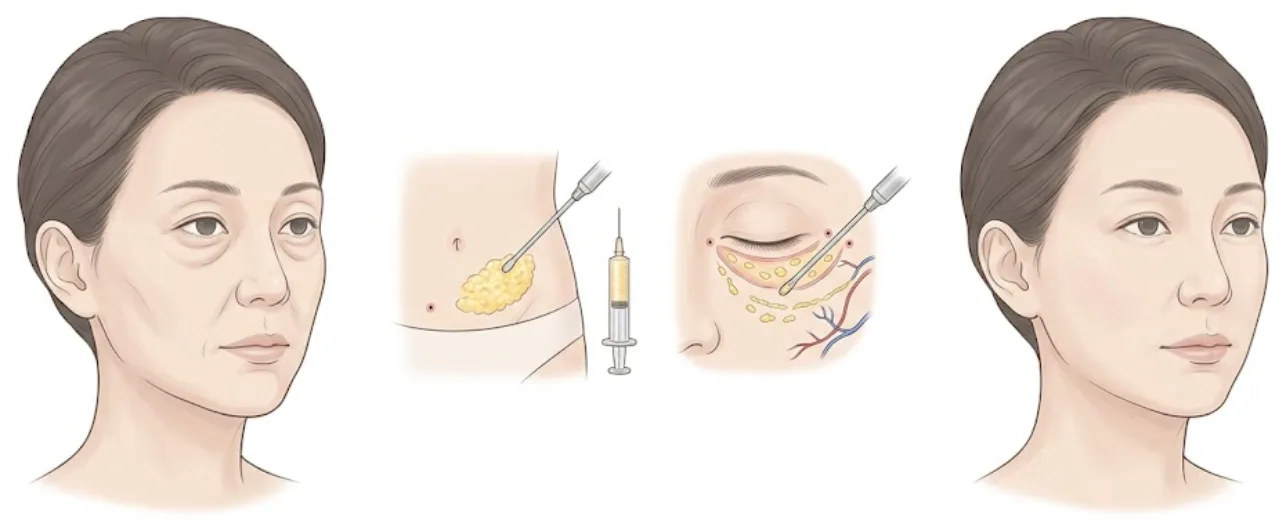
Illustration: the patient's own fat is gently taken from a donor area such as the abdomen, refined, and placed in small amounts where volume has been lost.
Over-resection is the harder direction, because fat that has been removed cannot simply be put back by liposuction. Where too much was taken (a hollowed cheek, a gaunt or over-pulled neck), the corrective tool is usually fat grafting, refilling the over-thinned area with the patient's own fat to restore a softer, more natural contour. Choosing how much to graft, and accepting that a proportion of grafted fat is reabsorbed, is part of a realistic plan.
Contour irregularities and lumpiness sit between the two: a ridge or step is sometimes a small excess that a touch-up smooths, sometimes internal scar tissue that needs releasing, and sometimes an over-thinned zone that needs a little fat added beside it to blend. Skin laxity, finally, is its own category. When slimming the contour has unmasked loose skin under the jaw or chin, the answer is a skin-tightening or lifting approach, and more fat removal will not help. Working out which of these you actually have is the entire point of a careful assessment.
Timing
When to wait and when to act on a liposuction revision
Timing is the most important decision in facial liposuction revision, and the usual answer is to wait, often longer than people expect. The neck and lower face are slow to settle: swelling, firmness and internal scarring continue to change for several months, and contour can keep refining well past the point most people assume it is final. Operating into tissue that is still healing and inflamed makes a clean, even correction much harder and risks creating new irregularities.
As a general principle, a surgeon prefers to let the original result fully mature before considering revision, so the assessment is made on a settled face. For most aesthetic concerns (bumpiness, asymmetry, a contour that does not yet look refined), the most skilled thing a surgeon can do is recommend patience, gentle massage where appropriate, and a review later. The exception is a clear early complication, which is reviewed promptly.
Once enough time has passed and a concern is genuinely real, there is room to plan properly: deciding whether the fix is touch-up liposuction, fat grafting, scar release or a skin-tightening approach, and what a realistic improvement looks like. The page on facial liposuction swelling and bruising can help you judge whether what you are seeing is still part of normal settling before you conclude that revision is needed at all.
Technique
What a facial liposuction revision involves
A revision assessment starts with the history of the first operation: what areas were treated, roughly how much was removed, how long ago, and how the contour changed as it settled. The surgeon examines the neck, jawline and cheeks for true excess versus over-resection, feels for ridges and scar tissue, checks the symmetry of the two sides, and assesses how well the skin has redraped. The point is to tell a fat problem from a skin problem from a scarring problem.
Where a touch-up is warranted, the surgeon works through hidden access points similar to the original, removing only the small additional amount needed and feathering the edges so there is no step between treated areas. The work is deliberate and conservative, because the field has already been operated on and the margins for error are smaller. Where the issue is over-resection, the plan shifts to fat grafting: fat is harvested, processed and placed in small amounts to refill the hollow and blend the contour. Where there is internal scarring, releasing and smoothing it may be combined with one of these. Because facial liposuction uses small, hidden incisions, a well-planned revision does not usually add conspicuous new scars, and the scars and healing page covers how these settle.
Revision is more demanding than a first liposuction and is best done by an experienced surgeon working on a settled face, because correcting an uneven or over-thinned contour is finer work than the original removal. As with the first procedure, recovery follows a pattern of swelling, firmness and gradually softening tissue. The aim throughout is to solve the specific problem with the smallest appropriate step. Removing more fat in the hope the shape improves is not a plan.
At Garnet
How Garnet approaches facial liposuction revision
Garnet is a single-surgeon clinic in Apgujeong, Seoul. The only operating doctor is Dr. In-Soo Baek, a board-certified plastic surgeon (Korean medical licence no. 77407). He assesses each revision case himself, plans it himself, performs it himself and reviews every follow-up, with structured reviews at 1, 3 and 6 months. For revision, that continuity is especially valuable: the surgeon who examines your earlier liposuction is the one accountable for the plan and the outcome.
Revision assessment at Garnet is deliberately unhurried. That includes being willing to say that a lumpy or uneven contour simply needs more time to settle, that the right fix is grafting fat back instead of removing more, that loose skin is a separate problem from fat, or that revision is not warranted at all. There is no consultation fee and no pressure to book; a decision about re-operating on the neck or jaw should never be rushed.
If you are considering correcting an earlier facial liposuction from abroad, you can begin without travelling. Send the details of your first liposuction with current photos of your neck and jawline for a pre-assessment. The international patient guide explains how stay length and remote follow-up are handled.
Real Results
Before & After
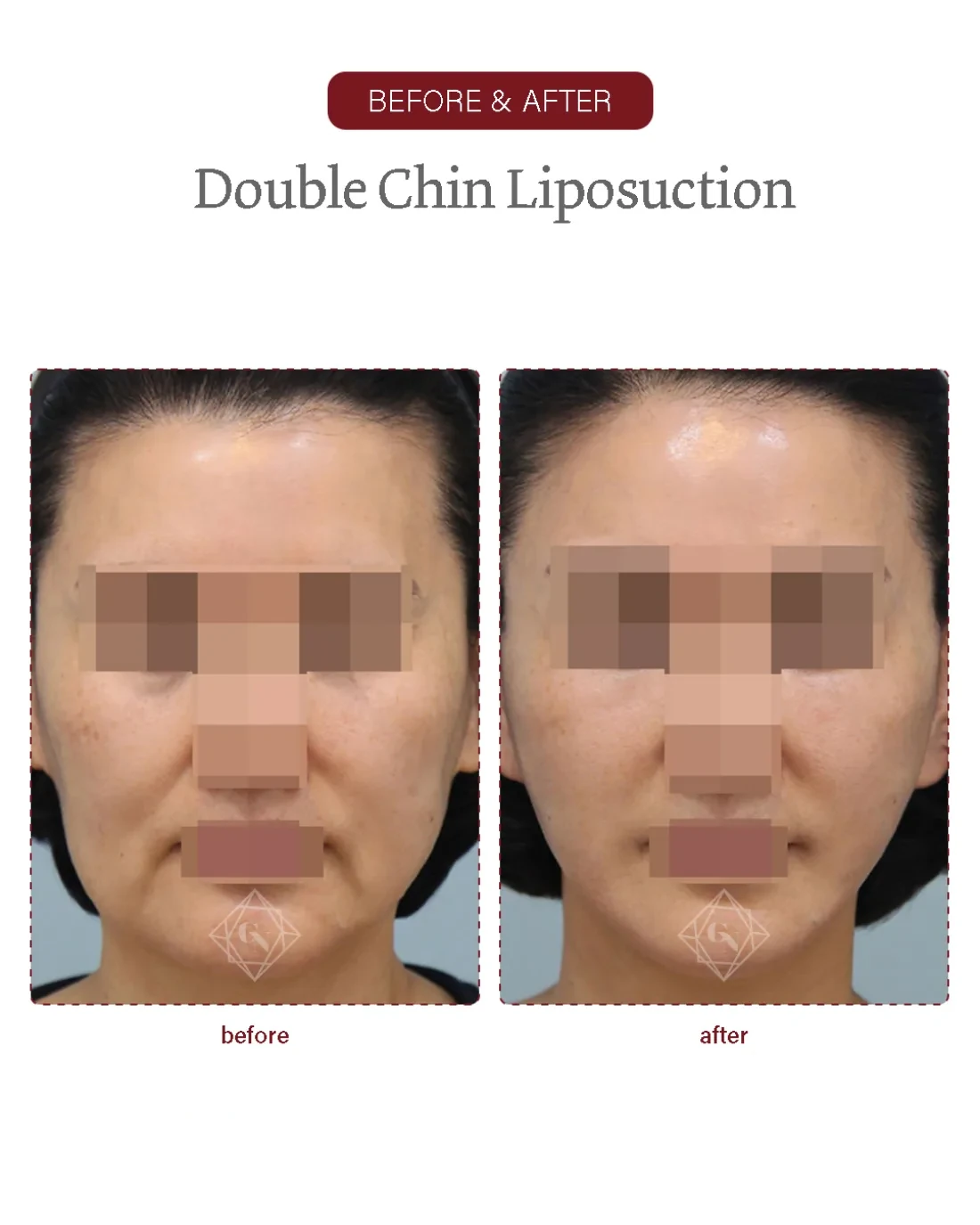
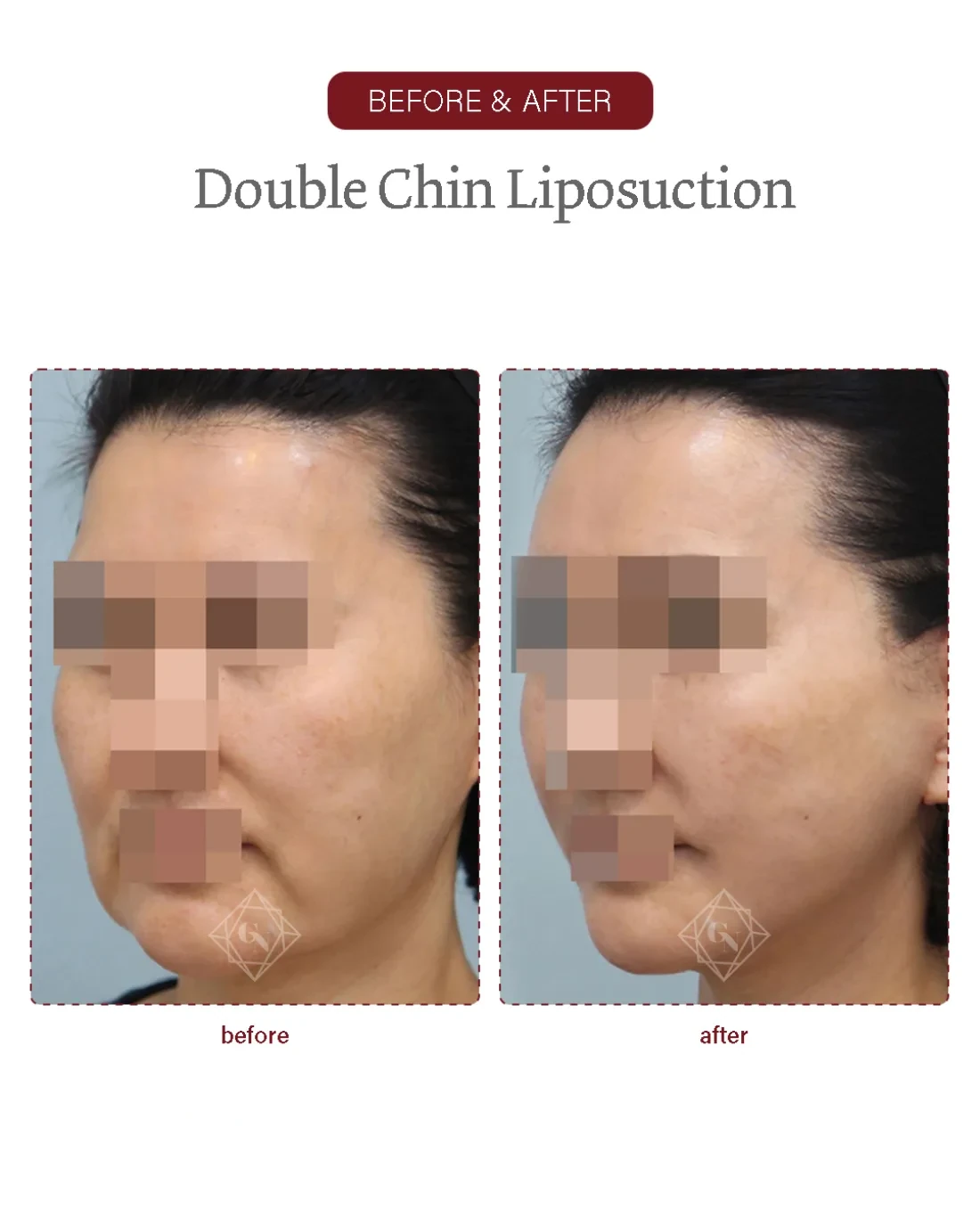
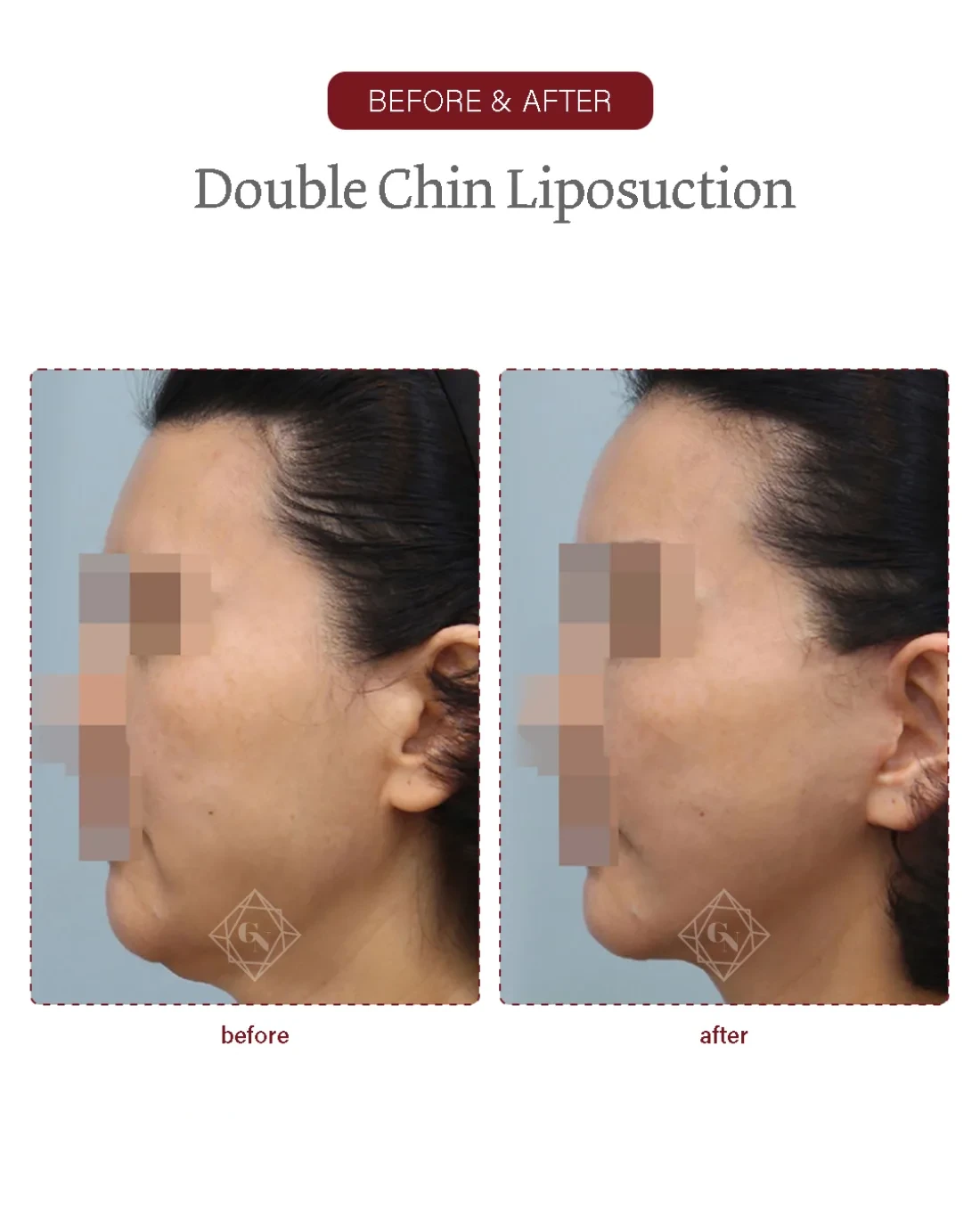
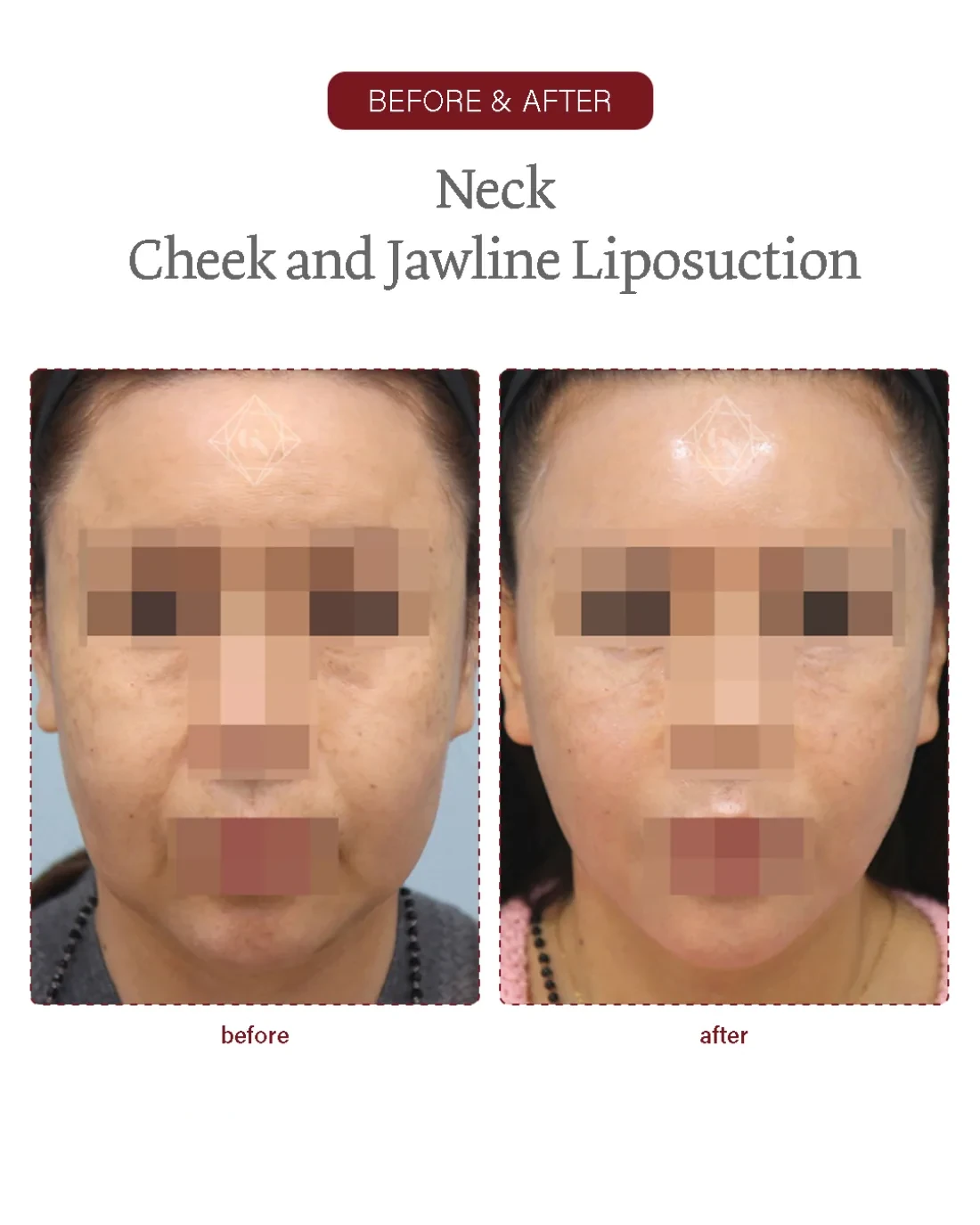
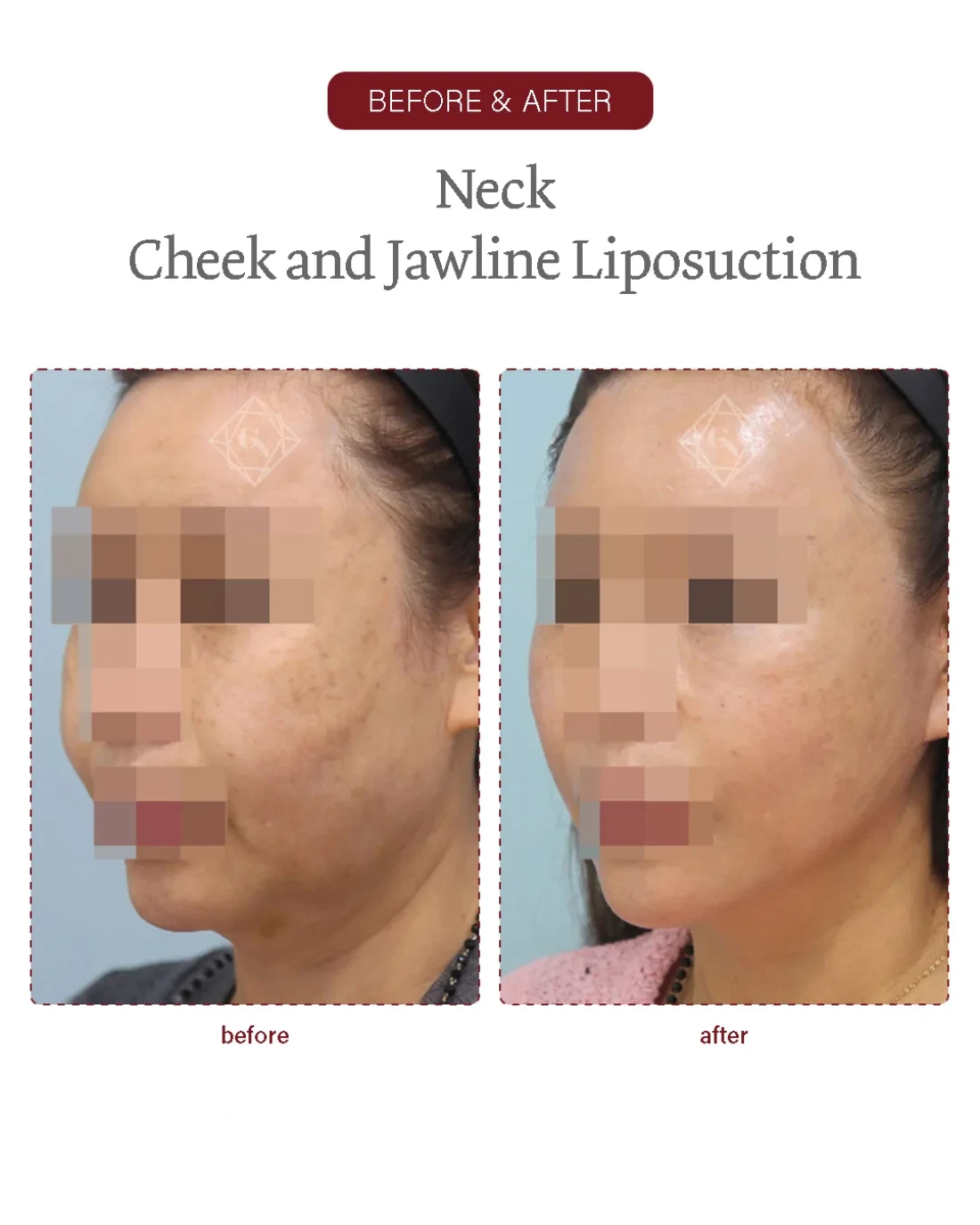
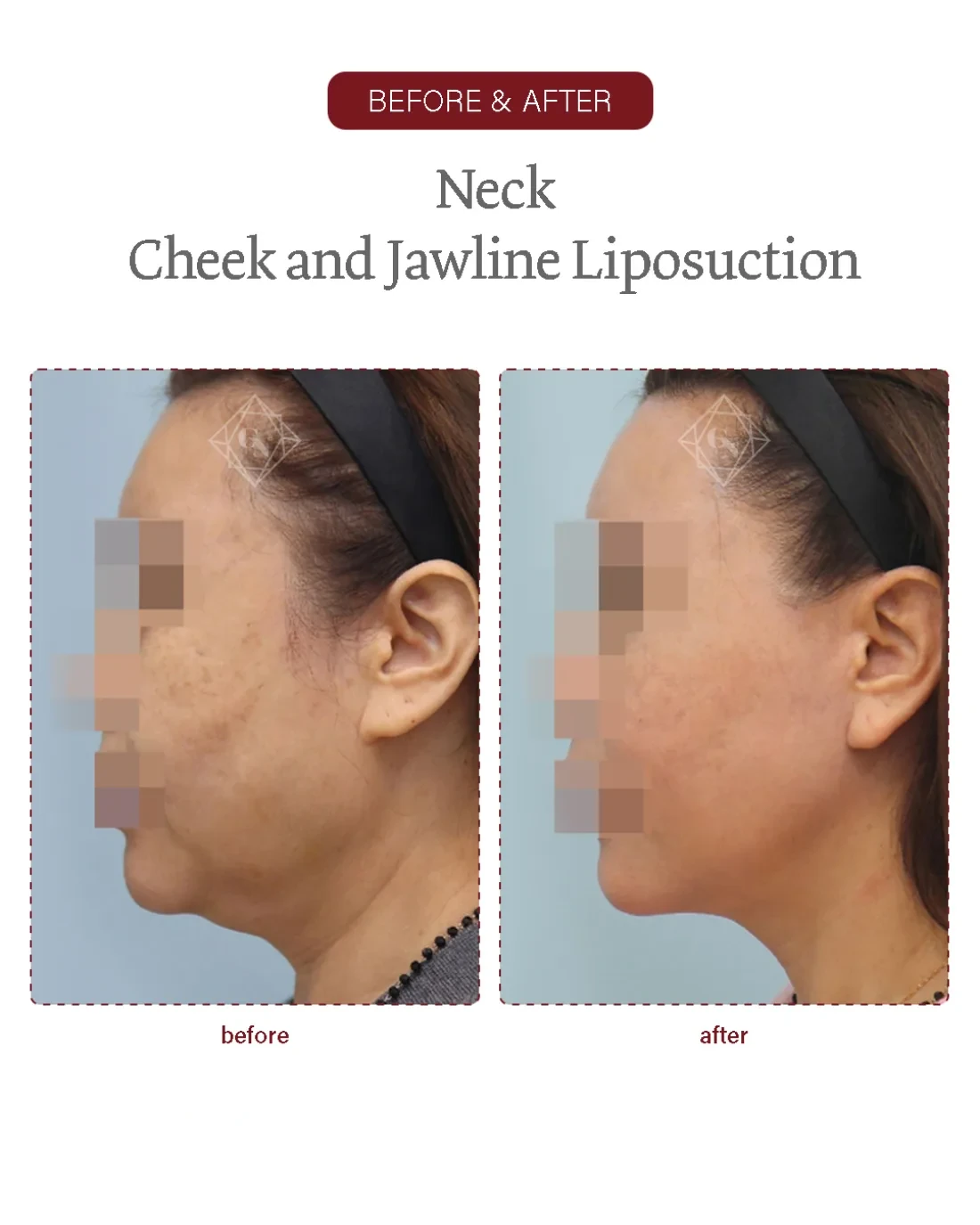
Double-chin and neck/cheek/jawline liposuction results of actual Garnet patients (published with consent). Results, recovery and suitability vary by individual, because skin quality and fat distribution differ, and outcomes are not guaranteed.
Dr. In-Soo Baek
Director & sole operating surgeon
Korean medical licence no. 77407
Operate on what you came for. Trained at Korea University Medical Center. Every case planned, performed and reviewed by the same hands.
1Operating surgeon
~2Surgeries per day
7Registered techniques
Board-certified plastic surgeon
Plastic surgery training at Korea University College of Medicine & graduate school
Korean Society of Plastic and Reconstructive Surgeons member, in its facial-contour, eye & rhinoplasty groups
Consults, operates and follows up each case himself
Peer-reviewed papers behind the facts on this page. Each describes findings in its own study group — not results at Garnet — and none predicts your own outcome.
Doerr TD. Lipoplasty of the face and neck. Current Opinion in Otolaryngology & Head and Neck Surgery. 2007. doi:10.1097/moo.0b013e32825b0777
Yoho RA et al. Review of the Liposuction, Abdominoplasty, and Face-Lift Mortality and Morbidity Risk Literature. Dermatologic Surgery. 2005. doi:10.1097/00042728-200507000-00001
FAQ
Common questions
Can facial liposuction be revised or corrected?
Often, yes, but it depends on the concern. Under-resection (heaviness that remains), over-resection (hollowing or an over-pulled look), contour irregularities, asymmetry and unmasked skin laxity can each potentially be improved, but with different methods. Revision is more demanding than the first procedure because the field has already been operated on, so it should follow a careful assessment instead of a quick decision.
My neck or jaw is lumpy and uneven after liposuction. Is that permanent?
Usually not. Lumpiness, firmness and unevenness in the first weeks to months are typically swelling and healing tissue, including internal scarring, which softens over time and often with gentle massage. The neck and lower face settle slowly, so a contour that feels bumpy early frequently smooths out. A ridge or step that clearly persists after several months can be assessed, but operating too early risks making it worse.
What if too much fat was removed and my face looks hollow?
Fat removed by liposuction cannot be put back by more liposuction, so the corrective tool for over-resection is usually fat grafting: refilling the over-thinned area with your own fat to restore a softer, more natural contour. A realistic plan accounts for the fact that a proportion of grafted fat is reabsorbed, so the amount placed and the timing are planned carefully.
What if not enough fat was removed?
Under-resection, meaning heaviness that remains because too little was taken, can sometimes be improved with a conservative, carefully planned touch-up that removes only the small additional amount needed to even the contour. Restraint is essential, because over-correcting on a second pass is how under-resection turns into over-resection, which is harder to fix.
What does facial liposuction revision involve?
It depends on the problem. A touch-up removes a small additional amount through hidden access points and feathers the edges; over-resection is corrected by grafting fat back; internal scarring may be released and smoothed; and unmasked loose skin needs a skin-tightening or lifting approach. Because facial liposuction uses small hidden incisions, a well-planned revision does not usually add conspicuous scars.
When is facial liposuction revision needed?
Only once a concern is genuinely real and is more than unfinished healing. Reasons include true excess fat that remains after swelling resolves, a real hollow or over-resected area, a persistent ridge or step, asymmetry that does not even out, or skin laxity unmasked as the swelling subsides. Most early bumpiness and asymmetry settle on their own, so timing the assessment well is half the decision.
How long should I wait before revising facial liposuction?
Often longer than people expect. The neck and lower face settle slowly, with swelling, firmness and internal scarring continuing to change for several months. Surgeons generally prefer to assess and revise on a fully settled face. The exception is a clear early complication, which is reviewed promptly; most aesthetic concerns are best reassessed once healing is well advanced.
Is loose skin after liposuction fixed by more liposuction?
No. If slimming the contour has unmasked skin that was already lax and has not redraped, removing more fat will not tighten it and can make the looseness more obvious. Skin laxity is a separate problem addressed by skin-tightening or lifting approaches, so distinguishing a skin problem from a fat problem is an important part of a revision assessment.
Is facial liposuction revision riskier than the first surgery?
It is more demanding. The field has already been operated on, scar tissue alters the planes, and correcting an uneven or over-thinned contour is finer work than the original removal, with smaller margins for error. That is why revision is best done by an experienced surgeon working on a settled face after a careful assessment, with a clear plan for whether the fix is liposuction, grafting or skin tightening.
Can I get a facial liposuction revision assessment from abroad before travelling?
Yes. You can send the history of your first liposuction and current photos for a pre-assessment online before committing to travel. You get a realistic view of what revision could and could not achieve, and of whether the right step is to wait, remove a little more fat, graft fat back, or treat the skin, before planning a trip.
My mom recently had a brow lift and lower blepharoplasty with Dr. Baek, and our experience has been wonderful so far. The Garnet team was incredibly kind and welcoming, with Kelly assisting us as our English consultant—she made everything…
I’m so happy I chose this clinic for my lower blepharoplasty. I was traveling from abroad by myself, so I was a little nervous, but from the beginning I felt comfortable and truly cared for. Everyone was kind, patient, and professional…
Came in for an in-person consult and ended up choosing Garnet and Dr.Baek for my non-incisional DES and tiplasty/alarplasty. I communicated with Kelly (English consultant) from the start till now (3 weeks post-op). She really help me feel…
My under-eyes have been sagging and folding for years... I tried to cover it up with makeup, but it actually got stuck in the wrinkles and made it stand out even more. While going for consultations, I noticed that the bigger the hospital…
If you are considering correcting or refining an earlier facial liposuction, send your history and photos for a no-obligation pre-assessment. It includes a frank view on whether the fix is more liposuction, fat grafting, or simply waiting for the contour to settle.
Send photos and your question before you travel. An English-speaking coordinator reviews every enquiry and replies with guidance on whether surgery is appropriate, the likely plan and timing.
✓ Reviewed by the clinic coordinator, not a bot
✓ Photo-based pre-assessment before you fly
✓ Foreign-patient scheduling & after-care
✓ One surgeon for consultation, surgery and follow-up
Prefer to chat now? Reach the coordinator directly:








 T S7 months ago



