Facial liposuction and facial fat grafting sit at opposite ends of the same idea: one removes unwanted fat to sharpen a heavy jawline or double chin, the other transplants your own fat to restore volume that has hollowed with age. They are two different operations. Which one fits depends entirely on whether your face has too much volume, too little, or, very commonly, both at once. This page sets the two out side by side so you can see where you actually sit.
The short answer
Facial liposuction removes fat from the neck, cheeks, jawline and double chin through a hidden submental access point to define a heavy lower face.
Fat grafting adds fat: your own harvested, PRP-supplemented micro-fat is transplanted to hollow areas such as the under-eye, temples or cheeks through fine cannula access, with no scar line.
The deciding factor is not which is better but what your face needs: excess fat calls for removal, lost volume calls for grafting, and many faces need a measure of both.
The same board-certified surgeon assesses volume across the whole face and will tell you plainly whether you need one, the other, both, or neither yet.
The core difference: taking volume away vs adding it
The cleanest way to understand these two procedures is by direction. Facial liposuction is subtractive: it removes fat from areas where there is too much of it (the neck, cheeks, jawline and double chin) to reveal a sharper, lighter lower face. At Garnet it is done through a hidden submental or discreet access point, sculpting the fat that blurs the jaw and neck line. Fat grafting is the opposite: it is additive. Fat is harvested from your abdomen or thigh, refined, and transplanted as PRP-supplemented micro-fat into areas that have lost volume, restoring softness to hollow under-eyes, flat temples or deflated cheeks.
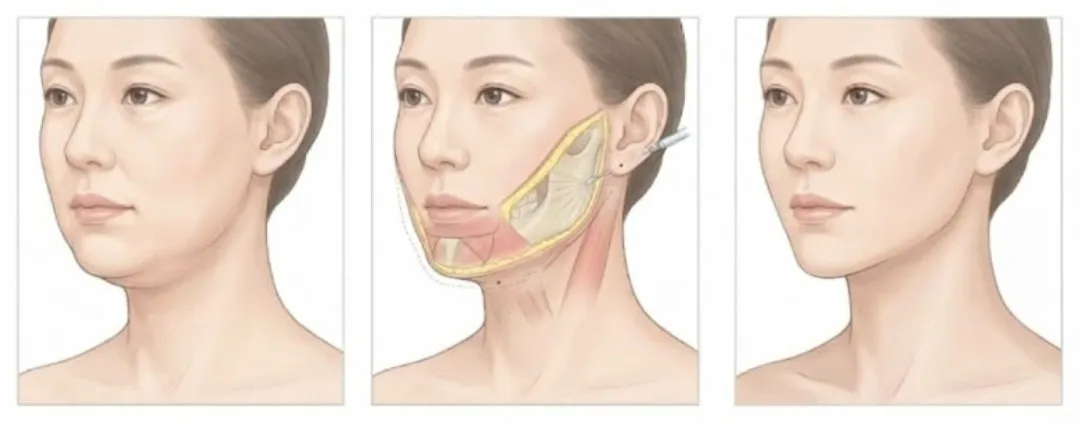
Illustration: excess fat along the jawline, cheeks and neck (outlined) is removed through tiny hidden openings for a sharper contour.
Because they move in opposite directions, they answer opposite complaints. If your face feels heavy, full or undefined, removal is the tool. If it feels gaunt, tired or sunken, addition is the tool. The reason they are so often discussed together is that a single face can be heavy in one zone and hollow in another. A full jawline above a deflated mid-face is a familiar pattern, so the assessment covers the jaw, cheeks, temples and under-eyes together, beyond the one feature you came in about.
What each does
What facial liposuction and fat grafting each do
Facial liposuction at Garnet targets the neck, cheek, jawline and double-chin fat through a hidden submental access point, so the fat that softens the jaw and blurs the neck is removed and the underlying line is allowed to show. It is contouring by removal. The change is a crisper jaw and a cleaner neck; nothing is lifted. It does not tighten heavy, sagging skin the way a surgical lift does, which matters when deciding whether liposuction alone is enough; the fuller picture of who it helps is in who facial liposuction is for.
Fat grafting works the other way. Fat is harvested from the abdomen or thigh through cannula access that leaves no scar line, processed into micro-fat and supplemented with PRP, then placed in fine passes into the areas that have lost their cushion. Because it uses your own tissue, it integrates naturally when it takes, and it can be layered precisely, a little under the eye and a little in the temple, instead of in one block. Not every transplanted cell survives, which is a normal part of how grafting behaves and is covered in how long fat grafting lasts.
Who each suits
Who facial liposuction or fat grafting suits
Facial liposuction suits a face carrying genuine excess fat (a soft jawline, a double chin, fullness under the cheeks or along the neck) over skin with reasonable elasticity that will re-drape once the fat beneath it is reduced. Skin that is heavy and lax, beyond merely full, needs something else; there, removing fat can leave the skin looking emptier. That is why the assessment matters more than the request. If loose skin is the real issue, a lift addresses it: see the corset platysmaplasty and neck-line options.
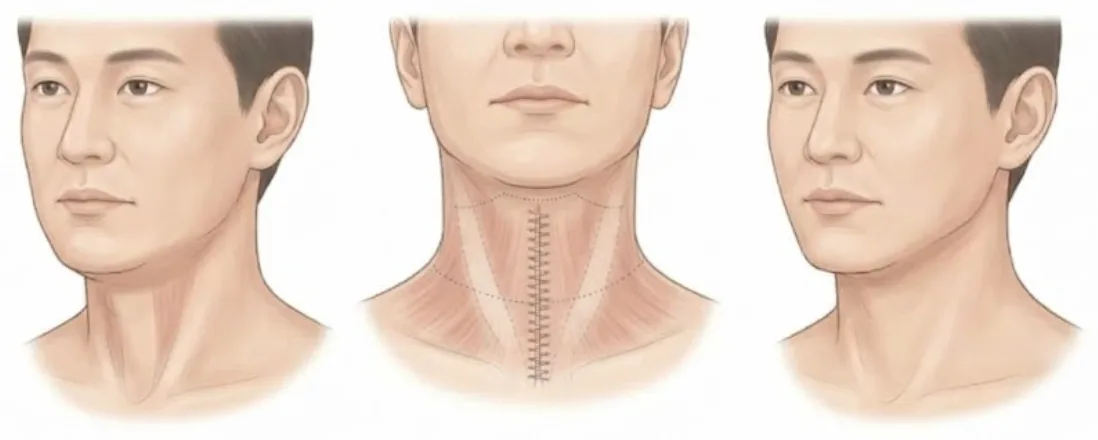
Illustration: the neck muscle (platysma) is drawn back together along the midline, like lacing a corset, to firm the neck.
Fat grafting suits a face that has lost volume (hollow under-eyes, flattened cheeks, temples that have narrowed), where softening and refilling those areas would look younger and more rested. It suits people who prefer their own tissue to a filler, and who accept that a graft settles over weeks and that a top-up is sometimes part of the plan. Where you sit is rarely purely one or the other, and who fat grafting is for walks through the candidacy in more detail.
How they combine
How facial liposuction and fat grafting are often combined
In practice these two are frequently done together, because ageing tends to redistribute facial fat. It seldom only adds or only removes it. A common pattern is fullness low down, a heavy jawline and double chin, sitting above a hollow, deflated mid-face and tired under-eyes. Treating only one half leaves the other looking worse by contrast, so the natural plan is to remove where there is excess and graft where there is loss, rebalancing the face in a single, considered session.
Combining them is a surgical judgement that depends on how your fat is distributed and how your skin will respond. This is precisely why a whole-face assessment beats treating the one feature you noticed: liposuction sharpens the line, grafting restores the softness, and the two together can look more natural than either alone. If a heavy neck is the dominant issue, the plan may lean toward contouring and lifting, with less grafting. Your surgeon will tell you which balance your face actually calls for.
Which fits you
Which one fits your face: liposuction or fat grafting
As a general guide: if the complaint is a heavy, full or undefined lower face over reasonably elastic skin, facial liposuction is the tool that addresses it. If the complaint is a hollow, tired or gaunt look from lost volume, fat grafting is the tool that addresses it. If your face shows both, excess in one zone and loss in another, the plan is usually a combination weighted to what your anatomy needs. The procedure you arrived asking about is only the starting point.
The wrong reasons to choose are worth naming too. Removing fat from a face that is already hollow can age it, and grafting a face that is already heavy adds to the problem it should solve. Skin laxity changes the answer again, because loose skin often needs a lift. Your jawline, mid-face and skin can be reviewed from photos in an online consultation before you decide between removal and grafting.
At Garnet
A facial liposuction and fat grafting assessment at Garnet
Garnet is a single-surgeon clinic in Apgujeong, Seoul. Dr. In-Soo Baek is a board-certified plastic surgeon (Korean medical licence no. 77407) who performs both facial liposuction and fat grafting himself. The recommendation you receive is therefore free of any pull toward one doctor's preferred procedure. Because one surgeon assesses the whole face, he can weigh where you carry excess against where you have lost volume and tell you candidly whether you need removal, addition, both, or neither yet.
Whether fat was removed or grafted, Dr. Baek reviews the contour himself at 1, 3 and 6 months and continues remotely once international patients are home. Garnet is registered with Korea's foreign-patient programme. The most useful next step is a no-obligation online assessment: send photos and get a clear read on whether facial liposuction, fat grafting, a combination, or neither is right for your face before you plan a trip.
Real Results
Before & After
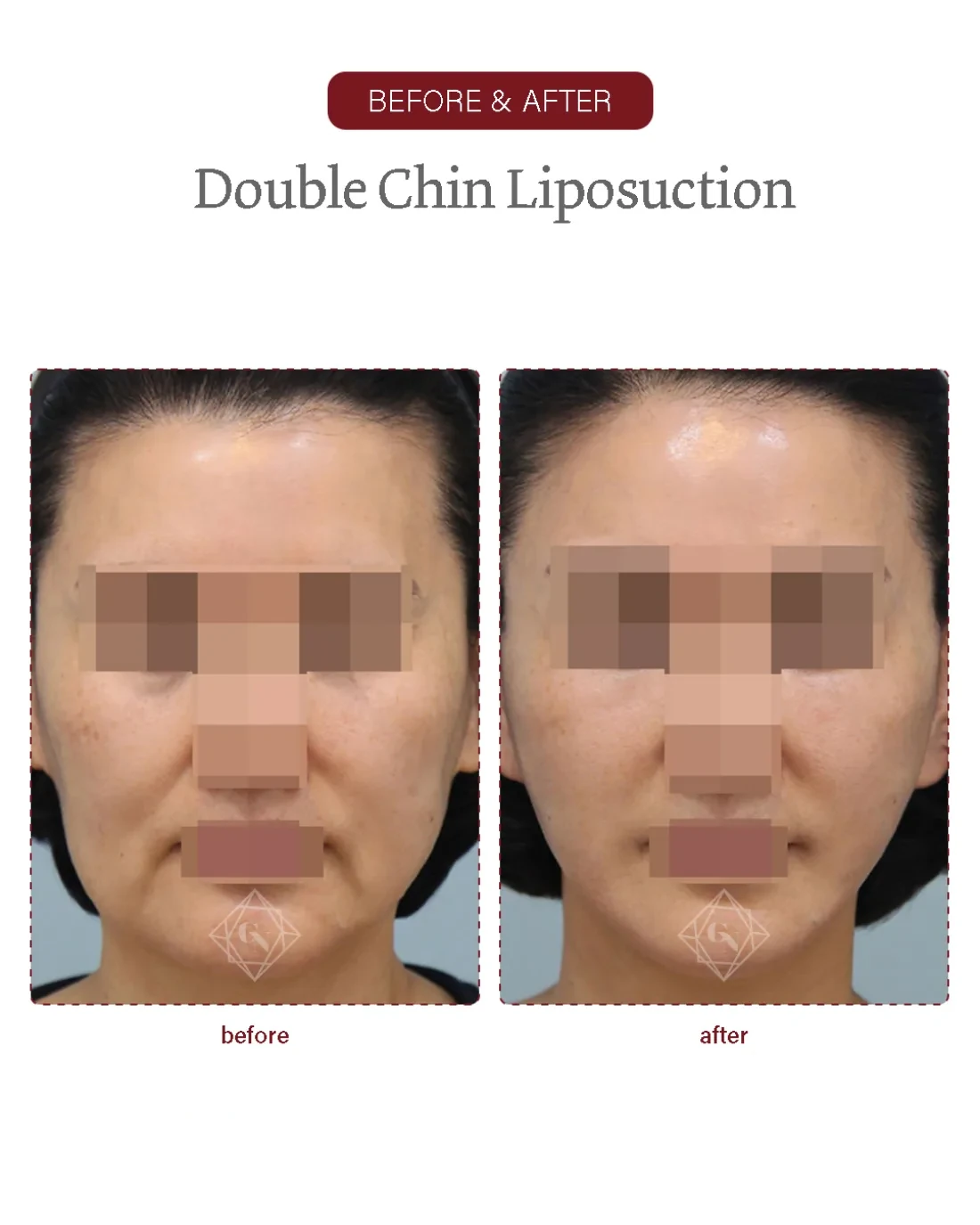
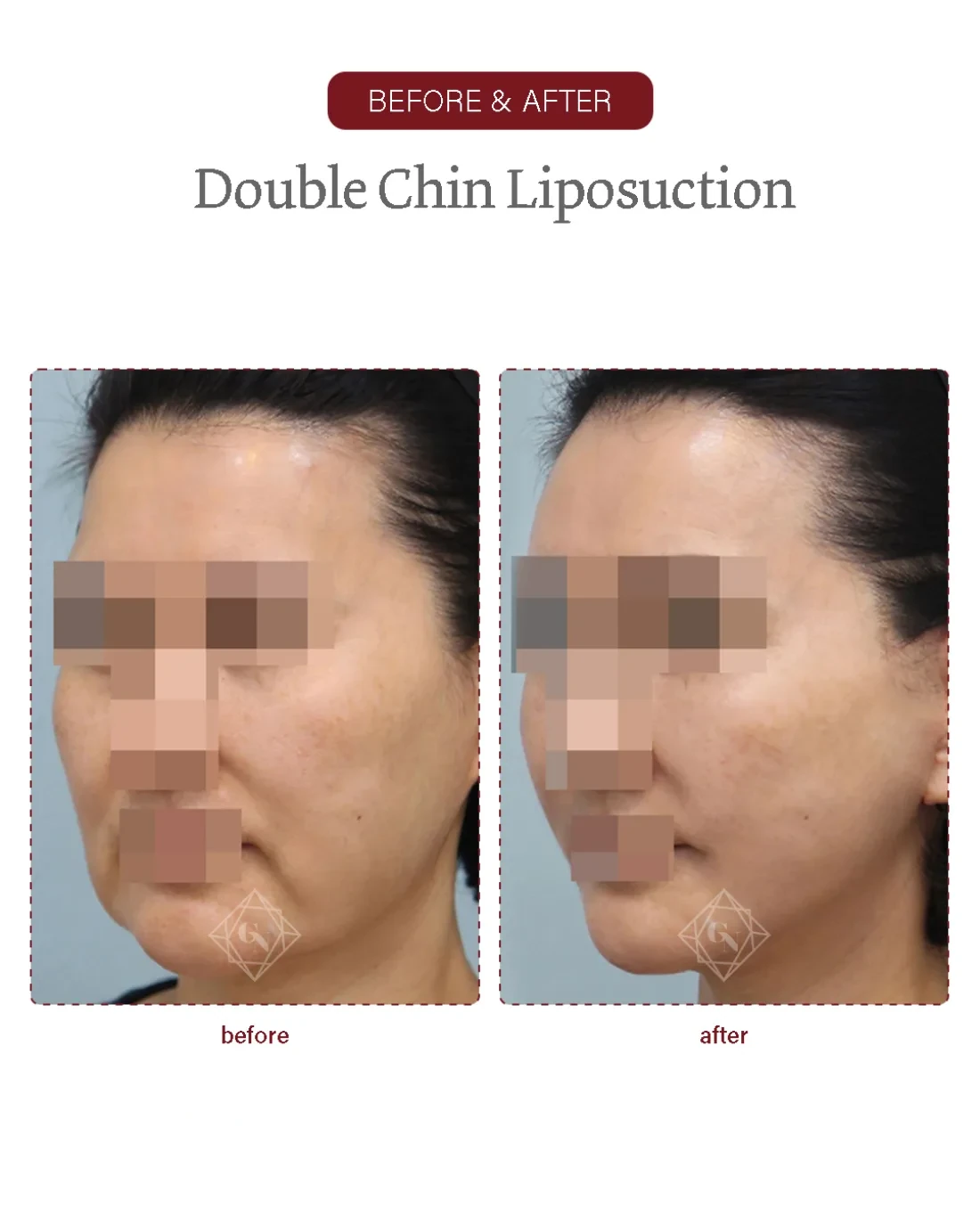
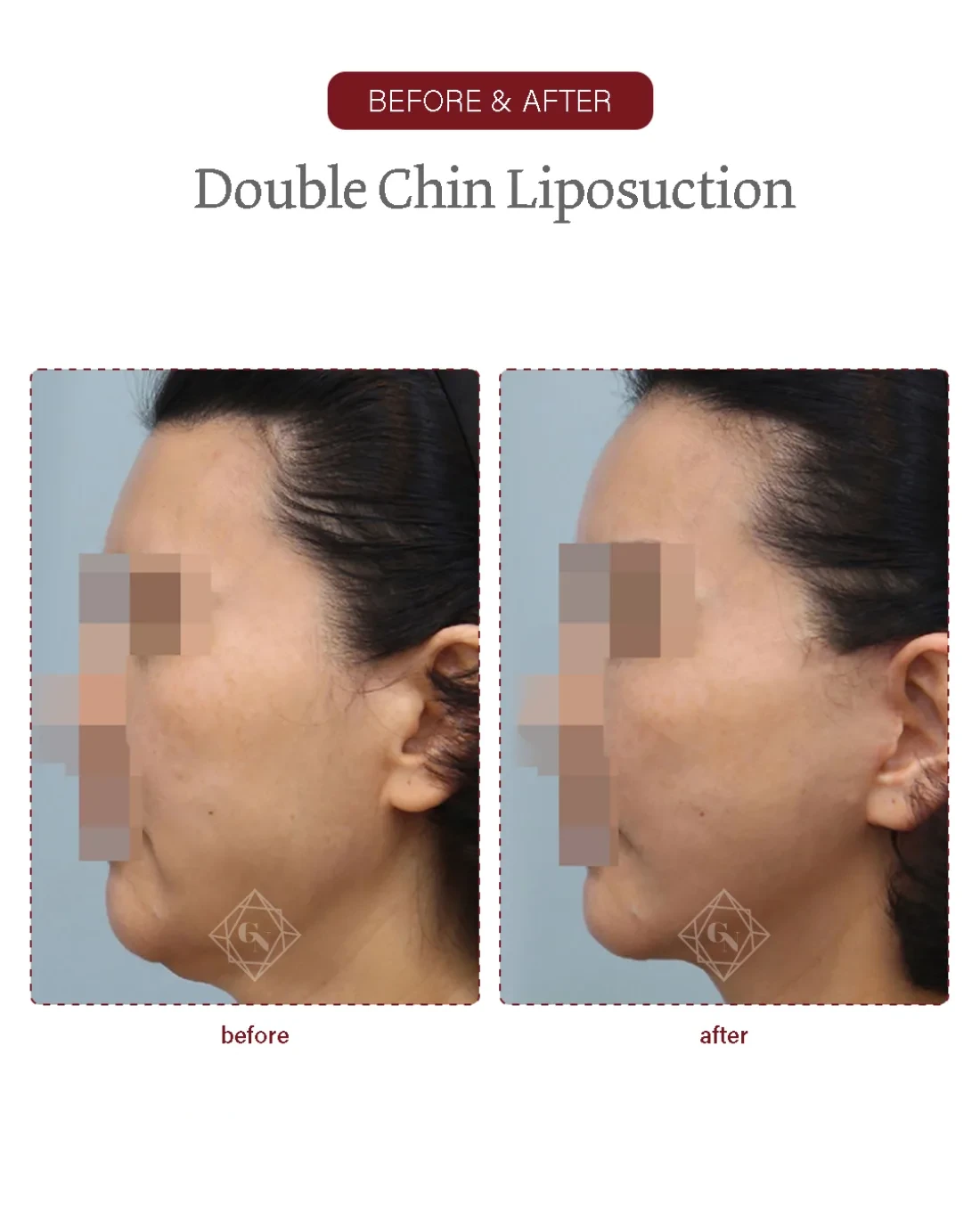
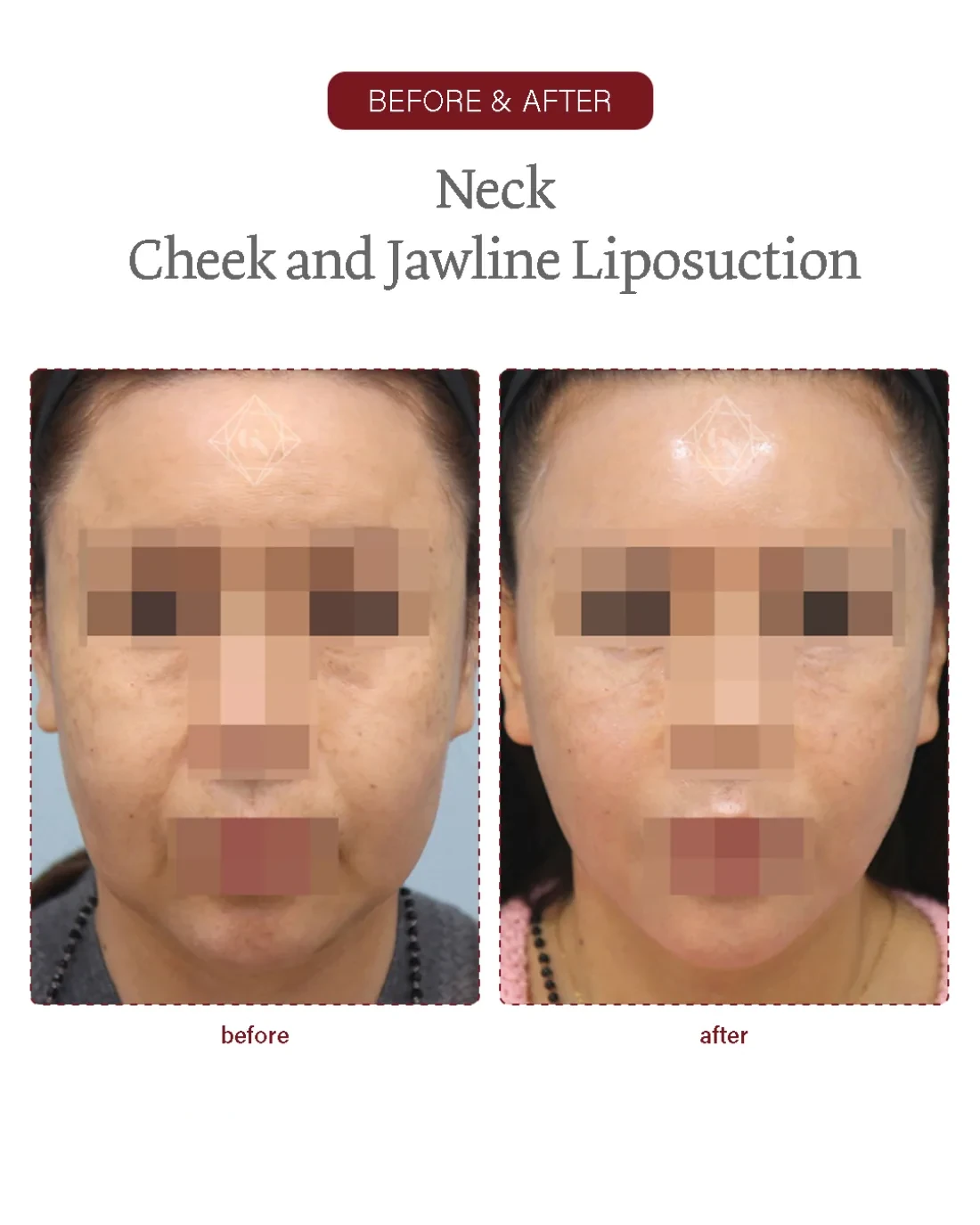
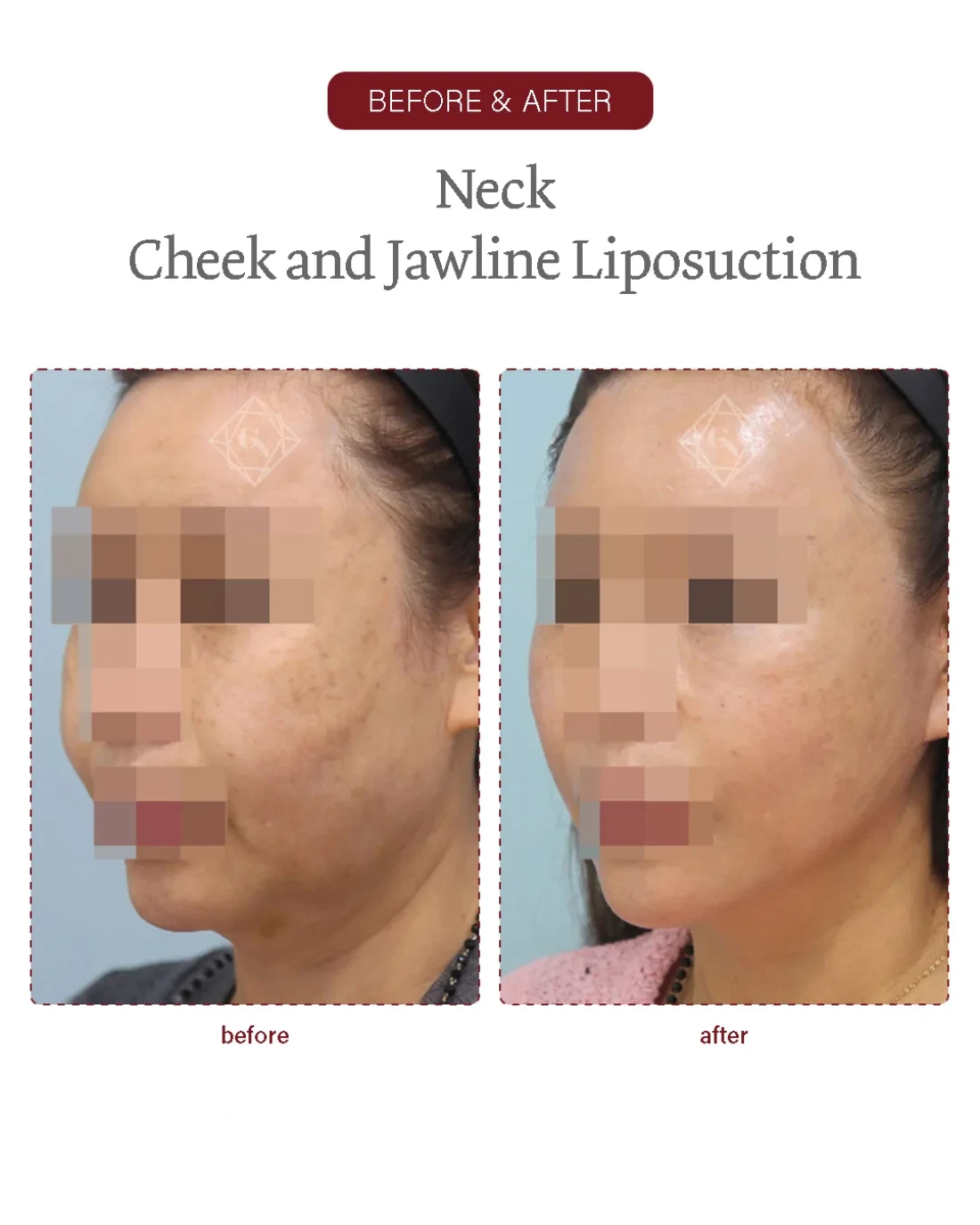
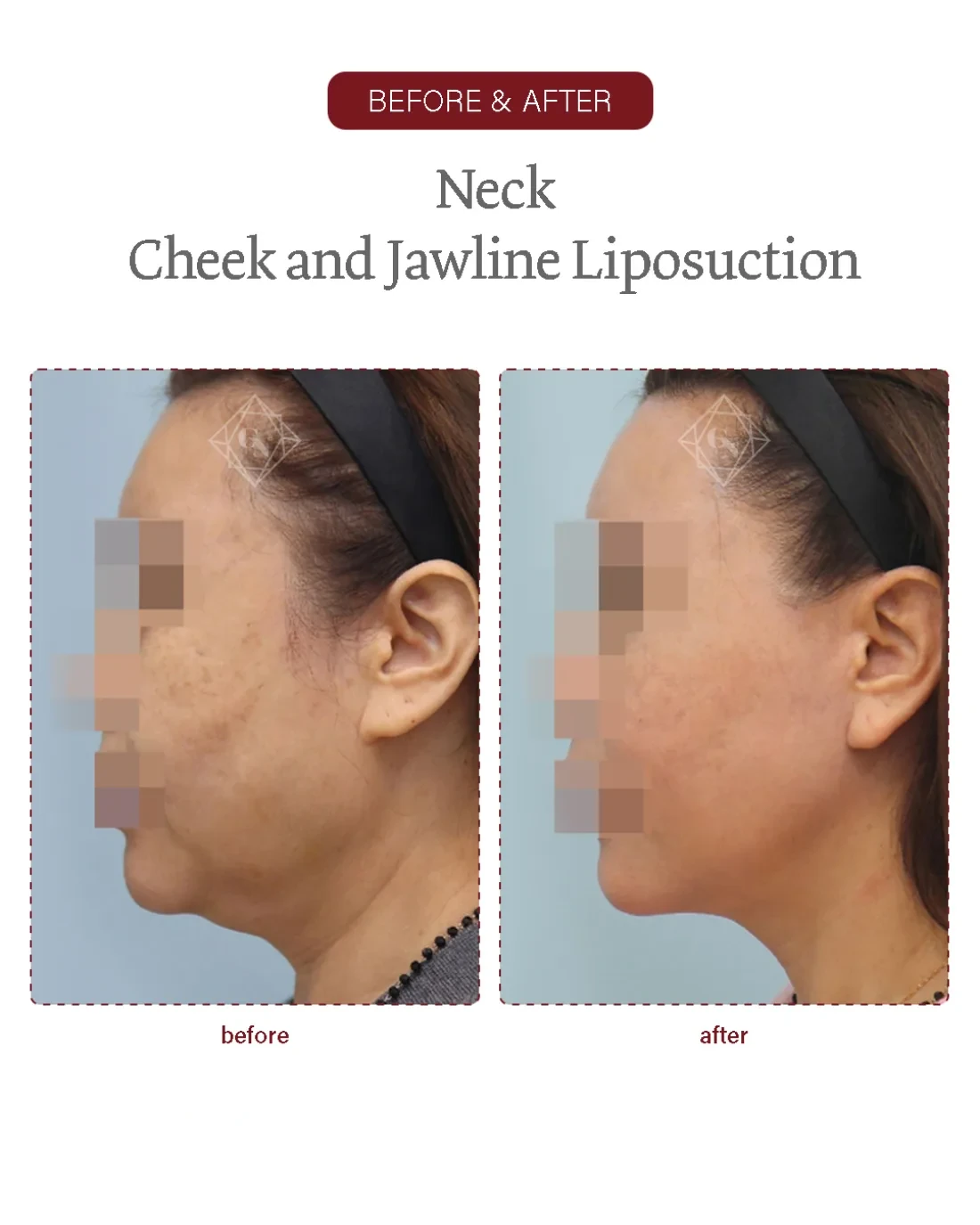
Double-chin and neck/cheek/jawline liposuction results of actual Garnet patients (published with consent). Results, recovery and suitability vary by individual, because skin quality and fat distribution differ, and outcomes are not guaranteed.
Dr. In-Soo Baek
Director & sole operating surgeon
Korean medical licence no. 77407
Operate on what you came for. Trained at Korea University Medical Center. Every case planned, performed and reviewed by the same hands.
1Operating surgeon
~2Surgeries per day
7Registered techniques
Board-certified plastic surgeon
Plastic surgery training at Korea University College of Medicine & graduate school
Korean Society of Plastic and Reconstructive Surgeons member, in its facial-contour, eye & rhinoplasty groups
Consults, operates and follows up each case himself
Peer-reviewed papers behind the facts on this page. Each describes findings in its own study group — not results at Garnet — and none predicts your own outcome.
Wang D et al. Fat Grafting Combined with Liposuction Improves Cosmetic Facial Contours in Asians. Clinics in Plastic Surgery. 2023. doi:10.1016/j.cps.2022.08.001
Collins PS et al. Evidence-Based Practice in Liposuction. Annals of Plastic Surgery. 2018. doi:10.1097/sap.0000000000001325
Doerr TD. Lipoplasty of the face and neck. Current Opinion in Otolaryngology & Head and Neck Surgery. 2007. doi:10.1097/moo.0b013e32825b0777
FAQ
Common questions
What is the difference between facial liposuction and fat grafting?
They move in opposite directions. Facial liposuction removes fat from areas with too much of it (the neck, cheeks, jawline and double chin) to define the lower face. Fat grafting transplants your own harvested, PRP-supplemented fat into areas that have lost volume, such as the under-eyes, temples or cheeks. One subtracts, the other adds.
Is facial liposuction or fat grafting better for me?
Neither is universally better; it depends on what your face needs. Excess fat and a heavy lower face point to liposuction; lost volume and a hollow, tired look point to grafting. Many faces show both and are best served by a combination. Seeing where your fat sits in person is the reliable way to tell which applies.
Can facial liposuction and fat grafting be done together?
Yes, and they often are. Ageing tends to leave a face fuller in some zones and hollower in others; a heavy jawline above a deflated mid-face is common. Removing fat where there is excess and grafting where there is loss can rebalance the face in a single session, when the surgeon judges your anatomy suits it.
Does facial liposuction tighten loose skin?
No. Liposuction removes fat; it does not tighten heavy, lax skin. It works best over skin with reasonable elasticity that will re-drape once the fat beneath it is reduced. If loose skin is the real issue, a lift such as a corset platysmaplasty or neck lift is what addresses it.
How long does fat grafting last compared with liposuction?
Facial liposuction removes fat cells, so the reduction it creates is stable. Fat grafting depends on how much of the transplanted fat survives and settles in; not every cell takes, so a top-up is sometimes part of the plan. The two are measured differently: one is a removal, the other a transplant that integrates over weeks.
Which one has more downtime?
Both are less involved than a surgical lift, but the recovery differs by area treated and by how much work is done. Combining removal and grafting in one session naturally involves more swelling than either alone. Your recovery depends on which areas are treated and whether removal and grafting are combined, so no generic figure is given.
I have a double chin but also look tired and hollow. What do I need?
That combination, fullness low down with volume loss higher up, is the pattern that often calls for both procedures: liposuction to sharpen the double chin and jawline, grafting to restore the mid-face or under-eye. The right balance depends on your fat distribution and skin, which a surgeon assesses in person.
Can I use filler instead of fat grafting?
Filler and fat grafting both add volume but behave differently: filler is a product placed temporarily, grafting uses your own tissue and integrates when it takes. Which suits you depends on the area and your goals. It is a separate comparison, worth raising together with whether liposuction is also needed.
Who decides which procedure I should have?
You do, with a clear assessment. At Garnet Dr. Baek performs both facial liposuction and fat grafting and assesses the whole face himself. He weighs excess against loss and tells you candidly which suits you, sometimes advising against a procedure, or advising to wait.
Can I get this assessment before travelling to Korea?
Yes. Send front and side photos and discuss whether facial liposuction, fat grafting, a combination or neither fits your face in an online consultation before you commit to travel. Garnet is registered with Korea's foreign-patient programme, and contour checks continue remotely once you are home.
My mom recently had a brow lift and lower blepharoplasty with Dr. Baek, and our experience has been wonderful so far. The Garnet team was incredibly kind and welcoming, with Kelly assisting us as our English consultant—she made everything…
I’m so happy I chose this clinic for my lower blepharoplasty. I was traveling from abroad by myself, so I was a little nervous, but from the beginning I felt comfortable and truly cared for. Everyone was kind, patient, and professional…
Came in for an in-person consult and ended up choosing Garnet and Dr.Baek for my non-incisional DES and tiplasty/alarplasty. I communicated with Kelly (English consultant) from the start till now (3 weeks post-op). She really help me feel…
My under-eyes have been sagging and folding for years... I tried to cover it up with makeup, but it actually got stuck in the wrinkles and made it stand out even more. While going for consultations, I noticed that the bigger the hospital…
If your face is heavy in one place and hollow in another, send photos for a no-obligation read on whether you need removal, grafting, both, or neither.
Send photos and your question before you travel. An English-speaking coordinator reviews every enquiry and replies with guidance on whether surgery is appropriate, the likely plan and timing.
✓ Reviewed by the clinic coordinator, not a bot
✓ Photo-based pre-assessment before you fly
✓ Foreign-patient scheduling & after-care
✓ One surgeon for consultation, surgery and follow-up
Prefer to chat now? Reach the coordinator directly:








 T S7 months ago



