Every forehead reduction leaves a scar, since any incision does, so the real question is where the line sits at the hairline and how visible it stays. Because the operation advances the hairline forward, the incision is placed along the hairline, which is exactly where a maturing scar is easiest to conceal.
The short answer
Forehead reduction uses an incision along the hairline, so the scar follows the front of the hairline and does not sit on open forehead skin.
A pretrichial (in front of the hairline) or trichophytic closure can let hair grow through and around the scar, which softens how visible the line is.
Like any scar, the line is most noticeable early and fades and flattens over months as it matures.
The same board-certified surgeon who operates reviews the scar at 1, 3 and 6 months, including remotely once an international patient has returned home.
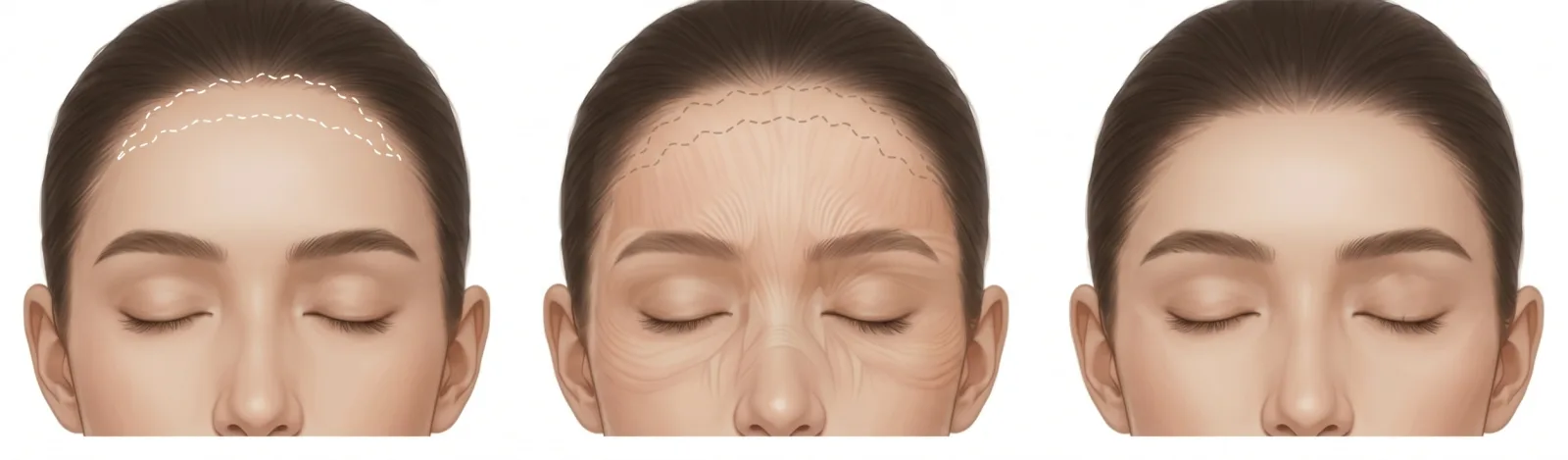
Forehead reduction shortens a tall forehead by advancing the hairline forward, and to do that the surgeon makes an incision along the hairline. That placement is the whole point of where the scar ends up: it follows the line of the hairline and does not cross open, exposed forehead skin. People sometimes picture a scar across the middle of the forehead, but this operation leaves its line where the hair meets the skin.
Illustration: through a fine line along the hairline (dotted), the hairline is brought forward to shorten a tall forehead.
The exact path depends on your hairline shape and how much advancement is planned, but the principle is consistent: keep the incision at the natural border so the resulting scar is camouflaged by the hairline itself. This is one of the reasons forehead reduction is a different conversation from a brow-raising forehead lift, which addresses a different concern and is planned around different incision options.
It is worth being realistic from the start: there is a scar, it runs along the hairline, and how well it ends up concealed depends on the closure technique, how your skin heals, and the hair density at your hairline. A careful surgeon discusses all three with you before surgery and does not promise an invisible result. Read the wider context in our forehead reduction overview.
Why the hairline
Why the incision is placed along the hairline
Placing the incision along the hairline is a deliberate choice to put the scar where it can be hidden. Skin at an open forehead is fully visible; the hairline is a natural transition where a fine, well-healed line can disappear into the hair. By advancing the hairline forward, the surgery both shortens the forehead and tucks the resulting scar into that border in one move.
There is a planning decision within this: the incision can be made right at the hairline or slightly in front of it, which is called a pretrichial incision. A pretrichial approach places the line just forward of the hairline so that, as it heals, hair can grow up to and through it, which can make the scar harder to spot than a line sitting strictly behind the hairline. Which approach suits you depends on your hairline shape, density and goals, and is decided with the surgeon.
In practice, scar placement is built into how the operation is designed from the start. That is why the consultation should cover where your incision will sit as well as how much forehead height can be reduced.
Closure
How the closure lets hair grow through the scar
How the incision is closed matters as much as where it is placed. A trichophytic closure is a technique designed specifically to let hair grow through and around the scar: the wound edges are prepared and closed so that hair follicles can sprout through the healing line, breaking up its appearance instead of leaving a bare, hairless strip. Done well, this is one of the main reasons a hairline scar can become difficult to pick out over time.
Combined with a pretrichial placement just in front of the hairline, the aim is a scar that sits at the natural border and has hair growing across it — so the eye reads a hairline and passes over the surgery. The incision is closed with sutures, which are removed once the early healing is underway; getting the sutures removed in person, by the surgeon who operated, is part of confirming the line is closing cleanly.
No technique guarantees an invisible scar, and how much hair grows through depends partly on your own follicles and healing. But the closure choice is a real lever the surgeon controls, and it is reasonable to ask in your consultation how your incision will be closed and what that means for concealment. International patients should also ask how the early closure will be checked — covered in our forehead reduction for international patients guide.
How it matures
How the scar matures over the first months
A new scar does not look like its final self for a long time. In the early weeks the line along the hairline is at its most noticeable. It can look pink or raised while the skin is actively healing, and there may be some numbness or tightness near the incision. This is the normal early stage and is not the end result; it is exactly what the first reviews are there to monitor.
Over the following months the scar gradually matures: it tends to flatten, soften and fade in colour, and the hair growing through and around it increasingly breaks up the line. Most of the visible improvement happens across the first several months, with finer fading continuing beyond that. Protecting the area as advised, with sun protection on a fresh scar in particular, helps it settle well. For how this overlaps with your general recovery, see the forehead reduction recovery timeline.
Because this unfolds slowly, scar healing is precisely the kind of thing structured follow-up is built for. Reviews at 1, 3 and 6 months track the line through its main maturation window, so the surgeon can confirm it is settling normally and reassure you about stages that look alarming but are routine.
Living with it
Concealing and living with the scar day to day
Because the scar sits along the hairline, everyday concealment is usually straightforward once healing is underway. Hair grown through and around the line (the goal of the trichophytic closure and pretrichial placement) does much of the work, and the way most people wear their hair already falls across the hairline. Many patients find the line genuinely hard to see at conversational distance as it matures.
Practical points still apply in the early phase: be gentle with the incision, follow the surgeon's guidance on washing and styling, and protect the fresh scar from strong sun, which can darken an immature line. If you part or pull your hair back tightly, mention your habits to the surgeon, because hairline shape and density influence how the scar is planned and how easily it stays hidden.
If a part of the line heals more visibly than hoped, that is a conversation to have at follow-up. It is not a final verdict, because scars continue to change for months, and the surgeon can advise on scar care or, where appropriate, options once it has fully matured. The point is that you are not left to judge it alone.
At Garnet
How Garnet approaches forehead reduction scars
At Garnet, forehead reduction is performed by Dr. In-Soo Baek, a board-certified plastic surgeon (Korean medical licence no. 77407) and the clinic's only operating doctor. Scar placement and closure are planned with you in the consultation: where the incision sits along your hairline, whether a pretrichial placement and trichophytic-style closure suit your hairline and density, and what concealment you can realistically expect as hair grows through the line.
Because the same surgeon consults, operates and follows up, the person assessing your scar at 1, 3 and 6 months is the one who designed and made the incision. For international patients that continuity carries over after you fly home: you can send photos of the hairline so the operating surgeon can confirm the scar is maturing normally and concealing as expected, through the remote follow-up described in our international patients guide.
If you are weighing the operation, start by understanding your own hairline. Read the full forehead reduction overview, see how the scar fits into the wider recovery timeline, and send front and side photos for a pre-assessment of where your incision would sit and how it is likely to heal.
Real Results
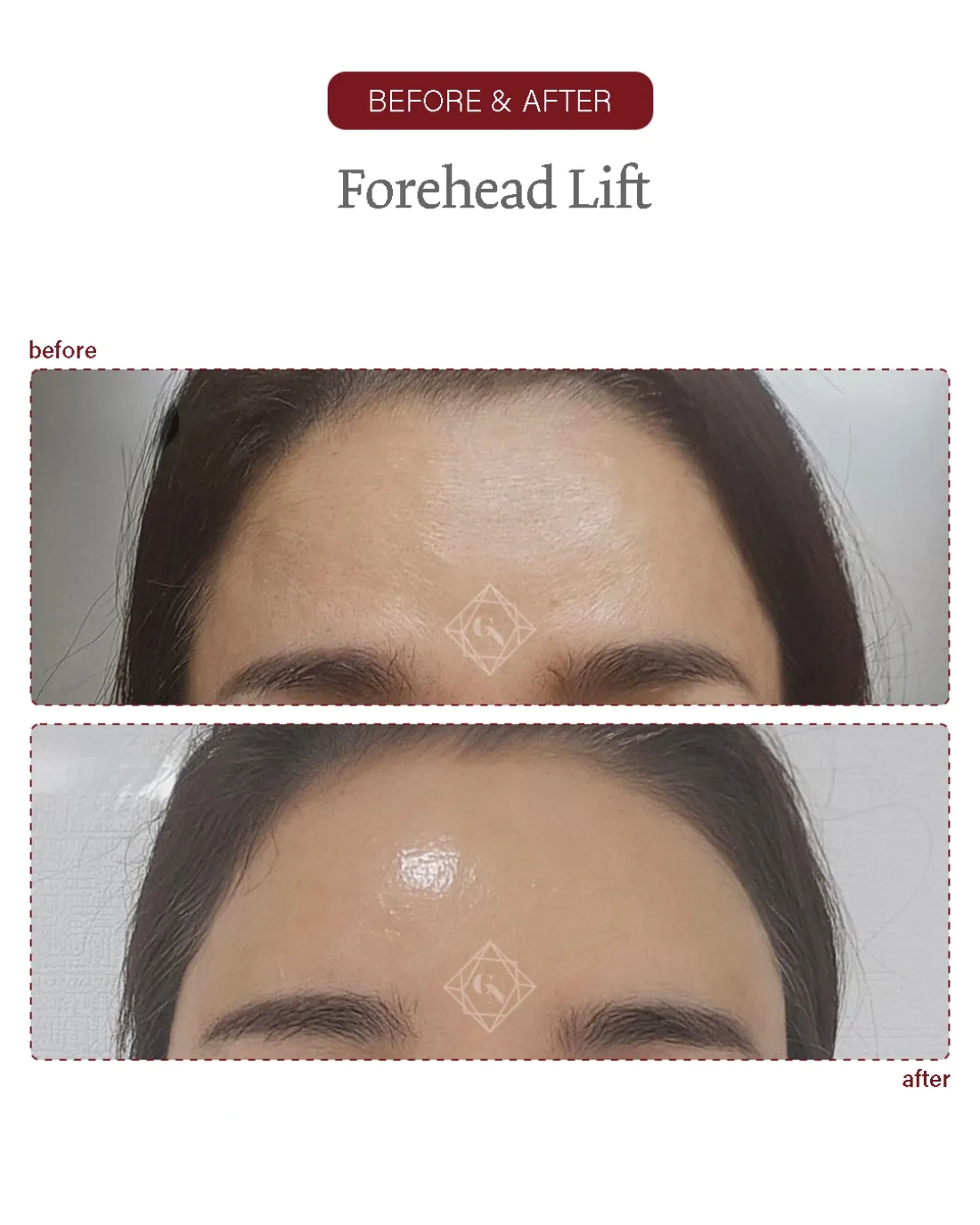
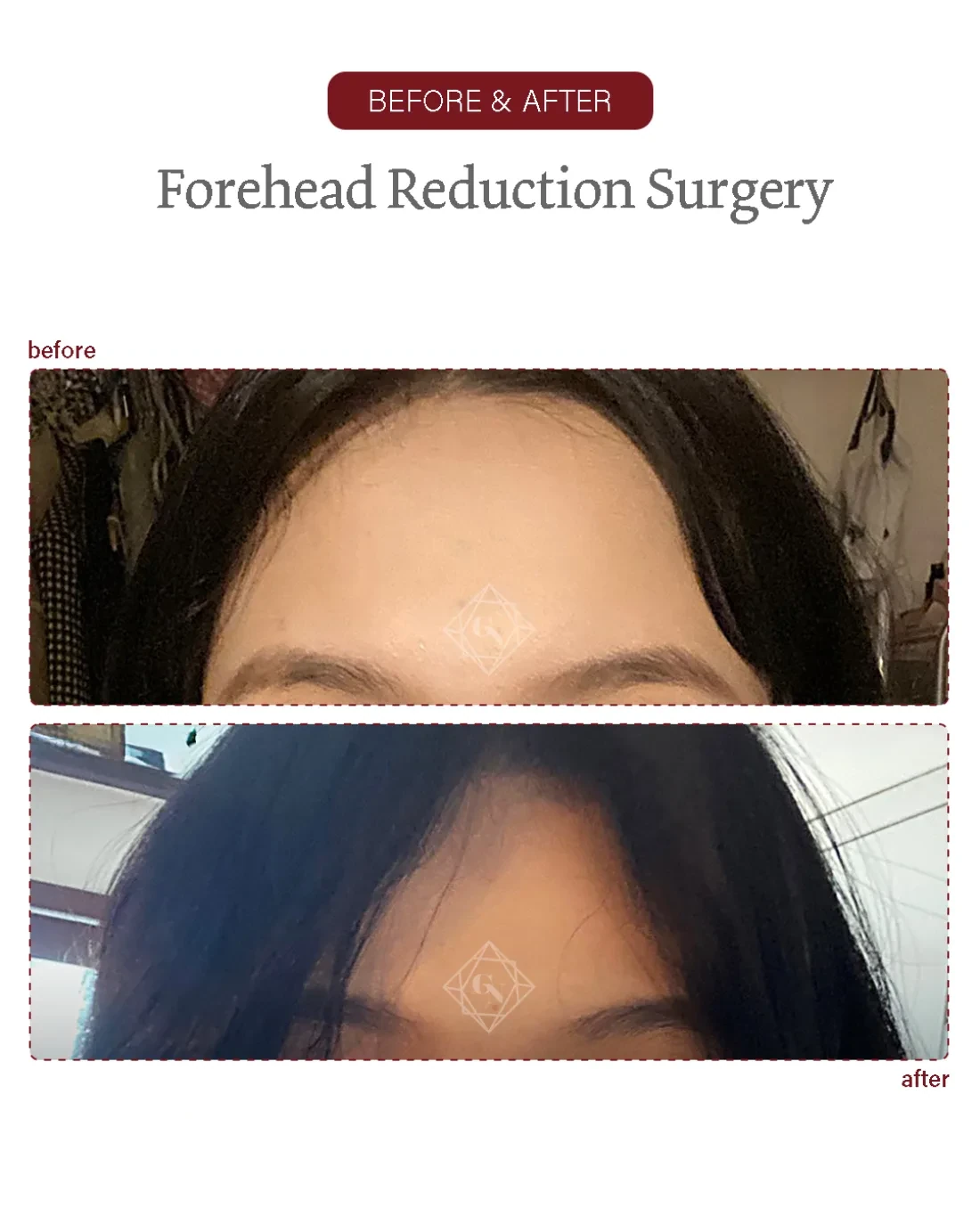
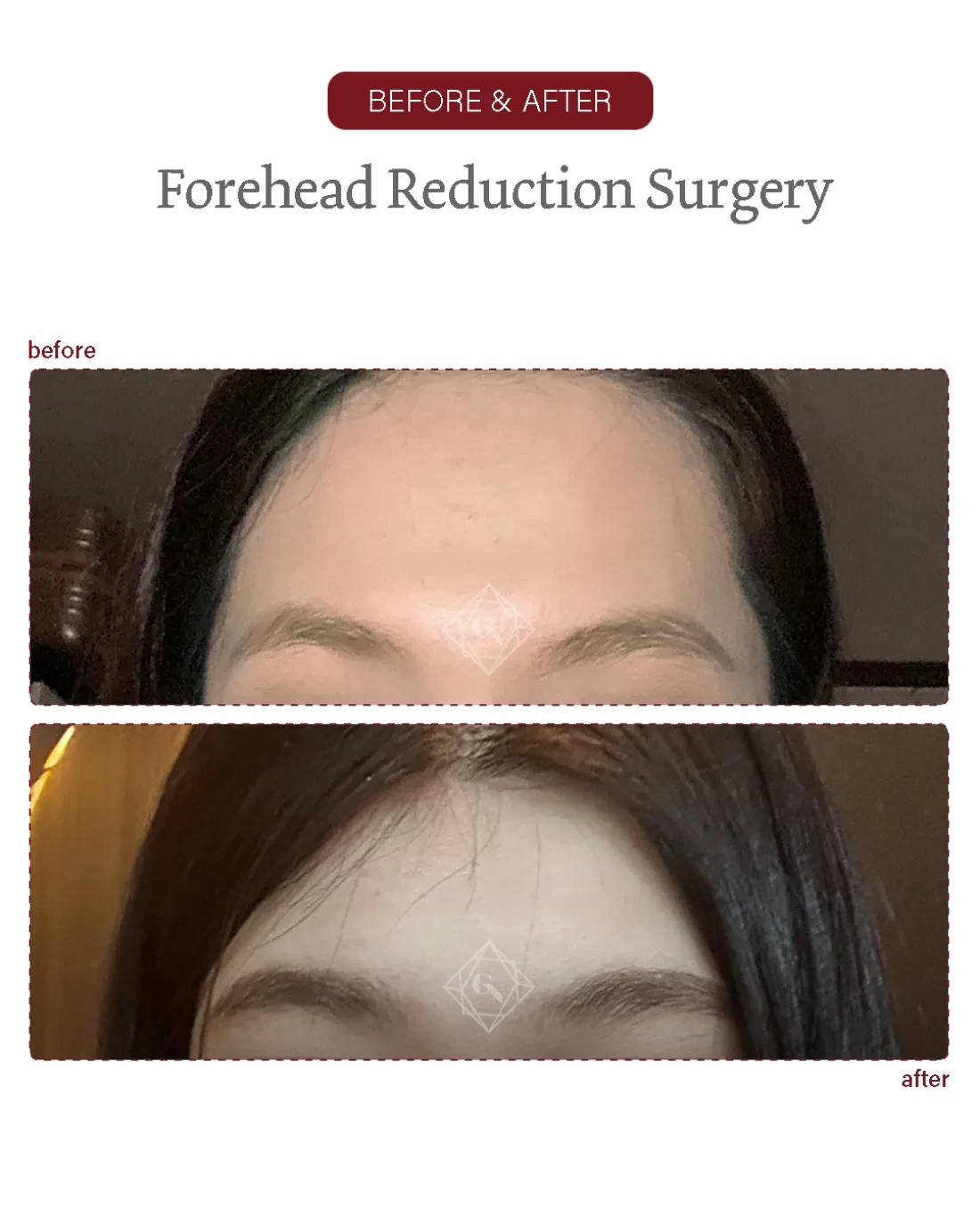
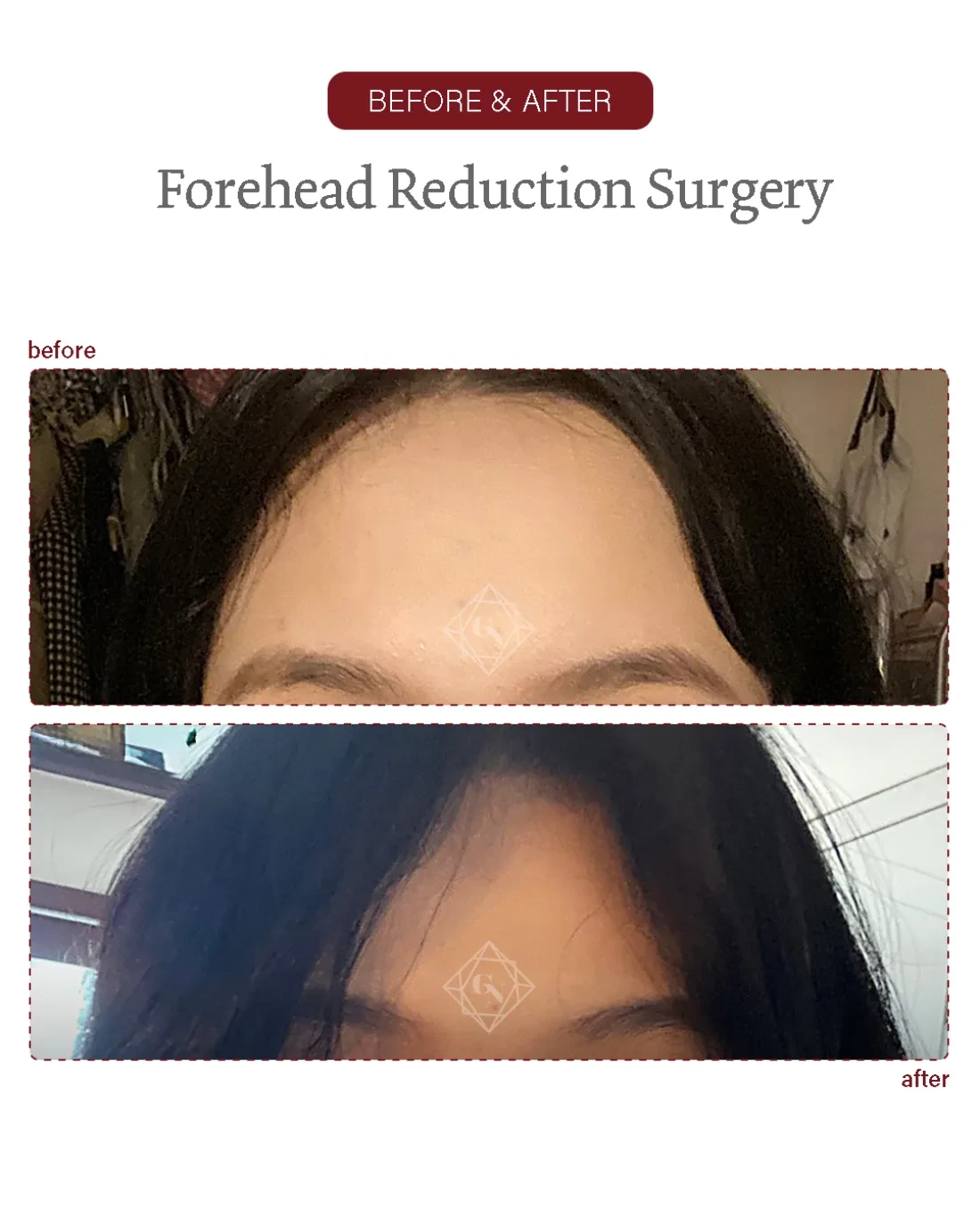
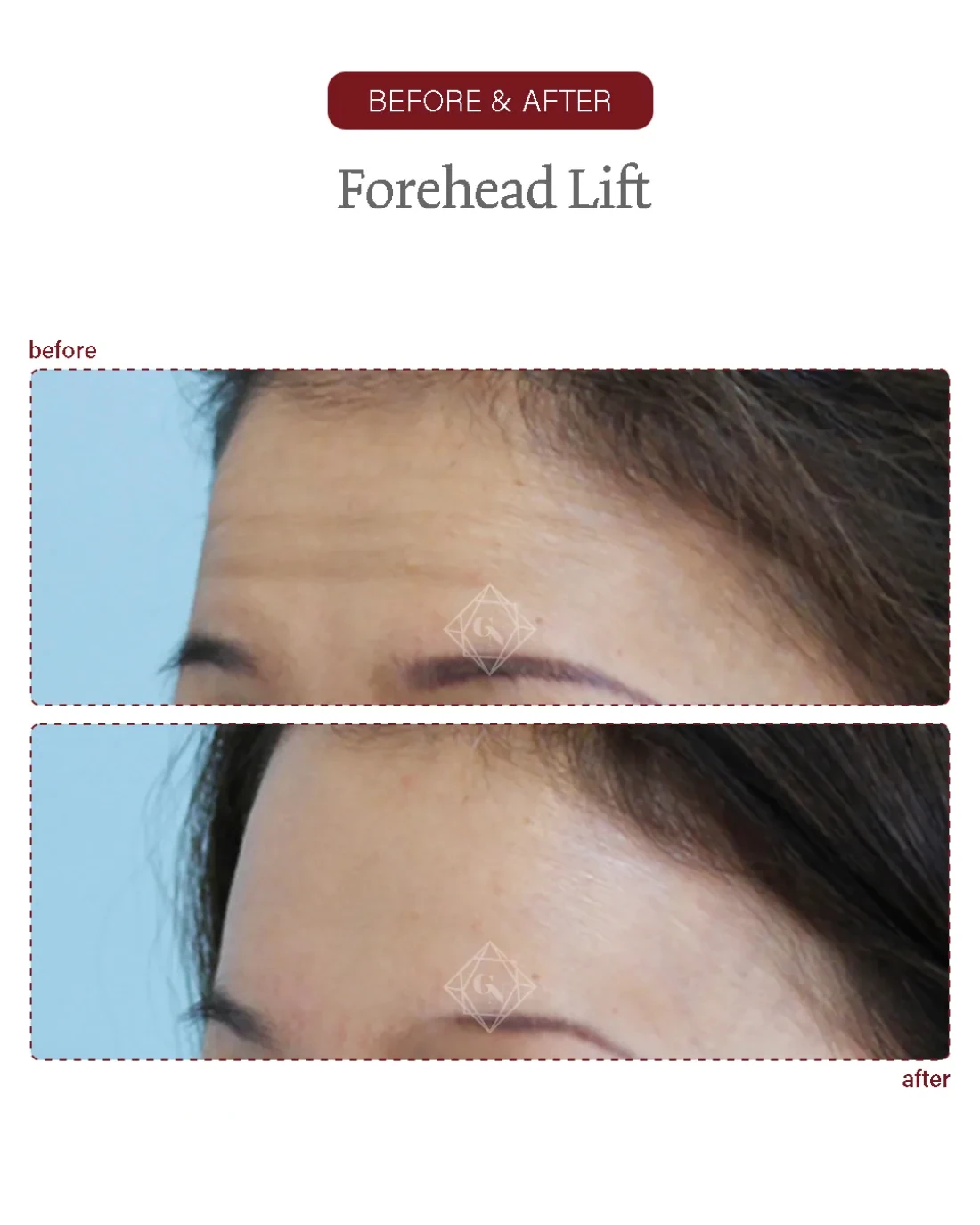
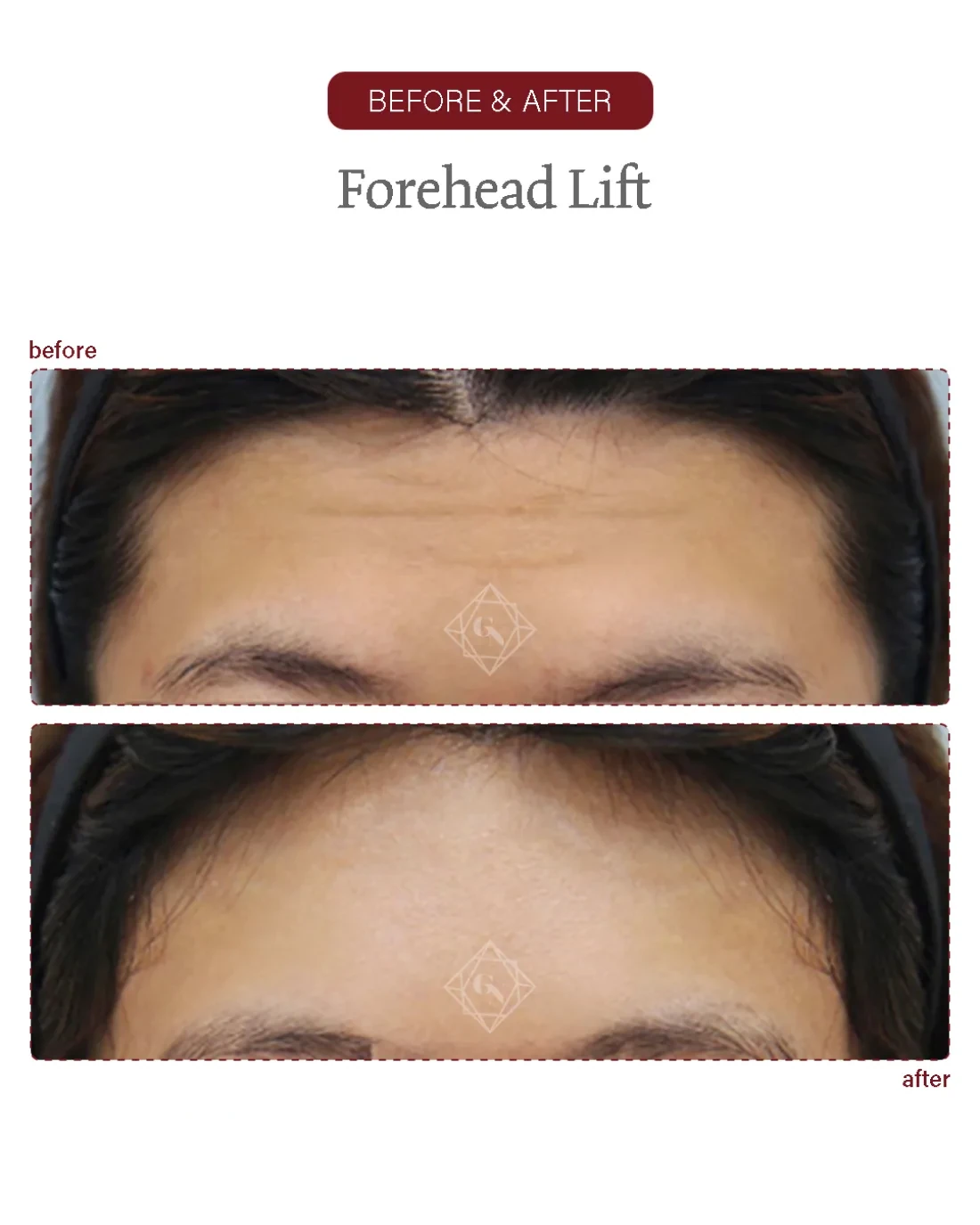
Before & After
Forehead reduction before/after sets of actual Garnet patients (published with consent). Results, recovery and scar appearance vary by individual, depend on scalp laxity and hair density, and are not guaranteed.
Prices
Price at Garnet
Forehead reduction
₩7,000,000 + VATExcluding VAT (10% VAT is added at payment)Book now
Same price as Korean patients. Prices shown exclude 10% VAT; your written quote, issued after the in-person consultation, shows the full amount payable.
Dr. In-Soo Baek
Director & sole operating surgeon
Korean medical licence no. 77407
Operate on what you came for. Trained at Korea University Medical Center. Every case planned, performed and reviewed by the same hands.
1Operating surgeon
~2Surgeries per day
7Registered techniques
Board-certified plastic surgeon
Plastic surgery training at Korea University College of Medicine & graduate school
Korean Society of Plastic and Reconstructive Surgeons member, in its facial-contour, eye & rhinoplasty groups
Consults, operates and follows up each case himself
Peer-reviewed papers behind the facts on this page. Each describes findings in its own study group — not results at Garnet — and none predicts your own outcome.
Park JH. Masking the Close Eye Appearance in the East Asian Female Population: Infratemporal Hairline Reduction with Hair Grafting. Aesthetic Plastic Surgery. 2016. doi:10.1007/s00266-016-0695-9
Kabaker SS et al. Hairline Lowering. Facial Plastic Surgery Clinics of North America. 2013. doi:10.1016/j.fsc.2013.05.007
Sturm A et al. Hairline Restoration: Difference in Men and Woman—Length and Shape. Facial Plastic Surgery. 2018. doi:10.1055/s-0038-1636905
FAQ
Common questions
Where are the scars after forehead reduction?
The scar follows the front of the hairline, because the operation advances the hairline forward through an incision placed along it. It does not sit on open forehead skin in the middle of the forehead. It runs at the natural border where the hair meets the skin, which is where a maturing scar is easiest to conceal.
Will forehead reduction scars be visible?
There is always a scar, but it is placed along the hairline and is designed to be concealed. A pretrichial placement just in front of the hairline and a closure that lets hair grow through the line help break up its appearance, so for many patients it becomes hard to see as it matures, though how visible it stays depends on your skin and hair density.
How do forehead reduction scars heal over time?
The line is most noticeable in the first weeks, when it can look pink or raised, then gradually flattens, softens and fades over the following months as it matures. Hair growing through and around it increasingly conceals the line. Most visible improvement happens across the first several months, with finer fading continuing beyond that.
What is a trichophytic closure?
It is a closure technique designed to let hair grow through and around the scar. The wound edges are prepared and closed so hair follicles can sprout across the healing line, breaking up its appearance so no bare, hairless strip is left. It is one of the main reasons a hairline scar can become difficult to pick out over time.
What is a pretrichial incision?
A pretrichial incision is placed just in front of the hairline instead of strictly behind it. This lets hair grow up to and through the healing line, which can make the scar harder to spot. Whether it suits you depends on your hairline shape, density and goals, and is decided with the surgeon at consultation.
Can I hide the scar with my hairstyle?
Usually yes, once healing is underway. Because the scar sits along the hairline and hair grows through and around it, the way most people wear their hair already falls across the line. Tell the surgeon how you part or pull back your hair, since hairline shape and density influence how the scar is planned and concealed.
How can I help the scar heal well?
Be gentle with the incision, follow the surgeon's guidance on washing and styling, and protect the fresh scar from strong sun, which can darken an immature line. Attending or sending photos for the 1, 3 and 6 month reviews lets the surgeon confirm it is settling normally and advise on scar care if needed.
Who reviews my scar if I have gone back home?
At a single-surgeon clinic the same surgeon who operated reviews your scar, including remotely. You send photos of the hairline so the operating surgeon (Dr. In-Soo Baek at Garnet) can confirm the line is maturing and concealing as expected, with structured reviews mapped to 1, 3 and 6 months.
My mom recently had a brow lift and lower blepharoplasty with Dr. Baek, and our experience has been wonderful so far. The Garnet team was incredibly kind and welcoming, with Kelly assisting us as our English consultant—she made everything…
I’m so happy I chose this clinic for my lower blepharoplasty. I was traveling from abroad by myself, so I was a little nervous, but from the beginning I felt comfortable and truly cared for. Everyone was kind, patient, and professional…
Came in for an in-person consult and ended up choosing Garnet and Dr.Baek for my non-incisional DES and tiplasty/alarplasty. I communicated with Kelly (English consultant) from the start till now (3 weeks post-op). She really help me feel…
My under-eyes have been sagging and folding for years... I tried to cover it up with makeup, but it actually got stuck in the wrinkles and made it stand out even more. While going for consultations, I noticed that the bigger the hospital…
Wondering where your scar would sit and how it would heal? Send front and side photos of your hairline for a no-obligation pre-assessment of your incision and concealment.
Send photos and your question before you travel. An English-speaking coordinator reviews every enquiry and replies with guidance on whether surgery is appropriate, the likely plan and timing.
✓ Reviewed by the clinic coordinator, not a bot
✓ Photo-based pre-assessment before you fly
✓ Foreign-patient scheduling & after-care
✓ One surgeon for consultation, surgery and follow-up
Prefer to chat now? Reach the coordinator directly:









 T S7 months ago



